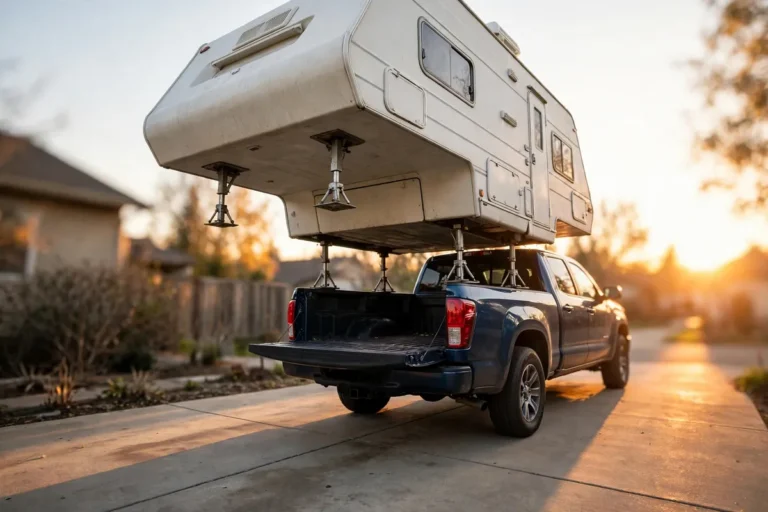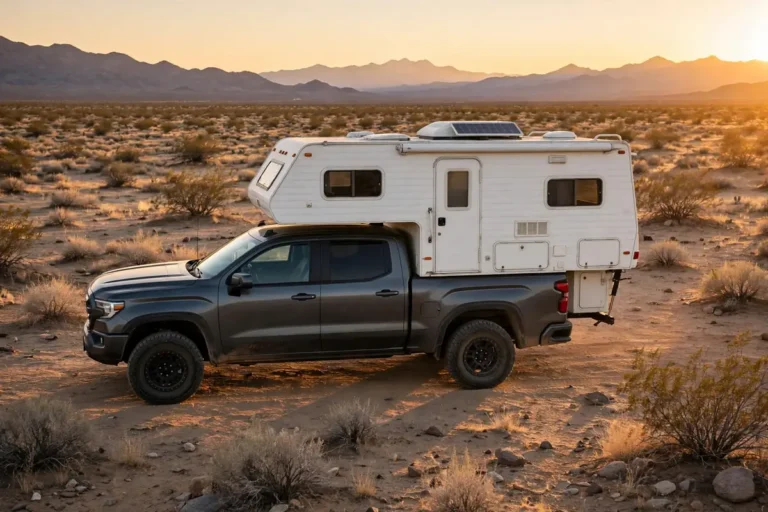
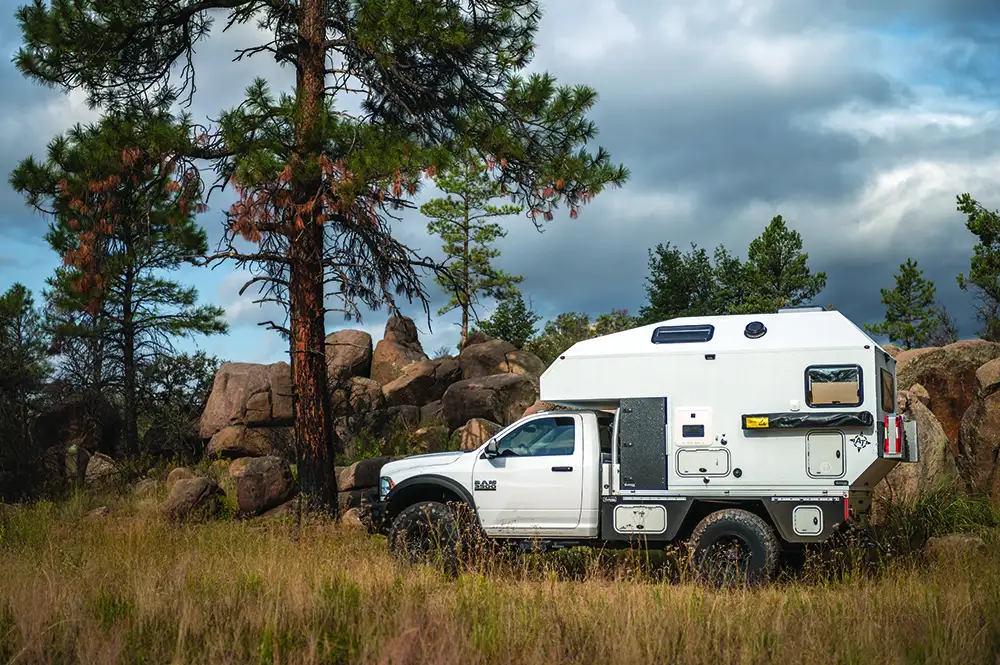
Truck Camper Payload Calculator: How to Know If Your Truck Can Carry Your Camper
I almost bought the wrong camper for my truck. The brochure said my half-ton could handle it, the salesman nodded along, and the camper’s dry weight looked fine on paper. Then I sat down with a truck camper payload calculator worksheet like the one below and discovered I would have been hundreds of pounds over my truck’s limit before I even loaded a cooler. Payload is the number-one reason truck camper setups go wrong, and it is also the easiest problem to prevent if you do the math before you buy. Here is exactly how I run the numbers now, from the door-jamb sticker to the scale ticket.
What Payload Actually Means (Forget the Brochure)
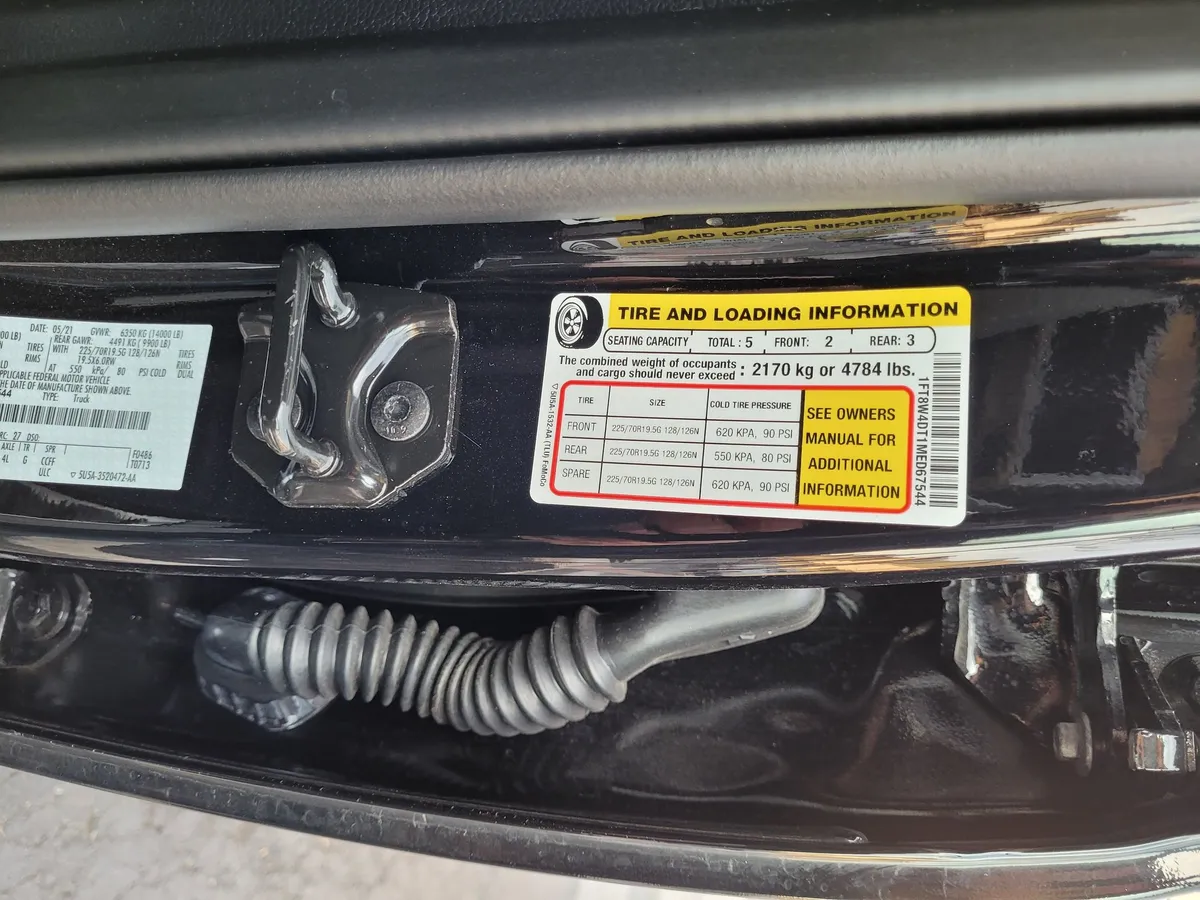
Payload is simple on paper: it is the maximum weight your truck can carry, and it equals your truck’s Gross Vehicle Weight Rating (GVWR) minus its curb weight. Every pound you add, people, camper, water, gear, counts against it.
The only payload number that matters is the one printed for YOUR truck, on the Tire and Loading Information placard stuck to the driver’s door jamb. Federal rules (FMVSS No. 110) require every vehicle to carry this label, and it states the vehicle’s capacity weight as “The combined weight of occupants and cargo should never exceed XXX kilograms or XXX pounds” (NHTSA’s own interpretation letter spells this out). Open your driver door and read it. That number, not the brochure, not the commercial, is your limit.
Three things about that sticker surprise most first-time camper owners:
It already assumes a full tank of fuel. Federal definitions count a vehicle’s “unloaded weight” with all fluids topped off, so you do not add fuel to your math. But the sticker assumes zero people and zero cargo. Your weight, your passengers, your dog, all of it comes out of that number.
The brochure number is not your number. The maximum payload in the brochure belongs to a stripped-down regular-cab work truck. Your crew cab, 4×4, diesel, and trim options each eat into it. Owners in truck camper forums report this constantly: a loaded one-ton truck can easily show hundreds of pounds less payload than the brochure suggests. Diesel engines, leather interiors, sunroofs, and fancy wheels all weigh something, and every ounce comes off the sticker.
Your truck may have a second sticker. Some trucks, especially older GMs, carry a separate slide-in camper loading label inside the glovebox with its own cargo weight rating. Owners in RV forums describe buying a one-ton truck and then finding a glovebox label listing far less capacity than they expected. Check both places before you shop for a camper.
Truck Camper Payload Calculator: The Step-by-Step Math

Here is the worksheet I use. Add up everything on the right, then compare the total to your door-jamb payload. If the total is bigger, the rig does not work as configured.
1. Start with the camper’s real weight, not the brochure weight. Find the weight sticker on the camper itself, usually inside a cabinet or on the entry door. That is the dry weight, and even it is optimistic: it typically excludes dealer or factory options like the air conditioner, awning, microwave, and generator. Add 100 to 150 pounds for common options unless you know the as-built weight.
2. Water: gallons x 8.34. A gallon of water weighs 8.34 pounds, so a full 30-gallon fresh tank adds about 250 pounds. And do not forget the water heater, which holds another 6 or so gallons even when you think your tanks are “empty.” I travel with partial tanks whenever I can and only fill up near camp. It also matters in shoulder season: I drain everything before freezing nights, and my winterizing routine is the checklist I follow.
3. Propane: gallons x 4.24. Liquid propane weighs about 4.24 pounds per gallon. A standard 20-pound cylinder holds roughly 4.7 gallons, so about 20 pounds of fuel, plus the steel tank itself at around 17 pounds empty. Two full 20-pounders put roughly 74 pounds on the truck. If you camp cold, budget more: winter heating burns through propane fast, and running out at 2 a.m. in January is a lesson you only need once.
4. Batteries and electrical. House batteries are heavier than people expect. A pair of lead-acid batteries can top 120 pounds before you add an inverter or solar controller. This is one of the cheapest places to buy back payload: swapping to lithium typically saves dozens of pounds, and the solar and lithium sizing guide walks through the math for your setup.
5. People and pets. Use real weights, not guesses. Two adults and a big dog commonly total 350 to 400 pounds.
6. Everything else. Gear, food, clothes, tools, camp chairs, the grill, firewood, the toolbox in the cab. Be honest here. Most of us carry 300 to 500 pounds of “stuff” without trying.
7. Aftermarket truck add-ons. Running boards, a bed mat or spray-in liner, tie-downs and turnbuckles, a toolbox, upgraded bumpers. The tie-down hardware for the camper alone can run 50-plus pounds.
Add it all up. That is your real-world load. Now compare it to the sticker. If you are under, great, but leave yourself a cushion. Many experienced owners aim to stay around 80 percent of their rated payload as a comfort buffer, not because any law requires it, but because real trips always weigh more than the spreadsheet.
Worked Example: 1-Ton Truck plus Hard-Side Camper
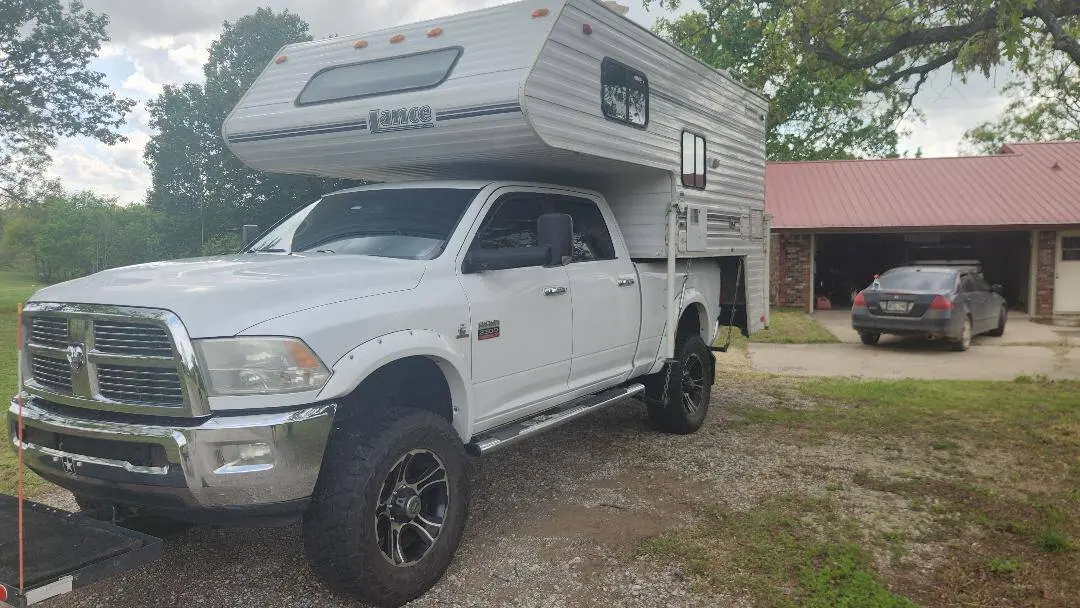
The numbers below are illustrative, not a real truck, but they are realistic for a common setup: a one-ton single-rear-wheel crew cab 4×4 diesel carrying a mid-size hard-side camper.
Example rig:
- Door-jamb payload: 3,850 lbs
- Camper dry weight (sticker): 2,950 lbs
- Factory options not in dry weight (A/C, awning): 120 lbs
- Fresh water, 24 gallons x 8.34: 200 lbs
- Propane, two 20-lb tanks (fuel plus tanks): 74 lbs
- Two lead-acid house batteries: 130 lbs
- Gear, food, clothes, tools, chairs, grill: 350 lbs
- Two adults and a dog: 380 lbs
- Tie-downs, bed mat, dealer running boards: 90 lbs
- Total load: 4,294 lbs
- Result: OVER by 444 lbs
Read that again. A one-ton truck, a mid-size hard-side camper, two people, and a normal load of gear, and the rig is more than 400 pounds over its sticker. This is exactly the trap: the dry weight (2,950) looks comfortable against a 3,850-pound payload, but dry weight is a fantasy number. Water, propane, batteries, people, and gear added nearly 1,350 pounds.
Could the owner fix it by packing light? Traveling with 10 gallons of water instead of 24 saves about 117 pounds. Swapping to lithium batteries saves roughly 75. Leaving the “just in case” gear home saves maybe 60. That is 250 pounds back, and the rig is still nearly 200 over. Sometimes the honest answer is that the combination does not work, and the buyer needs a lighter camper or more truck. Better to learn that from a worksheet than from a scale ticket, or worse, a blowout on a mountain grade.
The CAT Scale Three-Pass Method
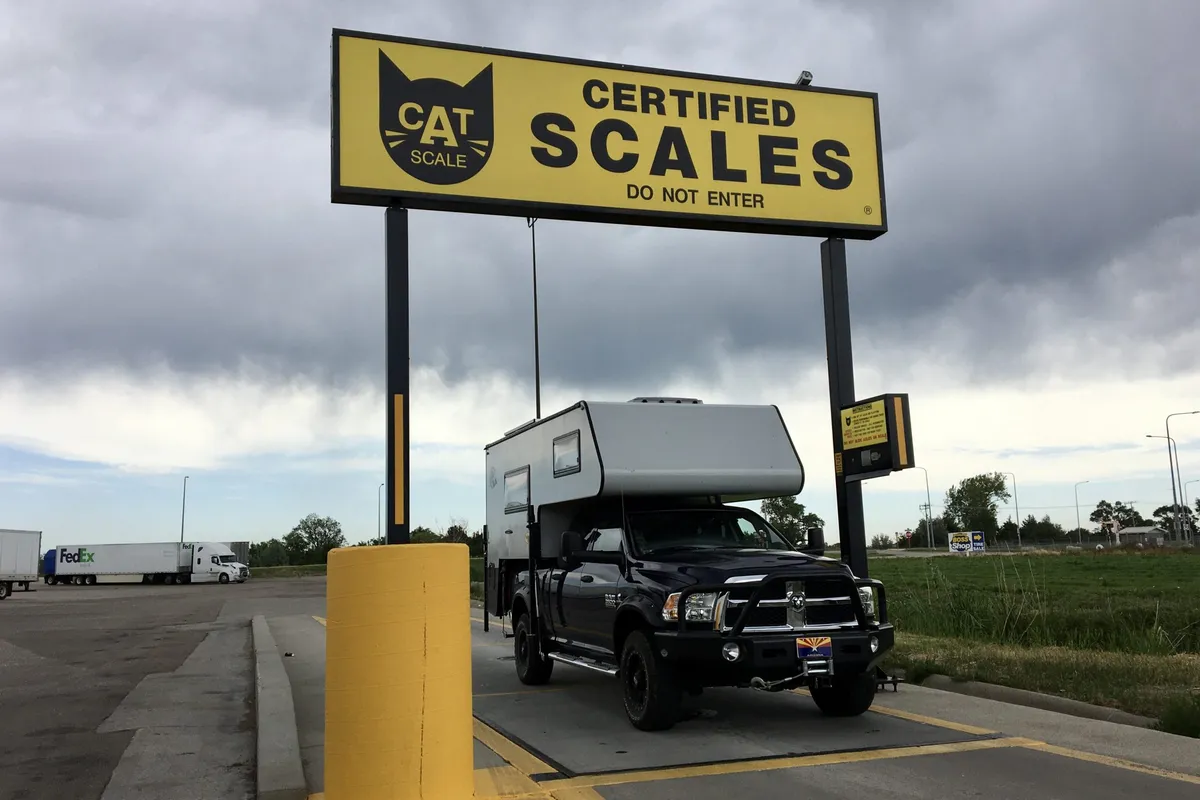
Math gets you close. A scale ticket gets you the truth. A CAT Scale is a certified truck scale found at truck stops across the country, more than 2,075 locations in 47 states and seven Canadian provinces, and you can find the nearest one on CAT Scale’s locator. A first weigh costs around $13, and reweighs within 24 hours at the same scale run about $5.25 according to CAT Scale’s own reweigh policy. The Weigh My Truck app lets you pay and get the ticket on your phone without going inside.
For a slide-in truck camper, here is the three-pass method adapted from what trailer owners do:
Pass 1: the full travel setup. Truck and camper loaded exactly as you would leave for a trip: full fuel, water as you travel, all passengers, all gear, dog in the back seat. Position the truck so the front axle is on the first scale segment and the rear axle is on the second. Write down steer axle, drive axle, and gross weight.
Pass 2 (optional): tanks drained. Same as pass 1 but with fresh, grey, and black tanks empty. The difference between pass 1 and pass 2 tells you exactly what your water and waste weigh, which is useful if you are hunting for pounds to cut.
Pass 3: truck alone. Drop the camper somewhere safe, off the scale and out of the way, a corner of the lot, home, or the campground. Never unhook on the scale itself; truckers waiting behind you will not appreciate it. Weigh the truck with the same fuel level and passengers as pass 1, as close as you can manage.
Now the math that matters:
- Loaded camper weight = gross weight from pass 1 minus gross weight from pass 3.
- Your real payload used = everything you added, which the scale just measured directly.
- Check gross weight from pass 1 against your GVWR. It must be under.
- Check the drive axle weight against your rear Gross Axle Weight Rating (GAWR), printed on the same door-jamb certification label. Truck campers load the rear axle hard, and the rear GAWR is often the real limiter even when total GVWR looks fine.
Go when the truck stop is not busy, keep each axle on its own scale segment, and do not block the fuel island or the scale while you sort out the camper. Owners in truck camper forums call the scale ticket the moment of truth, and more than a few describe the sinking feeling of watching the numbers print out over their sticker. In one long-running forum thread, an owner with a commercial license and 10,000-plus miles of camper travel estimated that the majority of truck camper rigs he sees on the road are running at or over their rated payload. Do not be a statistic. Thirteen dollars and twenty minutes buys certainty.
What to Do If You Are Over Your Payload
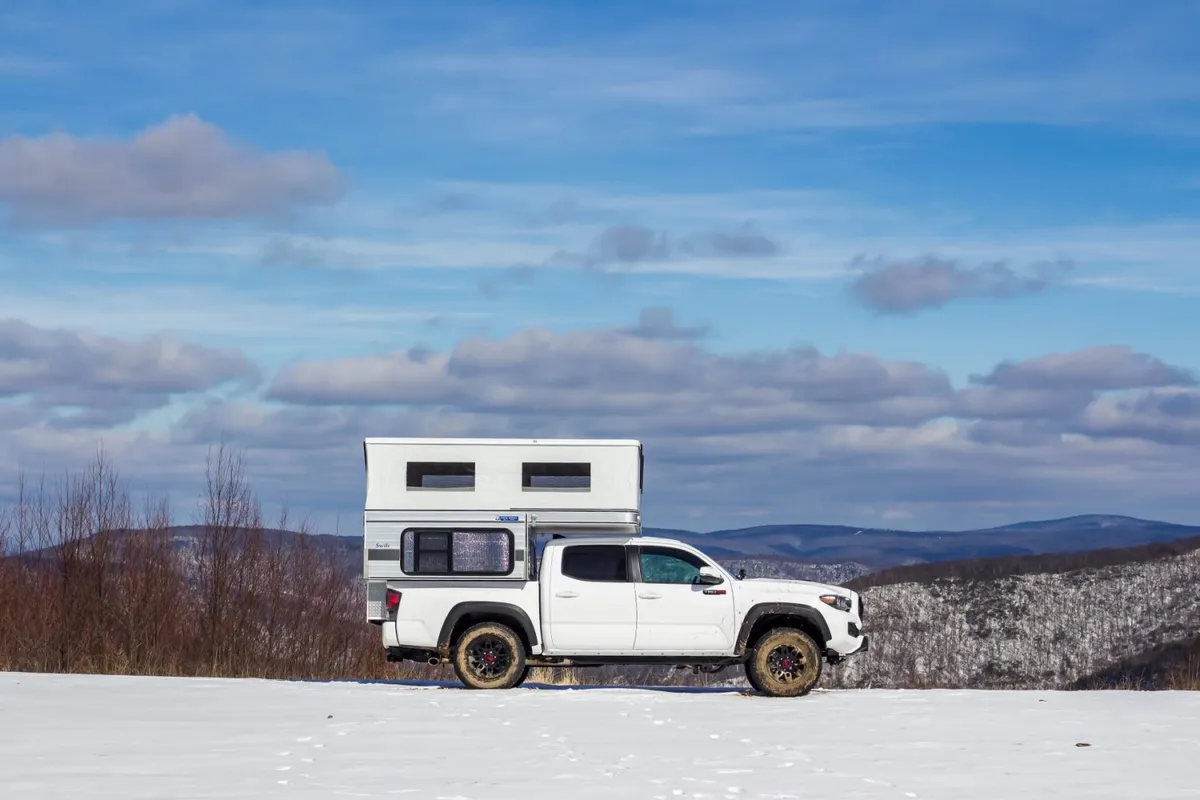
Finding out you are over is actually the good outcome, because now you can fix it before it costs you. Here are the levers that actually work, in order of pain:
Carry less water. Water is the easiest dial on the whole worksheet. At 8.34 pounds per gallon, the difference between a full 30-gallon tank and 10 gallons is about 167 pounds. Fill up near camp instead of at home.
Shed the heavy electrical. As mentioned above, lithium batteries weigh far less than the lead-acid pair most campers ship with. It is not a cheap swap, but it buys back meaningful payload and better performance at the same time.
Consider a lighter camper. This is the big one. Pop-up campers are the classic answer when payload is tight: you give up some insulation and headroom, but you can save a thousand pounds or more versus a comparable hard-side. The Four Wheel Camper Fleet vs. Swift vs. Hawk breakdown is a good place to start comparing. Older, simpler used campers are often lighter too, and easier on the wallet: see the budget truck campers under $15,000 roundup. If you run a midsize truck like a Gladiator, this is not optional: stick to ultralight pop-ups, as the Jeep Gladiator camper guide explains.
Audit the “just in case” gear. Most of us pack for fears, not trips. The third toolbox, the firewood you could buy at camp, the full wardrobe for a long weekend. A ruthless pass through the storage compartments routinely finds 50 to 100 pounds.
What does NOT work: suspension upgrades. Airbags, Timbrens, helper springs, heavier shocks, and load-range-E tires all improve how the truck rides and handles a heavy camper. None of them change your GVWR, your GAWR, or the number on the door-jamb sticker. Your legal payload is set by the manufacturer, not by your spring rate. This is the most repeated myth in every truck camper group, and believing it is how people end up thousands of pounds over while insisting the truck “handles it fine.”
If none of the levers get you under, the combination is wrong. Sell the camper, not the truck, or accept that you need more truck. An overloaded rig brakes longer, steers worse, and wears tires, bearings, and brakes faster, and none of that shows up until the moment you need it most.
Truck Camper Payload Worksheet: Run Your Own Numbers
Plug your own numbers into the worksheet below. It does the same math as the step-by-step section above: camper dry weight plus options, water at 8.34 pounds per gallon, propane at 4.24 pounds per gallon, gear, and people, compared against your door-jamb payload.
Truck Camper Payload Worksheet
Enter your numbers in pounds, except water and propane which you enter in gallons. The worksheet converts them automatically.
Run the worksheet before you buy, not after. If the numbers are close, assume they are worse than they look: real trips always weigh more than the plan. And whatever the worksheet says, a twenty-minute stop at a CAT Scale is the final word.
Frequently Asked Questions
Does payload include the driver and passengers?
Yes. The door-jamb payload number assumes a full tank of fuel but zero people and zero cargo. Every occupant, including you, plus pets, counts against it. This is the single most common mistake in payload math: people add up the camper and gear and forget the 350 pounds of humans in the cab.
Do airbags or helper springs increase my payload?
No. Airbags, Timbrens, SumoSprings, and helper springs improve ride quality and reduce sag, but they do not change your GVWR, your axle ratings, or the payload number on the door-jamb sticker. Your legal limit is set by the manufacturer, not by your suspension. Suspension upgrades are fine for handling; they are not a license to carry more.
Should I use the camper's dry weight or loaded weight?
Loaded weight, always. Dry weight typically excludes factory and dealer options like the air conditioner and awning, and it excludes water, propane, batteries, food, and gear. Those extras routinely add 1,000 pounds or more to a hard-side camper. If a seller only quotes dry weight, add your realistic extras before comparing to your truck.
What actually happens if I am a little over my payload?
The ratings are the manufacturer's certified limits, and exceeding them degrades braking, steering, and tire safety margins. I am not a lawyer, but owners in RV forums consistently warn that if you are in a crash while knowingly overloaded, expect your weights to become part of the conversation. The scale does not care about "close," and neither does physics. Get under the number and give yourself a buffer.
Where exactly do I find my truck's payload number?
Open the driver's door and look at the Tire and Loading Information placard on the door jamb or B-pillar. It states "The combined weight of occupants and cargo should never exceed XXX lbs." That is your payload. Also check the glovebox: some trucks carry a separate slide-in camper loading label with its own cargo weight rating, which can be lower than the door-jamb number.
How much do water and propane really weigh?
A gallon of water weighs 8.34 pounds, so 30 gallons is about 250 pounds. A gallon of liquid propane weighs about 4.24 pounds; a full 20-pound cylinder holds roughly 4.7 gallons of fuel (about 20 pounds) plus the steel tank at around 17 pounds empty. Water is almost always the heavier of the two and the easiest weight to adjust trip by trip.