
Lance 650 vs 825 vs 865: Real Loaded Weights vs. Brochure Numbers
If you are cross-shopping the Lance 650 vs 825, you have probably already noticed the brochure numbers look almost identical — and you are right to be suspicious. Lance’s own current lineup lists the 650 at 1,813 lbs dry and the 825 at 1,795 lbs dry, which means the bigger camper is, on paper, the lighter one. The 865 sits at 2,012 lbs dry, and owners will tell you that number has about as much to do with your real-world rig as the sticker price has to do with what you actually pay.
I have spent years watching buyers pick between these three, and the decision almost never comes down to the brochure. It comes down to what your truck’s door sticker actually allows, what the camper really weighs once wet and loaded, and the small lived-in differences — the bathroom sink, the oven, the dinette layout — that you will notice every day you own it. Here is the honest version, with real scale numbers from owners who weighed their rigs.
Lance 650 vs 825: The Quick Verdict
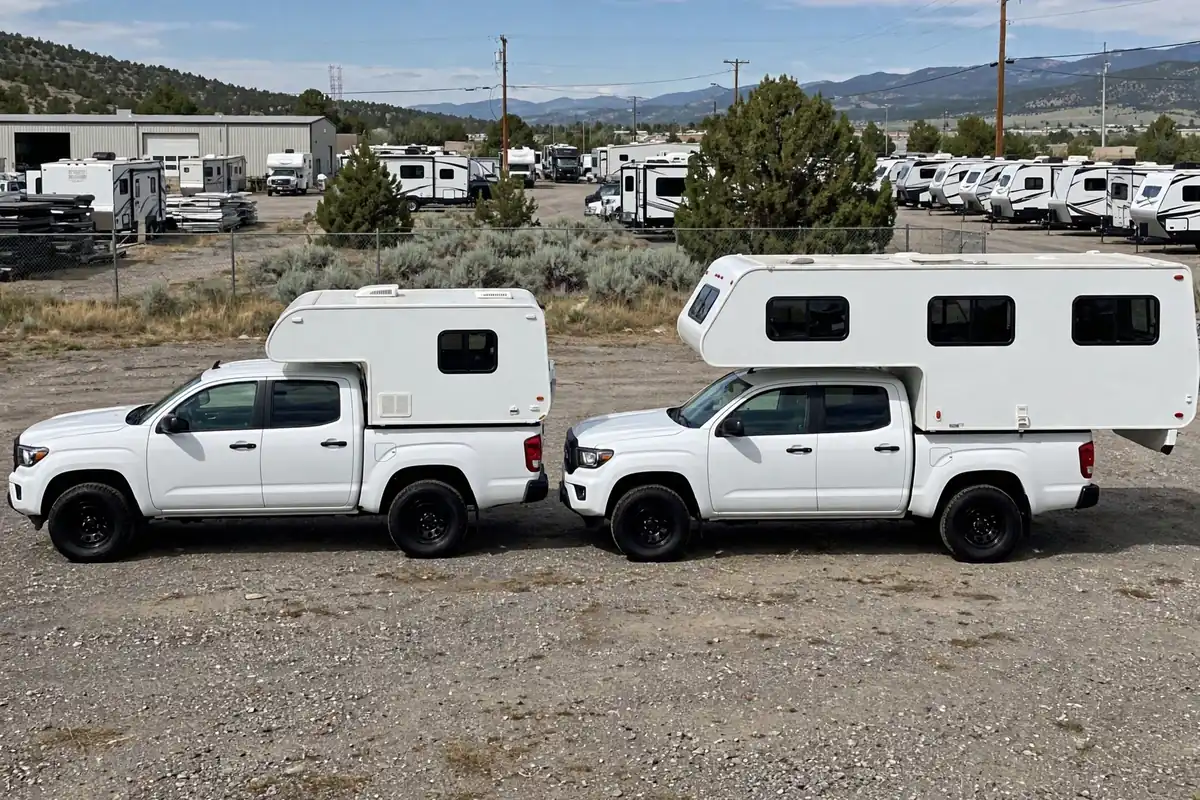
All three are short-bed campers that Lance rates for 250/2500-series trucks and up. All three skip the slide-out. But they are built for different buyers.
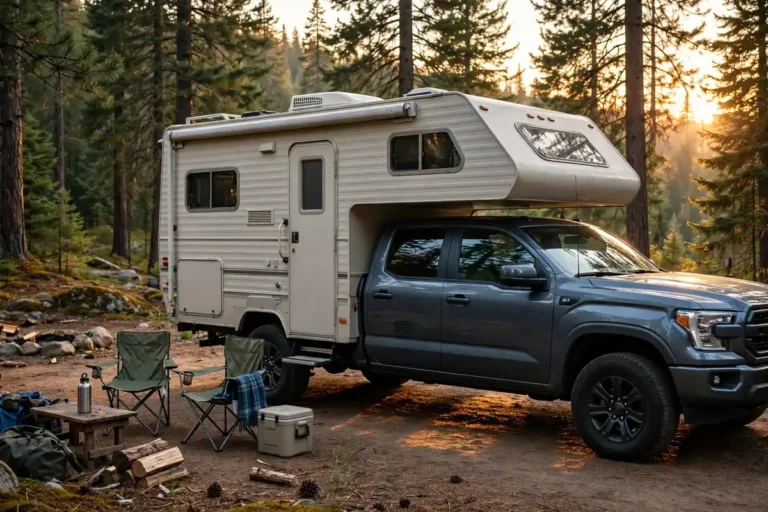
The Lance 650 is the smallest footprint — just 6 ft 10 in of floor length — with the tallest interior at 81 inches of headroom. It sleeps three. Think of it as the couple’s camper: compact, tall inside, and the only one of the three that fits the true lightweight conversation (a full walkthrough of the 650’s layout is worth a look if you are close to deciding).
The Lance 825 is the odd one: nearly two feet more floor length than the 650, sleeps four or five, and yet Lance’s current brochure lists it 18 pounds LIGHTER dry than the 650. It is the family-value play — more room, more sleeping capacity, barely more brochure weight.
The Lance 865 is the step-up unit: a bathroom sink in the wet bath, an available three-burner range with a 17-inch oven, a standard overhead cabinet bunk, and a pantry the other two do not get. It sleeps five and it is the one that starts pushing 3/4-ton trucks toward their limits.
If you only read the brochure, the 650 and 825 look interchangeable and the 865 looks like a modest step up. Once you look at wet weights and owner scale tickets, the gaps get much bigger — and the truck requirements change with them.
Brochure vs. Scale Weights: All Three Models
Here is the table I wish every dealer handed out. Brochure numbers come from lancecamper.com’s current lineup and Lance’s own spec sheets; the loaded figures are what owners report once the camper is wet and packed.
| Lance 650 | Lance 825 | Lance 865 | |
|---|---|---|---|
| Brochure dry weight (2026) | 1,813 lbs | 1,795 lbs | 2,012 lbs |
| Brochure wet weight | 2,016 lbs | 2,113 lbs | 2,329 lbs |
| Fresh / gray / black tanks | 22 / 15 / 16 gal | 30 / 13 / 14 gal | 30 / 14 / 13 gal |
| Floor length | 6’10” | 8’6″ | 8’7″ |
| Interior height | 81″ | 77″ | 77″ |
| Sleeps | 3 | 4–5 | 5 |
| Owner-reported loaded weight | ~2,300–2,500 lbs | ~2,500–2,800 lbs | 2,600–3,000+ lbs |
A few notes on where those numbers come from, because the sourcing matters. The dry weights are straight off Lance’s current truck camper lineup page. The 650 and 825 wet weights come from 2025 dealer spec sheets (wet meaning full fresh water, full propane, and the water heater filled — still zero cargo). The 865 wet weight of 2,329 comes from Lance’s own 2017 spec brochure, and it lines up with the current 2,012-lb dry figure: add 30 gallons of water at 8.34 lbs a gallon plus propane and the water heater and you land right about there. One 2024 dealer sheet showed an optioned 865 at 2,297 dry / 2,615 wet — options add up fast, before you load a single sleeping bag.
The loaded row is where I have to be straight with you: these are ranges built from owner reports, not a clean spec sheet, because no manufacturer publishes them. But the pattern is consistent, and the stories behind them are worth hearing.
What Owners Report on the Scale
The single most-quoted line I see in the truck camper forums is from a Good Sam owner of an older 845 — the 865’s predecessor in the same size class. His rig weighed “about 1800 lbs” on paper. After batteries, water, propane, food, and gear, it came in around 3,000 lbs on his GMC 2500HD, leaving him roughly 350 lbs over his payload rating. His summary: “Dry weight is not real weight.”
Another Good Sam owner in the same size class actually drove to a CAT scale. His camper’s factory sticker said it left the factory under 2,700 lbs. On the scale — with the battery, roof rack, AC, and microwave aboard but the holding tanks empty and no food or gear yet — it weighed 3,200 lbs. Fully loaded, he figures nearly 4,000 lbs on the rear axle. His fix: SuperSprings on the rear axle (about 1,400 lbs of added spring capacity) and Nitto tires rated 3,750 lbs at 80 PSI. His advice: do not trust the published dry weights, because manufacturers publish the lightest number they can sell.
The 825 is not immune either. One owner on iRV2 runs his Lance 825 — brochure dry weight “only ~1800 lbs” — on an F-350 with nearly 4,500 lbs of payload, and even that truck runs slightly overweight, by under 100 lbs, once the 30-gallon fresh tank is full. That is a one-ton truck maxed out by a camper Lance markets in the 1,700s.
And the 865 on a 3/4-ton is the tightest squeeze of all. On the RV Forum, an owner describes his 2011 865 (dry 1,830, wet 2,320) on a GMC Sierra 2500 with a 2,964-lb door-sticker payload. After himself, his partner, their dog, a full tank of gas, and a 55-lb generator, he had less than 200 lbs of margin left for clothes, food, and drinking water: 644 pounds of theoretical margin “won’t go far at all.”
Four owners, four different forums, one identical lesson. Add 600 to 900 lbs to whatever the brochure says, then do your math. If you want to run your own numbers properly, walk through it with a truck camper payload calculator guide and your truck’s door sticker before you sign anything — the brochure is a starting rumor, not a specification.
Matching the Camper to Your Truck

Here is where the Lance 650 vs 825 debate actually gets settled, and it has almost nothing to do with the campers themselves. It is about your truck.
Lance rates all three for 250/2500-series trucks and up, and for the 865 that is genuinely good advice. But the 650’s marketing has always flirted with the half-ton crowd — there are dealer videos calling it the most popular Lance for F-150s — and this is where owners push back hard. One Good Sam thread warns buyers not to trust the truck-filter tool on Lance’s own website, noting that a camper with a 3,000-lb dry weight becomes a 3,800–4,000-lb real weight, which will bury a truck with a 2,700-lb payload. If you are determined to run a half-ton, the only honest path is a max-payload configuration and your real door-sticker number in hand; our F-150 truck camper payload guide walks through why most half-tons are disqualified before they start.
The diesel question comes up constantly, and owners have a clear-eyed take. The same iRV2 owner running the 825 on an F-350 deliberately chose the gas 7.3L V8 over the diesel — not for the money, but because the diesel engine’s extra weight ate so much payload it erased the towing advantage. If your heart is set on a diesel 2500, read up on the Ram 2500 diesel payload trap before you order — it is the single most common way buyers accidentally disqualify their own truck.
Two more owner-tested lessons. First, 4×4, crew cabs, and option packages all subtract from payload — always read your specific door sticker, never the commercial’s number. Second, when you are at the edge, tires and suspension are the fix owners actually buy: the Good Sam owner’s SuperSprings-and-Nitto recipe is representative, and if your loaded rig porpoises down the highway, the fixes are in our truck camper porpoising guide.
One more practical note: tie your camper down like you mean it — frame-mounted tie-downs and real turnbuckles are non-negotiable at these weights (comparison here).
Lived-In Differences That Decide the Purchase
Weights get you to the right truck. These are the differences that decide which camper you will actually enjoy owning — the stuff owners bring up in every comparison thread, and the things no spec sheet emphasizes.
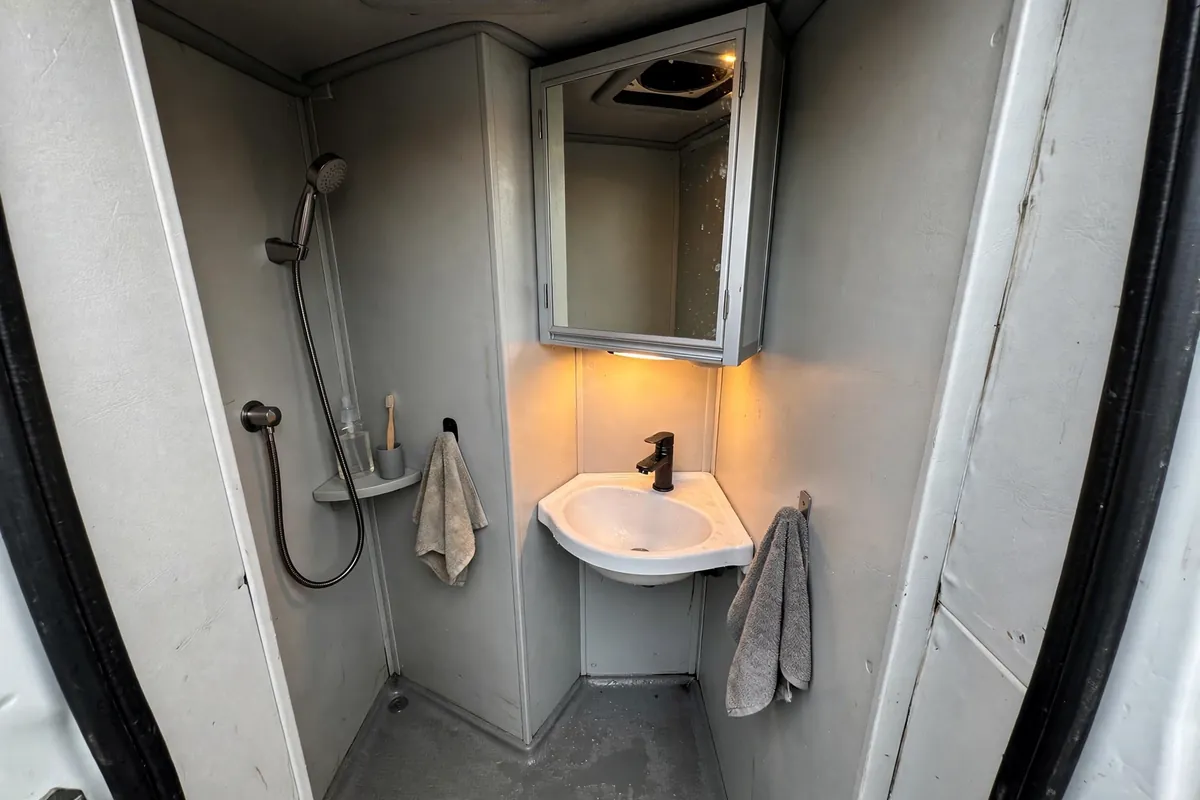
The bathroom sink. This is the 865’s quiet killer feature. Its wet bath includes a real bathroom sink with a medicine cabinet and mirror — standard equipment. The 650 and 825 wet baths do not have one. It sounds minor until you have spent a week brushing your teeth over the kitchen sink while your partner cooks breakfast. For couples, this alone has decided more 865 purchases than any weight table.
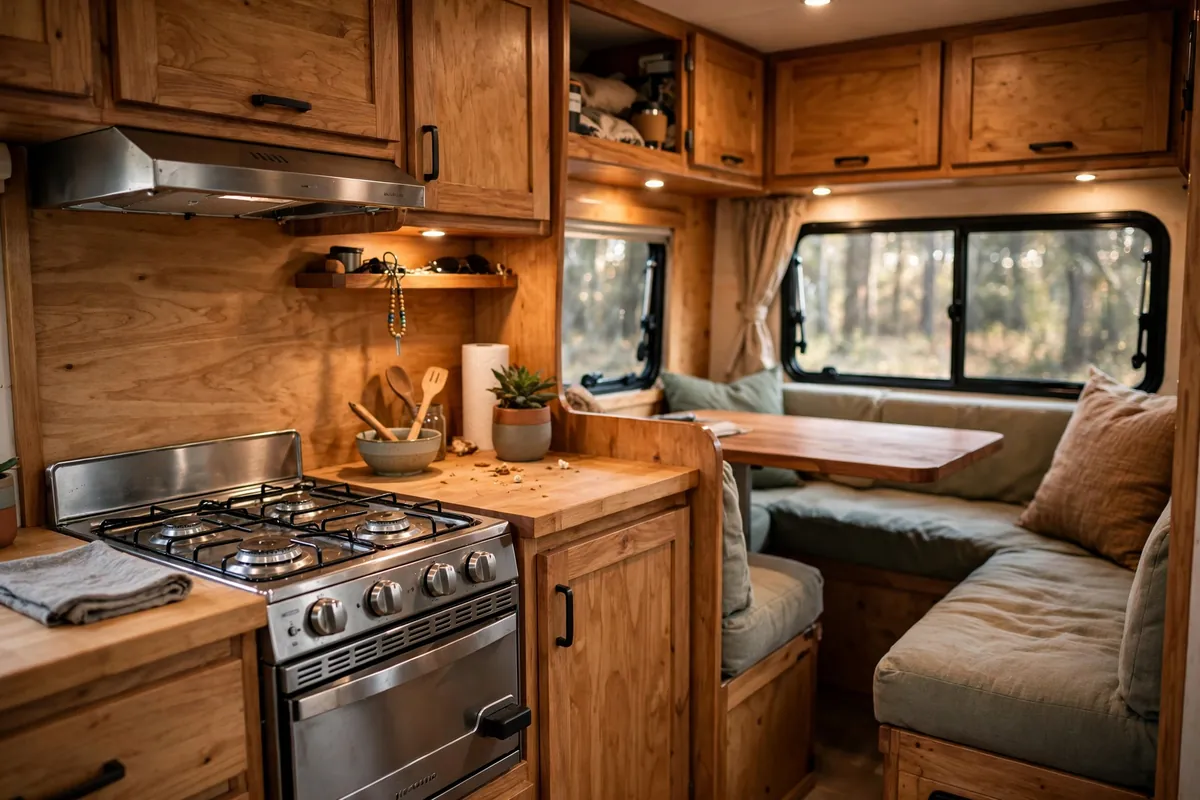
The oven. The 865 is, in one dealer’s words, Lance’s lightest offering with an oven — an available stainless three-burner range with a 17-inch oven. The 650 and 825 both come with a two-burner cooktop and no oven option. Cold-weather campers should note the related split: the 825 and 865 have enclosed, insulated, and heated holding tanks; the 650 does not — its tankless water heater is convenient, but the 650 is the least four-season of the three.
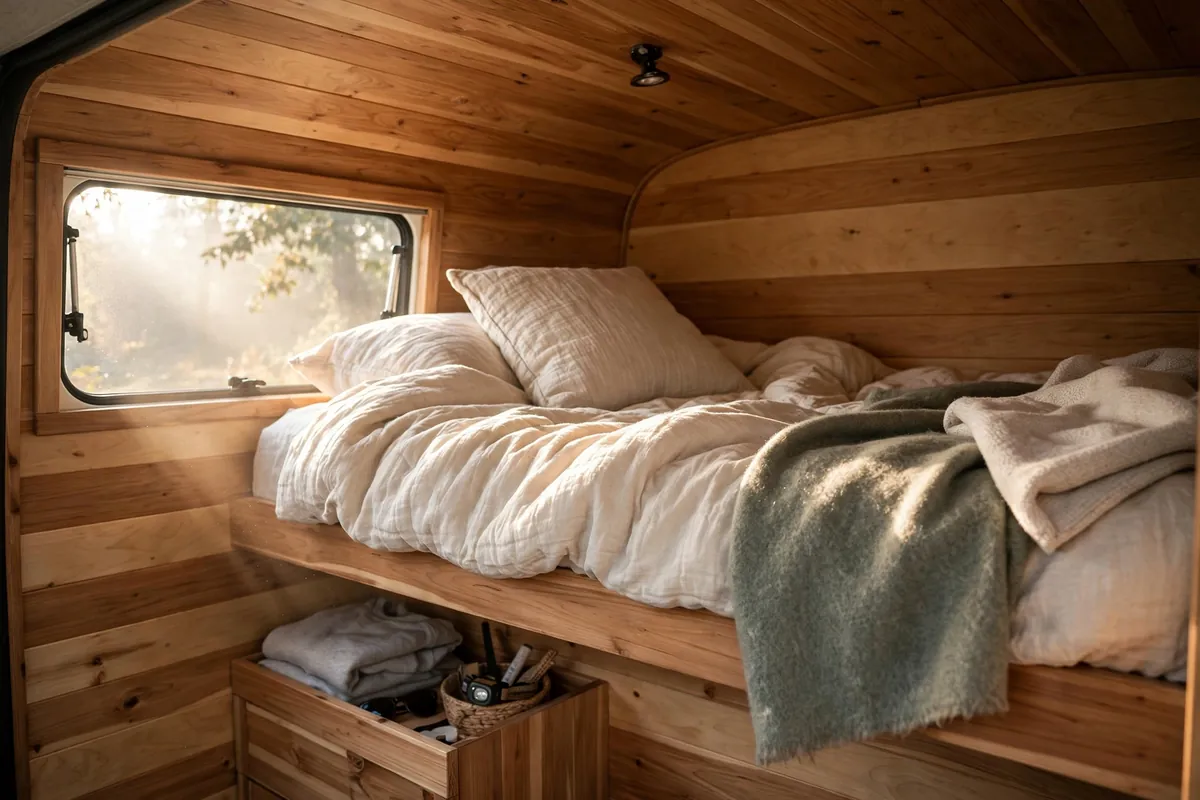
The dinette and the bunk. All three have a U-shaped dinette, but they sleep differently. The 650’s dinette folds down to make the third bed. The 825’s dinette converts too, and the overhead cabinet bunk is available as an option, which is how it reaches its 4-to-5 sleeper rating. The 865 gets the overhead cabinet bunk as standard, plus a pantry with adjustable shelves neither of the smaller campers has. Net: the 865 genuinely sleeps five without nightly furniture Tetris, the 825 can get there with the right options box checked, and the 650 is a two-adults-plus-one-kid camper.
Height and tanks. The 650 is the tall one inside — 81 inches of interior height versus 77 in both the 825 and 865. If you are over six feet, go stand in all three; the 650 feels noticeably roomier overhead. On tanks, the 825 and 865 carry 30 gallons of fresh water to the 650’s 22, but the 825’s 13-gallon gray tank is the weak link owners complain about most — one buyer worried he would be emptying gray water daily, and forum owners’ workarounds are pure lived experience: outdoor showers whenever the weather allows, and pouring dishwater into the toilet to spare the gray tank.
The little things. The 650 skips a few appointments the other two get: no range hood, no backsplash, a hinged bath door instead of the sliding door on the 825 and 865, and a standard queen mattress rather than the pillow-top innerspring in the bigger two. None is a dealbreaker alone; together they are why the 650 feels like the value model and the 865 feels like the premium one. Dealer-asked prices for 2026 650s have been advertised under $40,000 with the 825 and 865 stepping up from there — always verify current pricing with your dealer rather than trusting anything online, including this.
Which One Should You Buy?
Buy the 650 if: you are a couple (plus maybe one small kid), headroom matters more than floor space, and your truck’s payload is the binding constraint. It is the honest lightweight pick of the three. Just know you are giving up the oven, the bathroom sink, heated tanks, and real sleeping capacity.
Buy the 825 if: you want the most interior for the least brochure weight — 30 gallons of fresh water and family-sized sleeping in a package Lance lists under 1,800 lbs dry. It is the value sweet spot if your truck can handle a loaded ~2,600–2,800 lbs and you do not need an oven or a bathroom sink. Watch the 13-gallon gray tank if you boondock.
Buy the 865 if: you want the most house-like of the three — bathroom sink, optional oven, standard bunk, pantry — and you have a 3/4-ton or 1-ton truck with the payload to carry a real-world 2,600–3,000+ lbs. Just do not kid yourself that it is a lightweight camper because the brochure says 2,012. The scale does not care what the brochure says.
A CAT scale costs less than fifteen dollars and takes ten minutes, and it is the only number in this entire conversation that cannot lie to you.
FAQs
Can a half-ton truck carry a Lance 650?
Lance markets the 650 toward half-tons, and its 1,813-lb brochure dry weight makes that look plausible. In practice, a loaded 650 runs roughly 2,300–2,500 lbs, which exceeds the real-world payload of most half-ton configurations. It can work on a max-payload-package half-ton with a verified door-sticker number, but most owners recommend a 3/4-ton for comfortable margin. This is not legal advice — check your specific truck’s payload sticker and stay within it.
What is the real loaded weight of a Lance 865?
The brochure lists 2,012 lbs dry (2026 lineup) and about 2,329 lbs wet. Owners report 2,600–2,700 lbs loaded with gear is typical, and scale tickets in this size class run higher: one Good Sam owner CAT-scaled a predecessor-class camper at 3,200 lbs before food, water, or gear, estimating nearly 4,000 lbs fully trip-loaded. Plan your truck around 3,000 lbs, not 2,012.
Lance 650 vs 825 — which is actually lighter?
The 825, on paper: 1,795 lbs dry versus 1,813 for the 650. Wet, the gap flips — 2,016 lbs (650) versus 2,113 (825), thanks to the 825’s larger 30-gallon fresh tank. Loaded, owners put both in the mid-2,000s, with the 825 running a few hundred pounds heavier in practice.
Does the Lance 865 have an oven?
An oven is available on the 865 — a stainless three-burner range with a 17-inch oven offered as an option, making it Lance’s lightest camper available with an oven. The 650 and 825 come with a two-burner cooktop only. If baking matters to you, confirm the oven is on the specific unit’s build sheet, since it is optional equipment, not standard.
Can I put a Lance 865 on a 3/4-ton truck?
Yes, and many owners do — Lance rates the 865 for 250/2500-series trucks. But the margin is thin: one owner with an 865 on a GMC Sierra 2500 (2,964-lb payload) reports less than 200 lbs of remaining capacity after passengers, a dog, and a generator, before food and clothes. A gas-engine 3/4-ton typically gives you more usable payload than the diesel version. Verify your door sticker and consider weighing the loaded rig.
Which sleeps more people, the 825 or the 865?
The 865 sleeps five as standard — cabover queen, U-shaped dinette conversion, and standard overhead cabinet bunk. The 825 is rated 4–5, reaching five only with the optional overhead bunk ordered. The 650 sleeps three. For a family of four or five, the 865 is the only one that gets there without an options-box gamble.
Weights and specifications change by model year and installed options — verify the current numbers on lancecamper.com and your dealer’s spec sheet for the exact unit you are buying. Never exceed your truck’s GVWR, GAWR, or tire load ratings; this article is owner-experience information, not engineering or legal advice.