Do You Need to Register a Truck Camper? Title, Plates, and the DMV Truth
The afternoon my first truck camper arrived, I stood in my driveway wondering where the plates go. There were none — and no title in the seller’s envelope either, just a bill of sale and a handshake. So, do you need to register a truck camper? It depends entirely on where you live — the DMV in one state will tell you the opposite of the one next door. This guide sorts out title, registration, and plates, shows you how to check your own state’s rule in ten minutes, and covers the paperwork that saves headaches when you buy used or cross state lines.
The Short Answer: Do You Need to Register a Truck Camper?
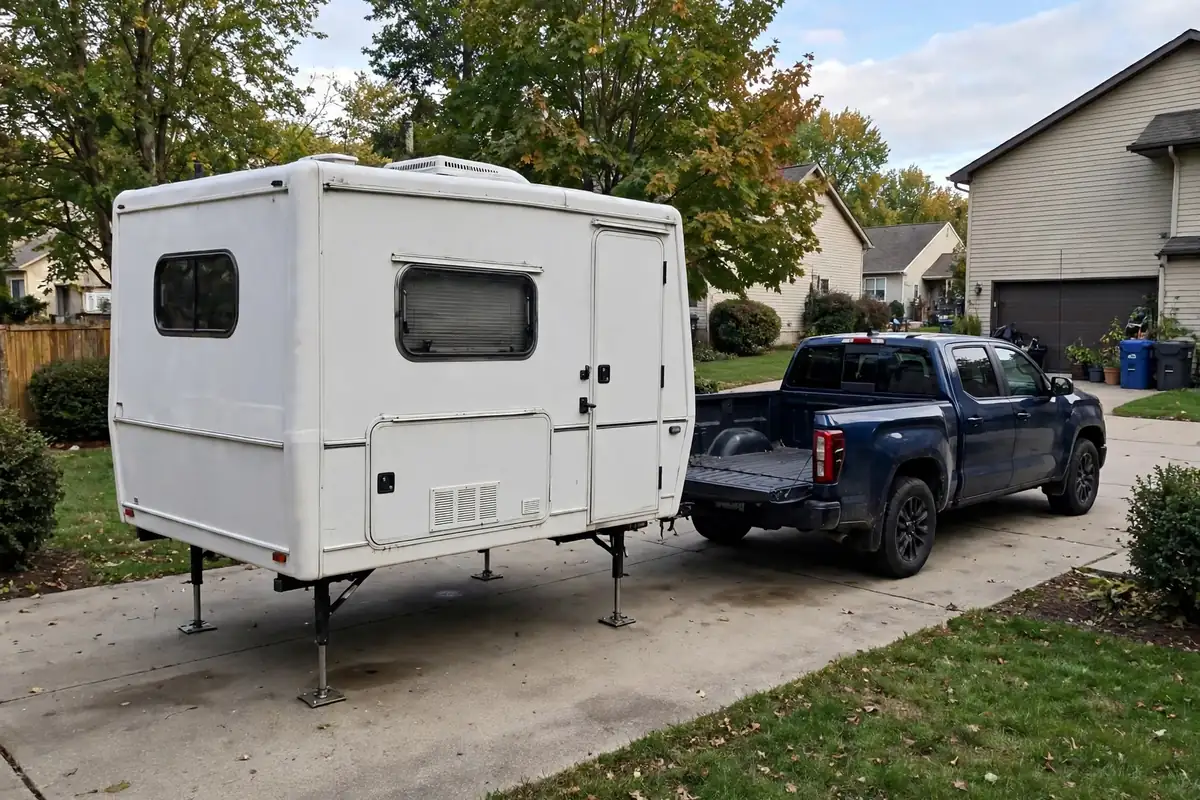
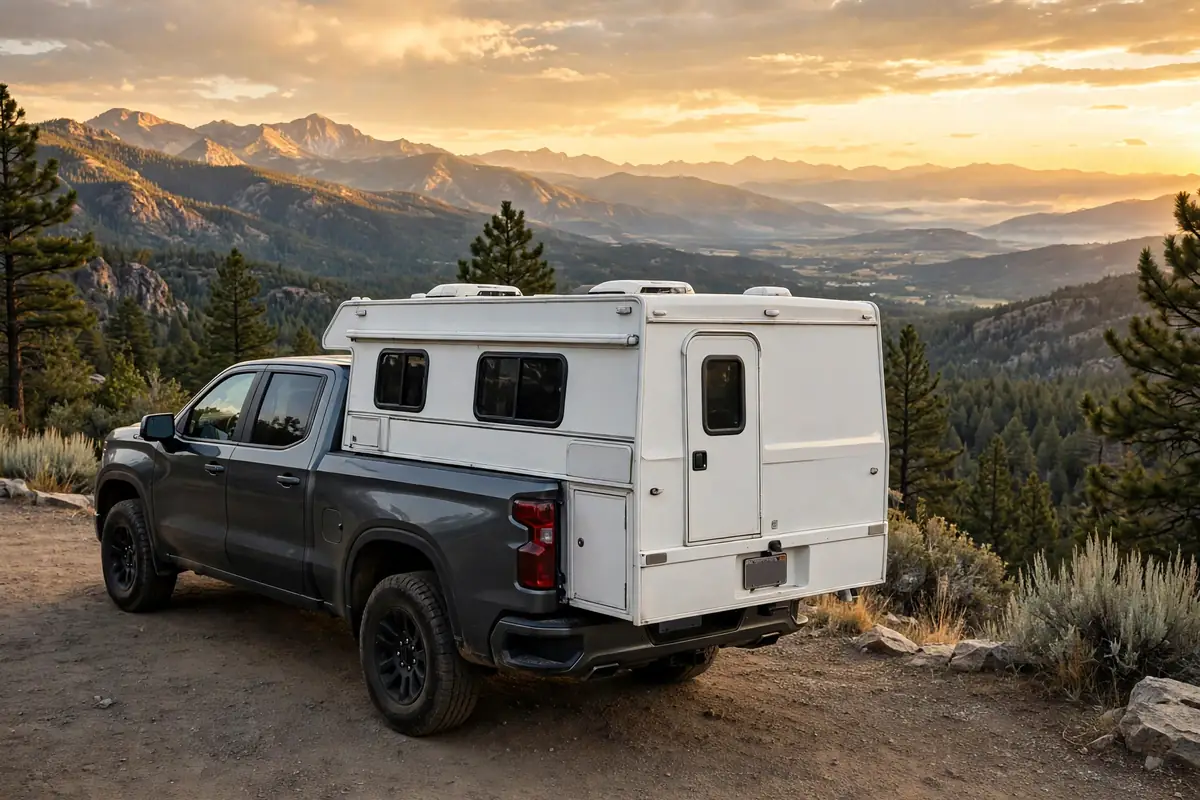
For most owners in most states, no. A slide-in truck camper — the kind that drops into the bed and comes back off with jacks — is legally cargo in most states, not a vehicle. It has no wheels, no engine, and no steering, and it rides on a truck that is already titled, registered, and plated. So in most states there is no separate truck camper registration, title, or second license plate.
But a handful of states treat a truck camper as a vehicle and require a title, registration, and its own plate. An RVIA survey put it at roughly 8 states requiring registration and 9 or 10 a title — but it’s from 2017 and the lists online disagree, so I verified three states from official sources and will name only those. For every other state, check your own DMV.
General information from an owner who’s been through this, not legal advice. If a DMV clerk and a blog post disagree, the clerk wins.
Why Most States Call Your Camper “Cargo”
The logic is simple. A travel trailer has its own axle and wheels and rolls down the highway as a separate vehicle, so it gets its own title and plate. A slide-in truck camper has none of that: loaded, the truck carries 100% of its weight, and off the truck it’s a box on jacks that can’t move or be towed.
So most states classify it like a load of lumber in the bed: personal property, or cargo. Your truck’s registration covers the combination — which is why a dealer or seller may have looked blank when you asked for the title. In their state, there may never have been one.
The States That Do Require a Title and Registration
I verified two states from their own official DMV pages — the only two I’ll name with confidence.
Washington requires a truck camper to be titled and registered separately from the truck. The Department of Licensing is blunt: state law no longer recognizes a permanently attached camper and pickup as a motorhome — even bolted down, camper and truck need separate titles and registrations. Campers 10 years old or newer also need a Recreational Vehicle Data/Use Tax form. (Washington State Department of Licensing — Registering campers)
Oregon also titles and registers truck campers. Its DMV handbook defines a camper as a structure with a floor, built for human habitation or camping, designed to be mounted on a motor vehicle but not permanently attached — at least six feet long and 5½ feet high from floor to ceiling. Campers must meet the NFPA 1192, NFPA 501C, or ANSI A119.2 standard to be titled, and registration is based on length, valid for two years. (Oregon DMV — Title and Registration Handbook, Chapter L: Vehicle Types)
Beyond Washington and Oregon, guides and the RVIA survey agree a handful of other states require registration or titling, but disagree on which ones — so I won’t reprint a list as settled fact. The minority is roughly a fifth of the country; the check below settles whether your state is in it.
California: The Example That Confuses Everyone
California confuses people both ways — some think it requires full registration, others think it ignores campers entirely. Neither is quite right.
California does not require a separate title or registration for a slide-in truck camper. The DMV handbook says a one-axle camper is not a motor vehicle, and a pickup with a camper temporarily attached is registered as a commercial vehicle with the camper as a load — its value excluded from the vehicle license fee. (California DMV — Pickup With a Camper Attached)
But California adds two wrinkles. First, voluntary registration: under Health and Safety Code §18075.7, a truck camper may, at the owner’s request, be registered at sale, resale, or transfer, and the department will issue a title and registration card — usually because a lender or insurer wants a title, or the owner plans to sell into a state that requires one. (California Health and Safety Code §18075.7)
Second, a permanently attached camper is different: a pickup with a camper permanently attached meets the definition of a housecar and may be registered as a passenger vehicle. That can matter for money — California titles pickups as commercial vehicles with weight fees, and owners on the WanderTheWest forum report reclassifying to non-commercial plates cut their registration bill roughly in half. But removing the camper later means commercial registration and weight fees come due again.
Title vs. Registration vs. Plates: Three Different Things
People use these three words interchangeably; the DMV does not. A state can require one without the others:
- Title — the document proving who owns the camper. It ties a VIN or serial number to a named owner, and matters when you buy, sell, finance, or insure.
- Registration — the state’s permission to use the camper on public roads, renewed annually or every two years — what gets you a registration card and, where applicable, a plate.
- License plate — the physical plate. In registration states, the camper gets its own plate. In cargo states, there is no camper plate — but your truck’s plate still has to be visible (see below).
That split explains the odd combinations you’ll hear about. Check all three for your state.
How to Find Out Your Own State’s Rule in Ten Minutes
Don’t trust a forum post, a Facebook comment, or even this article as your final answer. Here’s the check that settles it:
- Search your state DMV’s own site for “truck camper.” Use the official .gov site, not a third-party DMV information site.
- Call the title office, not the general line — its clerks deal with camper titles weekly. Ask: “Is a slide-in truck camper titled and registered separately here, or treated as cargo?”
- Ask about your specific camper — some states draw lines by length, height, or axle. Oregon, for example, defines a camper by minimum dimensions.
- Get it in writing if it matters. If you’re buying or selling, ask the clerk for the statute or handbook page and save the link — you may need it when a different clerk tells you something different.
What Paperwork to Keep (Even If Your State Requires Nothing)
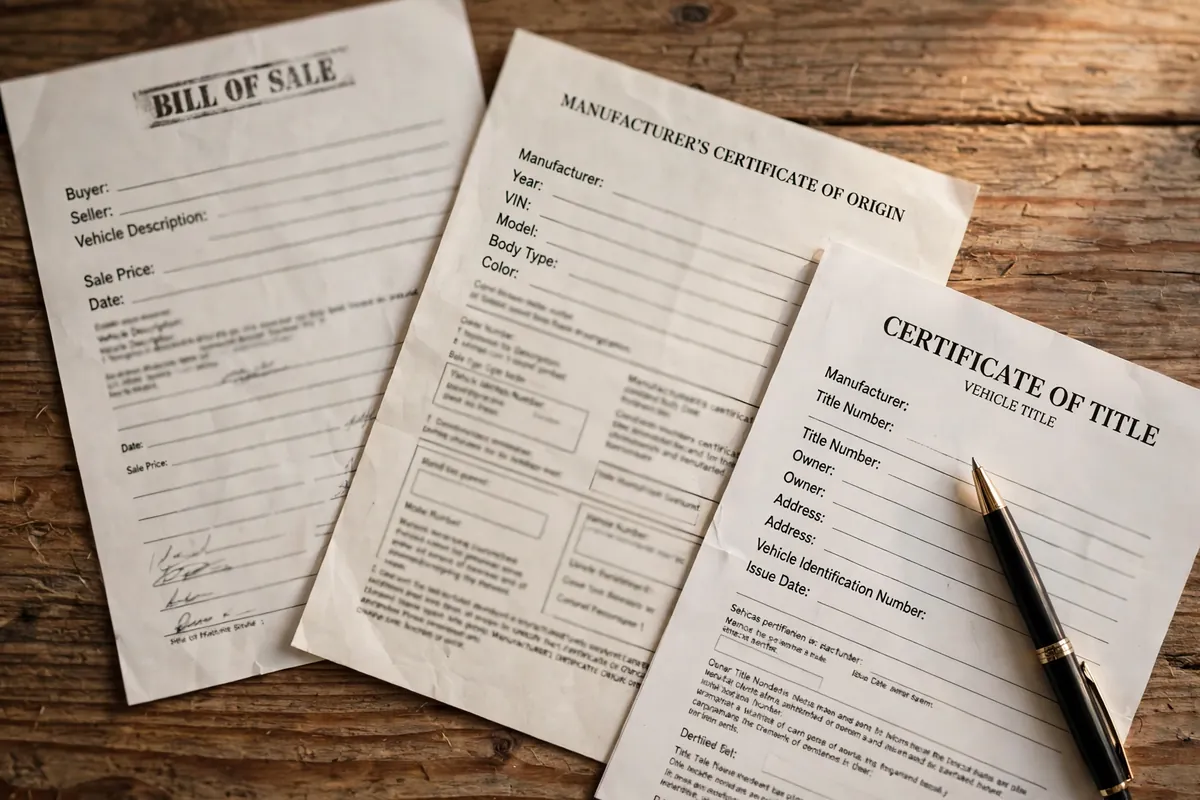
“No title required” doesn’t mean “no paperwork needed.” Keep a folder with everything below — it’s your ownership proof and what the next buyer will ask for.
- Bill of sale. Every purchase, even from a friend, even for cash. List buyer and seller names, date, price, and the camper’s make, model, year, and VIN or serial number, with both signatures. If your state doesn’t title campers, this paper is your ownership proof.
- Manufacturer’s Certificate of Origin (MCO/MSO). For a new camper, the dealer gives you this birth certificate — what a titling state converts into a title. Copy it before handing the original to any DMV.
- Prior title, if one exists. If the camper was ever titled, keep that title and get it signed over to you — a title history makes resale easier.
- VIN or serial number record. Photograph the VIN plate and record the number away from the camper. Many older or homemade units have no VIN, which alone can complicate titling.
- Loan and lien paperwork. A lien follows the camper, not the owner, and an unpaid one can block a transfer years later. If you’re financing, our guide to truck camper financing explains what lenders check.
One hard-learned rule: a bill of sale proves you paid someone money — not that they had the legal right to sell. On an iRV2 thread, a buyer found the camper he wanted, then learned the seller didn’t have the title yet because the previous owner’s bank loan had just been paid off and it was still in transit. He walked away rather than pay in full without the title in hand, and the replies backed him up: use a deposit with a written contract of sale, balance due on delivery of a clear title.
Buying a Used Truck Camper Across State Lines

This is where the patchwork bites. You live in a cargo state, find a camper in Washington or Oregon, and the seller hands you a title. Or the reverse: you live in a registration state, buy from a cargo state, and the seller has no title at all — just a bill of sale and a shrug.
Neither is a dealbreaker, but handle both before money changes hands:
- Buying from a title state into a no-title state: Take the signed-over title anyway, even if your state never asks for it — it’s the strongest ownership proof you’ll ever have.
- Buying from a no-title state into a title state: This is the harder direction. Call your DMV before you drive to see the camper and ask what they accept instead — usually a bill of sale plus the MSO, sometimes a VIN inspection or a bonded title. Don’t discover the answer after you’ve paid.
- Check for liens and theft before you pay. If it has a VIN, run the free NICB VINCheck and consider an NMVTIS report. A lien or theft report follows the camper, and “I just lost the title” should trigger extra scrutiny, not sympathy.
- Get a trip permit for the drive home. Owners on the FiberglassRV forum describe the catch-22: you can’t register until you own it, and can’t legally drive it home without plates. The fix is a temporary trip permit — Virginia sells a three-day permit online for a few dollars, Oregon offers a 10-day one. Check both states before travel day.
- Inspect before you commit, paperwork included. Murky paperwork deserves the same suspicion as a soft floor. Run through our used truck camper inspection checklist before you buy.
Selling instead? The same rules apply in reverse: know what your buyer needs from your state and have it ready. Our guide on how to sell a used truck camper covers pricing and the sale.
The Flatbed Camper Wrinkle
A slide-in camper comes off with jacks in twenty minutes. A flatbed camper is bolted to a tray, often with the bed itself replaced, and many owners never take it off. That permanence is what changes the legal treatment in some states.
California can classify a pickup with a permanently attached camper as a housecar. Washington says the opposite — permanence changes nothing, and camper and truck still need separate titles and registrations. Two states, two opposite answers, both official.
So if your camper is flatbed-mounted and effectively permanent, don’t assume slide-in rules apply. Tell the DMV exactly what you have — “flatbed-mounted, bolted on, not removed” — and ask whether that changes the classification. If you’re still deciding, our flatbed vs. slide-in comparison covers the practical differences beyond the paperwork.
Insurance: The Short Version
In most cargo states, the camper is typically covered under the truck’s policy or as an add-on — it’s legally a load on an insured truck. In states that title and register campers separately, it more likely needs its own policy or RV endorsement. Some insurers ask for a title even where the state doesn’t issue one — one reason some California owners register voluntarily.
Costs, coverage, claims, and what to do when insurer and DMV disagree are in our full truck camper insurance guide. Sort the title question first, then call your insurer.
What If You Get Pulled Over?
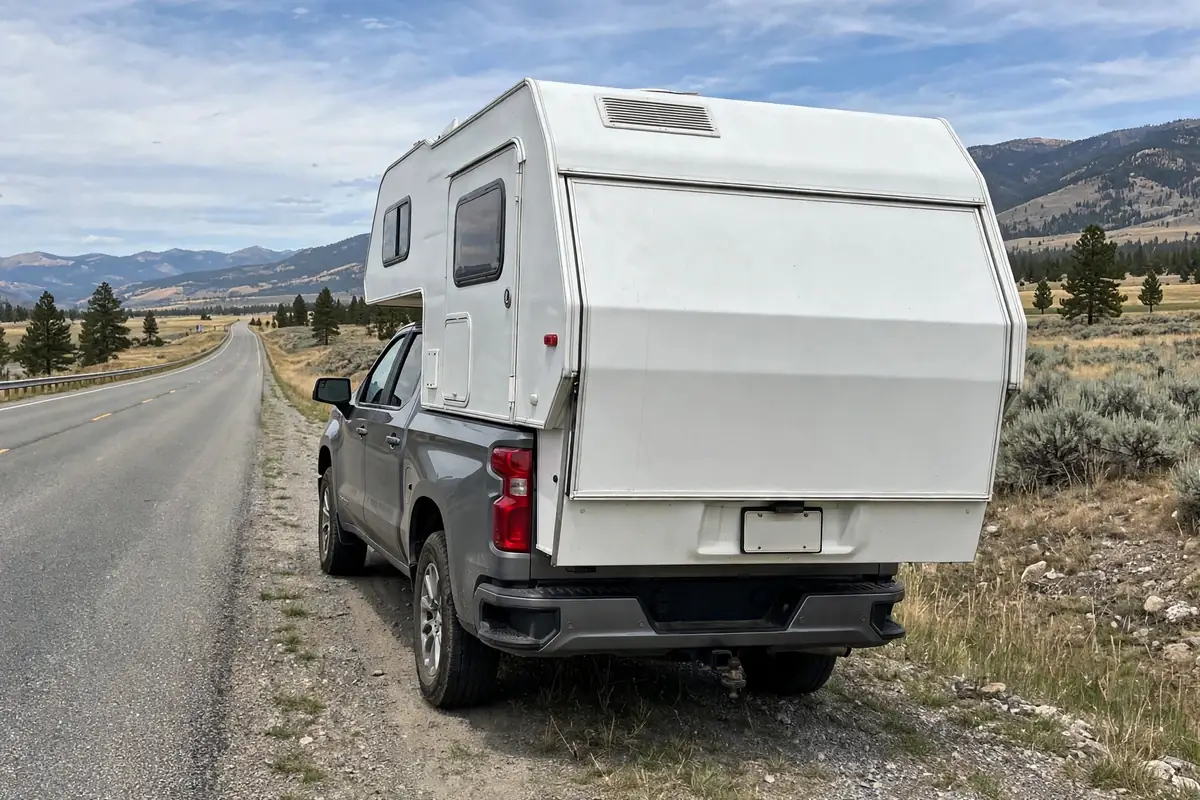
The most common roadside problem has nothing to do with titling. It’s the license plate you cannot see.
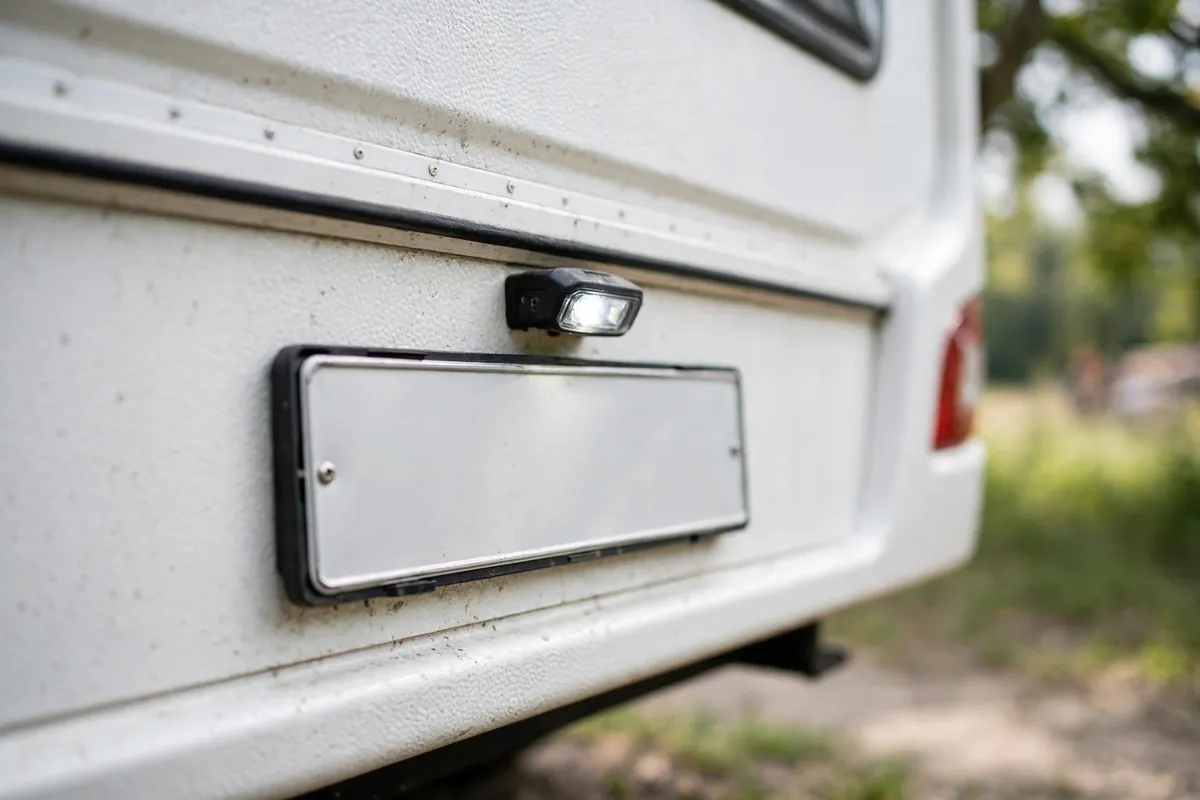
Many truck campers overhang the rear bumper by two or three feet, hiding the truck’s plate completely. Most states require the plate to be clearly visible from behind, and an obscured plate is an easy reason for a stop even if everything else is legal. Owners on iRV2 argue about this constantly: some have driven twenty years with a hidden plate and never been stopped; others point out it’s an infraction and a bored officer in a small town needs no better excuse. Both are true — so remove the excuse.
Keep this checklist in the glovebox:
- Truck registration and driver’s license — the officer is checking the truck.
- Camper paperwork. Bill of sale, title if you have one, or registration card in a title state. In a no-title state, the bill of sale proves the box on your truck is yours.
- Insurance card — the truck’s, plus anything covering the camper.
- A calm one-liner: “The camper is cargo in my home state — it isn’t titled separately.” That’s why you confirm your state’s rule before the trip.
- Fix the plate before the trip, not after the ticket. Move the truck’s plate to the camper’s rear mount and light — many have one — or carry a duplicate. Some states issue two plates; where they don’t, owners order a matching duplicate. One caveat: in New Mexico, per an owner who asked his MVD directly, the plate must stay on the truck by law even if the camper hides it. Check your state’s plate-display rule separately — it isn’t the same question as registration.
One more campground question: can someone ride in the camper while you drive? Separate state laws — covered in our guide to whether you can ride in a truck camper. Don’t assume a state that ignores your camper for registration ignores passengers inside it.
FAQ
Do you need to register a truck camper?
In most states, no. A slide-in truck camper is treated as cargo, not a vehicle, so it needs no separate registration, title, or plate — your truck’s registration covers it. But a handful, including Washington and Oregon, require the camper to be titled and registered separately. Check your own DMV.
Does a truck camper need a title?
It depends on your state. Roughly 9 or 10 states require a certificate of title, per an RVIA survey; the rest don’t. Where no title is required, a bill of sale and the manufacturer’s certificate of origin are your proof of ownership — keep both. A few states, including California, offer voluntary titling.
Does a truck camper need its own license plate?
Only in states that register truck campers separately. In most states the camper gets no plate — but your truck’s plate must still be visible from behind, and a camper overhang hiding it is the most common reason owners get stopped. Move the plate to the camper’s rear mount or display a duplicate where allowed.
I bought a used truck camper and the seller has no title. What do I do?
First, check whether your state requires a title — in most it doesn’t, and a detailed bill of sale is enough. If it does, call the DMV before paying and ask what they accept instead: usually a bill of sale plus the MSO, a VIN inspection, or a bonded title. Run the VIN through NICB VINCheck, and never pay in full without the title in hand.
Can I drive a truck camper home from another state without plates?
In a cargo state, yes — the camper is a load on your registered truck, and your bill of sale proves ownership. In a title-and-registration state, you generally need a temporary trip permit from the state you bought in or your home state — a few dollars, lasting three to ten days. Check before travel day.
What happens if my camper is permanently mounted on a flatbed?
Possibly. California can classify a pickup with a permanently attached camper as a housecar (passenger registration), while Washington requires separate titles and registrations regardless of permanence. Tell your DMV it’s flatbed-mounted and permanent.
Disclaimer: This article is general information, not legal advice. Registration, titling, and plate rules vary by state, change over time, and depend on your camper. Confirm current requirements with your own DMV before buying, selling, or traveling.