Truck Camper Solar Panels & Lithium Sizing Guide — How Big a System Do You Actually Need?
There’s a moment every new truck camper owner has — usually around day three of boondocking — when the fridge is humming, the fan is spinning, the phone is charging, and you glance at the battery monitor and think: how much of this can I actually run, and for how long?
Most people answer that question by buying stuff and hoping. But once you do the math one time, properly, the whole power system clicks into place. That’s this guide: the honest walkthrough of truck camper solar panels, battery sizing, and everything between them, built on real electrical math and checked against what full-timers actually run.
Whether you’re a weekend warrior or full-time truck camping, sizing comes down to three questions: how much power you use, how much battery stores it, and how much solar (plus backup charging) refills it.
Step 1: How much power you actually use (the worked example)
Everything starts with a power budget. The formula couldn’t be simpler:
Amps × Hours = Amp-hours (Ah) per day Amp-hours × Volts = Watt-hours (Wh) per day
Here’s a realistic daily budget for two people in a hard-side camper in shoulder season — not ultralight, not extravagant:
| Appliance | Typical draw | Daily use | Daily draw |
|---|---|---|---|
| 12V compressor fridge (50–65 qt) | 4.0 A while cycling | 9 h effective runtime* | 36 Ah |
| LED lights (6 fixtures) | 1.5 A total | 5 h | 7.5 Ah |
| Roof vent fan on medium | 2.5 A | 6 h | 15 Ah |
| Furnace fan (cold night) | 7.0 A | 3 h | 21 Ah |
| Phones/tablets charging | 1.0 A | 6 h | 6 Ah |
| Laptop via inverter (incl. inefficiency) | 5.0 A | 2 h | 10 Ah |
| Water pump | 5.0 A | 0.5 h (intermittent) | 2.5 Ah |
| Total | ~98 Ah |
*A compressor fridge cycles on and off — nine hours of compressor runtime in 24 is a reasonable planning number for mild weather; in summer heat, bump it up.
Convert to watt-hours using nominal system voltage (about 12.8V for lithium; close enough for sizing):
98 Ah × 12.8V ≈ 1,250 Wh per day (call it 1.25 kWh/day)
Now add a 20% margin, because budgets always underestimate reality — heat, altitude, an extra cloudy hour, a second laptop session:
1,250 Wh × 1.2 = 1,500 Wh/day target (~117 Ah/day)
That’s your anchor number for the rest of this guide. If your habits are lighter, swap in your own numbers using the same table format.
One note from experience: the furnace fan is the silent killer. It draws 7+ amps and people forget it runs all night in shoulder season. That single row is worth more than your lights and phones combined.
Step 2: Sizing your truck camper solar panels — from watt-hours to watts
Here’s the question everyone asks — what size solar for truck camper use — and the honest answer depends on where you park. Solar math needs one more variable: peak sun hours (PSH), the hours per day your panels get full-strength sun. The desert Southwest in June gets 6–7. The Pacific Northwest in December gets 1–2.
Panels also don’t produce their rated wattage in the real world. Heat, flat mounting angle, wiring losses, and dust all take a cut — a 0.75 derating factor is a sane, widely-used planning number.
Array watts = Daily Wh ÷ (Peak sun hours × 0.75)
Run it for our 1,500 Wh/day example:
- Desert summer (6 PSH): 1,500 ÷ (6 × 0.75) = 1,500 ÷ 4.5 = 333 W → a 400 W array
- Shoulder season (4 PSH): 1,500 ÷ 3 = 500 W → a 500–600 W array
- PNW December (1.5 PSH): 1,500 ÷ 1.125 = 1,333 W
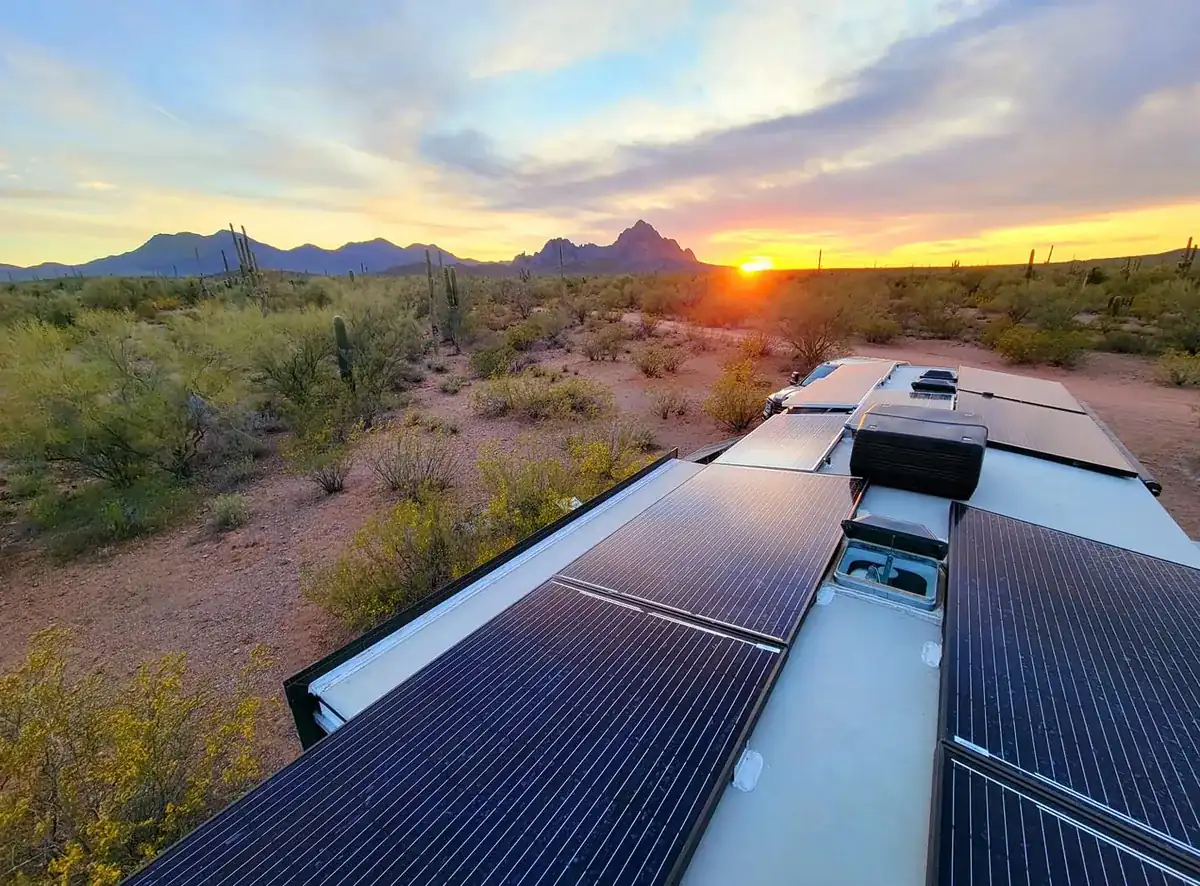
You cannot fit 1,300 watts of truck camper solar panels on a camper roof — and that’s before the panels get snowed on. December in the Northwest isn’t a bigger-solar problem; it’s a different charging strategy problem (more on that below).
Sanity-check the math in reverse. A 200W panel in 5 peak sun hours: 200 × 5 × 0.75 = 750 Wh/day, or roughly 60 Ah/day at 12.8V. Our example load needs ~117 Ah — so 200W covers about half a moderate load in good sun. That matches what experienced owners tell each other in the boondocking groups: a factory 200W setup amounts to little more than trickle charging once you add a 12V fridge. The math says it; the people who’ve lived it say it louder.
So: size your array for the seasons you actually camp in. Winter demands alternator charging, a generator, or serious conservation — not more rooftop wattage you’ll never harvest.
Step 3: How many amp-hours of battery do you need?
Battery sizing answers a different question than solar: how long do you want to run with zero charging? That’s days of autonomy — most people plan for 2–3 to ride out a cloudy stretch.
Required battery Ah = (Daily Ah × Days of autonomy) ÷ Usable depth of discharge
Depth of discharge (DoD) is where chemistry changes everything. A lithium battery for truck camper use gives you roughly 100% of its rated capacity; AGM lead-acid gives you ~50% before you start damaging it. Using our 117 Ah/day target:
LiFePO4 (100% usable): – 1 day of autonomy: 117 × 1 ÷ 1.0 = 117 Ah → a single 100–120 Ah battery – 2–3 days: 117 × 3 ÷ 1.0 = 351 Ah → a 300 Ah bank (close enough, and realistic)
AGM lead-acid (50% usable): – 1 day: 117 ÷ 0.5 = 234 Ah → a 200–250 Ah bank – 2–3 days: 351 ÷ 0.5 = 702 Ah — a wall of heavy batteries you won’t want to carry or charge
Notice the relationship: battery size is set by your worst cloudy stretch, while solar size is set by your average sunny day. A giant solar array with a tiny battery dies at sunset; a giant battery with tiny solar never recharges.
LiFePO4 vs AGM: the honest comparison
Almost every serious truck camper power system built in the last few years uses lithium iron phosphate (LiFePO4) — and this is the one place the hype is mostly justified:
| LiFePO4 (lithium) | AGM (lead-acid) | |
|---|---|---|
| Usable capacity | ~100% of rated Ah | ~50% of rated Ah |
| Weight per 100 Ah | ~31 lbs (Battle Born 100Ah spec) | ~65–70 lbs |
| Cycle life | 3,000–5,000 cycles (Battle Born rated) | ~300–500 deep cycles |
| Charge efficiency | ~99% | ~85–90% |
| Cold-weather charging | Blocked below ~32°F/0°C by the BMS | Works (with temp compensation) |
| Maintenance | None | None (sealed), but voltage must be monitored |
| Rough cost per 100 Ah | $250–$950 (budget brands → Battle Born) | ~$200–$300 |
Usable capacity is the headline. A “100 Ah” AGM battery is really a 50 Ah battery in daily use — drain it further and you shorten its life dramatically. That’s why the community shorthand says one lithium battery replaces two AGMs of the same rating: 100 Ah × 100% vs. 2 × 100 Ah × 50%. Same energy, half the weight, a fraction of the footprint.
Cycle life is the money argument. At 3,000–5,000 cycles, a quality lithium battery for truck camper use can last a decade of daily cycling. An AGM cycled deeply might last 300–500 cycles — a few seasons of real off-grid use. The upfront price stings, but lithium usually wins on cost per cycle over the battery’s life.
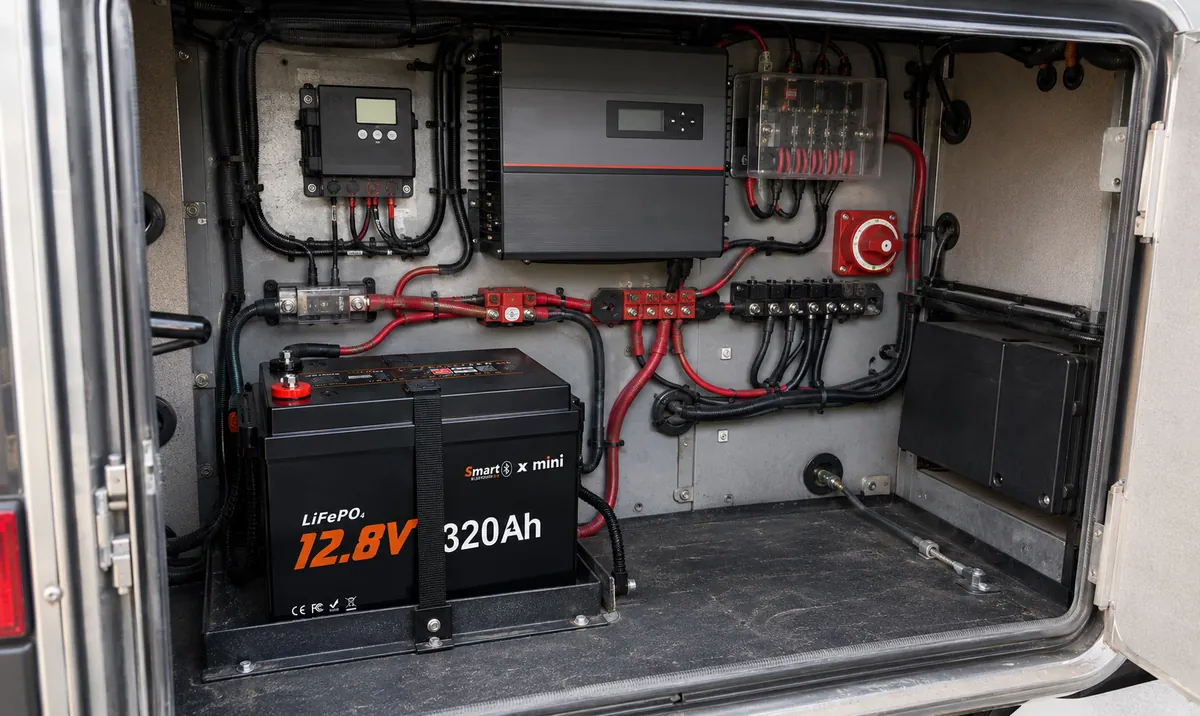
Cold is lithium’s real weakness. Standard LiFePO4 cannot safely accept a charge below freezing — the BMS will refuse it, so solar and alternator charging silently do nothing on a 25°F morning. Three fixes: buy heated batteries, keep the bank inside the heated living space, or stick with AGM if you regularly camp below freezing without heating the battery box. If you’re planning real winter camping trips, decide this before you buy — it’s the most common expensive regret I see. It’s also why battery placement belongs in any plan to winterize a truck camper: the electrical system has a cold-weather story too.
The brains of the system: charge controllers and alternator charging
MPPT vs PWM charge controllers
The charge controller sits between your panels and your batteries:
- PWM (pulse width modulation): cheaper and simpler. Fine on small systems where panel voltage closely matches battery voltage — a basic 200W kit on a 12V system, like Renogy’s 200W starter package, ships with PWM for exactly this reason.
- MPPT (maximum power point tracking): constantly finds the panels’ optimal voltage-current sweet spot and converts the difference into extra charging amps. Typically harvests 15–30% more than PWM from the same panels, handles higher-voltage panels wired in series, and performs better in cold and partial shade.
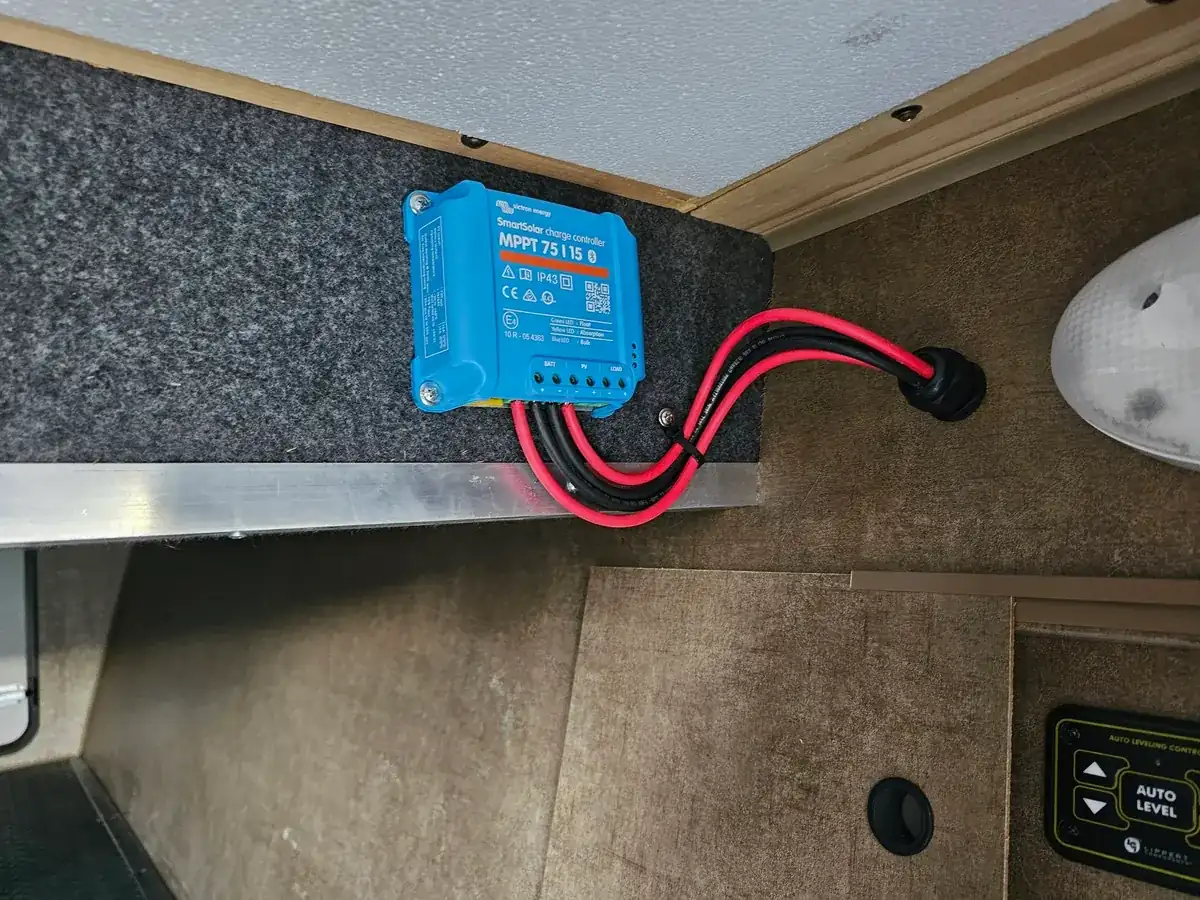
For any system above ~200W of truck camper solar panels — or any lithium bank — MPPT is the standard recommendation. A popular size is a 30A controller like Victron’s SmartSolar MPPT 100/30, which handles up to 440W of panels on a 12V system and gives you Bluetooth monitoring from your phone. Size rule: controller amps ≥ array watts ÷ battery volts, with headroom. (400W ÷ 12.8V = 31A — so a 400W array wants a 40A+ controller. Check this before you buy.)
DC-DC alternator charging: the unsung hero
A full-time couple documenting their setup on YouTube put it in the clearest terms I’ve seen: solar tops up the system through the day, but alternator charging is the fast-charging redundancy — the thing that saves you when the sky does nothing for three days.
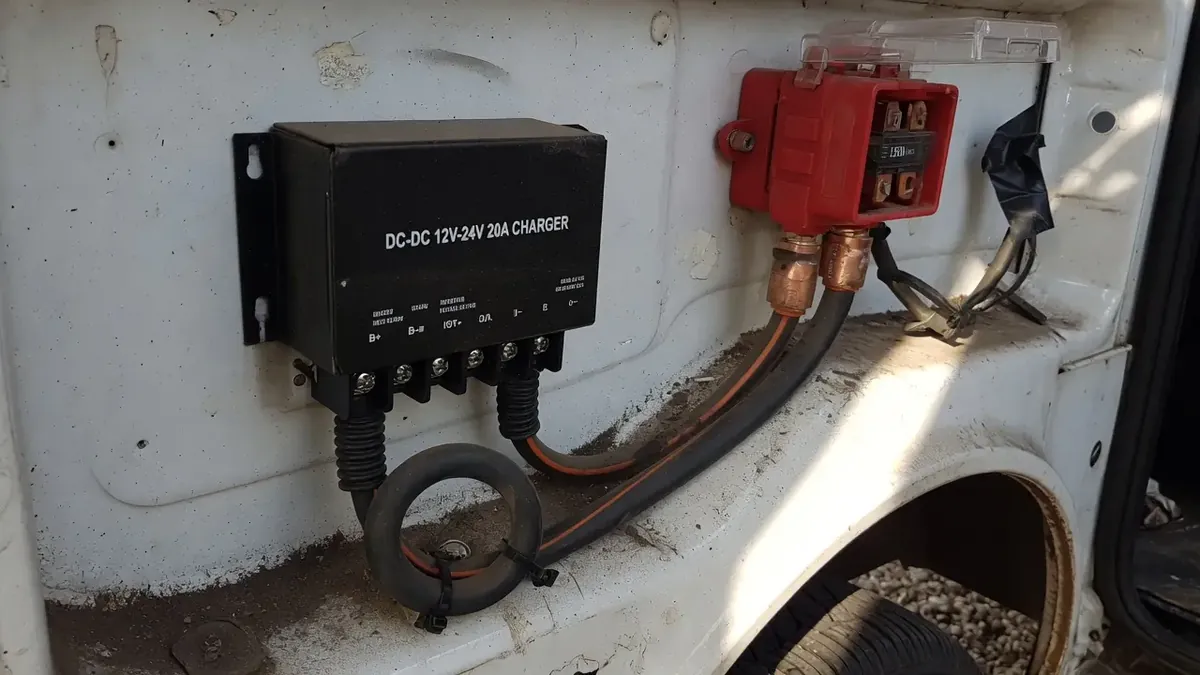
A DC-DC charger (30A is the common size) converts your truck’s alternator output into a proper multi-stage charge for the camper batteries. Two hours of driving puts ~60 Ah back in the bank — about half of our example day’s usage. No sun required.
This matters because modern trucks have smart alternators whose voltage varies with engine load. A DC-DC charger is required to deliver a stable, complete charge — and it protects the truck’s alternator from being overworked by a hungry lithium bank. Budget for one, wire it in 6 AWG, and think of it as cloudy-day insurance. In the boondocking groups, the people who never worry about power almost always have one.
Winter, shade, and December in the PNW: the reality check
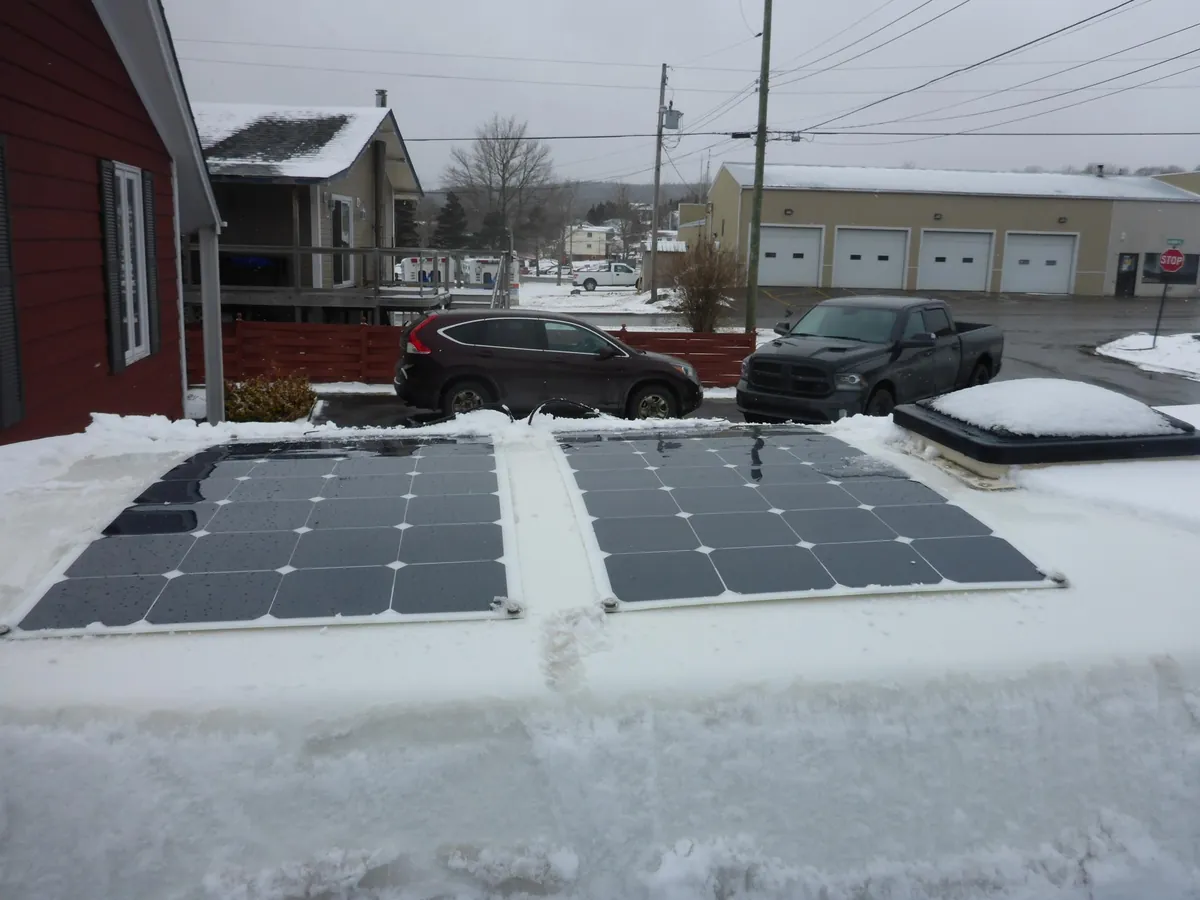
December in the Pacific Northwest gives you roughly 1–2 peak sun hours, low sun angles, and days of flat gray where panels produce 10–25% of their rating. A long-running thread on a truck camper forum measured a 160W panel laid flat on a camper roof in Portland: about 600 Wh/day in January vs. 1,350 Wh/day in July. Same panel, same roof — winter cuts output by more than half.
Shade is worse than clouds. One creator I came across runs a pop-up camper on a Jeep Gladiator in the shaded Southeast — the kind of beautiful tree-covered campsite we all dream about. She started with a 100W rooftop panel and found she rarely saw anything close to rated output between tree cover, clouds, and low angles. Her lesson is everyone’s lesson: truck camper solar panels only work when the roof sees sky. In forested campgrounds, a portable panel placed in the one sunny patch 30 feet away often outperforms twice the rooftop wattage.
Practical winter/shade strategy:
- Oversize the battery bank, not just the array. Two to three days of autonomy is what actually gets owners through a gray week — one family in the boondocking groups ran a full week off-grid by starting topped up and letting solar claw back charge on the brighter days.
- Have a second charging source. Alternator (DC-DC), a small inverter generator, or both. In winter, this is the primary plan.
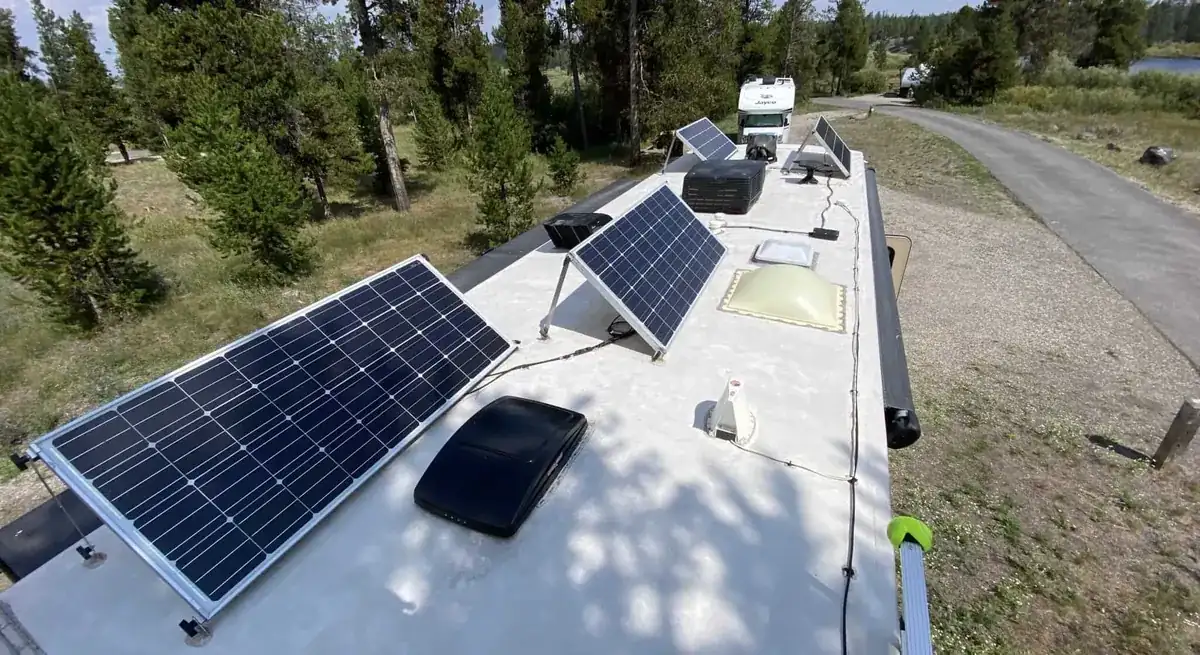
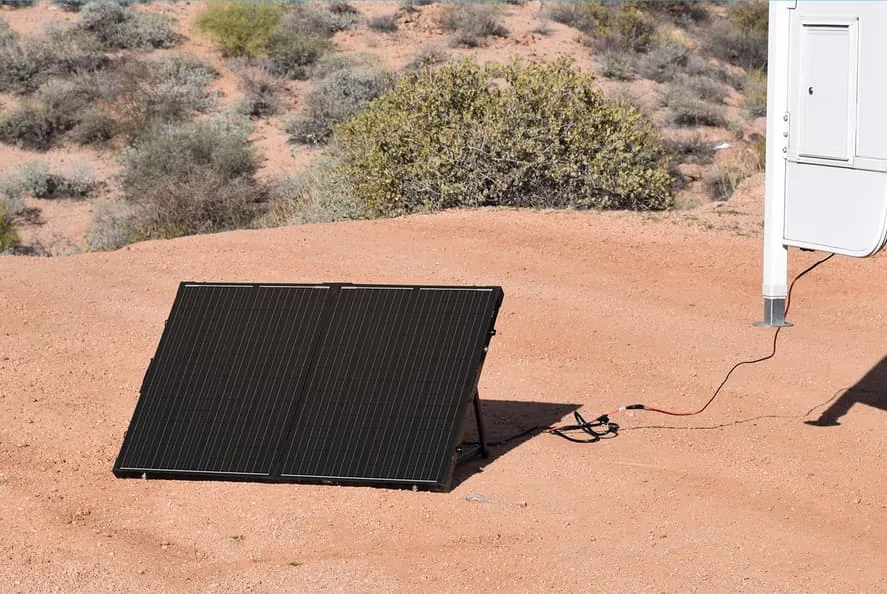
- Consider a portable panel. Ground-deploy panels let you chase the sun and tilt for the season — overkill in bulk, but the principle scales down to a single suitcase panel.
- Conserve aggressively. The furnace is your biggest winter draw; LED everything, and charge laptops while driving to stretch any bank.
What full-timers actually run (and what they’d change)
Here’s what I’ve gathered from people who live this (anonymized — the wisdom matters more than the handles):
- A full-time couple on YouTube has lived ten months off-grid in a truck camper on ~900W of solar and a 920 Ah lithium bank, with four charging pathways (solar, DC-DC alternator, onboard generator, shore power). Their lesson: redundancy beats capacity — no single source has to carry everything.
- Owners in the boondocking groups consistently warn newcomers off the “200W is enough” assumption. Multiple threads reach the same conclusion: with a 12V fridge running, 200W is barely a trickle charger on an AGM bank, and the fridge is almost always the biggest draw. Budget for the fridge first, everything else second.
- A DIY couple building in Portland went straight to two 300 Ah lithium batteries, a 3,000W inverter, a 60A DC-DC charger, and a 60A MPPT controller — the “buy once” approach. Their reasoning, echoed across the community: upgrading later costs more, because you replace the controller, wiring, and mounting hardware too.
- The alternator-charging converts are the most evangelical group in the forums. Owners who added a DC-DC charger after struggling with solar alone describe it as the single most impactful upgrade — one drive into town for groceries becomes a meaningful recharge. The unsung-hero framing isn’t marketing; it’s consensus.
- Pop-up camper owners (Four Wheel Campers, Aliners, and similar) live with the smallest roofs and the hardest sizing puzzle. Their recurring advice: measure the actual roof, pick high-efficiency panels that fit, and don’t skip the portable ground panel. If you’re shopping in this category, our roundup of the best pop-up truck campers covers which models leave you the most roof to work with.
The pattern: almost nobody says “I wish I’d bought less solar or less battery.” The regrets run the other direction — undersized banks, skipped alternator charging, and lithium batteries mounted in freezing exterior compartments.
Quick-start sizing cheat sheet
The practical sweet spots for a 12V truck camper system:
- Weekend warrior, fair weather, frugal use: 200–300W solar, 100 Ah lithium, PWM or small MPPT controller. Fine for lights, fan, fridge, and devices — as long as you drive home Sunday.
- Extended boondocking, moderate use (our worked example): 400–600W of truck camper solar panels, 200–300 Ah lithium, 40–50A MPPT, 30A DC-DC charger — the setup that handles a cloudy day or two without drama.
- Full-time off-grid, all seasons, remote work: 600–800W+ solar, 400–600 Ah lithium, large MPPT, DC-DC charging, and a generator or serious conservation plan for winter.
Match the battery to your worst week, the solar to your average day, and the charging sources to your worst season. That’s the whole guide in one sentence.
FAQ
How many solar panels do I need for a truck camper?
Divide your daily watt-hour use by (peak sun hours × 0.75). For a moderate 1,500 Wh/day load, that’s roughly 400W of truck camper solar panels in summer desert sun or 600W in shoulder-season light. Most camper roofs comfortably fit 200–400W; beyond that, add a portable ground panel or let alternator charging cover the gap.
Is 200W of solar enough for a truck camper?
For light use — lights, fan, device charging, no fridge — 200W with a 100 Ah lithium battery is a fine weekend system. Add a 12V compressor fridge or a furnace-heavy shoulder season, and 200W becomes a trickle charger: the math says ~60 Ah/day of harvest against a ~117 Ah/day load, and owners in the boondocking groups reach the same conclusion from experience.
What size lithium battery for truck camper use?
Take your daily amp-hour use, multiply by the cloudy days you want to ride out, and divide by ~1.0 (lithium’s usable depth of discharge). A moderate 117 Ah/day load wants ~120 Ah for one day of autonomy or ~300 Ah for three. Most extended boondockers land between 200 and 300 Ah of LiFePO4; full-timers often run 400–600 Ah.
Can I charge my truck camper batteries from the alternator while driving?
Yes — with a DC-DC charger, which is required on modern trucks with smart alternators. A 30A unit delivers about 30 Ah per hour of driving, making it the best cloudy-day backup most owners have — and full-timers consistently rate it the most impactful upgrade after the batteries themselves.
Sizing a power system is the least glamorous part of truck camping and the one that pays off the most. Do the budget once, buy to the math, and you’ll spend your trips watching sunsets instead of battery monitors. And if you’re still deciding which camper all this gear is going on, start with our guide to the best truck camper to buy — roof space, battery compartments, and factory pre-wiring vary enormously between models, and picking the right shell makes the electrical build dramatically easier.