Unbiased Winter Heating Guide: Truck Camper Heater — Diesel vs Propane vs Electric
The first winter night I ever spent in a truck camper, I woke up at 3 a.m. to a frosted-over vent and my own breath hanging in the air. My heater had given up — or more accurately, I’d never thought hard enough about how to heat the thing. Since then I’ve heated truck campers with diesel, propane, and electric setups, and learned the hard lessons the cold way so you don’t have to.
This is the honest truck camper heater diesel vs propane vs electric breakdown I wish someone had handed me that first night: real numbers, real drawbacks, no sponsor spin.
Diesel heaters: the truck camper heater diesel vs propane vs electric boondocking champion
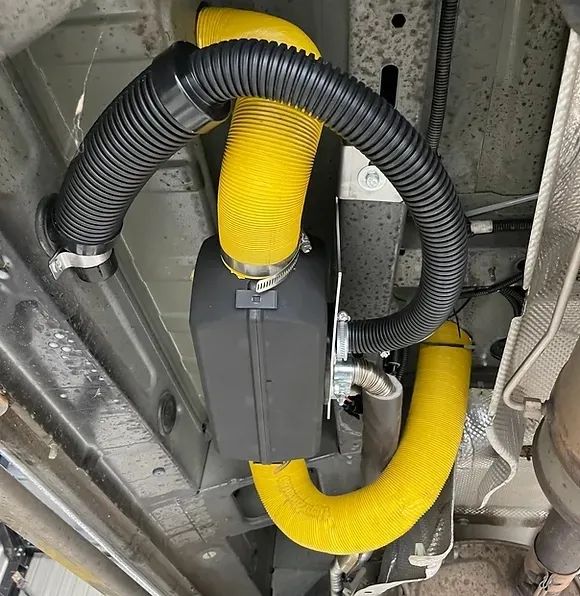
Diesel air heaters — the German-engineered Espar Airtronic and Webasto Air Top units, plus the generic budget 12V diesel heaters that flooded the market in the last decade — are the darling of the winter truck camper crowd. And honestly, for off-grid winter use, that reputation is earned.
How they work: A small burner chamber heats a heat exchanger while a 12V fan blows cabin air across it. Combustion happens in a sealed circuit: the burner draws combustion air from outside and pushes exhaust outside through a separate pipe. The air you breathe never touches the flame. That matters for both safety and condensation.
Heat output. The classic Espar Airtronic D2 puts out 0.85–2.2 kW (2,900–7,500 BTU), sipping 0.10–0.28 liters of diesel per hour. The Webasto Air Top 2000 STC is nearly identical: 0.9–2.0 kW (3,100–7,000 BTU) at 0.12–0.24 liters per hour. The generic budget 5kW units claim 5 kW of output and burn roughly 0.15–0.4 liters per hour depending on the setting. For a truck camper’s tiny interior, even the 2 kW units are plenty — I ran a 2 kW unit in single-digit weather and had to crack a window.
12V amp draw. This is where diesel shines for dry camping. The Espar D2 draws 8–34 watts in operation (under 3 amps at 12V), with startup peaking around 100 watts while the glow plug heats up. The Webasto 2000 STC draws 14–29 watts (about 1.25–2.45 amps). Budget 5kW units pull roughly 15 amps for a few minutes at startup, then settle to about 3 amps while running. Over an 8-hour night, expect to spend roughly 20–30 amp-hours from your batteries. A single 100Ah lithium battery handles that comfortably — pair it with a modest solar setup and you’re set, which is why sizing your solar and lithium right matters so much for winter trips.
Pros: sips fuel (1.5–3 liters per night is typical), tiny electrical draw, sealed combustion so no added moisture, exhaust routed outside, diesel available everywhere, and many owners in truck camper forums report sleeping soundly with the thermostat set and forgetting about it.
Cons: Budget units are a lottery. Several winter-camping owners on YouTube mention sooting, failed glow plugs, and temperamental controllers on the cheapest ones — parts support is basically “buy another one.” The fuel pump ticks every second or two; light sleepers mount it on rubber, away from the bed. Diesel also gels in extreme cold unless treated, and fuel quality matters.
Altitude. This is the real gotcha. Thin air makes diesel burn rich and sooty. Budget heaters are generally happiest below a few thousand feet, though some advertise a “plateau mode.” The older Espar D2 is rated to about 7,200 feet (2,200 m) with an optional high-altitude kit for more; the newer Eberspächer AS3 D2L auto-adjusts to about 13,120 feet (4,000 m). The Webasto Air Top 2000 STC is rated to roughly 5,000 feet. If you camp in the Rockies all winter, altitude ratings aren’t trivia — they’re the deciding factor.
Propane heaters: Suburban furnaces, the Propex HS2000, and portable buddy heaters
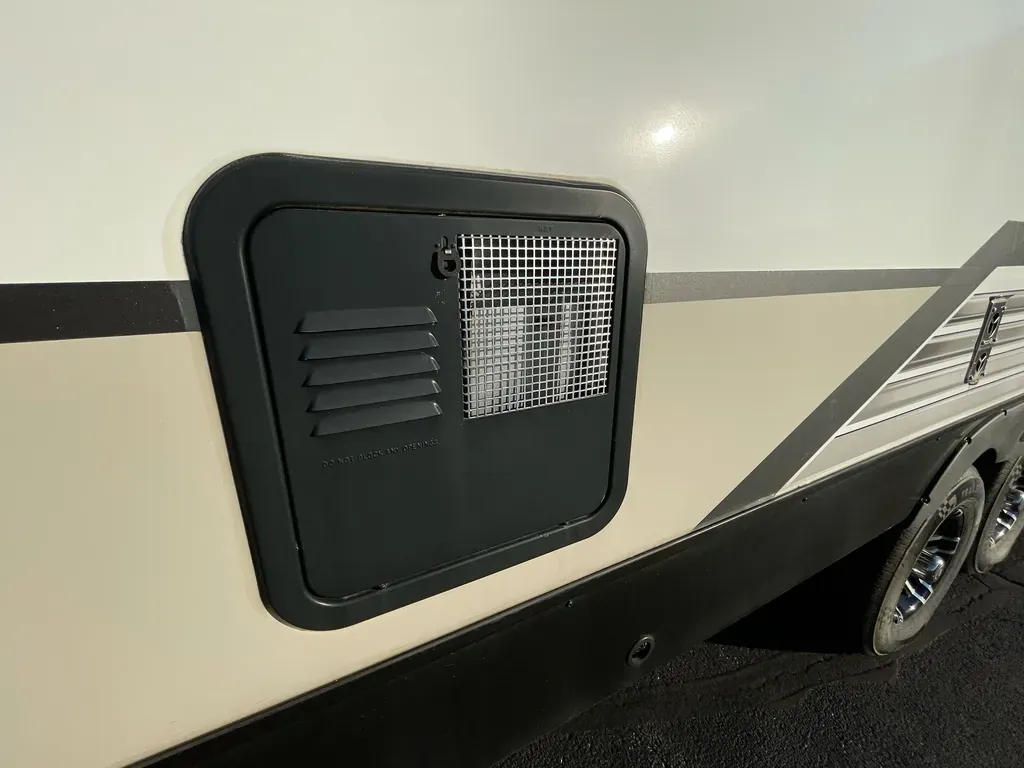
Propane is the default heating fuel of the RV world, and plenty of truck campers come from the factory with a forced-air propane furnace. If you camp with hookups or carry big propane bottles, it’s a proven setup.
Suburban-style forced-air RV furnaces. The Suburban NT-16SEQ is a classic truck-camper-sized furnace: 16,000 BTU on propane with a 12V draw of about 2.7–2.8 amps while running. It’s ducted, thermostatic, and vents combustion outside, so like diesel heaters it doesn’t dump moisture into your living space. The catch is appetite: 16,000 BTU works out to roughly 0.175 gallons of propane per hour of continuous burn (a gallon of propane holds about 91,500 BTU). In a real winter night with the thermostat cycling, you’ll use less, but a full night of serious cold can still drink over a gallon. Over a multi-day boondocking trip, propane weight and tank space become your planning problem. Noise is the other complaint — the blower is noticeably louder than a diesel heater’s fan.
Propex HS2000. This compact British unit is a favorite in the van-life and small-camper world, and it works just as well in a truck camper. Official specs: 1.9 kW heat output (about 6,500 BTU), propane consumption of about 141–142 grams per hour, and only 1.4 amps of 12V draw in continuous running (Propex’s own FAQ rounds it to 1.6A). Owner reports say a standard 20-lb BBQ-style propane tank gives around 60 hours of runtime. It’s sealed-combustion and externally vented, so — critically — it doesn’t add condensation the way unvented heaters do. It costs far more than a budget diesel heater and puts out less heat than a Suburban, but its electrical frugality and whisper-quiet fan have a loyal following.
Portable propane (Mr. Heater Portable Buddy and friends). The popular Buddy-style catalytic heaters deliver 4,000–9,000 BTU from 1-lb cylinders or a 20-lb tank with a hose, burning about 0.044 gal/hr on low and 0.099 gal/hr on high — roughly 5.4 hours on low or 2.4 hours on high per 1-lb cylinder. They’re cheap, portable, and need no installation or electricity. Here’s the but: they are unvented. They dump all their combustion moisture straight into your camper — a recipe for dripping windows and damp bedding — and while they carry oxygen-depletion sensors and tip-over switches, sleeping overnight with one running is a hard no from me. Use them for taking the morning chill off while you’re awake and ventilated, never as an overnight heat source. They’re also rated only to about 7,000 feet of elevation.
Propane pros: widely available fuel you may already carry, factory-installed options exist, sealed-combustion models vent outside, and propane burns clean with no soot maintenance. Propane cons: high fuel consumption on cold nights, heavy tanks, furnaces are power-hungry relative to diesel or Propex, and unvented portables add moisture and real safety risk.
Electric heat: why your batteries say no
Every winter, someone asks whether they can just run a little electric space heater in their truck camper. The math says almost always no — at least off-grid.
Ceramic/space heaters. A standard portable electric heater in the US is capped at 1,500 watts. At 12 volts, 1,500W demands 125 amps (watts ÷ volts = amps — that’s just physics). A 200Ah lithium battery would be empty in about an hour and a half, and that’s before the furnace, lights, and fridge take their share. On shore power at a campground, a 1,500W heater works fine — and that’s honestly the one scenario where electric heat makes sense. Off-grid? You’ll flatten a typical truck camper battery bank before midnight. Several owners in camper forums describe exactly this lesson, usually phrased as an expensive mistake involving a second battery purchase.
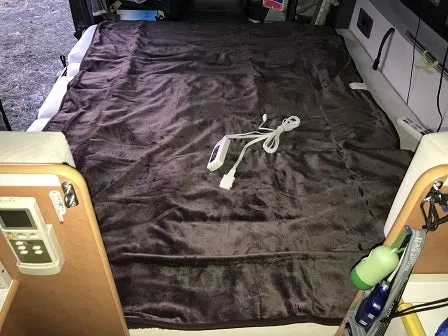
12V electric blankets and mattress pads. This is where electric actually earns a place — not heating the air, but heating you. An Electrowarmth 12V mattress pad draws about 75 watts (roughly 6.2 amps) on high; 12V heated blankets like the BougeRV run around 45–50 watts, and many owners report typical draw in the 3–6 amp range. Heating the bed directly instead of the whole cabin is wildly efficient — one measured test in a boating forum found a whole night of sleeping warmth for about 12 amp-hours. The catch is obvious: when you get up at 2 a.m., the camper is freezing, and your pipes are still at risk. Pair a heated blanket with a small, efficient air heater rather than treating it as a standalone solution.
Electric pros: silent, zero emissions, zero moisture, cheap to buy. Electric cons: space heating is a non-starter off-grid; useful only on shore power or as body-level supplemental heat.
Fuel cost comparison: what a cold night really burns
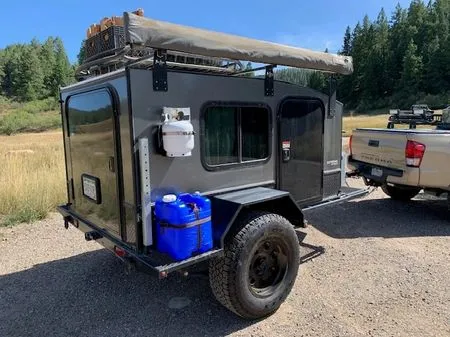
Skip the pump-price roulette — diesel and propane prices swing by region and season. Instead, look at what one 8-hour winter night consumes, then multiply by your local prices:
- Budget 5kW diesel: roughly 1.5–3 liters (0.4–0.8 gal) of diesel per night → a 5-liter jerry can lasts several nights.
- Espar/Webasto 2kW diesel: roughly 0.8–2.2 liters per night — the stingiest way to heat a camper, period.
- Propex HS2000: about 1.1 kg of propane per night; a 20-lb tank stretches to roughly a week of nights.
- Suburban 16,000 BTU furnace: up to ~1.4 gallons per night at continuous full burn (real cycling use will be less) — plan on refilling propane far more often than diesel.
- Mr. Buddy on 1-lb cylinders: 2–3 cylinders per night on high. Convenient, but those little green bottles get expensive and wasteful fast — run it off a 20-lb tank with a hose if you go this route.
- 1,500W electric space heater: not a fuel cost problem, a battery problem — see above.
Boondocking and off-grid suitability
If free camping away from hookups is your thing, this category decides the contest. Diesel heaters are the boondocker’s pick: minimal fuel, minimal amp-hours, sealed combustion, and a week’s worth of diesel fits in a single jerry can. The Propex HS2000 is propane’s best answer to the same problem, at roughly 11–13 amp-hours per night. A Suburban furnace works off-grid too, but at ~22 amp-hours per night plus heavy propane use, it’s thirsty for week-long winter trips. Electric space heating off-grid is simply off the table.
Installation: fuel tanks, exhaust, and ventilation
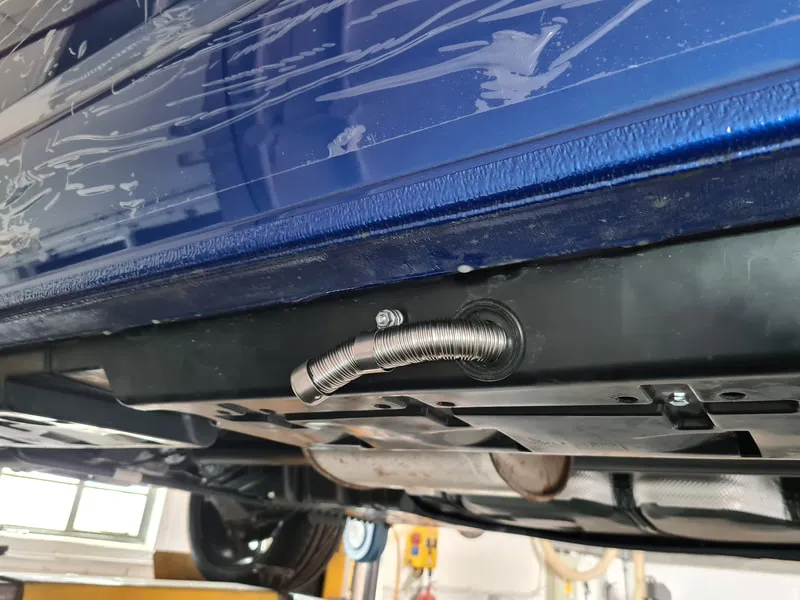
Diesel: You need a fuel source — a dedicated tank (common) or a tap into your truck’s diesel tank if you have a diesel truck. The heater mounts inside a locker or under a seat, with a hole through the floor for the exhaust pipe and combustion air intake. Route the exhaust so it exits clear of doors, windows, and anything meltable; use the supplied muffler; mount the fuel pump at the correct angle on rubber to tame the ticking. Budget units come as complete kits, which is half their appeal. Allow a full day for a careful first install.
Propane: Suburban furnaces are a bigger surgery — cutting a rectangular hole in the camper wall for the vent assembly, running gas lines, and wiring a thermostat. Most owners have this done at install or by a shop. The Propex HS2000 is more DIY-friendly: it mounts in a locker with a flue through the floor, a gas line to your propane system, and a thermostat wire. Portable Buddy heaters need no installation, just ventilation discipline and a stable spot away from anything flammable.
Ventilation is non-negotiable for all of them. Sealed-combustion units (diesel heaters, Suburban, Propex) still need fresh-air makeup for the cabin and a path for interior moisture to escape — crack a roof vent. For unvented portables, ventilation isn’t a tip, it’s a survival requirement. And heating without managing moisture will soak your camper from the inside: my full guide on stopping condensation in a truck camper pairs directly with whatever heater you choose, and a four-season-capable build makes every one of these heaters work less hard. Parking the camper for the season instead of camping in it? Then skip the heater debate entirely and winterize it properly.
Safety: the part you don’t skip
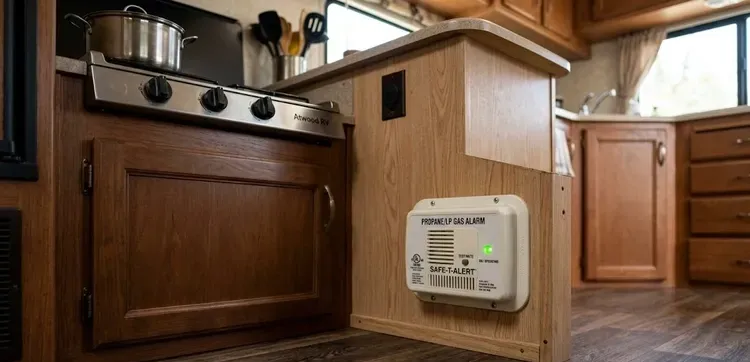
⚠️ Safety disclaimer — read this before buying anything. All fuel-burning heaters produce carbon monoxide. CO is colorless, odorless, and lethal. Install a working CO detector AND a propane detector in your camper, test them monthly, and replace them per the manufacturer’s schedule. Never sleep with an unvented heater (Buddy-style catalytic heaters, cook stoves) running. Never modify exhaust routing, never run any heater while the exhaust could be blocked by snow, and always follow the manufacturer’s installation instructions exactly — gas appliances should be installed by someone qualified. Keep a fire extinguisher within reach, keep combustibles away from hot surfaces and exhaust components, and crack ventilation even with sealed-combustion heaters. If a CO alarm sounds, get out immediately and don’t go back in until the camper is aired out and the cause is found. For the broader picture of staying safe and warm, my winter camping in a truck camper guide covers the full cold-weather checklist.
My verdict: which one I’d pick
For winter boondocking in a truck camper, I pick diesel — a genuine Espar or Webasto if the budget allows, a well-reviewed budget 5kW unit if it doesn’t (buy from a seller with real support, and carry a spare glow plug). The fuel sips, the battery barely notices, and the heat is dry and thermostatically controlled.
I pick propane if the camper already has a Suburban furnace and I camp mostly at hookups or carry big tanks — or a Propex HS2000 for a compact, ultra-efficient propane install in a smaller camper.
I pick electric only on shore power, or as a 12V heated mattress pad layered under my real heating system. A warm bed plus a diesel heater on low is, in my experience, the single coziest winter camping setup that exists.
There’s no single “best” heater — there’s only the best heater for how you camp. Match the fuel to your trips, respect the amp-hour math, ventilate like your life depends on it (it does), and winter becomes the best camping season instead of the one you sit out.
Frequently asked questions
Is it safe to run a diesel heater overnight in a truck camper?
Yes, with a proper installation. Diesel air heaters use sealed combustion — the burner draws air from outside and exhausts outside, so combustion gases never enter your living space. That said, “sealed” doesn’t mean “ignore safety”: install a CO detector, route the exhaust correctly with no leaks, keep the exhaust outlet clear of snow, and follow the manufacturer’s instructions. Owners in truck camper forums widely report sleeping with diesel heaters running all night through multi-week winter trips.
Can I run my propane furnace while driving or sleeping?
A properly installed, vented propane furnace (Suburban-style or Propex) is designed to run while you sleep — that’s what the thermostat and sealed combustion are for. Many owners run them while driving too, though you should check local regulations and your manufacturer’s guidance, and make sure propane cylinders are secured and the system is leak-free. What you should NOT do is sleep with an unvented portable propane heater running.
Why does an electric space heater kill my camper batteries so fast?
It’s pure math: a 1,500W heater on a 12V system draws about 125 amps. Even a large 200Ah lithium battery holds less than two hours of that. Heating air with electricity is enormously energy-hungry compared to burning fuel, which is why electric space heat only makes sense on shore power. For battery-friendly warmth, a 12V heated mattress pad (around 45–75 watts) heats you directly for a fraction of the energy.
Do diesel heaters work at high altitude?
It depends on the unit. Thin air causes rich, sooty combustion. Budget diesel heaters are generally happiest below a few thousand feet, though some offer a high-altitude mode. The classic Espar Airtronic D2 is rated to about 7,200 feet with an optional high-altitude kit available, and the newer AS3 D2L generation auto-adjusts up to about 13,120 feet. The Webasto Air Top 2000 STC is rated to roughly 5,000 feet. If you winter camp in the mountains, check the altitude rating before you buy.
Will a Buddy-style portable propane heater cause condensation?
Yes — noticeably. Unvented heaters release all their combustion water vapor into your living space (burning a gallon of propane produces roughly a gallon of water vapor), which condenses on cold windows, walls, and bedding. Sealed-combustion heaters (diesel air heaters, Suburban furnaces, Propex) exhaust that moisture outside, which is one of the biggest comfort differences between the two types.
Diesel vs propane: which is cheaper to heat with?
Per night of heat, diesel is almost always cheaper: a diesel air heater burns roughly 1–3 liters per night, while a 16,000 BTU propane furnace can burn over a gallon of propane on a cold night. Propane’s real cost is logistical — heavier tanks, more frequent refills, and more battery drain. If you already carry propane for cooking and camp near refill stations, the convenience can outweigh the cost difference.
Specs referenced: Espar Airtronic D2 / Eberspächer AS3 D2L via Eberspächer/Espar dealer technical data, Webasto Air Top 2000 STC via Webasto’s official datasheet, Propex HS2000 via Propex Heating & Leisure’s official specs, Suburban NT-16SEQ via Suburban’s official NT-SEQ product overview (PDF).