Truck Camper Theft Prevention: A Security Guide That Actually Works
I learned about truck camper theft prevention from a neighbor in my storage lot. He walked in one Saturday to an empty space where his pop-up had sat for two months. The thief had backed a pickup under it, raised the jacks on the camper’s own battery power, and driven off in minutes. The camper never came back.
That was the moment I stopped treating security as a padlock on the door and started treating it as a system. A truck camper is an easy, odd target: it lifts off with jacks, drops into any pickup bed that fits, and many are not titled in every state, which makes them easy to resell or part out. Most theft is opportunistic, and opportunistic thieves pick the easiest rig in the lot. This guide is my full system: what I actually do, what owners in truck camper groups describe as working, and which products are worth the money in 2026.
Why Truck Campers Are Such Easy Targets
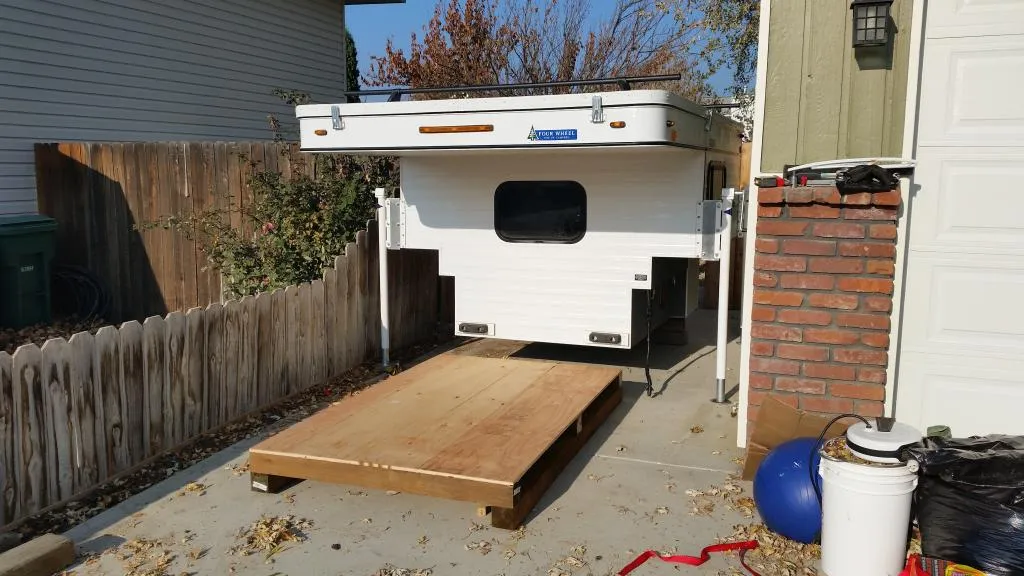
A travel trailer needs a matching hitch and a tow vehicle with the right setup. A truck camper needs nothing but a pickup with an open bed. Electric jacks make it worse, because the camper can load itself: a thief connects the battery, holds the button, and your thirty-thousand-dollar camper slides into their truck. Manual jacks slow them down a little. Lowering the camper off the jacks onto the ground slows them down a lot, which is why you will see this trick repeated in every owner discussion on the topic.
Weight is another problem. The lightest pop-up campers are liftable by two or three strong people, and even a 2,000-pound hard side is trivial for a pickup to carry. Because many states do not title truck campers the way they title vehicles, a stolen camper can cross state lines and sell on a bill of sale with almost nobody asking questions. This is also why state-by-state rules matter for more than just riding inside your camper: in states that require a truck camper plate and title, you at least hold a paper trail with the serial number on it.
My Mindset: Deter, Delay, Detect, Recover
No lock stops a determined professional with a cordless angle grinder and a trailer. Accept that, and the strategy gets simple. You build four layers:
- Deter so the thief walks past your rig. Bright locks, visible cameras, good lighting.
- Delay so that even if they try, it takes longer than they are willing to spend. Wheel locks, lowered jacks, multiple locks.
- Detect so you know within minutes, not weeks. GPS trackers with motion alerts, cameras.
- Recover so that if it goes, you have what the police and your insurer need. Photos, serial numbers, a tracker feeding live location.
Each layer is cheap on its own. Together they change your camper from the easiest target in the lot to a job that is not worth starting.
Truck Camper Theft Prevention When the Camper Is Off Your Truck
This is the highest-risk scenario. A camper sitting off the truck in your driveway or a storage lot is the one that gets stolen. Here is the stack I use, in order of importance.
Take the jacks out of the equation. The most repeated advice from experienced owners is to lower the camper onto a platform or heavy crates and remove the jacks entirely, storing them somewhere else. Without jacks, a thief cannot raise the camper to truck-bed height without bringing their own equipment. If your jacks are electric, at minimum disconnect and remove the battery, because a powered jack is basically a self-loading machine. Also orient the camper so a truck cannot back straight up to it, or park something immovable behind it.
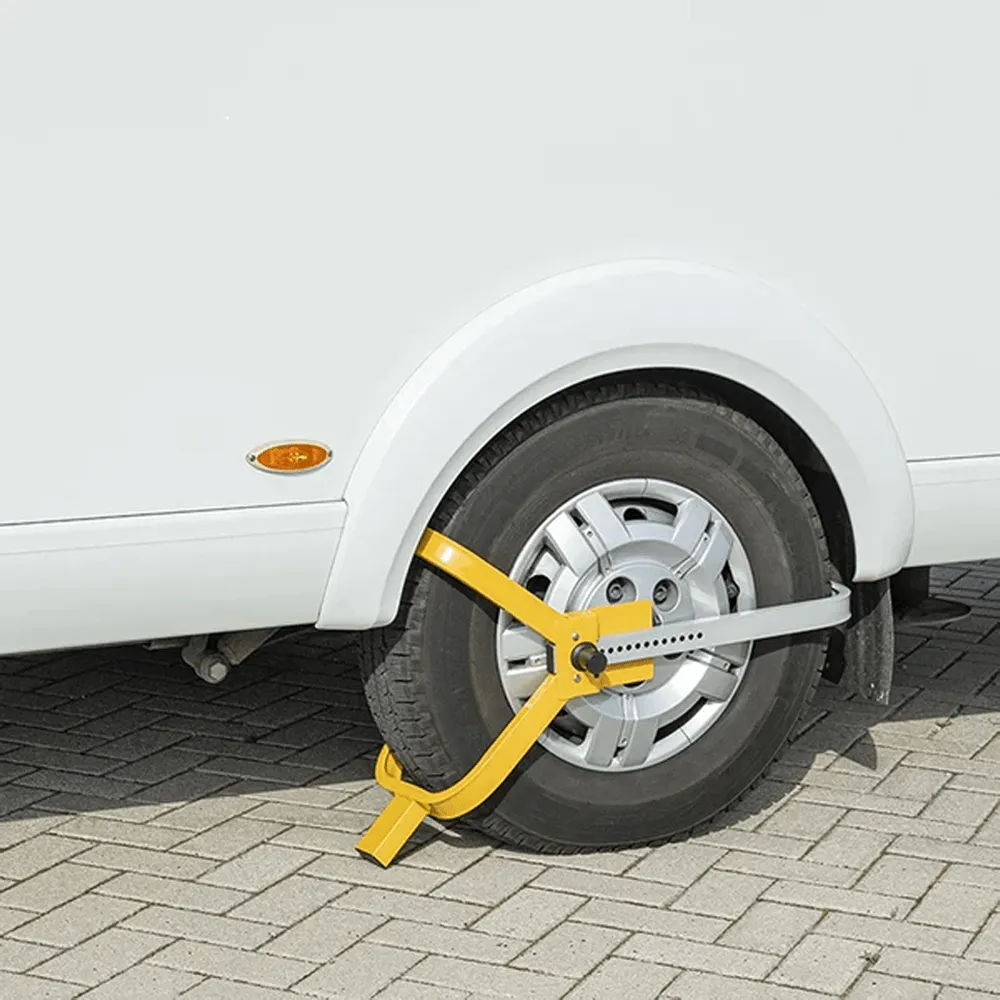
Lock the wheels. A wheel lock clamps onto a tire and prevents the rig from rolling or being towed. The Trimax TCL65 is a solid choice: heavy-gauge powder-coated steel, a pick-resistant cylinder, and it doubles as a chock, available from Trimax for about $163. Run one on each side and pair them with locking lug nuts so a thief cannot just swap the wheel. Bright yellow paint is a feature, not a flaw: it advertises that this camper will be a hassle.
Lock the coupler and the doors. If your setup has any trailer-style tongue or accessory hitch, a coupler lock like the Proven Industries Model 2178 is the heavyweight option: it glove-fits the coupler head, secures the safety chains, and uses a patented key system hardware stores cannot duplicate. Replace the stock door latches with quality deadbolts, because factory RV locks are famously standardized. Lock every exterior compartment too. Owners on RV forums describe generators and propane tanks as the real targets of opportunity; cable-lock the generator to the bumper and chain tanks together at minimum.
Add eyes. A cellular trail camera or game camera pointed at the camper is the most recommended gadget in owner groups after wheel locks. It does not stop anyone, but a photo of the truck and plate that walks away with your camper is the difference between a dead police report and an active case. A small solar setup keeps a camera alive indefinitely in storage; if you are already running rooftop panels, sizing a lithium bank to cover security gear alongside your normal loads is worth planning, since short winter days and condensation season make unattended storage rougher on everything.
Light it up. Motion-activated floodlights on a garage or post are cheap and brutally effective deterrents. Thieves want darkness and time. Take both.
Securing the Camper While It Is On the Truck
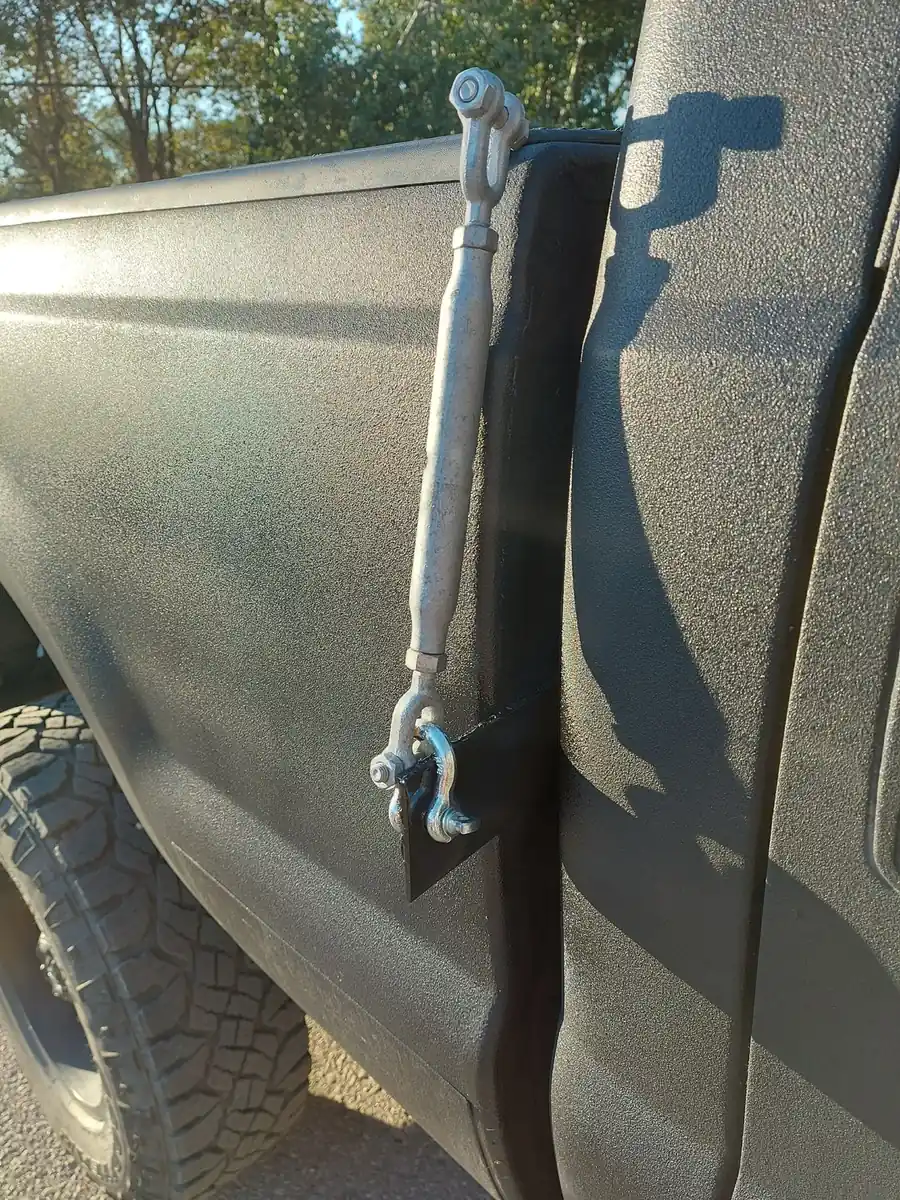
When the camper is loaded, the rig is one vehicle, which changes the threat. Nobody is lifting the camper out of the bed at a trailhead; they are stealing the whole truck, breaking in for valuables, or stripping bolt-on gear.
Lock the tailgate. An unlocked tailgate gives a thief easy access to the camper’s tie-downs and rear door. A locking tailgate handle or an aftermarket tailgate lock is a ten-minute job on most trucks and removes the easiest entry point.
Lock your tie-downs and turnbuckles. Torklift sells locks for exactly this: the FastGun Locks and S9700 Tie Down Locks secure your tie-down inserts and turnbuckles so the camper cannot be unhooked without a key. The 4-pack runs about $123, is keyed alike, and lets you leave the hardware on the truck year-round.
Make noise. A basic vehicle alarm with a shock sensor, plus a secondary battery-powered alarm inside the camper itself with a remote fob. When the door opens, it screams. Alarms do not guarantee anything, but every forum thread on this topic repeats the same line: locks and alarms make thieves choose the quieter target.
Park like you mean it. At trailheads and in parking lots, back the camper against a wall or another vehicle so the rear door cannot be fully opened. Keep the blinds closed so nobody can inventory your gear through the windows. Take the valuables with you: laptop, camera, drone. No alarm protects a laptop sitting on the dinette in plain sight.
GPS Trackers: Why AirTags Are Not Enough
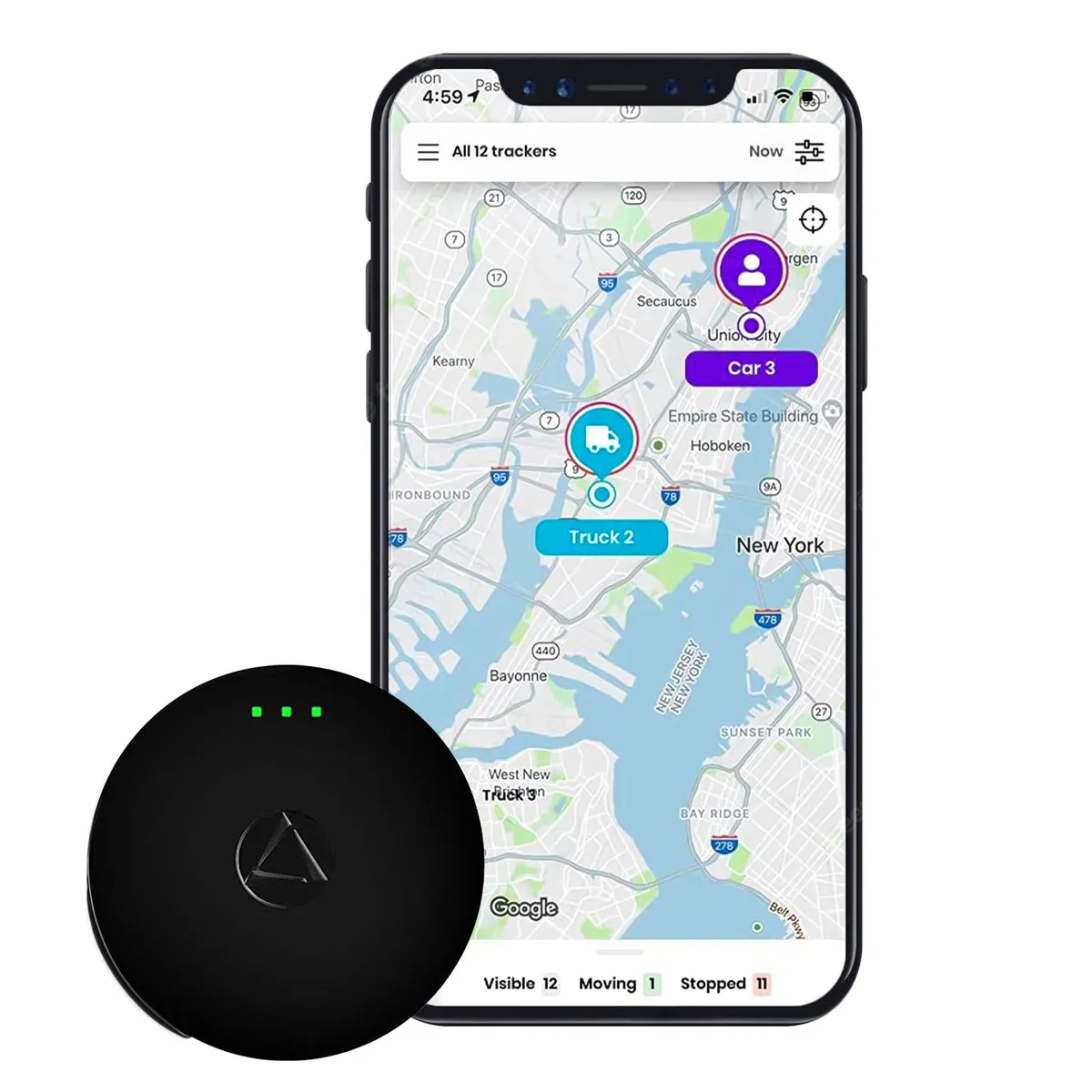
This is where owners waste the most money. An Apple AirTag or Tile feels like cheap insurance, but for theft recovery it has real limits that matter.
AirTags have no GPS. They report location only when a nearby Apple device picks up their Bluetooth signal and relays it through the Find My network. In a city that works surprisingly well. On a rural storage lot or an empty highway, it goes silent. Worse, Apple’s anti-stalking features mean an unknown AirTag traveling with someone’s iPhone eventually triggers an alert on that phone, typically within about a day. A thief with an iPhone gets told your camper has a tracker and roughly where to look for it. AirTags are also passive: they never notify you that your camper is moving. They are fine as a hidden backup, but not a recovery plan.
A dedicated battery-powered GPS tracker is the real tool. Units built for unpowered trailers, like the Outlaw Trailer GPS, run on their own lithium battery for weeks to months, send motion-activated alerts the moment the camper moves, update location every few seconds while moving, and let you set geofences around your storage spot so your phone buzzes the second it leaves. There is a monthly plan, usually around ten dollars, for the cellular connection. Hidden inside a cabinet, drawing no attention, it does the one thing an AirTag cannot: it wakes you up at 2 a.m. while the theft is still in progress. When police have a live dot on a map, recoveries happen in minutes. Without it, they happen almost never.
Whatever you choose, hide it well and never rely on just one technology. A cheap Bluetooth tag plus a real GPS unit is a sensible combo: the GPS for recovery, the Bluetooth tag as a cheap backup that survives even if the thief finds and rips out the main unit.
Choosing a Storage Lot (or Staying Home)
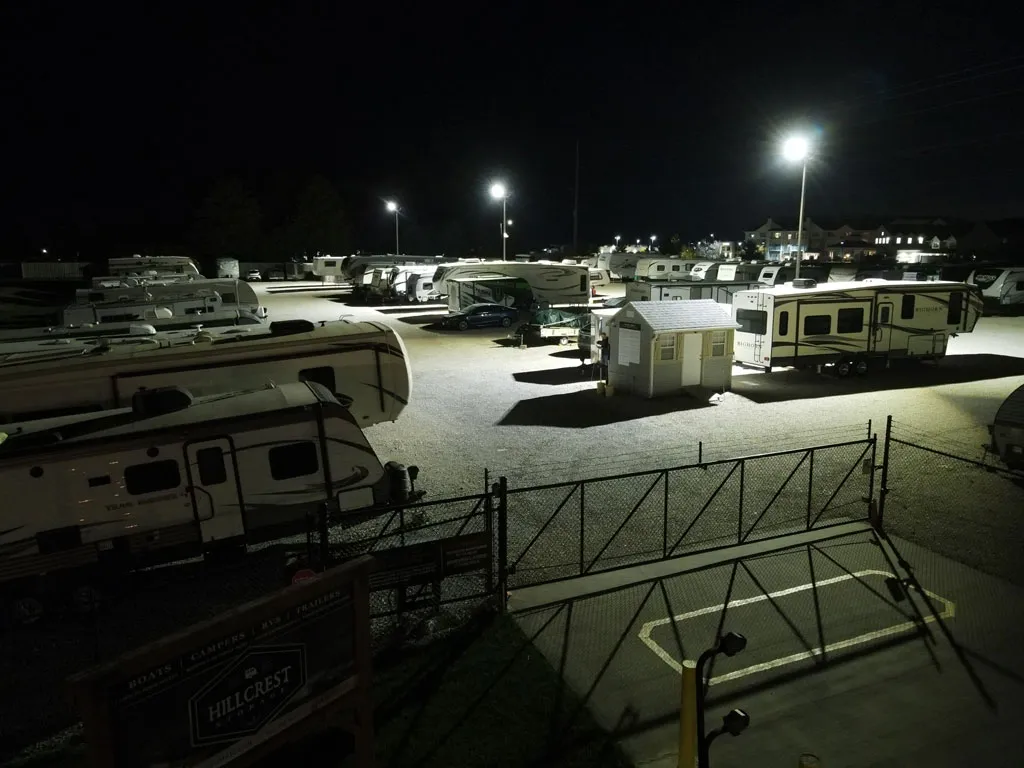
Owners who have been through this agree on one uncomfortable fact: the most common place a camper gets stolen from is a storage facility. Remote boondocking sites almost never produce theft stories, because thieves do not cruise forest roads looking for one target. Storage lots are where thieves shop.
If you use a lot, walk it before you sign. I look for a gated facility with an actual attendant or office hours, individual unit lighting, cameras that clearly cover the rows (not just the gate), and a fence that is not decorative. Ask the manager directly about break-ins in the last year. A good manager will answer; a bad one will get vague. Read the contract’s liability language and make sure your policy actually covers the camper at that address.
Home storage is not automatically safer, but it has one advantage no lot can match: you. A camper visible from your front window, under a motion light, is a terrible target. If your driveway will not work, consider whether a friend’s acreage with a locked gate beats a commercial lot. Several owners I know split a rural spot with two or three other rigs: three campers in a fenced yard with cameras is a harder target than one camper alone in a 200-unit lot.
Insurance, VIN Records, and the Paperwork That Saves You
Security prevents most theft. Paperwork decides whether a theft ruins your year or just your week.
Insure for agreed value. Most camper policies default to actual cash value, which means the insurer pays market value minus depreciation at the time of loss. For a camper you bought used or have upgraded with solar, lithium, and suspension, that gap can be thousands of dollars. Agreed value locks in the payout number when you buy the policy. Photograph every upgrade receipt and email them to your agent, because when you file a claim you will need to prove what was in the camper. Used camper values move around, so revisit the agreed number every year or two.
Inventory everything. Take dated photos of the camper inside and out, including the serial number plate and every major appliance and upgrade. Store the copies in the cloud, not on a laptop that lives in the camper. Owners who have filed claims say the same thing: the insurer believed the claim in direct proportion to the documentation.
Record the identifiers. Write down the camper serial number, the truck VIN, and the serial numbers of expensive gear. Etch the last digits of the serial number on major components like the generator and the jacks. It does not stop theft, but it makes stolen parts identifiable and harder to fence.
Know your title situation. In states that title truck campers, keep a copy of the title somewhere other than the camper. If your state does not title them, keep the bill of sale and a dated photo of the serial plate. That paper trail turns “someone has a camper that looks like mine” into a provable ownership claim.
If Your Camper Is Stolen Anyway
Do this in order, and do it fast.
- Call the police immediately. File the report before you do anything else. Get the report number. Give them the serial number, VIN, photos, distinguishing marks, and the tracker’s live location if you have one. A live GPS location is the single biggest factor in whether a stolen camper comes back.
- Do not chase it yourself. This is the safety note that matters most. A stolen camper is insured property; a confrontation with a thief is a situation where people get hurt. Give the location to the police and let them make the recovery.
- Call your insurer the same day. The earlier the claim starts, the better. Send your inventory photos and receipts right away.
- Check NICB VINCheck. The National Insurance Crime Bureau runs a free VINCheck tool at nicb.org/vincheck that tells you whether a VIN has been reported as stolen and not recovered, based on participating insurers’ records (up to five free searches per day). It is also the first thing a smart buyer runs when someone offers them a suspiciously cheap camper.
- Spread the word carefully. Post in local truck camper and RV groups with photos, the serial number, and the police report number. Do not post your home address or insurance details. Owner groups have genuinely helped recover stolen rigs because campers are distinctive and the community is small, but keep the post factual.
A Quick Legal and Safety Note
Security gear is legal in most places, but a few rules are worth knowing. Surveillance cameras that record your own property are generally fine; cameras pointed at a neighbor’s windows or recording audio where you do not live can run into wiretapping and privacy laws that vary by state, so check your local rules before you set up audio recording. Defensive devices like pepper spray or anything marketed for confronting intruders are regulated differently everywhere, and none of them are a substitute for calling the police. And as I said above: never confront a thief over property. Property is replaceable. You are not.
Frequently Asked Questions
Can a truck camper really be stolen that easily? Yes, and that is the uncomfortable truth this whole guide is built on. A camper on jacks with its battery connected can be raised and loaded into a pickup in minutes. That is why removing the jacks or at least the battery, lowering the camper onto a platform, and adding wheel locks matter more than any single fancy gadget.
Will my truck insurance cover a stolen truck camper? Usually not. Your auto policy covers the truck. The camper typically needs its own RV or camper policy, or a scheduled endorsement on your homeowners or auto policy. Call your agent and ask specifically: is the camper covered while off the truck, while in storage, and for its full replacement value? Get the answer in writing.
Is an AirTag good enough to track a stolen camper? As your only tracker, no. AirTags depend on nearby Apple devices, have no real-time GPS, cannot send you movement alerts, and Apple’s anti-stalking features can notify a thief that a tracker is traveling with them. Use one as a cheap hidden backup, but put a dedicated battery-powered GPS tracker with motion alerts on the camper if recovery matters to you.
What is the best lock for a stored truck camper? There is no single best lock, because the best lock depends on what is stealable. For the wheels, a clamp-style wheel chock lock like the Trimax TCL65. For tie-downs and turnbuckles, Torklift’s dedicated lock sets. For doors and compartments, quality deadbolts instead of the standardized factory latches. Layer them; no one lock does the whole job.
Should I remove the jacks when storing my camper? If you can, yes. Owners consistently rank this as the most effective single anti-theft step. A camper sitting on a platform with the jacks removed and stored elsewhere cannot be raised to truck-bed height without serious equipment. At minimum, remove the battery so electric jacks cannot be operated.
Does etching the VIN or serial number actually help? It helps with recovery, not prevention. Etched numbers on the frame, generator, and major components make stolen parts identifiable to police and harder for a thief to resell. Combined with dated photos and your paperwork, it turns a vague report into an identifiable, provable case.