Boondocking With a Truck Camper: The Complete 2026 Guide to Free Dispersed Camping
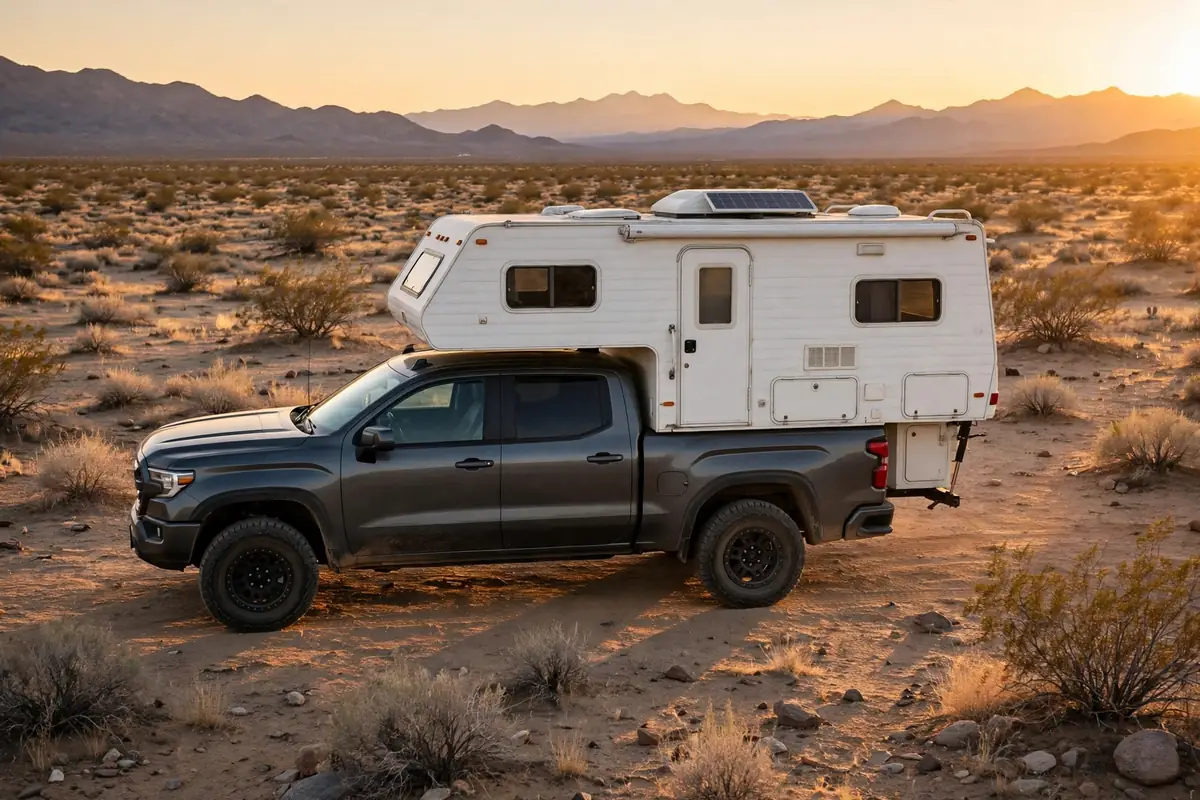
Boondocking with a truck camper is the whole reason a lot of us own one. Not the RV park with numbered sites, but a free patch of desert or pine forest you found yourself, twenty miles past the last pavement, where the sunset costs nothing and the nearest neighbor is a coyote. The BLM and the Forest Service manage hundreds of millions of acres where you can camp for free, and a truck camper reaches the good ones better than any other rig.
But free does not mean lawless, and a few rules tightened in 2026. This guide covers where you can legally park, the stay limits that actually apply, the apps worth your phone storage, how to stretch water and power, and the etiquette that keeps these places open.
Why a Truck Camper Is the Best Boondocking Rig
A big fifth wheel sees a dispersed site and asks whether the access road is graded. A truck camper sees the same site and asks whether the turnaround is tight. Dispersed sites live at the end of washboarded forest roads and BLM two-tracks never meant for 40-foot combinations. Your rig is shorter than most truck-and-trailer combos, turns around on a dime, and with four-wheel drive goes places that make travel-trailer owners wince.
The second advantage: the truck itself. When tanks run low, you do not break camp. Just drive the truck to a water spigot or dump station and come back. Big-rig owners buy expensive macerator pumps and portable waste tanks to solve the problem you solve with your ignition key.
Boondocking With a Truck Camper: Where You Can Legally Park Free
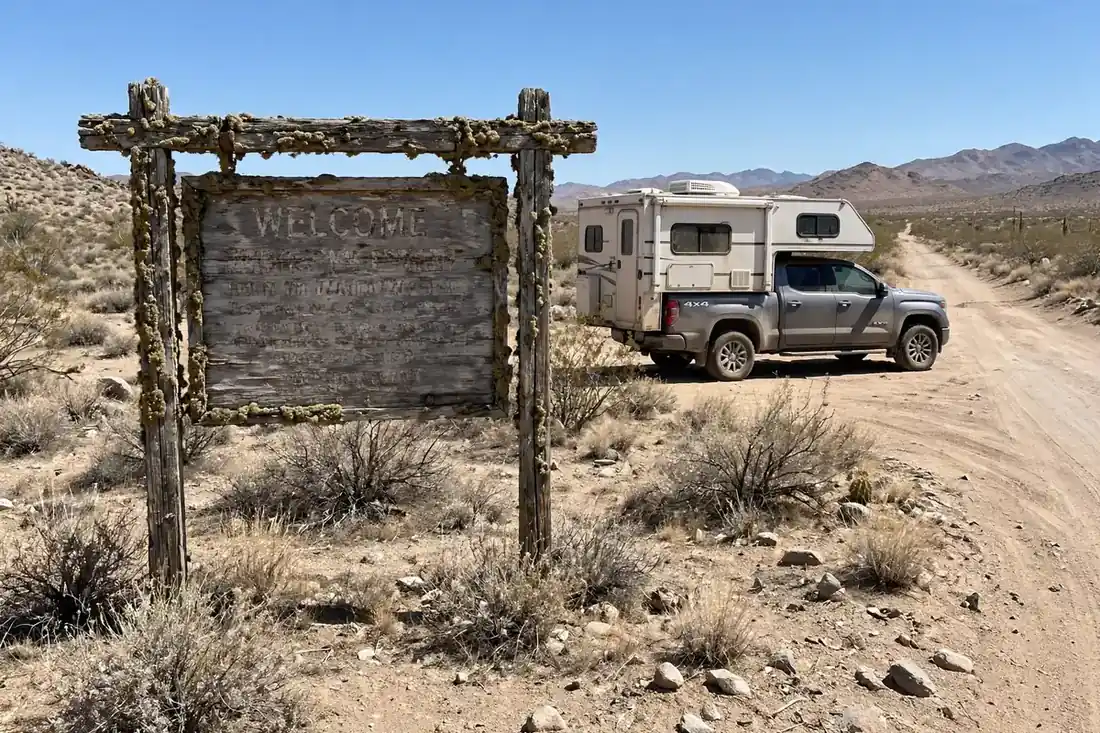
Everything below changes by district and over time. Verify with the local ranger district or field office before committing to a spot. Posted signs and forest orders beat any article, including this one.
BLM land: generally 14 days in 28
The Bureau of Land Management runs about 245 million acres, mostly in the West, and most of it is open to dispersed camping unless posted closed. The BLM’s own camping page gives the guidance everyone quotes: dispersed camping is generally limited to 14 days within any 28-day period, and when you hit the limit you move, usually at least 25 to 30 miles away.
Do not skip the word generally. Colorado, for example, runs 14 days in a 30-day period at one location. Treat 14 days as the default, read the posted rules at the trailhead, and call the local field office when in doubt. Owners on the RV forums consistently report that field offices are friendly and helpful about this.
Other BLM basics: camp at least 200 feet from water, stay within 150 feet of designated routes, use existing sites instead of carving new ones, and pack out everything. The one exception is the Long-Term Visitor Areas in California and Arizona, where winter visitors can camp up to seven months with a permit.
National forests: same spirit, different rulebook
National forests also default to roughly a 14-day dispersed stay limit, but the Forest Service sets limits at the ranger district level, not the forest level. Two adjacent districts of the same forest can have different rules, so check the district whose ground you are actually on.
The other big difference: in national forests, the Motor Vehicle Use Map is the legal document for where you can drive and camp. If a road is not on the MVUM, it is closed to motorized travel, even if it looks perfectly drivable. The map is free at forest offices and online.
The forest picture tightened recently. In 2026, the Stanislaus National Forest in California finalized an order with a hard 21-day per calendar year cap on dispersed camping, aimed at people living full-time in the forest. If that model spreads, the free-camping map shrinks everywhere. Popular corridors now require numbered, designated sites, still free, and some busy zones near Jackson, Sedona, and Salt Lake City run shortened limits of five to ten days. Do not assume 14 days everywhere. Read the local order.
State trust lands: cheap, but not federal
This is the category that surprises truck camper owners most, because the maps make state trust land look like just more public land. It is not. These lands are held in trust to fund schools, and western states run their own permit systems:
- Arizona: A recreation permit is required just to stop on State Trust land. The individual permit runs about $15 per year, the family permit about $20, and camping is capped around 14 cumulative days per calendar year. Lands leased for agriculture, mining, or military use are closed entirely.
- New Mexico: A $35 per year recreation permit is required, and it does not permit camping. Camping on leased state trust land needs the written permission of the surface lessee, arranged through the State Land Office.
- Utah: Camping is allowed on most trust lands for up to 15 consecutive days, with a right-of-entry permit required beyond that.
- Montana: Overnight use is limited to two consecutive days on leased or licensed land, and 16 days in a 30-day period on unleased land outside a designated campground.
State trust land is a legitimate boondocking option, especially Arizona’s desert sections every winter, but it is a separate system with its own paperwork. Buy the permit before you go.
Where you cannot boondock
National parks do not allow dispersed camping in the BLM sense. City and county land, private land, and areas posted no-camping are off the table. When the map is ambiguous, the agency map, not a campsite app, is the legal answer.
Finding Spots: The Apps That Actually Work in 2026
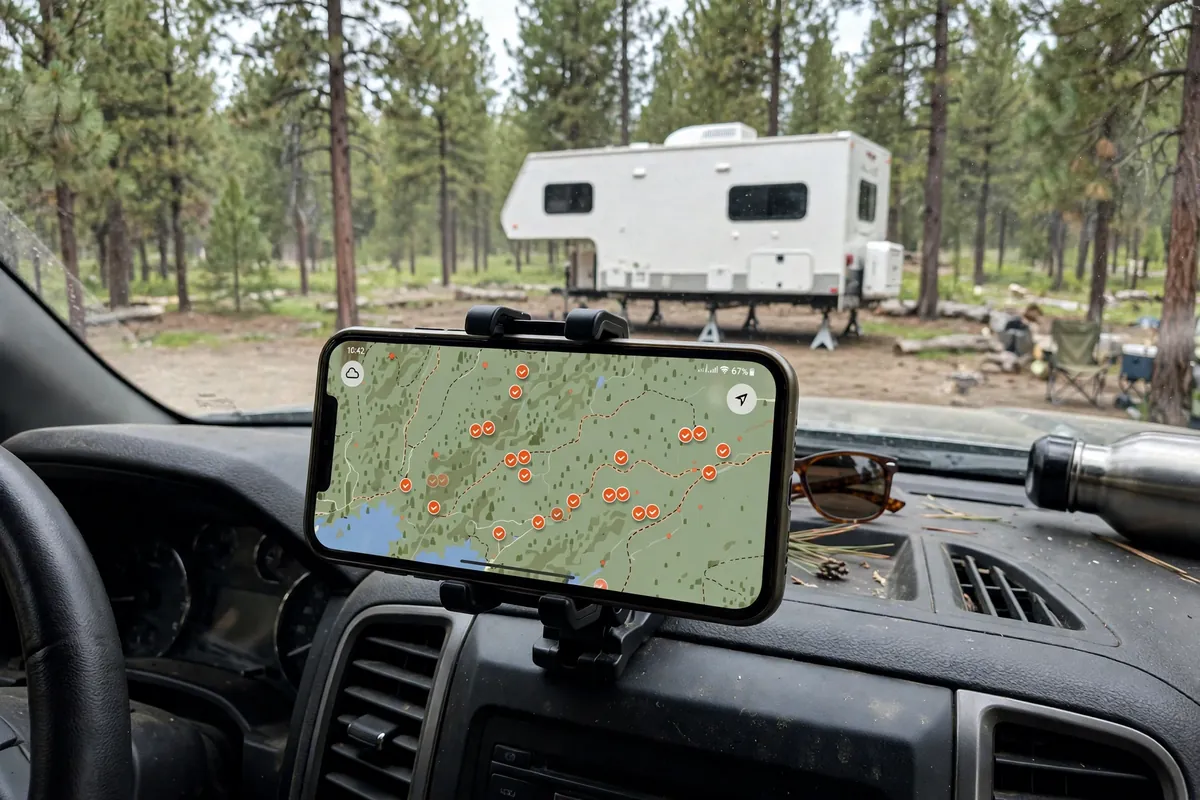
The standard stack for finding sites is free or nearly free, and each tool covers a weakness of the others.
Campendium is the review-first tool at campendium.com. The app and site are free, and user reviews include cell coverage ratings, which matters more than beginners expect. The premium tier is now bundled as Roadpass Pro at $59.99 per year, so the free tier does the job. Its weakness, shared by every review-based app: a glowing review from 2019 means nothing if the area closed in 2025. Treat anything older than a year as a rumor.
iOverlander is the traveler’s database, and it is the app experienced boondockers reach for when they need water or a dump station, not just a campsite. It tracks wild camping, water refill points, dump stations, mechanics, and propane worldwide, and the basic version is free. Offline maps sit behind the paid Pro or Unlimited subscription, which is the feature that matters once you lose signal. Check it out at ioverlander.com.
FreeRoam is the third tool in the kit, built specifically around free and dispersed camping with an emphasis on public-land boundaries. Between the three, you cross-check every spot three ways: reviews, traveler reports, and land ownership.
The one free tool that beats them all on legality: the Motor Vehicle Use Map. Download the MVUM for your forest before you lose signal. Apps show you where people camped. The MVUM shows you where you are allowed to camp. Cross-check app listings against the agency, because a spot reviewed in 2023 may sit in a corridor that went designated-sites-only in 2024.
The Four Clocks: Water, Power, Waste, and Propane
Every boondocking trip is a race against four things running out. A popular RV YouTuber who tested fifteen boondocking hacks put it well: your rig has four clocks, and the one that hits zero first ends the trip.
Water: the first clock for most people
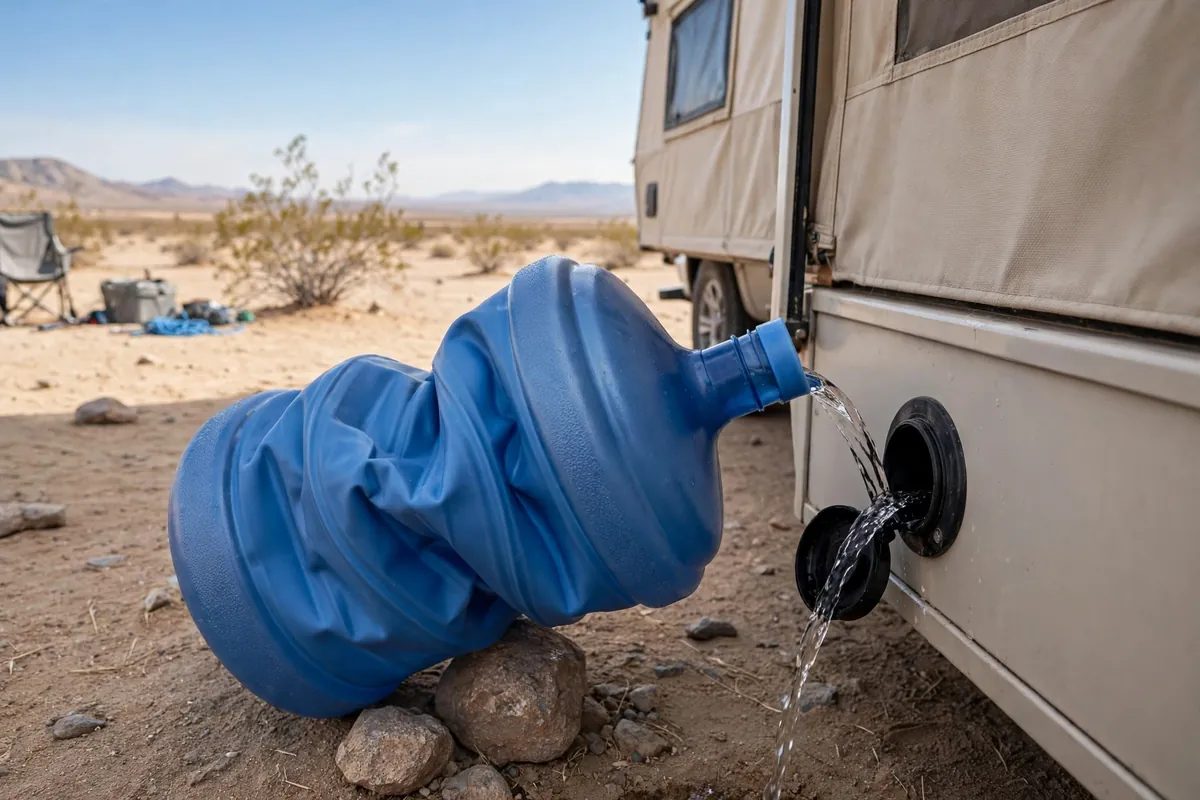
Truck camper fresh tanks are small, commonly 20 to 40 gallons, and water weighs 8.3 pounds per gallon, so a full tank is real payload. Conservation is a skill, not a hardship: navy showers, paper plates on the lazy nights, a basin for dishwater instead of a running tap, and catching the shower warm-up water in a jug.
The recurring forum complaint is that refilling mid-trip is harder than expected. The community solution: carry a few collapsible five-gallon water containers in the truck bed and a small 12-volt transfer pump, and refill the camper tank at camp. Smaller containers beat one big one, because they are liftable and a single leak does not cost you the whole reserve. iOverlander lists water refill points, and many owners top up at the same stops they use for dump stations.
Power: the furnace fan is the thief
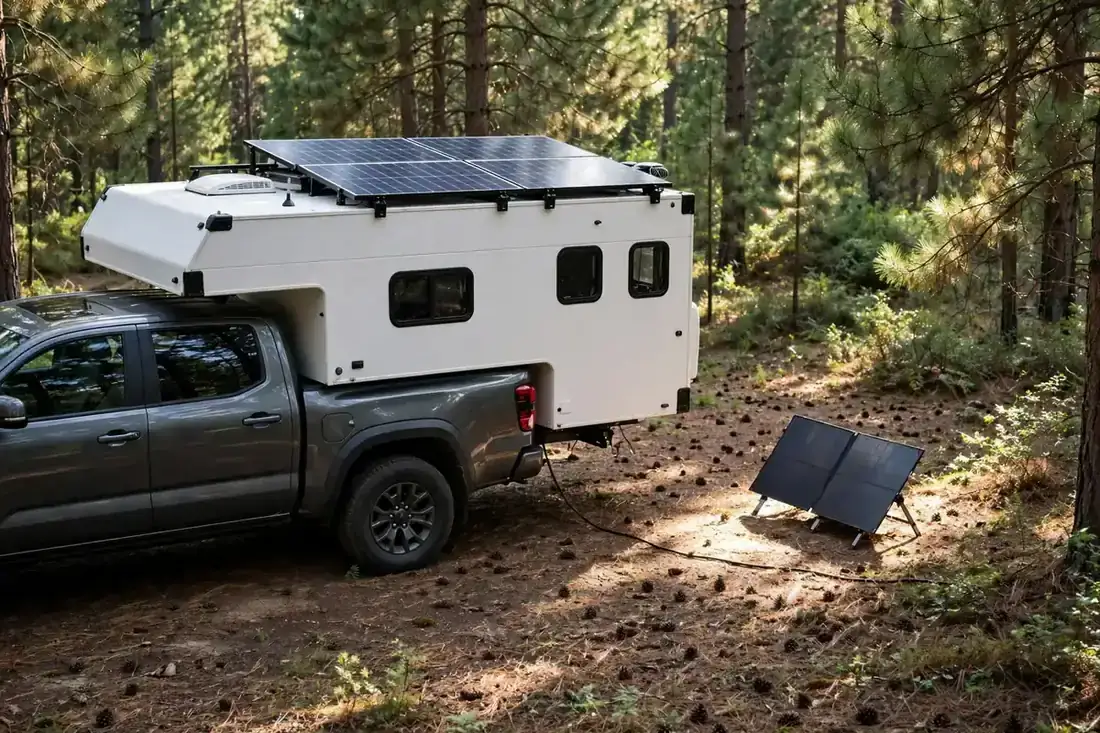
If you remember one electrical fact, make it this: the furnace fan is your biggest battery draw, commonly seven or more amps, running all night in cold weather. Add the fridge, vent fan, lights, and phones, and a modest battery bank dies in two to three days with zero charging.
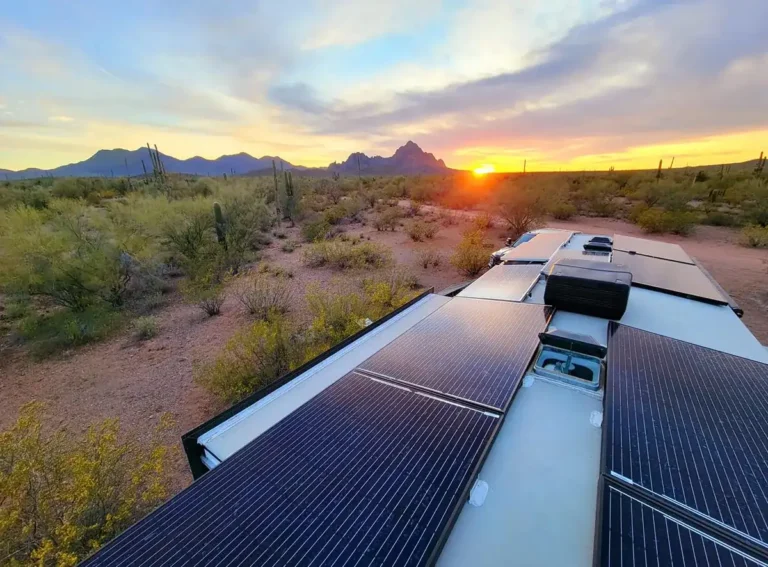
The community wisdom has settled into a clear sequence: get a generator first, then figure out solar. With a generator you always have power, especially with enough battery to carry you through quiet hours. Solar is a second source until you know your consumption, because factory 200-watt rooftop setups barely trickle-charge once a 12-volt fridge enters the picture. Do the load math first with our truck camper solar and lithium sizing guide, or go plug-and-play with a unit from our portable power station roundup.
Three cheap habits stretch any battery: turn the inverter off when you are not using AC power, because it draws current doing nothing; charge phones and laptops while driving; and add a DC-DC charger so the alternator refills the camper bank on the drive in. In shade, a portable ground panel in the one sunny patch outperforms twice the rooftop wattage.
Waste: the gray tank fills first, every time
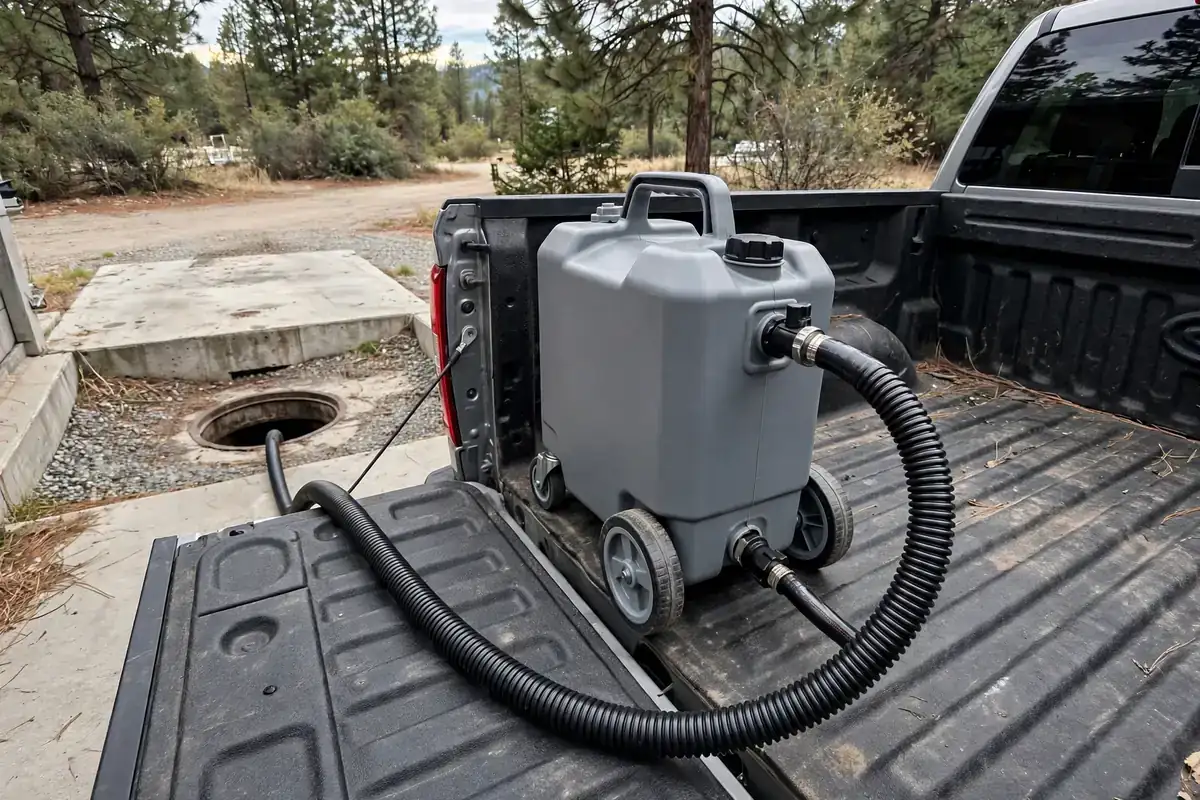
Here is the problem nobody warns beginners about: the gray tank fills two to three times over before the black tank does, and a full gray tank backs up into the shower pan. Forum threads are full of this exact discovery, usually around day three of the first trip.
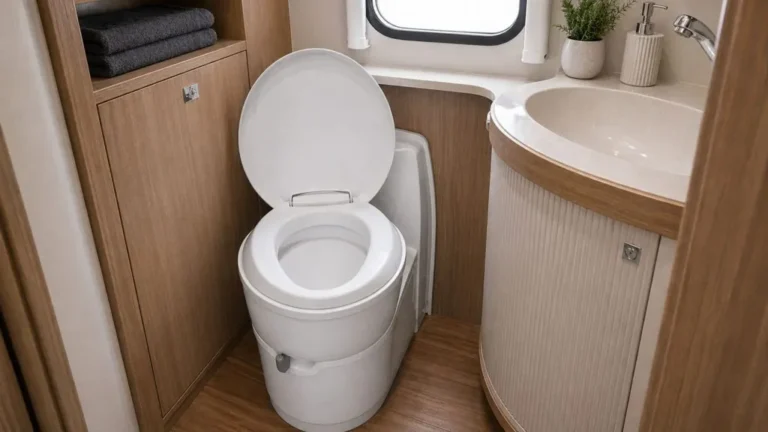
Conserve water at the sink, because nearly all fresh water becomes gray water, and carry a portable tote tank in the truck bed to haul gray water to a dump station without breaking camp. For black water, cassette, composting, and dry-flush toilets stretch capacity for weeks or remove the dump station entirely. Our truck camper toilet comparison breaks down all three with 2026 pricing.
The rule that never changes: never dump gray or black water on the ground. Use a dump station, a campground toilet, or a sewer cleanout. Gray water on the ground is illegal in most states and many campgrounds, and it is the fastest way to get a dispersed area closed.
Propane: the quiet limiter in cold weather
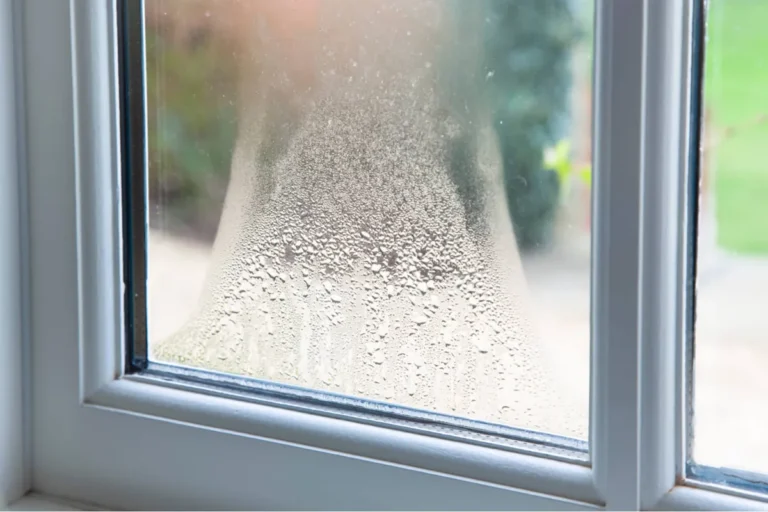
Propane rarely ends a summer trip, but it ends winter ones. A big furnace in sub-freezing weather can drain a 20-pound tank in under a week, and propane in the backcountry is a planned stop. Refill before remote stretches, and note that grocery store exchange tanks only hold 15 to 16 pounds of propane, not the full 20. Winter boondocking without ventilation also turns your camper into a rainforest, so read our condensation guide before your first cold trip.
Boondocking Etiquette: The Rules That Keep These Places Open
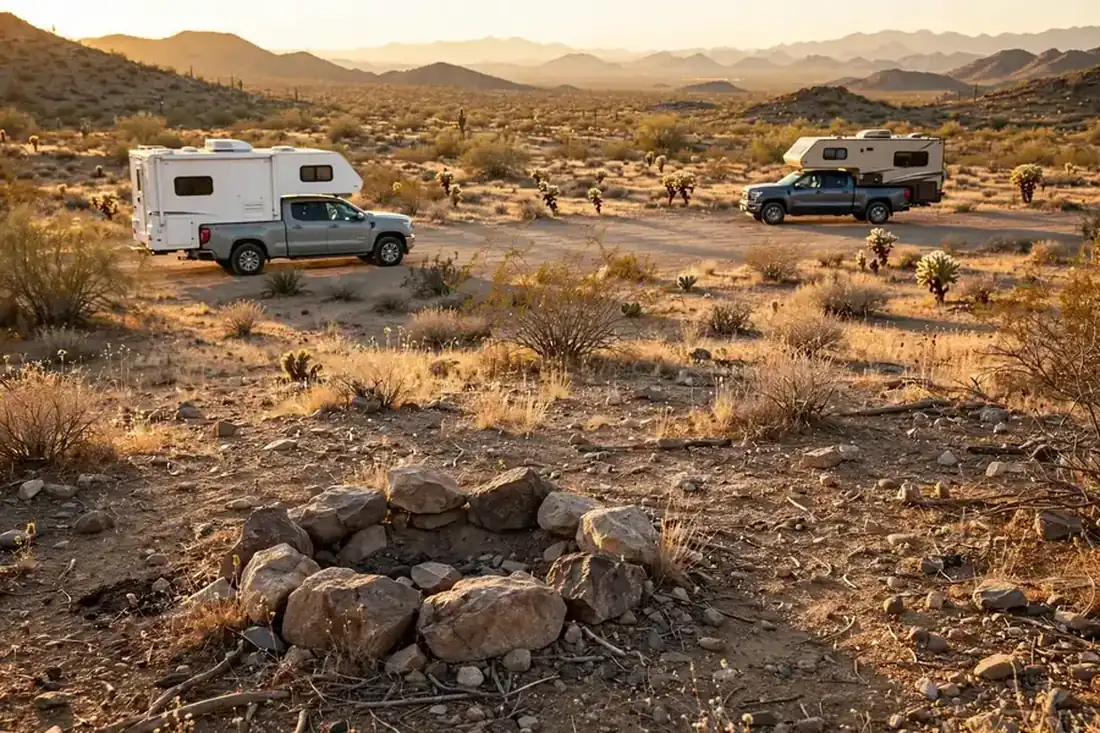
Dispersed camping runs on an honor code, and the code is enforced by closures. So: use established sites, never cut new roads or clear vegetation, and pack out everything, including the trash the last person left. Keep the generator to daytime hours with short runtimes, never next to a rig on solar. If a spot fits two rigs and another camper is clearly looking, wave them in. Do not hold sites with chairs for friends arriving Friday. Respect quiet hours the way you want them respected at 6 a.m.
And the one that costs nothing: be friendly. A wave, a tip about the water spigot in town.
What the Community Wishes Every Beginner Knew
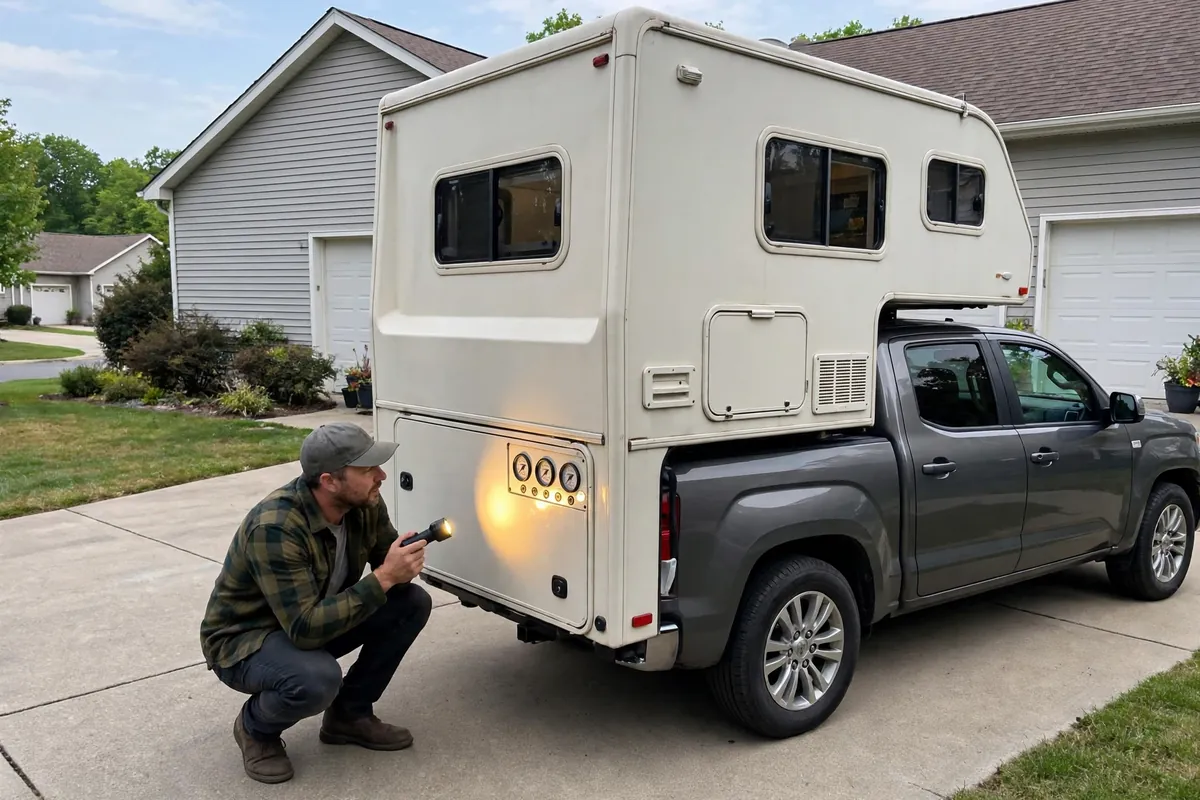
Run the driveway test. The highest-value advice in that YouTube boondocking video was also the cheapest: before your first trip, camp in your own driveway with the tank full and no hookups, and find out which clock runs out first.
Assume no signal, and plan for it. The most common rookie complaint on the owner forums is the phone dying fast in a dead zone, because it burns battery searching for a tower that is not there. Airplane mode when you have no bars, 12-volt USB outlets wired into the camper’s house system, and a look at Campendium’s cell coverage ratings before you pick a site.
Size your waste plan before your water plan. Beginners obsess over fresh water and ignore the gray tank, and the gray tank is what ends trips. Know your gray capacity, carry the tote or know the nearest dump station.
Buy the generator before the solar. A small inverter generator works on cloudy days, in the shade, and at night, charging batteries and running the microwave in a couple of hours. Add solar after you know your consumption, sized to it.
Secure the rig like it is anywhere else. Remote sites see very little theft, but trailheads are different stories. Lock your tie-downs, take the valuables, and hide a GPS tracker. Our truck camper theft prevention guide covers the full system.
Thinking about making this a lifestyle instead of a long weekend? Our full-time truck camper guide compares the rigs built to live off-grid for months.
A Quick Legal Note
Nothing here is legal advice, and the rules change. Stay limits, permit requirements, fire orders, and closures vary by state, field office, and ranger district. Before you park, check the current rules with the BLM field office, the ranger district, or the state land agency, and obey every posted sign. Free camping survives because campers stay legal.
FAQs
Is boondocking with a truck camper legal?
Yes, on most BLM land and in most national forests, under each area’s rules. BLM land generally allows 14 days of dispersed camping within any 28-day period, and national forests typically allow around 14 days set at the ranger district level. State trust lands in Arizona, New Mexico, and Utah run their own permit systems. National parks do not allow dispersed camping.
How long can I stay in one dispersed campsite?
The common baseline is 14 days, but it is not universal. BLM guidance is generally 14 days in a 28-day period with a move of 25 to 30 miles afterward, though Colorado runs 14 in 30 and some field offices differ. National forests set limits by ranger district, commonly 14 days, with some busy zones shortened to 5 to 10 days and one California forest now capping dispersed camping at 21 days per calendar year. State trust land limits range from 2 consecutive days to 15 days by state. Check the local order.
Which app is best for finding truck camper boondocking spots?
Use more than one. Campendium has the best reviews and cell coverage ratings, and it is free. iOverlander is strongest for water refill points and dump stations. FreeRoam focuses on free and dispersed sites with public-land boundaries. For national forests, the free Motor Vehicle Use Map is the legal authority on where you can drive and camp.
How do I get water and dump tanks while boondocking?
Fill the fresh tank before leaving pavement, carry collapsible five-gallon jugs and a small 12-volt transfer pump for mid-trip refills, and mark water points in iOverlander ahead of time. A portable tote tank in the truck bed lets you haul gray water to a dump station without breaking camp. Never dump gray or black water on the ground.
Do I need a permit to camp on state trust land?
In several western states, yes. Arizona requires a recreation permit, about $15 per year for an individual or $20 for a family, with camping capped around 14 days per year. New Mexico requires a $35 annual recreation permit that does not cover camping at all. Utah allows up to 15 consecutive days on most trust lands. Buy the permit before you go, and treat trust land as a separate system from federal land.