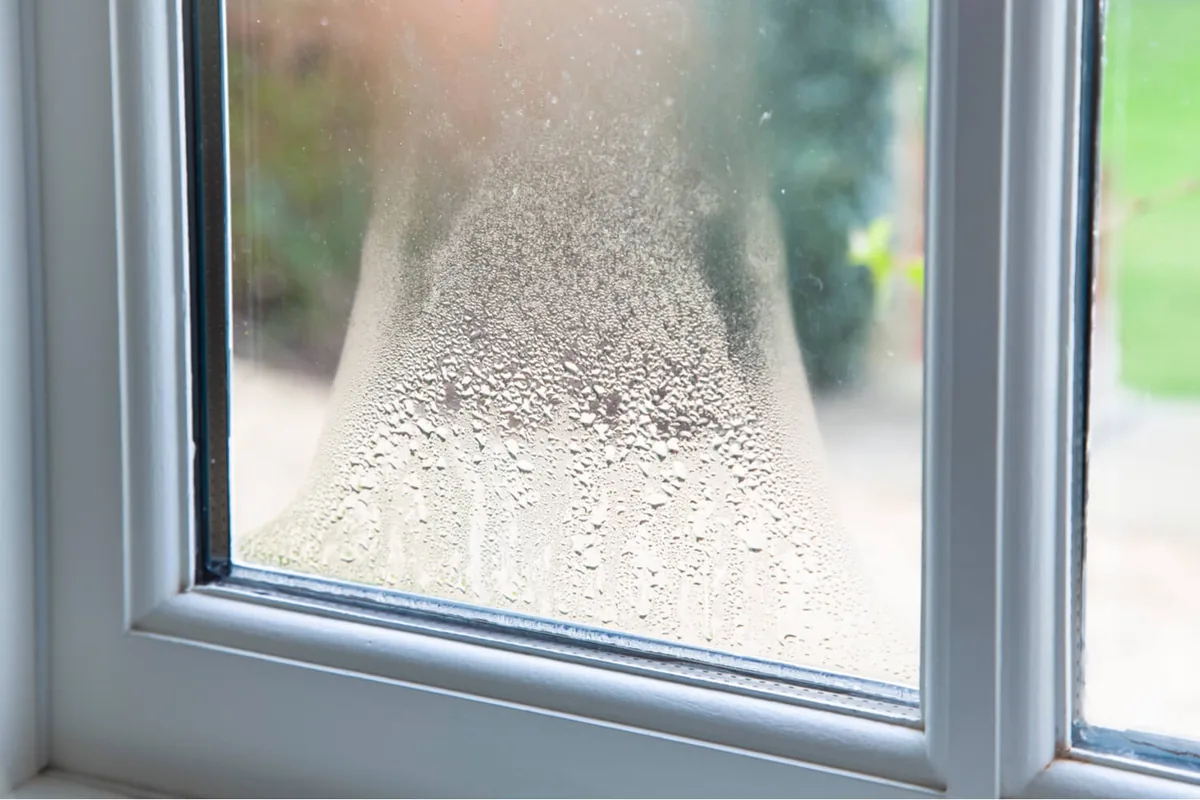
How to Stop Condensation in a Truck Camper (2026 Definitive Guide)
You know the moment. It’s 3 a.m., it’s 25 degrees outside, and a cold drop of water lands square on your forehead. You wipe it off in the dark, tell yourself it was probably nothing, and then it happens again — the ceiling above your cabover bed is sweating. If you’re wondering how to stop condensation in a truck camper, I can save you the season of trial and error it cost me: it’s fixable, mostly with habits, starting tonight.
That drip ruined my first real winter trip. I sealed up tight, cranked the heat, and woke to windows running with water, damp cabover corners, and a clammy mattress underside. A month later came the first whiff of mildew. This is the guide I wish someone had handed me that night.
Why Truck Campers Get Condensation
Condensation isn’t a leak. It’s physics, and truck campers are basically designed to produce it.
Warm air holds more moisture than cold air. Every breath exhales warm, humid air — roughly a liter of water vapor per person per night. Put two people in a truck camper, with maybe a fifth of a travel trailer’s air volume, and that moisture has nowhere to go.
Then it meets a cold surface. Truck campers are largely single-wall construction: a thin skin with modest insulation and little thermal break. On a cold night, the inside face of the wall is nearly as cold as the night air — when warm, humid interior air touches it, the air cools past its dew point and water vapor turns to liquid. Windows are the worst, but walls, ceilings, and cabover corners all do it.
It’s worse than in a van or trailer for three reasons. First, the small volume means humidity spikes fast. Second, that single-wall shell means big temperature swings between interior surfaces and the living air. Third, you seal it up tight on cold nights — why open a vent when you’re paying to heat the place? That instinct is exactly backward, and it’s the first thing to fix.
Ventilation: The Fix That Feels Wrong
Here’s the counterintuitive move that matters more than anything else on this list: crack a roof vent and run the fan, even in the cold.
I fought this for a full season. Opening a vent in January felt like throwing heat into the night sky. But moisture removal is a numbers game: one cracked vent plus a fan on low exhausts the humid air quickly, and what replaces it is cold outside air that’s low in absolute moisture. Once that air warms up inside, its relative humidity drops dramatically. You’re not freezing the camper out; you’re trading wet air for dry air and letting the heater warm the dry stuff.
The working formula:
- Crack the roof vent about an inch — just enough to let moist air escape.
- Run the vent fan on low or medium overnight. It’s loud, but it moves the needle more than anything else in this guide.
- No vent fan? Crack a downwind window half an inch so air has both an exit and an entry path. One opening beats none; two is a system.
Check behind cushions and under the mattress every few days while camping cold — condensation hides in dead-air spots. A quick wipe-down every morning keeps moisture from soaking into upholstery and wood. I keep a small chamois by the bed for exactly this.
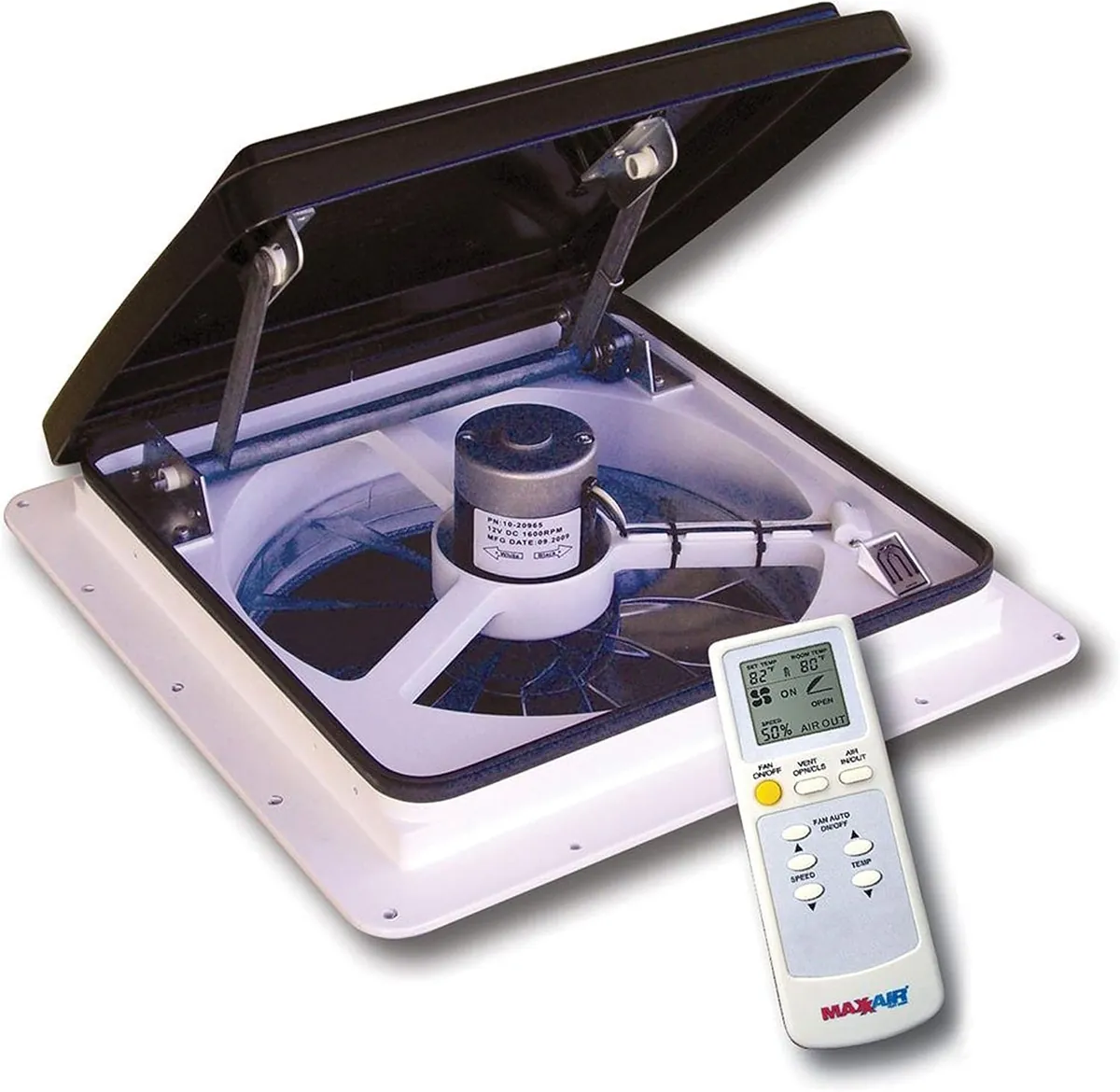
A winter-storm test of a popular pop-up truck camper put it bluntly: within an hour of the first cold night, water was beading on the metal crossbeams and dripping onto the sleeping bag. Heat alone didn’t fix it — what worked was cycling: fire the heater to warm the air, then run the powered roof vent to dump the moisture, repeat a few times. That heat-then-vent rhythm is the practical version of everything above.
Heat Source: Why Diesel Heat Is So Much Drier
This is the most common “aha” moment in condensation conversations — and there’s a popular myth that needs correcting first.
Unvented propane heat adds water to your air. Vented propane furnaces don’t. Burning propane produces carbon dioxide and water vapor (C₃H₈ + 5O₂ → 3CO₂ + 4H₂O), and roughly a gallon of propane yields a gallon of water in vapor. Heat with a portable Mr. Buddy, a catalytic heater, or a cooktop left on for “extra warmth,” and every drop of that combustion water goes straight into your camper’s tiny air volume.
A proper RV propane furnace (Dometic, Suburban, Atwood) draws combustion air from outside and exhausts combustion water outside too. Zero interior moisture. If you have a factory furnace, it’s not your condensation culprit.
So why do diesel heater owners (Webasto, Espar/Eberspächer, and the ubiquitous Chinese 2kW–5kW parking heaters) rave about dry heat?
- External combustion exhaust. All combustion products leave through an exhaust pipe. Zero added moisture.
- Constant low-level airflow. The heater blows warm air all night on low, keeping interior air circulating — moving air is the enemy of condensation.
- Long run times. They sip fuel and battery, so owners run them all night at low settings. Propane furnace owners often cycle the thermostat aggressively to save fuel — and cold surfaces plus humid air is exactly when condensation wins.
Owners consistently report dry windows on sub-freezing mornings after installing one. If you winter camp seriously, it’s the highest-impact upgrade — a moisture-control system that works while you sleep.
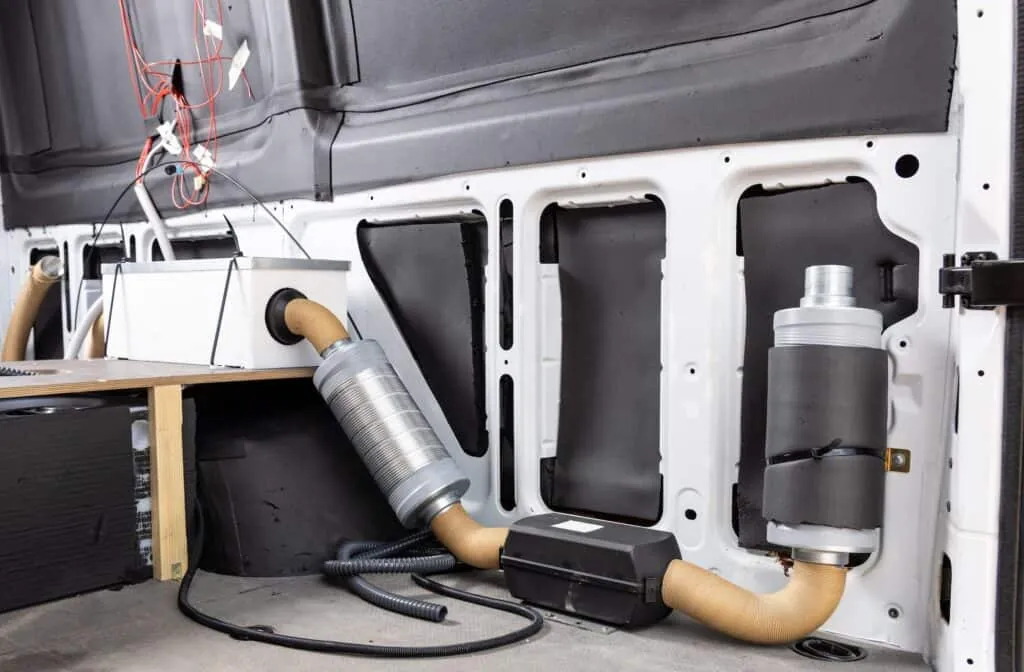
One full-time setup I keep seeing shared is the external diesel heater: a budget parking heater sits outside the camper on a small platform, ducting warm air in through a 3-inch wall flange with the exhaust routed well away. A family of four plus two dogs and two cats in the Pacific Northwest reported dry windows all night on about half a gallon of diesel — real-world proof that ducted dry heat scales to the worst-case moisture load.
Your Mattress Is Hiding Condensation
Of everything in this guide, this is the one most owners discover too late. Your body puts out heat and moisture overnight, the mattress traps it, and the cold cabover platform underneath is the coldest surface in the camper. The result: a damp mattress underside, and eventually mildew, stains, and that smell you can’t quite place.
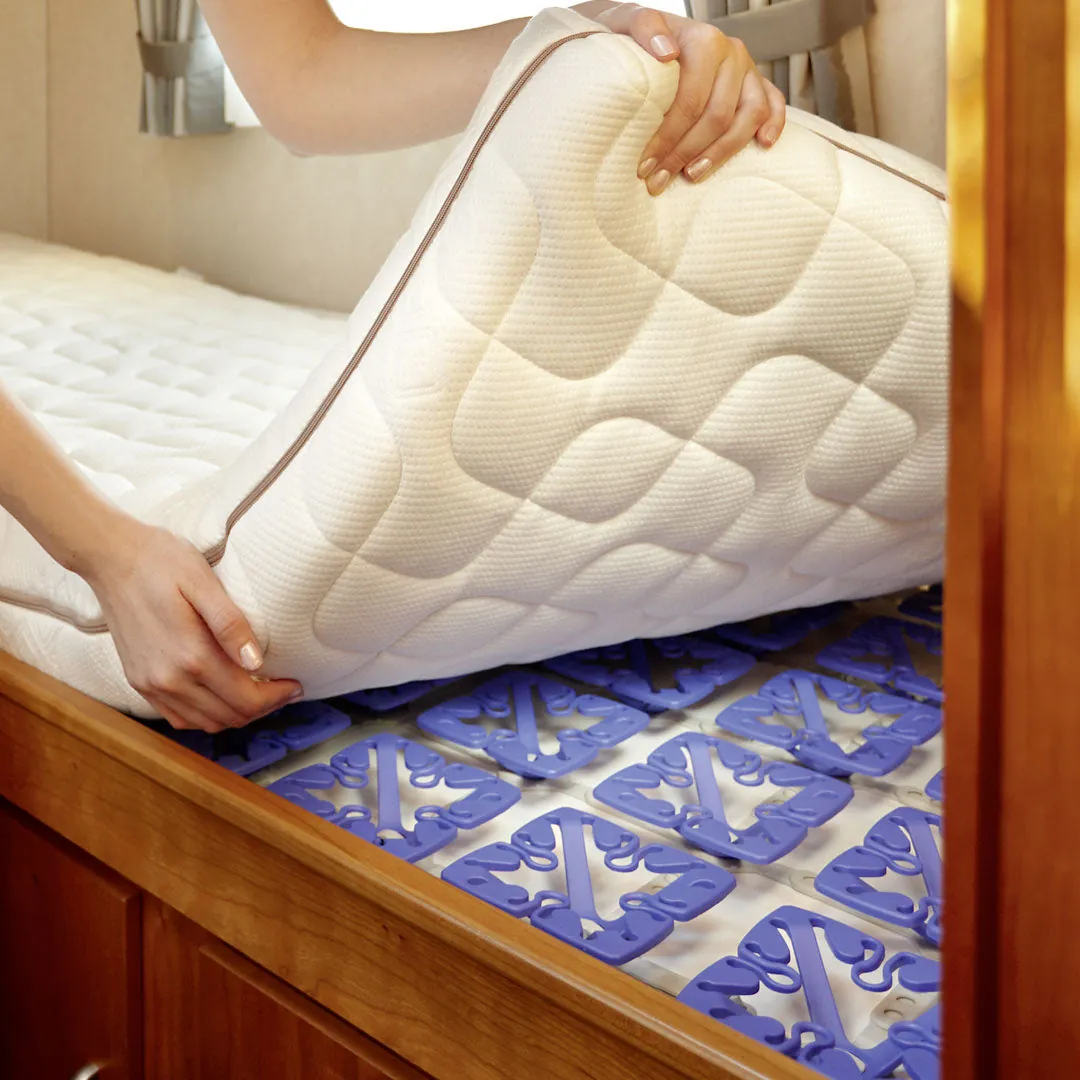
Froli Sleep System. This is the real deal, not a hack. Froli is a German-made modular spring system — the same design used in sailboats for years — that lifts your mattress 1⅜ to 2⅜ inches off the platform, creating permanent under-mattress ventilation. Each spring flexes independently, so it’s far more comfortable too. Truck camper owners cite condensation as a top reason for installing it, and some manufacturers (nuCamp’s Cirrus) ship it factory. Not cheap, but it’s the buy-once fix.
Ventilation mesh (HyperVent and similar). A springy polymer mesh mat between mattress and platform. Smaller air gap than Froli and no comfort boost, but much cheaper — the smart budget play. A Scout owner on Instagram documented an even cheaper DIY: interlocking plastic airflow-grid tiles, the snap-together kind sold for garage floors, trimmed to fit the platform’s curved corners. After a humid East Coast storm run that had previously left pools of water under the mattress, the tiled platform stayed dry — and commenters piled on with their own versions using bar mats and desiccant packs.
Slats. Bed slats on the platform give air somewhere to move. A classic fix that works well.
The habit fix. Not ready to buy anything? Prop the mattress up every morning and air it for an hour while you make coffee. Flip it. Feel the underside regularly. Moisture you find early is a wipe-down; moisture you find in spring is mold.
One more spot: the gap between the mattress edge and the cold exterior wall. Pull the mattress an inch or two away — a mattress pressed tight against a cold wall becomes a vertical condensation strip. Some campers wedge foam pool noodles in the gap: cheap, effective, weirdly satisfying.
Moisture Absorbers: Helpful, But Know Their Limits
DampRid and Eva-Dry show up in every condensation thread, so let’s be honest about what they can and can’t do.
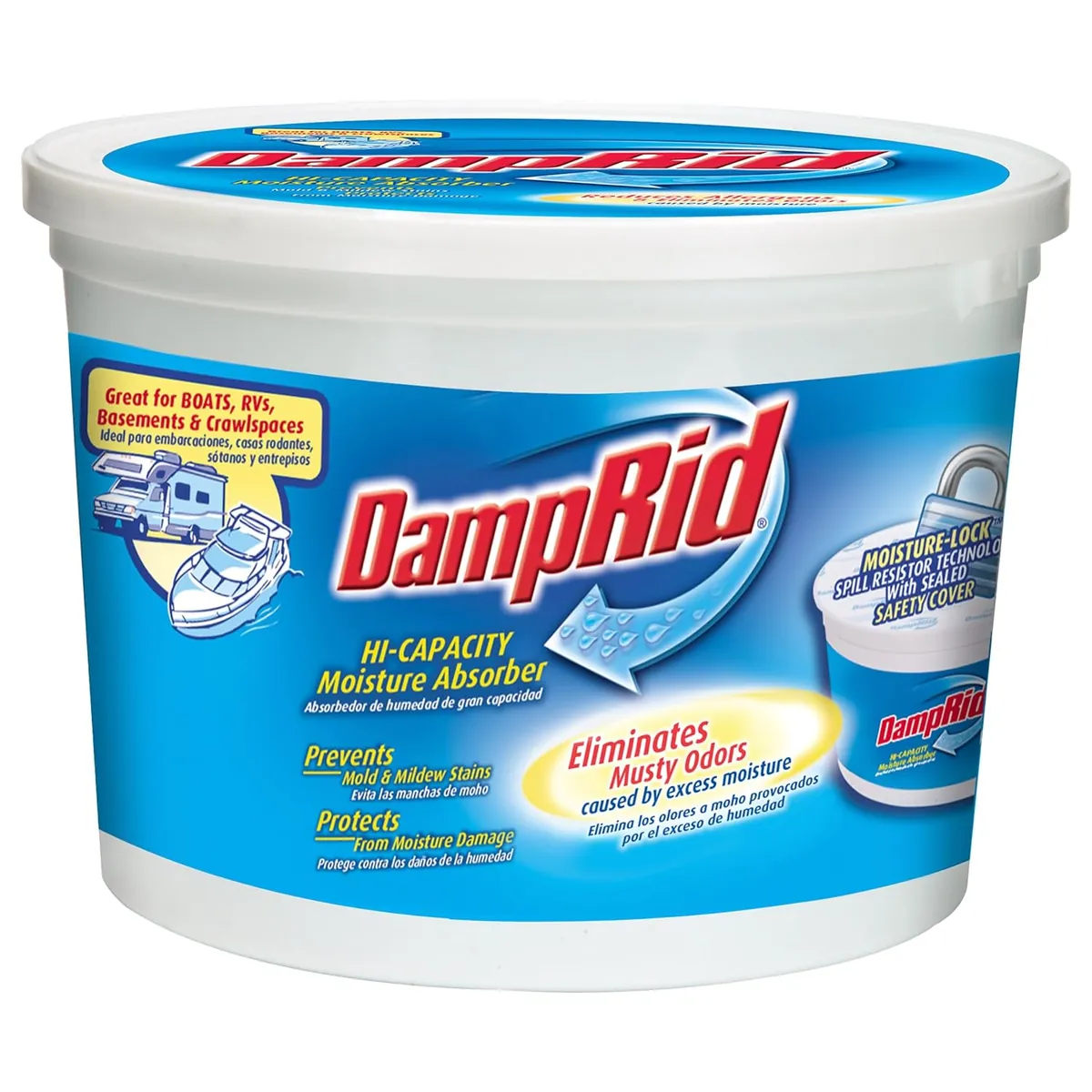
DampRid (calcium chloride) genuinely pulls water out of the air — set a tub in the cabover and you’ll watch it collect liquid. But its capacity is a cup or two over days, while two sleeping humans exhale liters of vapor per night. Great for storage, decent for a weekend trip. It cannot keep up with active overnight moisture.
Eva-Dry and small electric dehumidifiers are rechargeable units built for closets and small spaces. A helper, not a solution — a full-size unit would work, but it draws serious power and eats precious space, so it’s not realistic for boondocking.
My take: use a desiccant tub as part of the system, especially in storage or shoulder seasons. Ventilation and dry heat do the heavy lifting.
Insulate the Cold Spots: Windows, Curtains, Thermal Bridging
The other half of the battle is making interior surfaces less cold.
Windows. Single-pane RV windows hit dew point first, so they’re also where you’ll see results fastest.
- Reflective window film or Reflectix cut to fit each window, pressed in place at night. It keeps the interior face of the glass warmer, delaying condensation. Store the pieces behind a cushion during the day.
- Thermal curtains or insulated covers do the same job with the bonus of privacy and darkness for the cabover.
- Pull covers off in the morning and wipe any moisture — the glass is still cold behind the cover.
Thermal bridging. Every metal frame, screw, and bare-aluminum edge conducts cold straight through the wall — these spots can be far colder than the insulated wall around them, and they condense first. On a cold morning, run your hand along the interior to find them: window frames, the entry door frame, the cabover’s front corners. Cover metal frames with insulating tape or foam where practical, and stuff foam into cold corners. In pop-up campers, the canvas walls have almost no R-value — the hardest version of this problem, and the answer is ventilation plus a dry heat source.

Pop-up owners have one more trick: the thermal-pack wind tunnel. If your camper has an insulated thermal liner over the soft walls, open the upper vinyl windows, close the thermal liner’s openings, and run both roof fans while you’re outside having coffee. The fans pull air through the gap between the vinyl and the liner, drying the canvas fast. Owners on the forums swear by it — it’s the difference between packing up damp and packing up dry.
If cold-weather camping is a priority and you’re still shopping, this is worth weighing when you choose the best truck camper to buy — hard-side campers with real insulation and double-pane window options fight condensation far better than thin single-wall pop-ups.
Cooking and Showering Habits That Cut Moisture
You generate a shocking amount of moisture just living in the camper. Boiling pasta without a lid can pump serious steam into a few hundred cubic feet of air. Habits matter here more than they ever would in a house.
- Lids on pots, always. The easiest moisture cut in the whole guide.
- Run the vent fan while cooking — and for 15–20 minutes after.
- Crack a window near the stove so the fan has make-up air.
- Never boil water for “extra heat” — it’s a humidifier disguised as a heater.
- Skip the indoor shower when it’s cold. A hot shower in a tiny wet bath is a condensation bomb; if you do it, run the bath vent wide open and wipe the walls after.
- Don’t dry wet gear inside without ventilation running. Wet jackets and damp towels are slow-release humidifiers — hang them in the heater’s airflow with a vent cracked.
How to Stop Condensation in a Truck Camper: Solutions Ranked
Not every fix is equal. If you want a practical plan for how to stop condensation in a truck camper for good, here’s how I’d rank the solutions by real-world impact:
| Rank | Solution | Impact | Cost / Effort |
|---|---|---|---|
| 1 | Ventilation: cracked vent + fan running overnight | Highest — removes moisture at the source | Free (uses battery) |
| 2 | Dry heat source (diesel heater / vented furnace run steadily) | Very high — no added moisture + constant airflow | $$ for diesel heater install |
| 3 | Mattress airflow (Froli system or HyperVent mesh) | High — prevents the worst hidden moisture damage | $ to $$$ |
| 4 | Cooking/showering habits (lids, fans, no indoor showers) | Medium-high | Free |
| 5 | Window insulation (Reflectix, thermal curtains) | Medium — raises surface temps, delays dew point | $ |
| 6 | Thermal bridge fixes (insulating frames, corners) | Medium | $ |
| 7 | Moisture absorbers (DampRid, Eva-Dry) | Low as primary — fine as backup/storage | $ |
Notice the pattern: the top of the list is about removing moisture (ventilation) and not adding it (heat source). Everything below is damage control. If you only do two things, do those two.
FAQ
Why is there condensation in my truck camper?
Because you’re a humidifier sleeping in a cold metal box. Your breath and perspiration add liters of water vapor to a very small air volume every night, and the thin, single-wall shell gives that moisture plenty of cold surfaces — windows, walls, the cabover — to condense on. It’s physics, not a leak, and it gets worse the colder it is and the more tightly sealed the camper is.
Does a diesel heater reduce condensation?
Yes — it’s one of the most effective upgrades for the problem. A diesel heater (Webasto, Espar/Eberspächer, or a 2kW–5kW Chinese parking heater) burns fuel in an externally vented combustion chamber, so unlike an unvented propane heater, it adds zero moisture to interior air. Just as important, it blows warm air continuously all night, keeping air circulating and surfaces warmer. Owners consistently report dry windows in the morning. Note that a vented propane furnace is also moisture-neutral — the moisture problem comes specifically from unvented combustion like portable propane heaters and cooktops.
How do I keep my mattress dry in a truck camper?
Get air flowing under it. The gold standard is a Froli Sleep System — a spring grid that lifts the mattress over an inch off the cold platform for permanent ventilation. Budget alternatives include HyperVent-style mesh underlay or simple bed slats. At minimum, prop the mattress up every morning to air it out, keep it an inch or two away from cold exterior walls, and check the underside regularly. Hidden mattress moisture is where mildew starts.
Will DampRid stop condensation in my camper?
Not on its own. DampRid tubs and rechargeable units like Eva-Dry absorb real moisture, but their capacity is tiny compared to what two people exhale overnight. They’re useful as a supplement — especially in storage or shoulder seasons — but they can’t replace ventilation and a dry heat source.
Should I run my vent fan in winter while heating?
Yes. Crack the roof vent and run the fan on low even on cold nights. Cold outside air is low in absolute moisture; once your heater warms it, its relative humidity drops, which actively dries the camper. The slight extra heating cost is far cheaper than dealing with mold and water damage.
The Takeaway
Condensation in a truck camper isn’t bad luck or a sign your camper is defective. It’s the predictable result of warm, moist humans in a small, cold box — and it responds to a short list of actions: ventilate even when it’s cold, heat with a dry source you can run all night, give your mattress air to breathe, insulate the cold spots, and mind the steam coming off your stove.
Start with the free stuff tonight: crack the vent, run the fan, put lids on your pots. How to stop condensation in a truck camper comes down to committing to the system — ventilation, dry heat, mattress airflow — not any single product. That 3 a.m. drip on the forehead is optional. I haven’t had one in years.
If cold-weather trips are your thing, our full winter camping guide goes deeper on heaters, insulation, and battery strategy for freezing nights. And if you’re still shopping, our roundup of the best truck camper to buy covers which models are built for four-season use — with lighter options in our guide to lightweight truck campers if payload is your limit.