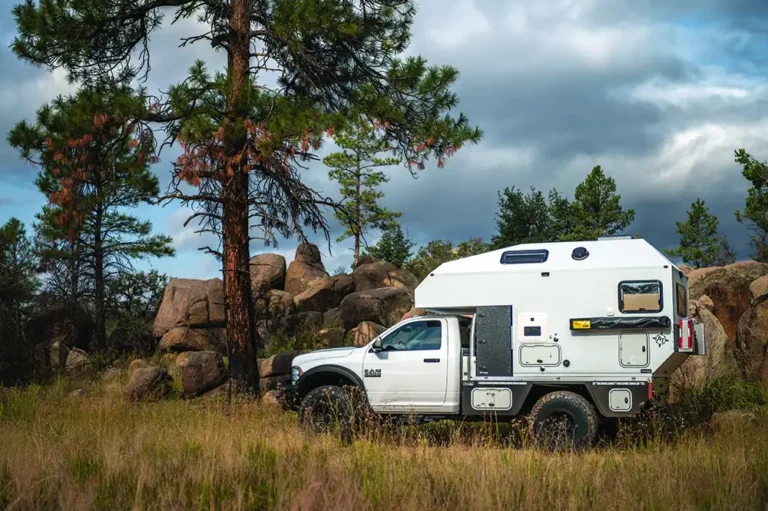
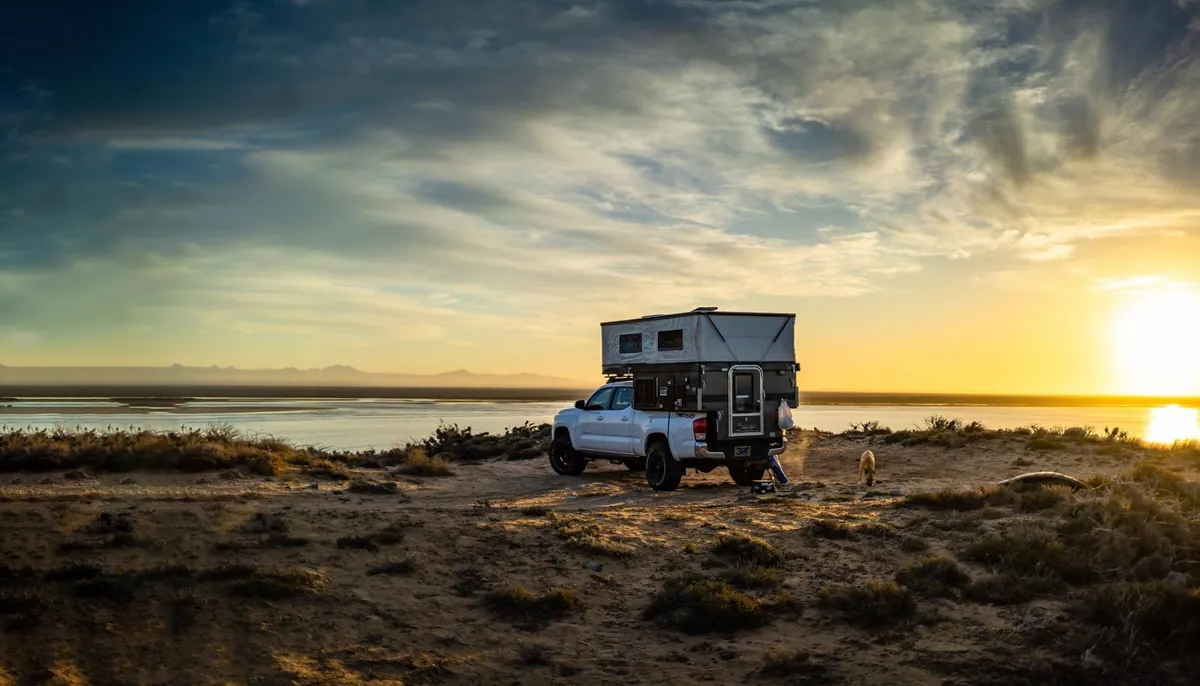
Can You Ride in a Truck Camper? The 2026 State-by-State Guide
It always starts the same way. You’ve got five seatbelts in the truck and seven people who want to come. Someone — usually a teenager, sometimes a grandparent with a mischievous streak — points at the camper and asks: “Can you ride in a truck camper while we’re driving?”
It’s a fair question. The cab-over bunk looks like the world’s greatest road-trip nap spot, and the dinette is right there begging for a card game. But can you ride in a truck camper while the truck is moving? The answer is messier than almost any other question in truck camping. In most states, no law says “yes, passengers may ride in a slide-in truck camper” — and in a handful of states, the laws on the books seem to say no. Then there’s the gap between what’s technically legal and what a state trooper will actually do about it. And underneath all of that sits the safety reality, which is the part nobody wants to hear.
I’ve dug through actual statutes, DMV pages, and owner discussions for this guide, because confident blog posts love to repeat each other on this topic — and sometimes repeat each other wrong.
Scope: passengers riding inside a slide-in truck camper while the truck is moving — not fifth wheels, travel trailers, or open truck beds. Those have their own (also messy) rulebooks.
The Short Answer: Can You Ride in a Truck Camper?
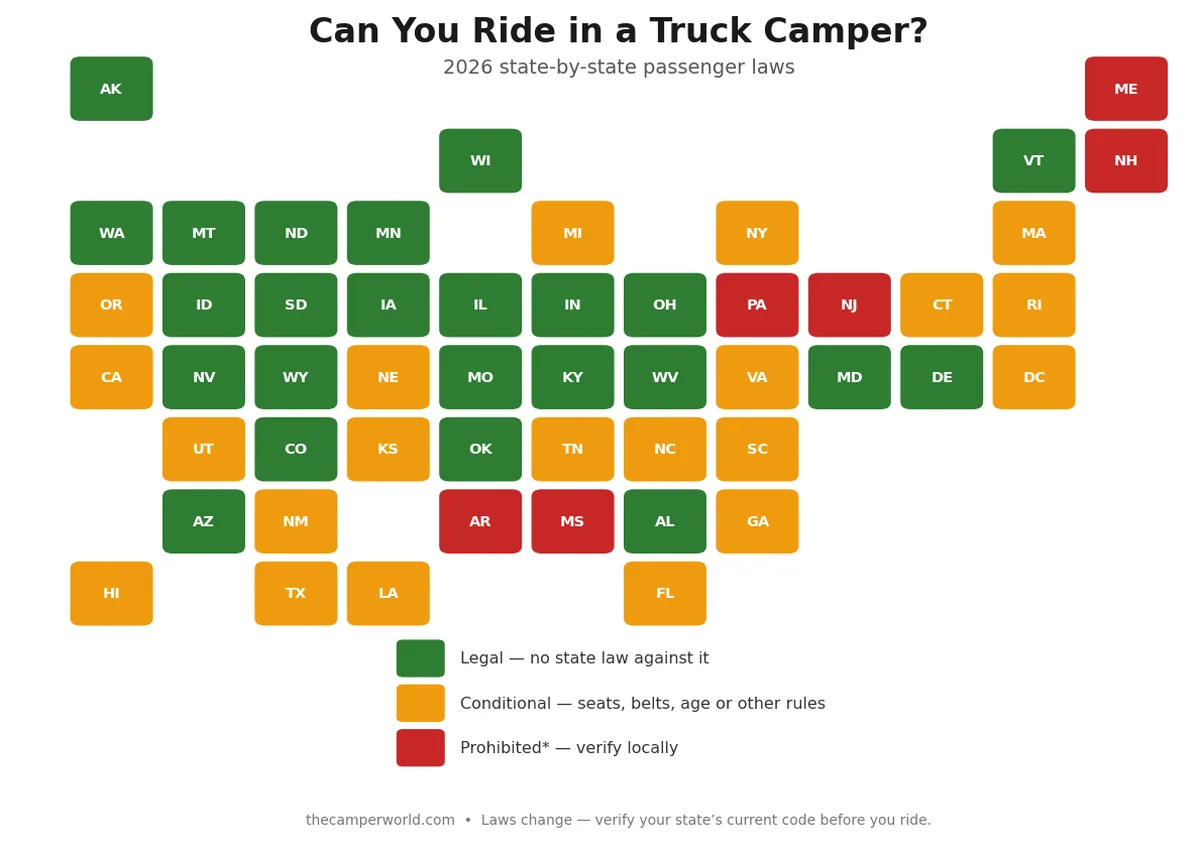
Can you ride in a truck camper? In most U.S. states, no law specifically forbids it — which is not the same as it being clearly legal. A small group of states (commonly listed as Maine, New Hampshire, Arkansas, Mississippi, and Pennsylvania, with New Jersey sometimes added) are widely cited as banning passengers in truck campers. A second group — California, Georgia, Hawaii, and Kansas most prominently — allows it only with conditions like driver communication, age minimums, or seatbelts.
Then there’s the giant gray middle: roughly thirty states whose laws address “riding in cargo areas” of pickup trucks without ever mentioning truck campers. Whether an enclosed, bolted-down camper counts as a “cargo area” keeps lawyers, forum moderators, and campground debaters busy.
Our truck camping hub covers setups, gear, and trip planning beyond the legal fine print.
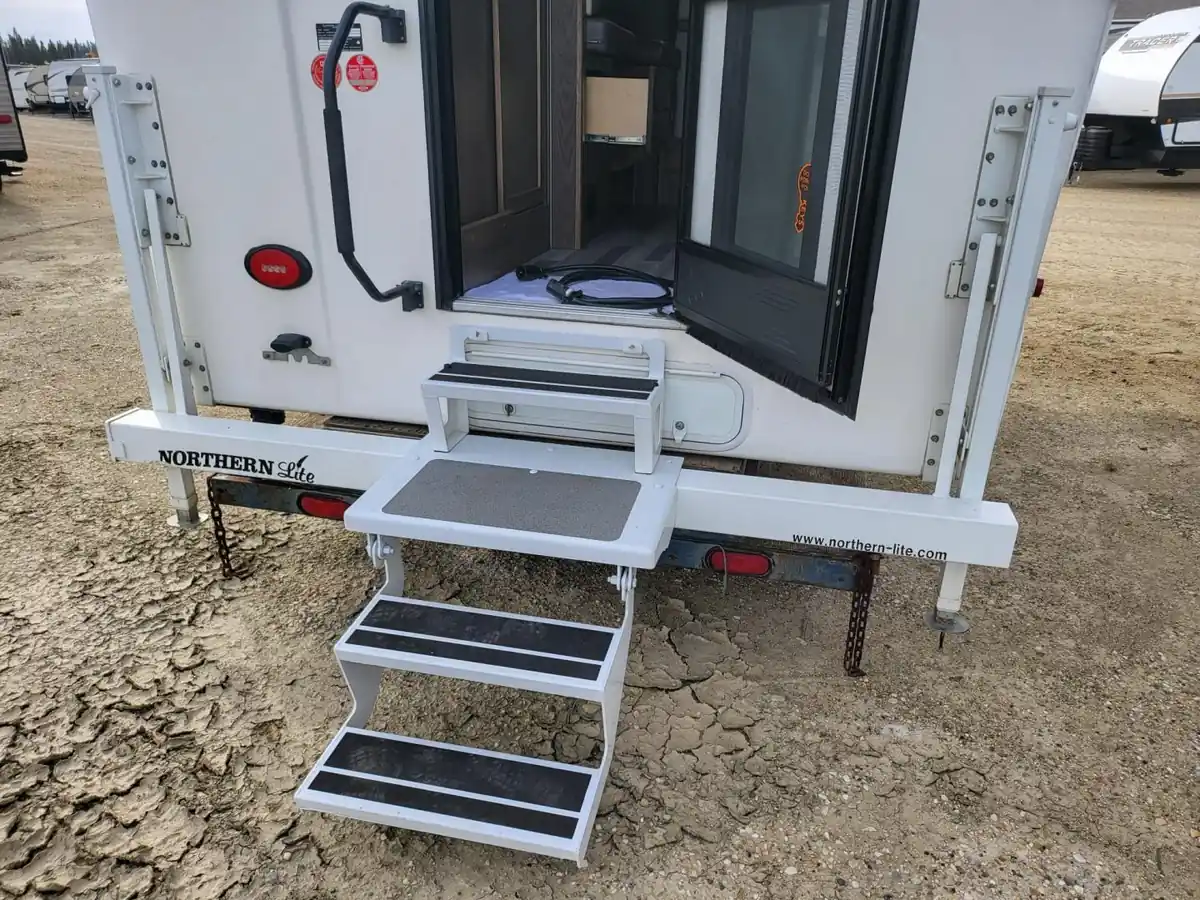
The 50-State Table: Truck Camper Passenger Laws for 2026
Here’s the full reference — ✅ Legal (no prohibiting law found), ⚠️ Conditional (allowed with age/restraint/communication requirements), ❌ Prohibited* (on widely cited ban lists, but the underlying statutes are disputed — treat as “verify before you go”).
Sources: the IIHS-based 50-state cargo-area chart (full PDF), California’s camper-specific vehicle code, and multiple truck-camper law roundups. The next section explains exactly where this gets fuzzy.
| State | Status | The short version |
|---|---|---|
| Alabama | ✅ Legal | No state law against it. |
| Alaska | ✅ Legal | No state law against it. |
| Arizona | ✅ Legal | No state law against it. |
| Arkansas | ❌ Prohibited* | Widely cited as a ban; statute scope disputed — verify locally. |
| California | ⚠️ Conditional | Camper signaling device so passengers can alert the driver (CVC §28080); belts where installed. |
| Colorado | ✅ Legal | Allowed — ban exempts areas enclosed on all four sides. |
| Connecticut | ⚠️ Conditional | 16+; 15 and under only if belted. |
| Delaware | ✅ Legal | No state law against it. |
| District of Columbia | ⚠️ Conditional | Narrow exemptions only — effectively restrictive. |
| Florida | ⚠️ Conditional | Cargo-area restrictions; enclosed campers not clearly addressed — verify with FLHSMV. |
| Georgia | ⚠️ Conditional | Passengers must have free access to the driving compartment. |
| Hawaii | ⚠️ Conditional | 13+ minimum. |
| Idaho | ✅ Legal | No state law against it. |
| Illinois | ✅ Legal | No state law against it. |
| Indiana | ✅ Legal | No state law against it. |
| Iowa | ✅ Legal | No state law against it. |
| Kansas | ⚠️ Conditional | 14+ minimum age. |
| Kentucky | ✅ Legal | No state law against it. |
| Louisiana | ⚠️ Conditional | 12+ off-interstate; tighter rules on interstates. |
| Maine | ❌ Prohibited* | Widely cited as a ban — verify locally. |
| Maryland | ✅ Legal | Exempt — ban doesn’t apply to covered cargo areas. |
| Massachusetts | ⚠️ Conditional | 12+; younger only in limited low-speed cases. |
| Michigan | ⚠️ Conditional | 18+; 17 and under only at ≤15 mph, parades, emergencies, farm use. |
| Minnesota | ✅ Legal | No state law against it. |
| Mississippi | ❌ Prohibited* | Mandatory seatbelt law for all passengers makes it effectively illegal. |
| Missouri | ✅ Legal | Exempt — doesn’t apply to covered cargo areas. |
| Montana | ✅ Legal | No state law against it. |
| Nebraska | ⚠️ Conditional | 18+; parade exemptions. |
| Nevada | ✅ Legal | Exempt — enclosed camper-shell areas carved out. |
| New Hampshire | ❌ Prohibited* | Widely cited as banning truck camper passengers — verify locally. |
| New Jersey | ❌ Prohibited* | Widely cited as a ban (cargo-area law: work-duty exemptions only) — verify. |
| New Mexico | ⚠️ Conditional | 18+. |
| New York | ⚠️ Conditional | Short trips (≤5 mi) or secured seating + side rails + tailgate + adult present. |
| North Carolina | ⚠️ Conditional | 16+; 15 and under only with supervising adult, belted. |
| North Dakota | ✅ Legal | No state law against it. |
| Ohio | ✅ Legal | Exempt — inapplicable to pickups with covered cargo areas. |
| Oklahoma | ✅ Legal | No state law against it. |
| Oregon | ⚠️ Conditional | 18+ for pickup beds — in practice includes truck campers. |
| Pennsylvania | ❌ Prohibited* | Widely cited as a ban (enclosed-area exemption for 17 and under) — verify. |
| Rhode Island | ⚠️ Conditional | 16+; 15 and under only if secured. |
| South Carolina | ⚠️ Conditional | 15+; younger only with adult present, belted. |
| South Dakota | ✅ Legal | No state law against it. |
| Tennessee | ⚠️ Conditional | 12+; 6–11 only off interstates or in slow parades. |
| Texas | ⚠️ Conditional | 18+; under-18s limited to parades, farm use, emergencies. |
| Utah | ⚠️ Conditional | Off-highway, work duties, or cargo spaces only — verify. |
| Vermont | ✅ Legal | No state law against it. |
| Virginia | ⚠️ Conditional | 16+; narrow farm-crossing exemption. |
| Washington | ✅ Legal | No state law against it. |
| West Virginia | ✅ Legal | No state law against it. |
| Wisconsin | ✅ Legal | Exempt — doesn’t apply to enclosed areas. |
| Wyoming | ✅ Legal | No state law against it. |
Why This Table Is Messier Than It Looks
If you’ve seen other articles on this topic, most confidently declare that “five states ban riding in truck campers” and move on. Here’s why that confidence is shaky.
Almost no state statute actually says the words “truck camper.” A sharp 2025 legal analysis walked through the “banned in five states” claim and found that the cited statutes address trailers — towed campers — not slide-in truck campers. That doesn’t make it legal there; it makes the question genuinely unsettled. (That full analysis is worth a read.)
The big 50-state cargo-area chart everyone cites is from 2014. The IIHS-derived table above is the best public starting point, but legislatures tinker constantly — treat every row as “the last known position,” not a promise.
Seatbelt laws can ban it without banning it — and “enclosed area” exemptions can allow it without allowing it. Mississippi has no cargo-area law, but its mandatory seatbelt rule for all passengers makes a belt-less camper effectively illegal. Meanwhile Wisconsin, Maryland, Ohio, Missouri, Nevada, and (for minors) Pennsylvania carve enclosed cargo spaces out of their riding bans — and a hard-sided slide-in is the strongest possible version of “enclosed.” Both are readings, not rulings.
The Three Rules Conditional States Keep Repeating
When states do regulate riding in a truck camper, they reach for the same three tools:
1. Seatbelts and real restraints
California requires safety belts where the camper has them installed, and several states allow younger riders only if belted. The catch: virtually no production truck camper ships with DOT-compliant seatbelts in the living area, and aftermarket lap belts bolted to plywood don’t meet federal anchorage standards. “Belted” is easy to say and hard to actually achieve in a camper.
2. A way to reach the driver
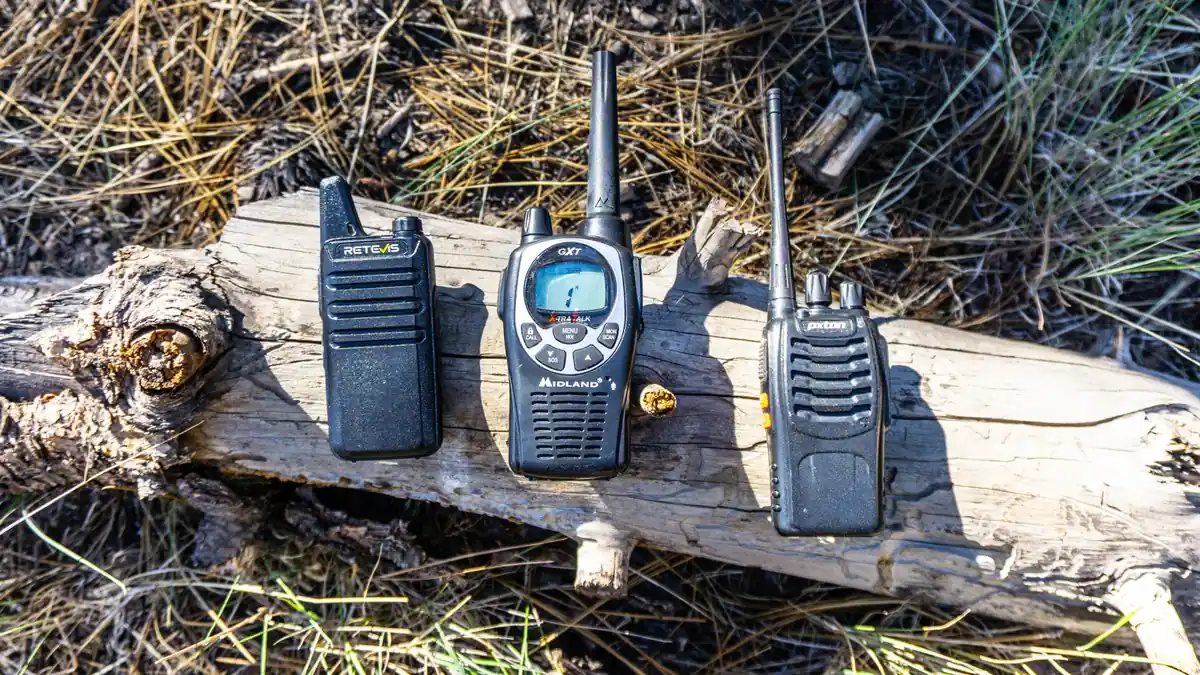
California is the only state with a law written specifically for truck campers: Vehicle Code §28080 requires an audible or visual signaling device — anything that lets a passenger get the driver’s attention, though explicitly not the horn — in every truck carrying a camper with passengers. (Companion section §28081 waives the requirement if passengers can move freely between cab and camper or open a sliding window themselves.) Georgia’s version is blunter: passengers need “free access” to the driving compartment. In practice, owners in truck-camper forums use FRS or GMRS two-way radios as their cab-to-camper link — one widely discussed thread featured an owner who’d bought the radios before even asking about legality. They satisfy the spirit of the law in most readings; just don’t assume every trooper agrees.
3. Age minimums
Hawaii (13+) and Kansas (14+) set hard floors tied to camper passengers, and a long list of other states — Oregon, Texas, Nebraska, and New Mexico at 18; Tennessee and Massachusetts at 12 — restrict bed/cargo-area riding by age in ways that sweep truck campers along. Wherever the law draws an age line, kids are the ones it protects most aggressively — child-restraint laws apply in all 50 states regardless.
What’s Actually Enforced vs. What’s Technically Legal
Here’s the part no statute will tell you about whether you can ride in a truck camper without getting stopped. In the owner community, the enforcement reality looks like this:
Routine traffic stops for “someone’s in the camper” are rare. I’ve never found a credible owner report of being pulled over solely because an adult was riding in an enclosed truck camper. Several full-time YouTubers and forum regulars describe years of spouses napping in the cab-over without a second glance — the camper is enclosed, the truck looks normal from outside, and there’s nothing to catch a trooper’s eye.
Enforcement shows up at the margins: DUI or safety checkpoints, weigh stations, border crossings — and most commonly after a crash, when “who was where” suddenly matters enormously. That’s also when insurance gets involved, and injuries to passengers in an unbelted, non-designated space can give an insurer grounds to fight the claim.
Kids change everything — and crossing state lines resets the rules. An unrestrained child visible through a camper window is the fastest way to turn a gray area into a citation or a child-endangerment conversation. NHTSA’s position is unambiguous: kids don’t belong in cargo areas, period. (Their child safety guidance is here.) And on a multi-state loop, you’re only as compliant as the strictest state on the route — legal in Arizona doesn’t help you in New Mexico (18+). Plan the trip, not just the home state.
The Safety Reality: Why Legal Doesn’t Mean Smart
I’ll be blunt: I wouldn’t do it. Not because I’m a scold, but because the physics back there are genuinely unforgiving.
Crash dynamics: you’re cargo, not a passenger
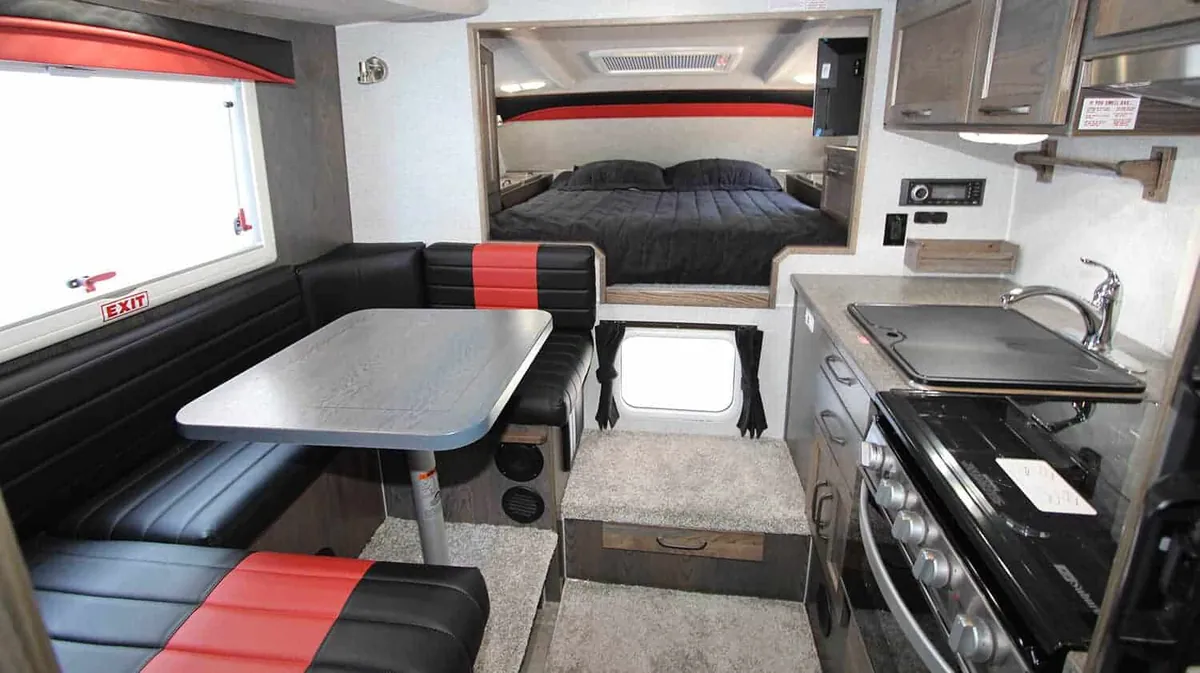
A truck camper is not crash-tested. No crumple zones, no airbags, no engineered occupant cell — just a wood-and-aluminum (or fiberglass) box held to the bed by four turnbuckles, sitting above the truck’s crash structure instead of inside it. In a hard stop, everything unsecured becomes a projectile: cabinet doors, the microwave, battery boxes. Full-timers stow for travel because they’ve watched a cabinet empty itself on a rough forest road — now imagine that at 65 mph with a person in the flight path. The rear of a camper also bounces and sways far more violently than the cab; a 250-comment owner thread on this exact topic was dominated by stories of nausea, bruising, and near-misses from ordinary expansion joints.
Carbon monoxide: the invisible one
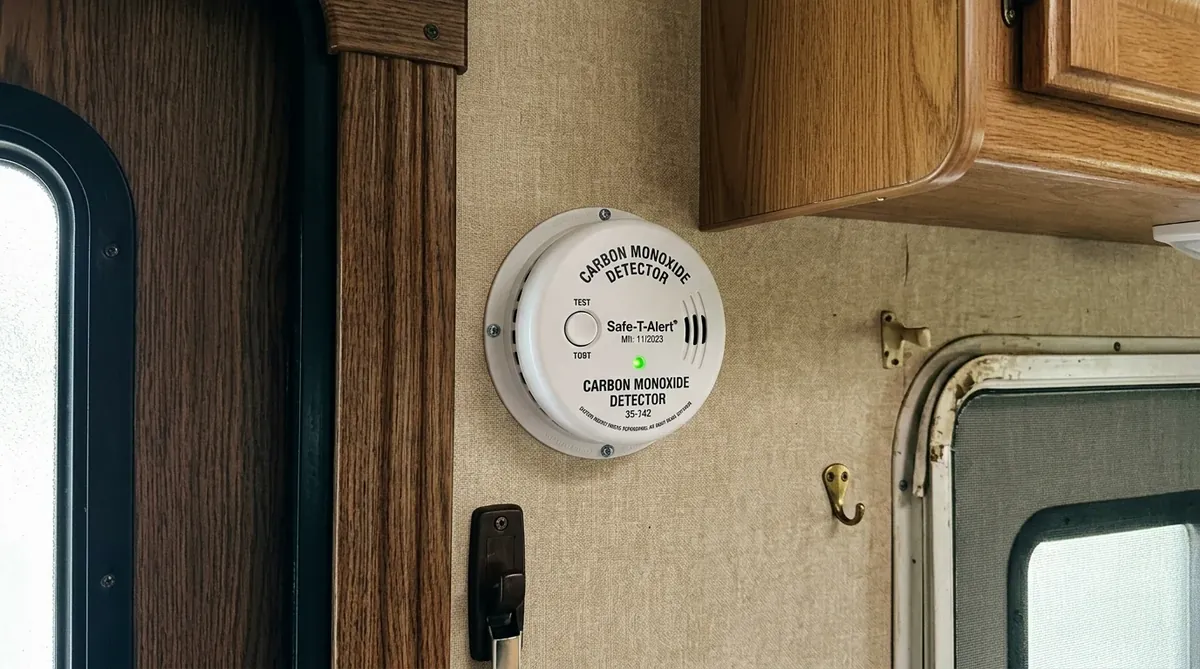
This is the danger that scares me most, because it doesn’t need a crash. A CDC investigation documented three children — ages 6, 10, and 11 — who died of carbon monoxide poisoning while sleeping in an enclosed camper shell during a 550-mile overnight drive in 1990. Exhaust entered through holes in the bed behind the cab; the parents in the cab never felt a thing. (The full CDC report is sobering reading.) Engine exhaust, a generator, or a furnace can all feed odorless CO into an enclosed camper. Our winter camping guide covers furnace ventilation and detector placement — a CO detector in the camper is non-negotiable whether or not anyone rides back there.
Falls, ejections, and what owners actually do
Camper doors unlatch at speed. In April 2024, a widely discussed RV-community tragedy saw a mother die after a trailer’s door opened while moving — she’d gone into the back for just the last 20 minutes of the trip. Slide-in doors are no more trustworthy, with no “door ajar” chime and no one in the cab able to see it. NHTSA’s data agrees: falls from swerving, braking, or rough roads are the leading cause of non-collision deaths for truck-bed riders.
The community consensus isn’t “it’s legal so it’s fine.” In a vintage-truck Facebook group, nearly a hundred nostalgic comments about riding in campers in the 1960s and 70s made clear those days are gone: today’s owners keep every human in belted cab seats. When owners ask “can you ride in a truck camper with the family?”, the veterans’ answer is: keep everyone in the cab.
FAQ
The four questions I see asked most:
Is it legal to ride in a truck camper in Texas?
For adults, effectively yes with limits: Texas restricts cargo-area riding to people 18 and older, with narrow under-18 exemptions (parades, hay rides, beaches, farm operations, emergencies). There’s no truck-camper-specific ban, so an adult in an enclosed camper sits in the gray zone — but troopers do enforce the under-18 restrictions, and seatbelt rules still apply. If you’re hauling extra adults because the cab is full, a rig from our best lightweight truck camper roundup won’t fix the seatbelt math — but it might be the nudge to right-size the setup.
Is it legal to ride in a truck camper in California?
Yes, with conditions — California is the one state that addresses truck campers by name. Vehicle Code §28080 requires an audible or visual signaling device (not the horn) so camper passengers can get the driver’s attention, and you may not drive with passengers in the camper without one. Section 28081 waives the device if passengers can move between the camper and cab or open a sliding window themselves. Separately, seatbelt laws still apply wherever belts are installed. (Read §28080 in full.)
Is it legal to ride in a truck camper in Florida?
Conditional and murky. Florida’s cargo-area statute restricts riding in pickup beds and flatbeds, with age-based exemptions tied to seatbelt-equipped seating — but it doesn’t clearly address enclosed slide-in campers. That puts Florida in the “no explicit ban, but don’t assume you’re clear” bucket: an adult in an enclosed camper is unlikely to be the primary reason for a stop, yet occupant-protection rules give an officer plenty to work with if something else goes wrong. Verify with the Florida Highway Safety and Motor Vehicles department before a trip.
Can kids ride in a truck camper?
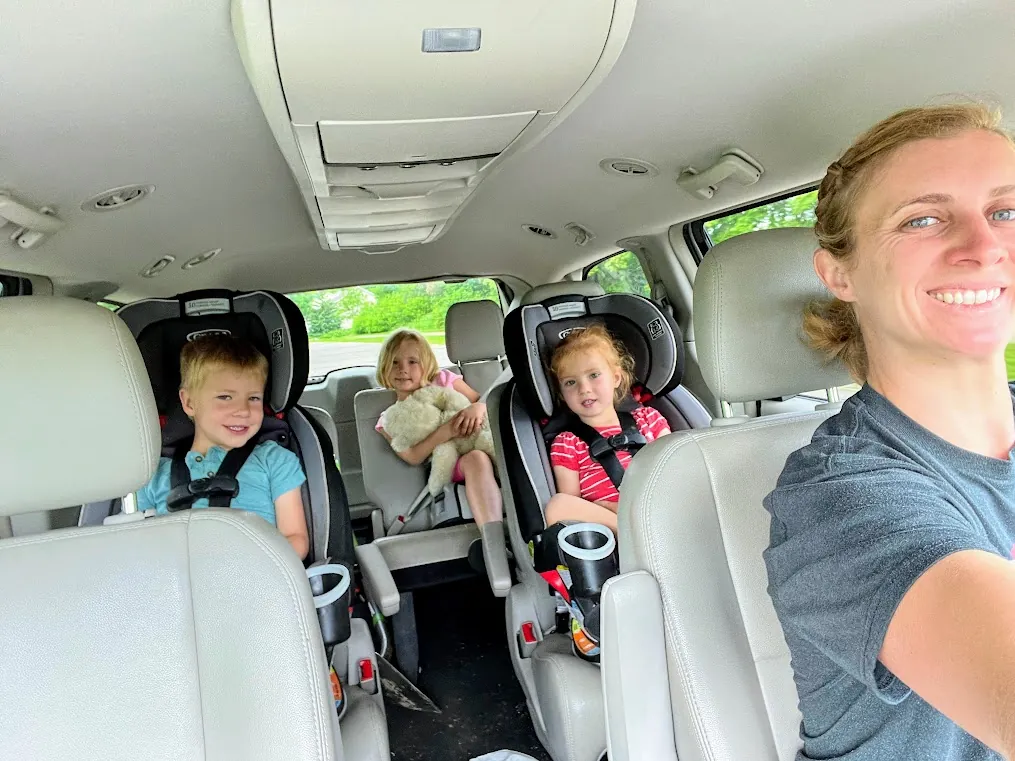
Don’t. Child-restraint laws apply in all 50 states, and truck campers have no approved child-seat anchorages, no rear-facing-safe seating, and no crash structure. NHTSA explicitly warns that children don’t belong in cargo areas. An unrestrained child in a camper faces every hazard above — projectiles, CO, ejection — with none of a car seat’s protections. Every kid rides in the cab, properly restrained, every time. If the cab lacks belted seats for your family, solve that problem instead — sometimes with a simpler truck bed camping setup for gear while everyone rides up front.
The Bottom Line
So, can you ride in a truck camper? The honest 2026 answer: probably, in most states, under most readings — except the five or six where the answer is likely no, the twenty-odd where it’s “only if,” and every state the moment a child or a missing seatbelt enters the picture. Enforcement is light until it suddenly isn’t. And safety-wise, a camper in motion is one of the least protected places you can put a person on a public road.
Disclaimer: I am not a lawyer, and this is not legal advice. Vehicle codes change — some every legislative session — and how a statute reads on paper isn’t always how it’s enforced on the shoulder. Before any trip, verify the current law with your own state’s DMV or legislature website, especially for the states you’ll drive through. When in doubt, everyone rides in the cab.
If the real problem behind this question is that your crew has outgrown your cab, that’s a rig problem, not a legal puzzle — start with our guide to the best truck camper to buy and build the setup around belted seats first, sleeping space second.