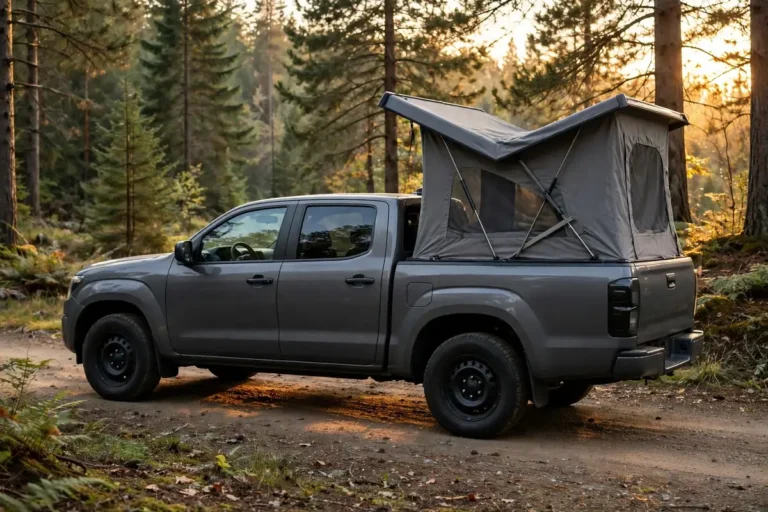
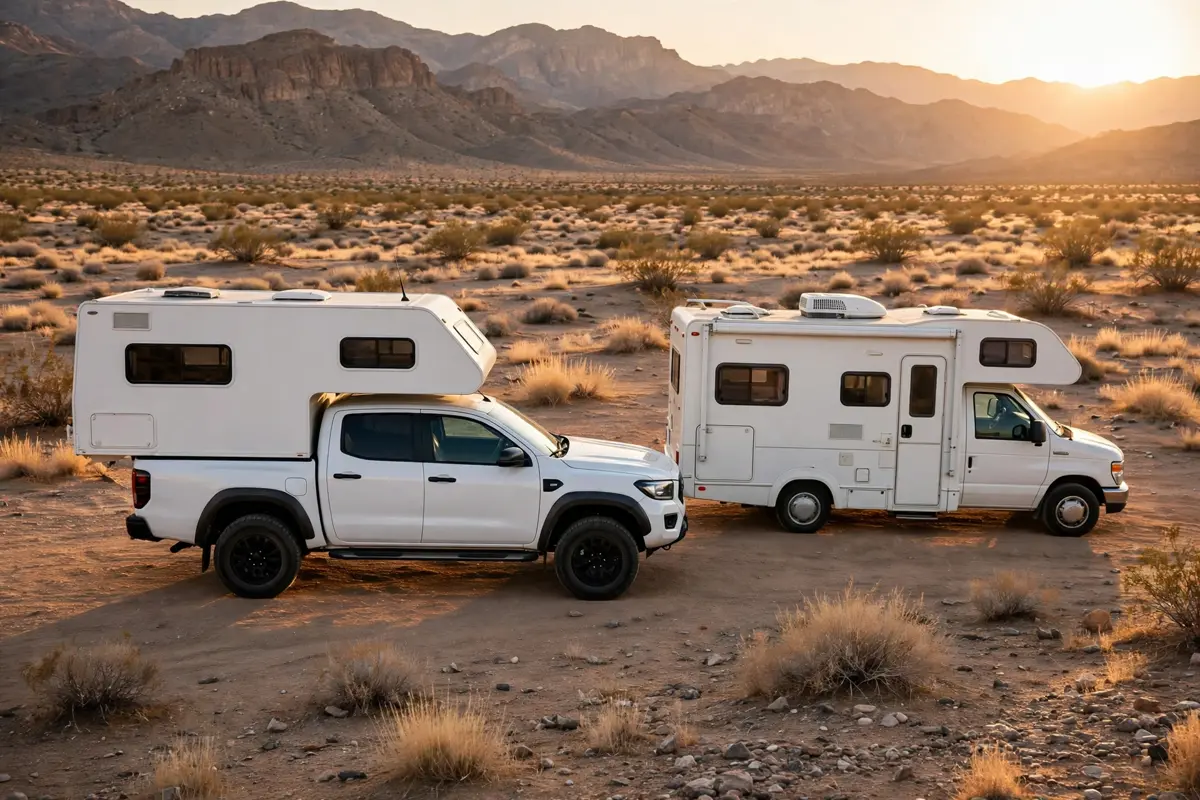
Truck Camper vs Class C Motorhome: Which One Should You Buy?
I have spent enough nights in a truck camper to know exactly what it does well and where it starts to feel small. I have also spent enough time talking to Class C owners at dump stations to know why some of them would never go back — and why a few quietly wish they had bought the truck camper instead. This truck camper vs class c guide is the conversation I wish someone had sat me down for before I spent real money: not a spec-sheet shootout, but a decision by life situation.
Here is the short version. A truck camper wins when you already own a capable truck, you want to reach rough places, and you want your daily driver back when the trip ends. A Class C wins when you want to stand up, walk from the driver’s seat straight into the kitchen, and live in real space for weeks.
The cost question is really two different questions
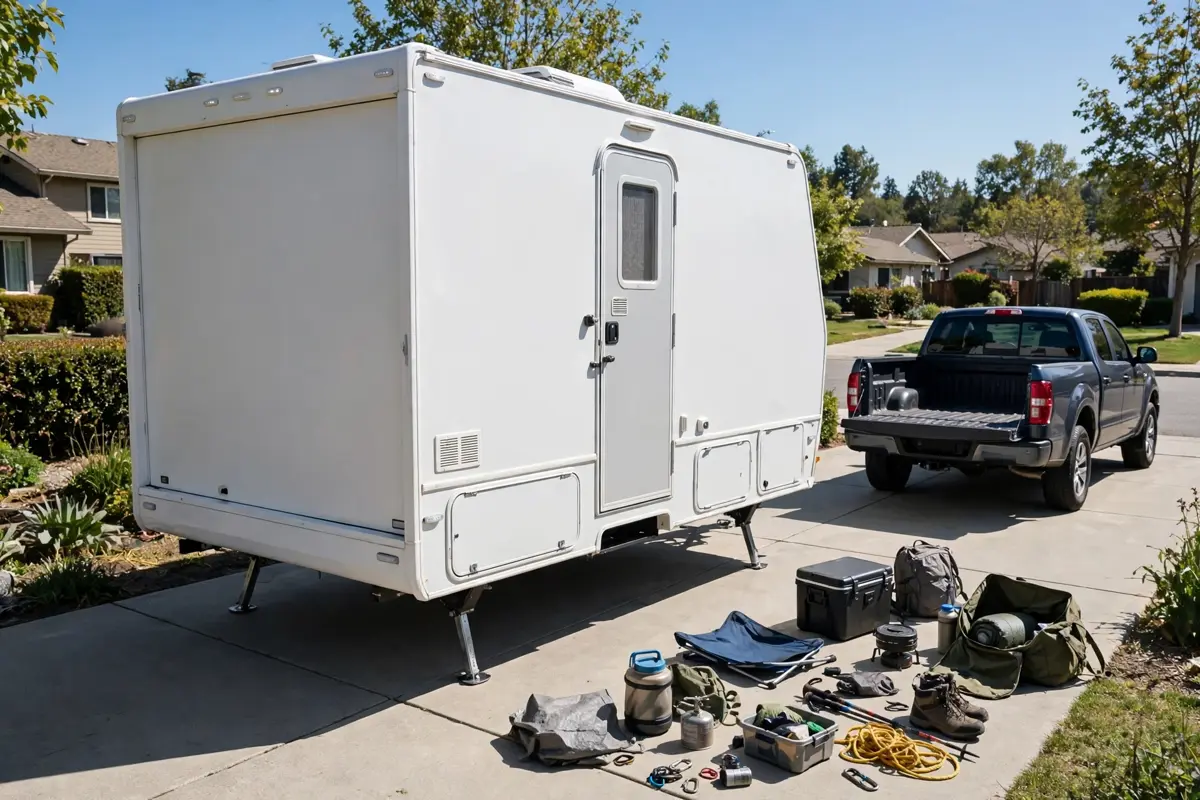
If you already own a three-quarter-ton or one-ton truck with real payload, the truck camper is the cheaper way in by a wide margin. A 2026 Lance 650 lists at $30,443 MSRP, weighs 1,694 lb dry (2,485 lb wet, per Truck Camper Magazine’s 2026 Lance buyers guide), and sleeps three. A 2026 Four Wheel Camper Hawk pop-up lists at $30,675. Even a big double-slide Lance 1172, at $62,284 MSRP, costs less than half of an entry-level new Class C.
If you do not own the truck, the maths changes completely. Now you are buying a $50,000–$70,000 heavy-duty pickup plus a $30,000–$60,000 camper, and you are suddenly in the same neighbourhood as a new Class C, or past it. That is the trap owners on the forums keep warning about: they price the camper, fall in love, and only later price the truck. Our true cost of truck camper ownership walks through the full picture — tie-downs, suspension help, batteries, solar and insurance — because the camper’s sticker is never the whole bill.
The Class C side is simpler to price and harder to swallow. Jayco lists the 2026 Redhawk SE from $122,318, sleeping up to seven. Winnebago lists the Minnie Winnie 22R at $139,912, at 23 ft 10 in long, sleeping five. Those are single-purchase prices for a complete, drive-away home — but they do not include the second-vehicle problem: once you park a 24-foot motorhome, every grocery run is either a drive in the motorhome or a tow vehicle you also bought and insured. (Owner-reported asking-price data in November 2026 put the middle advertised price of a new Class C at about $126,000 and a used one at about $80,100.)
My rule of thumb: if the truck is already in your driveway and paid for, the camper wins on cost. If you are buying both the truck and the camper from scratch, run the Class C numbers honestly — and include a tow vehicle or rental car in the Class C column.
Truck camper vs class c on the road: a tall pickup vs a small bus
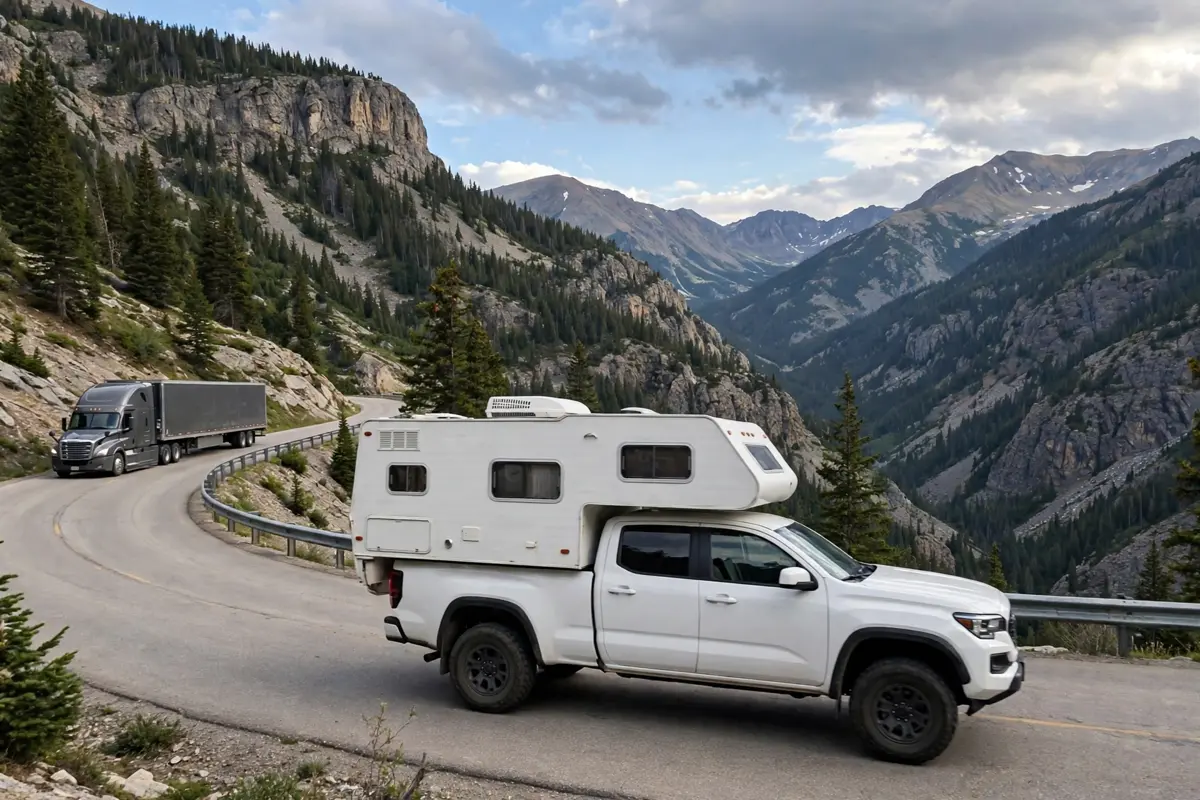
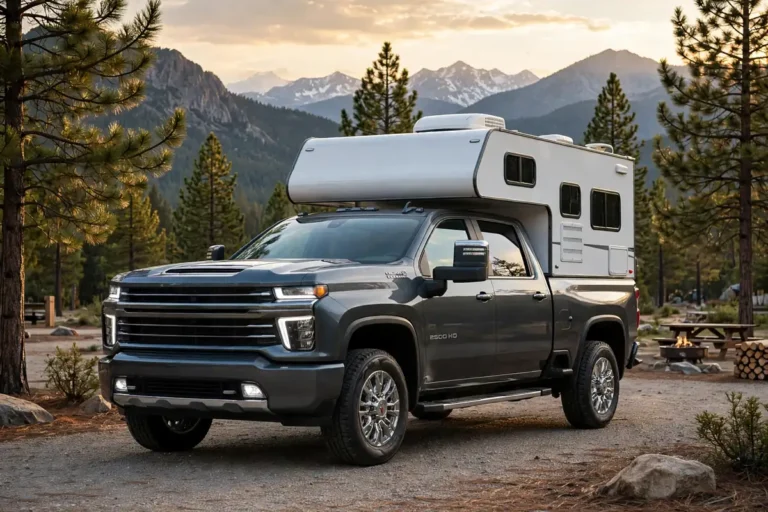
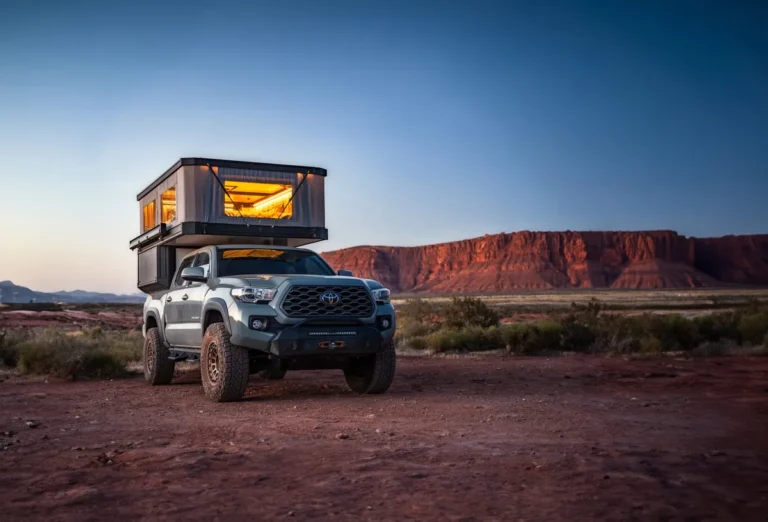
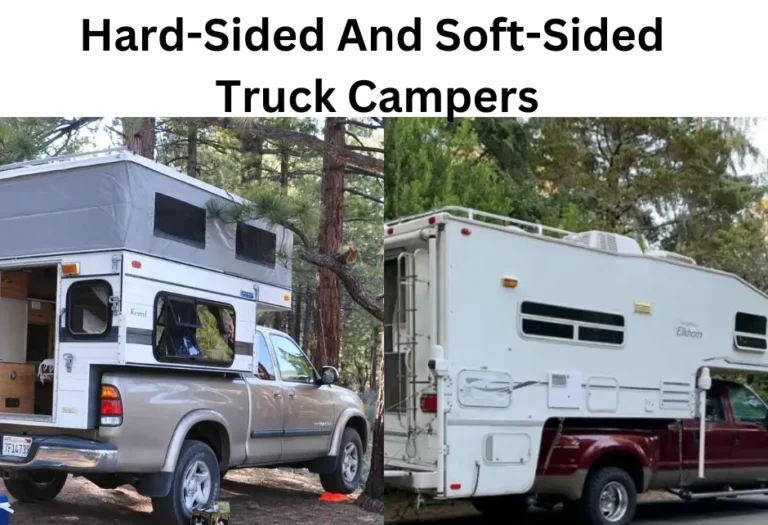
A truck camper drives like the truck it sits on, only taller, heavier and more top-heavy. A pop-up like the Hawk drops down for the highway, which helps with wind and clearance. A hard-side sits at roughly 8–9 ft tall, and you feel every crosswind and every passing semi. Owners on iRV2 and Good Sam forums describe the same learning curve: the first hour feels wrong, the steering feels vague, and then you slow down, fit the right suspension help, and it becomes normal. That is physics — but do not buy a big hard-side expecting it to drive like an empty pickup.
A Class C drives like a van that grew a house on its back. The small ones, around 22–24 ft, are genuinely manageable: the Minnie Winnie 22R rides on a 158-inch wheelbase with a 350-hp 7.3L Ford V8, and owners call it the easiest motorhome to drive. Go longer and the story changes. Owners on Good Sam report that a 24 ft Class C in a 25 mph crosswind “bounces us all over our lane,” and owners on iRV2 call some gas motorhomes “a hair raising time dealing with sway, roll, porpoising” until the suspension is sorted. The fixes owners report are the same on both sides — better shocks, a rear track bar, a steering stabiliser, correct tyre pressures — so budget for that sorting, whichever rig you buy, and test-drive in wind if you can.
A truck camper is about the same length as the truck itself and can turn around on a forest road. A 24 ft Class C needs a bigger turning circle and a plan for every fuel stop. One more difference matters: getting out. In a Class C, you park, stand up, and you are home — bathroom and lunch at a rest stop without stepping outside. In a truck camper, you climb out of the cab, walk around, and climb in the back door. On a rainy night on the interstate, that walk-through difference is worth real money; on a rough dirt road, the truck camper’s ground clearance is worth more.
Where each one can actually go
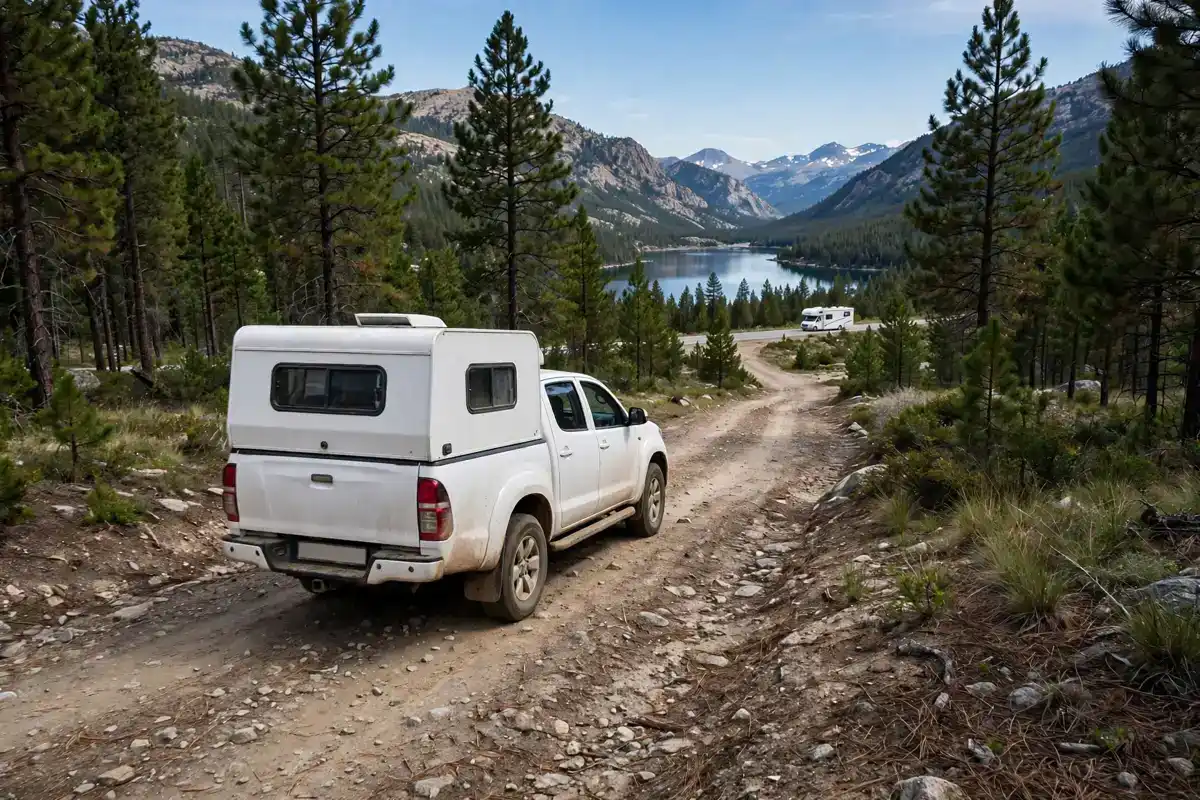
Be honest about where you really camp, because this decides it for most people.
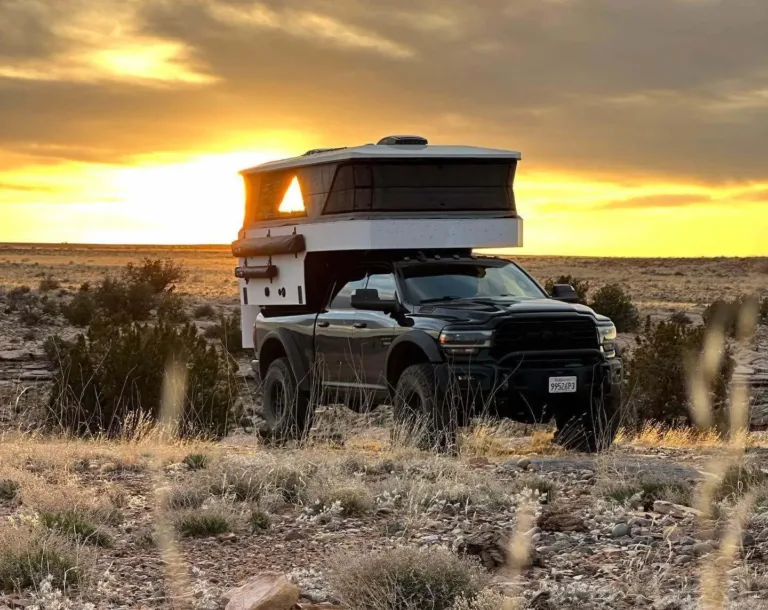
The truck camper goes further. Four-wheel drive, high clearance and a short wheelbase mean forest-service roads, BLM two-tracks, and trailheads a motorhome cannot reach. Owners on iRV2 who have owned both put it this way: a 4WD truck camper “can cover some fairly rough terrain with care,” limited mostly by height and overhang. If your trips are built around dispersed camping, hunting, fishing or ski-area parking lots, the truck camper is the only honest answer here.
The Class C goes to campgrounds, and goes there comfortably. State parks, national-park campgrounds, RV parks with hookups — a 22–25 ft Class C fits most of them, and the longer 30 ft-plus models start getting turned away from older, tighter sites. Owners on the RV Forum warn that staying under about 30 ft “would maximize your campsite options”: every foot past 25 ft costs you sites. A Class C can still boondock — bigger tanks, a built-in generator, more solar room — but it does it from a graded road, not a two-track. At home, a truck camper comes off the truck on its jacks and the truck goes back to daily life, while a Class C is a second vehicle that needs a parking spot — in some neighbourhoods, a storage lot with a monthly fee.
Living space and slide-outs: the Class C’s home-field advantage
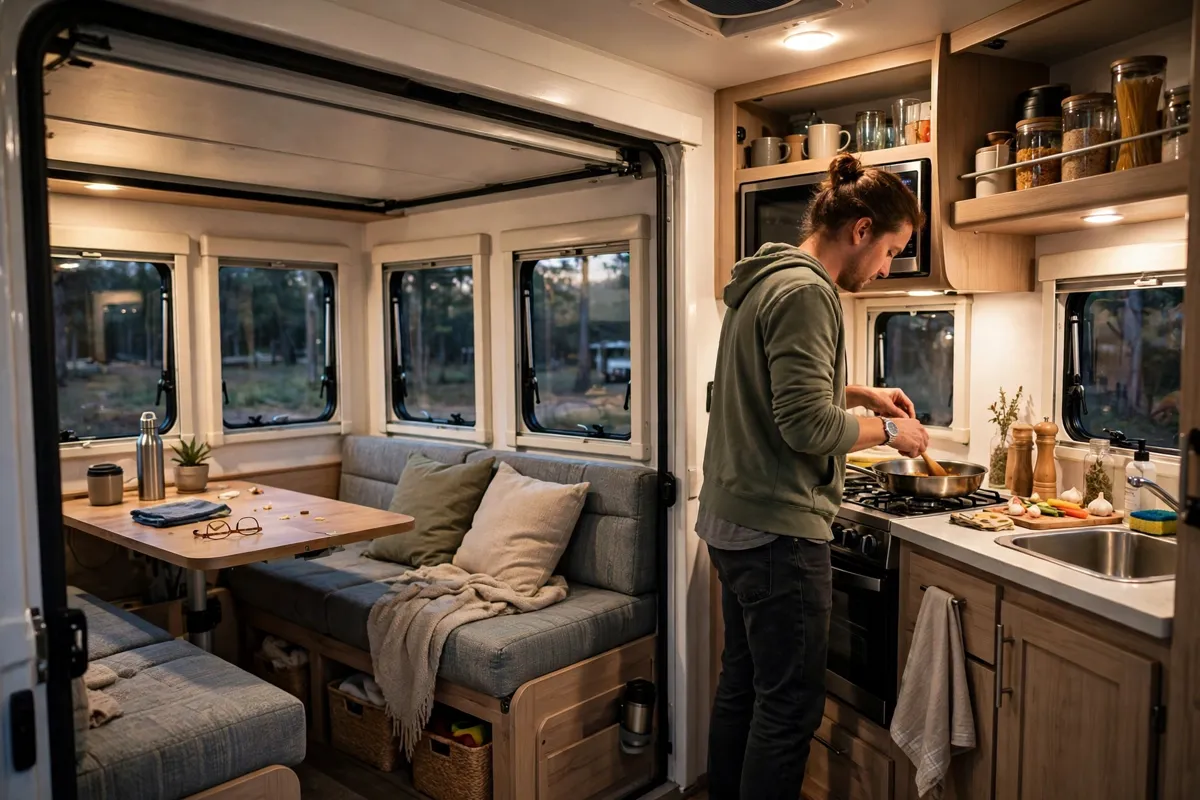
Let me be blunt about the truck camper’s weakness: the space is small, and on a rainy day it feels smaller. A hard-side Lance 650 gives you a queen cabover bed, a wet bath, a small dinette and a kitchen you cook in sideways. It works beautifully for one or two people who spend their days outside. Add a third person, a dog and a week of rain, and you are stepping over each other.
A Class C is a different world inside. The Redhawk SE offers an 84-inch ceiling, a real dinette, a queen bed that is not a crawl-in cabover, a separate bathroom you can stand up in, and on some floorplans a slide-out that turns a hallway into a living room. The owner who switched from a truck camper to a Class C on the Good Sam forum listed the wins plainly: walk-through from cab to home, heat that reaches both ends, more floor space without a much bigger rig, a kitchen at the back where cooking does not block everyone, and a washroom where you are not sitting against a cold wall.
Slide-outs deserve their own warning: they are the Class C’s biggest gift and its most common repair bill. Owners and repair shops report the same pattern — seals dry out and leak, motors fail (often at 8–10 years on Schwintek systems), and rooms go out of square and chew seals. Repair costs reported in 2026 run roughly $485–$895 for a common motor replacement and $500–$3,000-plus for bigger mechanism or water-damage work, and a leaking slide seal can hide thousands of dollars of rot before you see a soft spot. The fix owners keep coming back to is boring and cheap: condition the seals, lubricate the mechanism, and never run a slide out of level. Our truck camper slide-out problems guide covers what fails and what to check before you buy.
Tanks tell the same story in numbers. The Minnie Winnie 22R carries 40 gallons fresh, 24 grey and 21 black; the Redhawk SE carries a 4,000W generator. A Lance 650 carries 22 gallons fresh, while a big Lance 1191 carries 45 fresh, 31 grey and 24 black — closer, but still in a rig you climb into rather than walk through.
Maintenance: one engine or two?
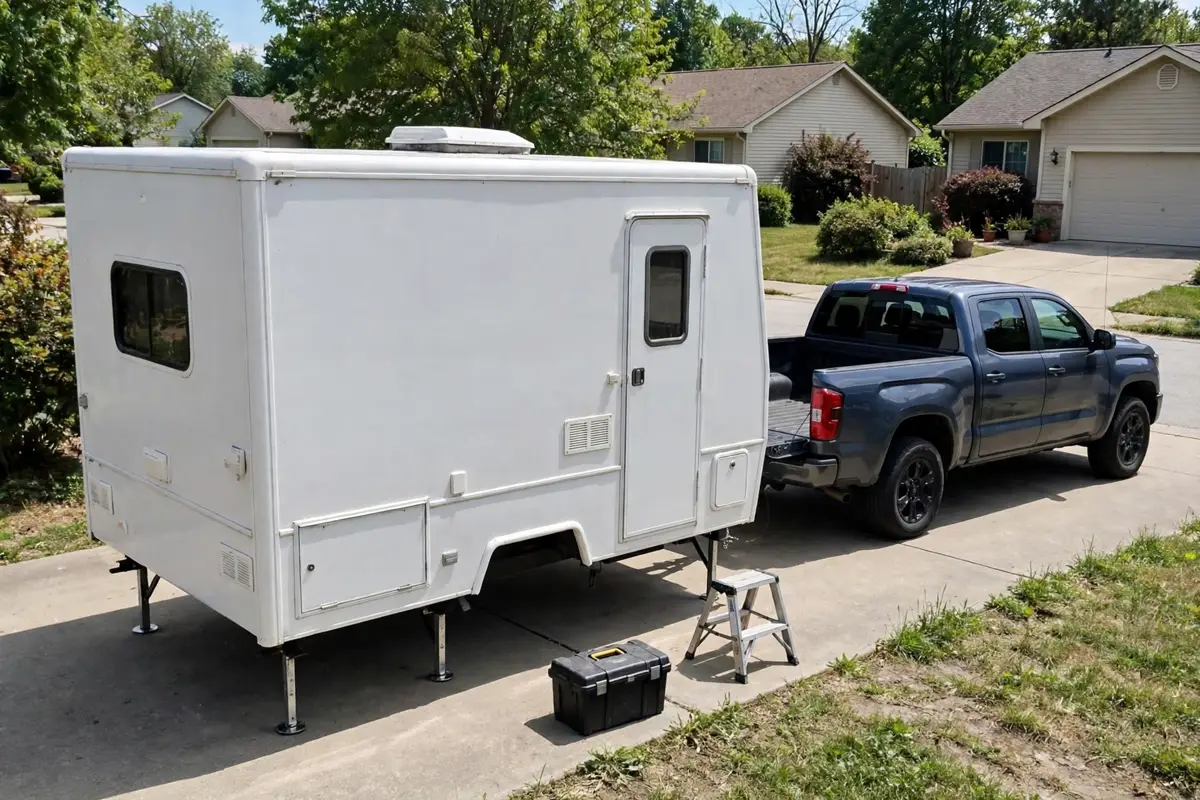
Here is the question people forget until the first breakdown: how many engines are you maintaining?
A truck camper has no engine of its own. Your truck is your engine, transmission, brakes and daily driver — one vehicle to service, one set of tyres, one registration, and a mechanic on every corner who knows your truck. When the camper needs work, it is house work: reseal a roof, fix a water pump, replace a fridge board. And when the truck needs work, you can drop the camper on its jacks and drive the truck to the shop alone. That separation is the truck camper’s quiet superpower — the owner on Good Sam who switched to a Class C said he could buy the truck and the camper separately, so a great camper was never held hostage by a worn-out truck, and vice versa.
A Class C is one vehicle with one drivetrain — but motorhome service is not pickup-truck service. The Ford E-Series chassis is well understood and parts are available, but the house and the chassis are bolted together: when the coach is in the shop for an engine problem, your home is in the shop too, and you are in a hotel. Owners on iRV2 who tow a small car behind a Class C accept this trade because the toad gives them a runabout; owners who do not tow either rent a car at every stop or drive the motorhome everywhere. The honest tally: truck camper, one truck to maintain (which you would own anyway), plus camper house systems, tie-downs, jacks and seals. Class C, one motorhome drivetrain and house in a single package, plus — realistically — a towed vehicle or rental cars, slide mechanisms, a generator, and a much bigger roof to keep sealed. Neither is cheap, but the truck camper is simpler to live with when something breaks, because the break is usually in only half the rig.
Resale and the exit plan
Every rig you buy is one you will one day sell, so think about the exit first.
Truck campers sell to a wide pool: anyone with a suitable pickup. A dry, well-kept Lance, Four Wheel Camper or Bigfoot holds value because the buyer does not need to buy a vehicle — only the box. The risk is payload honesty: a buyer who does the maths will walk away from a heavy camper if their truck cannot carry it, so the market for the biggest double-slide campers is narrower than for a mid-size non-slide. Keep it dry and weigh it honestly when you list it.
Class C motorhomes sell to a wide pool too, but they depreciate like vehicles, because they are vehicles. A new motorhome loses a large chunk of value in its first years, and a used buyer will discount for mileage, tyre age, roof condition and slide history. The Good Sam owner who switched put his finger on the buying risk that becomes your selling risk: with a Class C you buy truck and house as one unit, so a great coach on a tired chassis — or a great chassis under a leaking coach — is hard to price and hard to sell.
If you are unsure which life you actually want, rent first — our rent a truck camper before you buy guide covers how to test the lifestyle without the loan, and the same applies to a Class C.
Who should buy which?

Buy the truck camper if: you already own a capable truck; your trips are weekends and long boondocking runs; you want 4×4 and rough-road access; you are one or two people (plus a dog); and you want your daily driver back between trips.
Buy the Class C if: you are a family or travel with friends or grandkids; your trips are a week or longer; you mostly stay in campgrounds and RV parks; and you want to walk from the driver’s seat to the kitchen without going outside.
Buy neither yet if: you have not weighed your truck, sat in both rigs with the people who will travel in them, or priced insurance, storage and a tow setup. Those three checks kill more bad purchases than any review ever will.
The payload warning that decides truck camper purchases
If you go the truck camper route, one number matters more than any other in this article: the payload on your truck’s yellow door sticker. Not the brochure maximum, not the towing rating — the sticker for your exact truck, with its exact options. A Lance 650 at 2,016 lb wet, plus two adults and gear, is already past 2,600 lb before you pack a cooler, and owners on forums report the same story again and again: they bought the camper on dry weight, loaded it for a real trip, put it on a scale, and found themselves hundreds of pounds over. Do the maths before you sign, and weigh the loaded rig on a CAT scale. Our truck camper payload calculator guide walks through the full calculation.
A Class C has its own version: cargo carrying capacity. The Minnie Winnie 22R’s GVWR is 14,500 lb on the E450 chassis, and the difference between that and the coach’s actual weight is what you get for people, water, food and gear. It is usually more generous than a pickup’s payload, but it is not infinite — especially once you fill the 40-gallon fresh tank. Weigh it too.
The decision, in one paragraph each
If I already owned a good three-quarter-ton truck, I would buy the truck camper without a second thought: it keeps my daily driver, reaches the places I actually camp, and costs half as much to get into. If I were travelling with kids for weeks at a time, I would buy the small Class C — a 22–24 ft Minnie Winnie or Redhawk SE — because the walk-through space, the real bathroom and the bigger tanks would make the trip. And if I were buying both the truck and the camper from scratch, I would price the Class C seriously, because then you are choosing between two complete rigs in this truck camper vs class c decision.
Still torn between a truck camper and a van? Our truck camper vs van life comparison covers that third option. Deciding as a couple? Our truck camper vs travel trailer for couples looks at the same space question through a two-person lens.
Frequently asked questions
Is a truck camper cheaper than a Class C motorhome?
Usually, yes — if you already own a suitable truck. A popular new hard-side truck camper lists around $30,000–$62,000, while an entry-level new Class C lists from about $122,000. If you have to buy the truck too, the totals can be similar, so price the whole rig.
Can a truck camper go off-road where a Class C cannot?
Yes, in most cases. A 4×4 truck camper can handle forest-service roads and rough two-tracks that a Class C, with its long wheelbase, low clearance and 2WD chassis, cannot. Neither rig is a rock crawler.
Is a Class C easier to drive than a truck camper?
For most new drivers, yes — especially a small 22–24 ft Class C, which drives like a large van. A truck camper drives like a tall, heavy pickup and needs suspension help and practice in crosswinds. Both benefit from better shocks and a track bar or sway-bar upgrade.
Do I need a special licence to drive a Class C motorhome?
Licensing and registration rules vary by state and by the motorhome’s weight and length, and they change — so I am not going to state any state’s rule as fact here. Check your own state’s DMV or equivalent before you buy, and confirm the same for the truck-plus-camper combination.