Truck Camper Grey Water Management: Tanks, Rules, and Boondocking Practice
The first time my grey tank caught me out, I was washing up after breakfast on day two of a quiet boondocking trip, and the shower tray started holding water. That is how truck camper grey water usually announces itself: not with a warning light you trust, but with a drain that suddenly stops draining. Manage it well, and a three-day stay becomes a comfortable week.
Grey water is everything that goes down your sink or shower drain except toilet waste. It is not sewage in the same sense as black water, but it is not clean water either: it carries soap, shampoo, toothpaste, body oils, hair, food particles, and cooking grease, and after a warm day or two in a tank it can smell every bit as sour as anything else in the camper.
How a truck camper grey water system actually works
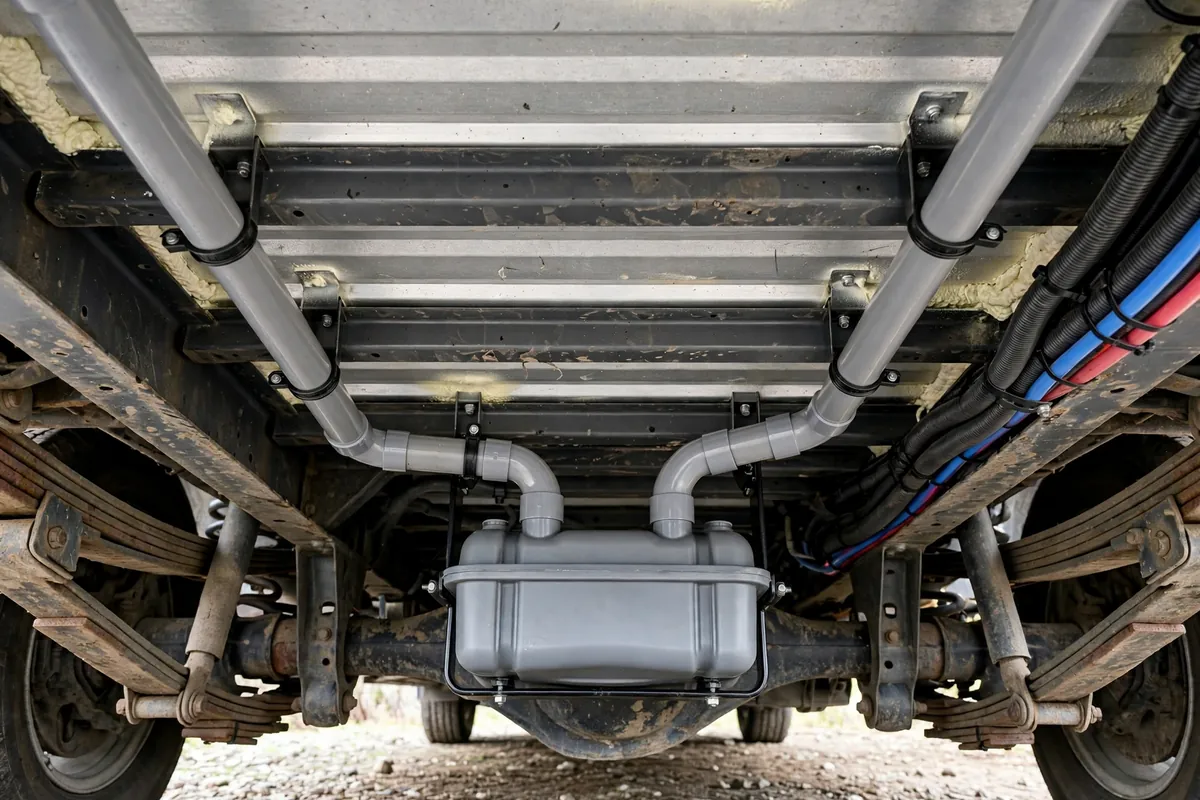
Truck campers are tight on space, so grey tanks are small: roughly 20 to 30 gallons is common, with many pop-ups and smaller hard-sides at the lower end — and some little campers have no built-in grey tank at all, just a sink drain that needs a jug or tote underneath. Every gallon you run through a tap has to go somewhere, and in a truck camper that somewhere fills up fast.
I covered the clean-water half in my truck camper fresh water system guide; this article is the other half: what happens after the water goes down the drain.
Here is the maths that matters. A standard RV showerhead can pass around 2 to 2.5 gallons per minute, so a relaxed five-minute shower can send 10 to 12 gallons straight into the grey tank. Two of those, plus dishes washed under a running tap, and a 20-gallon tank is in trouble before lunch. A navy shower — wet down, tap off, soap up, quick rinse — uses more like 2 to 3 gallons. That single habit is the difference between leaving camp on day two and staying until day five.
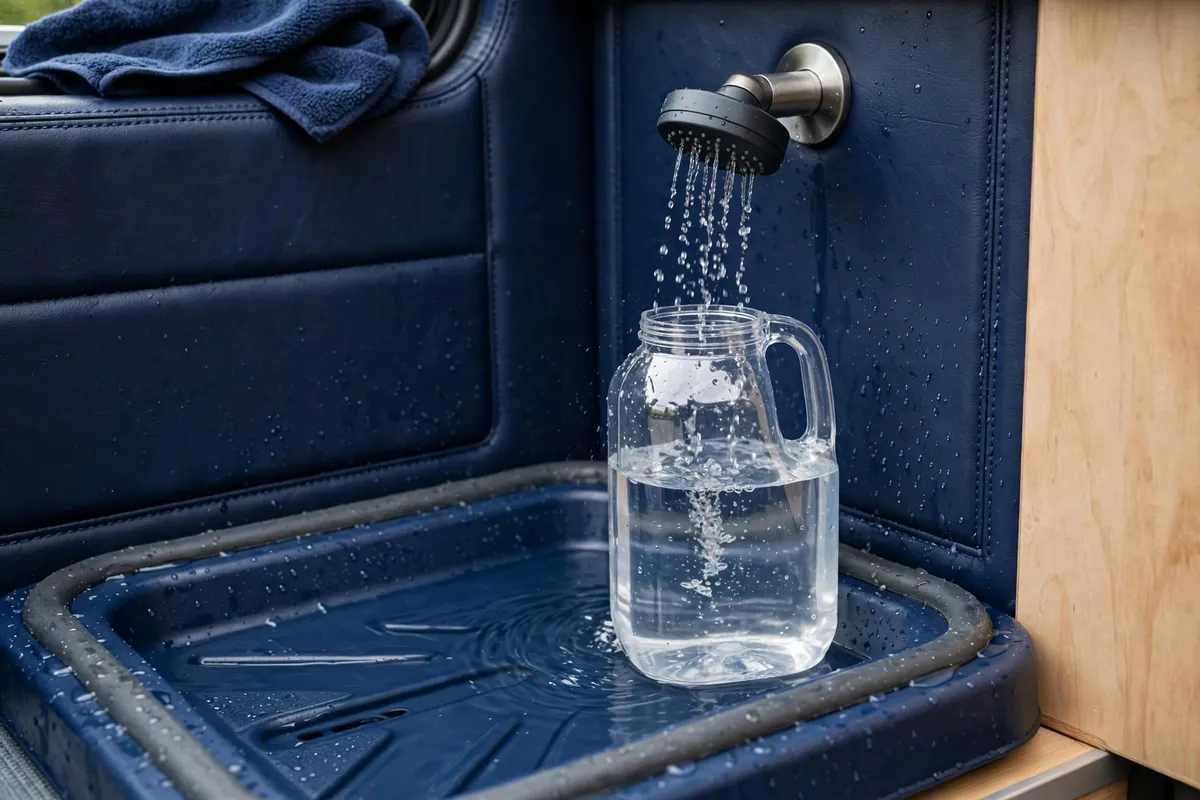
Owners on RV forums report exactly this pattern: grey fills first, not black, and showers are the reason. One owner on iRV2 put it plainly after years of dry camping — grey was the weak link, and the fix was a strict water routine, including catching the cold water that runs before the shower gets hot and using it for coffee or washing up instead of letting it run down the drain. I do the same now: a jug by the shower catches the cold start, and nobody in my camper takes a “thinking” shower when we are off-grid.
How fast your grey tank fills — and why the gauge lies
Work out your own number before you leave: divide your grey tank size by your honest daily grey use, and that is your stay length. Two people who navy-shower and wash dishes in a basin might put 6 to 8 gallons a day into the tank; two people showering normally and washing under a running tap can easily double that.
Then treat the monitor panel as a rough hint, not a fact. Owners on RV forums report grey gauges reading two-thirds full on the first day, or “full” on day two when the tank plainly is not. Grease and soap film coat the little sensor probes inside the tank, and they start lying. I trust how many gallons I know I have used, and how the shower drain behaves, more than the lights. When the shower tray is the low point in the system, grey backing up into the shower pan is often the first honest full signal you get — unpleasant, but unambiguous.
Why grey water smells (and the quick checks before you panic)
Grey water smells because of what is rotting in it: food bits, grease, soap scum, hair, and bacteria building up as a slimy film inside the tank, especially in warm weather and when water sits still. The kitchen sink is usually the worst offender. Boondockers get a concentrated version, because careful water use means less water diluting the same soap, oil, and food.
Before you reach for a tank treatment, check the cheap things. First, a dry P-trap: every drain has a curved section of pipe that holds a little water to block tank smells from coming back up, and in a camper those traps dry out easily in storage, in hot weather, or after a long drive. Running water down each drain refills them. Second, the air admittance valve under the sink — a small one-way valve that lets air into the drain system. Long-term RVers report that a failing valve lets odours leak out under the sink cabinet, and replacing it fixed a smell they had blamed on the tank for weeks. Third, a blocked roof vent, which stops the tank venting properly.
The habits that prevent most of it are boring and they work. Wipe plates and pans with a paper towel before washing so food never goes down the drain. Use a sink strainer and empty it into the trash. Never pour coffee grounds or cooking grease down the sink — grease coats the tank walls and the sensors, and it does not rinse out easily. And do not leave the grey valve open at a full-hookup site just because you can: water trickling away leaves grease and solids behind, and it can let campground sewer smells travel back up your hose. Keep the valve closed, let the tank fill, and dump it in one proper flush.
Truck camper grey water rules: what you can and cannot do
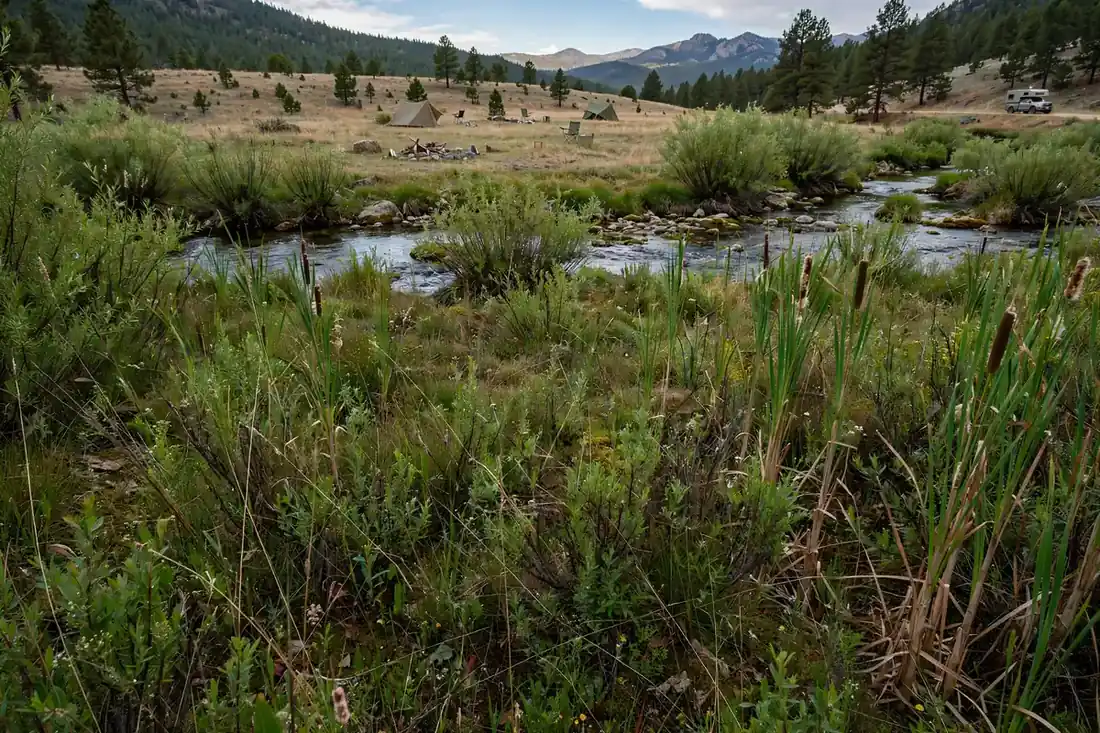
This is where confident campfire advice gets people into trouble, so let me be blunt: a full grey tank is not a basin of dishwater, and the rules for one are not the rules for the other.
In the United States, the Bureau of Land Management’s general sanitation rule prohibits draining sewage or waste from a vehicle except in places provided for that purpose, but it carves out an exception for “wash water.” That phrase is the source of almost every argument about grey water on BLM land. It does not mean you can open a 25-gallon grey valve anywhere on BLM land: supplemental rules for specific areas can prohibit it outright, state law can override the federal exception, and Arizona, for instance, treats kitchen-sink and dishwasher water as sewage rather than grey water. National parks and many Forest Service campgrounds require grey water to go to a dump station or a designated disposal point, full stop.
The practical rule I live by: if permission to dispose of tank grey water is not clearly stated for the exact place you are camping, assume it is not allowed. A dump station or an approved disposal area is the default; developed campgrounds, rest areas, and private land are never a place to dump a tank on the ground. A small basin of strained dishwater, scattered on soil under Leave No Trace guidance, is a different thing from opening a tank valve.
That distinction matters for washing up outside, too. Leave No Trace guidance, published by the National Park Service, is to carry wash water 200 feet away from streams or lakes, use small amounts of biodegradable soap, and scatter strained dishwater. That guidance is about a basin, not a tank. It does not give you permission to empty a holding tank on the ground, and it does not make soap safe in a stream — biodegradable soap breaks down in soil, with microbes and oxygen, not in cold moving water. I keep the two jobs separate: basin water follows Leave No Trace; tank water goes to a dump station.
Boondocking grey-water practice that actually stretches a stay
Stretching a stay is mostly about keeping water out of the tank. For site selection beyond water, see my complete boondocking guide. Shower like water costs something, because it does. Navy showers, a low-flow showerhead (around 1.5 to 1.8 gallons per minute still feels fine), and catching the cold start in a jug. On days when a full shower is not needed, a flannel wash with a basin of warm water uses a fraction of a gallon.
Wash dishes in a basin, not under a running tap. A basin of hot soapy water plus a quick rinse basin uses far less than a running tap — and it gives you something you can strain. Wipe food off first, strain the basin through a fine mesh or cloth, and bag the solids with your trash. Owners on Airstream and RV forums report the same trio again and again: wipe dishes before washing, use a drain strainer, and keep coffee grounds and grease out of the tank entirely.
Move some washing outside the tank. If you are at a campground with a bathhouse, use it for at least some showers — that alone can double your grey capacity. Know your exit before you need it. Before I settle into a dispersed site, I note the nearest dump station. Grey tanks fill on their own schedule, usually a day earlier than you planned.
Portable grey tanks: the tote that buys you days
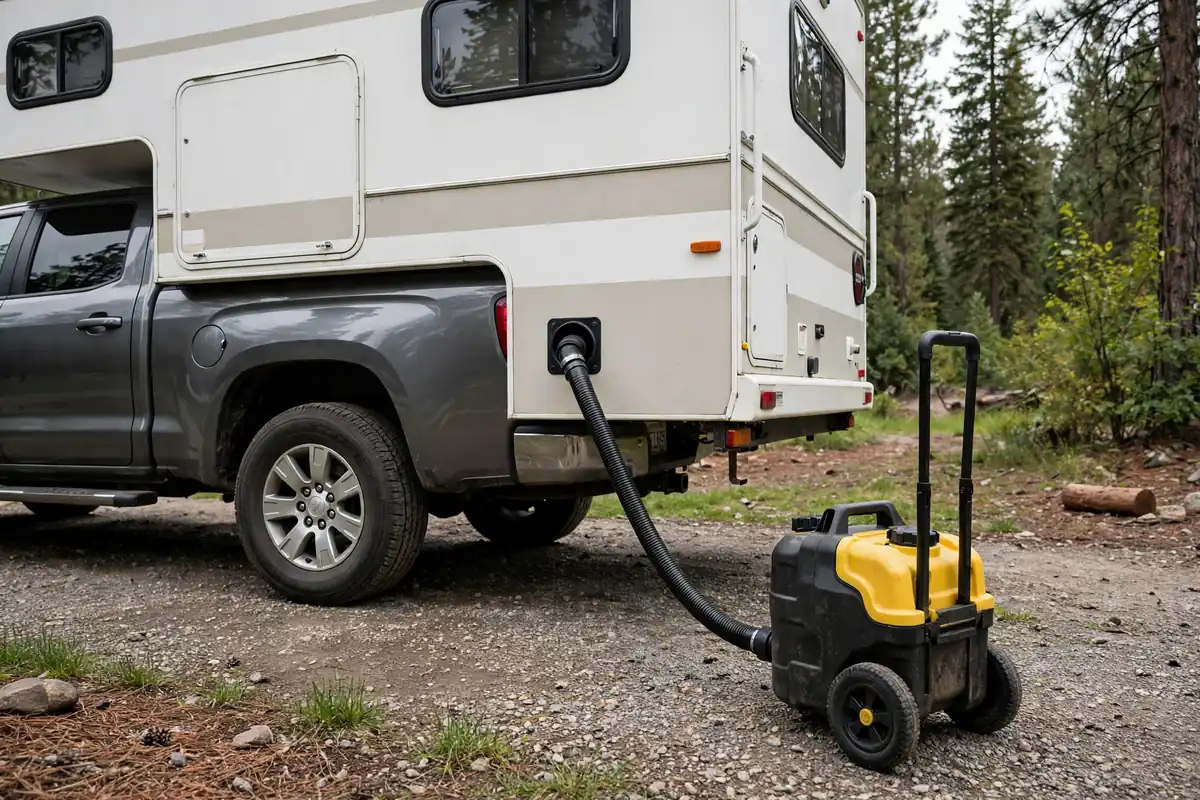
When the built-in tank is small, a portable tote — the wheeled “blue boy” tank — is the simplest way to buy extra days without moving the camper. This is especially true for pop-up and small hard-side truck campers, where owners report sink water going to a tote outside because there is no big built-in grey tank to rely on.
Size it to your camper, not your ambition. Totes commonly come in roughly 15 to 36 gallons. A 15-gallon tote is easy to handle; a 36-gallon tote holds a whole small grey tank’s worth but weighs around 300 pounds when full, since water is about 8.3 pounds per gallon, so you tow or wheel it, never lift it. For most truck campers, a tote in the low-to-mid 20s is the sweet spot. Well-known options include the Camco Rhino line and the Thetford SmartTote2 — check the size that fits your camper’s outlet height and storage space.
Use it properly and it is painless. Park on level ground, connect with a dedicated sewer hose (never your fresh-water hose), open the grey valve slowly, and watch the tote’s level — overfilling a tote is a mess you only make once. Tow it only the short distance to the dump station, slowly, on campground roads, following the manufacturer’s instructions, and never at highway speed. At the dump station, empty the tote into the sewer inlet, rinse it and the hose with the non-potable rinse water provided (never the potable spigot), and let everything dry before storage.
Dumping etiquette: the step-by-step that keeps you welcome
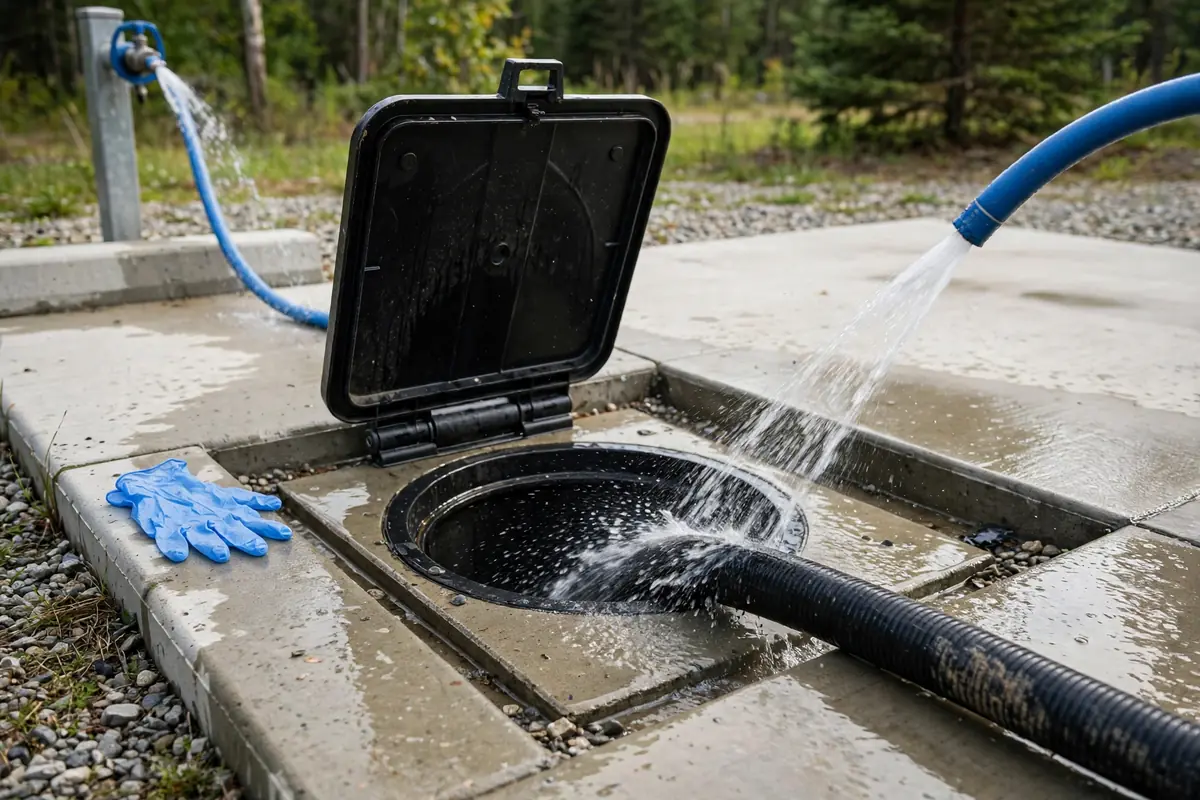
Gloves on, sewer hose out, and check the hose for cracks before you connect anything. Seat the discharge end firmly and deeply in the dump inlet, so it cannot jump out under pressure. If you are dumping both tanks, black first, then grey — the grey water rinses black residue out of the hose. Close each valve firmly when it finishes. Rinse the hose with the dump station’s non-potable rinse water, compress it to push out the remaining liquid, cap both ends, and stow it separately from anything fresh-water related. Leave the pad clean: if you splashed, rinse it. At home, grey water goes into your sewer cleanout or septic connection, never into a storm drain, a ditch, or onto the ground.
Soap choice: biodegradable is not a free pass
Inside the tank, I keep soap simple — a small amount of ordinary dish soap and body wash, nothing exotic. What actually keeps a tank clean is water volume at dump time, keeping food and grease out, and an occasional slosh-and-dump clean on a drive.
Outside the tank, the rule is stricter. Biodegradable soap is not harmless in water: it needs soil, warmth, microbes, and time to break down, and in a cold stream it behaves much like any other soap. So never wash in a lake, creek, or river, even with biodegradable soap. Carry water at least 200 feet — roughly 70 adult paces — from any water source, use a tiny amount of soap, strain out the food bits, pack those out, and scatter the strained water broadly on soil, unless a designated receptacle is provided. Leave No Trace’s own dishwater guidance puts it exactly that way: carry water 200 feet away, use small amounts of biodegradable soap, and broadcast strained dishwater unless a designated receptacle is available. That guidance is for basin water, not a tank.
Winter grey water: the valve freezes before the tank does
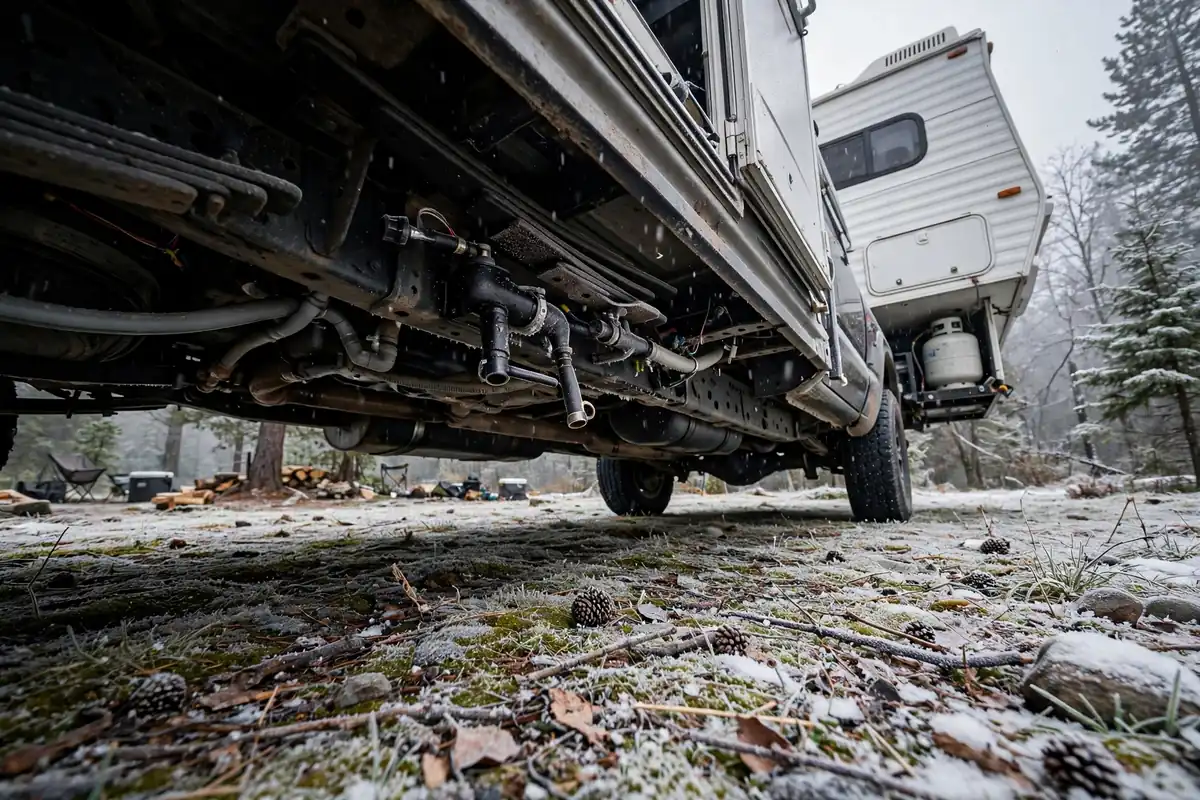
Cold weather turns grey water from a capacity problem into a breakage problem. The tank is usually thick plastic that can flex a little, but the exposed dump valve and short pipework around it are brittle, sit lower than the tank, and freeze first. Owners on Forest River and RV forums report tanks staying liquid on heater pads while valves and exposed lines froze solid.
What works: dump before a hard freeze arrives, not during it. If your camper has tank heater pads, switch them on before temperatures drop — pads add heat, they do not thaw a solid valve quickly, and they draw real battery power. A splash of non-toxic RV antifreeze in the grey tank and in each drain trap is the cheap insurance owners report using for winter dry camping. Do not leave a sewer hose full of water out overnight in freezing weather — it will freeze first. When you are done for the season, drain the grey tank fully as part of the full winterizing routine in my truck camper winterizing guide.
Grey water troubleshooting: quick diagnosis
Sink or shower drains slowly. Check the tank is not full first, then the drain strainer for hair and food, and a kinked drain hose or blocked roof vent.
Smell from one drain only. Clean that drain, refill its P-trap with water, and check the air admittance valve under that sink. If the smell is strongest in the cabinet under the sink, the valve is the prime suspect.
Smell everywhere, all the time. The tank film is the likely cause; a soapy drive-and-dump clean plus keeping food and grease out usually settles it. For black-water smells, see my guide to killing truck camper black tank smell.
Frequently asked questions about truck camper grey water
Can I dump truck camper grey water on the ground while boondocking?
As a default, no. Tank grey water goes to a dump station or an approved disposal area. The BLM “wash water” exception is narrow, can be overridden by supplemental rules or state law, and does not cover developed campgrounds, national parks, or private land.
How long does a truck camper grey tank last off-grid?
It depends on your tank size and your shower habit more than anything else. Two careful people with a 25-gallon grey tank, navy showers, and basin dishwashing can often stretch four to five days. Two people taking normal showers and washing under a running tap can fill the same tank in two days or less.
Why does my grey tank smell worse than my black tank?
Because grey water is full of food, grease, soap, and hair, and bacteria thrive on that mix in warm, still water. A dry P-trap, a failed air admittance valve, or a blocked roof vent can also let tank smells into the camper, so check those before blaming the tank itself.
Is biodegradable soap safe to use in a stream?
No. Biodegradable soap breaks down in soil, not in water, and it can harm aquatic life even in small amounts. Always carry wash water at least 200 feet from lakes and streams, use a tiny amount of soap, strain the water, and scatter it on soil — or use a designated receptacle where one is provided.
Do I need a portable tote tank for a truck camper?
Not for every trip, but for any off-grid stay longer than your built-in grey tank allows, it is the simplest solution. Size it close to your grey tank’s capacity, remember that a full tote weighs roughly 8 pounds per gallon, and tow it only slowly and over short campground distances to a dump station.
Grey water is not the glamorous part of truck camping, and that is exactly why it catches people out. Know your real capacity, keep food and grease out, and default to a dump station — and it stops being the thing that ends your trip early, and becomes one more quiet routine, noticed only when you skip it.