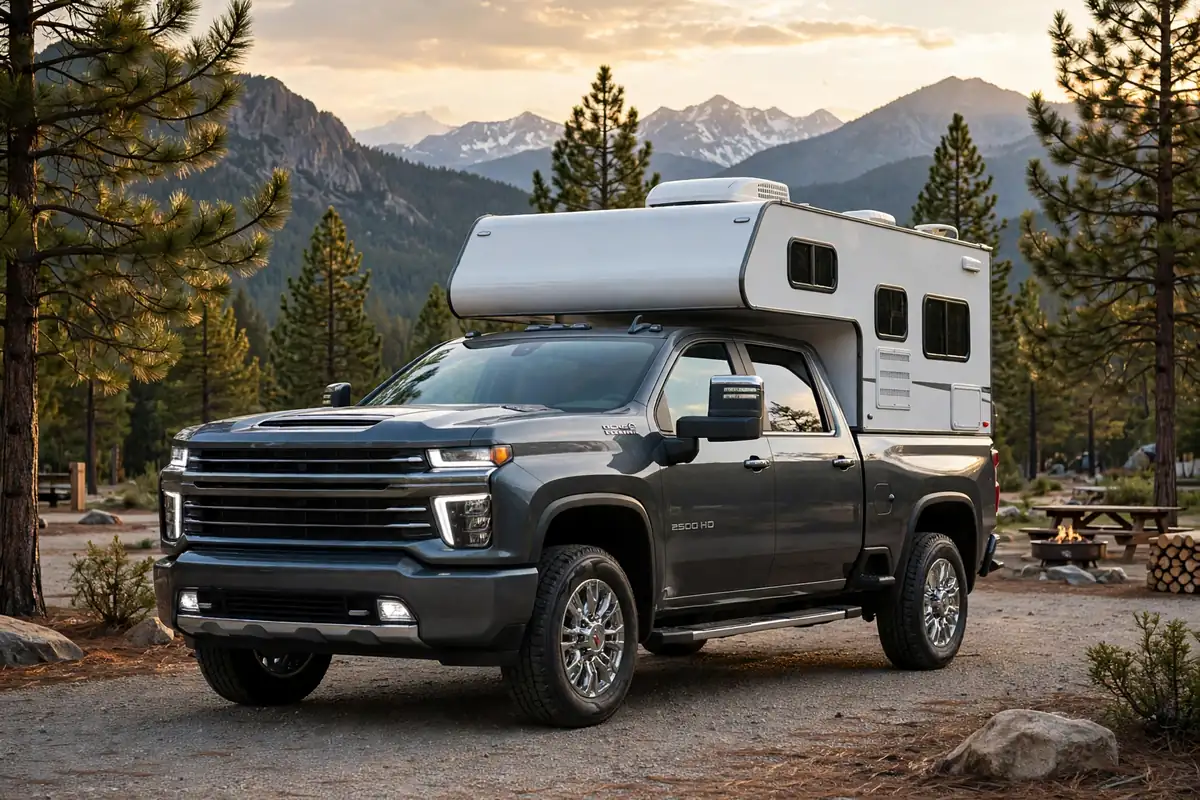
Best Truck Camper for Chevrolet Silverado 2500HD: Fitment Guide
I used to believe a three-quarter-ton truck could carry any truck camper. That is what the brochure numbers suggest, and it is the first mistake most Silverado 2500HD owners make. The best truck camper for Chevrolet Silverado 2500HD is not the biggest one you can afford. It is the one that still leaves you under the number on your own door jamb once water, propane, food, two adults, and the tie-downs are all in the truck.
This guide is that math: your real payload by trim, cab, bed, and engine, the gas versus Duramax argument settled with Chevrolet’s own numbers, real camper weights matched to that number, and the suspension and tie-down fixes in the order that helps. Every weight below is a published dry weight. Add 800 to 1,500 pounds to each one before it means anything on the road.
Start With the Sticker, Not the Brochure
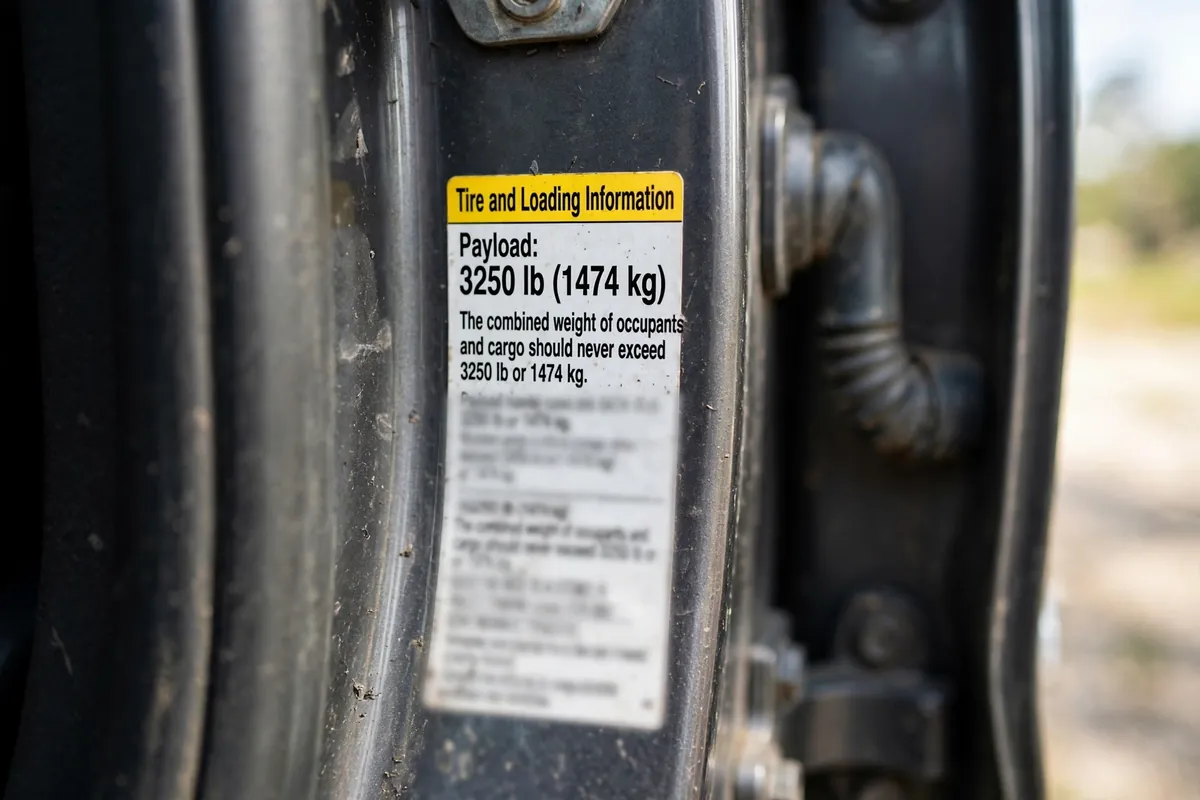
Chevrolet publishes a base payload table for the 2026 Silverado 2500HD. These are base-truck figures, before options, and Chevrolet itself says to check the label on your door jamb for the carrying capacity of your specific vehicle. Here is the part that matters for the truck most of us actually buy, the Crew Cab 4WD:
| 2026 Silverado 2500HD | Gas 6.6L V8 base payload | Duramax 6.6L diesel base payload |
|---|---|---|
| Regular Cab, long bed, 2WD | 3,689 lbs | 3,613 lbs |
| Double Cab, standard bed, 4WD | 3,375 lbs | 3,372 lbs |
| Double Cab, long bed, 4WD | 3,434 lbs | 3,441 lbs |
| Crew Cab, standard bed, 4WD | 3,387 lbs | 3,387 lbs |
| Crew Cab, long bed, 4WD | 3,495 lbs | 3,508 lbs |
Source: Chevrolet’s own 2026 Silverado 2500HD specifications.
Now compare that with the advertised maximums in dealer articles: up to 4,081 pounds, up to 3,979, up to 3,926, depending on the page. Those belong to one build — a Regular Cab, long-bed, two-wheel-drive work truck, usually with particular wheels. Nobody buys that truck to take his wife camping. The published sources do not even agree with each other on the maximum, which is why I am using Chevrolet’s pressroom base table as the conservative figure.
The subtraction that decides everything: take the payload number off your driver’s door jamb, subtract the camper’s loaded weight (not its dry weight), then subtract every adult and kid in the cab, the dog, the tie-downs, the airbags, the bed mat, and the toolbox. What is left should still be positive, with margin. Run the full version through our truck camper payload calculator guide before you shop.
Trim, Cab, and Bed: Where Your Payload Goes First
Every comfort feature you add is payload you no longer have. The WT is the payload champion because it carries the least of its own weight: bench seat, steel wheels, no sunroof, no power running boards. LT adds the big screen and trailering hardware. LTZ adds leather and power-folding mirrors. High Country piles on 20-inch wheels, ventilated seats, and a head-up display. Each step is a nicer place to sit and a smaller number on the door jamb.
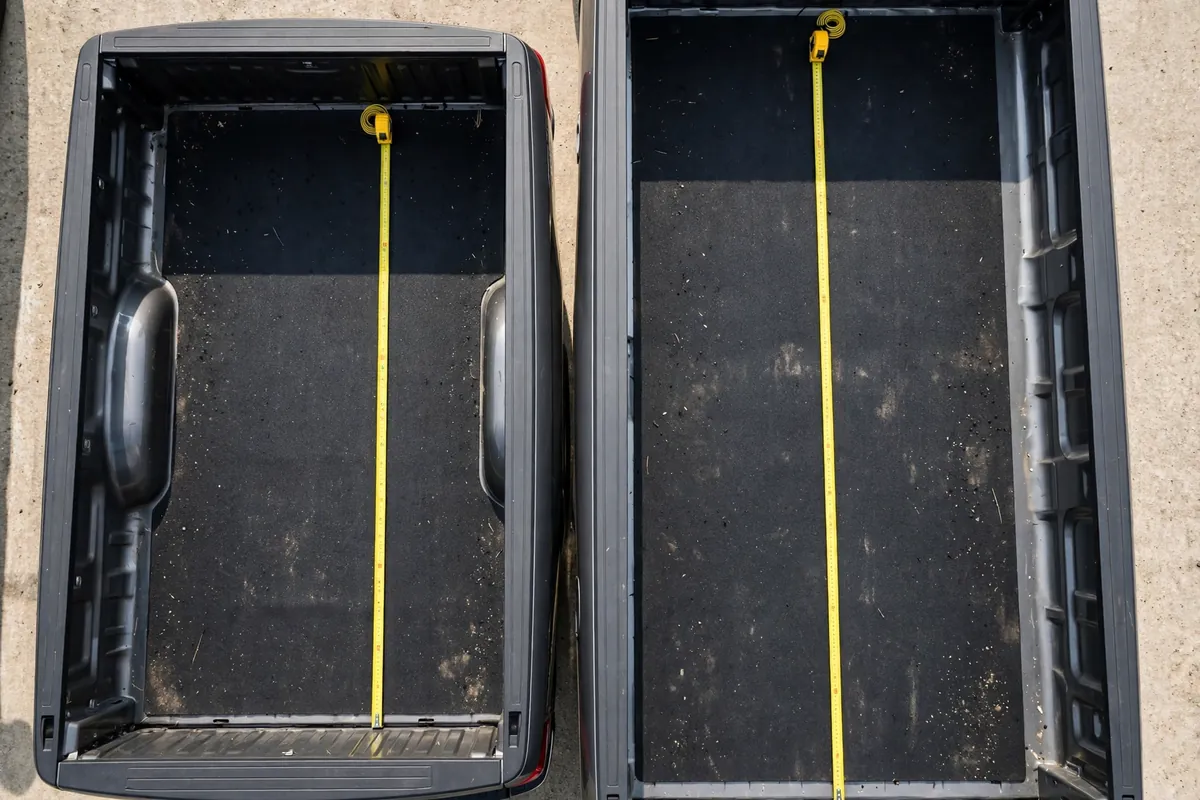
Cab and bed matter just as much. A Crew Cab carries two more doors and more glass than a Regular Cab, and a long bed carries about 16 inches more steel than a standard bed. Two trucks with the same badge can easily sit 500 to 1,000 pounds apart on the sticker once the options are counted.
The 2500HD offers no short bed. The standard bed is about 82 inches at the floor — call it 6 feet 10 inches — and the long bed is about 98 inches, a touch over 8 feet. Both are about 71 inches wide at the floor and about 51 inches between the wheel wells. That standard bed is longer than a half-ton’s, which is why campers built for a 6-foot-6 half-ton bed still fit it. But a camper built for an 8-foot bed overhangs a standard bed by more than a foot, shifting the center of gravity rearward and forcing the tailgate down. Our short bed vs long bed truck camper guide covers the full argument. The short version: if you have not bought the truck yet, buy the long bed. If you already own the standard bed, buy a camper designed for it.
Check the glovebox too. General Motors puts a Truck Camper Loading Information label there, listing a Cargo Weight Rating for a slide-in camper that is lower than the door-jamb payload. Owners on WanderTheWest worked out why: on one 2018 Silverado diesel the door sticker said 2,416 pounds of payload, but the camper rating was only 1,516 pounds. The 900-pound difference is six seat positions at 150 pounds each — GM assumes a full cab when it rates a slide-in camper, because a tall camper raises the center of gravity. Easy to miss, expensive to ignore.
Gas vs Duramax: The Payload Surprise
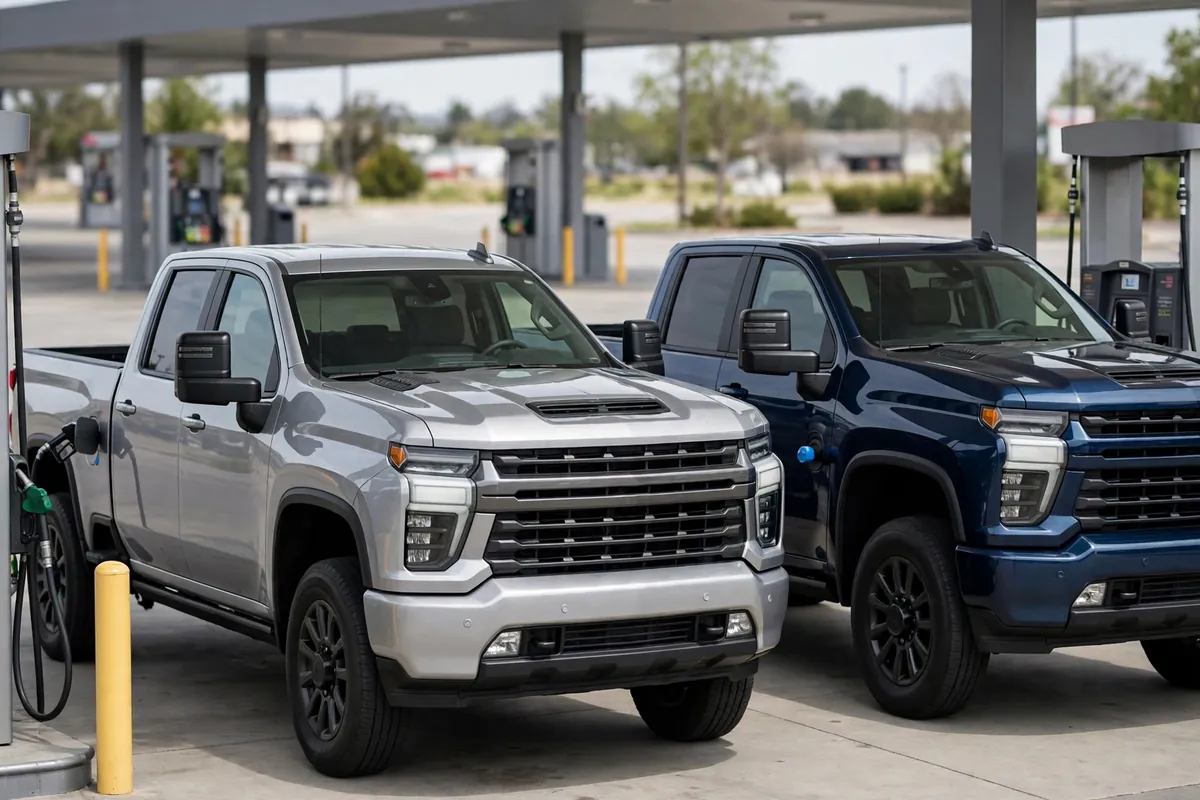
The standard 6.6-liter gas V8 makes 401 horsepower and 464 pound-feet of torque. The 6.6-liter Duramax turbo-diesel makes 470 horsepower and 975 pound-feet, and tows up to 20,000 pounds conventionally with the Max Trailering Package against 16,000 for the gas. So the diesel must be the camper engine? Not necessarily. The answer is in Chevrolet’s own curb-weight table.
A Crew Cab standard-bed 4WD gas truck has a base curb weight of 7,019 pounds. The same truck with the Duramax weighs 7,719 pounds. The diesel engine, its cooling system, its exhaust aftertreatment, and its DEF tank add about 700 pounds before you load a single thing. GM compensates by raising the diesel’s gross vehicle weight rating by roughly the same amount — 11,150 pounds against 10,450 for the gas truck — so the base payload figures come out nearly identical: 3,387 pounds for both engines in the most common configuration.
On the brochure, the diesel gives up almost nothing. In the real world it gives up plenty, because of how people actually buy diesels. Almost nobody orders a Duramax in a stripper WT Regular Cab. Diesel buyers order Crew Cab LTZ and High Country trucks, four-wheel drive, sunroof, every package — and every option eats the payload the higher GVWR was supposed to protect. Owners on iRV2 keep posting the same shock: one owner with a 2023 Silverado 2500 LT, Crew Cab, short bed, 4×4, Duramax, found a door-sticker payload of just 2,067 pounds. Another found his diesel Crew Cab’s glovebox camper rating barely broke 1,000 pounds. The brochure said 3,387. The truck said otherwise.
My rule of thumb: if the camper lives in the bed most of the year and you tow a boat or small trailer occasionally, the gas V8 is the better camper truck — cheaper to buy and maintain, no DEF, and the Crew Cab you actually buy will usually carry more camper than the equivalent diesel. If you tow a heavy trailer most weekends or cross the Rockies loaded, buy the Duramax and accept a lighter camper. Do not choose the engine on torque alone. Choose it on the sticker of the truck you are about to buy.
Best Truck Camper for Chevrolet Silverado 2500HD: The Campers That Actually Fit
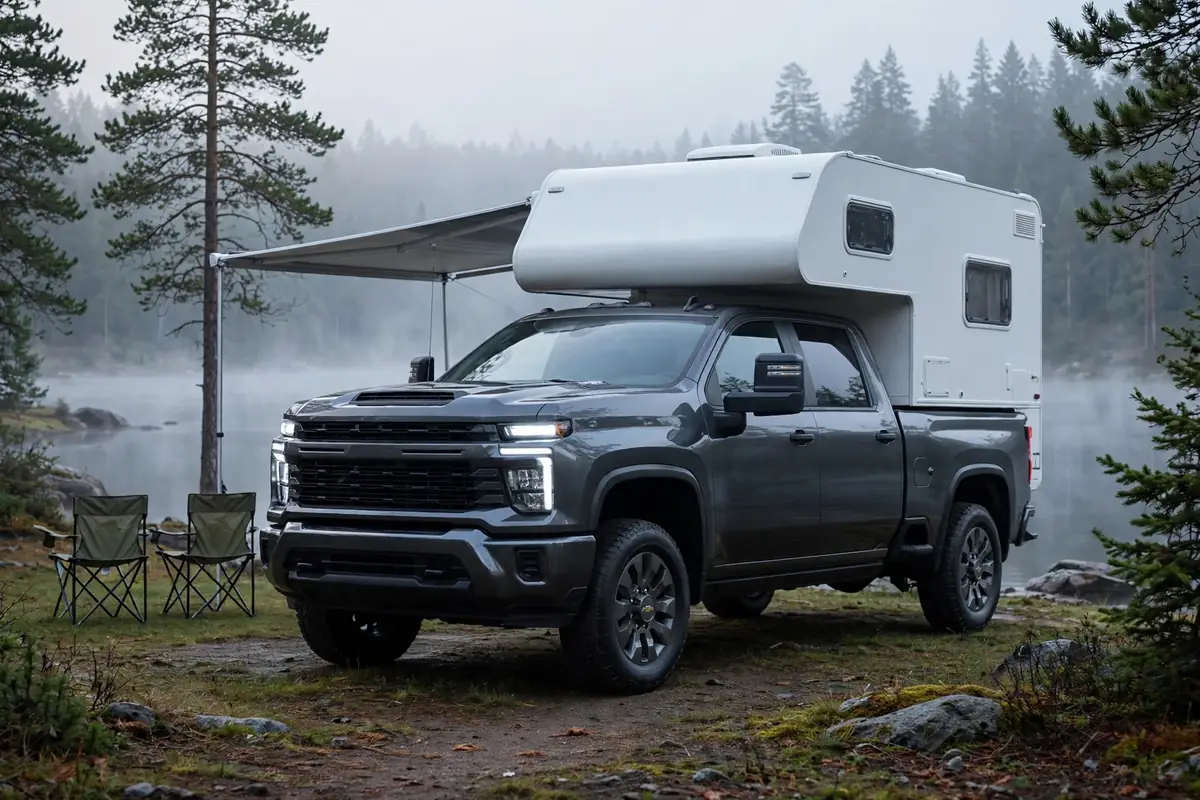
Dry weight is a starting point, not a real weight. Add 800 to 1,200 pounds for water, propane, batteries, options, food, and gear on a small camper, and 1,000 to 1,500 on a big one — a gallon of water weighs 8.34 pounds, so a 30-gallon tank alone is 250 pounds. Owners on iRV2 say it plainly: take the dry weight, add 1,000 to 1,500 pounds, and that is your real camper.
| Camper | Dry weight | Bed | Verdict for a 2500HD |
|---|---|---|---|
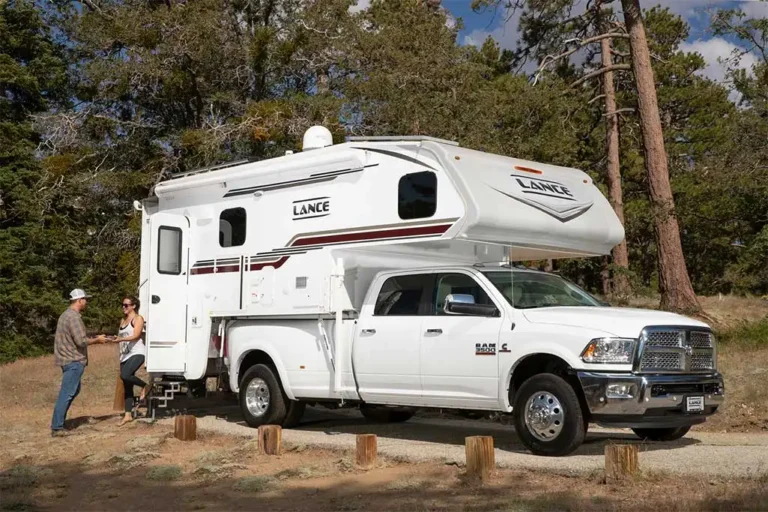
| Lance 650 | 1,813 lbs | Standard | Fits any 2500HD. Hard-side, non-slide, wet bath. |
| Lance 825 | 1,795 lbs | Standard | Fits any 2500HD. Longer floor plan, sleeps four. |
| Lance 865 | 2,012 lbs | Standard | Best all-round fit. Wet and loaded, about 2,800–3,000 lbs. |
| Northstar Liberty | 1,775 lbs | Short/standard | Fits any 2500HD. Northstar weighs every unit at the factory. |
| Northstar Laredo SC | 2,090 lbs | Standard/long | Fits any 2500HD. Loaded, about 3,050 lbs by Northstar’s math. |
| Scout Yoho | 1,002 lbs | Short/long | Fits even a low diesel sticker. Minimalist, tiny water capacity. |
| Scout Kenai | 1,358 lbs | Short/long | Built for three-quarter-ton trucks. Wet bath. |
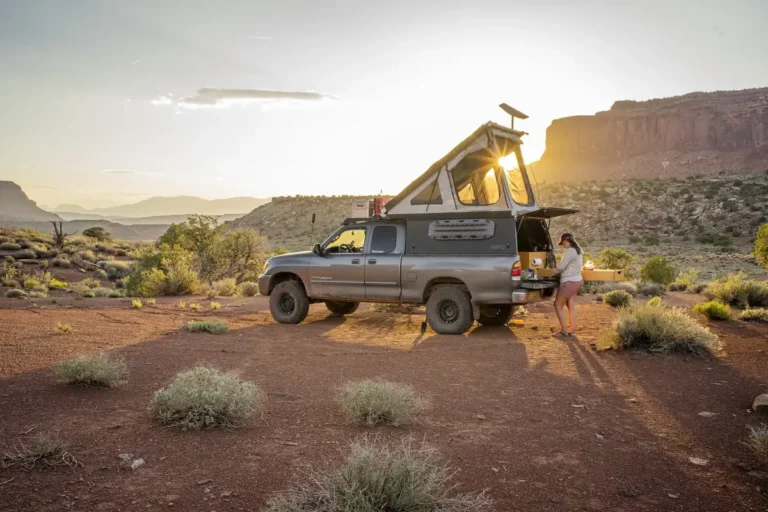
| Four Wheel Camper Hawk | ~1,428 lbs avg with options | Standard/long | Pop-up roof keeps the center of gravity low. Varies ~300 lbs by options. |
| nuCamp Cirrus 620 | 1,565 lbs | Standard | Genuinely light and well finished. |
| nuCamp Cirrus 820 | 2,876 lbs | Standard/long | Check your sticker carefully. Older listings show a lower figure; use the current nuCamp 2025 spec sheet. |
| Arctic Fox 865 | 2,641 lbs | Standard/long | Needs a sticker north of 3,300. Past 3,500 lbs loaded. |
| Arctic Fox 811 | 2,873 lbs | Standard/long | Single slide. Lovely and heavy once optioned; see the 2026 Arctic Fox buyers guide for the manufacturer-provided weights. |
| Bigfoot 25C9.4SB / LB | 2,980 / 2,950 lbs | Standard / long | Molded fiberglass, four-season. Loaded, near 4,000 lbs — long-bed gas truck only. |
| Lance 975 | 3,394 lbs | Long | Dry weight alone eats a Crew Cab sticker. Wet, over 4,400 lbs. |
| Lance 1062 | 3,424 lbs | Long | Double slide. If this is the camper you want, shop for a 3500. |
| Lance 1172 | 4,063 lbs | Long | Does not fit. About 5,100 lbs wet — more than most diesel stickers dry. |
| Eagle Cap 1165 | 4,917 lbs | Long | Does not fit. 6,157 lbs wet; maker says long-bed dually trucks. |
| Host Mammoth | 3,955 lbs | Long | Does not fit. Three slides, close to 5,000 lbs loaded. A 3500 dually camper. |
We compared the three small Lances side by side in our Lance 650 vs 825 vs 865 weights guide. If you own the half-ton sibling instead, the numbers are completely different — a Silverado 1500 tops out around 2,260 pounds of payload — so read our best truck camper for Chevrolet Silverado 1500 guide for that truck rather than scaling this one down. The trucks share a badge, not a payload.
Fix the Truck in the Right Order
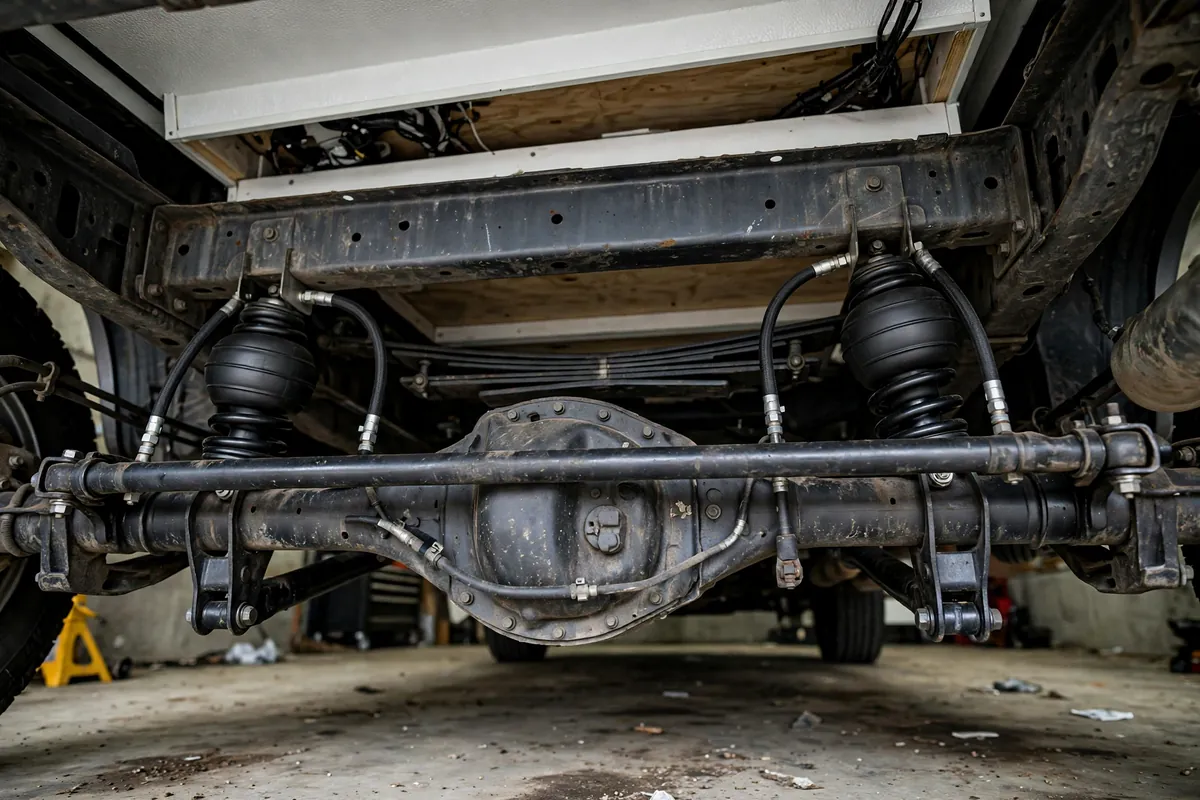
Suspension parts do not add payload. Airbags, Timbrens, SumoSprings, sway bars, and StableLoads make a legal load ride better. They do not make an overloaded truck legal, and they do not move a pound off your rear axle rating or your tires.
1. Scale the truck. Full fuel, full water, both passengers, all the gear, camper on. Compare the front axle, rear axle, and total against their GAWR and GVWR. If the rear axle is over, no helper spring fixes that — you need a lighter camper or less stuff.
2. Check the tires. Tires have their own load rating, often the lowest number in the chain. If the sidewall number is close to your scaled rear-axle weight, that is your next purchase, not airbags.
3. Level the load. Owners on the Grand Design and iRV2 forums who have run all three systems land in the same place: airbags are the most adjustable and give the smoothest loaded ride, and you can set pressure per side and level the truck at camp — but they need maintenance and can leak. Timbrens are set-and-forget, but several owners call them harsh under a heavy load; one described his truck as riding like a log truck. SumoSprings sit in the middle: softer than Timbrens, less adjustable than airbags. Our full owner verdict is in airbags vs Timbren vs SumoSprings — read it before spending, because the wrong choice is a $500 lesson.
4. Kill the sway and porpoising. A tall camper is a sail. A rear sway bar is the best dollar-for-dollar handling fix after leveling, and the one owners notice most in crosswinds and when semis pass. Add StableLoads or a similar kit if the truck still wallows — engaging the factory overload springs earlier does more for porpoising, that up-and-down chucking on rolling highways, than most people expect.
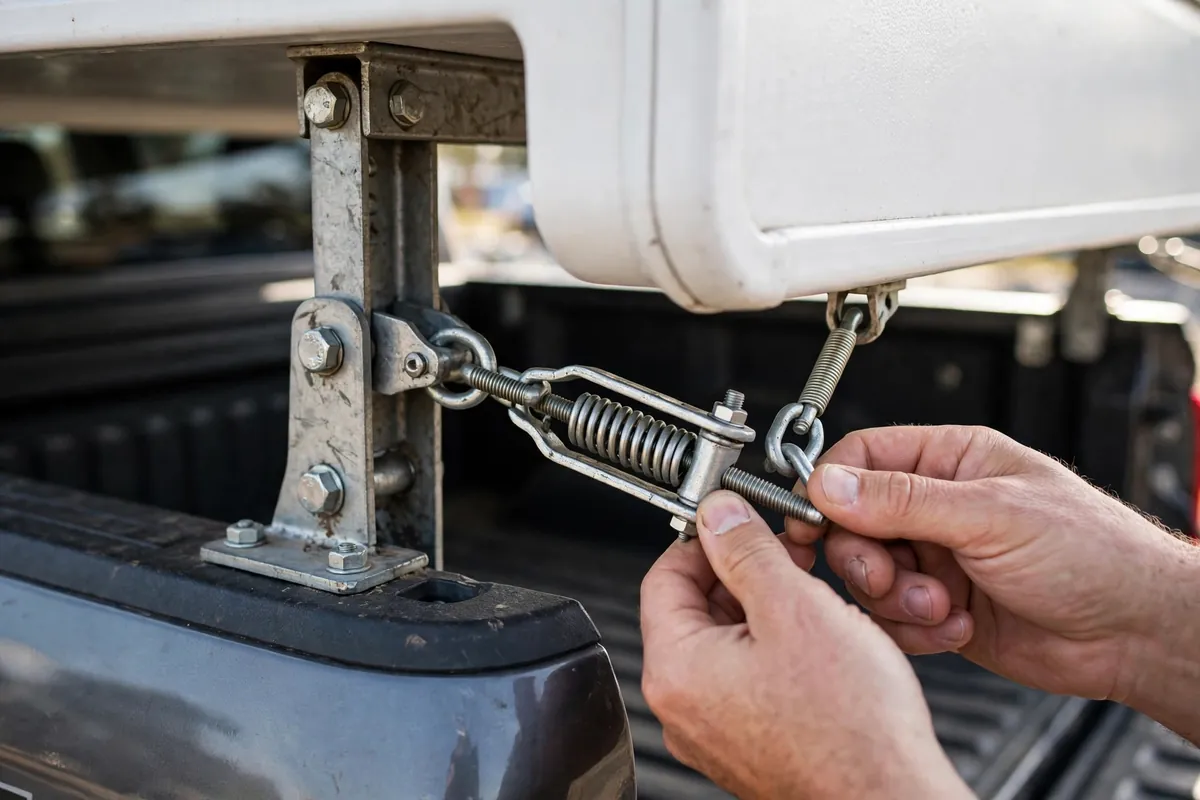
5. Tie it down properly. Frame-mounted tie-downs, not bed rails, not stake pockets. Use proper turnbuckles, check them after the first 50 miles, and check them again every morning on a trip — they loosen as the camper settles. The full comparison is in our truck camper tie-downs and turnbuckles compared guide.
Do it in that order and you will spend money once. Do it backwards — sway bar first, scale never — and you will spend money twice and still squat.
What I Would Buy
If I were buying a Silverado 2500HD and a camper tomorrow, with my own money, I would buy a gas Crew Cab, long bed, LT trim, four-wheel drive. The gas engine keeps the sticker honest, the long bed takes any camper on this list without an overhang argument, and LT is the sweet spot: the trailering tech without the High Country’s weight in leather and gadgets. Then I would put a Lance 865 on it. Wet and loaded it sits around 2,900 pounds against a sticker in the 3,300 to 3,500 range, and two adults, a full water tank, and a weekend of food still fit.
If the sticker comes back low — say you already own a diesel High Country and you are not trading it — I would buy the Scout Kenai or the Four Wheel Camper Hawk instead. Both leave more than 1,500 pounds of headroom on even a bad sticker, and headroom is what makes a rig relaxing instead of stressful.
Frequently Asked Questions
What is the best truck camper for a Chevrolet Silverado 2500HD?
For most owners, the Lance 865 at 2,012 pounds dry: hard-side, non-slide, wet bath, and it leaves real margin on a gas Crew Cab once loaded. If your sticker is low — a loaded diesel High Country, for example — the Scout Kenai at 1,358 pounds dry or the Four Wheel Camper Hawk at about 1,428 pounds dry with options are the safer picks.
How much payload does a Silverado 2500HD actually have for a camper?
Chevrolet’s base table lists 3,387 pounds for a Crew Cab standard-bed 4WD truck, gas or diesel, and 3,689 pounds for a Regular Cab long-bed 2WD gas truck. Those are base-truck figures. Owners report real stickers far lower — one 2023 Duramax Crew Cab LT owner found just 2,067 pounds on his. Always use your own door jamb, and check the glovebox slide-in camper rating too.
Can a Silverado 2500HD carry a Lance 1172 or an Eagle Cap 1165?
No, not within its ratings. The Lance 1172 is 4,063 pounds dry and about 5,100 pounds wet. The Eagle Cap 1165 is 4,917 pounds dry and 6,157 pounds wet, and its maker says it is designed for long-bed dually trucks. Both exceed a 2500HD’s payload before passengers, water, or gear. Those campers belong on a 3500 dually.
Gas or diesel for a truck camper on a 2500HD?
For carrying a camper, gas usually wins. The Duramax adds about 700 pounds to curb weight, and while GM raises the diesel’s GVWR to compensate on paper, most diesel trucks buyers actually order are loaded Crew Cab trims whose stickers come back much lower. Gas is cheaper to buy and maintain and needs no DEF. Diesel wins if you tow heavy trailers most weekends, thanks to 975 pound-feet of torque — but then buy a lighter camper.
Does a standard bed or long bed matter for a truck camper?
Yes. The standard bed is about 82 inches at the floor and the long bed about 98 inches. Long-bed campers overhang a standard bed by more than a foot, shifting the center of gravity rearward and forcing the tailgate down. Short-bed campers like the Lance 650, 825, and 865, the Northstar Liberty, and the Scout Yoho are designed for the standard bed.
Do airbags increase my truck’s payload?
No. Airbags, Timbrens, and SumoSprings level the truck and improve handling, but they do not change your GVWR, rear axle rating, or tire rating. If you are over the sticker, the only honest fixes are a lighter camper, less gear, or a bigger truck. Suspension parts make a legal load ride well; they do not make an overloaded truck legal.