Best Truck Camper Toilets Compared — Cassette vs Composting vs Dry-Flush (2026)
The toilet question hits every truck camper owner sooner or later, and it hits harder than in a big motorhome. You have less floor space, less payload to spare, and usually no giant black-water tank underneath. I have lived with all three options — a cassette toilet, two composting heads, and a dry-flush unit — on weekend trips and long off-grid stretches. This is the comparison of truck camper toilets I wish I had read before spending the money: 2026 prices, installation, emptying, and which system fits weekenders versus full-timers.
If you are still deciding whether you need a fixed toilet at all, start with our guide to portable camping toilets for trucks — buckets, folding toilets, and porta-potties. This article covers the step up: toilets that live in the camper full time.
Why the Toilet Decision Is Different in a Truck Camper
Most pop-up campers ship with no toilet at all, and most hard-sides ship with either a cassette or a small black tank in the 5 to 9 gallon range. Every gallon of flush water is weight on your payload sticker. That is why these three systems keep winning in truck campers: all are self-contained, all avoid a big black tank, and all have deep owner communities behind them.
Cassette Toilets: The Flush-and-Forget Workhorse
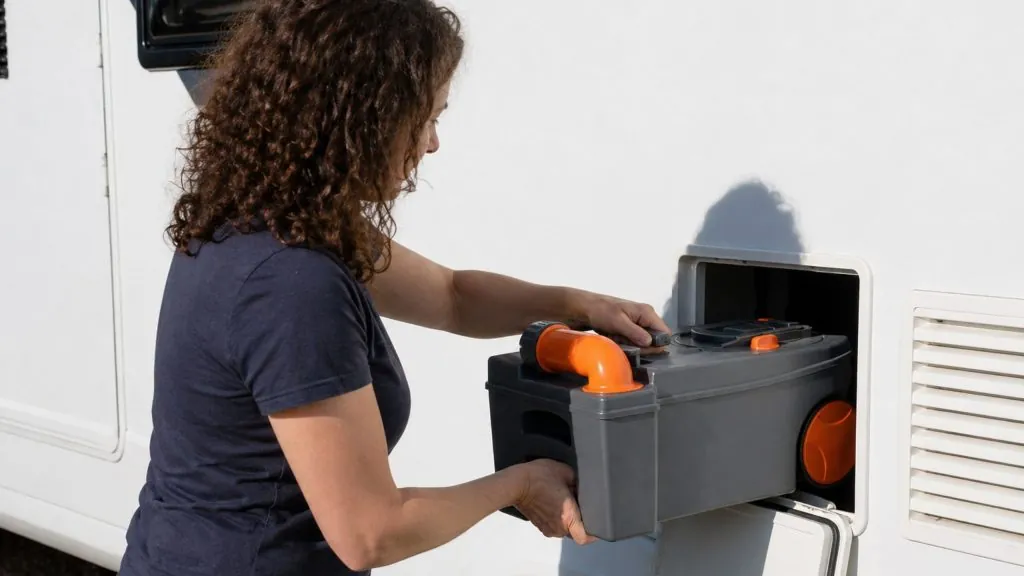
A cassette toilet looks and feels like a normal RV toilet from the seat. Underneath, instead of a black tank, sits a removable wheeled cassette — a sealed tank you slide out through an exterior hatch, roll to a dump point, and empty through a pour spout.
The models that matter in 2026
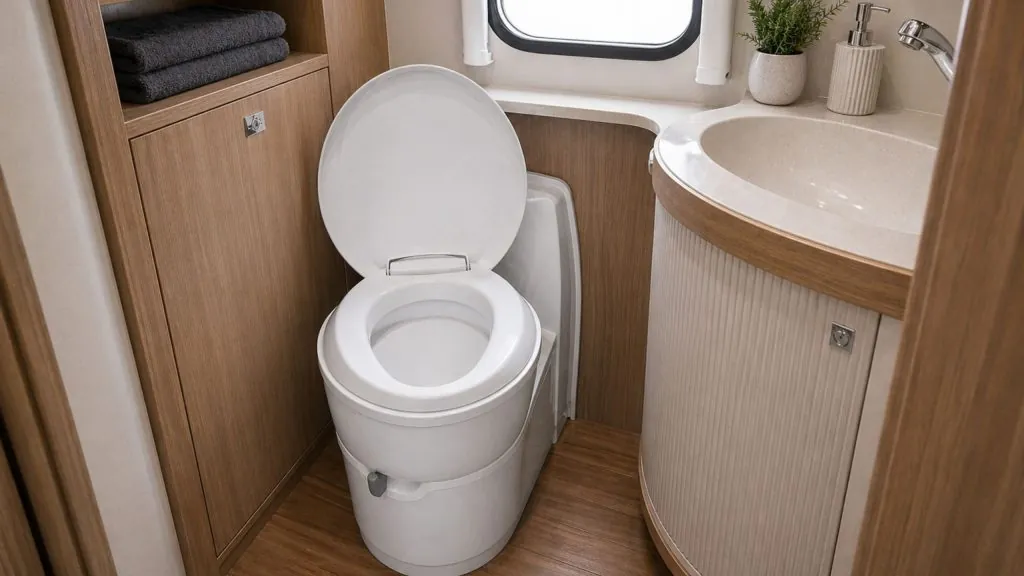
For the US market, the Thetford C223-CS is the one you will actually buy (Thetford’s cassette toilet lineup): a swivel-bowl cassette toilet with 12V electric flush, an 18-liter (4.75-gallon) removable waste cassette on wheels, a level indicator, and a flush system that ties into your camper’s own fresh-water tank. It weighs about 7.2 kg (16 lbs) and runs around $659 at US RV parts retailers in 2026. The swivel bowl rotates so you can tuck the toilet into a corner bathroom and still use it.
The Thetford C402-C is the bench-style European big brother found in imported campers: a 19.3-liter (5.1-gallon) wheeled cassette, its own integrated 15-liter flush-water tank filled from outside through the service door, 12V electric flush, and about 8.1 kg of weight. It sells for roughly £525 to £635 in the UK in 2026, but it is not officially sold through US dealers — Americans should price the C223-CS or the related C263 instead.
Installation: the hatch is the whole job
Installing a cassette in a camper that was not built for one means cutting a rectangular hole in an exterior wall for the service hatch — the cassette must slide out from outside. The toilet bolts to the floor, needs a small 12V feed for the flush pump, and on the C223-CS a tee into your fresh-water line. Campers with a factory bathroom already have the hatch — a quiet argument for buying a camper with a factory toilet.
The dump routine
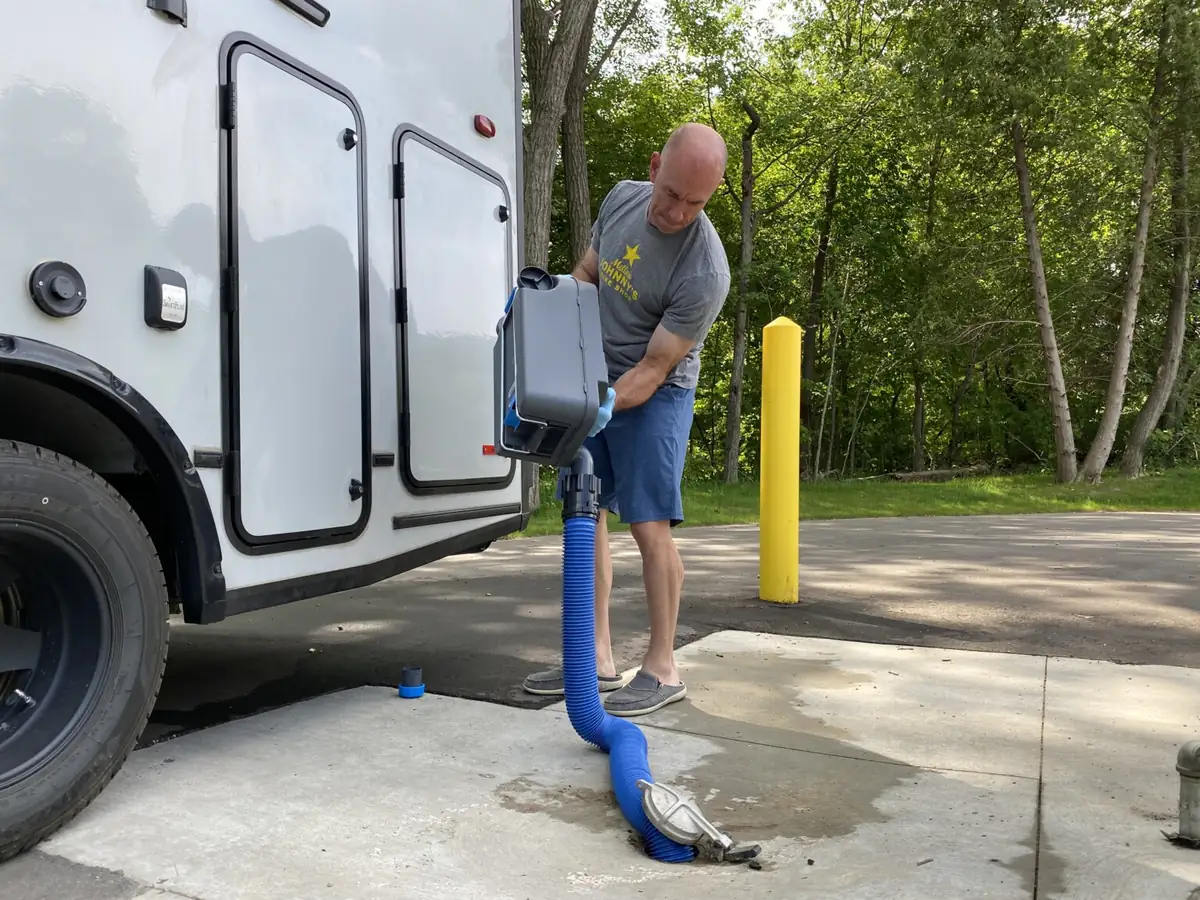
Pull the cassette out through the hatch, roll it to an RV dump station, flip the pour spout, press the vent button, and empty it. Rinse, add a dose of cassette chemical, slide it back in. Two people fill an 18-liter cassette in roughly 3 to 5 days.
Odor, cold, and weight
A healthy cassette does not smell inside the camper — the blade seal closes the cassette off from the bowl and the chemicals do their job. Smell complaints almost always trace to a dirty or worn seal, a cassette left too long in heat, or skipped chemicals. One warning RV forum owners repeat: never put holding-tank chemicals in the flush-water tank, only in the waste cassette — chemicals on the flush side attack the rubber blade seal and cause leaks. If the flush water smells mildewy, drain the flush tank and refill it with fresh water. Cassettes hate freezing: a full cassette can crack, so winter campers must heat the camper, drain before cold snaps, or run antifreeze through the flush side — our winterizing guide covers the toilet steps in order. Weight-wise, the toilet is 16 to 18 lbs, but a full 18-liter cassette is another 40 lbs of liquid until the next dump station.
Composting Toilets: No Water, No Dump Station
Composting toilets separate liquid from solid waste at the source. Urine goes to a bottle you empty every day or two; solids drop into a bin with coconut coir or peat moss, where a small fan and a crank or electric agitator keep things aerated and dry. Done right, the bathroom smells like nothing.
Nature’s Head: the full-timer’s standard
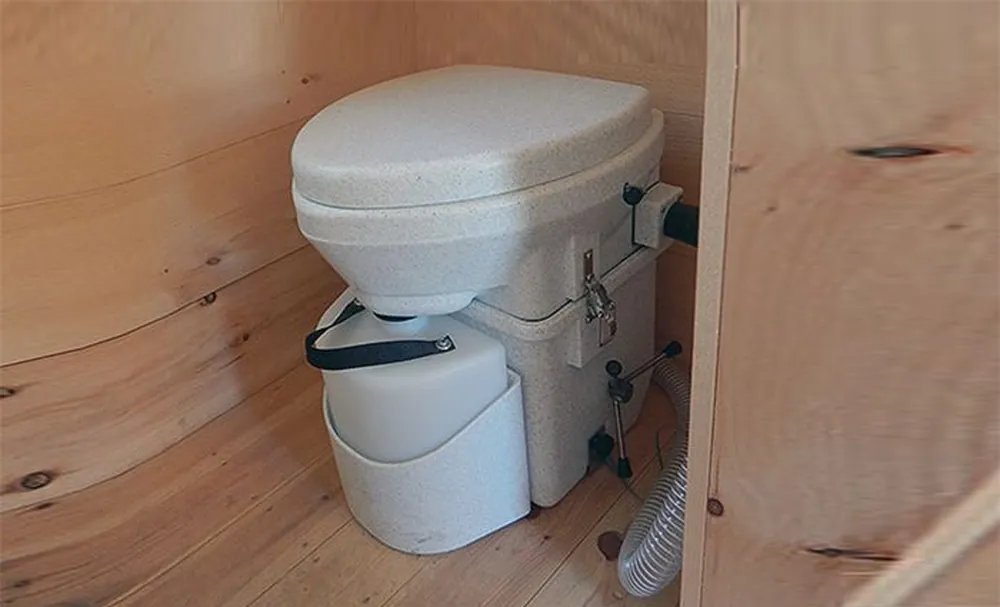
The Nature’s Head is the unit you see in serious off-grid builds. In 2026 it sells for $965 direct from natureshead.net, weighs 23 lbs, and is rated for 60 to 80 solid uses — roughly a month for two full-time users between solids emptying. The liquids bottle holds 2.2 gallons, the 12V fan draws 0.07 amps, and it carries a 5-year warranty. At 21 inches tall and 19 inches square it is a chunky piece of furniture, so check your bathroom footprint before ordering.
OGO Origin: the compact electric option
The OGO Origin is the newer American challenger, built for tight spaces. It sells for $984.99 at ogotoilet.com, measures 16 inches wide by 15 inches deep by about 18 inches tall, and weighs 34 lbs. Instead of a hand crank it uses a push-button electric agitator, and a sensor tells you when the 2.4-gallon urine bottle needs emptying. Solids capacity is rated around 25 to 30 uses. It needs 12V power and a small vent hose outside.
Trelino Evo: the no-power, no-vent minimalist
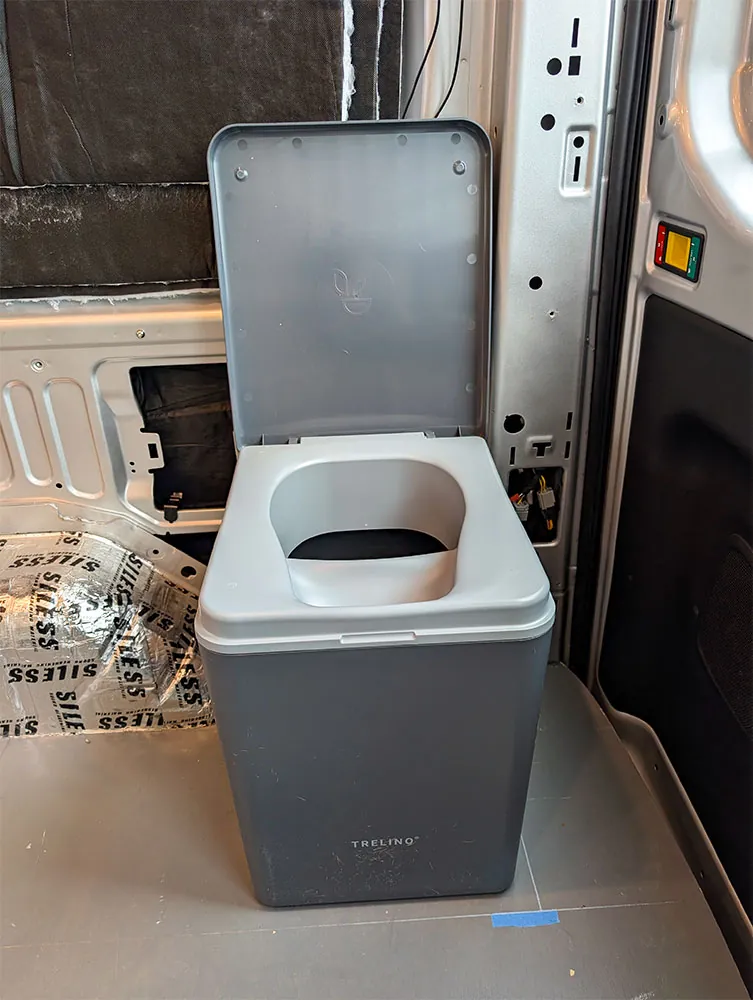
The Trelino Evo L uses urine diversion with a 10-liter urine canister and a 10-liter bag-lined solids container — no fan, no vent, no electricity. In 2026 the Evo L sells for $599 (Standard) or $659 (Plus+) at mytrelino.com, and weighs under 11 lbs. The trade-off is capacity: roughly 11 to 20 solid uses, so two people change the bag every few days.
Installation and emptying
This is where composting toilets shine for retrofits. The Nature’s Head and OGO bolt to the floor, need a 1.5-inch hole for the vent hose through a wall or the roof, and a fused 12V wire for the fan — an afternoon job. The Trelino needs nothing at all, which makes it the easiest toilet on this list to install and the easiest to remove if you change your mind.
Solids emptying takes five to ten minutes. Liquids are the daily chore: two well-hydrated full-timers can fill a 2-gallon bottle in a single day, and owners on RV forums warn that level indicators only tell you when you are nearly full — several learned to empty every morning and to cap the bottle before driving, after discovering what an uncapped bottle does on a bumpy forest road.
Odor and cold weather
Separation is the whole trick. Urine plus solids creates ammonia and hydrogen sulfide — the classic sewage stink. Keep them apart, keep solids dry and vented, and there is essentially no odor. A smelly composting toilet means urine in the solids bin, a dead fan, or a full bottle — all quick fixes.
The real winter hazard is the liquids bottle: owners report a full pee bottle left overnight below freezing can crack the plastic. The routine that works is to empty the liquids bottle at bedtime whenever temperatures will drop below freezing, and many cold-climate owners prefer coconut coir over peat moss because coir stays workable in the cold. Pair it with our condensation guide — a vented toilet and a dry camper go together.
On weight and power: the Nature’s Head (23 lbs) and OGO (34 lbs) are the heaviest toilets here, but a month of capacity means no weekly dump-station runs, and the fans draw a fraction of an amp — see our solar and lithium sizing guide. The Trelino at under 11 lbs with zero power draw is the payload champion.
Dry-Flush Toilets: The Bag-and-Forget Option
The Laveo Dry Flush works like a Diaper Genie crossed with a real toilet. Do your business, press the flush button, and the battery-powered mechanism twists a double-layer barrier bag closed around the waste, sealing it completely, then advances fresh bag material for the next use. No water, no chemicals, no vent, no dump station. The sealed cartridge goes in the regular trash.
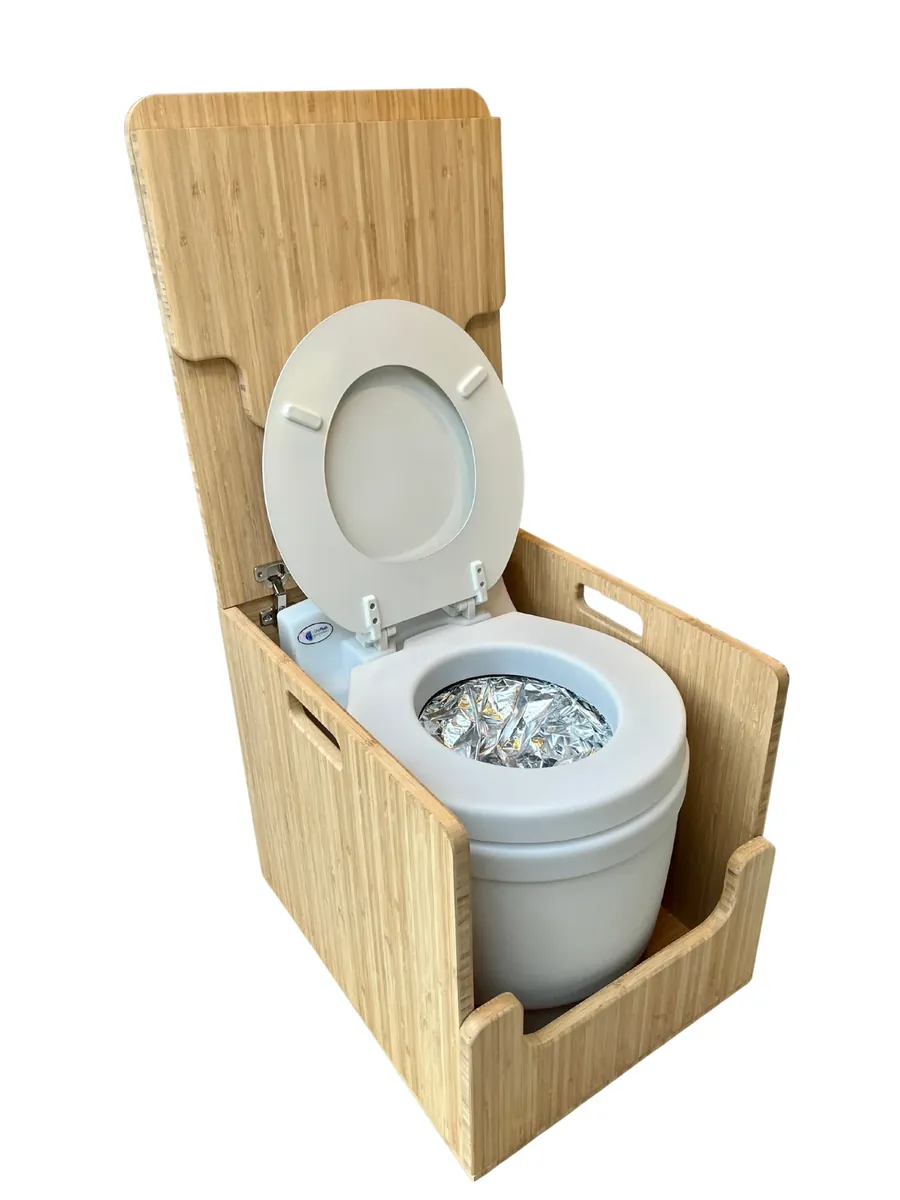
The Laveo DF1045 sells direct from dry-flush.com at $1,045 in white or $1,125 in black, battery and charger included, with a two-year warranty. It weighs 29 lbs at a full-size 16 by 20 by 18 inches. Each refill cartridge handles about 15 flushes, or around 28 with the included Pee Powder, and the battery lasts 300-plus flushes per charge, rated to -20°F. Installation is zero: set it down, charge the battery, optionally bolt the mounting bracket.
The toilet is the cheap part; the cartridges are the subscription. Owners on off-grid forums report refills work out to just over a dollar per use, and the bulky cartridges are awkward to store and can be hard to source while traveling. For weekend use the math is painless; for two full-timers, run the monthly numbers first, because cartridges become a real line item.
Odor control is the Laveo’s superpower: each use is sealed within seconds, so there is nothing to smell. A boat owner on a trawler forum reported nine years of use with zero odor even after long stretches between cartridge changes. Cold weather is equally drama-free — nothing to freeze or crack — which makes it the lowest-maintenance toilet on this list when temperatures drop.
Cassette vs Composting vs Dry-Flush: Head-to-Head
| Cassette (Thetford C223-CS) | Composting (Nature’s Head / OGO / Trelino) | Dry-Flush (Laveo DF1045) | |
|---|---|---|---|
| 2026 price | ~$659 | $599–$985 | $1,045–$1,125 |
| Unit weight | ~16 lbs | 11–34 lbs | 29 lbs |
| Power needed | 12V for flush | 12V fan (Nature’s Head/OGO); none (Trelino) | Rechargeable battery |
| Venting | No | Yes, except Trelino | No |
| Water needed | Yes, from fresh tank | No | No |
| Consumables | Cassette chemical | Coco coir/peat, cheap | Refill cartridges, ~$1+/use |
| Emptying (2 people) | Every 3–5 days at dump station | Liquids daily; solids days to monthly | Cartridge every ~1–2 weeks |
| Waste goes to | RV dump station only | Trash bag; toilet for liquids | Regular trash |
| Installation | Hard (exterior hatch cut) | Easy (vent hole + 12V) | None |
| Odor control | Good with seal care | Excellent when used right | Best in class |
Legal Dumping Rules: Where the Waste Actually Goes
Cassette waste is black water. It goes to an RV dump station, a campground toilet, or a sewer cleanout — never on the ground, never in a storm drain. The upside over a built-in black tank: you can carry the cassette to any dump point, and many campgrounds sell single dumps for a few dollars. Plan your route around them the way you plan around fuel.
Composting waste is two different things. Urine, diluted, can be dispersed on the ground in most dispersed-camping areas (never near water; check local rules) or poured into any toilet. Solids are trickier: after a few weeks the material is dried and reduced, but it is not finished compost — true composting takes months of heat and turning. Most jurisdictions treat bagged solids as solid waste, so a tied trash bag in a dumpster is the standard practice. Do not bury it in a cathole and call it compost.
Dry-flush cartridges go in the regular trash. The waste is sealed in plastic, so legally it is household trash in virtually every US jurisdiction — a genuine advantage for urban boondocking.
Grey and black tank reality: many pop-ups have no black tank and a tiny grey tank, and grey water on the ground is illegal in most states and many campgrounds.
Best Truck Camper Toilet for Weekenders vs Full-Timers
For weekenders doing two to four nights, you will not fill anything up and you want minimum fuss. A cassette is the familiar pick if your camper already has the hatch — flush, drive home, dump at the campground on the way out. Retrofitting a camper with no bathroom? The Laveo Dry Flush is the path of least resistance: no holes, no plumbing, no dump station, and a cartridge covers a long weekend easily. The Trelino Evo is the budget weekender pick at $599 — light, simple, stows in a cabinet.
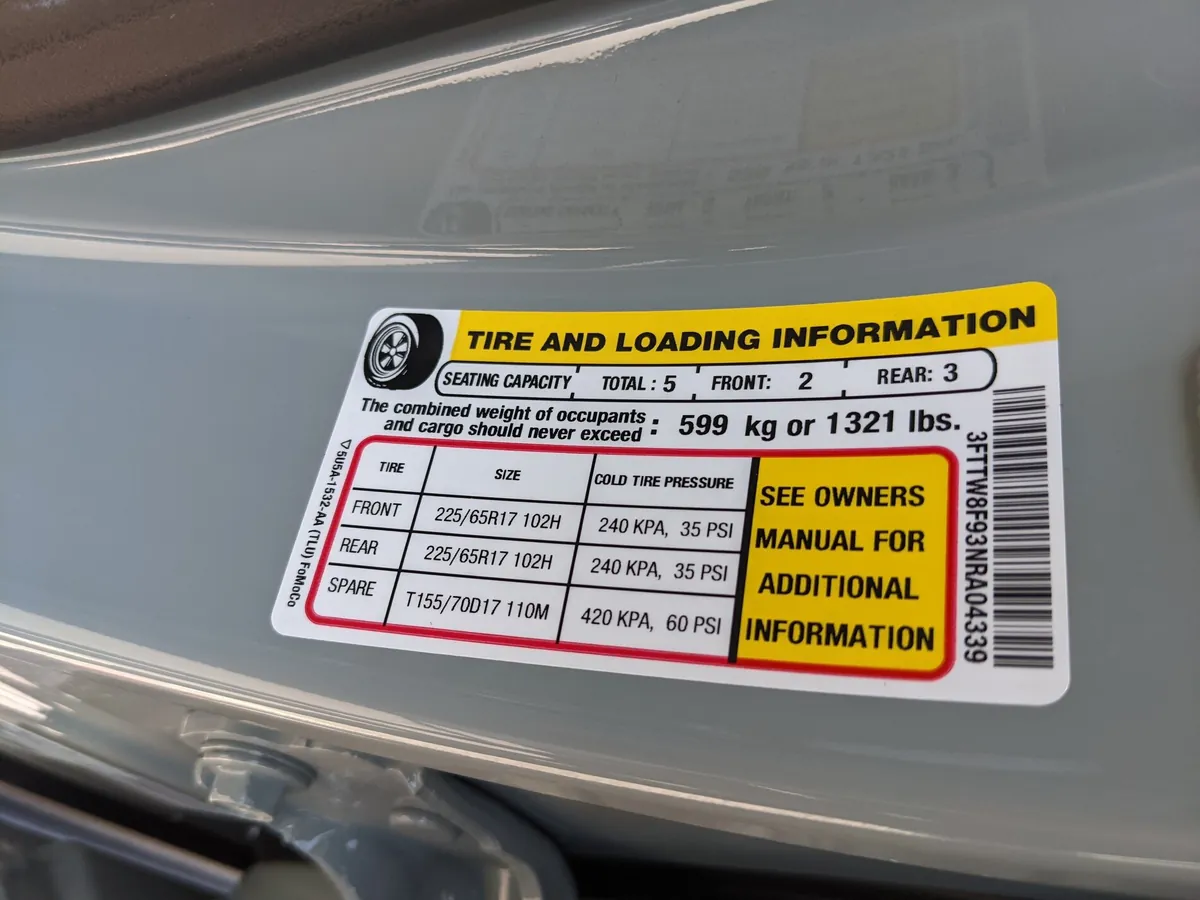
For full-timers, capacity and routine rule. The Nature’s Head is the full-timing standard for a reason: a month between solids emptying means the toilet stops being a weekly errand — see our full-time truck camper guide for the rest of the daily systems. A cassette works for full-timers near dump stations, but planning travel around dump points gets old. For winter campers, rank them: dry-flush first (nothing freezes), composting second (empty the liquids bottle nightly, keep the camper heated), cassette last — see our winter camping guide. For payload-limited half-ton setups, the Trelino wins on weight — every toilet choice in a lightweight truck camper is a payload choice, so do the math on your door sticker before you buy.
Frequently Asked Questions
Do composting toilets really not smell?
Essentially yes, when used correctly. Odor comes from urine and solids mixing and going anaerobic. A composting toilet separates them, dries the solids with airflow and medium, and vents the rest outside. Smell means something is wrong — urine in the solids bin, a dead fan, or a full bottle — and all three are quick fixes.
Can you empty a cassette toilet anywhere?
No. Cassette waste is untreated black water and must go to an RV dump station, a campground toilet, or a sewer connection. Dumping on the ground or into a storm drain is illegal and can carry serious fines.
Where do you put the solids from a composting toilet?
In a tied trash bag in a dumpster, in most US jurisdictions. The material is dried and greatly reduced in volume but it is not finished compost. On public land, pack it out as trash — do not bury it in a cathole.
How much do dry-flush cartridges cost?
Owners report refills work out to just over a dollar per use, with cartridges rated around 15 flushes each (about 28 with Pee Powder).
Do I need to vent a composting toilet?
The Nature’s Head and OGO both need a small vent hose (about 1.5 inches) through a wall or the roof — constant airflow is what keeps the system odor-free and dries the solids. The Trelino Evo is the exception: sealed urine diversion with no fan and no vent.
My Take
If I had to outfit one truck camper tomorrow, I would pick based on the camper, not the toilet. Factory cassette hatch already cut? Keep the cassette — comfortable, honest dump routine, parts everywhere. Retrofitting a camper with no bathroom? A composting head if you are handy and camp off-grid for weeks, a Laveo Dry Flush if you want the problem to disappear with zero installation. There is no bad choice here, only a mismatch between the toilet and how you actually camp.
Prices shown are 2026 figures from the manufacturers and US retailers and will change — check current pricing before you buy.