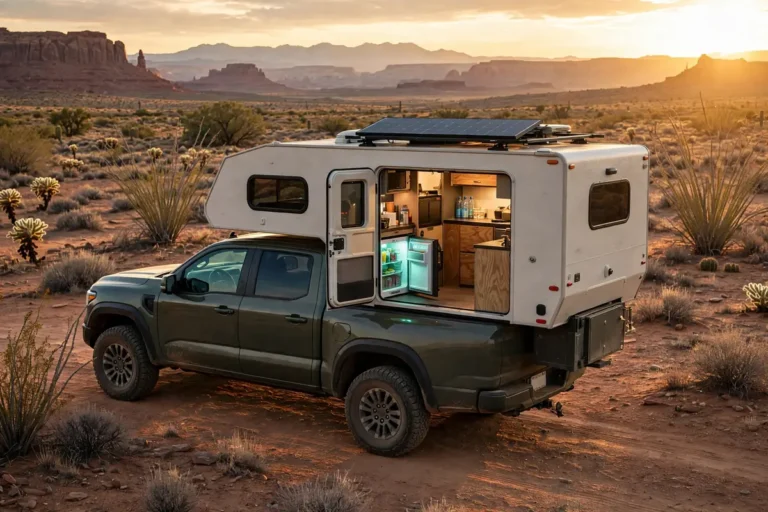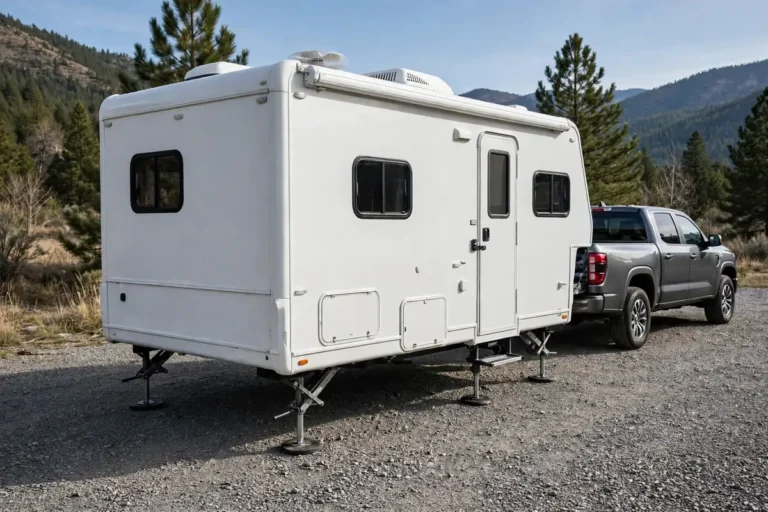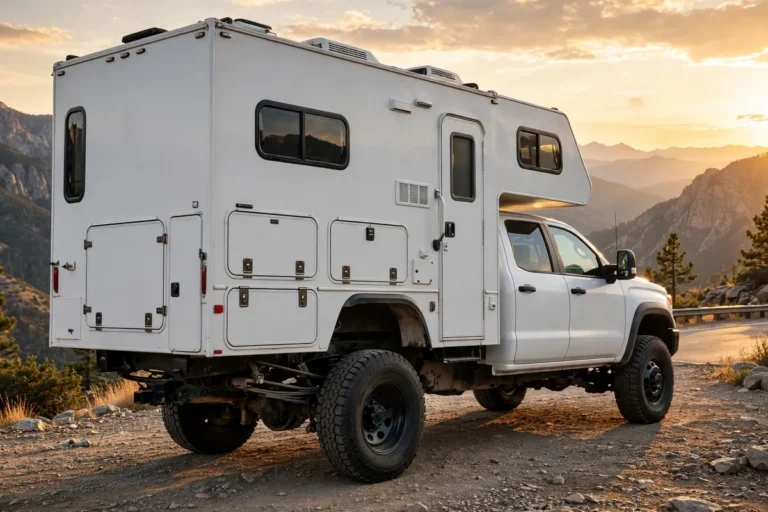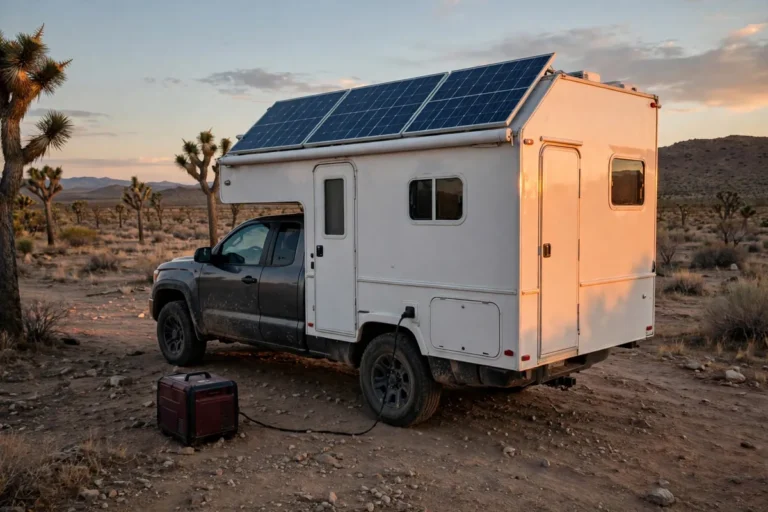
Truck Camper Emergency Kit and Self-Rescue Guide
A truck camper emergency kit is not a camping checklist. I learned that on a dirt road forty minutes from pavement, with no phone signal and a tire going soft faster than I wanted to admit.
Routine maintenance keeps you from breaking down. This guide is about the other side: something has already gone wrong, miles from help, and you must decide what to do right now.
First, stop and triage
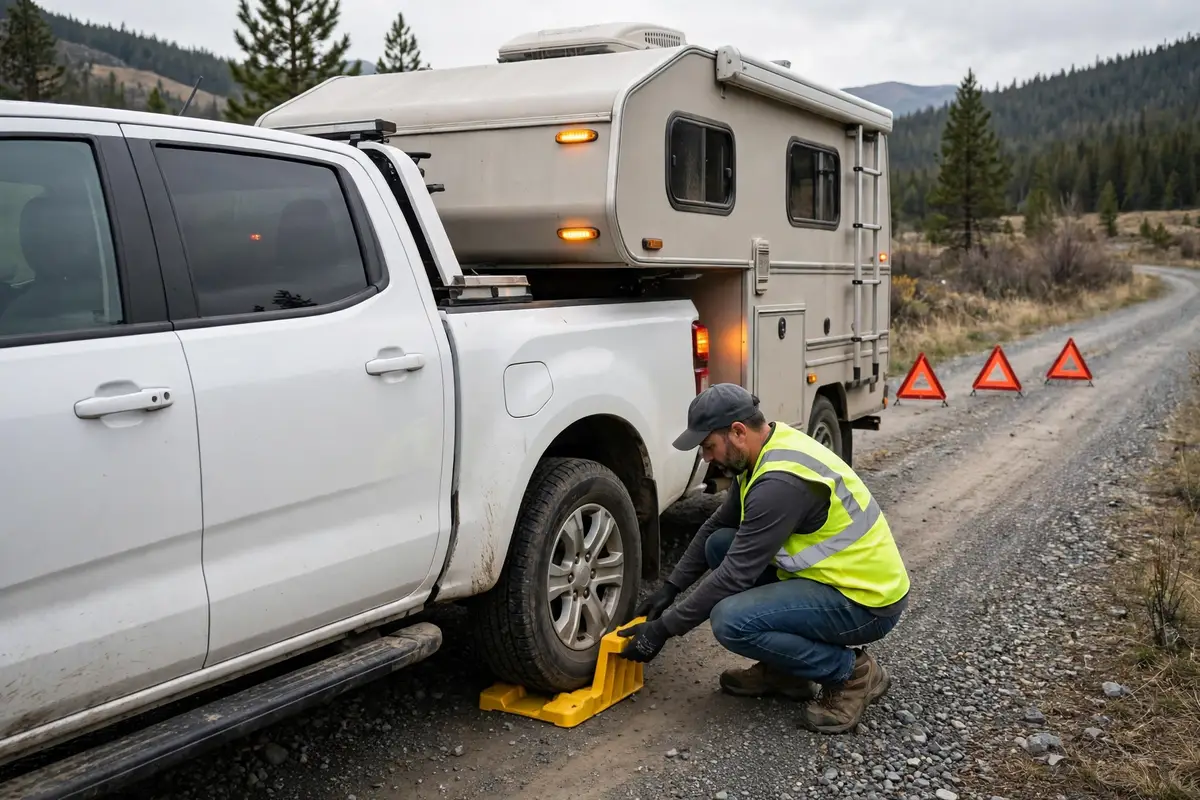
When something breaks, my first job is not to fix it. My first job is to stop making it worse.
Pull as far off the road as you can, on the flattest, firmest ground available. Hazards on. Parking brake on. Wheels chocked before anyone starts jacking or crawls near the underside. If you are on a slope, do not trust the parking brake alone on loose gravel.
Then walk around the rig and ask: Is anyone hurt, or is there fire, smoke, fuel, or propane leaking? Can the truck be driven safely to a better spot? What failed? And do I have signal, or a backup plan?
If anyone is hurt, or there is fire or a gas or fuel leak, that is not a self-rescue anymore. Get people away from the rig, call emergency services if you can, and do not go back inside a camper that smells of propane or fuel to fetch things. A truck camper is replaceable. You are not.
For everything else, write down your location, nearest mile marker, what failed, and what you have tried. Under stress you will forget details, and a dispatcher needs facts, not a story.
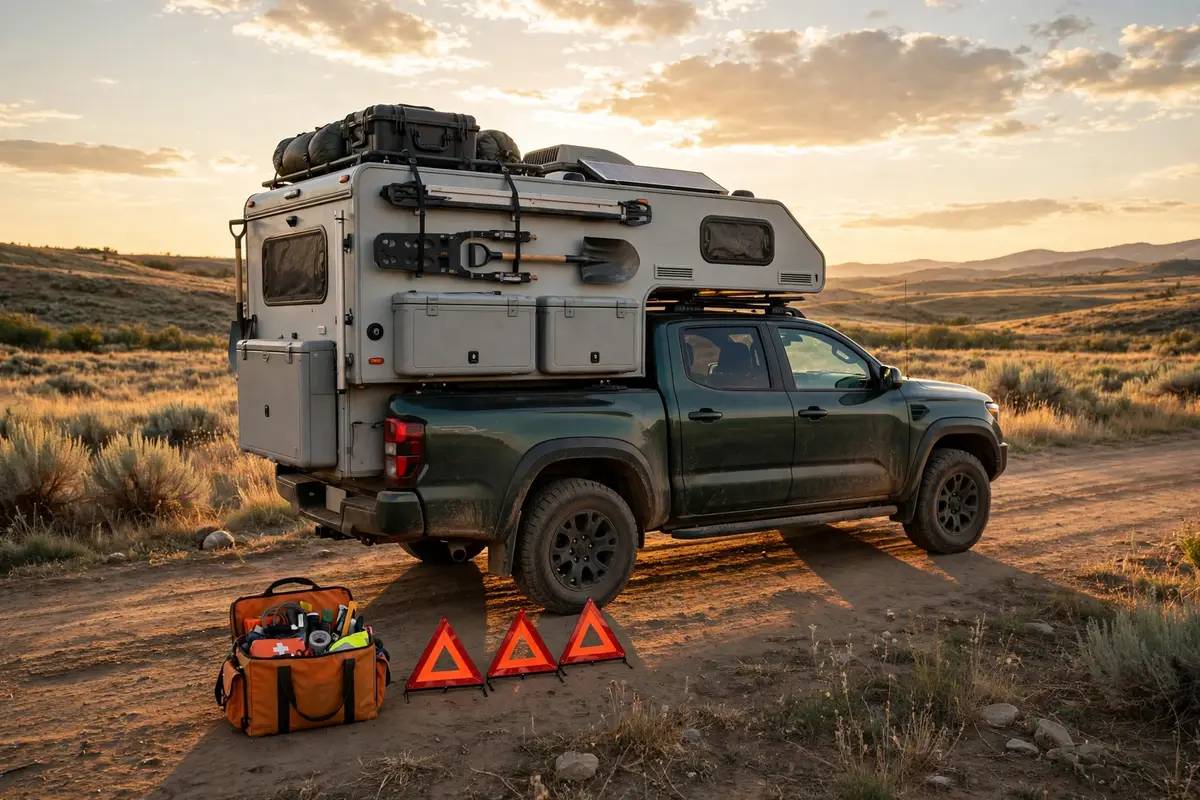
The truck camper emergency kit checklist
I keep my kit in two places. The truck kit lives in the truck, so I still have it if I drop the camper or drive away for help. The camper kit lives inside, where the water, food, warmth, and first aid are.
Truck kit: get moving again
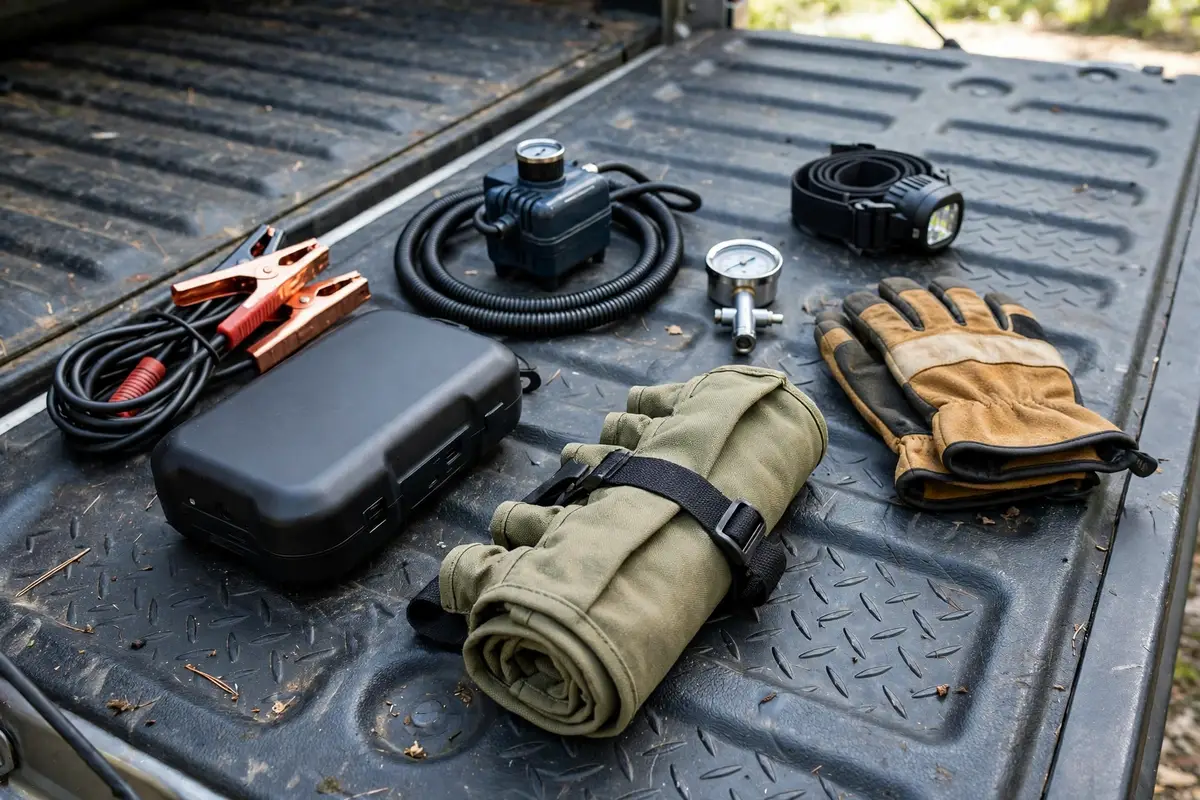
- A full-size, inflated spare tire that actually fits your truck, plus the correct lug wrench and a breaker bar. Test this at home, not on a shoulder.
- A bottle jack rated for your loaded truck and camper weight, with a solid base plate and a couple of short boards to spread the load on soft ground. The factory scissor jack that came with an empty truck may not lift a loaded rig far enough.
- A portable 12-volt air compressor, an accurate tire gauge, and a plug kit for a simple puncture.
- A lithium jump pack, kept charged, plus jumper cables as backup. Check the jump pack every month; a dead jump pack is just extra weight.
- Basic tools: sockets and wrenches for lug nuts, battery terminals, and tie-downs, screwdrivers, pliers, a multimeter, zip ties, duct tape, silicone tape for a leaking hose, and spare fuses.
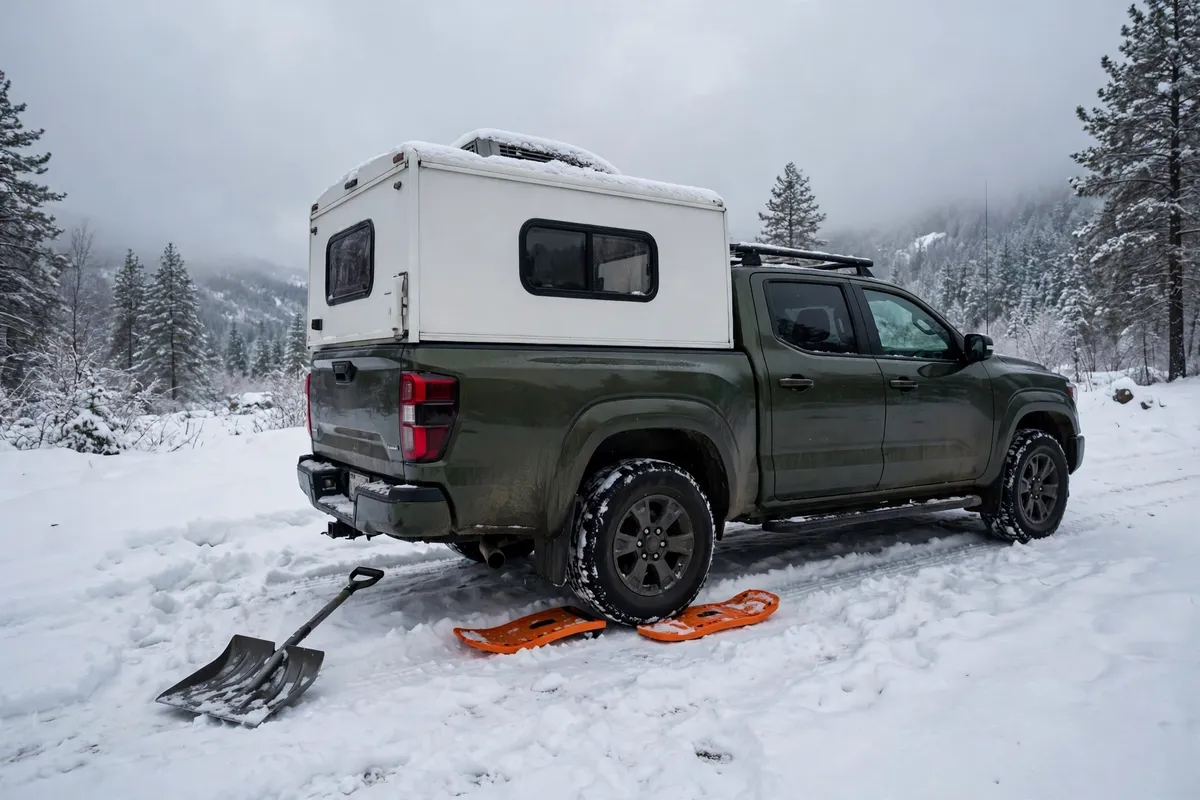
- A rated recovery strap and shackles, traction boards for dirt or sand, reflective triangles, a high-visibility vest, a headlamp, work gloves, and a folding shovel. A tow ball is not a recovery point.
- Oil, coolant, and washer fluid that match your truck.
Camper kit: stay safe while you wait
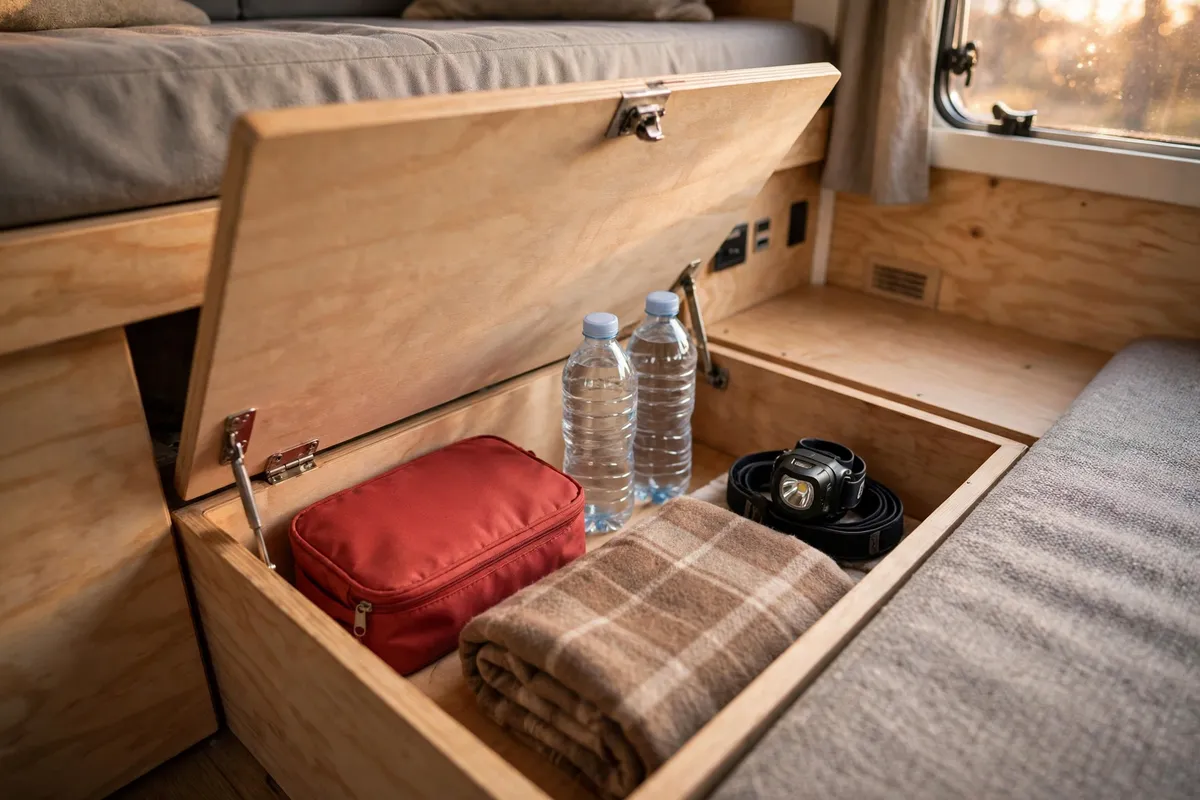
- A first aid kit you have actually opened and restocked, including any personal medication.
- Drinking water separate from your camper tank — at least a gallon per person for a day — plus food that needs no cooking and a way to boil water.
- Warm layers, a sleeping bag or heavy blanket, and rain gear, even in summer. Desert nights and mountain passes do not care about the forecast you left home with.
- A fire extinguisher, checked for pressure, within easy reach.
- A flashlight, spare batteries, a paper map, a whistle, a portable phone charger, and spare camper keys hidden separately from your main set.
- Basic camper spares: a water pump fuse, propane hose washers, PEX fittings if your system uses them, extra tie-down hardware, and sealant.
In practice that fits in a tool roll, a small tote, and under a bench seat. Check it twice a year and replace what you used.
No signal is a plan, not a surprise
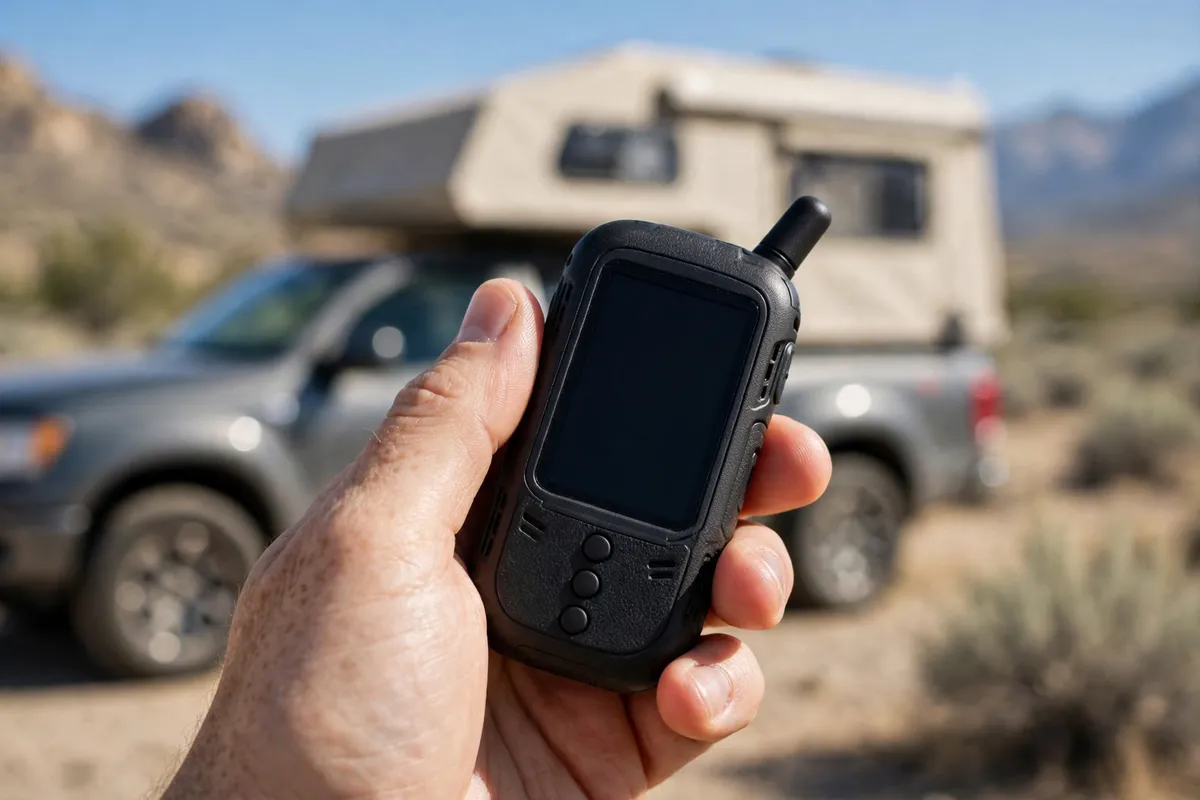
Here is the part most breakdown guides skip: your phone is not a rescue plan. Plenty of the best truck camper roads have no cell service at all, and a phone that shows one bar at camp may show nothing twenty miles down the road.
Before you leave pavement, tell someone your route and expected check-in time: where you are going, which road, when you expect to be back in service, and what they should do if they do not hear from you. That costs nothing and matters more than any gadget.
For communication, I carry layers. Phone first, including Wi-Fi calling if you have a booster or mobile setup. A Starlink setup for truck campers can restore messaging in open sky, but it needs power and is not a substitute for an SOS device. Keep the satellite messenger on your person or in the cab, not buried in the camper — and if you have no way to send a message, stay with the rig and leave a dashboard note with your name, direction, time, and what failed.
Second, a dedicated satellite messenger. A Garmin inReach sends two-way satellite messages and an interactive SOS to a staffed response centre over the Iridium network, but it requires an active subscription. Prices change often — 2026 roundups reported the Mini 2 around the mid-hundreds of dollars at list, often discounted, with entry plans from around eight dollars a month — so check Garmin’s current pricing and test preset messages before you need them. Garmin inReach plans and pricing
Third, phone satellite SOS as a backup. Newer iPhones (iPhone 14 and later) can text emergency services via satellite when there is no cellular or Wi-Fi coverage, but only outdoors with a clear view of the sky. Run Apple’s demo mode at home, not during a real emergency. Apple Emergency SOS via satellite
Flat tire or blowout: the loaded-rig version
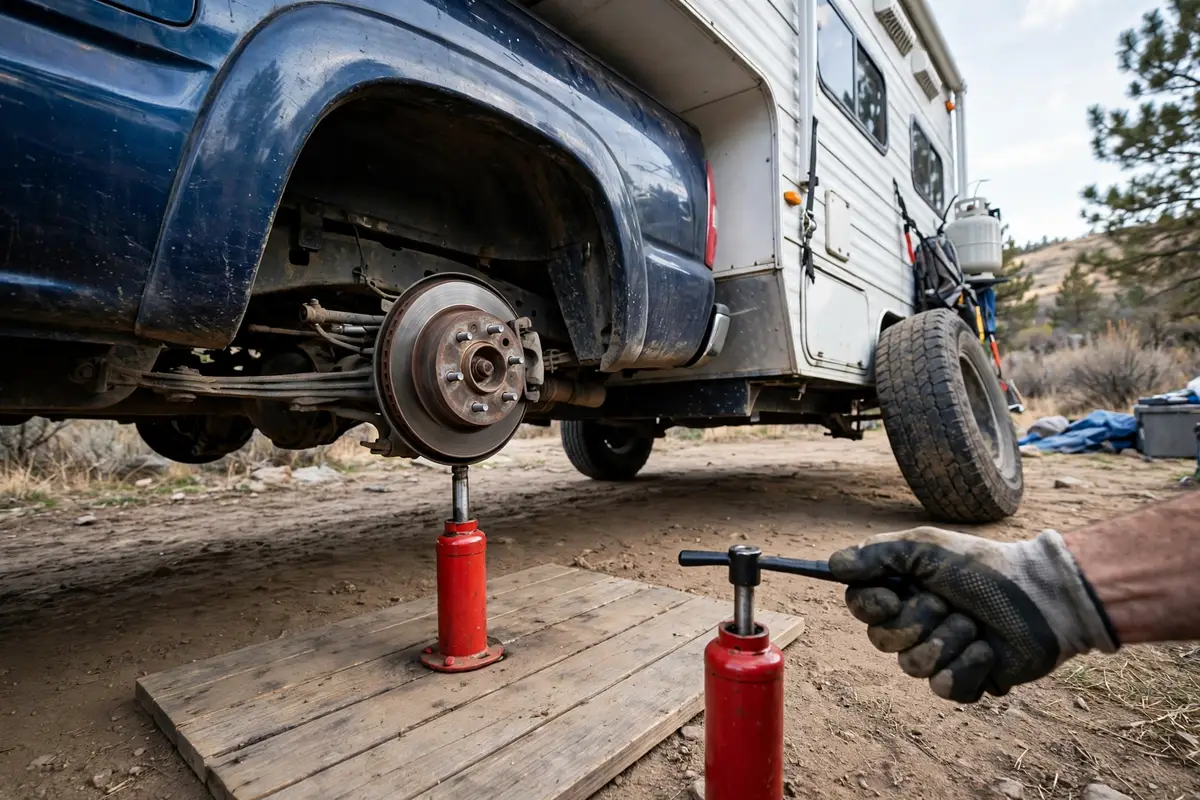
A flat on a loaded truck camper is not the same job as a flat on an empty pickup. The weight is higher, the centre of gravity is higher, and the factory jack may run out of lift before the tire clears the ground.
Owners on iRV2 report exactly this trap: the crank that lowers the spare does not reach with the camper loaded, or the jack keeps sinking into soft ground instead of lifting the truck. One owner watched his jack push boards into wet ground again and again; another, with a shredded inside dual, only got moving with a heavy bottle jack on boards.
So test the whole job at home, loaded: can you lower the spare, lift the axle high enough on a board, break the lugs loose by hand, and is the spare inflated and the right size and load rating?
On the road, chock the opposite wheels, loosen lugs before lifting, jack on firm, level ground, and never put any part of your body under a jack-only rig. If the ground is soft, put a board under the jack; if it still sinks, stop and call for help.
A plug kit and compressor can save a slow leak, not a shredded sidewall or bent rim. If the tire is torn, the rim is bent, or you have two flats on one side, do not limp on a rim — call for a tow and say you have a loaded truck camper, not just a pickup. For ratings and pressures, see this truck camper tire and load rating guide.
Jack failure, stuck rigs, and soft ground
Jacks usually fail slowly, on uneven ground, when you are tired and rushing. Forum owners describe jacks labouring on a slope, brackets bending, and one jack dropping a rig a few inches when it let go. Never work under a camper supported only by its jacks, never trust a single jack, and never load or unload on a slope if you can avoid it.
If a jack fails or leans, stop, get people and pets clear, and leave the truck underneath if it is safe to do so — the bed is a safety net. Lower the camper onto solid blocking, not the remaining jacks. Do not straighten a bent leg in the field and trust it again.
If the truck is stuck, lower tire pressure slightly if you know your safe minimum, clear material from around the tires, put traction boards under the drive tires, and try a slow, steady pull in low range. No violent wheelspin — it digs you deeper. A winch needs a rated anchor, a damper, and everyone clear of the line; otherwise a recovery strap and a second vehicle are safer. If you are sinking deeper with every attempt, stop, conserve fuel, water, and phone battery, and call for help.
Read this truck camper jack guide before your first solo load or unload — most jack emergencies start as loading mistakes.
Dead battery, dead camper power, and lithium cutoffs
A dead truck battery is simple if you have a charged jump pack and can reach it with the camper loaded. A dead camper battery is different — it can take out lights, water pump, furnace fan, and jacks at once. Check the disconnect switch, main fuses, and any tripped breaker first; more than one panic has been fixed by a switch bumped while loading gear.
For lithium camper batteries, cold weather adds a trap owners discuss on iRV2: many will not accept a charge below freezing, even though they may still supply power lower down, and a battery management system can cut off charging or discharge to protect the cells. A pack fine in summer can go quiet in a cold snap.
The field response is not to force it. Warm the battery if you safely can, or wait for daytime temperatures, and do not keep hammering a charger at a frozen pack. Keep a separate charged jump pack and headlamp, and do not drain your truck battery solving a camper battery problem. If a jump fails, note whether you hear a click, a crank, or silence — that is exactly what a dispatcher needs. Do not keep cranking a starter that is not turning over.
Water, propane, and cold-weather failures
Water and propane failures rarely strand you on the highway, but in cold weather they can become safety problems.
If you lose water pressure, check the pump fuse and switch first, then look for a leak before you keep running the pump — a dry pump burns out, and an inside leak soaks flooring long before you notice it. Shut off the pump and any city connection.
In freezing weather, owners report the same pattern: lines behind cabinets and in unheated spaces freeze first, long before the big tank. If a line is frozen, do not blast it with flame. Warm the space gently, open cabinet doors, and wait. If a pipe has burst, shut off the water and mop up fast — found early it is a repair, found in the morning it is water damage.
For propane, the emergency rule is simple: if you smell gas, do not light anything, do not flip switches, and get out. Shut off the tank valve only if you can reach it without entering a gas-filled space, and call for help. If the tank is simply empty, or a regulator has stopped delivering gas, check the level and valve, then try closing the valve, waiting, and reopening it slowly. If you are unsure which problem you have, treat it as the first one.
When to self-rescue and when to call for help
Self-rescue when the fix is simple, safe, and within your skill: a tire change on flat ground, a jump start, a blown fuse, a loose connection, or clearing a stuck tire — with the right tools, parts, and a safe place to work, and without crawling under an unsupported rig or handling fuel, propane, or high-voltage systems you do not understand.
Call for help when anyone is hurt or unsafe, there is fire, smoke, or a gas or fuel leak, the truck cannot be driven safely, brakes or steering are affected, or a wheel, axle, or suspension part is damaged. Call too if you are stuck on a slope or sinking deeper, have no signal and no satellite device, or have tried the obvious fix once, properly, and it failed.
When you call, give location and GPS coordinates, vehicle and camper description including height and weight, what failed, what you have tried, and whether anyone is hurt. Say explicitly that you have a truck camper on a pickup — a standard car tow truck may not handle it.
Roadside plans help, but read the fine print first. Good Sam, for example, advertises unlimited towing to the nearest qualified service centre on its Platinum plan, listed around seventy-nine dollars a year on its comparison page in 2026 — but towing to a shop of your choice can cost extra, and per-disablement limits in the brochure matter more than the headline. Good Sam roadside assistance Check whether your plan covers a loaded truck camper, off-pavement recovery, and whether coverage starts immediately. Buy it before the trip, not on the shoulder.
The overnight wait and the 30-minute rehearsal
Sometimes the right call is to wait until daylight. Conserve fuel and battery, run the furnace in bursts if you need heat, keep one phone charged, and stay visible but out of traffic. Tell your check-in contact you are waiting, where you are, and when you will message again. If the weather turns — rising water, wildfire smoke, or a snowstorm — move to safety first, even if that means leaving the rig.
A kit only works if you have used it once, in daylight, when nothing is wrong. Before your next off-grid trip, spend half an hour loosening one lug with the camper loaded, checking the spare pressure, testing the jump pack, compressor, and satellite messenger, and finding every fuse, disconnect switch, and propane shutoff without looking it up. Regular maintenance keeps most emergencies from happening; the rehearsal makes the kit useful when it was not enough.
Frequently asked questions
What should be in a truck camper emergency kit?
At minimum: a fitting spare tire and jack, compressor and plug kit, charged jump pack, basic tools and fuses, recovery gear, first aid, water, food, warmth, a fire extinguisher, and a satellite messenger or phone satellite SOS backup.
What do I do first when my truck camper breaks down off-grid?
Stop safely, get clear of traffic, chock the wheels, and check for injury, fire, or leaks first. Note your exact location, what failed, and what you have tried, then try a simple, safe fix or call for help.
How do I call for help with no cell signal?
Use a satellite messenger, try phone satellite SOS outdoors under open sky, or use a mobile internet setup if you have power and open sky. Before the trip, tell someone your route and check-in time. If you have no way to send a message, stay with the rig and conserve water, fuel, and phone battery.
Can I change a truck camper tire myself?
Yes, if you have practised with the camper loaded, on flat, firm ground, with a jack rated for the loaded weight and a spare that fits. Chock the opposite wheels, loosen lugs before lifting, never work under a jack-only rig, and call for help on soft ground, a slope, or with a damaged tire or rim.
When should I call a tow truck instead of self-rescuing?
Call if anyone is hurt, there is fire or a gas or fuel leak, brakes or steering are affected, a wheel or suspension part is damaged, you are stuck on a slope or sinking deeper, or a proper first fix has failed. Say you have a loaded truck camper, not just a pickup.
Does roadside assistance cover a truck camper off-road?
It depends on the plan, and off-pavement recovery is often limited or excluded. Check whether your plan covers a loaded truck camper, how far it will tow and to where, whether winching is included, and whether there is a waiting period.
Safety note: this guide is owner-to-owner advice based on real owner experiences and manufacturer and provider information available at the time of writing. It is not professional mechanical, medical, or rescue advice. If you are unsure, if anyone is hurt, or if a repair involves brakes, steering, fuel, propane, or high-voltage systems, stop and call emergency services or professional roadside help.