
Best Portable Power Stations for Truck Camping (2026 Tested Picks)
Picking a portable power station for truck camping punishes guesswork: too small and the fridge dies on night two, too big and a 60-pound brick eats payload you don’t have. After several seasons running fridges, laptops, and lights off these boxes, I can tell you the best unit on paper isn’t always the best for your rig — it depends on your payload, your solar, and your loads.
Six units matter most in 2026: EcoFlow Delta 3, River 3 Plus, Jackery Explorer 1000 v2, Bluetti AC180, Bluetti AC200L, and Anker Solix C1000. Every spec comes from the manufacturer’s own site; every price was listed in October 2026 and will change — check the live price before buying.
How to choose a portable power station for truck camping
Capacity (Wh) is your fuel tank. A 12V compressor fridge pulls roughly 400–500 Wh per day in mild weather; phones, lights, and a laptop add another 200–300 Wh. So a 1,000 Wh unit covers a moderate day with margin, while 286 Wh covers lights, phones, and a fan for a disciplined weekend. Do the load math in our truck camper solar and lithium sizing guide before buying.
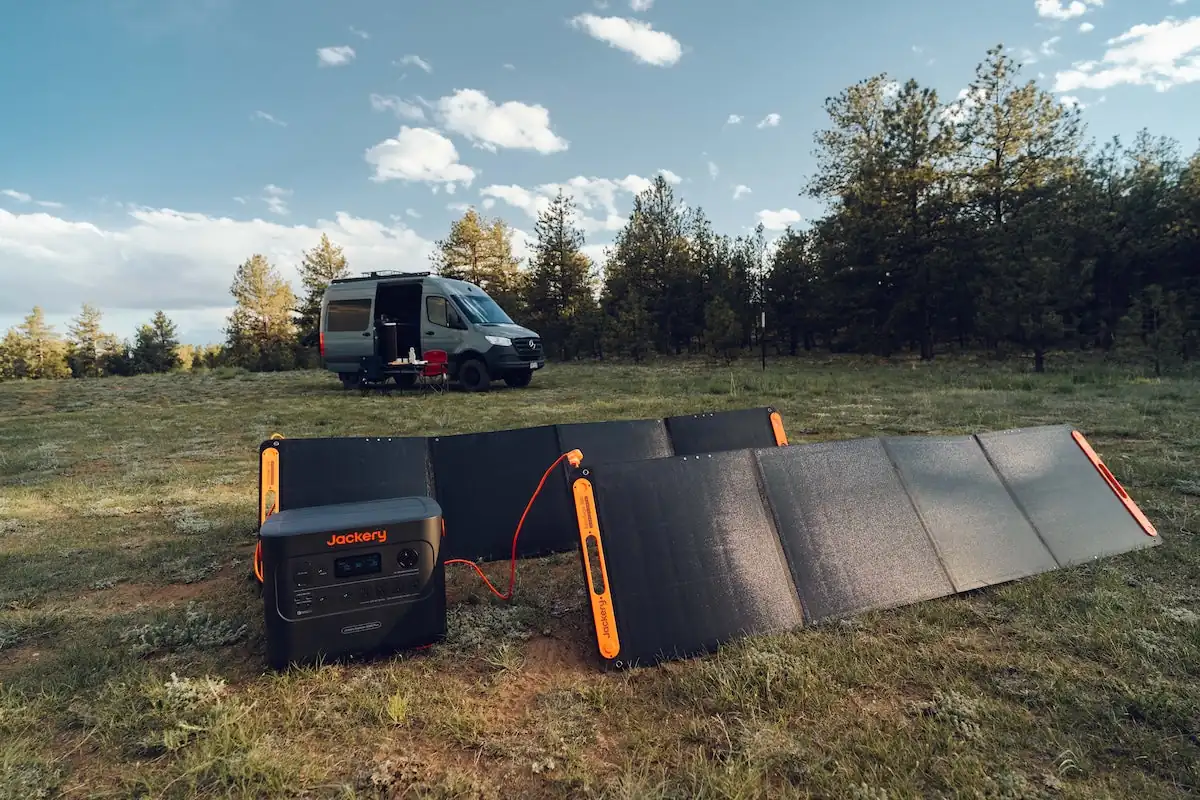
Solar input is your refill speed. Solar input caps how fast sunshine refills the box: 500W refills 1 kWh in about two and a half hours of good sun; 220W takes most of a day. Real panels produce 70–80% of their rating, so size the panel about 25% above the math.
Weight comes straight out of your payload. These units range from 10.4 lb to about 62 lb, and every pound counts against the same payload as your water and gear. A 62-pound station is the weight equivalent of about 7 gallons of water. Run the numbers in our truck camper payload calculator guide first.
LiFePO4 chemistry and cycle life. All six use lithium iron phosphate cells — safer and far longer-lived than older chemistries, rated 3,000–4,000 cycles to 70–80% capacity, roughly a decade of weekend use. Treat cycle ratings as rough indicators, not guarantees.
Pass-through and UPS behavior. Pass-through means the unit powers devices while being charged; a UPS mode switches to battery in milliseconds when shore power drops — important for a CPAP or router. Some stations only invert when not charging, so check the actual switchover spec, not the marketing.
The six picks at a glance
| Model | Capacity | AC output | Solar input (max) | Weight | LiFePO4 cycles | Price (Oct 2026) |
|---|---|---|---|---|---|---|
| EcoFlow River 3 Plus | 286 Wh | 600W | 220W | 10.4 lb | 3,000 | $299 |
| Jackery Explorer 1000 v2 | 1,070 Wh | 1,500W | 400W | 23.8 lb | 4,000 | ~$599 |
| EcoFlow Delta 3 Classic | 1,024 Wh | 1,800W | 500W | ~27 lb | 4,000 | $499 |
| Anker Solix C1000 | 1,056 Wh | 1,800W | 600W | 28.4 lb | 3,000 | $469.99 |
| Bluetti AC180 | 1,152 Wh | 1,800W | 500W | 35.3 lb | 3,500+ | Check site |
| Bluetti AC200L | 2,048 Wh | 2,400W | 1,200W | ~62 lb | 3,000+ | $1,199 |
EcoFlow Delta 3 Classic: the best all-rounder
1,024 Wh LiFePO4 (rated 4,000 cycles to 80%+), 1,800W continuous AC output with 3,600W surge and X-Boost up to 2,600W, 500W max solar input, and 1,400W AC input that takes it from empty to 80% in about 45 minutes. UPS switchover is 10ms — the fastest here — and the 5-year warranty is standard. Weight is about 27 lb. Listed at $499 on EcoFlow’s US site.
The sweet spot for most truck campers: a full kilowatt-hour, enough AC muscle for a microwave or induction plate, sub-hour wall charging, and expansion to 5 kWh. Watch-outs: not the lightest kilowatt-hour here, and the fan is audible under heavy load.
Jackery Explorer 1000 v2: the payload-friendly pick
1,070 Wh LiFePO4 (rated 4,000 cycles to 70%+), 1,500W continuous AC output with 3,000W surge, 400W max solar input, roughly 1.6 hours for a full AC charge (about an hour in emergency charge mode), and UPS switchover of 20ms or less. The headline number: 23.8 lb, the lightest ~1 kWh unit here. Listed around $599 on Jackery’s site, with a 3-year warranty plus 2 extra years on official-site purchases.
Payload is a truck camper’s scarcest resource, and those saved pounds are real for half-ton owners. The 1,500W output runs a fridge, laptop, lights, and a small coffee maker without drama. Caveats: the 400W solar ceiling is the class lowest, so refilling from empty takes a full day of good sun or a drive — and Jackery’s FAQ cautions against medical-device use including CPAP, so know the manufacturer’s position before relying on it overnight.
Bluetti AC180: best solar refill in the 1 kWh class
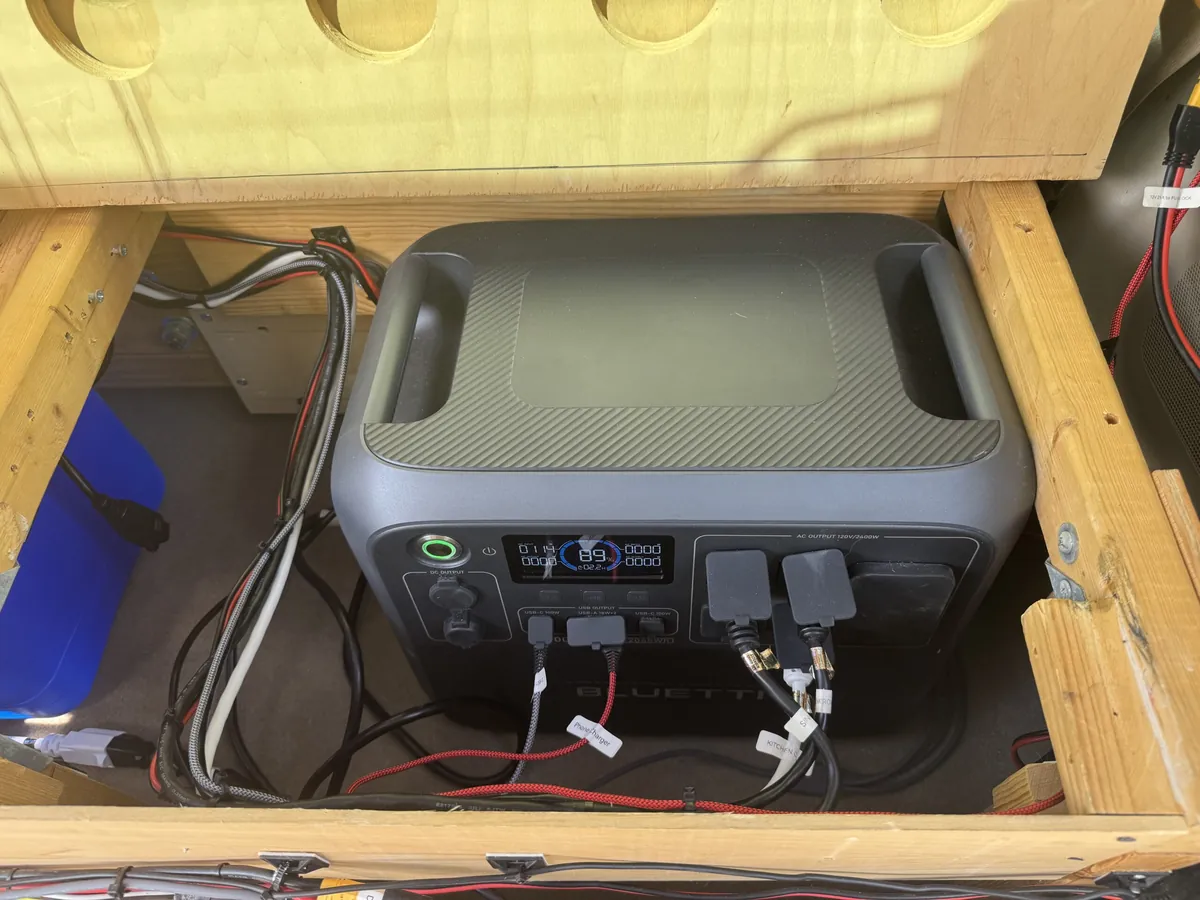
1,152 Wh LiFePO4 (rated 3,500+ cycles to 80%), 1,800W continuous AC output with 2,700W Power Lifting mode, 500W max solar input (full solar refill in roughly 2.8–3.3 hours), 1,440W turbo AC input (0–80% in 45 minutes), 20ms UPS, and confirmed pass-through charging on Bluetti’s spec page. Weight: 35.3 lb. 5-year warranty. Check current pricing on Bluetti’s site — Bluetti runs frequent sales.
The biggest battery of the 1 kWh class with the strongest solar refill story: 500W in, under three and a half hours to full. It expands past 4 kWh with Bluetti’s B80/B230/B300 batteries, and 2,700W Power Lifting handles kettles that trip lesser inverters. The watch-out is weight: 35.3 lb is 50% heavier than the Jackery for 8% more capacity. Also note 15–20W of inverter overhead — switch AC off for 12V/USB-only loads.
Anker Solix C1000: the value pick
1,056 Wh LiFePO4 (rated 3,000 cycles to 80%), 1,800W continuous AC output with 2,400W surge, 600W max solar input — the highest ceiling in the class — 1,300W AC input, sub-20ms UPS, and 6 AC outlets across 11 total ports. Weight: 28.4 lb. 5-year warranty. Listed at $469.99 on Anker’s US site.
The C1000 undercuts every other 1,800W unit on price with the best solar headroom in the class, and six AC outlets means no daisy-chained power strips. The sub-20ms UPS keeps a CPAP or router alive through shore-power hiccups. Caveats: 3,000 cycles is the shortest rated life here, and the advertised 2,112 Wh expansion was listed as “coming soon” — don’t buy it counting on that.
Bluetti AC200L: the full-time off-grid beast
2,048 Wh LiFePO4 (rated 3,000+ cycles to 80%), 2,400W continuous AC output with 3,600W Power Lifting, a massive 1,200W max solar input, 2,400W AC input (0–80% in 45 minutes), 20ms UPS, and a proper NEMA TT-30 30A RV outlet — the plug your camper’s shore-power cord already fits. It expands to 4,096 Wh with one B230 battery or up to 8,192 Wh with two B300s. Weight: about 62 lb. Listed at $1,199 on Bluetti’s US site.
For full-timers, this is less a power station than a house battery with a handle: 2 kWh runs fridge, Starlink, laptops, and lights through a cloudy day; the 1,200W solar ceiling means a serious rooftop array actually refills it; and the TT-30 outlet takes the camper’s shore cord directly. Watch-outs: 62 lb needs a permanent strapped-down home, it’s overkill for weekends, and it was out of stock on Bluetti’s site when I checked in October 2026 — confirm availability.
EcoFlow River 3 Plus: the ultralight weekender
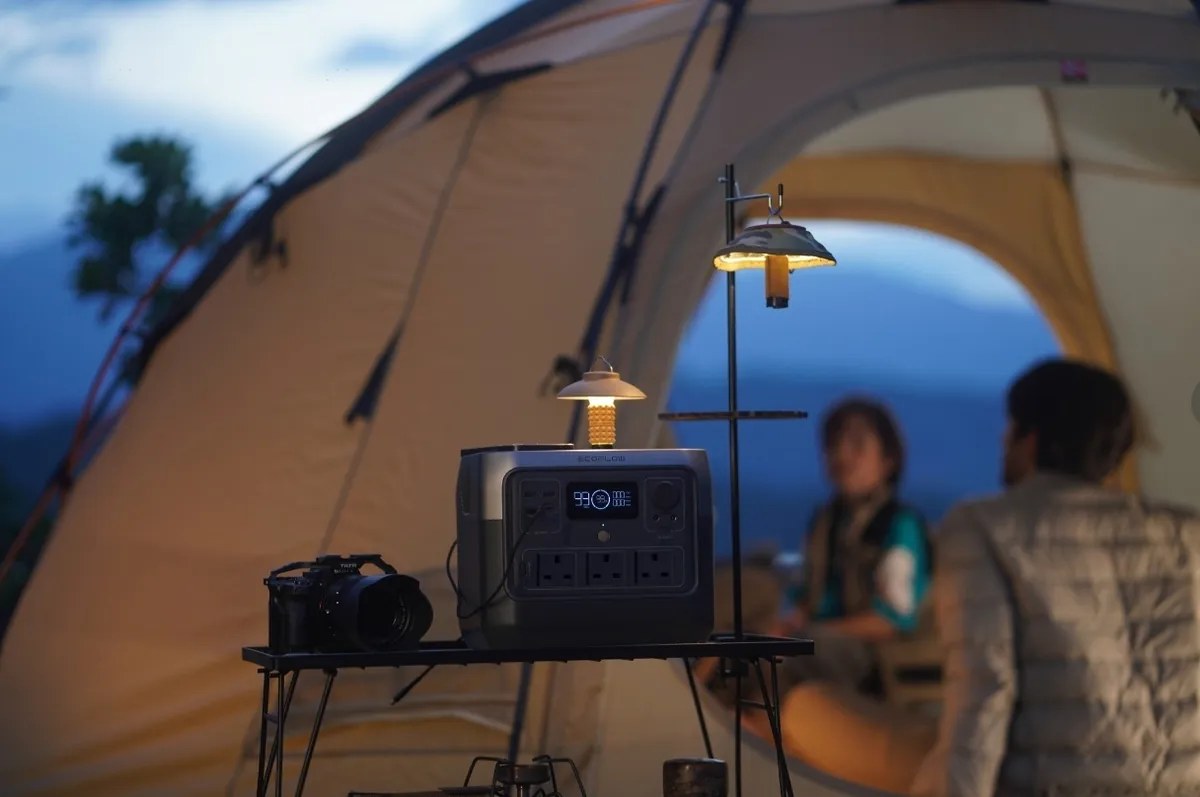
286 Wh LiFePO4 (rated 3,000 cycles to 80%), 600W continuous AC output with 1,200W surge and X-Boost, 220W max solar input, 380W AC input for a full charge in about an hour, sub-10ms UPS, and IP54 battery-pack protection. Weight: 10.4 lb — about a bag of groceries. Expandable to 858 Wh. Listed at $299 on EcoFlow’s US site.
Sometimes the right power station is the small one: 10.4 lb disappears into a camper where a kilowatt-hour box would eat real payload, and it runs lights, phones, a vent fan, and a 12V fridge’s overnight draw for a weekend — plus doubles as a tidy UPS for a router. For pop-up owners on half-tons, this is the sane choice. Honest limits: 286 Wh won’t run a humidified CPAP all night, 600W AC rules out heating elements, and the 220W solar ceiling makes shore power or the alternator the real recharge plan.
Which one for your actual use case
Weekend boondocking
For two to three days off-grid with fridge, lights, fan, and devices, the 1 kWh class is the answer: Delta 3 at $499 for value, Jackery 1000 v2 for lightest carry, Anker C1000 for most solar per dollar. Any of the three covers a long weekend starting full with a modest panel.
Running a CPAP overnight
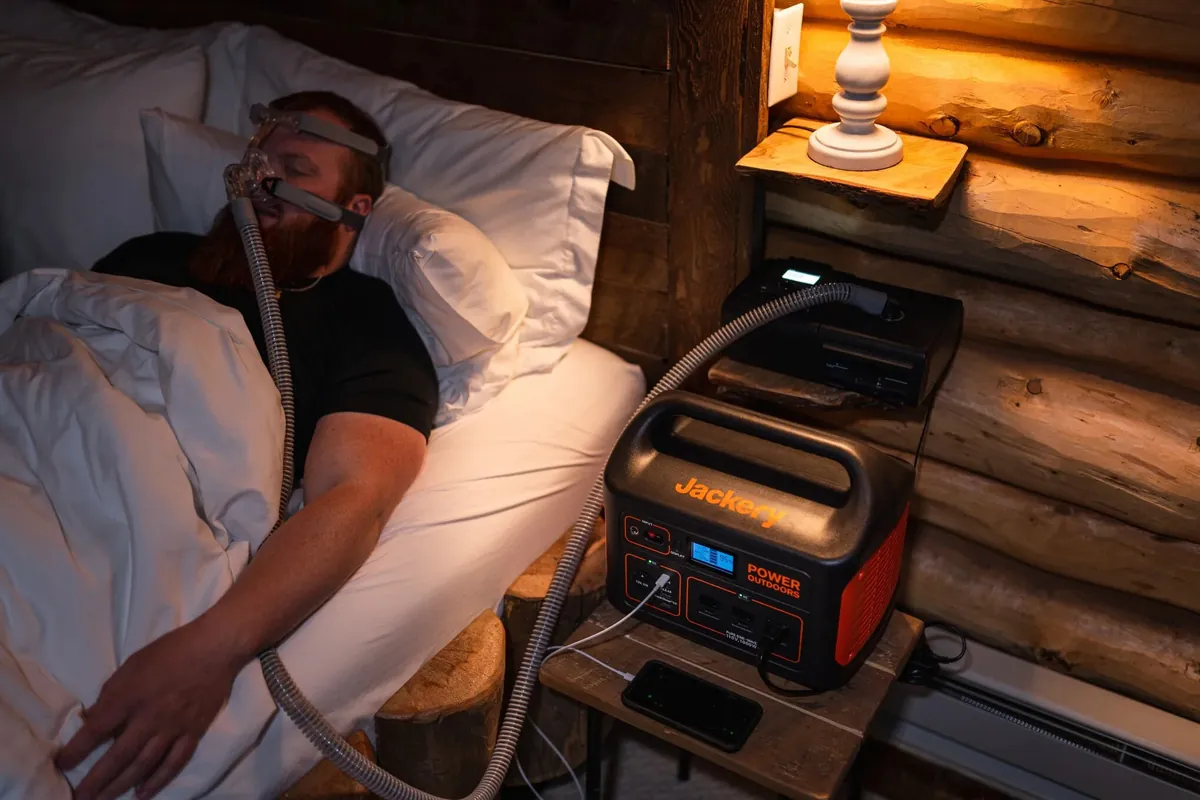
A CPAP without the heated humidifier draws roughly 15–40W — 120–320 Wh over eight hours; with the humidifier on, budget 320 Wh or more. Owner-tested CPAP power guides converge on multiplying your nightly draw by 1.4 as a safety factor. That makes the River 3 Plus a one-night dry-CPAP box (a 12V DC adapter skips inverter losses and stretches runtime), while any 1 kWh unit gives four to eight humidifier-free nights. The AC180’s 1,152 Wh and the C1000’s sub-20ms UPS are the most CPAP-friendly of the class. One repeat caveat: Jackery officially advises against medical-device use, so check with your doctor and CPAP manufacturer before making any unit your nightly setup.
Full-time off-grid living
Go straight to the AC200L: 2 kWh of storage, 1,200W of solar headroom, expansion past 8 kWh. Pair with 400–600W of panels and a DC-DC alternator charger, and size the system with our solar and lithium sizing guide.
Winter heating support
No station here runs an electric space heater all night — a 1,500W heater drains 1 kWh in under 40 minutes. Electric heat is a diesel-or-propane job, per our winter heating guide. A power station can run a diesel heater’s 12V blower fan, a 100–200W heated blanket, and lights and phones. Two rules: LiFePO4 can’t charge below freezing (32°F / 0°C minimum on every unit), so keep it in the heated living space — and budget for the furnace fan, the real winter battery killer at 7+ amps.
What owners wish they had known before buying
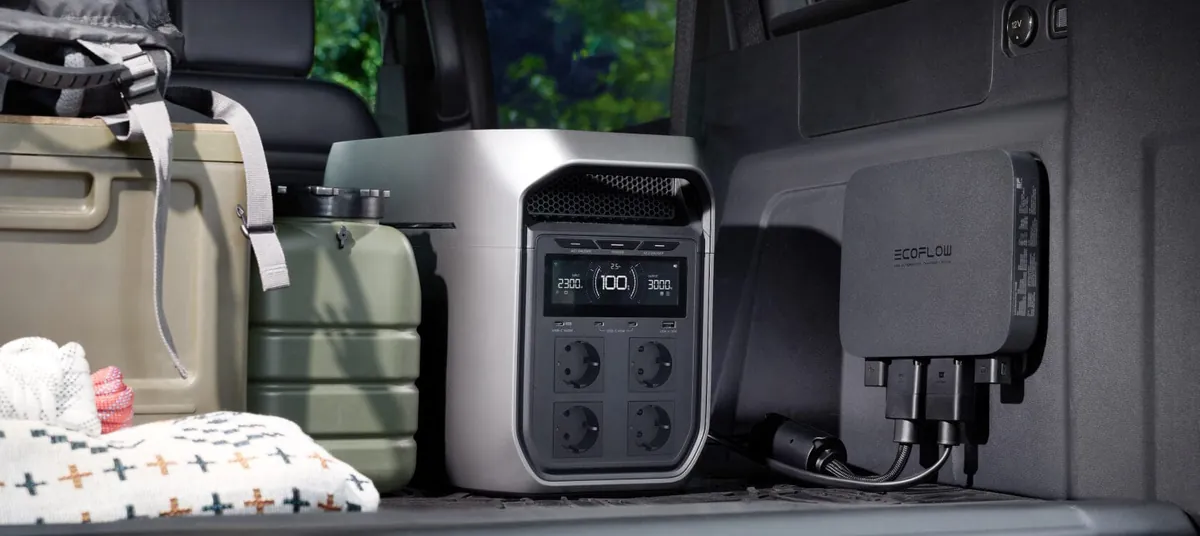
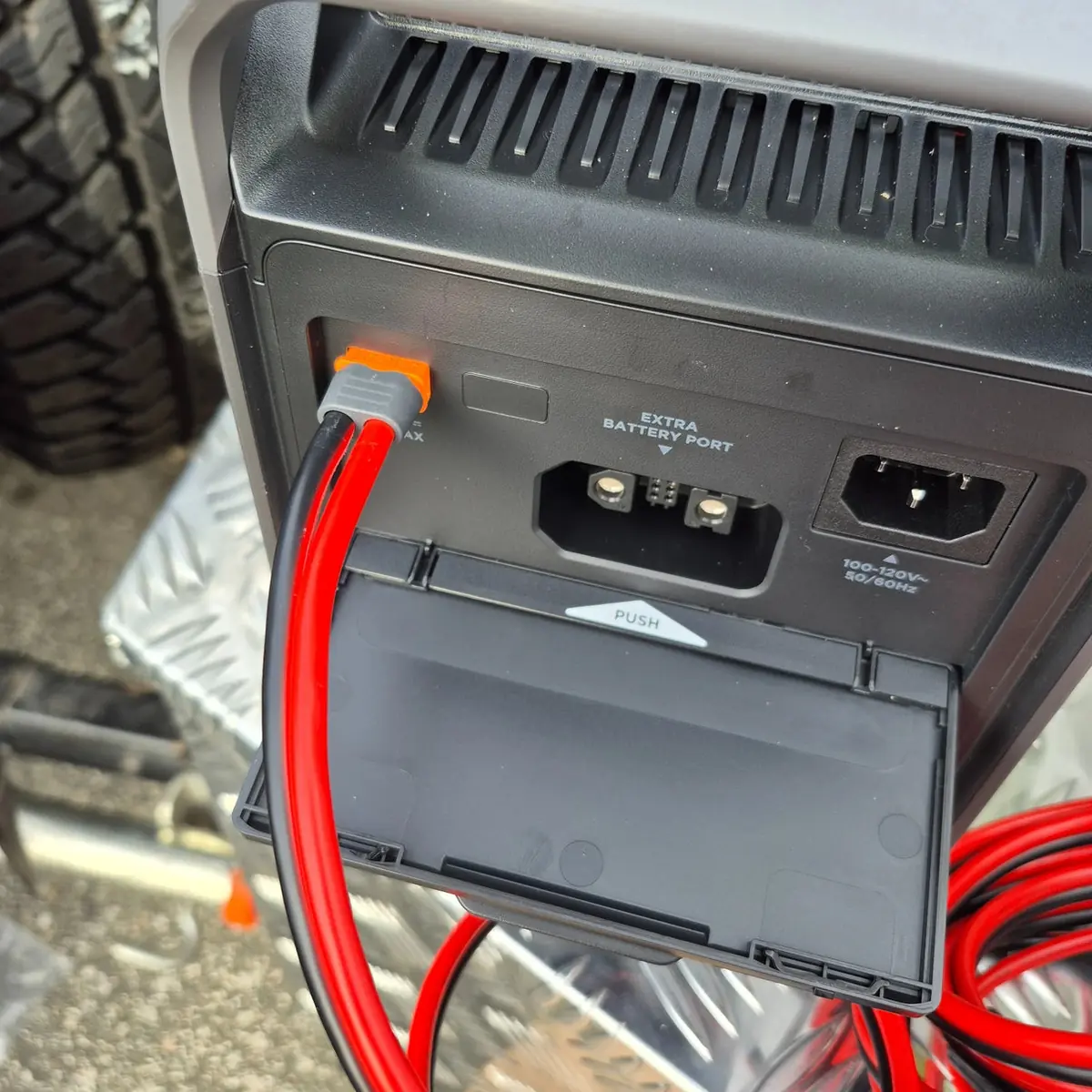
Car charging is far slower than the ads imply. Owners on overlanding forums report a rude awakening: “charges 80% in under an hour” means wall outlet. Through the cigarette-lighter cord, one owner measured 6–8 hours of driving to go from 40% to full. The fix: a dedicated DC-DC alternator charger (EcoFlow, Jackery, and Bluetti all sell one) charges five to six times faster. If your plan is “charge while driving,” budget for one.
Pass-through behavior is not universal. Solar forum regulars flag that some stations only invert when not charging — confusing if you run a CPAP or fridge while the box is charging. Every unit here supports pass-through or UPS, but verify the switchover spec and test your load combination at home first.
Inverter overhead eats small loads. Reviewers and owners consistently note the AC inverter draws 15–20W just staying alive — overnight that can eat a quarter of a small unit’s capacity. Switch AC off and run everything possible on 12V DC and USB.
Weight regret is real. Payload threads on truck camper forums hammer the same lesson: weigh the whole rig loaded, because everyone underestimates. A power station is one of the heaviest single items you will add. Do the payload math first, buy the box second.
Frequently Asked Questions
What size portable power station do I need for truck camping?
For weekend boondocking with a 12V fridge, lights, fan, and devices, 1,000 Wh is the sweet spot — roughly a day of moderate use with reserve. A 1 kWh station plus a panel refills daily in good sun.
Can a portable power station run a truck camper air conditioner?
Not realistically. A rooftop A/C pulls 1,000–1,500W running with a much higher startup surge — even the 2,048 Wh AC200L would drain in about an hour. Power stations are for everything except air conditioning and electric space heating. For cooling: shade, vent fans, or a generator.
How much solar do I need to recharge while camping?
Match the panel to the station’s solar ceiling: a 200W panel delivers about 140–160W real-world, refilling 1 kWh in 7–8 hours of good sun. Using the full 500–600W ceiling needs 600–700W of panels — more than most roofs fit — so many owners pair a 200W roof panel with a portable ground panel.
Is it safe to leave a power station charging in the camper while driving?
Yes, if secured: strap it down, keep vents clear, and keep it out of extreme heat — a summer truck cab can exceed the battery’s safe range, so the shaded camper interior beats the cab. Never charge LiFePO4 below freezing.
Can I charge from my truck’s alternator?
Yes, but the cigarette-lighter cord is slow — typically under 120W, meaning a full day of driving for a 1 kWh refill. A dedicated DC-DC alternator charger (EcoFlow’s 500W/800W units, Jackery’s, or Bluetti’s Charger 1) delivers 500W+ and turns a two-hour drive into a meaningful refill, with no sun required.
Power station or permanent lithium system?
A portable station wins on simplicity — no wiring, no installer, usable at home. A permanent system wins on integration and capacity per dollar. Camp more than a month a year or run big daily loads? Price out a permanent build; otherwise a 1 kWh station is the pragmatic choice.
The bottom line
For most truck campers, the best portable power station for truck camping in 2026 is the EcoFlow Delta 3 at $499: a full kilowatt-hour, 1,800W of output, sub-hour wall charging, and a payload-friendly weight. Half-ton owners should grab the 23.8-pound Jackery Explorer 1000 v2; full-timers should go straight to the Bluetti AC200L with its 2 kWh tank, 1,200W solar ceiling, and RV-ready TT-30 outlet; and if every pound is sacred, the 10.4-pound River 3 Plus covers a light weekend for $299. Do the load math first, weigh your rig, and never trust a recharge plan you haven’t tested.