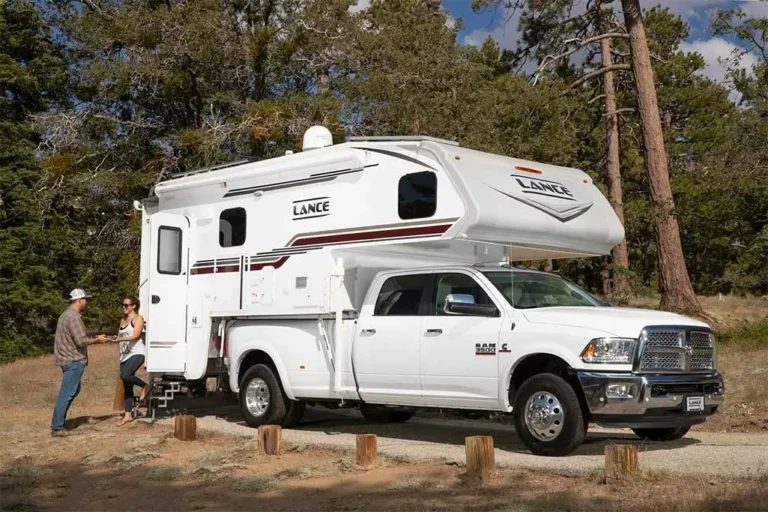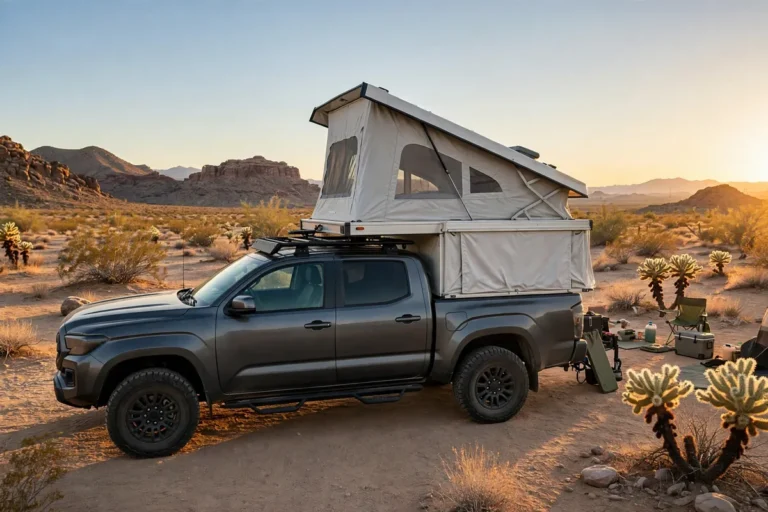
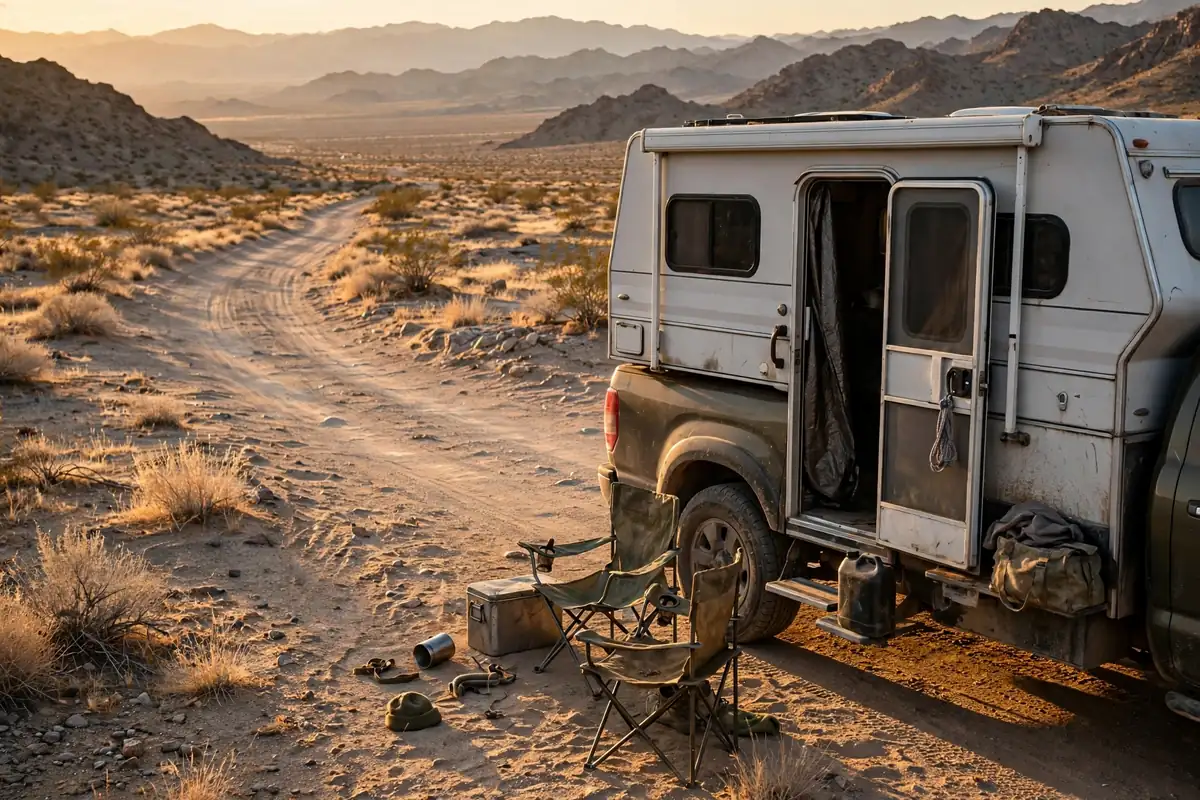
Full-Time Truck Camper Living: The Ugly Truth Nobody Posts (2026)
I’ll be straight with you: the Instagram version of full time truck camper living problems doesn’t exist. What exists is a couple arguing over the gray tank, a mattress slowly mildewing underneath them, and a $2,000 repair bill on a Tuesday in a town with no RV shop. I’ve lived the truck camper life, watched friends go full-time, and watched just as many sell their rigs within a year. This isn’t to talk you out of it — done right, it’s the freest way to travel America. But the brochures never show you the ugly side, so consider this the post I wish somebody had handed me before I committed.
Why So Many People Quit in Year One
Every RV YouTube thumbnail seems to quote the same stat: something like half of first-time full-timers quit within a year. I went digging for the actual study behind that number and couldn’t find one — it’s an oft-repeated estimate with no citable source I could trace. So I’ll skip the fake precision and tell you what I actually see on forums and in comment sections.
The pattern is remarkably consistent. Month one is euphoria; month three, the chores feel like a second job; months six to nine are the decision window. The people who quit almost never cite one catastrophe — they cite the grind: constant maintenance, never feeling settled, the math not working. One forum veteran put it well: there is no dummy’s guide for this, just a hundred smaller problems you solve one by one, forever.
Here’s what separates the quitters from the lifers: the lifers stopped expecting a vacation and started treating the camper like a small house that needs weekly attention. The quitters expected the freedom without the chores. The freedom is real — but it’s built on about five hours a week of tanks, batteries, seals, and troubleshooting.
Two People, 60 Square Feet: The Relationship Test
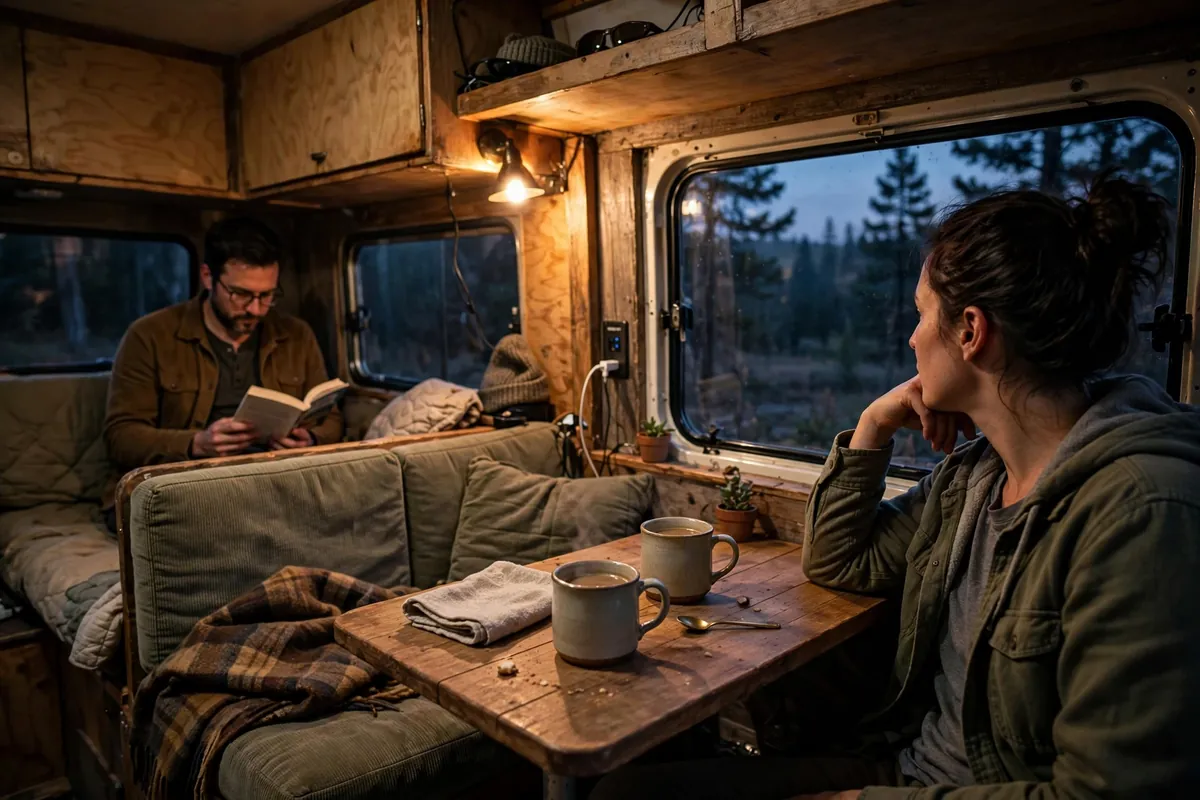
A truck camper gives a couple somewhere around 60 square feet of living space. When you move in full-time, you don’t just lose rooms — you lose every escape valve a house gives you. Can’t go to the garage when you’re annoyed. Can’t retreat to the guest room. Every bad mood is shared air.
A full-timing couple interviewed by Truck Camper Magazine put it bluntly: if you argue as a couple and don’t like being around each other, no RV is good for you. Their fix was deliberate: he goes fishing, she goes for walks, she flies out for girls’ weekends — separation built into the lifestyle on purpose.
That is the actual solution, and it’s the part nobody posts. You need a third place — the diner where you drink coffee alone, the trail you walk every evening, the hobby that physically takes you out of the camper. Couples who survive all develop this. The ones who fail sit across the dinette from each other for 16 hours a day waiting to feel annoyed. (Read their full story on Truck Camper Magazine — it’s a masterclass in what actually matters: the lifestyle, not the floorplan.)
For solo full-timers the problem inverts: total solitude, then too much of it. The lonelier you feel, the more days you stay inside the camper, which makes you feel lonelier. More on community below — it deserves its own section.
Full Time Truck Camper Living Problems: The Water-and-Waste Cadence

With no home base, your whole life runs on a dump-and-fill cycle, and in a truck camper the tanks are small. Many smaller campers run a cassette toilet instead of a traditional black tank — a removable 4-to-5-gallon cassette you carry by hand to a dump point or pit toilet. A full black tank on a truck camper might be 12 to 18 gallons, and a couple fills gray water fast — often within three to four days of careful use.
An old-timer on the RV forums gave the line every full-timer should memorize: when the black tank is full, the camping trip is over. Power you can solve with solar. Water you can haul. Waste is the hard stop. That means your “freedom” is really a rhythm — drive to a dump station every few days, fill fresh water at the same stop, plan travel routes around where you can legally dump. In winter it gets harder: freezing weather turns dump valves brittle and a sewer hose full of ice into a disaster, which is why experienced winter full-timers keep valves closed, dump on a schedule, and drain the hose completely after every dump.
The practical fixes are unglamorous: learn the dump stations along your regular routes before you need them, keep a backup cassette or portable tote for emergencies, and when shopping rigs for full-time use, tank capacity deserves as much attention as the floorplan.
Condensation: The Enemy That Never Sleeps
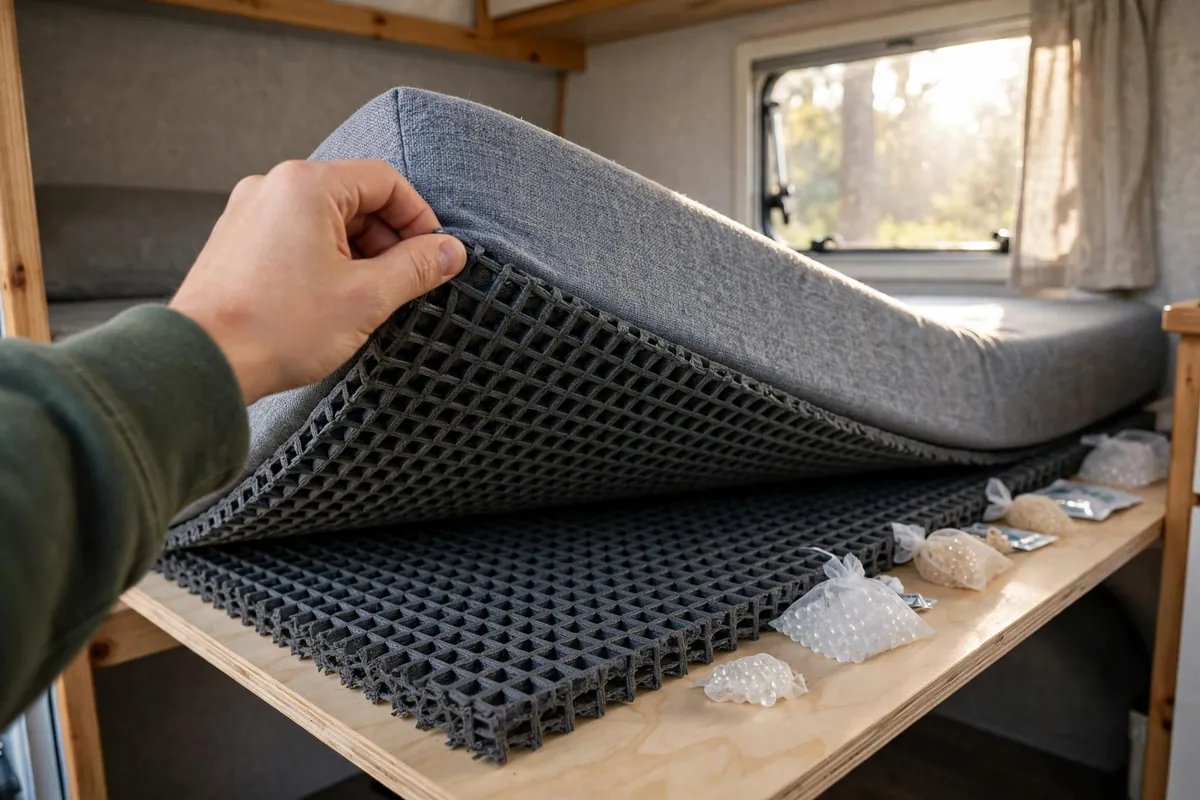
Weekend campers get condensation too, but they go home before it matters. Full-timers live inside the moisture cycle daily: you breathe out roughly a cup of water overnight, cooking and showers add more, and thin walls turn every cold surface into a drip edge. Left alone, moisture finds the dark places — behind the couch, around window frames, and worst of all under your mattress, where body heat meets a cold platform and grows mold you can’t see until it smells.
This is the single most-reported full-time truck camper problem in every owner community I searched, and the owner-sourced fixes are consistent. Full-timers on RV forums describe the same discovery — dampness and early mildew under the mattress — and the fix that worked: get air moving underneath it. One forum member built slats to lift the mattress off the platform, ventilating and insulating at the same time, then ordered a woven spacer (Hypervent) that holds the mattress up on non-compressing loops so dry air can circulate. The folks at Mortons on the Move did the simpler version: strips of foam under their truck camper mattress to break contact with the cold platform. Same principle, different budget.
My own ritual, learned the hard way: mattress propped up every morning for airflow, roof vent cracked even in winter, bathroom fan run during every shower and cooking session. Winter is the boss level — you’ll wipe window frames daily in cold weather, and that’s normal, not a sign your camper is broken. Our condensation guide has the full battle plan, and our mattress upgrade guide covers replacements that handle moisture better.
Mail, Domicile, and the Paper Trail

Nobody dreams about paperwork when they imagine full-time life, but you cannot legally be a person without an address. Driver’s license, vehicle registration, insurance, voter registration, taxes, banking — all of it requires a real street address, not a P.O. box (a P.O. box won’t accept UPS/FedEx packages and most states won’t accept it for domicile).
The established solution is a mail forwarding service, and the name in every full-timer conversation is the Escapees RV Club — running a mail service for RVers since the 1980s, with a real street address, envelope scanning, and forward/hold/shred on your instructions. Most full-timers domicile in Florida, Texas, or South Dakota — no state income tax, RV-friendly registration, straightforward domicile rules — and Escapees supports addresses in all three.
Here’s what the glossy version leaves out. Setting up domicile means actually ending your old domicile properly — license, registration, voting, the works — and the rules genuinely differ by state. “My friend did Texas” is not a plan. Read Escapees’ own domicile and mail forwarding guide first, then check your chosen state’s current requirements yourself — they change, and a blog post (even this one) is not the DMV.
Insurance and Registration Gotchas
This is the section that can actually ruin you financially. A standard RV policy assumes recreational use, and living in the camper full-time changes your risk profile — your insurer needs to know, because if you don’t tell them and something happens, the claim can be denied. A longtime full-timer who ran an RV journal for years wrote the definitive warning: forum posters were advising each other to hide full-time status from insurers, even suggesting listing the rig as “in storage” part of the year to pay less. His answer was blunt — never lie to your insurance company. Our truck camper insurance guide walks through the policy types and the questions to ask a carrier — start there, then get answers in writing.
The truck camper twist: campers are weird to insurers — not quite a vehicle, not quite a trailer, and in some states they don’t even need separate registration. Some carriers can’t comprehend a truck camper at all. You may have to shop harder for a policy that explicitly covers full-time living, and you may need to insure the camper separately from the truck.
Registration gets its own headache because you’ve tied it to your domicile state, and states disagree on what a truck camper even is. Fees, inspections, license classes — all state-specific. Check your state’s rules before you assume anything, and get the full-time question answered in writing from your insurer.
The Cheap-Living Myth: Cost Creep

“Full-time living is so cheap!” is the biggest lie in the niche. Yes, you can live cheaply in a truck camper — but the $1,800-a-month videos usually omit health insurance, the real maintenance budget, and the months where everything breaks at once.
A full-time truck camper couple posting real numbers on TikTok showed a month at $6,656 for two people and a dog — $1,114 of it just gas for 1,800 miles of travel, plus pricier campgrounds for peace of mind while moving fast. Your two biggest levers: how fast you move and where you park. Slow down on cheap public land and the numbers drop. Move like a tourist and you’ll outspend your old apartment.
The sneaky costs are the ones nobody budgets: maintenance (one RV forum veteran estimates $200–$300 a month averaged over time — seals, tires, batteries, furnace parts, all wearing out faster with daily use), campground fees when boondocking isn’t an option, propane in winter, laundry, and the constant small parts orders. The camper itself is also, per experienced owners, one of the most expensive RV types per square foot — you’re paying a premium for compact engineering. None of this makes full-timing a bad deal — it makes the “$1,800 and freedom” pitch a bad plan. Run honest numbers with our true cost of truck camper ownership breakdown before you sell the house.
Weather Traps: Wind, Cold, and the Wet Season
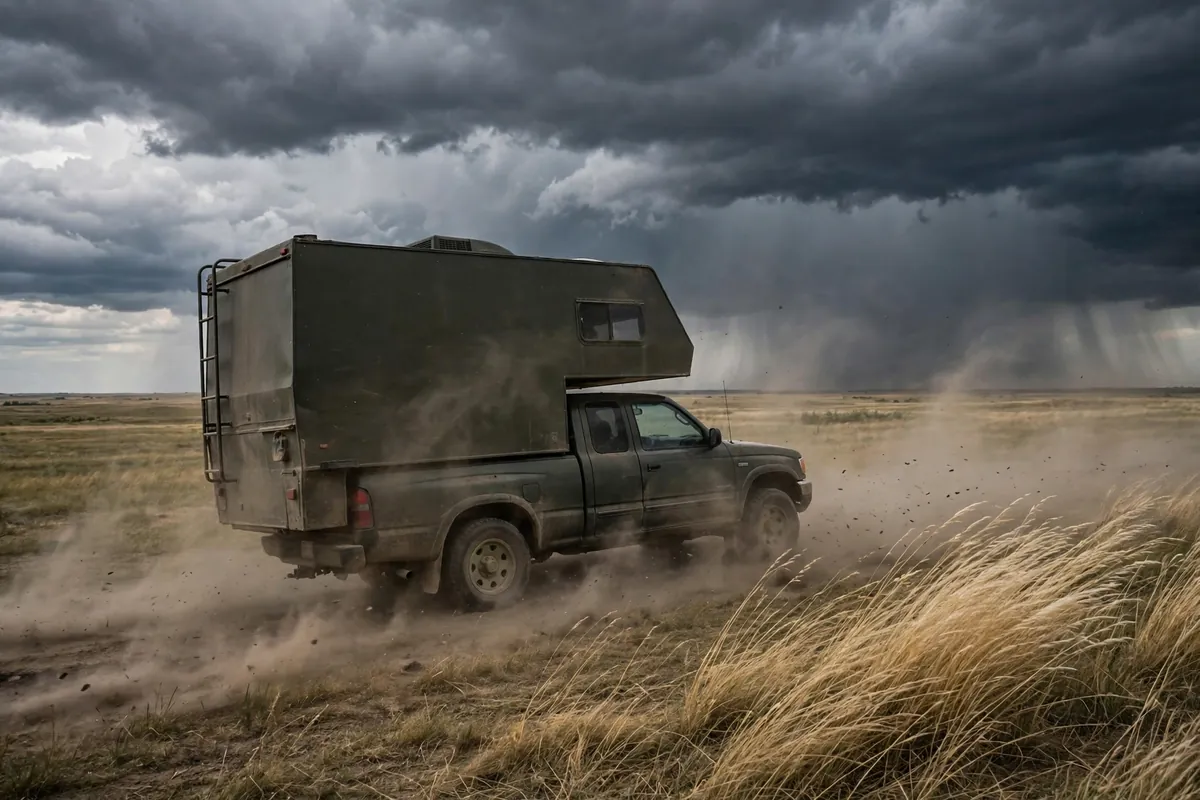
Your house never tried to blow over. A truck camper on a one-ton truck is a thirteen-foot-tall sail, and wind is the weather event full-timers respect most. Owners on towing forums name around 30 mph gusts as their personal limit for comfortable highway driving with a loaded rig — doable, but white-knuckle and exhausting. The veteran move: check the wind forecast, and be willing to sit a day out.
Cold is the second trap, and it’s worse for truck campers than for big motorhomes. Most truck campers are three-season rigs: exposed gray tanks, modest insulation, plumbing that was never designed to sit at 20 degrees for a week. The water system is the first casualty — lines, fittings, and dump valves freeze long before tanks do. Winter full-timers either buy a true four-season unit (heated tanks and ducted plumbing) or adapt: run the furnace to warm the underbelly, keep cabinet doors open over pipes, dump on schedule before valves freeze, and carry RV antifreeze like it’s a sacrament.
Rain brings the third trap: leaks you don’t find for months. A truck camper’s roof seals and window caulking take a beating from sun and road vibration. Get on the roof twice a year. Every year. No exceptions.
Loneliness, Community, and Finding Your People
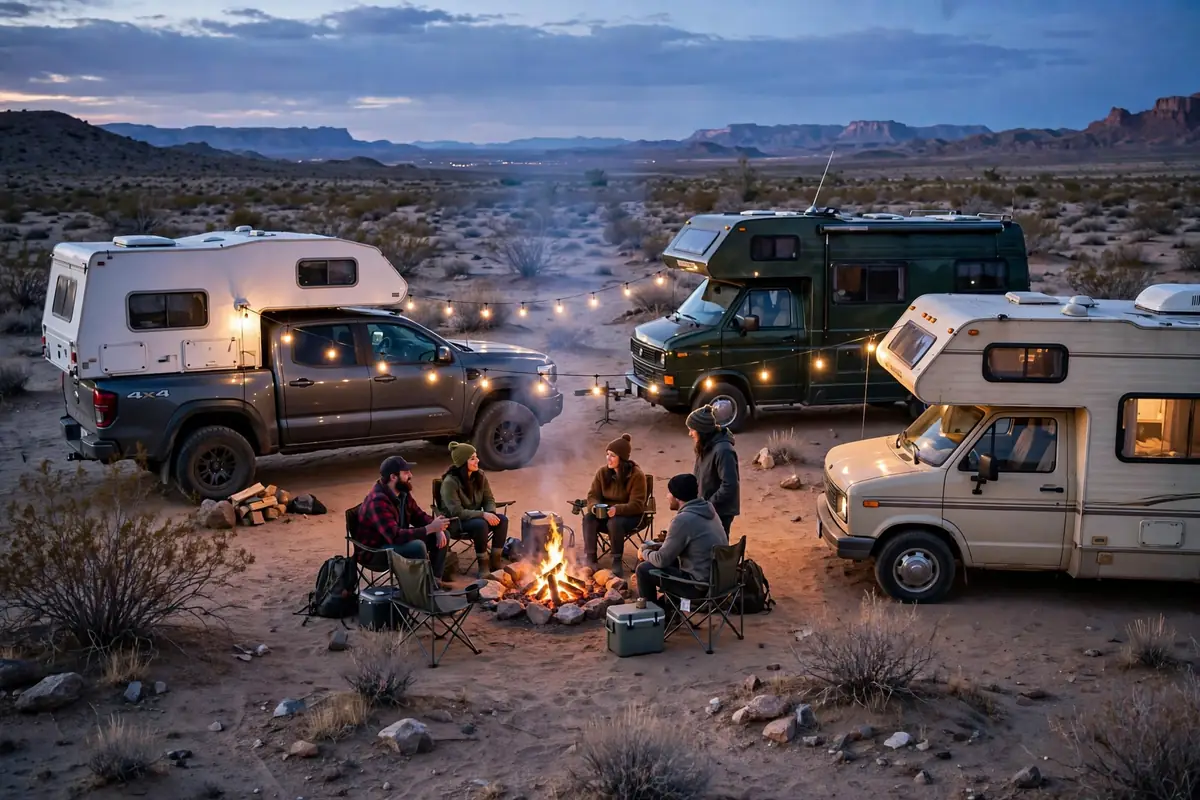
The road is lonely in a way that’s hard to explain until you’ve done three weeks without a real conversation. Campgrounds full of weekenders don’t count — they’re leaving Sunday. The fix is deliberate community, and full-timers who last all build it — through clubs like Escapees and their convergences, through the truck camper forums where strangers talk newbies through midnight furnace repairs, or just by workamping a season and learning the regulars’ rigs by sight.
The couples I mentioned earlier noticed something counterintuitive: they see family more now than when they had a house, because they plan visits instead of assuming proximity. Full-timing doesn’t have to mean drifting. The ones who burn out are the ones who treat every stop as temporary and never invest in any of them.
The couples I mentioned earlier noticed something counterintuitive: they see family more now than when they had a house, because they plan visits instead of assuming proximity. Full-timing doesn’t have to mean drifting. The ones who burn out are the ones who treat every stop as temporary and never invest in any of them.
The Buying Trap Most Full-Timers Fall Into
One last ugly truth, because it decides everything above: most people buy the wrong camper for full-time life. They buy for the vacation fantasy instead of the 300-day reality: tank sizes, insulation, build quality, whether the thing survives daily use. Then they’re either upgrading within a year (expensive) or living in a rig that fights them daily (miserable).
If you’re still shopping, buy used and buy for systems, not finishes — tank sizes, insulation, and build quality beat a photogenic floorplan. Compare the actual rigs built for full-time living before showroom shine seduces you. A gently used camper that someone else debugged is often a better full-time home than a new one whose warranty fine print excludes full-time use. Run any used rig through a proper inspection checklist before money changes hands — water damage and delamination are the two killers, and both hide well in photos.
So Is It Still Worth It?
Honestly? For the right person, yes — emphatically. Nothing else gives you a paid-off home you can park next to an alpine lake on a Tuesday. The people who thrive went in with eyes open, built maintenance into their weekly rhythm, budgeted honestly, and treated the small space as a discipline instead of a sacrifice. The ugly truths aren’t disqualifiers. They’re the entrance exam.
Frequently Asked Questions
How much does full-time truck camper living actually cost per month?
It depends on how fast you move and where you park: roughly $1,500–$2,500 a month for slow travel with lots of boondocking, up to $5,000+ for fast travel with paid campgrounds. One couple documented a $6,656 month including $1,114 in fuel for 1,800 miles. Budget $200–$300 a month for maintenance averaged over the year, and don’t forget health insurance.
Can two people really live full-time in a truck camper?
Yes, but it’s the hardest version. You get roughly 60 square feet and zero private rooms. Couples who make it work build deliberate alone time into the routine — separate hobbies, solo walks, separate coffee spots.
Cassette toilet or black tank for full-time living?
A cassette (4–5 gallons, carried by hand) means emptying every couple of days but gives flexibility — pit toilets and restrooms work. A built-in black tank (often 12–18 gallons) lasts longer but chains you to dump stations. Either way, get the biggest waste capacity you can: when the black tank is full, the trip is over.
How do full-timers handle mail and a legal address?
Most use a mail forwarding service like the Escapees RV Club: a real street address, mail scanned for you to review online, then forwarded, held, or shredded. Most full-timers domicile in Florida, Texas, or South Dakota. Check your chosen state’s current domicile requirements yourself.
Do I need special insurance to live in my truck camper full-time?
You need a policy that explicitly covers full-time living. Never hide your full-time status from your insurer — a claim can be denied and the policy cancelled. Shop around and get the answer in writing; check your state’s registration rules too.
What’s the biggest maintenance surprise for new full-timers?
Water intrusion. Roof seals and window caulking degrade from sun and road vibration, and a leak that would be a weekend annoyance becomes rot and mold when you live in it daily. Inspect the roof and reseal as needed twice a year.
Can you full-time in a truck camper in winter?
Yes, with adaptation. True four-season campers have heated holding tanks and ducted heat to the plumbing; with a three-season rig, run the furnace to warm the underbelly, keep cabinet doors open over pipes, dump tanks on schedule, and carry RV antifreeze. One hard freeze can crack fittings and cost you a weekend of repairs.