Truck Camper Insurance Guide 2026: Costs, Coverage and Claims
Heads-up: I am not an insurance agent — this is general information, not insurance advice. Rules vary by state and carrier, and only your policy language matters. Verify everything with a licensed agent before you buy.
Now the story I wish someone had told me the week I brought my first truck camper home: I drove it around for two months assuming my truck’s policy covered it. It did not. The twenty-thousand-dollar box in the bed was, in my insurer’s eyes, an expensive passenger. This truck camper insurance guide exists so you learn that before a claim, not after one.

A slide-in camper lives in an odd corner of the insurance world — not a car, not quite a trailer, and in some states not even a vehicle. That ambiguity is where owners get burned: cargo caps that would not replace a used pop-up, recreational policies that quietly exclude full-timers, and total-loss payouts landing thousands short of the loan balance. Here is how it actually works, what it costs in 2026, and what real owners learned the hard way.
How truck camper insurance actually works
There is no single product called truck camper insurance — two main options exist, and the right one depends on your state, your insurer, and how you use the camper.
Option 1: An endorsement on your truck’s auto policy
Many carriers let you add the camper to the truck’s policy as scheduled equipment — make, model, year, and value — covered for comp and collision while on the truck. Owners on truck camper forums report it is often shockingly cheap: one reported full coverage on a $20,000 custom camper for $182 a year, another roughly $75 a year over liability alone. Several State Farm customers say their agent treated the camper as a load on the truck at no extra cost while it stays mounted.
The catch: several owners report the endorsement covers the camper only while mounted. In the driveway it may fall under homeowners; at a storage lot or at camp with the truck gone, it may be covered by nothing. Get the on-truck and off-truck terms in writing.
Option 2: A standalone RV policy
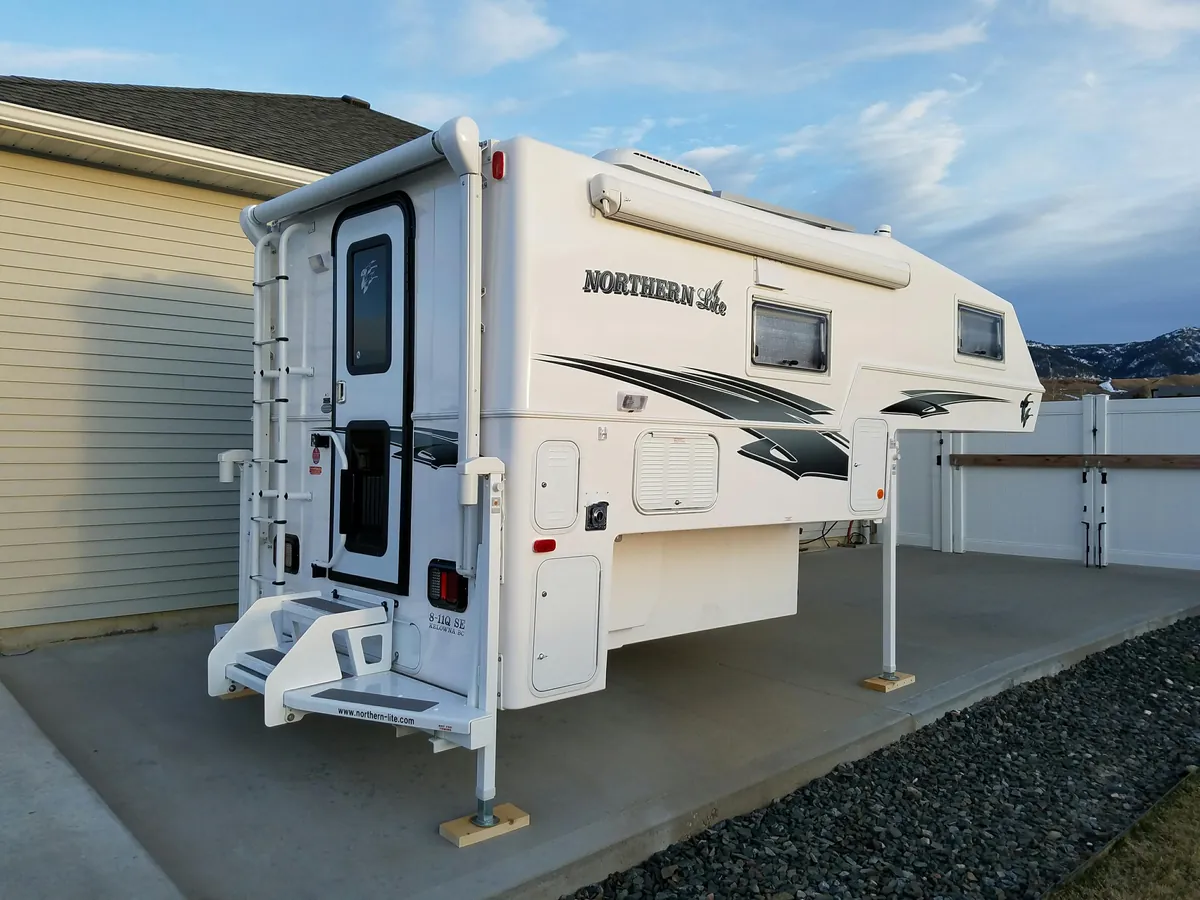
RV specialists — Progressive, GEICO’s RV department, Good Sam, National General — write the camper its own policy, like a travel trailer policy. This covers the camper on the truck, off the truck, in storage, and at camp, and unlocks RV-specific coverages: total loss replacement, vacation liability, personal effects, emergency expenses, and roadside assistance.
Progressive’s truck camper page states it plainly: no state mandates insurance for truck campers, but you will want specialized coverage for the camper itself — and a truck camper policy will not include bodily injury or property damage liability, which has to live on your truck’s policy. More on that below.
Rule of thumb: camper lives on the truck nearly full time with a cheap written endorsement available — take the endorsement. Camper comes off regularly, sits in storage, or would hurt to lose — get the standalone RV policy.
Truck camper insurance costs in 2026: what you will pay
Truck camper insurance is one of the cheaper RV policies because the expensive part — liability — rides on your truck, not the camper. Published 2026 industry rate guides put travel trailers and campers at roughly $180 to $1,000 a year for full coverage, with truck campers specifically around $300 to $600 a year, and liability-only from about $125. Your number moves with the camper’s value, your state, driving record, deductible, and nights of use.
By value tier, as rough bands to sanity-check any quote:
- Used pop-up or older hard-side, under $10,000: Roughly $200 to $350 a year. Many owners here skip full coverage and self-insure — legitimate when you can afford to lose the camper. (Shopping here? My budget truck campers under $15,000 roundup shows what that money buys in 2026.)
- Mid-range hard-side, $15,000 to $40,000: The heart of the market — roughly $300 to $600 a year standalone, or well under $200 a year as a truck-policy endorsement.
- Premium campers, $50,000-plus: Expect $600 to $1,000-plus a year. This is where agreed-value or total-loss-replacement coverage earns its keep, since depreciation hits hardest early.
Premiums move most with your deductible (raising $500 to $1,000 typically trims 10 to 15 percent), days of use per year, and bundling with auto and homeowners (commonly 10 to 25 percent off). Full-timer policies run about 20 to 40 percent more.
What comprehensive and collision actually cover on a slide-in
Comprehensive covers nearly everything that is not a collision: theft, vandalism, fire, hail, windstorm, falling limbs, flooding, and animal strikes. A hailstorm totaling your roof at a Colorado campground is a comprehensive claim; so is someone stealing the whole camper overnight — provided the camper is actually listed on a policy.
Collision covers damage when the camper hits or is hit by another vehicle or object, regardless of fault — the low gas-station canopy, the boulder on the forest road, the rear-ending at a stoplight. Collision pays for the camper’s repairs minus your deductible.
Two things owners misunderstand. First, your truck’s comp and collision cover your truck, not the box in the bed. The partial exception is liability: if the camper comes off on the highway and damages another car, the truck’s liability generally responds. But the camper’s walls, roof, and appliances need their own comp and collision, by endorsement or standalone policy.
Second, personal belongings are not the camper. The factory fridge is part of the camper; your laptop, camera, and camp chairs are not. Those need personal-effects coverage on an RV policy or fall back to homeowners or renters insurance, which usually caps off-premises theft at a fraction of your limit.
The liability gap nobody warns you about
A standalone truck camper policy typically does not include bodily injury or property damage liability — Progressive states this outright — so you need liability on your truck for damage or injuries you cause while driving.
Protection is split: the truck’s auto policy covers what you do to others while driving; the camper’s policy covers damage to the camper itself. The gap opens when the camper is parked and lived in — if a guest trips on your camper steps at the campsite, auto liability does not apply because you were not driving. That is what vacation liability on an RV policy is for: cheap, with limits well into six figures at carriers like GEICO and Progressive.
One more point: run overloaded and contribute to an accident, and you have handed your insurer a coverage argument — so run a truck camper payload calculator before you assume you are fine.
Agreed value vs actual cash value: the line that decides your total-loss check
If your camper is ever totaled or stolen, one line on your declarations page decides the check size. Three ways it usually works:
Actual cash value (ACV) is the default. It pays what the camper was worth on the day of loss — replacement cost minus depreciation. Buy for $30,000, total it three years later at $20,000 of value, and ACV pays $20,000 minus your deductible — which can leave you owing thousands on a loan for a camper that no longer exists.
Agreed value fixes the payout number up front, agreed by you and the insurer. Total the camper, get the agreed number minus the deductible, no depreciation argument. It costs more than ACV and suits campers that do not depreciate normally — well-kept older units, custom builds, hot resale markets.
Total loss replacement is the premium option for newer campers. Total a qualifying camper in its first model years and the insurer replaces it with a brand-new equivalent — same model year or later, same trim or better. Progressive’s example: a $30,000 camper worth $20,000 after three years could generate a $35,000 claim, because the guarantee is a new camper, not the depreciated one.
My take: camper under five years old and financed — get total loss replacement or agreed value, plus gap coverage for the loan. Older paid-off camper — ACV is usually fine, and some owners sensibly skip comp and collision. Read the declarations page once a year; five minutes on the most expensive page in the document.
The full-time living gotcha
Standard recreational RV policies are written for part-time use, many capping covered use at roughly half the year — and this is the exclusion that burns the most owners. Live in the camper full time and file a claim under a recreational policy, and the insurer can deny it for uncovered use.
Around five to six months of use per year, carriers want a full-timer policy — structured more like homeowners insurance, with personal liability, higher personal-effects limits, and campsite-as-residence coverage — at roughly 20 to 40 percent more than a recreational policy.
Truck campers make this trickier, because owners leave the camper mounted year-round and stop thinking of it as recreational use — until a large claim prompts the adjuster to ask how the camper is used. If you are genuinely living in it, have the full-timer conversation with your agent before you need it, and budget the uplift using my best truck campers for full-time living comparison.
Theft: what is covered and what is not
If the camper is listed on a policy with comprehensive — endorsement or standalone — theft of the whole camper is a comprehensive claim, paid per your valuation type. Straightforward.
The edges surprise owners. Items inside the camper are generally not covered by the camper’s comprehensive; that is personal-effects coverage or homeowners/renters with off-premises limits. Theft of the camper while off the truck depends on policy structure: a standalone RV policy typically covers storage, while a truck-policy endorsement may cover the camper only while mounted — nothing may cover it at a storage lot. Ask before buying: where exactly is my camper covered, mounted and unmounted, in what locations?
Layer physical deterrents too — locking tie-downs, parking strategy, visible anti-theft gear; my truck camper theft prevention guide covers what actually works. On the insurance side: photograph the camper, record the serial number when you bind coverage, and keep a cloud-stored video inventory of the interior.
The state-by-state pattern: cargo vs registered vehicle
In many states a slide-in is legally cargo — freight in the bed. No VIN, no title, no registration. California is the famous example: the state does not title or register truck campers at all, and insurers there treat the camper as cargo on the truck’s policy.
That cargo label has a sharp edge owners keep rediscovering. Cargo coverage on an auto policy can carry a low sublimit — one California owner reported his carrier capping cargo payout at $5,000 with no rider available above the state maximum, nowhere near enough to replace his camper. His fix was a standalone policy from an RV specialty insurer that understood slide-ins immediately. If your state treats the camper as cargo, verify the cargo sublimit in writing, because the default may be a fraction of your camper’s value.
Oregon, for instance, requires registration and tags for hard-side truck campers (pop-ups exempt), which usually pushes owners toward a standalone policy. And if you financed the camper, the lender may require a title plus comp and collision regardless of state rules.
No state requires liability insurance on the truck camper itself — the truck’s liability covers driving risk everywhere. But registration, titling, and cargo-sublimit rules are state-specific, so check your DMV and your declarations rather than trusting any forum post, including this one. My state-by-state guide to riding in a truck camper shows how much camper law varies across a state line.
Claim tips from owners who have been through it
Document before anything happens. Photograph the exterior, interior, and serial plate the day you insure it. Shoot a slow narrated walkthrough video of every compartment, upload it to the cloud, and keep the bill of sale and upgrade receipts.
Report fast; get a police report for theft or vandalism. Theft claims without one go nowhere.
Do not authorize big repairs before the adjuster sees the damage. Emergency measures to prevent further loss — tarping a storm-damaged roof — are expected and usually reimbursable; full repairs started early can become a fight over necessity.
Read your declarations page before you call. Know your valuation type, deductible, and personal-effects limit going in. One RV owner noted his adjuster reminded him to add sales tax to each claimed item — a small detail worth real money on a large contents claim.
If a claim is denied, get the denial in writing with the policy language cited, then take it to an independent agent or your state’s department of insurance.
How to get a quote: the checklist
- Have the camper’s year, make, model, serial number, purchase price, and photos ready — every insurer asks.
- Ask whether the quote is a truck-policy endorsement or a standalone RV policy, and where the camper is covered: mounted, unmounted, at home, in storage, at camp.
- Ask which valuation applies at total loss — ACV, agreed value, or total loss replacement — and confirm it on the declarations page, not just verbally.
- If you use the camper more than a few months a year, say so, and ask about full-timer coverage.
- Ask about vacation liability, personal-effects limits, emergency expenses, and roadside assistance.
- Get competing quotes — a specialty RV insurer and your auto carrier often differ by hundreds of dollars a year for identical coverage.
Start with Progressive’s truck camper page, GEICO’s RV insurance, and an independent agent who can shop multiple carriers. Published 2026 RV insurance rate ranges help sanity-check the numbers.
Frequently Asked Questions
Do I legally need insurance on my truck camper?
No state requires a separate policy for a slide-in, and your truck’s liability covers the driving risk. But without comp and collision on the camper itself, a wreck, hailstorm, or theft leaves you paying out of pocket — and a lender will require coverage on a financed camper regardless.
Will my truck’s auto policy cover the camper automatically?
Liability extends while the camper is mounted, but physical damage to the camper is not automatic. The camper must be specifically scheduled on the policy or covered by a standalone RV policy. Ask your agent directly; do not assume.
Does insurance cover my belongings inside the camper?
Not automatically. The camper’s comprehensive covers the camper; gear needs personal-effects coverage on an RV policy (Progressive offers limits up to $99,000) or falls back to homeowners or renters insurance, which usually limits off-premises theft.
What happens if I live in my truck camper full time?
Recreational policies are written for part-time use and can deny claims from full-time living, often defined around five to six months of use per year. Full-timers likely need a full-timer policy at roughly 20 to 40 percent more. Disclose your usage honestly when you buy.
Is my camper covered when it is off the truck?
It depends on your policy structure. A standalone RV policy generally covers storage and camp. A truck-policy endorsement may cover the camper only while mounted, with homeowners picking it up in your driveway. Ask specifically about off-truck and storage coverage — the most common coverage surprise owners report.

The bottom line
Truck camper insurance is simple once you see the structure: the truck’s policy covers your liability to the world, and the camper needs its own comprehensive and collision — by endorsement or standalone policy. The expensive mistakes live in the details owners skip: the cargo sublimit that would not replace a used pop-up, the recreational policy that excludes the full-timer filing a claim, the ACV valuation that leaves a loan balance with no camper attached.
Spend an hour on this when you buy the camper, not after the hailstorm. Read the declarations page, get off-truck coverage in writing, and pick a valuation type you could live with on your worst day. And remember the disclaimer from the top: general information from a fellow owner, not insurance advice — your policy language and a licensed agent have the final word.