Best Sway Bar for Truck Camper: Hellwig vs Roadmaster — Which Actually Kills the Sway? (2026)
The first time a real crosswind hit my rig on I-80, I learned what body roll feels like. Camper loaded, maybe 55 mph, and a gust shoved the top of the camper sideways while the truck stayed planted — that sickening half-second where the cabover seems to decide whether to follow the truck or go its own way. If you’ve had your version of that moment, you’re wondering which is the best sway bar for truck camper duty: the Hellwig Big Wig everyone on the forums swears by, or a Roadmaster RSS bar. I spent weeks digging through owner reports, install sheets, torque specs, and 2026 pricing for both. Here’s the honest comparison.
What a Sway Bar Actually Does (and the Job It Doesn’t Do)
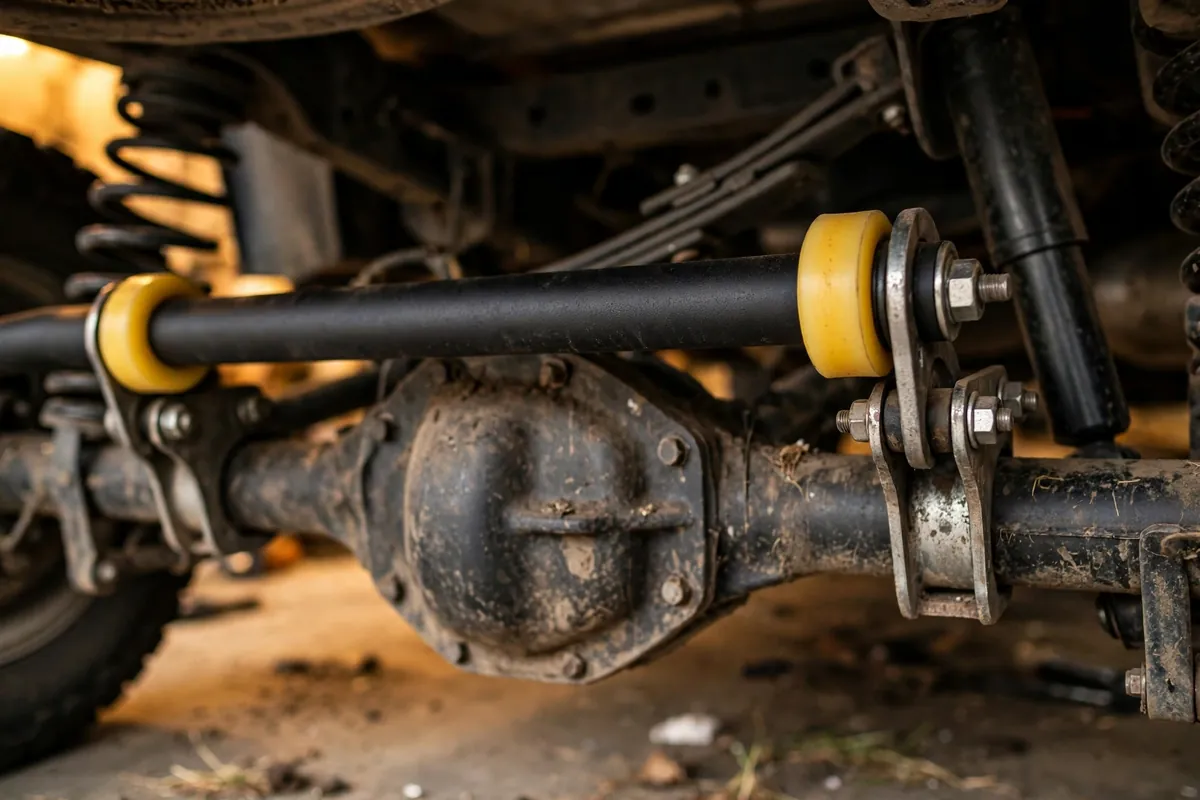
Get the physics straight before brand names, because this is where people waste money. A sway bar — anti-roll bar, same thing — is a torsion spring linking the left and right sides of your suspension. When the truck leans in a turn or a gust shoves the camper sideways, the bar twists and resists that lean. That’s its one job, and it’s very good at it.
What it does NOT do: carry weight, level your truck, or stop the front-to-back bucking owners call porpoising. A sway bar adds zero payload capacity and won’t lift a sagging rear end — our porpoising fix guide covers that problem.
Airbags, Timbrens, and SumoSprings do a different job entirely — they support and level the load. A sway bar keeps the truck from flopping sideways. They complement each other; they don’t replace each other. I’ve laid out how airbags, Timbrens, and SumoSprings compare separately — buying airbags to fix body roll is like buying a louder horn to fix bad brakes.
One thing experienced owners get exactly right: if your airbags share a single air line, air can shuttle side to side in a turn and make sway worse — plumb them on independent left/right circuits. A sway bar has no plumbing to get wrong.
Hellwig Big Wig: The Bar Most Truck Camper Owners End Up With
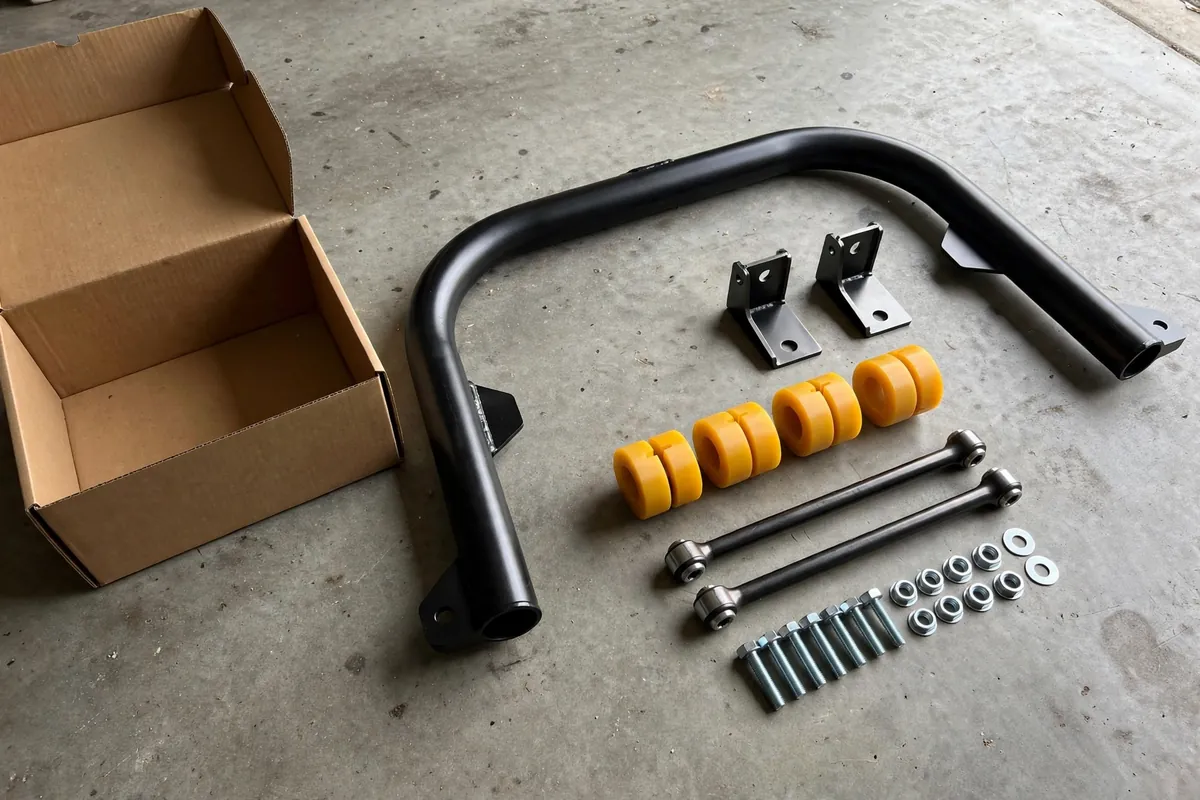
Hellwig’s Big Wig is their heavy-duty answer for trucks that haul: a solid heat-treated 4140 chromoly bar, usually 1-5/16 inches in diameter, with polyurethane bushings, heavy brackets, and a limited lifetime warranty. Most kits are adjustable — the bar arms have multiple end-link holes for tuning stiffness. Hellwig’s instructions say to start on the outer (softer) hole, then move inward for a firmer setting.
Most HD pickups leave the factory with a front sway bar only. Hellwig’s product listings say it plainly — most trucks do not come equipped with a factory rear sway bar, which is why roll gets dramatic the moment a tall camper goes in the bed.
Current Big Wig rear-bar applications for truck camper owners, with part numbers and 2026 pricing verified on Hellwig’s own site:
- Ram 3500, 2014–2026, 6.7L diesel, 2WD/4WD, single or dually (7298): 1-5/16 inch, $753.85 direct, around $850 at Tractor Supply. Diesel-only fitment — gas Ram owners, see the Roadmaster section.
- Ram 2500, 2014–2026, 2WD/4WD, stock rear height (7306): 1-1/4 inch, $632.18 direct. The one coil-sprung 2500 owners want.
- Ford F-250/F-350 Super Duty 4WD, 2017–2026 (7320): 1-5/16 inch, $666.20 direct. Covers single and dual rear wheel pickups.
- Ford F-250/F-350 Super Duty 2WD, 2017–2026 (7321): 1-5/16 inch, $596.60 direct.
- GM Silverado/Sierra 2500HD/3500HD, 2020–2026, stock height (7328): 1-5/16 inch, $798.84 direct, around $830 at Tractor Supply.
- GM 2500/3500 HD, 2011–2019, 2WD/4WD, SRW and dually (7270): 1-5/16 inch, $762.11 direct.
- Older trucks: 2013 Ram 2500/3500 diesel (7293, $694.22), 2013–2016 F-350 dually 4WD (7294, $663.06), 2008–2016 Super Dutys (7282, $792.19), 1999–2007 F-350 dually (7289, $548.90).
Street prices move — I’ve seen the Ford 7320 near $600 on sale and the Ram 7298 over $800 — but the direct numbers above are the stable reference. Some applications are made to order with lead times.
The before/after stories are remarkably consistent. A hands-on install test on a 2002 Chevy 2500HD took about two hours in a driveway with basic hand tools — the improvement was immediate, almost no body roll in corners, with no loss of wheel articulation over hundreds of miles of dirt afterward. On the owner forums, one member said his rig went from swaying significantly to minimal sway, and truck camper owners describe the same transformation, several calling it the single most effective handling mod they’ve done. Minor complaints: polyurethane bushings can occasionally creak, and sharp one-wheel bumps feel slightly stiffer. Owners universally say the trade is worth it.
Roadmaster RSS: The Other Serious Choice
Roadmaster (Vancouver, Washington) is the other name in every sway bar thread. Their RSS bars use the same honest formula — thick 4140 chromoly steel, polyurethane bushings, heavy hardware — and they claim torsional roll stiffness rises about 30 percent with every 1/8-inch increase in bar diameter.
For HD pickups, the Roadmaster options that matter:
- RM73FR (kit 1129-145): a 1-1/2 inch rear bar for Ram 2500 and 3500 trucks WITHOUT a factory rear sway bar. The big deal: it fits the 6.7L diesel AND the 6.4L Hemi gas engine, where the Hellwig Big Wig is diesel-only on the 3500. Confirmed compatible with factory rear air suspension. Around $1,080 at etrailer. Note: installation requires drilling the frame for the end-link mounts.
- RM34GR: the 1-1/2 inch rear-bar answer for Ram 2500/3500 trucks that DO have a factory sway bar (a replacement upgrade, not an add-on).
- RM47VR: a 1-5/8 inch front bar for trucks with a factory sway bar, if you want the matched set.
- 1139-170: a 1-3/8 inch rear bar for 2004–2007 Ford F-250/F-350 pickups, around $795 at specialty retailers. Roadmaster’s official install sheet for this kit is unusually detailed — read it before you buy.
One caveat: Roadmaster’s deepest pickup catalog skews toward older trucks and motorhome chassis. If you drive a 2020+ truck, confirm your exact application with Roadmaster’s fit guide before ordering — the Ram 1129-series kits split by year range and by whether your truck already has a factory bar.
Hellwig vs Roadmaster: The Head-to-Head

Price. Hellwig Big Wig rear bars run roughly $600–$850 direct; Roadmaster pickup kits run roughly $795–$1,080 at retail. Price genuinely decides purchases — one forum member picked Hellwig because two bars came in under $650 versus over $725 for the Roadmaster equivalents.
Materials and size. Both use 4140 chromoly and polyurethane bushings. Roadmaster runs slightly larger diameters on comparable kits and leans on the diameter-equals-stiffness math, but owners who’ve run both report no meaningful performance difference — mounting geometry matters as much as raw diameter.
Adjustability. Hellwig’s arms have multiple end-link holes for tuning stiffness after install. The Roadmaster RM73FR uses fixed end links. Tinkerers get a point for Hellwig.
Installation. The biggest practical difference. Hellwig Big Wigs are true bolt-on — no cutting, no drilling — and the two-hour driveway stories back that up. Roadmaster kits frequently need frame drilling: the RM73FR requires it on Rams without a factory bar, and one owner’s account describes drilling one hole per side, then wrestling the heavy bar onto the axle with a floor jack. Both are DIY-able, but Roadmaster asks more of you.
Availability. Both brands have had made-to-order stretches — one owner chose Roadmaster for an F-550 because the Hellwig was built to order with an 8–10 week lead. Check stock before you plan around a part number.
The gas-engine Ram question. A forum member with a 2021 Ram 2500 6.4L Hemi carrying a 2,700-pound hard-side camper — already on Firestone airbags — was still getting more roll than he liked and asked point-blank: Hellwig vs Roadmaster? Two useful answers came back. First, a bigger rear bar helps even with airbags installed, because bags level the load while the bar controls the roll. Second, the Hellwig 3500-series Big Wig didn’t fit his gas truck (diesel-only, with brake-line and muffler clearance issues on the Hemi), while Roadmaster’s RM73FR fits gas and diesel alike. If you drive a gas HD Ram, that fitment fact may decide for you.
Which Is the Best Sway Bar for Truck Camper Setups Like Yours?
Match the bar to the truck, not the brand:
- Ford F-250/F-350 Super Duty, 2017–2026: Hellwig 7320 (4WD) or 7321 (2WD). Clean bolt-on, adjustable, $600–$670 direct. Easy call.
- Ram 3500, 2014–2026, 6.7L diesel: Hellwig 7298 at $753.85 direct. The most popular truck-camper bar in existence for a reason.
- Ram 2500, 2014–2026: Hellwig 7306 at $632.18. The coil-sprung 2500 is the truck that benefits most from a rear bar.
- Ram 2500/3500 with the 6.4L Hemi: Roadmaster RM73FR around $1,080 — the verified option for gas and diesel, with or without factory air.
- GM Silverado/Sierra 2500HD/3500HD, 2020–2026: Hellwig 7328 at $798.84. For 2011–2019 trucks, the 7270 at $762.11.
- Older trucks (2004–2016): both brands cover you — Hellwig’s 7293/7294/7282/7289 and Roadmaster’s 1139-170 for the 2004–2007 Fords.
Before ordering, check whether your truck already has a factory rear sway bar — many newer HD trucks with camper or snowplow packages include front and rear bars. If yours does, you’re shopping for a bigger replacement (like Roadmaster’s RM34GR), not an add-on, and the improvement will be smaller. And if you’re still figuring out whether your loaded rig is within ratings, run the numbers in our payload calculator guide first — a sway bar improves handling, not payload. Ram 2500 diesel owners should also read the payload trap that catches Cummins buyers.
Install Reality: Driveway Afternoon or Shop Bill?
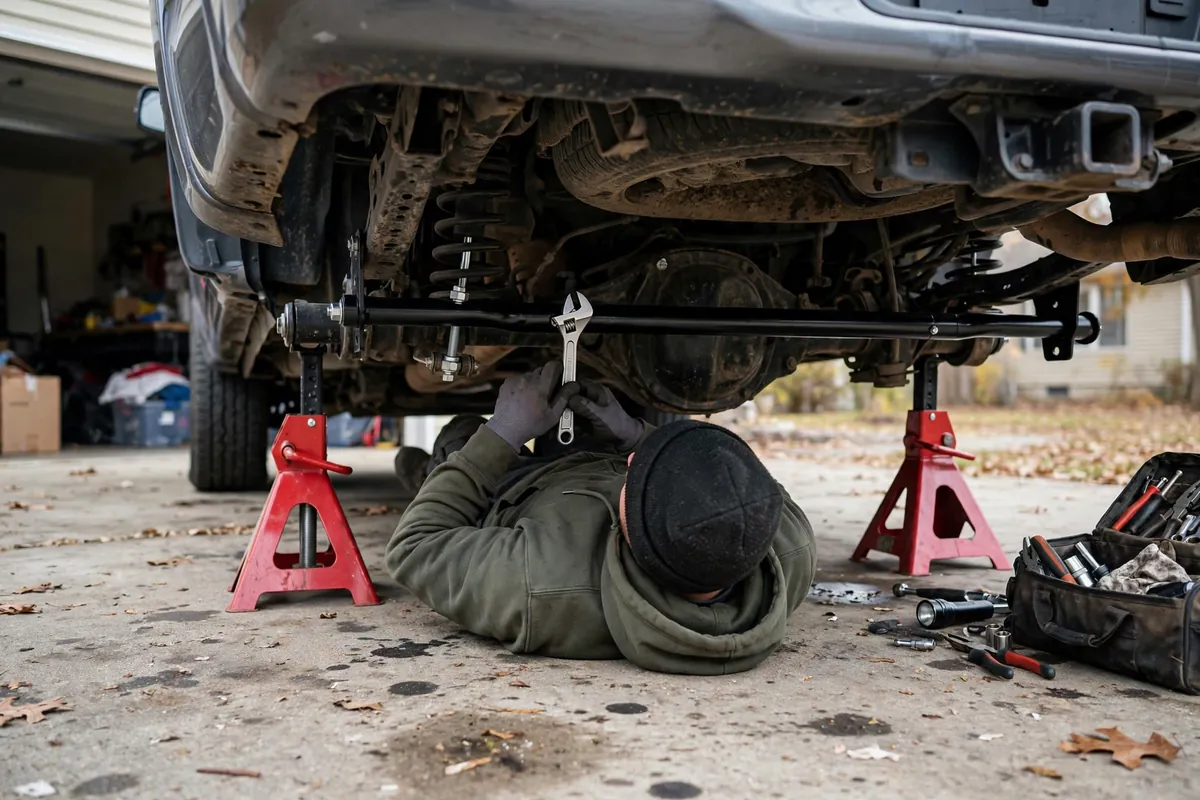
Most owners DIY this job — honest difficulty is 3 out of 10 if you’ve worked under a truck before. Two to three hours for a bolt-on Hellwig; add an hour and a drill for a Roadmaster kit that needs frame holes. Use a floor jack as a third hand to lift the heavy bar into position.
Torque specs matter — this hardware lives a hard life. From the manufacturers’ own instruction sheets:
- Hellwig: U-bolt nuts 50–60 ft-lb; end-link fasteners 35–40 ft-lb. General table: 3/8-inch hardware 20–30 ft-lb, 7/16-inch 35–45, 1/2-inch 50–70, 9/16-inch 70–90.
- Roadmaster (1139-170 sheet): end-link bolts 45–55 ft-lb; U-bolt nuts 70 ft-lb. Roadmaster specifically warns against using an air impact wrench — stripped threads are on you.
Do final tightening with the truck’s weight on its wheels, not hanging on a jack — both manufacturers stress this. Grease the polyurethane bushings during assembly or they’ll squeak. Start adjustable bars on the outer (softer) hole. Check clearances around brake lines, wiring, and exhaust before calling it done.
Safety disclaimer — read before you crawl under the truck. Set the parking brake, chock the wheels, and support the truck on jack stands rated at or above the vehicle’s weight at the frame rails or rear axle. Never rely on a jack alone, and never put your body under a vehicle supported only by a jack. A sway bar is NOT a load-bearing component — never tow, hoist, or lift the vehicle by the bar or its brackets. Check every fastener before and after your first road test, recheck the installation after the first week of driving, then periodically after that — that’s straight from Hellwig’s instruction sheets and it’s cheap insurance. If any of this is outside your comfort zone, pay a shop the couple hours of labor. This is not the job to learn on.
Do You Actually Need One?

Not everyone does, and the forums are honest about it.
You probably need one if: you carry a tall hard-side camper (2,000+ pounds) on a 3/4-ton, especially a coil-sprung Ram 2500 — the most sway-prone common setup. You drive windy corridors or mountain passes where gusts and switchbacks punish a tall rig. Or you’ve added airbags and the truck sits level but still leans in turns and gets shoved by passing semis — the textbook “bags leveled it, the bar will steady it” case. One Ram 2500 owner described being terrified at 50 mph driving home with a new-to-him 1,900-pound camper. A rear sway bar is exactly the fix for that feeling.
You probably don’t if: your camper is a light pop-up on a one-ton truck, your dually already has a factory camper package with front and rear bars, or your driving is all flat, slow, local roads. One Ram 3500 owner with factory air and a 2,800-pound camper asked the forums whether to bother — the consensus was the 3500’s leaf springs plus supplemental air were likely enough. It’s usually the 2500 owner, not the 3500 dually owner, who needs the bar.
Either way, get fundamentals right first: proper tie-downs and turnbuckles (a sway bar can’t fix a camper shifting in the bed), correct tire pressures for the load, and a rig within its payload rating. The sway bar is the finishing touch on a sorted rig, not a bandage for an overloaded one.
FAQ
Do I need a sway bar if I already have airbags?
Quite possibly — different jobs. Airbags support and level the load; the bar resists side-to-side roll. If the truck sits level but still leans in turns and gets shoved by crosswinds, the bar is the missing piece.
Front or rear bar first?
Rear, and it’s not close for camper duty. The camper’s weight sits over and behind the rear axle — that’s where roll starts. Owners who did both say the rear bar was the dramatic change; the front was a modest refinement.
Will a rear sway bar fit with my tie-downs and turnbuckles?
Usually yes — the bar mounts to the rear axle and frame rails, clear of bed-mounted tie-down anchors. An etrailer tech confirmed the Hellwig Big Wig clears TorkLift tie-downs and StableLoads on a Ram 3500.
Will it make my unloaded ride harsh?
A bit, over sharp one-wheel bumps — potholes, railroad crossings, angled driveways — because the bar links the two sides. On smooth highway, no downside. Nobody in the threads I read took the bar back off.
Can I install it myself in a driveway?
If you’re comfortable with hand tools and jack stands, yes. Two to three hours for a bolt-on Hellwig; longer if your Roadmaster kit needs frame drilling. Torque to spec, recheck hardware after the first week. If drilling your frame makes you nervous, pay a shop.
How often should I re-torque the hardware?
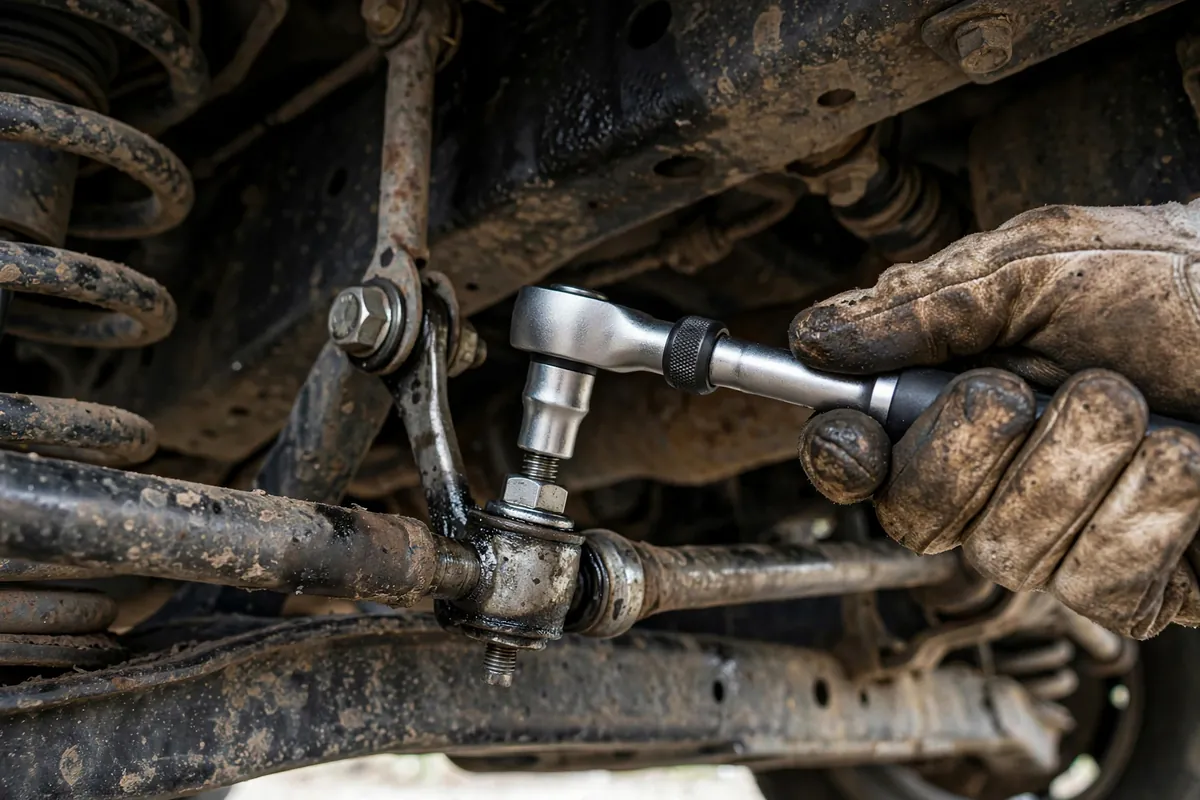
Check everything after the first road test, then again after about a week of driving — Hellwig’s specified interval — and periodically after that. A few minutes with a torque wrench beats discovering a loose end link on a mountain pass.
The Bottom Line
For most truck camper owners, the Hellwig Big Wig is the default: purpose-built for hauling, adjustable, true bolt-on, $600–$850 depending on the truck. Roadmaster’s RSS bars are every bit as serious — slightly larger diameters, excellent build — and they’re the answer for cases like gas-engine Rams that Hellwig doesn’t cover, though you’ll usually pay more and drill a hole or two. Owners who’ve run both say the difference is negligible; fitment, price, and stock decide it.
If your rig leans in turns, gets bullied by crosswinds, or feels top-heavy in a way that leaves your shoulders aching, a rear sway bar is the single most transformative handling upgrade you can bolt on. It’s the difference between driving the camper and fighting it.