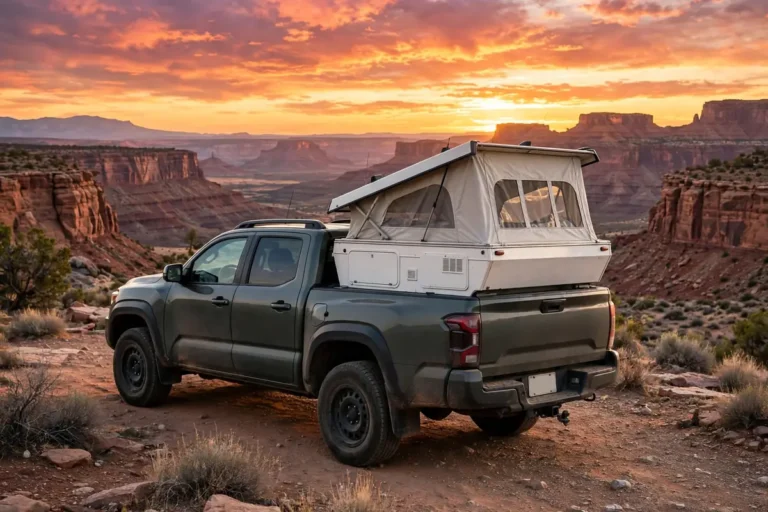
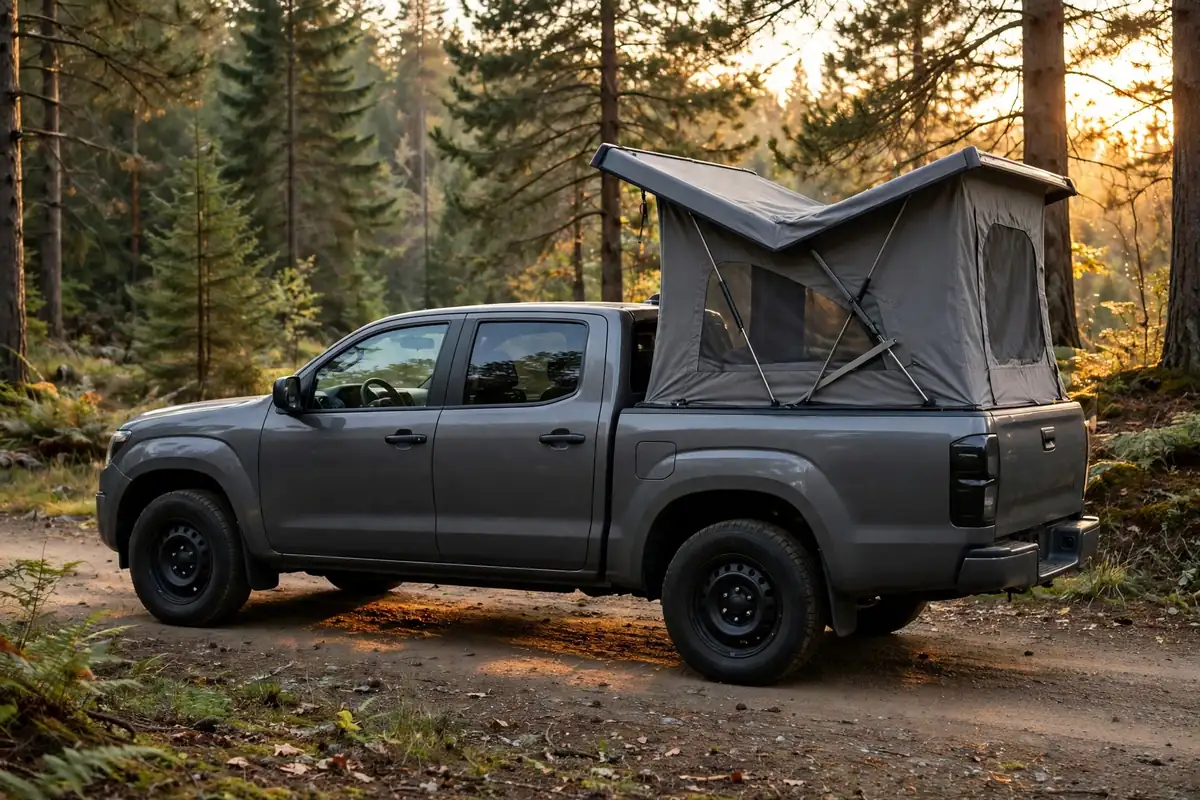
Best Truck Camper for Toyota Tundra: What Actually Fits Without Overloading It
I love the Tundra — reliable, holds its value, and the twin-turbo V6 pulls hard. But if you are shopping for the best truck camper for Toyota Tundra ownership, I have to be straight first: the Tundra is the weakest half-ton on payload, and that number decides almost everything else.
I have watched owners do the maths after they already bought the camper — then somebody read the door sticker, or put the rig on a scale, and the plan fell apart. This guide stops that happening to you.
What a Tundra can actually carry
Toyota lists a maximum payload of up to 1,850 pounds for the 2026 Tundra, with up to 12,000 pounds of maximum towing when properly equipped. Some dealer pages citing Toyota’s own tables put the absolute maximum at 1,940 pounds for a lightly equipped SR or SR5 Double Cab with rear-wheel drive. I flag that discrepancy because it proves the point: there is no single Tundra payload — only your Tundra’s payload.
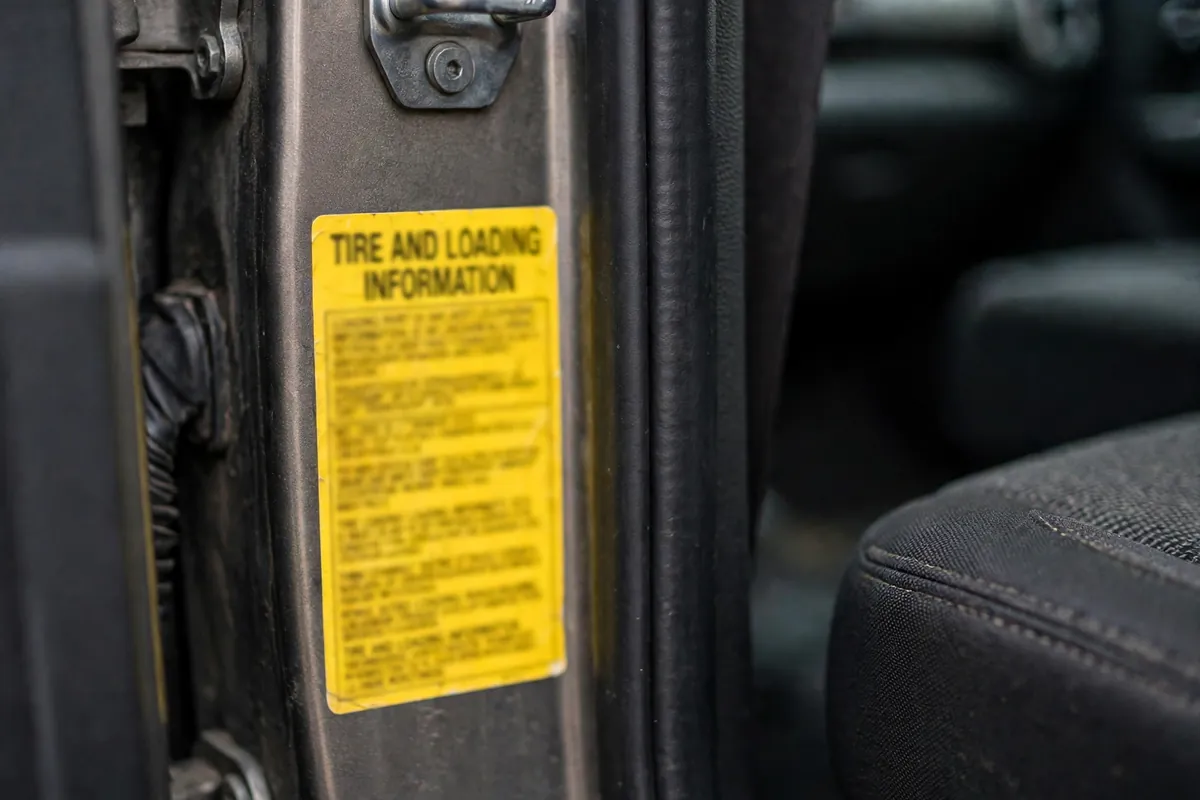
The number that matters is on the Tire and Loading Information label inside your driver’s door jamb: the maximum combined weight of occupants and cargo for that exact truck.
Here is how fast it falls. Toyota’s specification tables, as reproduced by dealers from toyota.com, put a 2026 Tundra Limited at roughly 1,635–1,685 pounds, the hybrid Limited at about 1,575–1,655 pounds, a 1794 Edition CrewMax 4×4 at 1,545 pounds, and a TRD Pro hybrid CrewMax 4×4 at 1,580 pounds.
Real stickers are often lower again. Owners in Tundra discussion groups have reported door labels of 1,380 pounds on a 2024 SR5 CrewMax 4×4, 1,330 pounds on another 2024 Tundra, and 1,180 pounds on a 2021 Platinum. Planning around 1,850 pounds when your sticker says 1,380 is how people end up hundreds of pounds overweight without ever feeling it.
Payload includes everything, not just the camper: passengers, fuel, tie-downs, jacks, water, propane, food and gear. For a worked method, use our truck camper payload calculator guide.
The dry-weight trap
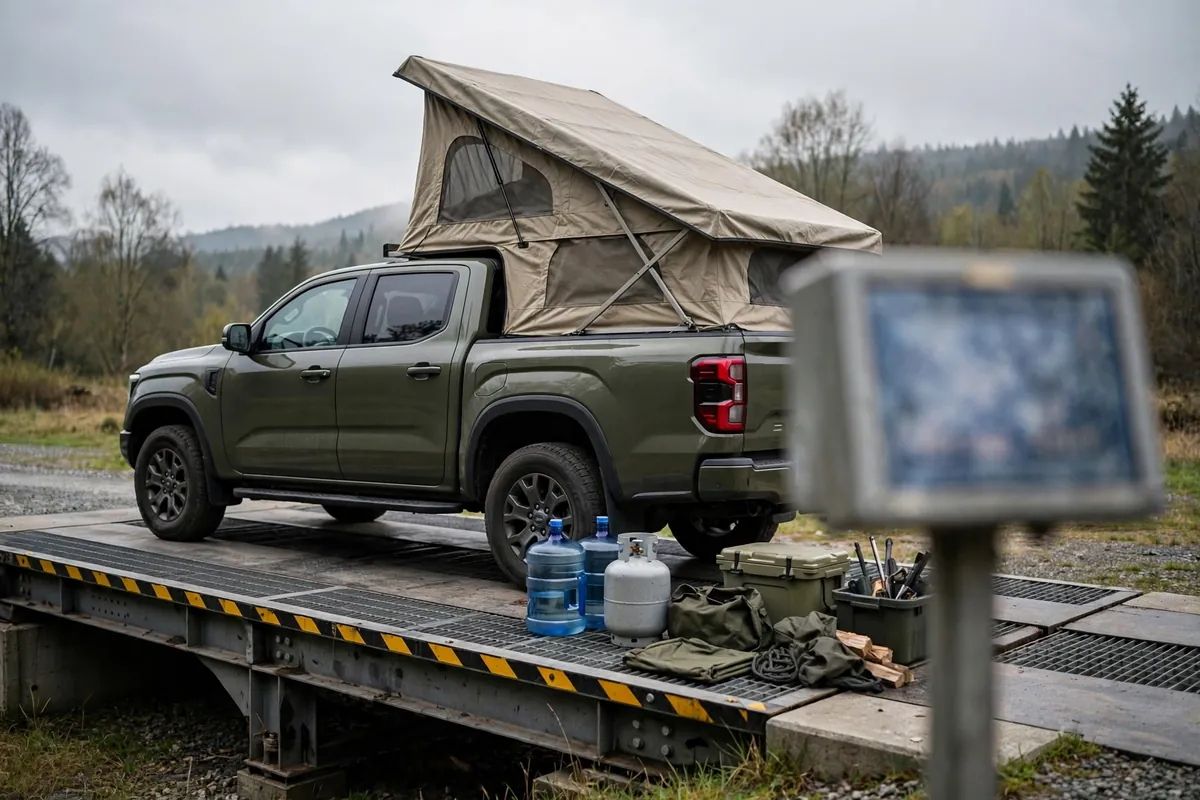
A buyer reads a camper’s dry weight, sees a few hundred pounds of headroom against the truck’s maximum payload, and buys. Then the camper arrives with options fitted, the water tank gets filled, two adults climb in, and the truck is over its gross vehicle weight rating.
Owners on Reddit and in Facebook Tundra groups report the same pattern: the brochure number was never the travelling number. One widely discussed case involved an owner whose door label read just 1,380 pounds. His Four Wheel Campers Fleet has a listed base dry weight of 1,045 pounds. Fill its 20-gallon fresh-water tank — about 167 pounds — and only about 168 pounds is left before he, his wife, their child, food, clothing, propane, camper options and truck accessories are counted. The fix owners kept coming back to: do the maths with the wet, optioned weight, not the dry weight, and weigh the loaded rig.
Water is the quietest weight adder: 20 gallons is about 167 pounds. Budget 400 to 600 pounds above dry weight for a sensibly equipped pop-up, and more for a hard-side.
Tundra bed lengths: 5.5, 6.5 and 8.1 feet
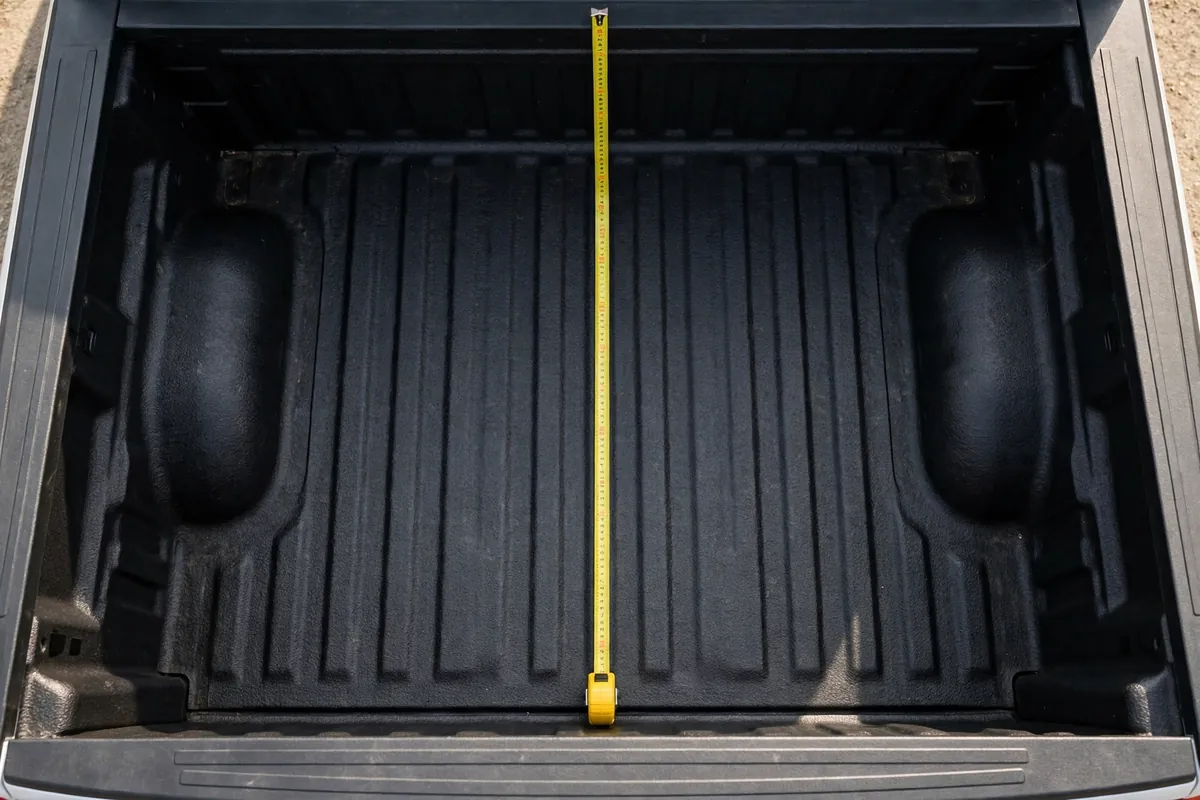
The Tundra comes with three beds: 5.5 feet (65.6 inches), 6.5 feet (77.6 inches) and 8.1 feet (96.5 inches). All are 58.7 inches wide, 20.9 inches deep, and 48.7 inches between the wheel wells. The 5.5-foot bed comes with the CrewMax cab, the 6.5-foot bed with Double Cab or CrewMax, and the 8.1-foot bed only with the Double Cab.
Most Tundras on the road are CrewMax trucks with the 5.5-foot bed, the hardest bed to fit a camper to: a camper built for a 6.5-foot bed overhangs it by a foot. Owners on WanderTheWest have argued this out for years, and the consistent warning is about centre of gravity — the more camper hanging behind the bed, the further the centre of gravity moves behind the rear axle, the lighter the front end gets, and the worse the handling and braking become. Buy the camper made for your bed length, support any overhang properly, and confirm the centre of gravity sits forward of the rear axle.
The 6.5-foot bed is the sweet spot: it opens up the Hawk and Olympic class, and still leaves a truck that is easy to park and drive daily. The 8.1-foot Double Cab is the unicorn — the most bed and the most camper choice, but usually the lowest payload. Our short-bed vs long-bed truck camper guide covers the same trade-off. The composite bed is slippery, so a rubber bed mat is cheap insurance — see our tie-downs and turnbuckles comparison.
Which campers genuinely fit a Tundra
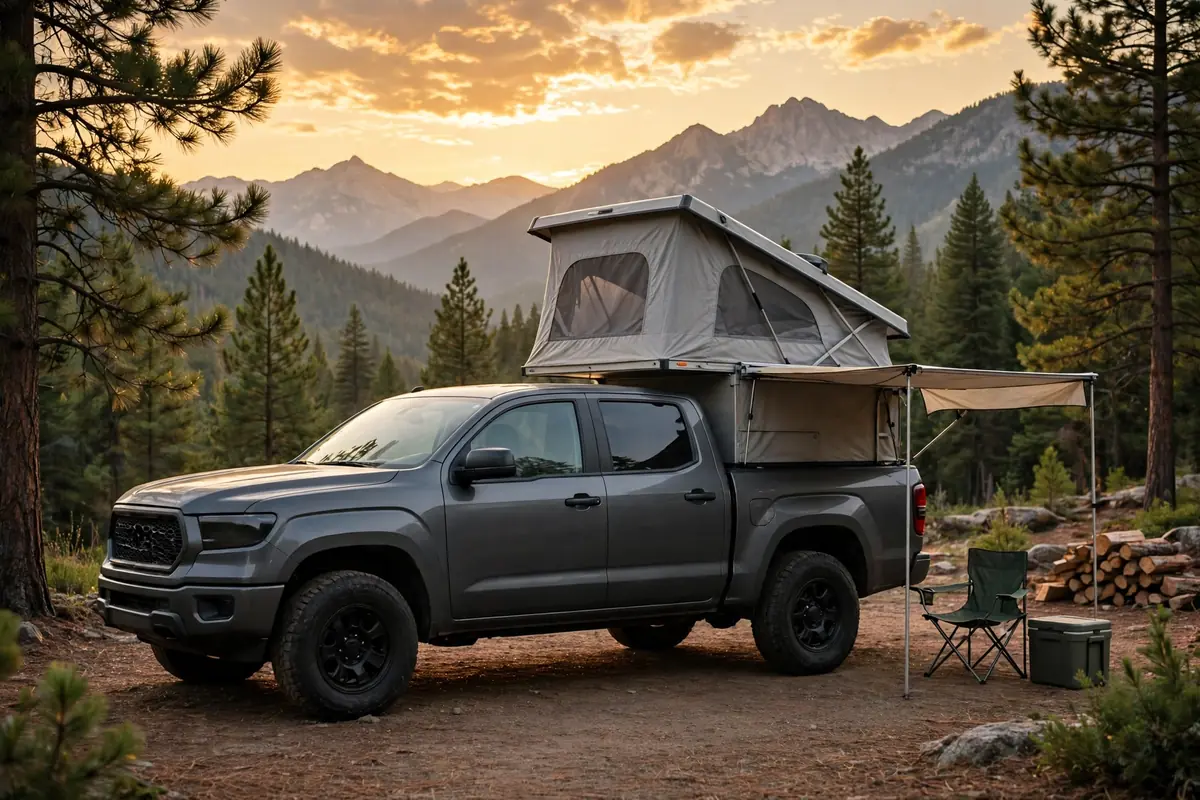
The table uses 2026 manufacturer-published dry weights and Truck Camper Magazine’s wet-weight method (water, propane, a battery and 500 pounds of gear). Treat every dry weight as a base figure before options.
| Camper | Type | Base dry weight | Wet weight* | Best Tundra bed |
|---|---|---|---|---|
| Four Wheel Campers Project M | Pop-up topper | ~375–400 lb | ~900 lb | 5.5, 6.5 or 8.1 ft |
| Scout Yoho (hard-side) | Hard-side, non-slide | 1,002 lb | 1,553 lb | 5.5 or 6.5 ft |
| Four Wheel Campers Raven | Pop-up slide-in | ~1,050 lb | ~1,800 lb | 5.5 ft |
| Scout Olympic 6.5 | Hard-side, non-slide | ~1,171 lb | ~1,720 lb | 6.5 ft |
| Four Wheel Campers Hawk | Pop-up slide-in | 1,200 lb | 1,952 lb | 6.5 ft |
| Palomino SS-550 | Pop-up slide-in | 1,611 lb | 2,321 lb | 6.5 ft — tight |
| Lance 650 | Hard-side, non-slide | 1,813 lb | 2,016 lb | 6.5 ft — usually no |
Four Wheel Campers Raven — the 5.5-foot bed answer
If you drive a CrewMax with the 5.5-foot bed, the Raven is where I would start. Four Wheel Campers built it for 5.5- to 5.8-foot short beds on crew-cab half-tons, including the Tundra, at about 1,050 pounds dry. It is a proper slide-in pop-up with a kitchen, sleeping for two or three, and 6 feet 6 inches of standing room when popped up. On a 1,600-pound sticker, a Raven at roughly 1,400 pounds optioned and wet still leaves room for two adults and light gear. On a 1,380-pound sticker it is tight but doable for a solo traveller. Four Wheel Campers lists the Raven as its 5.5-foot-bed Tundra pick: Four Wheel Campers Toyota options.
Four Wheel Campers Hawk — the 6.5-foot bed classic
The Hawk is the Tundra camper most owners end up with: Four Wheel Campers’ most popular full-size model, built for 6- to 6.5-foot beds, at about 1,200 pounds dry with a 2026 MSRP of $30,675. It sleeps two or three and has a proper kitchen and optional furnace. But the average optioned Hawk is about 1,428 pounds dry and its wet weight is 1,952 pounds — one owner on WanderTheWest weighed his at 1,300 pounds dry and empty, jacks removed — so it only works with a sticker of 1,600 pounds or more. On a 1,380-pound sticker, a Hawk plus two adults plus water is already over. See the Four Wheel Camper buyers’ guide.
Scout Yoho and Olympic — the light hard-side option
Scout is the camper I point people to when they want hard walls but cannot afford hard-side weight. The 2026 Yoho is a hard-side, non-slide short-bed camper at 1,002 pounds dry, about 1,553 pounds wet, with an MSRP of $22,495. It carries just 4.9 gallons of fresh water, which is part of why it stays light, and sleeps up to four. The Olympic 6.5 is its bigger sibling at about 1,171 pounds dry, built for the 6.5-foot bed. The trade-off is space: no wet bath and a minimalist interior. Check current specifications in the Scout camper buyers’ guide.
Four Wheel Campers Project M — the ultralight escape hatch
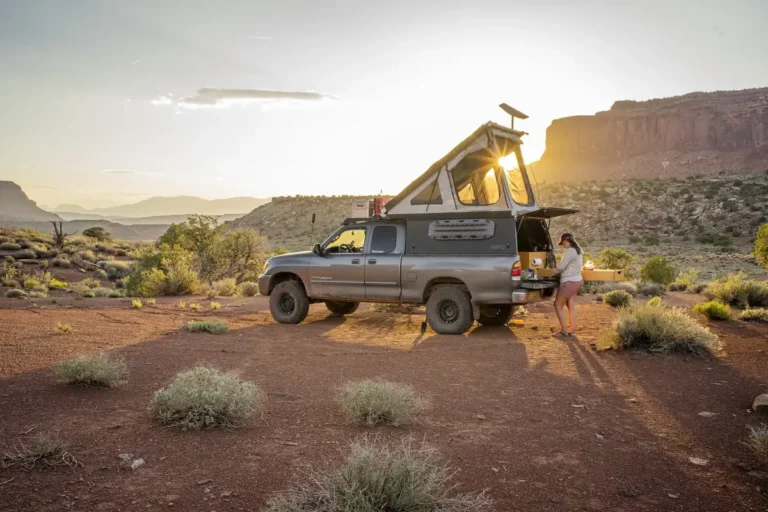
If your sticker is one of the low ones, the Project M is worth a serious look. It is a pop-up topper that bolts to your bed rails and uses your truck bed as the floor, starting at about 375 to 400 pounds dry. That leaves more than 1,000 pounds of payload on even a 1,400-pound sticker for people, gear, water and a DIY build-out. The compromise: you build the interior yourself, with no built-in kitchen or bathroom. If you drive a Tacoma instead, the same logic applies on a smaller scale — see our best truck camper for Toyota Tacoma guide.
What about the Supertramp Flagship LT?
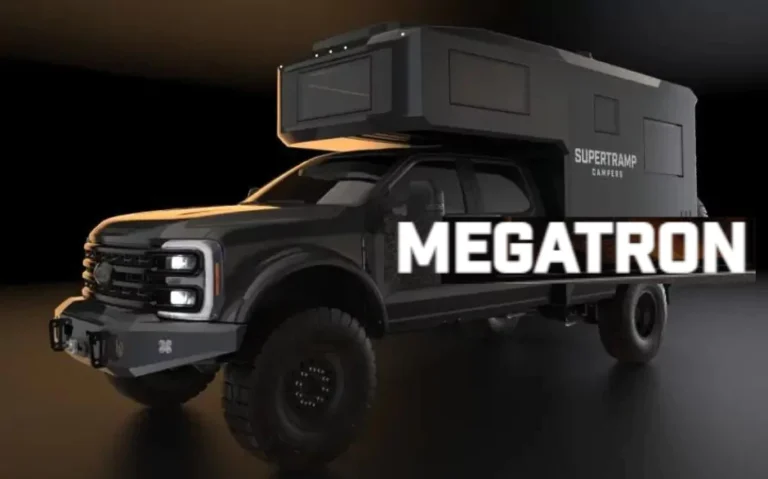
The Supertramp Flagship LT is frequently recommended for Tundras — a composite hard-side pop-up with an 82-inch floor for 6.5-foot beds, listed in an older roundup as about 1,350 pounds fully optioned. I could not verify a current 2026 dry weight or price from the manufacturer’s published specifications, and the $59,975 figure in that roundup is now dated, so it is not in the table as a verified pick. Get the as-built weight and current price from Supertramp directly.
Which campers do not fit a Tundra
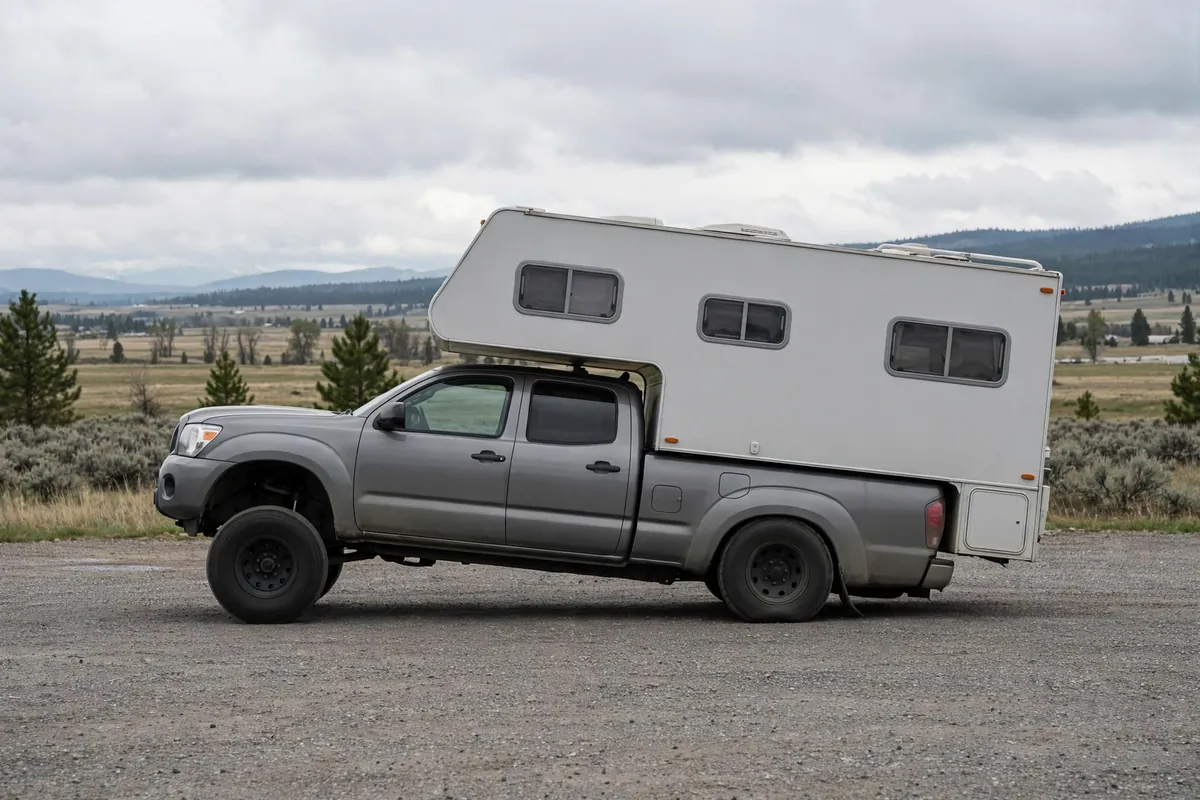
The Lance 650 is the classic trap. It is Lance’s smallest and lightest hard-side, marketed for short-bed half-tons, at 1,813 pounds dry and 2,016 pounds wet. That dry weight alone is above the entire payload of many real-world Tundras, and above the 1,545-pound figure for a 1794 CrewMax 4×4 before a single person climbs in. Lance’s own guidance tells buyers to scale the truck and add passengers, gear and options to the wet weight. On a base SR Double Cab with a 1,940-pound sticker, a stripped 650 might just work for a solo traveller. On the CrewMax 4×4 most people buy, it does not. Our Lance 650 vs 825 vs 865 weights comparison shows how quickly the Lance range climbs.
The Palomino SS-550 is the same story in pop-up form: 1,611 pounds dry and 2,321 pounds wet — more than the whole payload of a typical CrewMax Tundra. A Tundra is rarely the right truck for it once loaded.
The Four Wheel Campers Grandby is the third no. One owner on Expedition Portal considering a Grandby flatbed on a Tundra noted a 1,660-pound payload against a Grandby at 1,395 pounds dry and 2,148 pounds wet, before fuel and passengers, and asked whether removing the bed would help. The answers were consistent: a flatbed tray is heavier than the factory bed, so it makes the problem worse; the Grandby belongs on an F-250, Ram 2500 or equivalent; and several owners said they had replaced their Tundra with a three-quarter-ton truck to carry a camper of that size. One put it plainly — almost all half-ton trucks with slide-in campers are overweight. If you want a camper that size, you need a bigger truck. Our Ram 2500 diesel payload guide is a useful reality check, and if you drive an F-150 instead, see our F-150 truck camper payload guide.
The pattern is clear: any hard-side over about 1,800 pounds dry, any pop-up over about 1,600 pounds dry, and any camper whose wet weight passes your door sticker is a no on a Tundra.
Suspension help that does not add payload
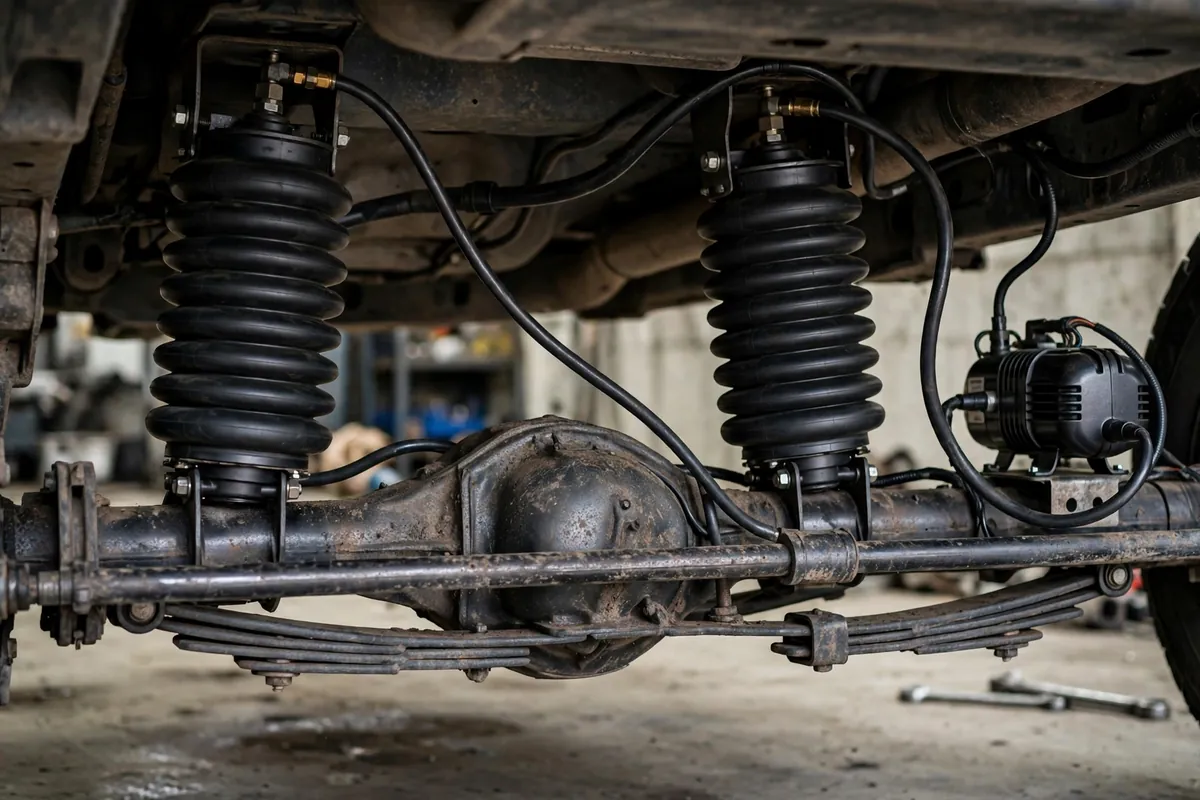
Airbags, Timbren SES, SumoSprings and helper springs level the truck, reduce sag and improve handling under a load you are already allowed to carry. None of them changes your GVWR, axle ratings or payload rating — Air Lift, Firestone and Timbren all say so. A 2026 Tundra owner who asked in a Facebook Tundra group whether airbags could raise his truck’s cargo capacity was given the same answer: no, they cannot add payload. Our airbags vs Timbren vs SumoSprings comparison makes the same point.
Suspension upgrades are still worth it. Owners on WanderTheWest report airbags transformed how their Tundra handled a Hawk — one ran them for four years, another switched after Roadmaster helper springs sagged after two years — and owners on Expedition Portal call E-rated tyres, airbags and a suspension upgrade close to mandatory for a loaded Tundra. First pick a camper that fits your sticker, then spend on suspension to make that legal load ride well.
How owners make a tight payload work
Travel light on water: a full 20-gallon tank is 167 pounds you may not need to carry. Owners routinely travel with a quarter tank, or fill up near camp.
Cut ruthlessly. One Expedition Portal build is a masterclass: the owners of a 2008 Tundra with an OEV Alpine camper removed the rear seat (86 pounds saved), fitted a lithium starting battery (55 pounds), left the winch off (75 pounds) and stripped a heavy drawer from their flatbed tray (at least 150 pounds) — more than 360 pounds found by deleting things.
Pack heavy stuff low and forward, leave the jacks at home when the camper stays on the truck (check your manual first), and accept the trade: a Tundra with a Raven or a Yoho is a brilliant weekend rig, not a full-time hard-side for a family of four.
How to verify fitment before you buy
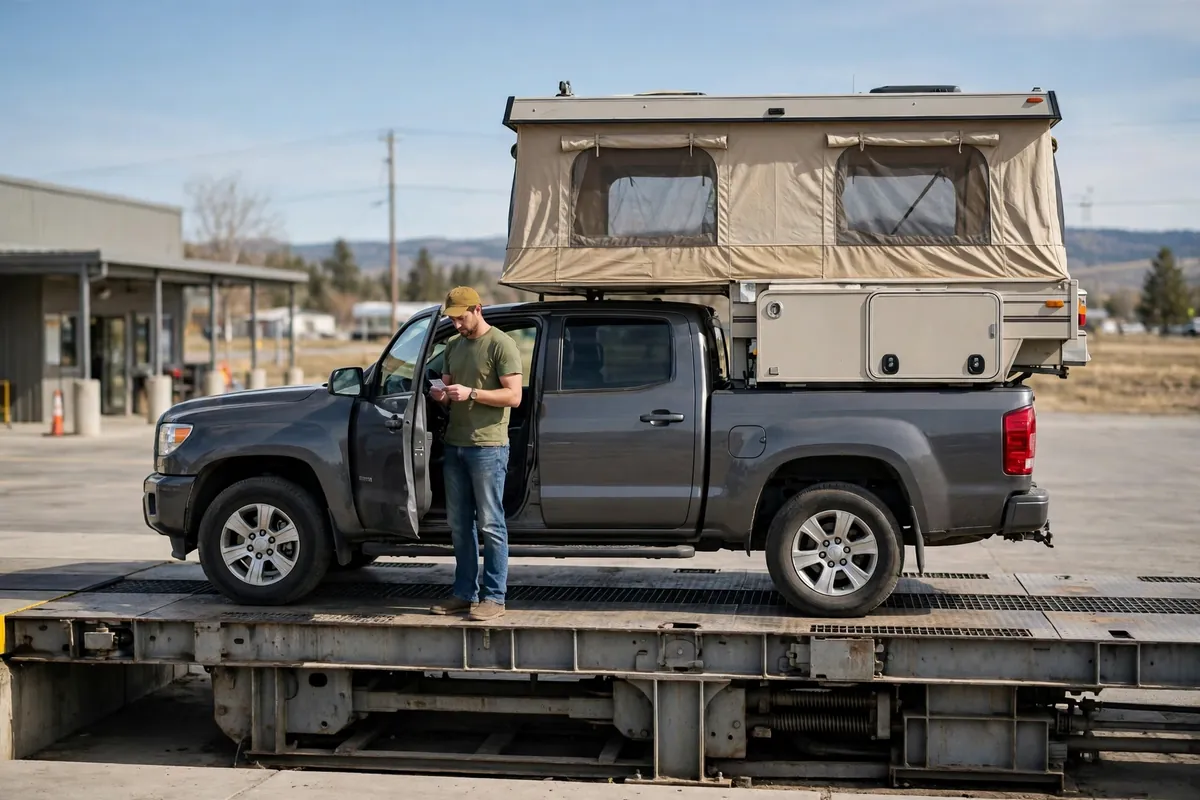
1. Read your door sticker — note the exact “combined weight of occupants and cargo” figure, on the truck you are buying. 2. Measure your bed against the camper’s floor dimensions and check cab-over clearance. 3. Get the camper’s as-built weight with options fitted; if a maker cannot provide one, add at least 300 pounds. 4. Do the loaded maths — camper, water, propane, battery, passengers and 300 to 500 pounds of gear; if the total is under your sticker with at least 100 pounds to spare, you have a fit. 5. Weigh the loaded rig on a CAT scale and check both axles against your GVWR and axle ratings. 6. Check the centre of gravity sits forward of your rear axle. 7. Test drive it loaded on the motorway, a rough road and a hill.
The bottom line
The best truck camper for Toyota Tundra ownership is the lightest camper that gives you the comfort you actually need, on the bed length you actually own, inside the payload your door sticker actually allows. For most owners that means a Raven on the 5.5-foot bed, a Hawk or an Olympic on the 6.5-foot bed, a Yoho if you want hard walls at pop-up weight, or a Project M if your sticker is low. It does not mean a Lance 650, a Palomino SS-550 or a Grandby. Buy the camper that fits the truck. Read the sticker. Weigh the rig.
Frequently asked questions
Can a Toyota Tundra carry a truck camper?
Yes — but only a light one: a pop-up or light hard-side whose loaded weight, plus passengers and gear, stays inside your door sticker — usually 1,000 to 1,400 pounds dry, such as a Raven, Hawk or Scout Yoho.
What is the payload of a Toyota Tundra?
Up to 1,850 pounds for the 2026 Tundra (some SR/SR5 configurations up to 1,940 pounds). Popular trims run about 1,545 to 1,685 pounds, and owners have reported stickers as low as 1,330 to 1,380 pounds. Your door-jamb label is the only figure that applies to your truck.
What is the best truck camper for a Tundra with a 5.5-foot bed?
The Four Wheel Campers Raven (about 1,050 pounds dry, built for 5.5- to 5.8-foot beds). The Scout Yoho (1,002 pounds dry) and Project M topper (about 400 pounds dry) are the other strong options. Avoid 6.5-foot-bed campers — the overhang pushes the centre of gravity behind the rear axle.
Can I put a Lance 650 on a Toyota Tundra?
Usually not: 1,813 pounds dry and 2,016 pounds wet, already above most CrewMax 4×4 payloads before passengers or gear. It may work on a lightly equipped two-wheel-drive Double Cab with a sticker near 1,940 pounds for a solo traveller — verify with the loaded maths and a scale weigh.
Do airbags increase a Tundra’s payload?
No. Airbags, Timbren SES, SumoSprings and helper springs improve ride height and handling under a load you are already allowed to carry. They do not change your GVWR, axle ratings or payload rating.
How do I check if a camper fits my Tundra?
Read the payload on your door-jamb label, get the camper’s as-built weight, add water, propane, passengers and gear, and check the total against your sticker. Confirm the centre of gravity sits forward of your rear axle, then weigh the loaded truck on a CAT scale.