Short Bed vs Long Bed Truck for a Camper: The Buying Decision (2026)
Every few weeks someone asks me the same question: for a short bed vs long bed truck camper setup, which bed should I actually buy? They are standing on a dealer lot or scrolling listings at midnight, torn between the crew cab short bed that fits their life and the long bed that fits their camper dreams. I have watched enough owners learn this the expensive way to tell you straight: this is the one truck-camping choice that is genuinely hard to undo. You can swap a camper. You can add airbags. You cannot stretch a truck bed.
The short answer is that in any short bed vs long bed truck camper decision, the bed has to match the camper, not the other way around, and one physics rule decides whether a combination is safe or sketchy. Get that rule right and the rest becomes a lifestyle decision. Get it wrong and no suspension upgrade will save you.
The one rule that decides everything: keep the weight ahead of the rear axle
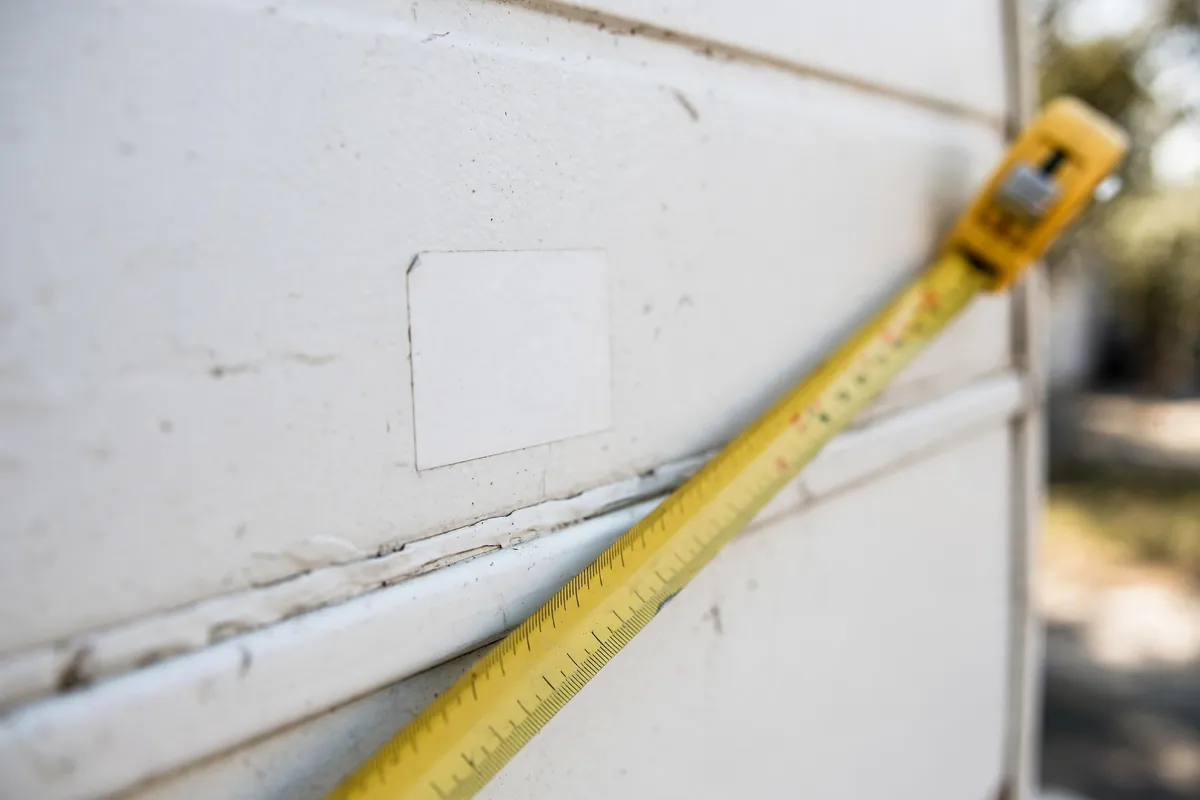
Forget everything about brands for a minute. Every slide-in camper has a balance point called its center of gravity, and the manufacturer marks it with a small sticker on both sides of the camper, measured in inches from the camper’s front wall. That number is the single most important spec nobody talks about at the dealership.
The rule is simple: the camper’s center of gravity must sit forward of your truck’s rear axle. Not on it. Not behind it. Ahead of it. When the weight sits ahead of the axle, roughly 10 to 20 percent of the camper’s weight presses down on the front axle and the rest on the rear, and the truck steers and brakes the way it was designed to. When the balance point ends up behind the rear axle, weight lifts off the front wheels. Steering goes vague, braking distances grow, and in the worst cases the frame itself takes a bending load in the middle that it was never designed for. Truck Camper Adventure lists ignoring a bad center of gravity among the top ten truck camper mistakes, and they are blunt about why: it creates drivability problems and can crack frames.
The five-minute check: measure from the front wall of the truck bed to the center of the rear axle. Then look up the camper’s center-of-gravity number from the manufacturer’s spec sheet. If the camper’s number is smaller, the balance point lands ahead of the axle and you are good. If it is bigger, walk away. I wrote up how to measure a truck bed the right way separately.
Owners also swear by the CAT scale test: weigh the truck once without the camper and once with it loaded. If the front axle weighs less with the camper on, your center of gravity is sitting too far back. Heavy gear always goes ahead of the rear axle, never in the rear overhang compartments.
One disclaimer: I am an experienced owner, not an engineer. Nothing here overrides your truck’s door-jamb payload sticker or the camper maker’s fitment chart. When a combination is borderline, call the manufacturer with your exact truck specs.
Short bed vs long bed truck camper sizes: what the words mean in 2026
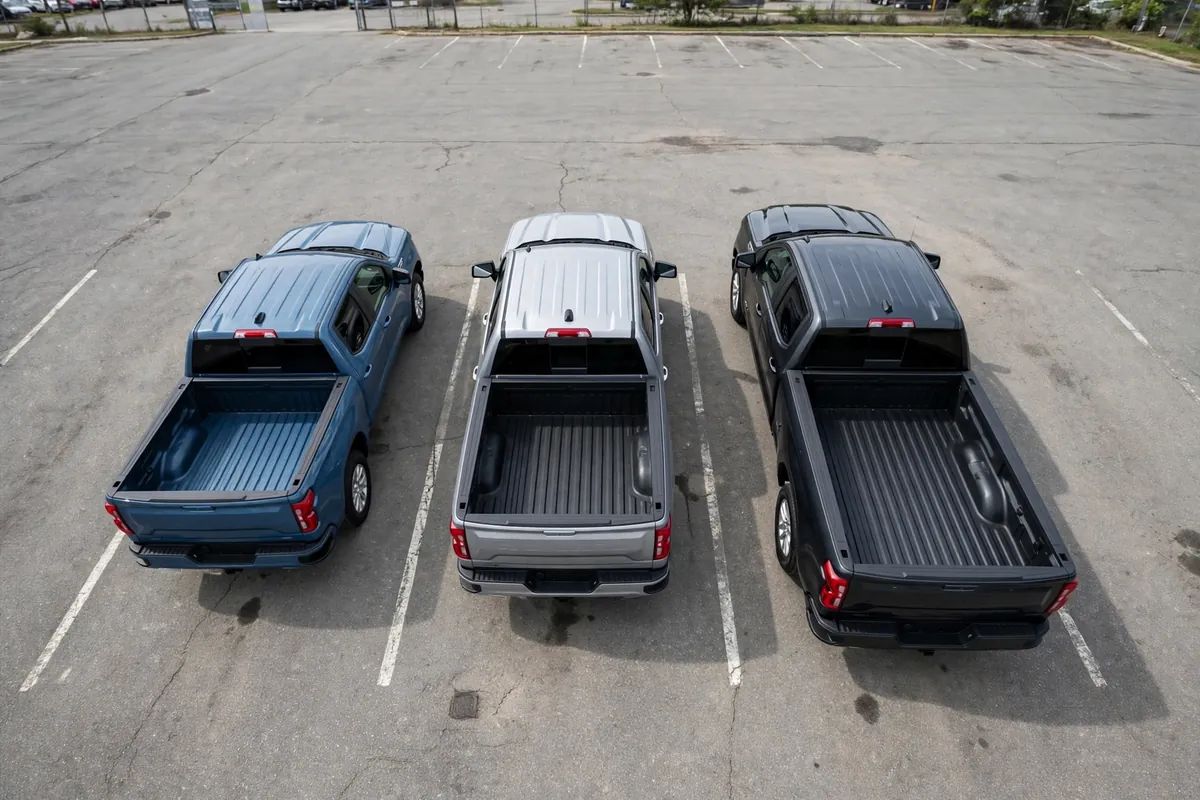
The words get thrown around, so let us pin them down. On a modern half-ton (F-150, Silverado 1500, Ram 1500, Tundra), the beds are 5.5 feet (short, standard with most crew cabs), 6.5 feet (standard), and 8 feet (long, usually regular or extended cab). On three-quarter-ton and one-ton trucks, it is the standard bed at around 6 feet 9 inches or the 8-foot long bed.
Here is the reality that shapes this whole decision: the crew cab short bed is what dealers stock, because it is what most truck buyers want. One commenter on a truck site estimated roughly nine out of ten F-150s leave the lot as crew cab short beds. Walk any dealer row and the ratio feels about right. Families want the back seat. Daily drivers want to fit in a parking space and a garage. The camper is an afterthought for most buyers, right up until it becomes the whole point.
That popularity creates the central tradeoff of this article. The most common truck configuration on the road has the least camper to choose from, and the least common configuration has the most.
If your truck has the 5.5-foot bed
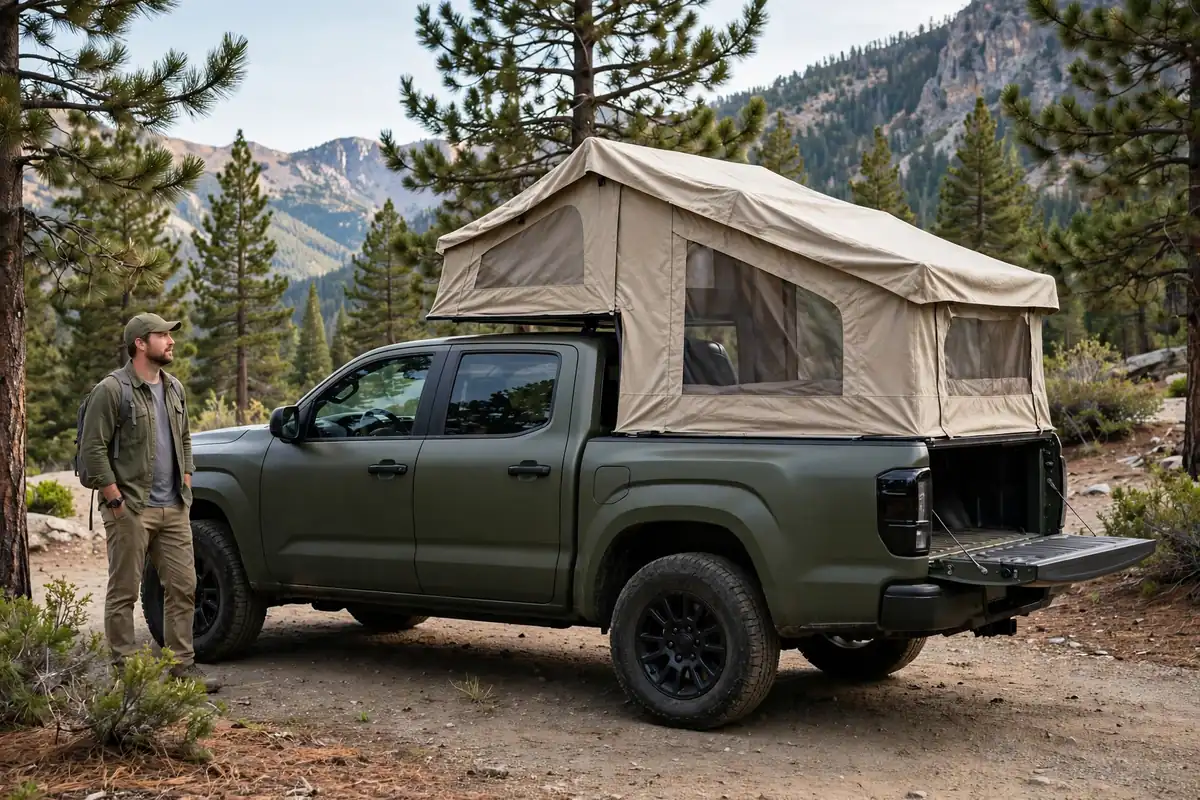
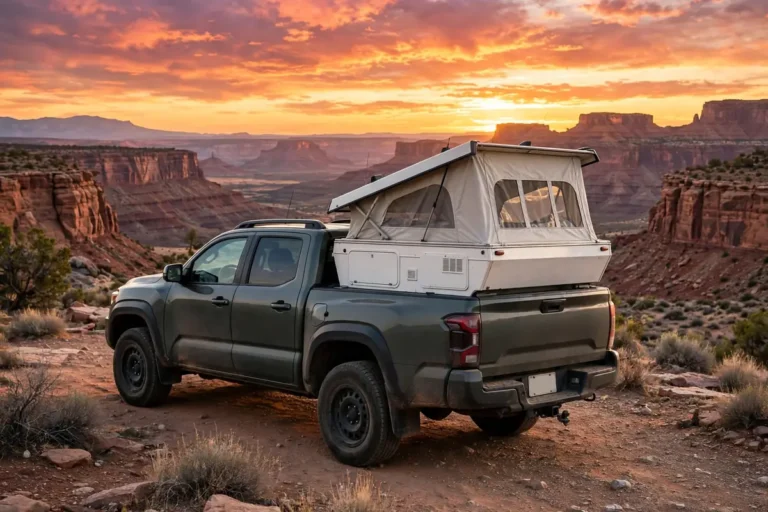
Already own the crew cab short bed, or set on one because it is your daily driver? You are in the biggest crowd on the road and the smallest corner of the camper catalog. Not a reason to panic, but a reason to be picky.
The campers that genuinely fit a 5.5-foot full-size bed are a short list. The best-documented is the Four Wheel Campers Raven, built specifically for 5-foot-5 to 5-foot-8 short beds at around 1,050 pounds dry. Four Wheel Campers publishes a full size guide matching each model to bed lengths worth bookmarking: Raven for the shortest full-size beds, Hawk for 6.5-foot beds, Grandby for 8-foot beds. Their Project M pop-up topper is the other clever answer for short beds. It mounts to the bed rails, starts around 375 to 400 pounds, and you keep your tailgate and full use of the bed. For a half-ton that is already payload-tight, that light weight matters enormously, and my F-150 truck camper payload guide goes deep on which half-ton configurations can actually carry a camper.
Wedge-style canopy campers are another strong short-bed answer, especially if you camp more than you glamp. I rounded up the best wedge canopy campers separately, and several are built with short beds in mind. If your short bed sits under a midsize truck like a Tacoma, the equation shifts toward lighter models, which my Toyota Tacoma truck camper guide covers in detail.
There is also the tailgate-down workaround, and it is more legitimate than it sounds. Outpost Campers states outright in their truck fitment guide that their 6.5-foot camper works on 5.5 and 5.7-foot short beds with the tailgate down or removed, and that they have owners doing exactly that. On the Wander the West forum, owners describe running longer campers tailgate-down for years, using the lowered tailgate as a step and a gear shelf. It works, but you lose the locking tailgate, and on some trucks a lowered tailgate blocks the spare tire winch.
Now the warning, because owners on the Good Sam forums have watched people learn it the hard way. Do not put a full-size 8-foot camper on a 5.5-foot bed and assume the tailgate will sort it out. In one forum thread, experienced owners walked through the math: a typical 8-foot camper’s balance point sits around 48 inches back from its front wall, while the rear axle on a 5.5-foot-bed truck sits near the front of the bed. That puts the center of gravity well behind the axle, and the rig in question was visibly hundreds of pounds over the truck’s payload and tire ratings. It might roll down the road. It will not handle an emergency lane change the way you need it to.
The 6.5-foot crew cab: where most camper buyers land
If the 5.5 is the people’s choice and the 8-footer is the camper’s choice, the 6.5-foot bed is the compromise most buyers land on in the short bed vs long bed truck camper debate. On a crew cab half-ton it is the standard bed, it fits in a surprising number of garages, and it is the bed length the camper industry designs around.
The Four Wheel Campers Hawk, the company’s best seller, is built for 6.5-foot beds at around 1,200 pounds dry. Outpost’s 6.5 model is designed so the tailgate closes on a 6.5-foot bed, which sounds like a small thing until you have lived with a tailgate you cannot shut: closing it means lockable storage along the bed sides, a built-in step on modern trucks, and a genuine little porch for muddy boots and morning coffee. Most hard-side floorplans with a dry bath are drawn around the 6.5-foot or 8-foot bed, with the 6.5 getting the deepest catalog.
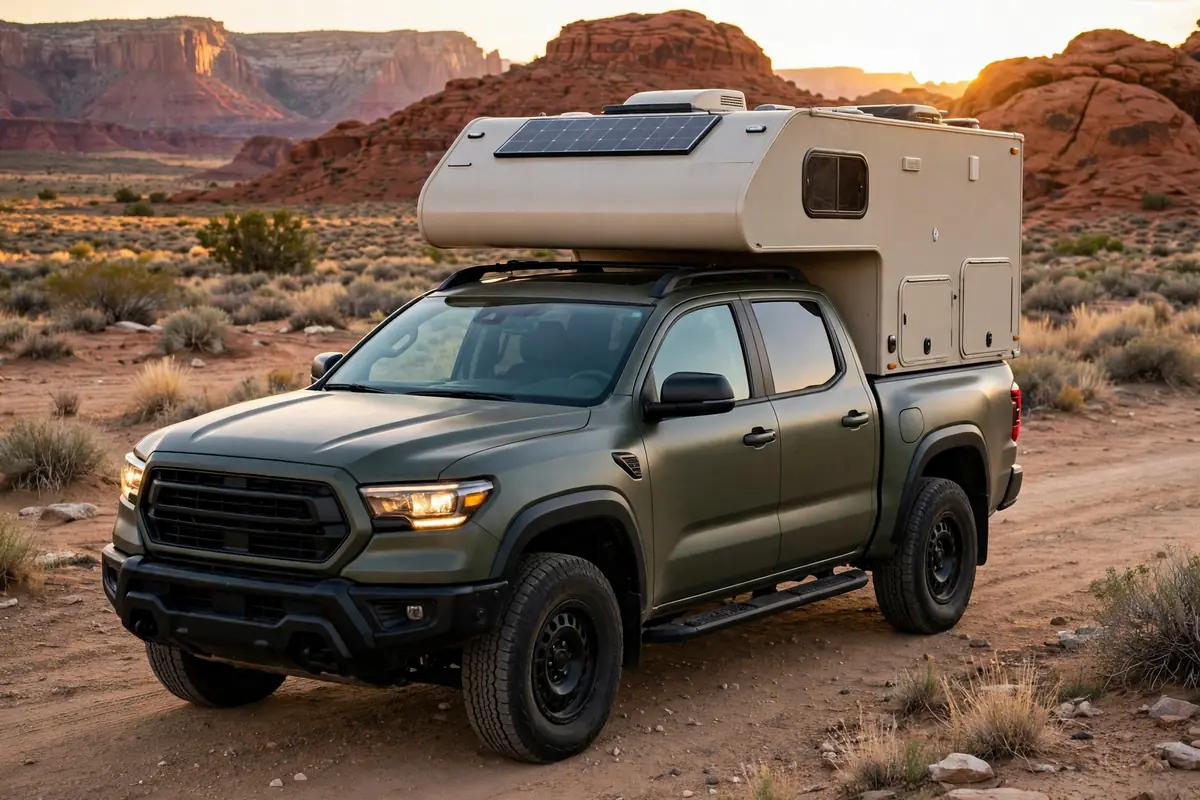
One more common question: a short-bed camper on a long-bed truck works fine, because the balance point lands even further ahead of the longer bed’s axle. The only cost is a gap between the cab and the camper nose. The reverse, long camper on a short truck, is what creates the dangerous behind-the-axle geometry. Direction matters.
One more 6.5-foot note: Four Wheel Campers itself says the 8-foot Grandby is a popular pick for 6.5-foot owners who want extra room and accept the overhang. That is a manufacturer blessing, not a dare. Run the center-of-gravity math yourself and be honest about the payload, because an extra foot of camper behind the axle is exactly where the balance point starts drifting rearward.
Why long-bed owners stop worrying
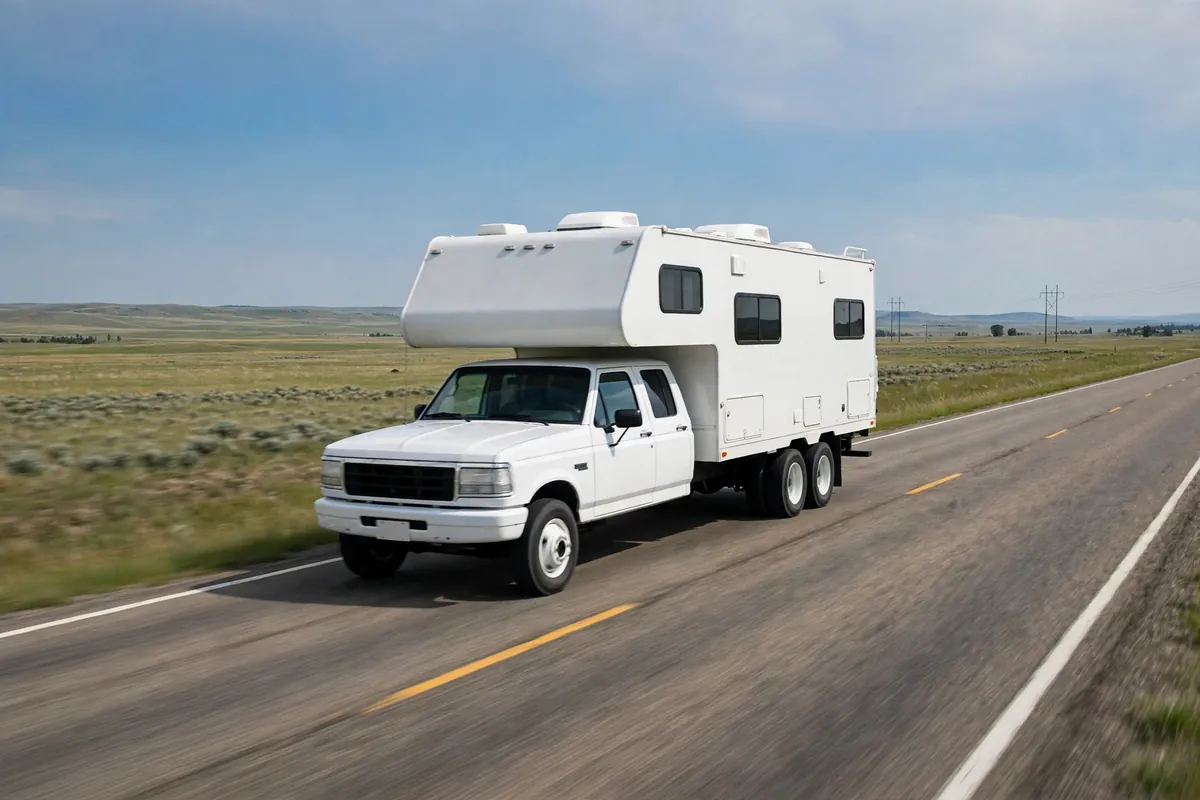
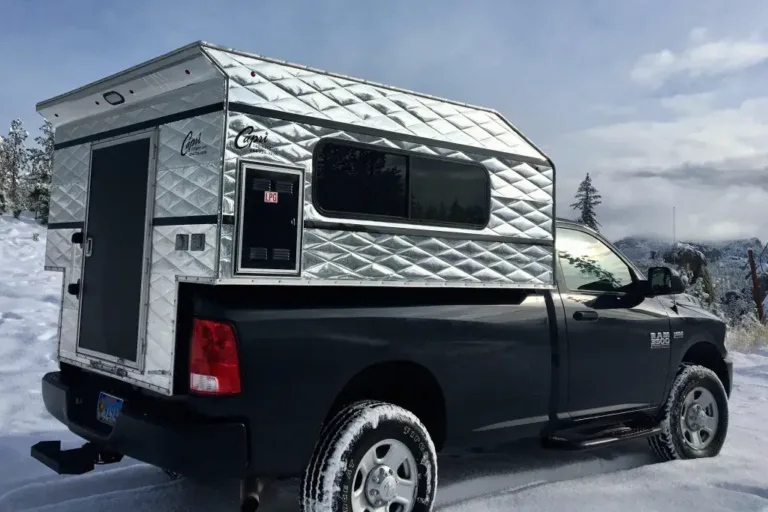
Everything about carrying a camper gets easier with eight feet of bed. The camper sits fully inside with the tailgate closed. The balance point lands well ahead of the rear axle without any creative measuring. The catalog opens all the way up: full dry baths, bigger fresh tanks, deeper slides, campers like the 8-foot Grandby that sit flush at exactly eight feet with the tailgate removed.
A longer wheelbase also tracks straighter in crosswinds and when big rigs blow past, with the weight between the axles instead of behind them. Double-duty setups, like towing a boat behind the camper, are simply more relaxed when the camper is not already hanging off a short bed.
The price is paid everywhere else in life. A crew cab long bed is around 22 feet of truck. Owners describe fighting tight parking lots, narrow city streets, and drive-throughs, and several say flatly they would not want one as a daily driver in the suburbs. It is a magnificent camper hauler and a mediocre grocery getter, so be honest about which job the truck does more often.
The regrets owners keep sharing
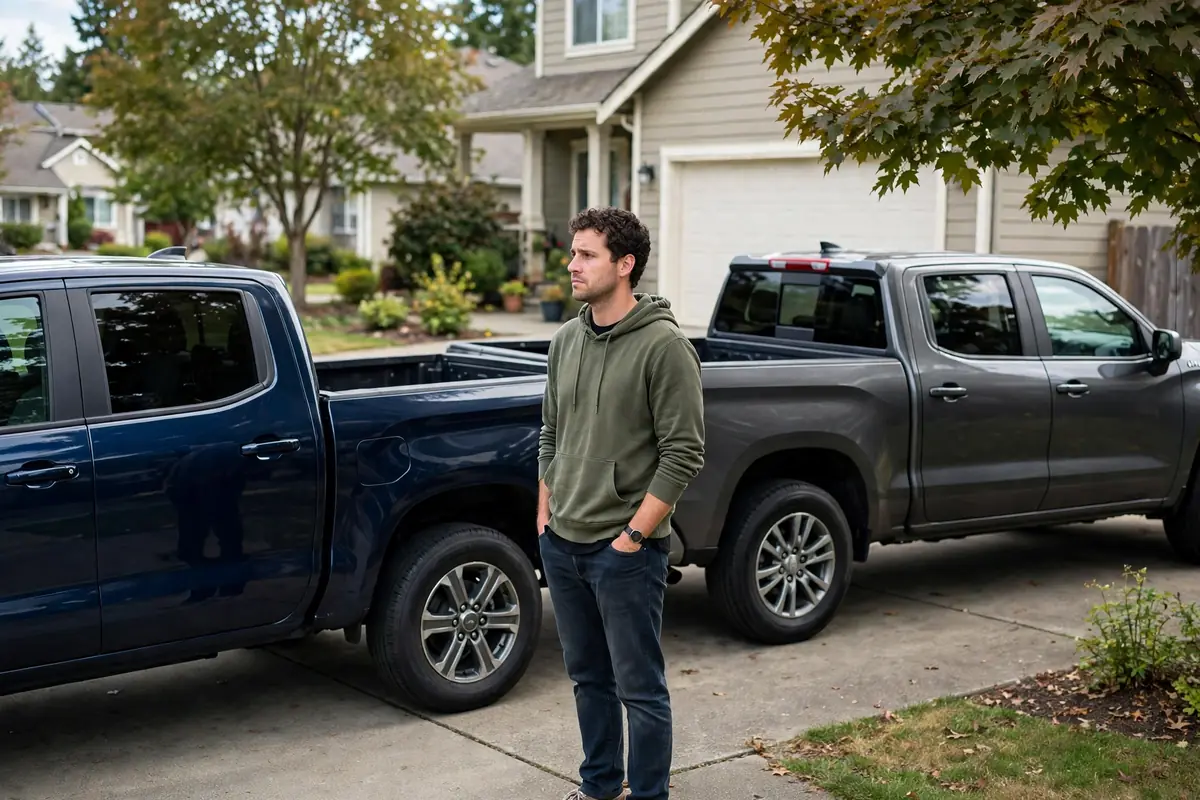
This is the section I wish someone had made me read before my first truck purchase. The same stories come up in every community, year after year.
The most common one goes like this. An owner on the iRV2 forums started with a stout short bed truck and an Arctic Fox with a slide. It worked, but it put even that capable truck at its limits. Then the wish list grew: more room, a side door, a dry bath. That required not just a long bed but a dually. He bought the bigger truck and carried the old short-bed camper on it for a couple of years, living with the cab gap, before finally upgrading the camper too. His story is the rule, not the exception: your idea of enough gets bigger with experience, and the truck you bought for your first camper becomes the truck that limits your second one.
The second regret is about the 5.5-foot bed specifically. On the Good Sam forums, an owner shopping for a camper to fit a 5.5-foot bed was told the blunt truth: campers built for that bed are a niche product in a niche market, and finding a used one is like finding a needle in a haystack. That cuts both ways. Buying new, your options are few. Buying used, fewer. And the same thread carried the warning I repeat to everyone: once the money changes hands, fixing a wrong-bed decision is very expensive. You cannot just list the truck on a forum and swap it over a weekend without taking a financial beating.
The third regret comes from the daily-driver crowd: the short bed that parks easily but only fits a short list of compromise campers, or the perfect long-bed rig that never leaves the driveway because commuting in it is miserable. There is no universally right answer, but there is a universally wrong process, which is buying the truck for today’s commute and hoping the camper sorts itself out later.
My buying framework: decide in this order

Here is the order of operations I recommend, after watching this decision play out across hundreds of forum threads and my own driveway.
First, pick your camper class before you pick your bed. Be honest about whether you are a long-weekend pop-up person or a months-on-the-road hard-side with a dry bath. Write down two or three actual models and pull their center-of-gravity numbers and dry weights from the manufacturer.
Second, match the bed to those models with the balance-point check above. If your dream camper needs eight feet, you need eight feet.
Third, run the payload math with real numbers. Dry weight is a fantasy; add water, propane, batteries, food, gear, and every passenger, then compare against the door-sticker payload of the exact truck configuration you are considering, not the brochure maximum. My truck camper payload calculator guide walks through this, and it is the step most buyers skip.
Fourth, think five years out. Will there be kids, a bigger boat, longer trips, a move to full-timing? The iRV2 owner’s story above is what happens when the truck is bought for year one and the camper wishlist arrives in year three. If there is any chance your ambitions grow, the longer bed is the cheaper insurance.
Fifth, test daily life. Park the exact configuration at a grocery store on a Saturday and pull into your garage. If you cannot live with the truck 300 days a year, the 65 days of perfect camping will not make up for it.
And the tiebreaker I give everyone: when you are torn between two beds, choose based on the camper you will own second, not the one you own first. Almost nobody’s second camper is smaller than their first.
Frequently asked questions
Can I put a long bed camper on a short bed truck?
Physically, sometimes. Safely, usually not. A long-bed camper’s center of gravity is designed to sit ahead of a long bed’s rear axle, and moving it to a short bed pushes that balance point rearward, often behind the axle. That unloads the front wheels and creates the steering, braking, and frame-stress problems described above. Owners on the forums are blunt about this one: a long bed camper should not be carried on a short bed truck.
Can I put a short bed camper on a long bed truck?
Yes. This direction is safe because a short-bed camper’s balance point sits ahead of a short bed’s axle, which puts it even further ahead on a long bed. You will have a gap between the cab and the camper nose, but the handling is fine. This is exactly what owners do when they upgrade the truck before the camper.
Is a 5.5-foot bed enough for a truck camper?
Enough for the right camper, not for every camper. The Four Wheel Campers Raven is designed for 5.5 to 5.8-foot beds, the Project M topper fits them at under 400 pounds, and several wedge canopy campers suit short beds. What you will not find is a full-size hard-side camper with a dry bath built for that bed, and the used market for 5.5-foot campers is thin. Check the center-of-gravity math for your exact truck before committing.
Do I need a long bed for a truck camper with a bathroom?
In practice, yes for a true dry bath. The floorplans with separate showers are overwhelmingly drawn for 6.5-foot and 8-foot beds. Short-bed campers make do with wet baths, cassette toilets, or outdoor showers. If a real bathroom is non-negotiable, that single requirement answers the bed question for you.
Which bed length is better for resale?
It depends which resale you mean. Short-bed crew cabs are the highest-volume trucks on the used market, so the truck itself is easy to sell. But long-bed trucks are scarcer and sought after by camper and fifth-wheel buyers, so a clean long bed can command a premium from exactly the buyer you want. Treat resale as a tiebreaker, not the decision driver.
Does bed length affect payload?
Slightly, in the short bed’s favor on paper. A shorter bed means a lighter truck, and payload is the gross vehicle weight rating minus the truck’s own weight, so the short bed version usually has a bit more rated payload. The difference is small, often around a hundred pounds, and it does not make up for a camper whose balance point sits behind the axle. Payload rating and weight placement are two separate problems.