How to Sell a Used Truck Camper for the Best Price
If you want to know how to sell a used truck camper for a good price without getting scammed, start with the buyer’s worries. A serious buyer wants to know whether it fits their truck, whether it has leaked, whether the title is clean, and whether handing thousands of dollars to a stranger is safe. Answer those clearly, price it like a real sale rather than a wish, and you will get better offers and far fewer time-wasters.
When to sell, and how
Spring is usually your friend: buyers planning summer trips pay more for a camper they can use next weekend than for the same camper parked through winter. If you can choose, list in late spring or early summer, clean, dry, and ready to show.
A private sale usually brings the highest price, but you do the photos, messages, showings, and paperwork. A dealer buyout or consignment is faster, but you pay in a lower offer or commission. A lien, major damage, or missing title changes that trade-off.
Before you list, gather title or lien information, registration, manuals, service receipts, and upgrades with dates. A folder of records tells a buyer the camper was looked after — see our truck camper maintenance schedule for what buyers expect done.
Price it like a sale, not a hope
Start with the book, then check the real market
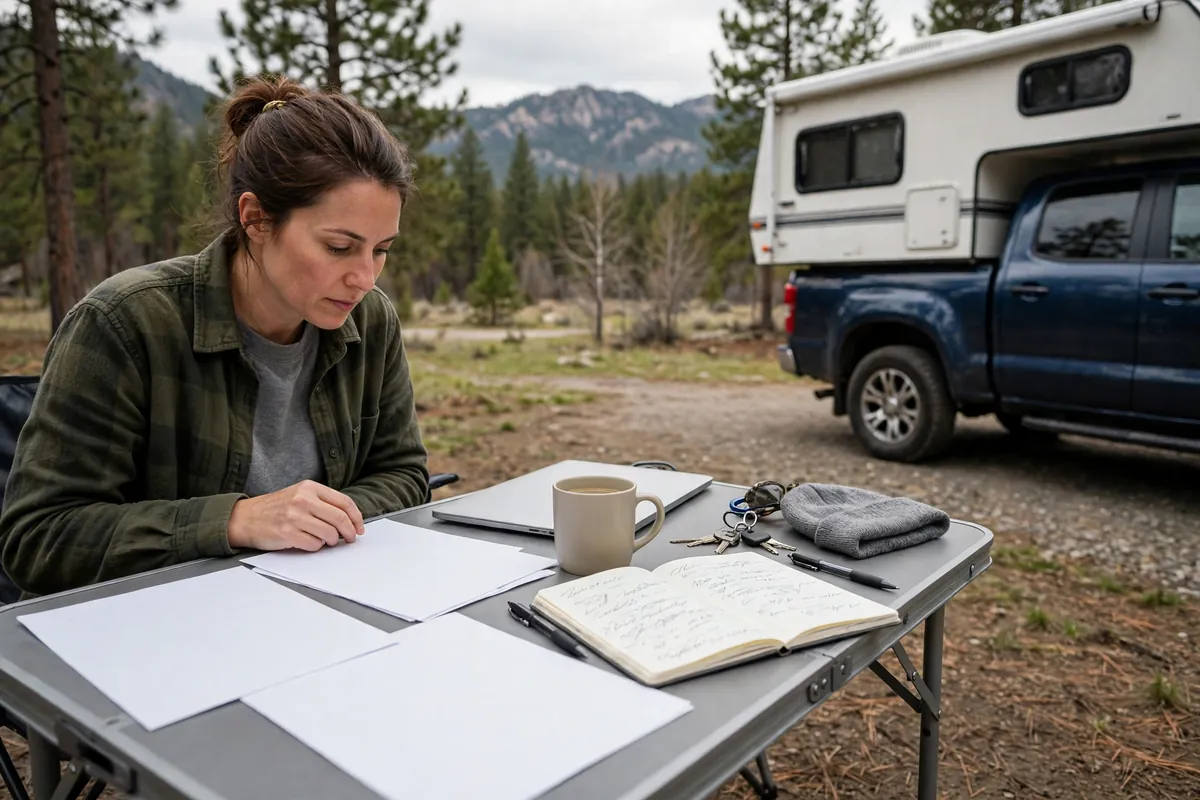
The J.D. Power RV values guide — formerly NADA Guides — is the closest thing the RV world has to a blue book, and banks and dealers still use it. Run your exact year, make, and model, and note low retail (heavy wear or deferred maintenance) and average retail (clean, normal condition).
Then check what similar campers actually sold for, not just what people are asking. A camper listed at $22,000 that has sat for four months is not a $22,000 camper. Compare at least five similar units — same age, floor plan, slide or no slide, and condition — in your region, using completed or recently sold listings where you can find them.
Owners on RV forums make the same point in plainer language: the book is a starting point, not a verdict. It does not know your roof was resealed last fall, and it does not care what you paid. Buyers pay for condition and fit, not memories.
Three numbers before you write the ad
- Your walk-away price — the lowest amount you will accept. Do not publish this.
- Your realistic target — what similar campers in similar condition have actually sold for.
- Your asking price — usually a little above your target, so there is room to negotiate.
Sellers on Quora describe the same habit: they ask a little more than they want because so many buyers open low. A cushion of roughly 8 to 12 percent is common, but if your target is $15,000 and you list at $19,000, you are filtering out serious buyers, not leaving room to negotiate. And price honestly for known problems — water damage, a soft floor, or a dead furnace costs you far more in a buyer’s mind than the repair costs you, because the buyer is pricing in risk.
The weight question can make or break the sale
Truck campers live and die on payload, so do not copy the brochure dry weight and call it done. Owners on forums keep warning that sticker weight usually leaves out options, water, propane, batteries, and gear, and a loaded camper can easily run 1,000 pounds over its dry figure. That is how a sale falls apart — a buyer does the math and realizes their truck cannot safely carry your camper.
List the real numbers: dry weight, your honest as-equipped estimate, bed length, and truck class needed. If you have weighed the rig, share that figure; if not, say so. A half-ton buyer will thank you for saving a wasted trip, and a dually buyer will trust you for not overselling the fit.
Get it ready — and fix only what pays

You do not need to remodel it — just make it feel cared for. Deep-clean inside and out, empty every cabinet, clean fridge, shower, and toilet, and air it out. A damp-smelling camper loses buyers before they check a single system.
Then fix small things that make a big impression: dead bulbs, a sticky latch, a torn screen, a dripping faucet, cracked caulk. Charge batteries, have propane for a demonstration, and run furnace, air conditioner, water pump, fridge, and stove before anyone arrives.
Do not spend thousands chasing perfection. A mattress, batteries, or reseal can be worth it on a strong camper; a full cosmetic renovation on an older, low-value camper rarely pays back. If something is broken and you are not fixing it, disclose it and price for it. Show the camper on and off the truck if you can do so safely, so buyers see the underside, tie-down points, and how it sits on its jacks.
Photos and listing copy that actually sell
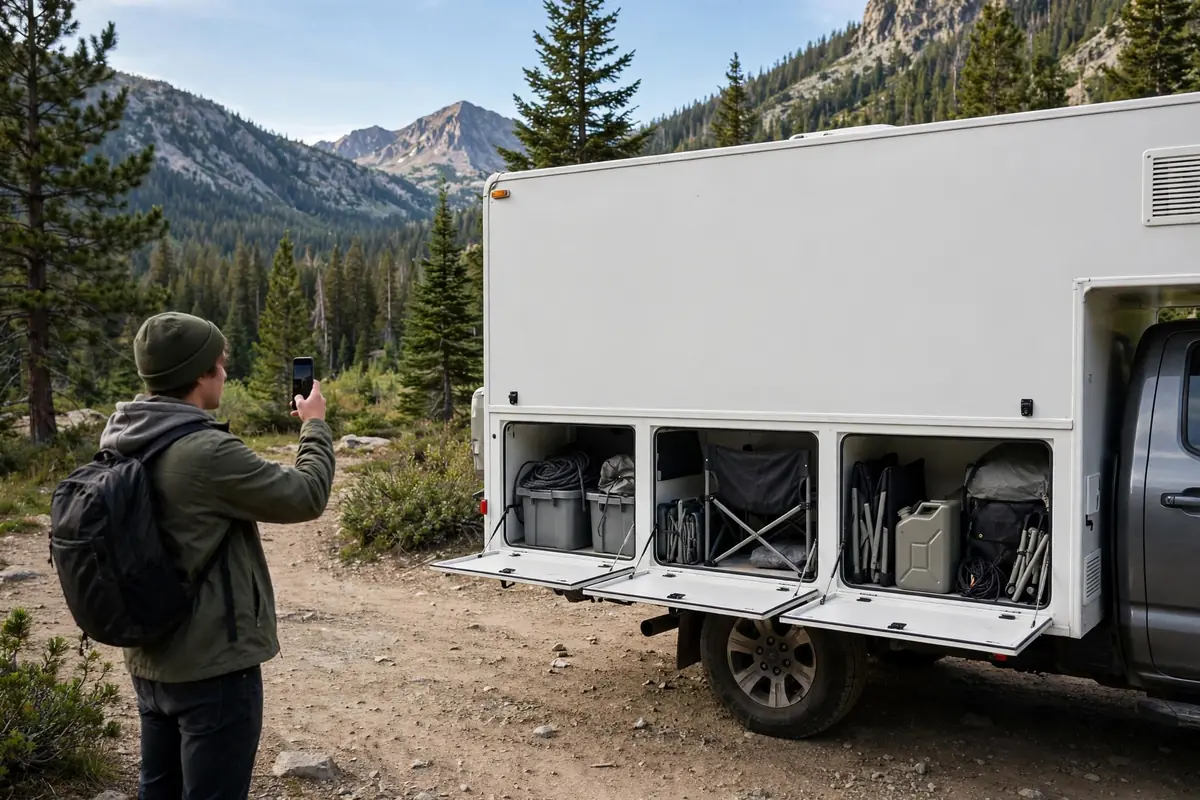
Most buyers decide whether to message you from the photos alone. Shoot in daylight, staged like someone could camp tonight: bed made, table clear, curtains open, no clutter. Take 30 to 50 photos — all exterior sides, roof if safe, underside and jacks, every compartment open, kitchen, bathroom, bed, and dinette from several angles, control panel, appliances, tires, and any damage, photographed plainly.
Owners who have sold this way describe photos as a buyer’s checklist. One seller quoted in Truck Camper Magazine took 48 photos of everything he would inspect as a buyer, and the buyer used them to confirm the camper before travelling. Aim for that standard.
Your listing copy should read like a straight answer, not a sales pitch. Lead with year, make, model, floor plan, bed length, weight, slide or no slide, and location. Then add condition, upgrades, recent work, inclusions (jacks, tie-downs, mattress, solar, batteries), and honest negatives in one short paragraph. “Small soft spot repaired near the rear vent in 2024, no leaks since” will outsell “perfect condition!!!” that falls apart on inspection.
Structure it simply: headline, what it is and who it fits, specifications and condition, inclusions and known issues, then location and payment terms. Skip “no lowballers” — it makes you sound difficult before the first message.
If a buyer wants their own detailed inspection, welcome it. Our used truck camper inspection checklist covers the same ground from the buyer’s side, and welcoming it is one of the fastest ways to close at your price.
Where to list it
You do not need to be everywhere. You need to be where truck-camper buyers look, and to remove every listing the day it sells.
RV Trader and RVT.com are national, buyer-intent marketplaces. They cost money, but reach shoppers who will travel for the right unit — best for mid-priced and higher-priced campers.
Facebook Marketplace and owner groups are free and local, and move lower-priced campers quickly, at the cost of more messages, no-shows, and low offers. Keep screening firm, and never let a free listing push you into a rushed payment.
Craigslist still works for cheaper or older campers, with the same screening work.
Specialist forums and brand groups reach a smaller, more knowledgeable audience, and a photo-heavy listing there can sell a niche camper fast.
Dealers and consignment are the hands-off route. A buyout is fast but lower; consignment usually costs around 10 to 15 percent plus fees. Get the full breakdown in writing first, and read our guide to truck camper dealer red flags before signing.
Showings: screen first, then make it easy
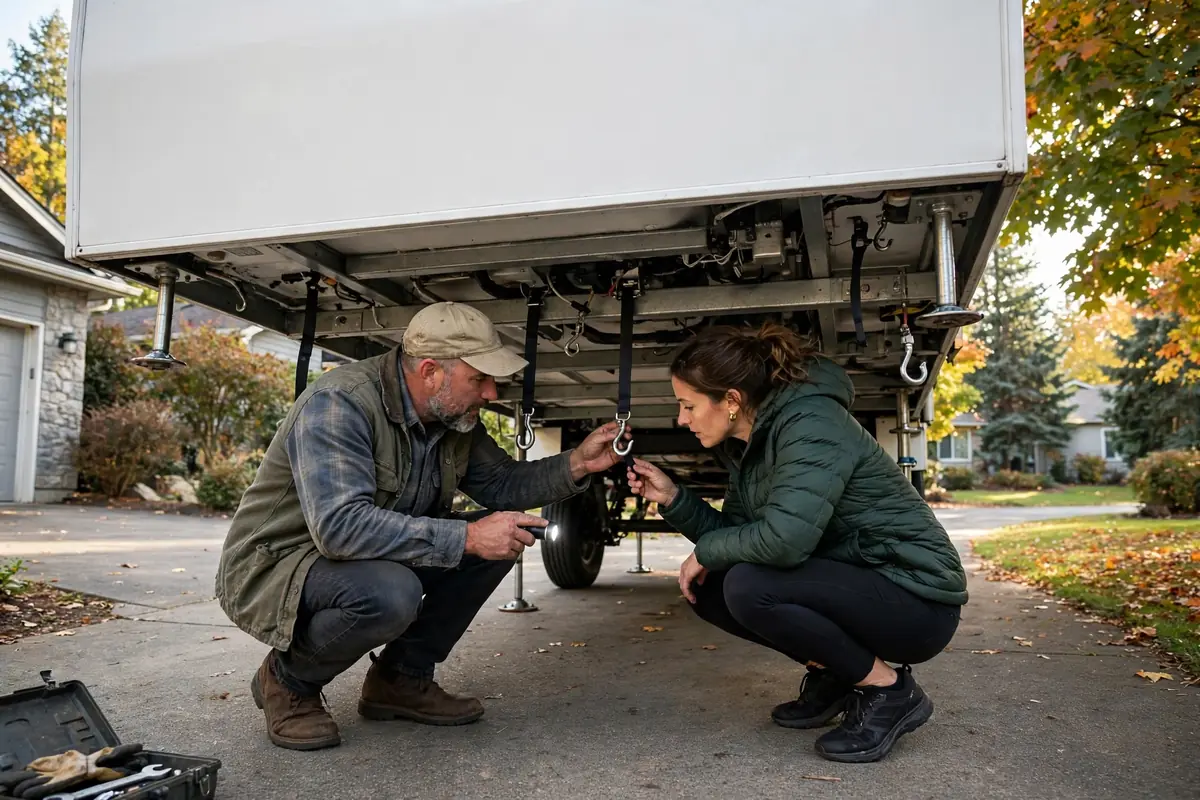
You do not owe every messenger a showing. Ask first: What truck and payload? What bed length? When can you come in person? How will you pay? A buyer who cannot answer the truck question, will not talk on the phone, or wants shipment sight unseen is not your buyer yet.
For real showings, meet in daylight, preferably with someone else at home, and keep the camper powered up. Walk the buyer through jacks, electrical, water, heat, cooking, and storage, and let them open cabinets, run the pump, and check roof and underside themselves. Do not hover or rush them.
Be ready for loading: most buyers need help. Talk through jack height, bed clearance, and tie-down order, agree who brings a bed mat, tie-downs, and wiring adapter, and put the handover in writing — price terms, inclusions, and loading day.
Scams and deposit safety: the part you cannot skip

This is where sellers lose money. Owners on RV forums report the same story repeatedly: a “buyer” agrees full price immediately, cannot meet in person, and wants to send a cashier’s check — often for more than the price — with an agent to collect the camper. The seller is asked to wire back the extra for “shipping.” Days later the check bounces, the camper is gone, and the seller owes the bank the overpayment.
Treat these as hard rules:
- Never accept an overpayment. If a check arrives for more than the price, do not deposit it or send back the difference. That is the scam.
- Never release the camper on an unverified check. “Available” funds are not cleared funds. Call the issuing bank on a number you look up yourself before handing over keys or title.
- Prefer a bank wire or in-person bank transaction. Verify and deposit funds on the spot, then sign over the title.
- Do not use an escrow service the buyer picks. If escrow makes sense, choose and verify a licensed, independent provider yourself.
- Do not pay a buyer’s shipper, agent, or courier. You are the seller; no deposit, shipping, or “holding” fee should flow from you.
- Keep payment apps small. They can work for a written holding deposit, not for receiving $20,000, and many transfers cannot be reversed.
- Do not email bank logins, account numbers, or ID copies. A title photo with sensitive numbers covered, plus an in-person meeting, is enough.
Deposits need written rules: a small, non-refundable holding deposit — often a few hundred dollars — stating price, payment deadline, and what happens if either side backs out. Do not take a large deposit from a stranger, or hold the camper indefinitely. If the deadline passes, it goes back on the market. Real buyers accept a bank meeting, a phone call, and a written bill of sale; scammers push speed and irreversible payment. Report attempts to the platform and the FTC at ReportFraud.ftc.gov, and keep screenshots.
Title, lien, and paperwork — get this right before you list
A clean, ready title is worth money. If yours is lost, apply for a duplicate from your state’s motor vehicle agency before you list — it is usually a straightforward application with your ID and vehicle identification number, and it removes a major reason buyers walk away.
With no lien, the paperwork is simple: a signed title, plus a bill of sale with both names and addresses, year, make, model, vehicle identification number, price, date, both signatures, and an “as-is” note if that is your agreement. Keep copies, remove your plates if your state requires it, and file a notice of sale or release of liability if your state offers one.
Selling a camper with a lien
You can sell a camper you still owe money on, but you cannot hand over a clean title until the loan is paid off. Call your lender first for a written payoff quote, its expiry, whether the title is electronic or paper, and how they want a private sale handled. Some can close at a local branch; others take days or weeks to release the title.
The safest structure is simple: the buyer’s payment goes directly to the lender for the payoff amount, and any excess goes to you. Do this at the bank if you can, with a loan officer present, and give the buyer a signed bill of sale, the lender’s written payoff confirmation, and a dated title-delivery promise. Keep insurance on the camper until the lien is released.
If you owe more than it will sell for, close the gap first — cash, a small personal loan, or paying down principal. You cannot sell it, keep the money, and leave the buyer stuck with your loan. If the buyer is financing, expect their lender to join the payoff and title transfer; build that timeline into your deposit agreement. Taxes, registration, and notarization vary by state, so check your state’s motor vehicle agency website before closing.
Showing, delivery, and the handover
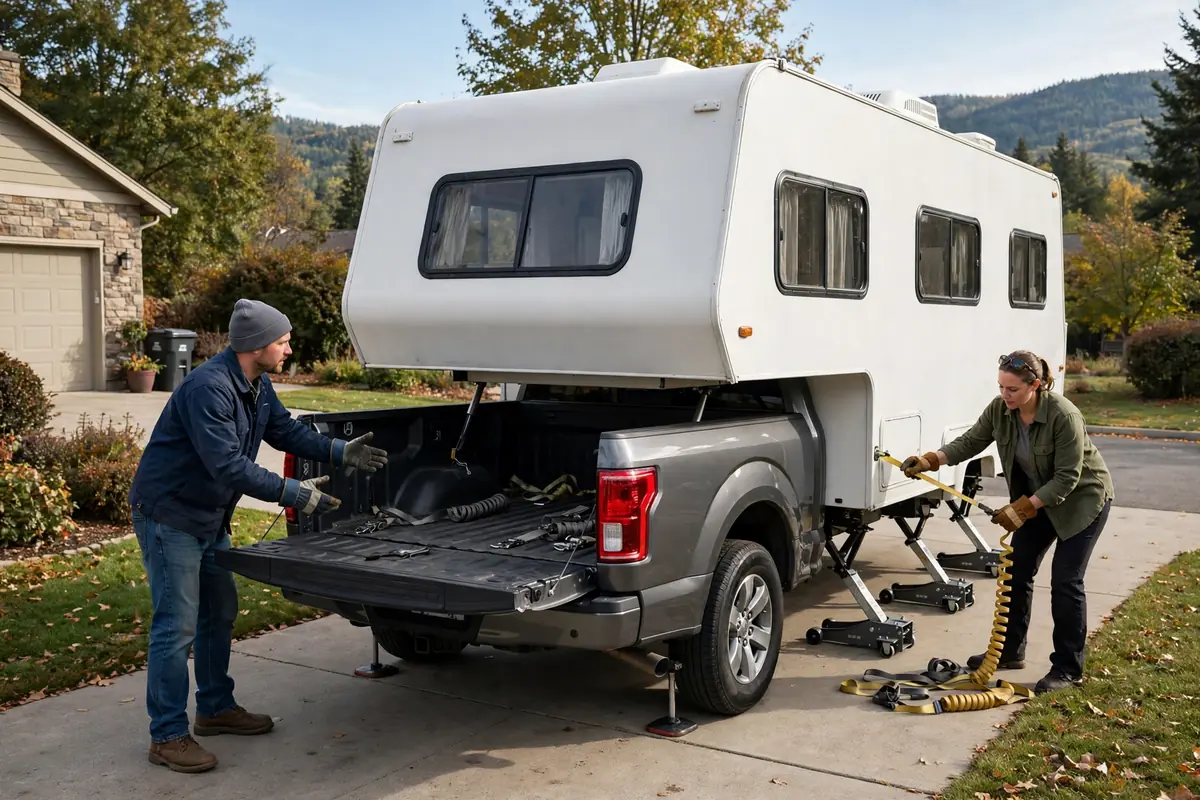
Most sales end with the buyer driving away with the camper on their truck. Confirm fit once more before loading — bed length, cab clearance, tie-downs, electrical plug — load slowly, and check it sits level, tie-downs are tight, and lights work before anyone leaves.
If the buyer cannot collect in person, be very careful. A legitimate distant buyer will travel to inspect, send a trusted person, or hire an independent inspector, and pay through a verified bank method — not a stranger’s shipper and a check. For any third-party pickup, verify that person’s identity and keep the bill of sale and title transfer in your hands until funds are confirmed.
Once done, adjust your insurance, remove toll tags, personal items, and documents from every compartment — including hidden ones under beds — keep copies of title, bill of sale, and payoff letter, and file any release-of-liability form promptly. Our truck camper insurance guide covers drive-home cover.
Frequently asked questions
How do I know what my used truck camper is really worth? Start with the J.D. Power RV values guide, then adjust using at least five similar campers that actually sold — not just listed — in your region.
Is it better to sell privately or to a dealer? Private sale usually brings the highest price but takes more work. A dealer buyout is faster but usually lower; consignment sits in between, often around 10 to 15 percent plus fees.
Can I sell a truck camper if I still have a loan on it? Yes, but the loan must be paid off before a clean title can transfer. Get a written payoff quote, route the buyer’s payment directly to the lender where possible, and give the buyer a signed bill of sale, payoff confirmation, and a dated title-delivery promise.
What is the safest way to get paid? A bank-to-bank wire or an in-person bank transaction, with funds verified before you sign over the title. Avoid overpayments, unverified cashier’s checks, buyer-chosen escrow links, and large peer-to-peer app payments.
Should I let a buyer inspect the camper? Yes — a careful buyer is more likely to pay your price.
What if a buyer offers full price but cannot meet in person? Be cautious — full price plus no meeting plus a check and a shipper is a classic scam pattern. Insist on a phone call, verified bank payment, and an in-person or verifiable independent inspection, or walk away.
Selling well is not about being a salesperson. It is about being the seller you would want to buy from: clear on price, honest about condition, precise about weight and fit, careful with money, and tidy with paperwork.