Truck Camping: How to Start? (2026 Beginner’s Guide)
Truck camping looks simple from the outside: a camper slides into the bed of a pickup, and suddenly your truck is also your hotel room. And honestly, that simplicity is the whole appeal. No trailer to hitch, no tow vehicle math beyond one number, and a rig that can still squeeze into a grocery store parking lot. If you want to learn how to start truck camping without the expensive mistakes, this is where to begin.
But ask around in any truck camper community and you will hear the same refrain from experienced owners: the beginners who struggle are almost never struggling with camping. They are struggling with the three things nobody explained before they bought — payload, realistic costs, and the unglamorous setup work. Get those three right and truck camping is one of the easiest, cheapest ways to travel. Get them wrong and your first season becomes an expensive education.
This guide shows you how to start truck camping the right way: how it actually works, what it really costs in 2026, and the seven things to sort before your first trip.
How Truck Camping Actually Works
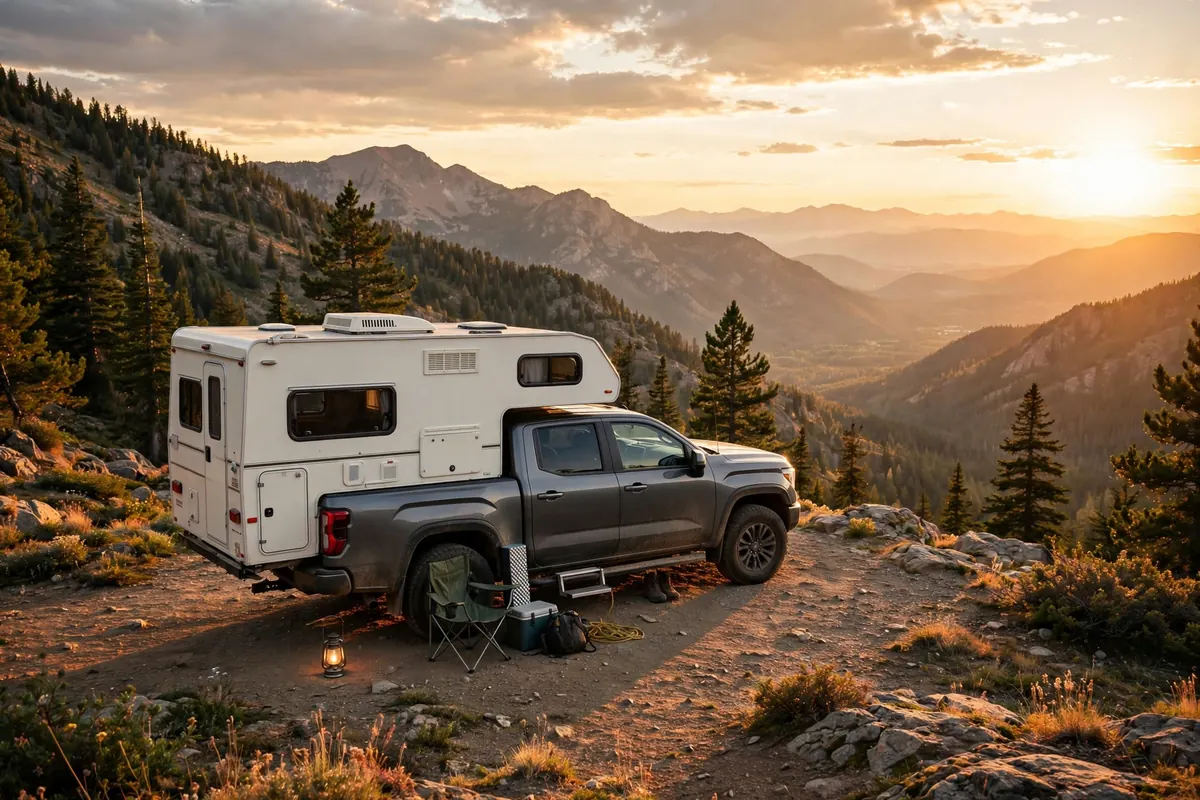
A truck camper is a self-contained living unit that slides into the bed of a pickup truck and is secured with tie-downs. When you arrive at camp, you lower the camper onto its jacks, and your truck is free to drive around. When it is time to leave, you back under it, raise the jacks, and drive away with your house in the bed.
That removability is the defining advantage over every other RV type. A travel trailer needs a tow vehicle rated to pull it. A motorhome is a second vehicle to insure and maintain. A truck camper turns the pickup many people already own into an RV, then gives the truck back on Monday morning.
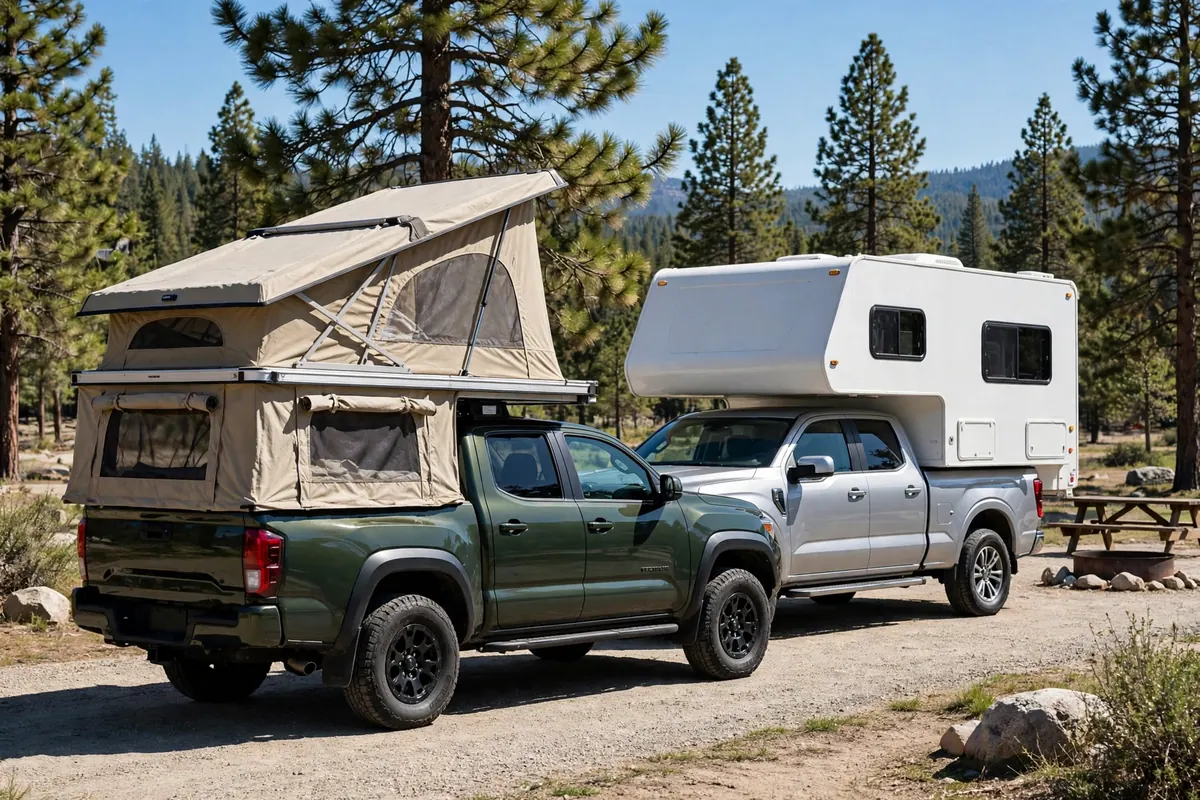
The Three Types of Truck Campers
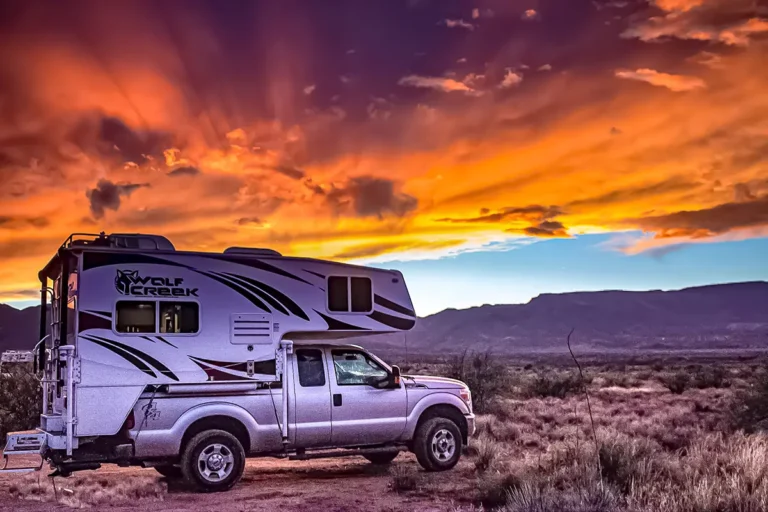
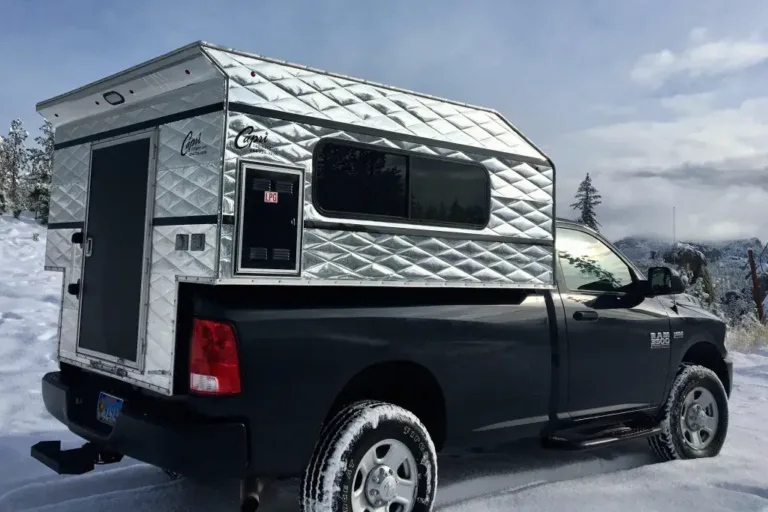
Hard-side slide-ins are the classic image: rigid walls, a cab-over bed hanging over the truck’s cab, and full amenities — kitchen, bathroom, furnace, air conditioning. They are the heaviest option, typically requiring a three-quarter-ton or one-ton truck, and the most expensive. If you want to camp in winter or live in the camper for months, this is the category.
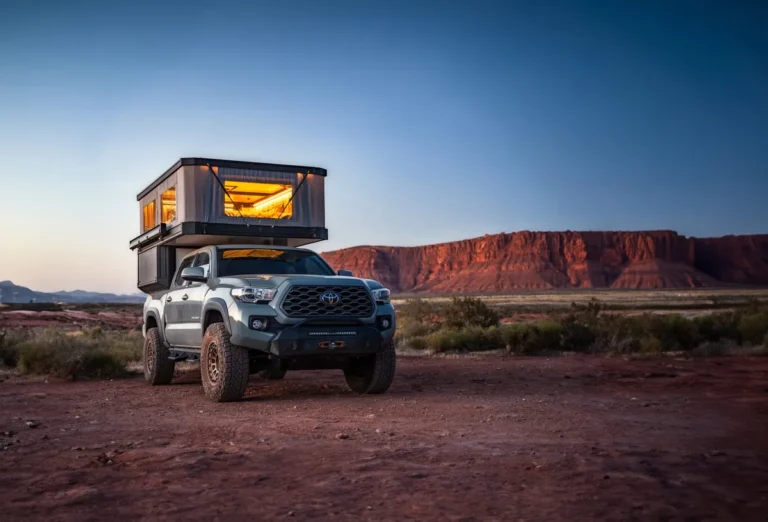
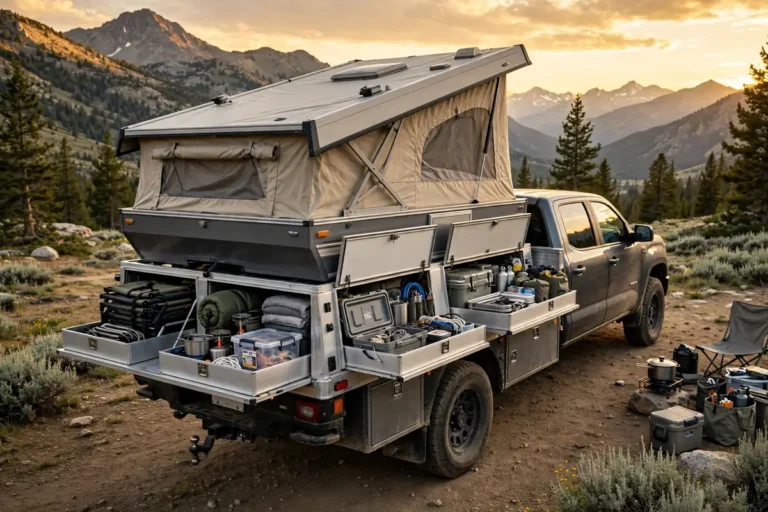
Pop-up slide-ins have soft canvas or composite walls that collapse down for travel and pop up at camp. They weigh far less than hard-sides, which means half-ton trucks can carry many of them, and the lower travel profile means better fuel economy and less wind sway. The trade-off is less insulation and a simpler interior.
Wedge campers and shells are the minimalist end: a lightweight wedge or canopy that turns the truck bed into a sleeping platform, sometimes with a small kitchen. Some weigh under 500 pounds and can ride on midsize trucks. They are the cheapest entry point and the favorite of overlanders, but you are camping, not RVing — expect a bed, storage, and not much else.
The One Number That Rules Everything: Payload
Every truck has a payload rating printed on the yellow sticker inside the driver’s door jamb. It reads something like “Occupants and cargo should not exceed 1,450 lbs.” That number — not the tow rating in the brochure — is the entire ballgame in truck camping.
Here is the math that surprises nearly every beginner. A half-ton truck with a 1,450-pound payload rating sounds like it can carry a 1,200-pound pop-up camper with room to spare. But payload must also cover you, your passengers, the dog, the cooler, the toolbox, the water in the tanks (8.3 pounds per gallon), and the tie-down hardware itself. Owners on RV forums report the same discovery over and over: by the time real humans and real gear are aboard, a half-ton’s payload can be essentially gone before the camper is even loaded.
The practical rule experienced owners repeat is to leave a 10 to 30 percent buffer under your payload rating, not to ride the limit. A camper that technically fits on paper but leaves you zero margin will drive poorly, wear the truck faster, and leave you white-knuckling every mountain pass. Our truck camper payload calculator guide walks through the exact math, and the free payload calculator tool does it for you in under a minute.
One more thing the forums are blunt about: manufacturer “fits your truck” claims are marketing. Advertised dry weights never include water, propane, batteries, or your belongings. Always work from the camper’s loaded weight, and if you want certainty, weigh the whole rig at a certified truck scale before your first big trip — a step Camping World’s towing setup guide also recommends as the most reliable way to confirm your real-world weights.
What It Really Costs in 2026
The most common cost misconception among beginners is underestimating the total by looking only at the camper’s sticker price. The honest answer has three parts: the camper, the truck readiness, and the setup gear.
The Camper Itself
Based on current 2026 market listings, here are realistic ranges:
- Used pop-up or shell campers: roughly $8,000 to $20,000 for units in decent shape. Older hard-sides from the late 2000s trade around $10,000 to $18,000.
- Used hard-side campers (5–10 years old): roughly $24,000 to $55,000 depending on brand and condition. Premium brands like Lance and Northern Lite hold value; a used 2022 Lance 1172 recently listed near $55,000.
- New campers: entry-level new units start around $15,000 to $25,000 (brands like Palomino Real-Lite and Sunset Park). Mid-range new hard-sides run $35,000 to $65,000. Premium four-season flagships from Northern Lite, Host, or Eagle Cap list from $65,000 up past $87,000.
Two cost truths the community hammers home. First, new campers depreciate hard — expect 20 to 30 percent gone in the first year or two, which is why experienced owners overwhelmingly tell beginners to buy used first. Second, pound for pound, truck campers are among the most expensive RVs you can buy new, because you are paying for a lot of engineering in a small footprint. Evaluate carefully whether a simpler used unit does the job before financing a flagship.
Getting the Truck Ready
If you already own a suitable pickup, the mandatory hardware is refreshingly short: frame-mounted tie-downs and turnbuckles (typically $400 to $800 installed), a bed mat to protect the bed and stop the camper sliding ($100 to $200), and the electrical umbilical so the truck charges the camper batteries while you drive ($150 to $300 if not pre-wired). That is genuinely it for day one.
What you do not need on day one is the suspension catalog. Airbags, upgraded shocks, sway bars, and helper springs are the most common premature purchase in truck camping — a pattern documented in Truck Camper Adventure’s top 10 truck camper pitfalls. The consistent advice from long-time owners is to load the camper, drive it, and fix only the problems you actually feel — porpoising over bumps, rear sag, or body sway in crosswinds. Many rigs need nothing at all.
Setup Gear and First-Season Extras
Budget another $500 to $1,500 for the starter kit: leveling blocks, wheel chocks, a drinking-water hose plus a separate utility hose, a water pressure regulator, a surge protector, basic tools, and camp essentials. If you plan to boondock, a portable power station ($500 to $2,000 depending on capacity) is the single most transformative upgrade for most beginners.
All in, a realistic first-year budget for a beginner buying used runs $12,000 to $25,000 all-in, while a new mid-range setup with a truck you already own lands around $40,000 to $70,000. The truck itself is the wildcard — but here is the veteran perspective worth remembering: several experienced owners describe the truck as the sacrificial item and the camper as the keeper, since a good camper transfers from truck to truck for decades.

7 Things to Sort Before Your First Trip
1. Know Your Real Payload Number
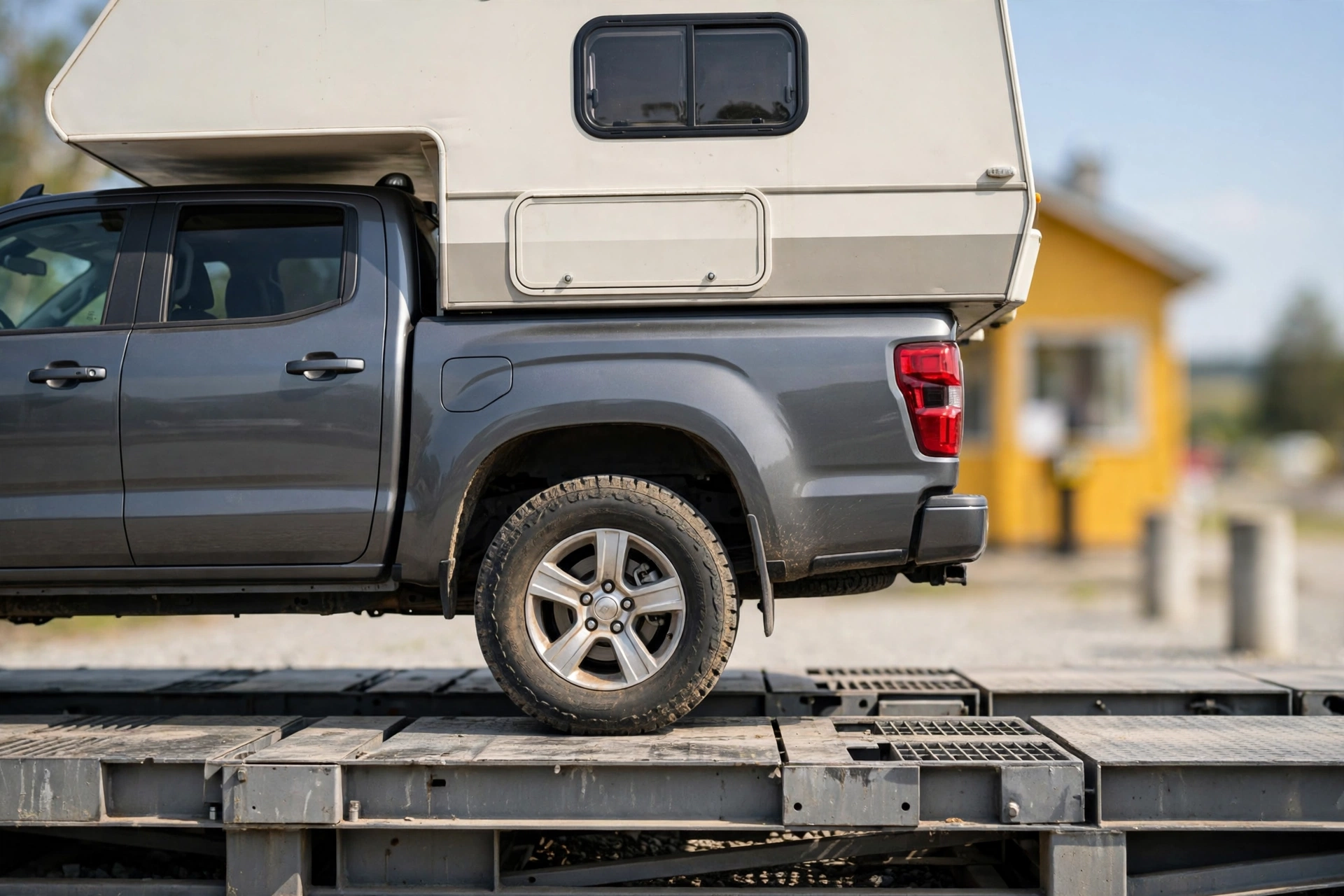
Open the driver’s door and read the yellow payload sticker. Write the number down. Now subtract: every passenger, the dog, the toolbox, the cooler, full water tanks, propane, batteries, and roughly 100 pounds for tie-downs and the bed mat. What is left is your true camper budget. If the result makes you nervous, you have just saved yourself the most expensive mistake in truck camping. Run the numbers through our payload calculator before you shop.
2. Match the Camper to Your Truck — Not the Other Way Around
Shop campers by your truck’s remaining payload, not by floor plans you fell in love with online. Half-ton owners should focus on lightweight pop-ups and shells; there is an excellent selection in the best lightweight truck camper category that stays within half-ton limits. Three-quarter-ton and one-ton trucks open up the hard-side world. Falling in love first and doing math second is how people end up truck shopping unexpectedly.
3. Install Only the Essentials
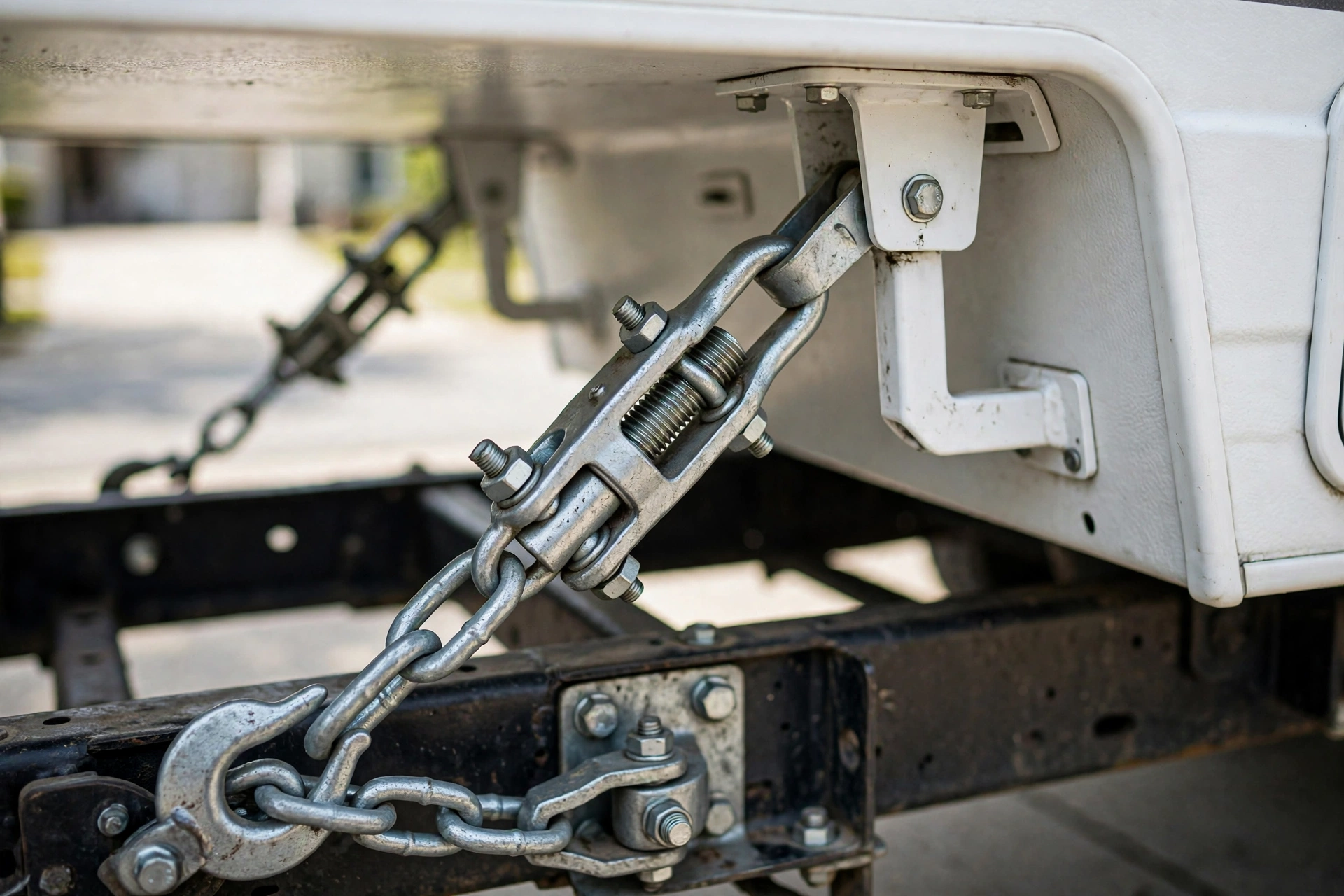
Tie-downs, turnbuckles, bed mat, electrical hookup. That is the complete day-one list, and it is all most people need to drive their new camper home safely. Resist the urge to order suspension upgrades, solar arrays, and lithium batteries before the maiden trip. Drive it loaded first; upgrade against real problems, not imagined ones.
4. Do a Driveway Shakedown
Before you book a campsite three hours away, spend a night in the camper in your driveway or a nearby lot. Run every system: fill the water tank and check for leaks, light the furnace and water heater, test the fridge on all power modes, extend and retract the jacks, and sleep in the bed. Nearly every owner discovers something — a sticky latch, a confusing thermostat, a missing hose fitting — and discovering it at home is free. Discovering it at a remote campground is a story.
5. Learn Your Power and Water Limits
This is the single biggest source of first-trip confusion. When you are plugged into shore power at a campground, everything works. When you are not, only 12-volt systems run: lights, the furnace blower, the water pump, and the fridge on propane or 12V mode. The air conditioner, microwave, and 120V outlets will not work off-grid unless you have a substantial inverter and battery bank. Know your fresh, gray, and black tank capacities, and plan water around roughly five to seven gallons per person per day for comfortable use.
6. Practice Loading and Unloading Once
Factory videos make loading look like a two-minute job. Owners are candid that it is not — especially the first few times, and especially without remote-controlled electric jacks. Practice in a flat parking lot with a spotter, learn your jack controls, and mark your tie-down tension points. You do not want your first loading attempt to happen at a busy campground with an audience.
7. Make the First Trip Easy
Pick a campground within an hour of home, with hookups, on a weekday. Give yourself daylight for arrival. Bring the manual. The goal of trip one is not adventure; it is a systems check with scenery. The owners who report the smoothest first seasons almost all started with a boring, close, easy weekend — and the ones with disaster stories usually started with a 500-mile maiden voyage into the mountains.
What Experienced Owners Wish They Had Known
Beyond the basics, here is the hard-won wisdom that comes up again and again in owner communities — the stuff that separates a smooth first season from an expensive education.
Weigh your rig loaded, not empty. On the iRV2 forums, the single most repeated piece of advice to newcomers is to fill the fuel tank, load every passenger who will travel with you, pack your typical gear, and then hit a CAT scale — weighing front and rear axles separately. Brochure payload numbers evaporate once real humans and real cargo climb aboard. One owner on an F-350 showed the math: 4,108 lbs of door-jamb payload minus a 3,200-lb camper and six passengers left almost nothing to spare. The scale does not lie; the brochure does.
Buy used first — let someone else pay depreciation. A widely echoed Quora perspective from a full-time RVer: buy a low-mileage used camper with good service records and you will save a fortune versus new, with all the early kinks already ironed out. New slide-in campers depreciate hard, and beginners often discover after one season that they bought the wrong layout. Your first camper teaches you what you actually want; make that lesson cheap.
Test before you modify. The single most repeated warning across owner forums: buying air bags, shocks, and sway bars before the first trip is putting the cart before the horse. Drive it loaded first — many owners find their stock truck handles the camper just fine.
Payload beats towing, every time. Truck Camper Magazine’s camper knowledge test drills this as question one: when matching a camper to a truck, payload capacity is the number that matters — not towing capacity. And the only payload number you can trust is the yellow Tire and Loading Information sticker on your specific truck’s door jamb, because options and trim eat into the advertised figure. Their test also hammers center of gravity: it must sit over or in front of the rear axle, never behind it.
Frequently Asked Questions
Can a half-ton truck carry a truck camper?
Some of them, yes — but only the light ones. Most half-ton trucks have 1,300 to 1,800 pounds of payload, and after passengers and gear, the realistic camper budget is often under 1,000 pounds. That covers pop-up campers, wedge shells, and the lightest hard-sides. If you want a full hard-side with a bathroom, you are realistically shopping for a three-quarter-ton or larger truck. When in doubt, the scale does not lie: weigh your loaded rig.
How much money do I need to start truck camping?
If you already own a suitable truck, $12,000 to $25,000 buys a solid used setup including tie-downs and starter gear. Starting from zero with a new mid-range camper runs $40,000 to $70,000 plus the truck. The cheapest credible entry is a used shell or wedge camper on the truck you already drive, which can come in under $10,000 all-in.
Do I need a special license to drive with a truck camper?
In most US states, no — a standard driver’s license covers a pickup with a slide-in camper as long as you stay within the truck’s GVWR. A few states have non-commercial Class A or B requirements above certain weight thresholds, so verify your own state’s rules before buying an especially heavy setup.
Can passengers ride in the camper while driving?
Laws vary by state — some allow it with certain safety conditions, others prohibit it entirely. Many experienced owners discourage it regardless of legality, since the camper is not crash-tested as a passenger compartment. Check your state’s current rules before assuming anything.
How long does it take to load and unload a truck camper?
Plan 20 to 45 minutes once you are practiced, longer the first few times. Manual jacks, uneven ground, and tie-down adjustments all add time. Electric remote-controlled jacks cut the job significantly, which is why owners who load and unload often consider them the best money they ever spent on the rig.
Is truck camping comfortable in winter?
With the right camper, yes. Four-season hard-sides with heated basements, good insulation, and a reliable furnace handle real winter. Pop-ups and shells are three-season shelters for most people. Either way, winterizing the plumbing matters — see our guide on how to winterize a truck camper before the first freeze.
The Bottom Line
Truck camping rewards preparation more than spending. The beginners who thrive are not the ones with the most expensive rigs — they are the ones who did the payload math, bought a used camper that truly fits their truck, installed only what they needed, and shook everything down close to home before heading for the horizon.
Start with the number on your door jamb. Everything else follows from there. And if you are dreaming bigger than weekends — months on the road, working remotely, chasing seasons — our full-time truck camper comparison shows what the long-haul rigs actually require. For the absolute cheapest way to test the lifestyle first, a simple truck bed camping setup gets you sleeping under the stars this weekend for a fraction of the cost.
Welcome to truck camping. Do the math, buy used, and we will see you out there.