
12V Compressor Fridge vs Propane Absorption: The Real Answer for Truck Campers
Every new truck camper on the lot now comes with a 12V compressor fridge, and the forums are full of people arguing about whether that is progress or a downgrade. I have camped with both types for years, so here is the honest version of the 12v vs propane fridge RV debate: the manufacturers did not switch because the compressor is better for every camper. They switched because it is cheaper and easier to build around. Which one is actually right for you depends entirely on how you camp. Here is how to decide.
How Each Fridge Actually Cools Your Food
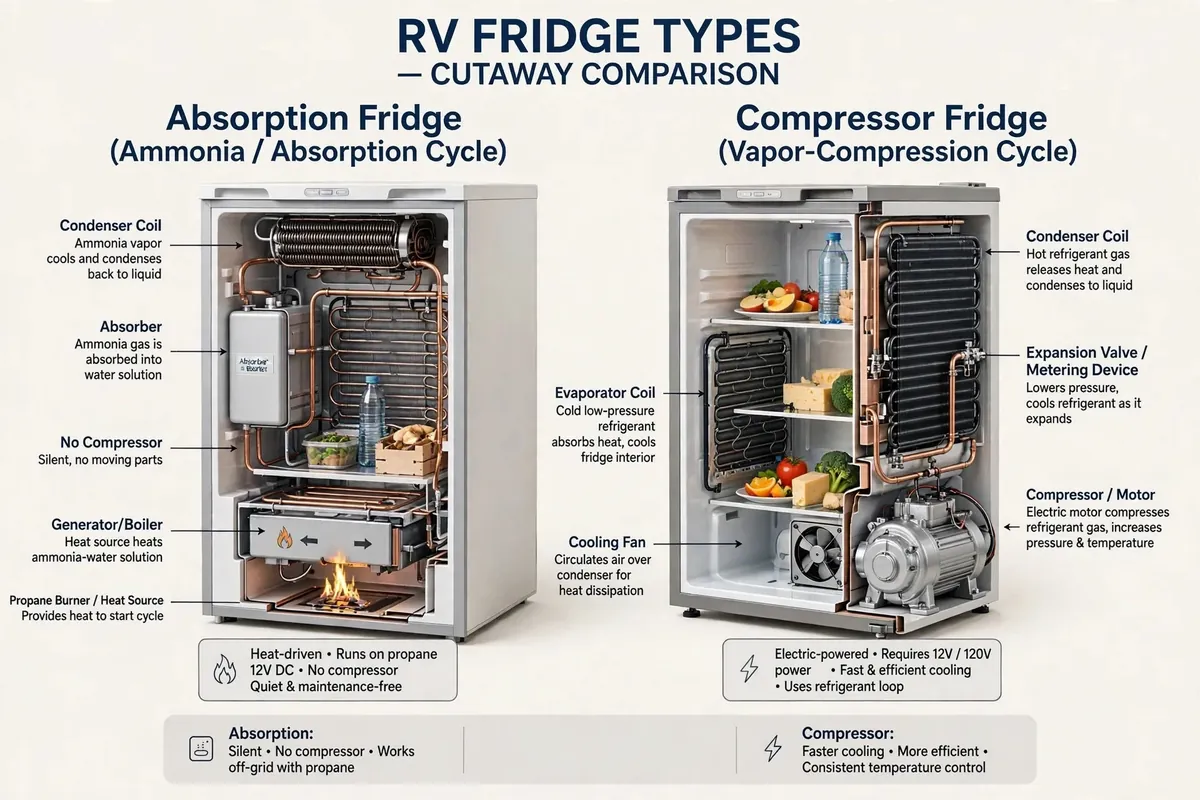
A propane absorption fridge has no compressor at all. It heats an ammonia-and-water solution with a small propane flame (or an electric heating element on shore power), and that heat drives a chemical cycle that pulls warmth out of the fridge box. No moving parts, no motor, essentially silent. The catch: the whole cycle runs on gravity and heat, so the camper has to sit close to level, and the system is inherently inefficient at turning energy into cold.
A 12V compressor fridge works exactly like the fridge in your kitchen, shrunk down and hardened for road vibration. A small electric motor squeezes refrigerant gas, the gas dumps heat through condenser coils, expands, and gets cold, cycling on and off as the thermostat calls for it. It does not care if you are parked on a slope, and it keeps cooling while you bounce down a dirt road.
That mechanical difference explains almost everything that follows.
12V vs Propane Fridge RV: The Measured Consumption Numbers
This is where the debate usually goes sideways, because people compare electricity to propane and the units get confusing. Here are the real, verifiable numbers.
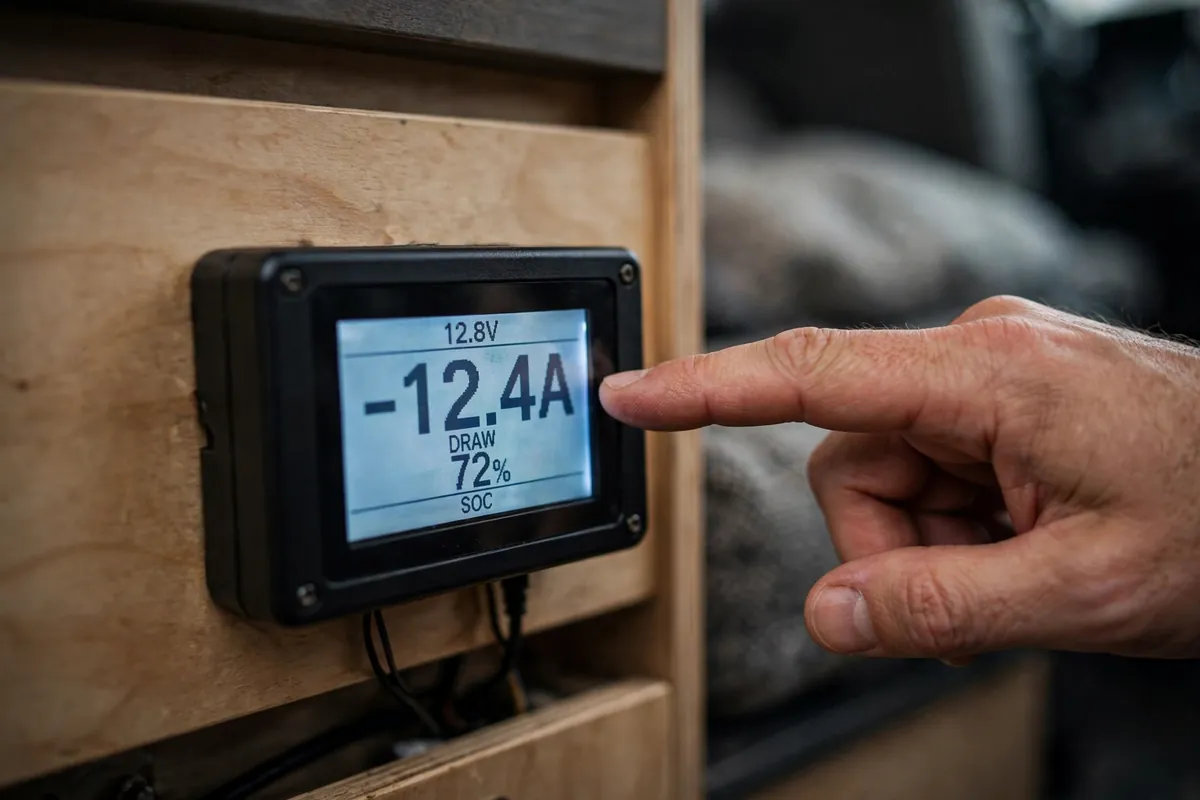
A compressor fridge in the 4 to 6 cubic foot range — the size most truck campers run — draws roughly 4 to 6 amps while the compressor is running, but it only runs part of the time. Real-world daily consumption lands around 40 to 60 amp-hours per day in warm weather, about 0.5 to 1 kWh. Dometic’s own spec sheet rates the popular CRX110 upright at 0.36 kWh per 24 hours at 25°C ambient, rising to about 0.58 kWh at 32°C. Owners who have measured larger 10 cubic foot units with battery monitors report roughly 50 amp-hours (about 0.6 kWh) per day in summer heat.
An absorption fridge on propane barely sips electricity — the control board draws a fraction of an amp, roughly 7 amp-hours a day on a small unit — but it burns propane to make its cold. A typical 6 to 8 cubic foot Dometic is rated around 1,500 BTU per hour when the burner is firing. Do the math on propane’s energy density (about 91,500 BTU per gallon, roughly 4.2 pounds per gallon): at realistic duty cycling, the fridge drinks about 1 to 2 pounds of propane a day. A standard 20-pound cylinder — the size most truck campers carry — keeps an absorption fridge running for a couple of weeks or more of camping, with the furnace and stove drawing from the same tank.
But force that same absorption fridge to run on electricity, and it turns into a power hog. On its 120V heating element, an absorption unit can consume 3 to 8 kWh per day — several times what a compressor fridge uses. The 12V mode on a three-way absorption fridge is even worse: 10 to 15 amps of continuous draw just to make weak heat, which is why experienced owners treat 12V mode as a “hold the cold while driving” setting at best.
So the honest summary: the compressor is dramatically more efficient at turning electricity into cold, but propane stores an enormous amount of energy per pound — one gallon carries roughly 27 kWh, the equivalent of a very large battery bank. Each side wins on a different fuel.
Why Every New Camper Ships With 12V Now (The Honest Answer)
The shift to 12V compressor fridges was not a pure engineering verdict that compressor is better. It was largely a manufacturing and supply-chain decision.
During the supply crunch a few years back, compressor fridges were easier to source in volume, and they are fundamentally cheaper to install: no gas line to plumb, no roof or sidewall vent cutouts to build and seal, no propane certification of the installation. One industry thread put it bluntly — the 12V units are vastly cheaper than two-way propane fridges once you include the cost of ventilation and propane lines. Truck Camper Magazine ran an owner poll on the trend and reported that camper manufacturers told them they could no longer reliably source gas absorption fridges in volume, which forced the switch to 12V as standard equipment. Both Lippert and Thetford now publish their own absorption-versus-compressor comparisons, and both describe the same industry-wide migration.
There is nothing sinister about this — compressor fridges genuinely perform better in several ways, and cheaper-plus-simpler is a legitimate reason to change. But it means the fridge in a brand-new camper was chosen partly for the factory’s convenience. If you buy new, you get a compressor fridge whether you wanted one or not. If you buy used or are replacing a dead unit, you still have a choice, and this article is for you.
Where the 12V Compressor Fridge Wins
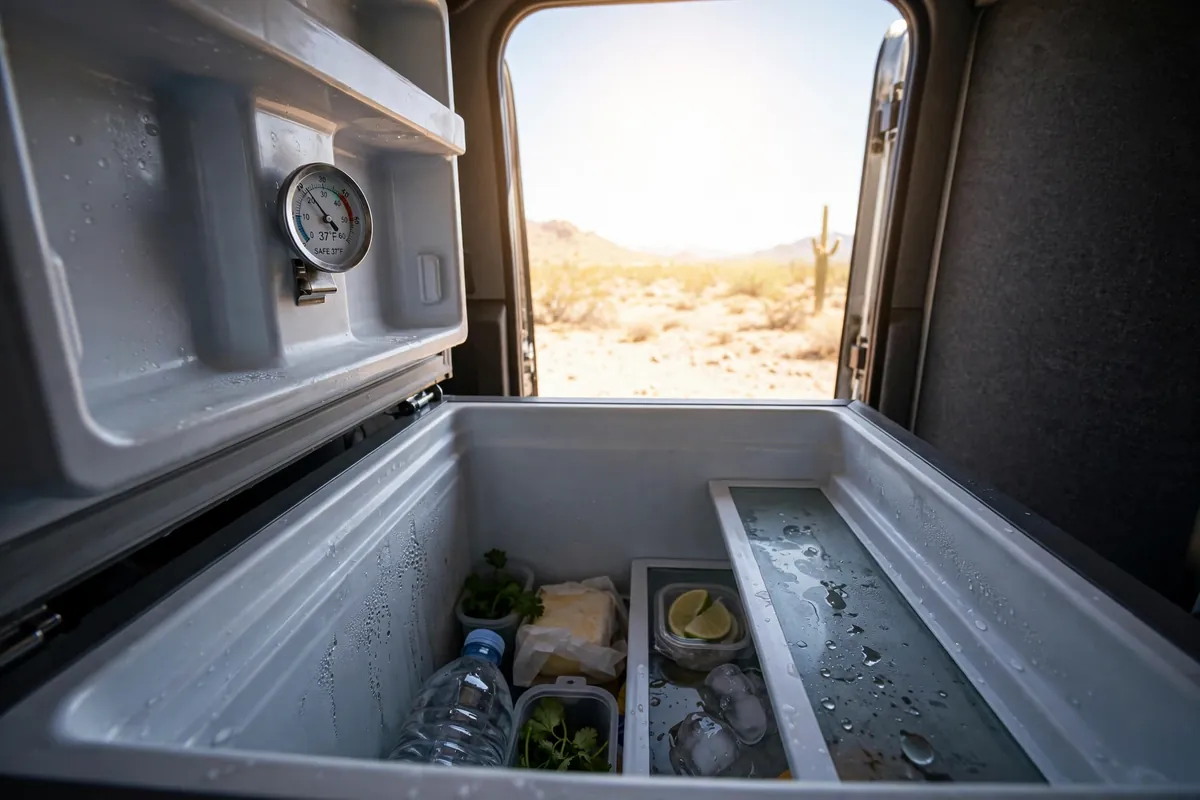
Hot weather. This is the compressor’s biggest, most decisive advantage. Absorption fridges cool by boiling ammonia, and the hotter the ambient air, the harder that cycle struggles. Above about 90°F, many absorption units cannot hold safe food temperatures no matter what you do. A compressor fridge holds its setpoint in 100-degree weather without drama. For anyone camping in the Southwest, this alone settles it.
Cooling speed and temperature control. A compressor fridge reaches safe temperatures in a couple of hours; an absorption unit wants 8 to 24 hours of pre-cooling before a trip, loaded only with pre-chilled food. Compressor temperatures stay steady, while absorption units drift with the weather and need constant thermostat fiddling.
Leveling. Absorption fridges need the camper within a couple of degrees of level to keep the ammonia solution flowing — running one badly off-level can permanently damage the cooling unit. A compressor fridge genuinely does not care: park on a slope, boondock on uneven ground, cool while driving.
Cooling while driving. With an absorption fridge, the propane flame can blow out from wind turbulence on the highway, especially when big trucks pass. The common owner fix is a high-wind baffle kit for the burner (owners report kits around thirty dollars), or just pre-cooling and running on 12V while underway. A compressor fridge sidesteps the entire question — it runs off the battery while the alternator keeps everything topped up.
Usable space. For the same cabinet cutout, compressor units usually give you more interior storage, because the absorption cooling unit’s bulky rear works eat into the box.
Where Propane Absorption Still Wins
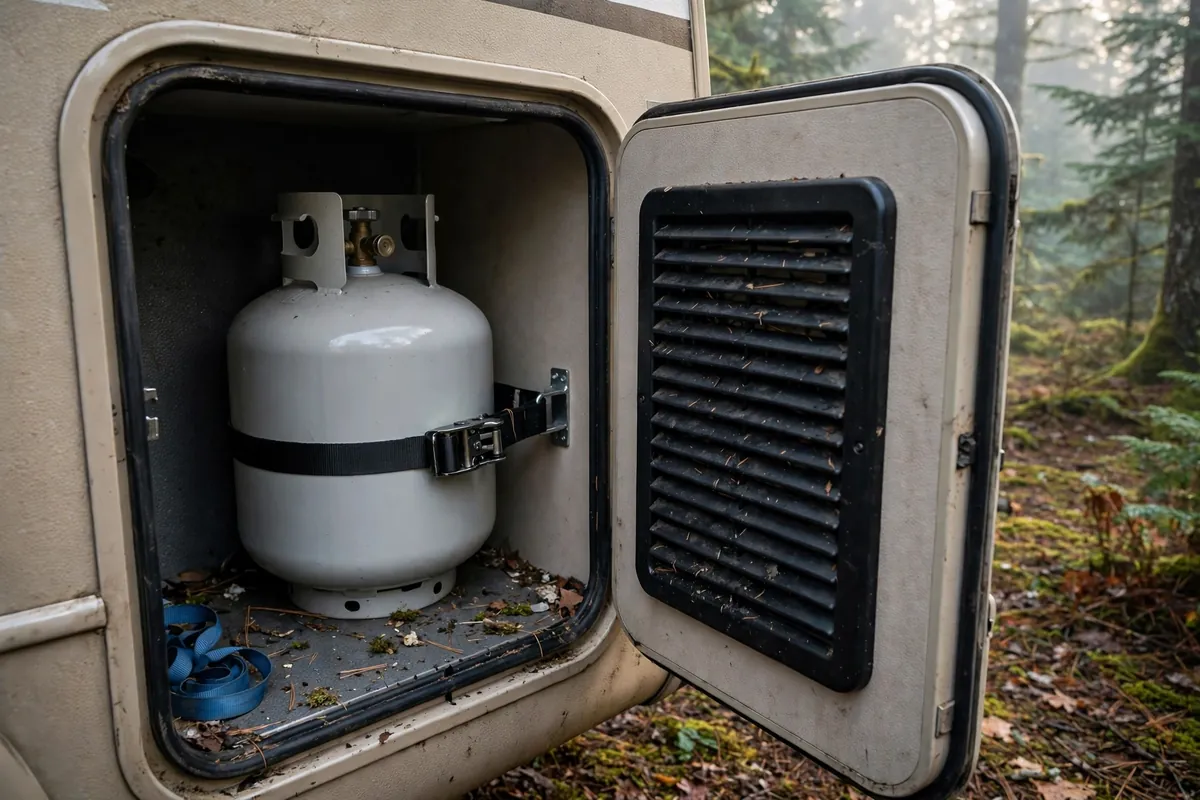
Energy independence. If you boondock for weeks with no solar and no generator, nothing beats propane’s energy density. The fridge barely touches your battery — just the control board — and your propane cylinder holds weeks of cooling. The compressor alternative needs a real battery bank and a way to refill it: solar panels, a DC-DC charger, or generator run time.
Silence. Absorption fridges have no moving parts and make no sound. Compressor fridges hum. Most owners tune it out, but light sleepers in a small truck camper notice it at night when everything else is quiet.
Simplicity when the electrical system is small. If your camper already runs its furnace, stove, and water heater on propane and you have a single modest battery, the absorption fridge fits your setup without demanding a full electrical overhaul. Adding a compressor fridge to that camper means adding battery capacity and charging — which is a project, not a purchase.
Long unattended stretches. Leaving the camper parked at a storage lot or a seasonal site with the fridge running? The absorption fridge on propane can hum along for weeks. A compressor fridge would drain the batteries unless you have solar maintaining them.
The Problems Owners Actually Run Into (And the Fixes That Work)
Here is what the community is actually dealing with — the stuff that never makes it into the spec sheets.
The flame blows out on the highway. One of the most common absorption complaints: the fridge is ice cold at the rest stop and warm at the campground, because the burner kept blowing out at highway speed. The fixes that work: a wind baffle kit around the burner (Dometic even issued one as a recall fix on some models), or switching to 12V mode while driving so there is no flame to lose. Several owners eventually concluded the real fix was a compressor fridge.
Absorption units die young and cost a fortune to replace. Forums are full of owners on their second or third cooling unit, or staring at replacement quotes over four thousand dollars for a new absorption fridge. One long-time owner described replacing two cooling units at about two thousand dollars each before giving up. The pattern owners report is consistent: absorption cooling units tend to fail in the 5 to 10 year range, and the replacement cost is high enough that many people use the failure as their excuse to swap to a compressor unit instead.
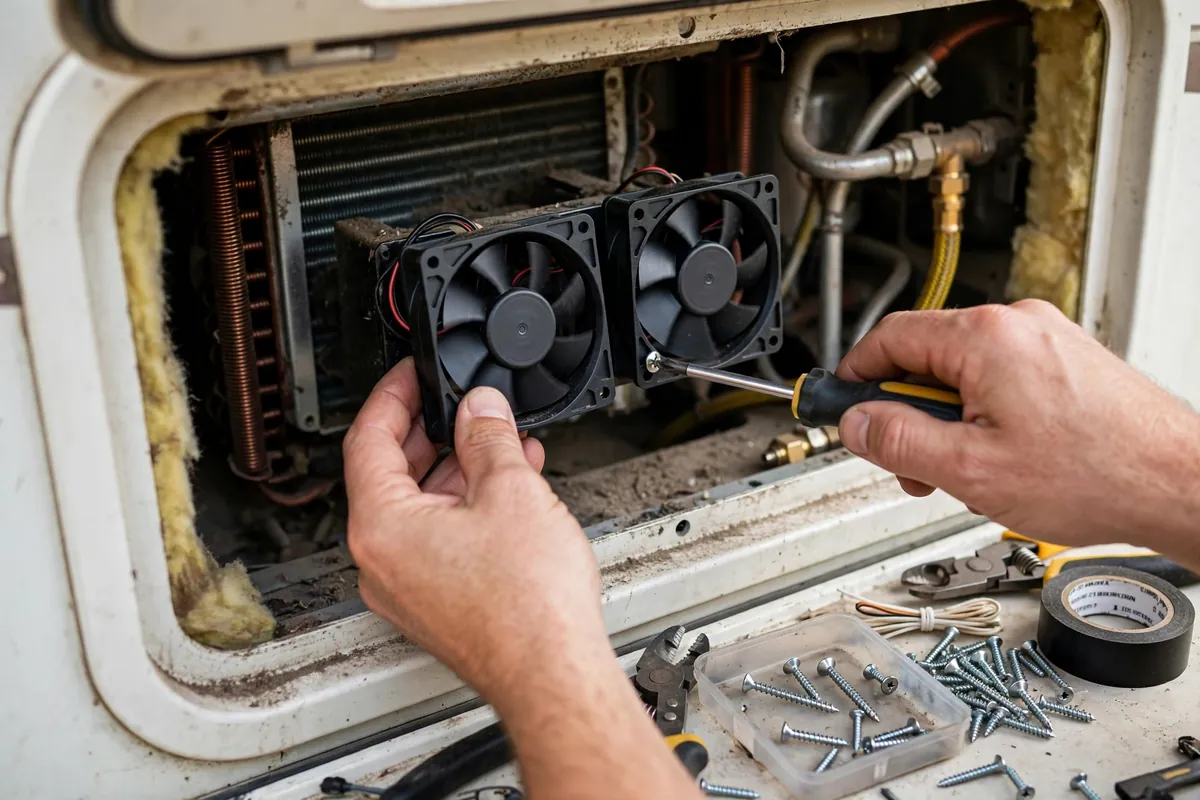
Hot-weather fade. “My fridge works great in spring and fall but cannot keep food cold in August” is practically a genre of forum post. Before ripping the fridge out, the community’s proven first step is airflow: small 12V fans inside the compartment to circulate air, and fans in the upper exterior vent to pull heat off the coils. Owners report several degrees of improvement from a pair of cheap computer fans on a thermostat. But there is a ceiling — in true desert heat, even a well-ventilated absorption unit struggles, which is when owners start pricing compressor swaps.
Compressor noise at night. The flip side. Owners who swapped to 12V sometimes report that the compressor hum is noticeable in a quiet camper at bedtime, where their old absorption unit was dead silent. The fixes that work: a variable-speed compressor model (which runs slower and quieter most of the time), and adding insulation around the fridge cabinet during the swap — one owner who wrapped the cabinet in two inches of foam board cut both the noise and the energy use, getting daily consumption down to about 40 amp-hours in warm weather.
What a Swap Actually Involves
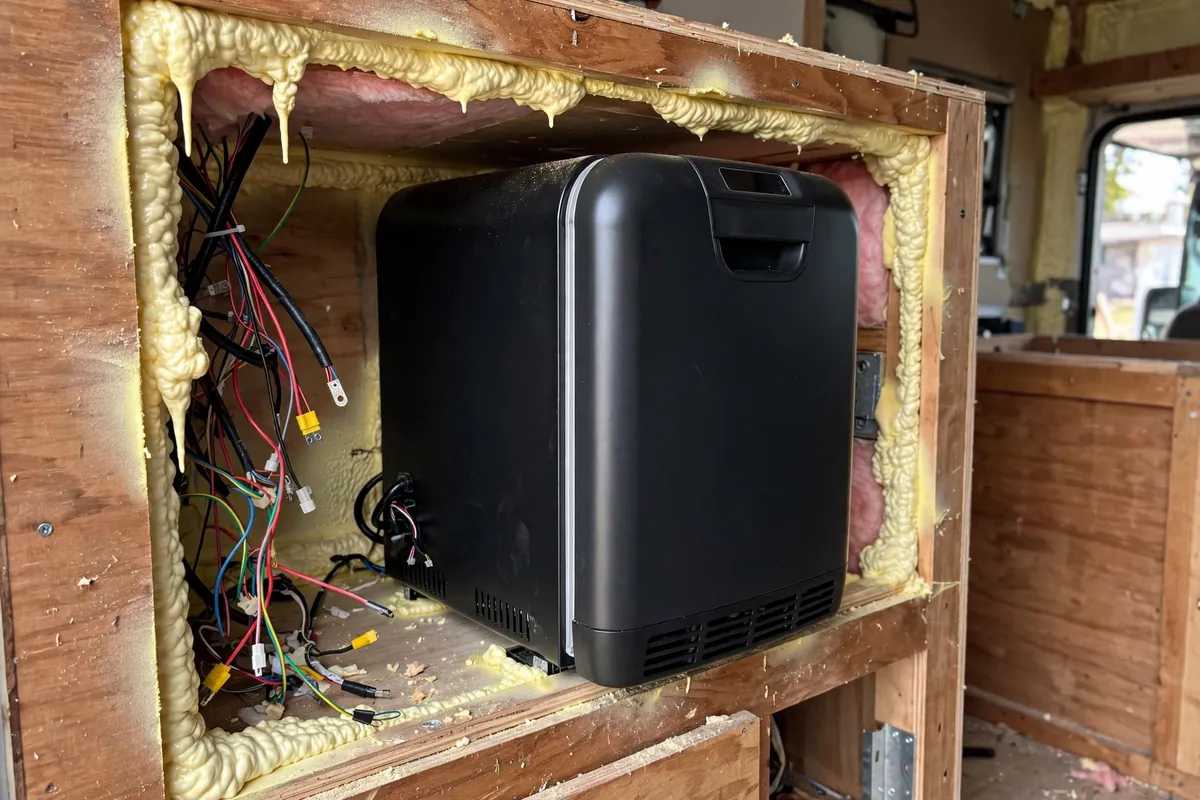
If your absorption fridge dies — and statistically, it will — swapping to a compressor unit is the move most experienced owners make.
First, measure your cabinet opening and your camper’s door. Multiple owners have discovered mid-project that the old fridge does not fit through the door and has to be partially disassembled to get out. Compressor units in the same size class usually drop into the same cutout, but check the depth.
Second, wiring. Your absorption fridge’s 12V feed was sized for a control board drawing an amp or two. A compressor fridge pulling 5-plus amps needs heavier gauge wire run from the battery bank, with proper fusing. Owners consistently say this is the step people underestimate: run new wire, do not reuse the thin factory feed.
Third, vents. The absorption fridge’s exterior sidewall and roof vents are no longer needed — leaving them open wastes heat in winter and lets in dust and insects. Seal the old vents and insulate the cavity, which also makes the whole camper quieter.
Fourth, the power system. A compressor fridge needs roughly 40 to 60 amp-hours a day. On lithium, a single 100Ah battery covers a day and a half of fridge plus lights with nothing else charging — but on a single lead-acid battery with no solar, the fridge will eat it overnight. If that sounds like a project, our truck camper solar and lithium sizing guide walks through sizing a battery bank and panels around a compressor fridge’s real draw, and the generator vs solar comparison helps if you are deciding how to refill those batteries when the sun does not cooperate.
The Decision Matrix
Stop debating in the abstract. Find yourself below.Boondocker with solar and lithium → 12V compressor, no contest. Your panels refill the 40 to 60 amp-hours a day without thinking about it, and you get better cooling, no leveling fuss, and no propane logistics.
Propane-first camper, small electrical system → stick with absorption. If your furnace, stove, and water heater already run on propane and you have a modest battery, the absorption fridge fits your rig without a four-figure electrical upgrade. Keep the burner clean, add vent fans if you camp in heat, and carry on. Our winter heating guide covers the propane side of a cold-weather setup, which pairs naturally with an absorption fridge.
Hot-climate camper → compressor wins decisively. If your summers mean 95°F-plus, the absorption fridge will fight you every August. The compressor holds temperature regardless.
Weekend warrior, mostly hookups → either works. On shore power, both fridges run fine. Pick based on what your camper already has — and if you are buying new, you will get a compressor anyway.
Longest possible off-grid time, no solar, no generator → absorption on propane. When there is no way to refill a battery, propane’s energy density is unbeatable. A 20-pound cylinder is weeks of refrigeration with zero electrical infrastructure.
Full-timer → compressor, with the power system to support it. The compressor’s reliability, temperature stability, and freedom from leveling pay off daily — just size the electrical system from day one, since undersized batteries are the number one regret in full-time truck camper problem stories. A portable power station can cover weekend trips without touching the camper’s wiring.
And the golden rule from the forums: if your absorption fridge works fine, keep it. The swap makes sense when the old unit dies, when you are upgrading the electrical system anyway, or when hot-weather performance is ruining trips. Ripping out a healthy fridge to chase a trend is how you spend money to create problems.
FAQ
How much power does a 12V compressor fridge use per day?
A typical 4 to 6 cubic foot 12V compressor fridge uses 30 to 60 amp-hours per day (roughly 0.4 to 0.8 kWh), depending on ambient temperature, door openings, and the temperature setting. Dometic rates the CRX110 at 0.36 kWh per day at 25°C ambient. In extreme heat, expect the higher end as the compressor runs nearly continuously.
Is a propane fridge cheaper to run than a 12V fridge?
It depends on what you are paying for. On propane, an absorption fridge burns roughly 1 to 2 pounds of propane a day, so a 20-pound cylinder lasts a couple of weeks or more — cheap per day if you already carry propane. A compressor fridge’s electricity is effectively free with solar, but requires the upfront investment in batteries and panels.
Can I run my absorption fridge on 12V while driving?
You can, but do not expect much. The 12V heating element in a three-way absorption fridge draws 10 to 15 amps continuously and cools weakly — it is a “maintain the cold you already have” mode, and many trucks’ charge lines cannot keep up with it. A compressor fridge runs normally on 12V while driving.
Do 12V compressor fridges need to be level?
No. Compressor fridges work at any angle — one of their biggest practical advantages for truck campers on uneven ground. Absorption fridges need to be within a couple of degrees of level; running one badly off-level can permanently damage the ammonia cooling unit.
How long will an absorption fridge run on a 20 lb propane tank?
Roughly two to three weeks of typical camping use for the fridge alone, based on about 1 to 2 pounds of propane per day. Your furnace and water heater draw from the same tank, so in winter the furnace dominates and total time drops.
Is it safe to run a propane fridge while driving?
Millions of RVers do it, and modern fridges have flame-failure safeguards that shut off gas flow if the flame goes out. The real-world annoyance is reliability, not safety: wind turbulence can blow the flame out on the highway, and you must shut propane off at fuel stations, some tunnels, and ferries. A compressor fridge eliminates the question entirely.
Should I replace my working absorption fridge with a 12V compressor?
Only with a reason: it struggles in heat, you are upgrading to lithium and solar anyway, or you are tired of leveling and flame blowouts. If it cools well and you are happy, keep it — the money is better spent on trips.