Flatbed Truck Camper vs Slide-In: The Honest Decision Guide
Spend enough time around truck campers and sooner or later someone rolls into camp on a rig that makes everyone stop and stare: factory bed gone, aluminum tray in its place, a wide flat-floor camper bolted down with storage boxes running the full length of the truck. It looks like the ultimate setup. And in the flatbed truck camper vs slide-in debate, the flatbed side has the best photos, the loudest fans, and — if you read the glossy build threads — seemingly no downsides at all.
There are downsides. Real ones, measured in dollars, pounds, DMV paperwork, and resale checks that come back smaller than expected. I have dug through owner build threads, forum arguments, manufacturer spec sheets, and for-sale ads to put together the guide I wish existed before anyone cuts a check for a tray: what a flatbed conversion actually buys you, what it costs, where it bites, and which kind of camper owner should — and should not — do it.
What the two paths actually look like
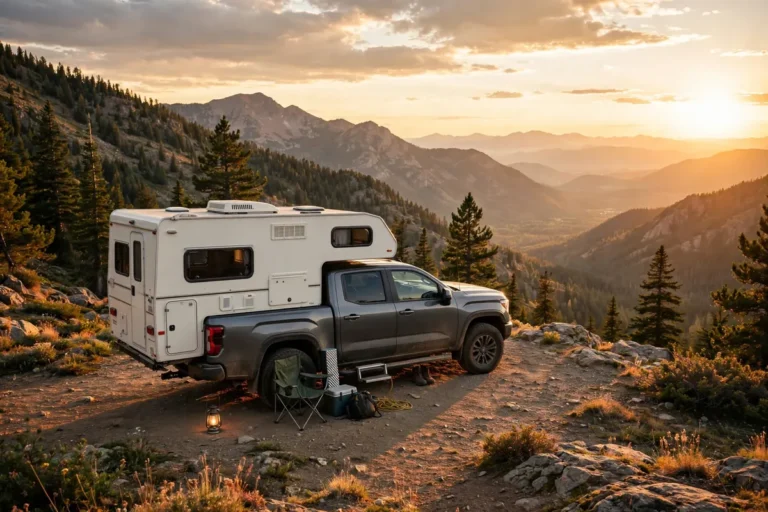
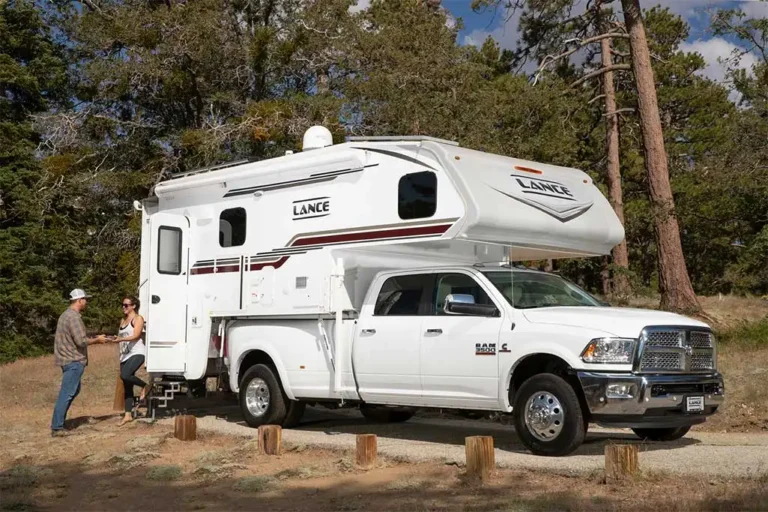
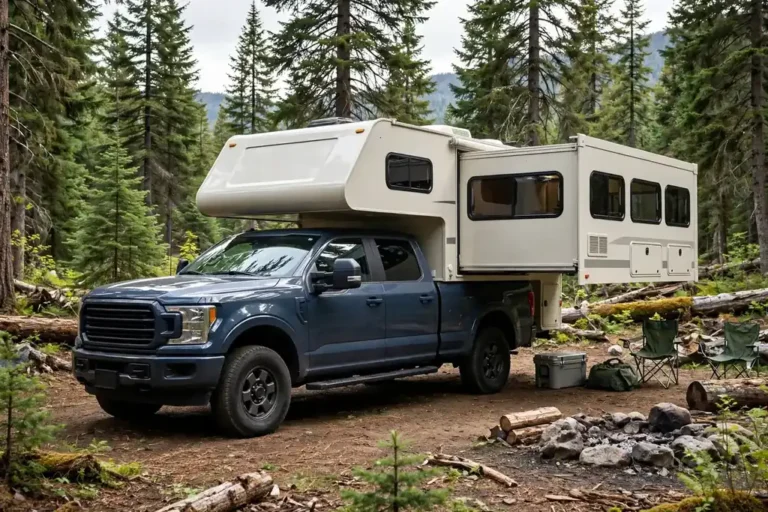
A slide-in camper drops into your factory pickup bed and clamps down with turnbuckles. You keep your truck a truck: take the camper off on a Sunday afternoon and you are hauling mulch on Monday. This is the setup the overwhelming majority of truck campers run, and the one every manufacturer designs around first.
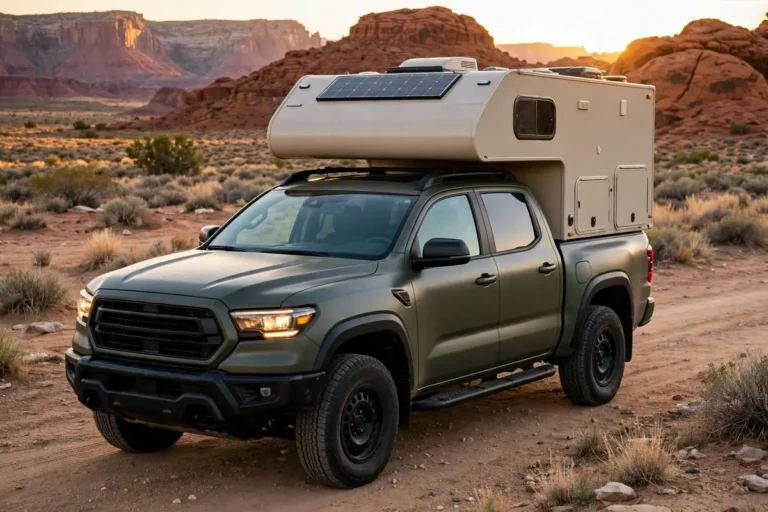
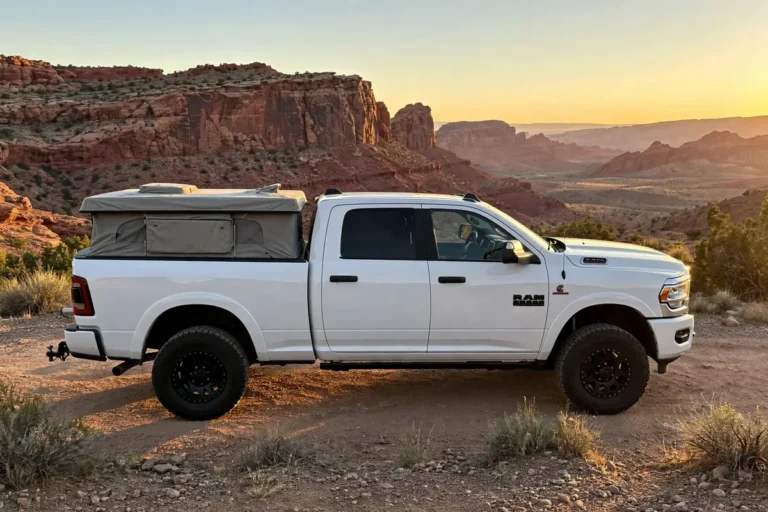
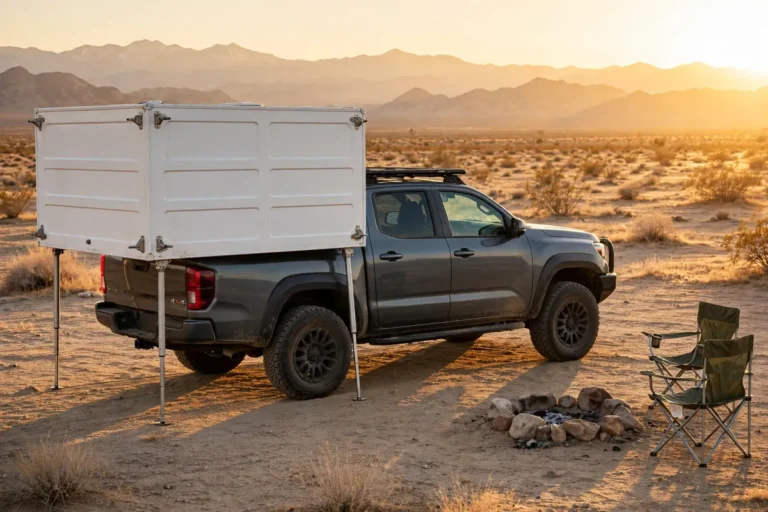
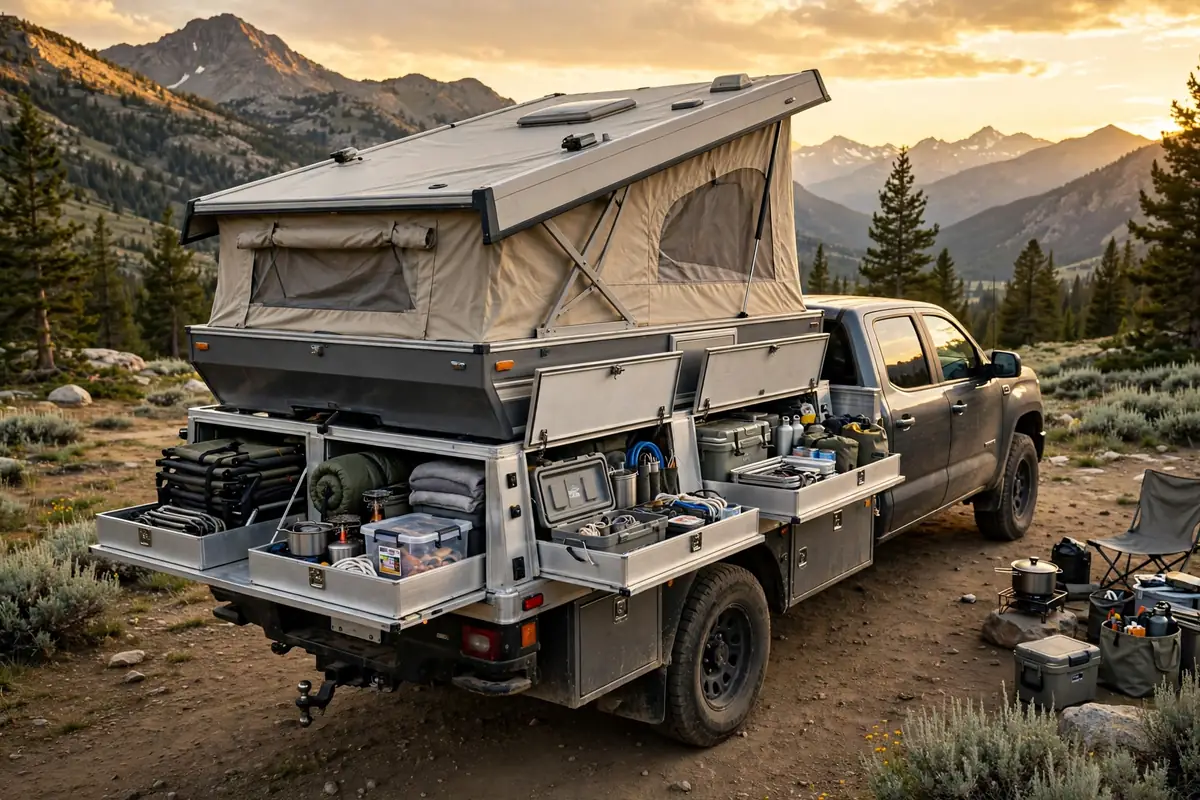
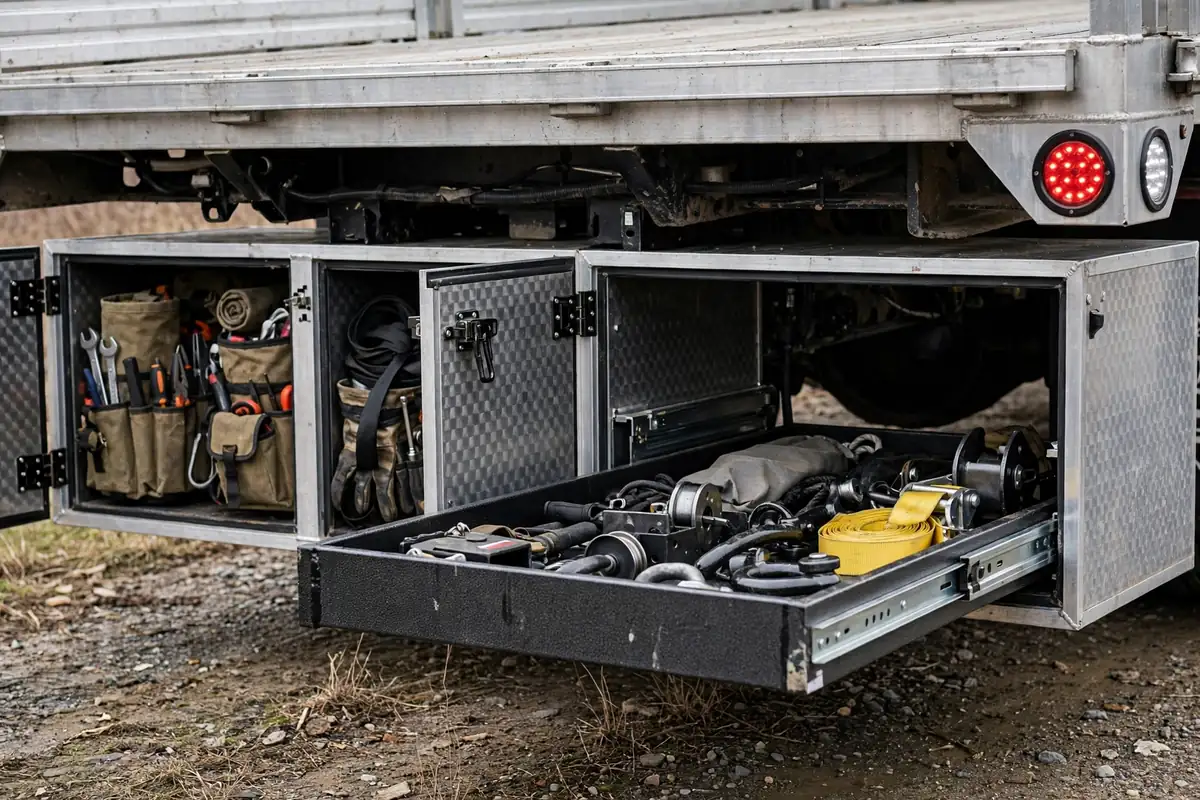
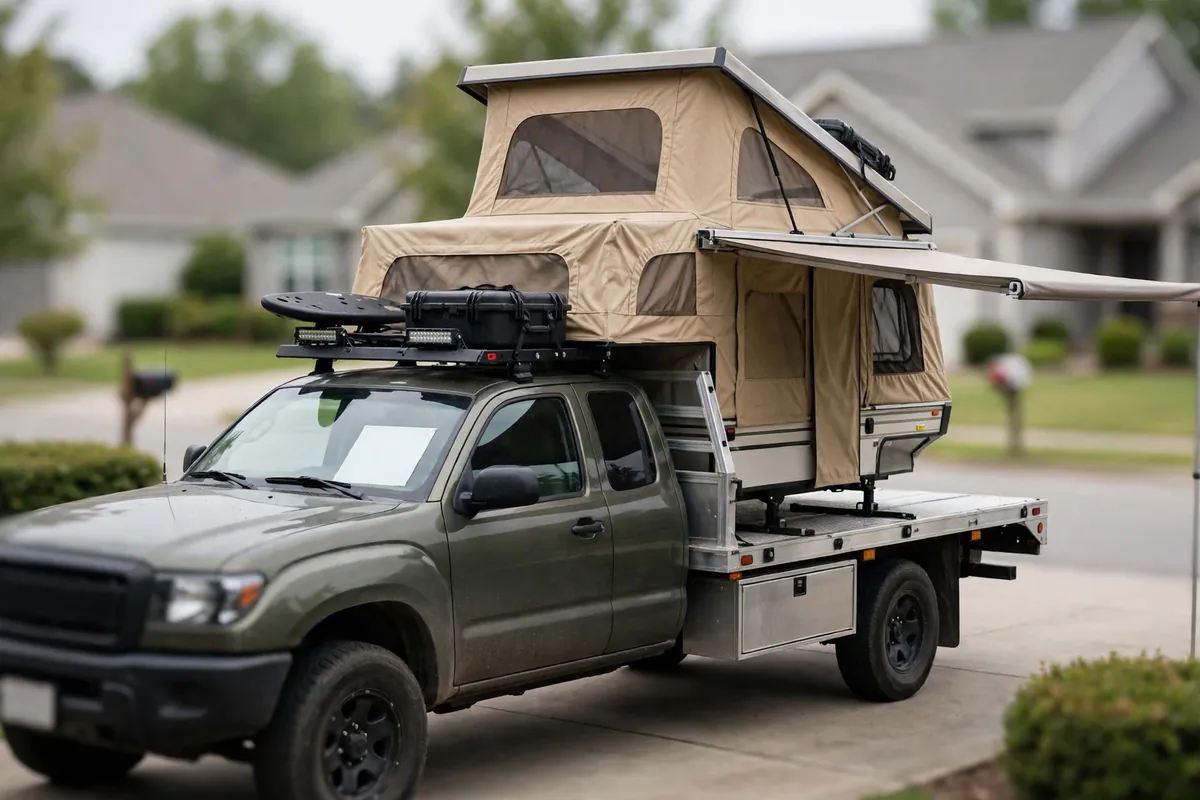
A flatbed conversion means unbolting the factory bed and replacing it with a flat aluminum tray — Norweld, MITS Alloy, Sherptek, and Highway Products build the popular ones — then mounting a purpose-built flatbed camper on top. The camper floor runs the full width of the tray with no wheel wells intruding, storage boxes and drawers live under the deck, and the camper usually bolts straight to the tray instead of hanging off turnbuckles.
Four Wheel Campers, which sells both styles side by side, describes the tradeoff plainly on its official model guide: flatbed models eliminate wheel-well intrusion for a roomier floor plan but are “better suited for trucks with higher payload capacity.” That one sentence contains about eighty percent of this entire decision.
Flatbed truck camper vs slide-in: the weight and center-of-gravity truth

Let us start with the claim that sells the most trays: lower center of gravity. It is real, and it is measurable. Four Wheel Campers publishes a center of gravity of 32 inches for its Hawk Flatbed against 43 inches for the slide-in Hawk — an 11-inch drop, because the flatbed camper floor sits on a tray deck instead of up inside tall bed walls. Owners who have run both describe the difference the same way every time: the flatbed rig feels planted in crosswinds and off-camber situations where the slide-in keeps you gripping the wheel.
But — and this is the part the tray brochures skip — the tray itself weighs a lot, and every pound of it comes straight out of your payload. Four Wheel Campers’ published Norweld tray sheet lists the Weekender tray at 473 pounds for a mid-size truck, 502 pounds for a 7-foot full-size, and 566 pounds for an 8-foot full-size, and that is before you load the under-bed boxes with tools, recovery gear, and water (Norweld spec sheet, PDF). A published build breakdown of a MITS EVO tray on a Jeep Gladiator put that tray at 429 pounds and over six feet wide. One long-term owner who documented his conversion warned that on a heavy-duty truck the tray-for-bed weight swap is close to a wash, but on smaller rigs it eats payload you do not have — his blunt advice was to never put a flatbed camper on a Tacoma or similar mid-size, because no suspension mod fixes a truck that was never rated for the weight.
Do the math before you fall in love. A flatbed Hawk carries a 1,325-pound dry weight, and a 20-gallon water tank plus propane, batteries, food, and gear will push any camper 500 to 750 pounds past dry. Add a 500-plus-pound tray and you are asking a truck to carry roughly 2,500 pounds before passengers. Four Wheel Campers’ own payload examples put a Ram 2500 at 2,970–4,010 pounds and a Toyota Tundra at 1,600–1,940 — and remember, the diesel engine in a 3/4-ton eats a shocking amount of that rating before you load anything, which is exactly what our Ram 2500 diesel payload trap breakdown covers. Run your real numbers through a truck camper payload calculator with the tray included, not just the camper. The flatbed handles better if the truck underneath it is rated for the total — on an overloaded half-ton, all that low-CG advantage drowns in sagging springs and overheated brakes.
One more handling note: the wider tray — typically a few inches wider than the factory body — is a genuine pro/con split. It gives you the full-width floor and cavernous side boxes, but it also means threading a wider rig down tight forest roads. And plan on suspension help regardless of route; a loaded camper is exactly the use case our airbags vs Timbren vs SumoSprings comparison was written for.
What a flatbed conversion really costs in 2026
Here is where daydreams usually die, so let us be specific with published numbers.
The tray: Four Wheel Campers’ Norweld sheet lists the Weekender tray at $14,550 for mid-size trucks, $15,000 for 7-foot full-size, and $15,750 for 8-foot full-size — and that sheet is from early 2024, so treat it as the floor, not the ceiling. That price includes the under-bed boxes, rear drawer, water tank, LED taillights, and sensor relocation kit, but not shipping or installation. One long-term owner who published his full conversion accounting put tray purchase, freight, and professional install at just over $15,000 total — for the tray alone, before the camper. Budget $15,000 to $18,000 all-in for a quality tray installed, and you will not be far off.
The camper: the 2026 Four Wheel Campers Hawk Flatbed lists at $41,995 MSRP, while Supertramp’s popular Flagship LT slide-in starts at $62,975 direct from the factory. A flatbed camper is not automatically cheaper than a slide-in — you are paying the tray cost on top of a camper that costs roughly what a good slide-in costs.
So the honest total: $15,000–$18,000 for the tray plus $40,000–$65,000 for the camper puts a complete flatbed setup at roughly $55,000 to $80,000 before the truck, before suspension upgrades, and before the auxiliary batteries and solar most buyers add. A comparable slide-in setup skips the entire tray line item. If someone tells you flatbed is the budget path, they are comparing a DIY plywood build to a showroom slide-in, which is not a real comparison. (If a ground-up DIY build is actually your plan, our four-season DIY truck camper build shows what that road really looks like — it is a different project with a different budget.)
There is also the question nobody asks until it is too late: where does the factory bed go? You need somewhere to store a full pickup bed indefinitely, because selling it means the conversion is permanent, and keeping it means it lives in your garage or behind the shed for years.
The gotchas nobody puts in the brochure
The turnbuckle problem, solved — expensively. Ask slide-in owners about their least favorite maintenance and a surprising number will mention turnbuckles: the camper-to-truck tie-downs that work loose and need regular checking. One long-term owner who ran a slide-in for a year and a half before converting put it bluntly — slide-in turnbuckles are awkward to reach and demand constant vigilance, while his flatbed camper simply bolts to the tray and stays put. That is a genuine quality-of-life win for the flatbed. If you stay slide-in, at least read our tie-downs and turnbuckles comparison so you are not learning this lesson at 65 mph.

DMV and title paperwork. Here is the careful truth: in most states, unbolting a pickup bed and bolting on a tray does not touch your title, because the VIN lives on the chassis and you have not rebuilt the vehicle. But “most states” is doing heavy lifting in that sentence. Texas publishes an entire Assembled and Reconstructed Vehicle Manual (October 2025 edition) covering converted trucks, and vehicles that fall into its reconstructed category get branded with a permanent RECONSTRUCTED remark on the title (TxDMV manual, PDF). States with periodic safety inspections can also flag relocated taillights, missing mudguards, backup cameras, and license-plate lighting — quality trays ship with LED taillights and sensor relocation kits precisely because of this. And here is the one owners on the forums actually complain about: registration class. A slide-in camper is cargo — in many states it needs no separate registration at all. A permanently mounted flatbed camper can blur that line depending on the state. Check your DMV before the bed comes off, not after.
Insurance: declare everything. A standard auto policy covers the truck as the manufacturer built it. A $15,000 tray plus a $45,000 camper bolted to it is not that truck. Owners on Expedition Portal report getting DIY and converted campers insured through mainstream carriers like Progressive without drama — but the key word is declared. A Custom Equipment endorsement raises the cap on permanently installed aftermarket gear (standard defaults are often just $1,000–$5,000, nowhere near enough), and high-value builds may need a stated- or agreed-value policy with receipts and photos on file. An undeclared conversion is how a claim gets denied. Call your agent before the conversion, not after the accident.
It is (mostly) a one-way door. A slide-in camper comes off in an afternoon and your truck is a truck again. A flatbed conversion is a commitment: the bed is gone, the tray is torqued to the frame, the wiring is integrated. Technically reversible if you kept the bed and want to spend another weekend plus a shop bill — practically, almost nobody goes back. Be sure before you start.
The hybrid hack owners actually recommend. My favorite community-sourced insight, from WanderTheWest: several experienced owners argue the best setup is neither pure option — a slide-in camper mounted on a flatbed tray, with storage boxes filling the gaps between the camper walls and the tray edges. You keep the removable camper, gain the under-deck storage and bolt-down mounting, and skip buying a dedicated flatbed camper. Owners call it the best of both worlds, and it is worth pricing before you commit.
Frame flex is real. One more warning from that long-term owner’s conversion guide: cheap farm-style flatbeds sometimes mount rigidly in ways that fight the frame’s designed flex, and frames that cannot flex as designed can develop stress problems down the road. Buy a tray engineered for your truck’s frame, not the cheapest flat steel deck on the lot.
Resale: the part that stings
Let us talk about the money you do not get back. A slide-in camper is a liquid asset: it fits thousands of trucks, the used market is deep, and a clean used camper sells in days on the forums. A flatbed conversion is a custom asset bolted to one specific truck, and the buyer pool is a puddle.
The for-sale ads tell the story. Browse Expedition Portal’s classifieds and you will find turnkey flatbed rigs — $150,000-plus in truck, tray, camper, and upgrades — listed at prices that make the sellers wince. One well-documented 2000 Ford F-250 with a Norweld tray and Northern Lite camper was listed at $59,500 with the seller openly noting the tray and camper alone cost far more than the asking price. This is the consistent pattern owners report: you will never recover the conversion cost at resale, because the next buyer is not paying for your vision — they are paying for a used truck with a permanent modification that only fits their plans if their plans match yours exactly.
None of this means flatbed rigs do not sell. They do — to the small, passionate slice of buyers who wanted exactly that build and would rather buy yours than wait a year for their own. But price it like a custom, expect it to take longer, and go in with eyes open: the tray money is spent money, not invested money. A slide-in camper, by contrast, can be lifted off and sold separately to the entire truck-camper market while the truck sells as a normal truck. That flexibility has real dollar value.
There is one more resale-adjacent cost: lead times. Quality trays and flatbed campers are often built to order with waits measured in months, and during that wait your truck sits bedless or your money sits with a builder. Slide-ins, especially used ones, can be on your truck this weekend.
So who should actually convert? The verdict
After all the numbers and forum threads, the decision sorts itself by how you actually use the thing.
Go flatbed if you are a long-term full-timer or extended overlander. If the camper lives on the truck for months or years, the flatbed’s advantages compound daily: the full-width floor and side-entry layouts kill the narrow-hallway feeling that wears on couples — one WanderTheWest owner put it perfectly, saying the side-entry flatbed “eliminates the galley feel” of slide-ins, and that after owning both he would not buy another slide-in. The under-bed boxes swallow tools and recovery gear that would otherwise colonize your living space. The bolt-down mounting ends turnbuckle anxiety forever. And the lower center of gravity pays off every mile of a 20,000-mile year. If you are building a rig to live in, the $15,000-plus tray premium amortizes into the best dollars-per-day you will spend.

Stay slide-in if you are a weekend warrior. If the camper comes off between trips and the truck still does truck things — commuting, hauling, towing the boat — the slide-in wins on every axis that matters to you: tens of thousands cheaper, removable in an afternoon, no DMV questions, no insurance renegotiation, and a resale market ten times deeper. The turnbuckle checks and the narrower floor are real annoyances, but they are weekend annoyances, not lifestyle problems. Most truck campers ever sold are slide-ins for exactly this reason.
Consider the hybrid if you are in between. A slide-in camper on a flatbed tray with gap-filler storage boxes gives you the tray’s storage and mounting with the camper’s removability and resale. It is the least-discussed option and, per the owners who run it, possibly the smartest.
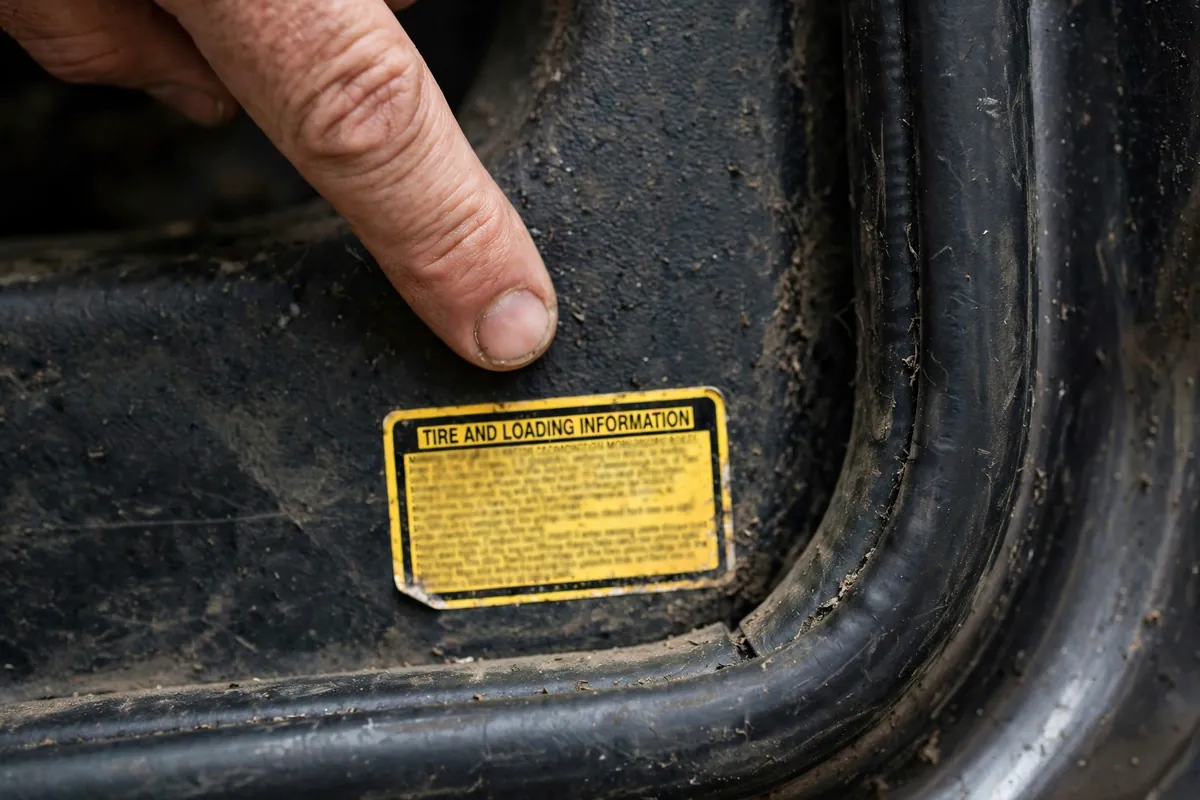
Do not convert on a half-ton. The closest thing to a hard rule here: tray plus loaded camper wants a 3/4-ton at minimum. On a Tacoma, Colorado, or half-ton, experienced owners near-universally warn against it — no suspension mod changes the door sticker.
Frequently asked questions
Can I put a flatbed camper on a half-ton truck like an F-150? Mechanically, people do. Wisely, almost nobody recommends it. A quality tray weighs 470–570 pounds before you load its storage boxes, and a loaded flatbed camper pushes 2,000-plus pounds. That combination overwhelms most half-ton payload ratings. The flatbed conversion is realistically a 3/4-ton-and-up project.
Does converting to a flatbed change my truck’s title? Usually not for a simple bolt-on tray swap, since the VIN stays with the chassis. But states differ: Texas maintains a formal reconstructed-vehicle process that brands titles with a RECONSTRUCTED remark for certain conversions, and states with safety inspections may flag relocated lights and sensors. Check your state’s DMV before the bed comes off.
Can I switch back to a regular pickup bed later? Technically yes if you kept the factory bed — it unbolts and rebolts. Practically, almost nobody does: it means another full weekend of work, rewiring, and finding a shop willing to do it. Treat the conversion as permanent when you decide.
Is a flatbed camper actually better off-road? The lower center of gravity is a genuine advantage — Four Wheel Campers publishes 32 inches for its Hawk Flatbed versus 43 inches for the slide-in version. Owners consistently report more planted handling in crosswinds and off-camber terrain. The tradeoff is width: trays run wider than the factory body, which matters on tight trails.
How much does a full flatbed conversion cost in 2026? Budget $15,000–$18,000 all-in for a quality aluminum tray purchased, shipped, and installed, plus $40,000–$65,000 for the flatbed camper itself — roughly $55,000 to $80,000 before the truck and suspension upgrades. A slide-in setup skips the entire tray line item.
Can I load and unload a flatbed camper by myself? Most flatbed campers stay bolted to the tray semi-permanently, so solo loading matters less than with slide-ins — but if you do need to remove one, the jack process is similar. Our solo loading and unloading guide covers the technique either way.