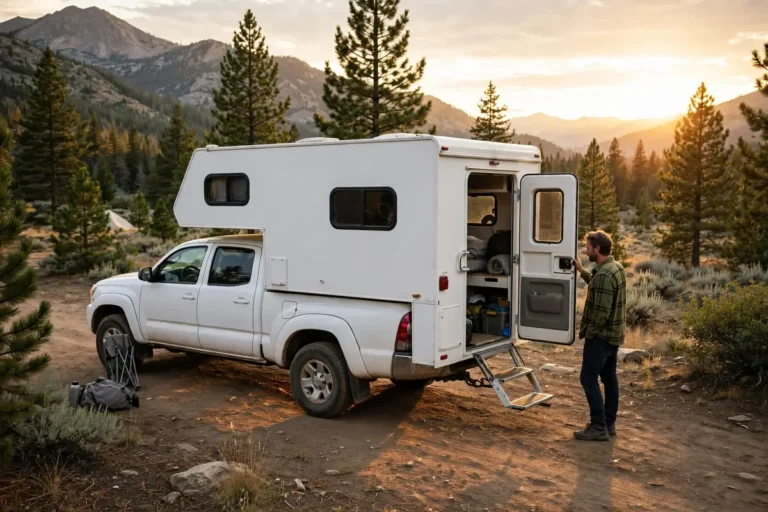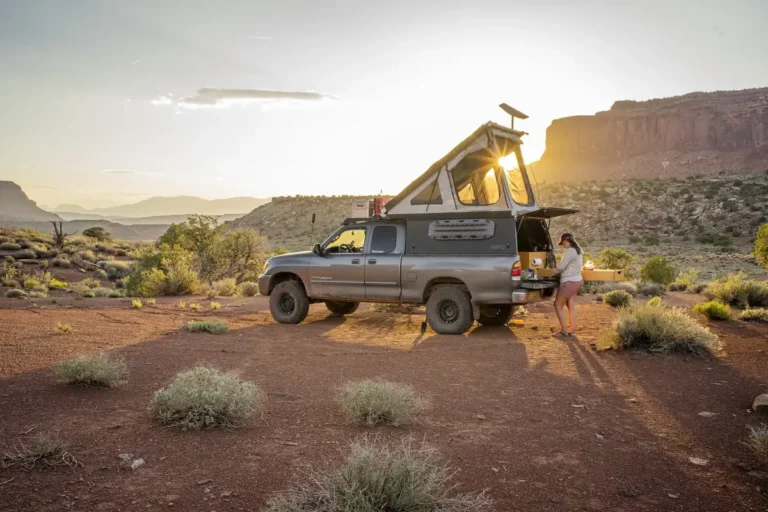
Can You Use a Truck Camper Off the Truck?
Yes — can you use a truck camper off the truck? You can sleep in it, cook in it, and live in it detached at camp, but only if you set it down properly. That last part is doing all the work in that sentence, and it’s where most people get tripped up.
I learned this the slow way. The first time I dropped my camper so I could take the truck into town, I left it sitting high on its jacks because lowering it felt like extra work. One gusty afternoon of watching that tall box sway every time someone walked across the floor taught me why every manual says to get it down low. It never fell over — but I spent the evening listening to it creak, wishing I’d spent the ten minutes.
The Short Answer: Can You Use a Truck Camper Off the Truck?
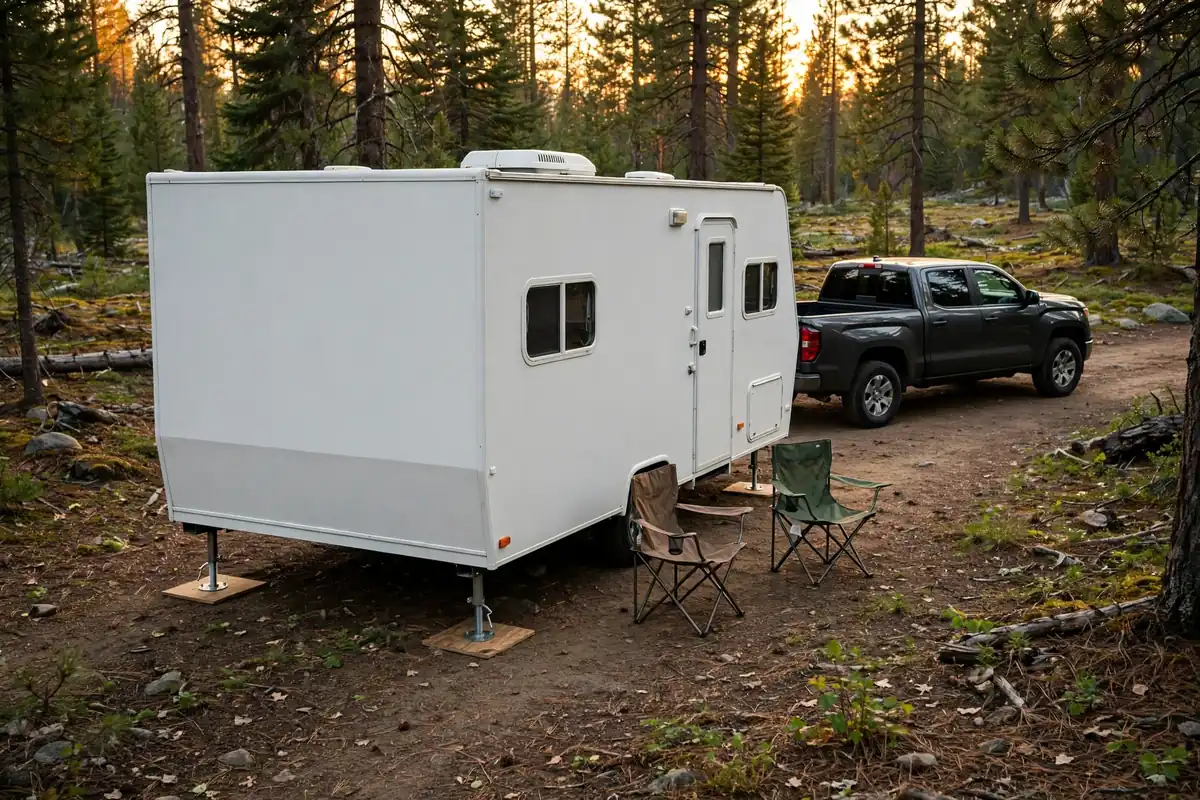
A truck camper is a self-contained box. The bed, the stove, the fridge, the heater — none of that stops working because the truck drove away. What changes is what’s holding the box up. On the truck, the entire floor sits on the truck bed, spreading the weight across a big flat surface. Off the truck, that same floor is suddenly hanging between four jack feet at the corners, with nothing under the middle.
That’s the whole problem in one paragraph. Everything else in this article is just different ways of solving it.
Some manufacturers say it outright. Lance’s owner’s manual says its camper is “designed to be used while standing on the jacks in a lowered position” — lowered being the key word — and warns in plain language: do not enter or occupy the camper in a raised position, and do not support it on tall sawhorses or cinder blocks while raised. Lower it back down close to ground level, and leave about two inches of clearance under the bumper and exhaust so nothing touches the ground.
Northern Lite’s manual is stricter, and worth reading because it’s the clearest manual language I’ve found. It says that when a camper is off the truck, you should lower it as low as the jacks will allow, keep it flat and level, and “fully support the floor of the camper” when putting it into storage or occupying it off the truck. It also says it doesn’t recommend using a camper equipped with dually swing-out brackets off the truck at all. And like every manual, it says never raise or lower the camper with people inside it.
Which Campers Handle Off-Truck Living Best?
No brand stamps “rated for off-truck occupancy” on a brochure in those words, so don’t go looking for a badge. What you’re really asking is: how is the floor built, and what does the manual allow?
Hard-side campers with a full floor and a manual that allows lowered-jack use are the easiest case. Lance falls in this camp, with the lowered-position language above. Northern Lite allows it too, but with the full-floor-support condition attached — which, in practice, means you need to bring supports, not just jacks.
Pop-up campers are lighter and lower, which helps with wind, but light construction can mean less structure under your feet, not more — so the same floor check applies.
Campers with slide-outs need extra care. Get the camper level and stable before you run a slide out, and never put a jack or block under the slide-out box itself — slide mechanisms are built to carry the room, and a fixed support underneath fights the mechanism when the camper settles or rocks. If the camper isn’t level and steady off the truck, keep the slide in. A smaller living space for a night beats a racked slide opening.
Dually trucks with swing-out jack brackets deserve a special warning. Those front brackets swing out so the jacks clear wide rear tires, and that extra leverage is exactly what you don’t want when the camper is standing alone. Owners on forums report watching those extensions flex and worrying about them bending, and Northern Lite’s manual advises against off-truck use with them. If that’s your setup, under-floor support isn’t optional — it’s the whole plan.
The Support Setups Owners Actually Use
There are three setups you’ll see at campgrounds, in rough order of effort — and solidity.
1. Jacks only, lowered as far as they’ll go
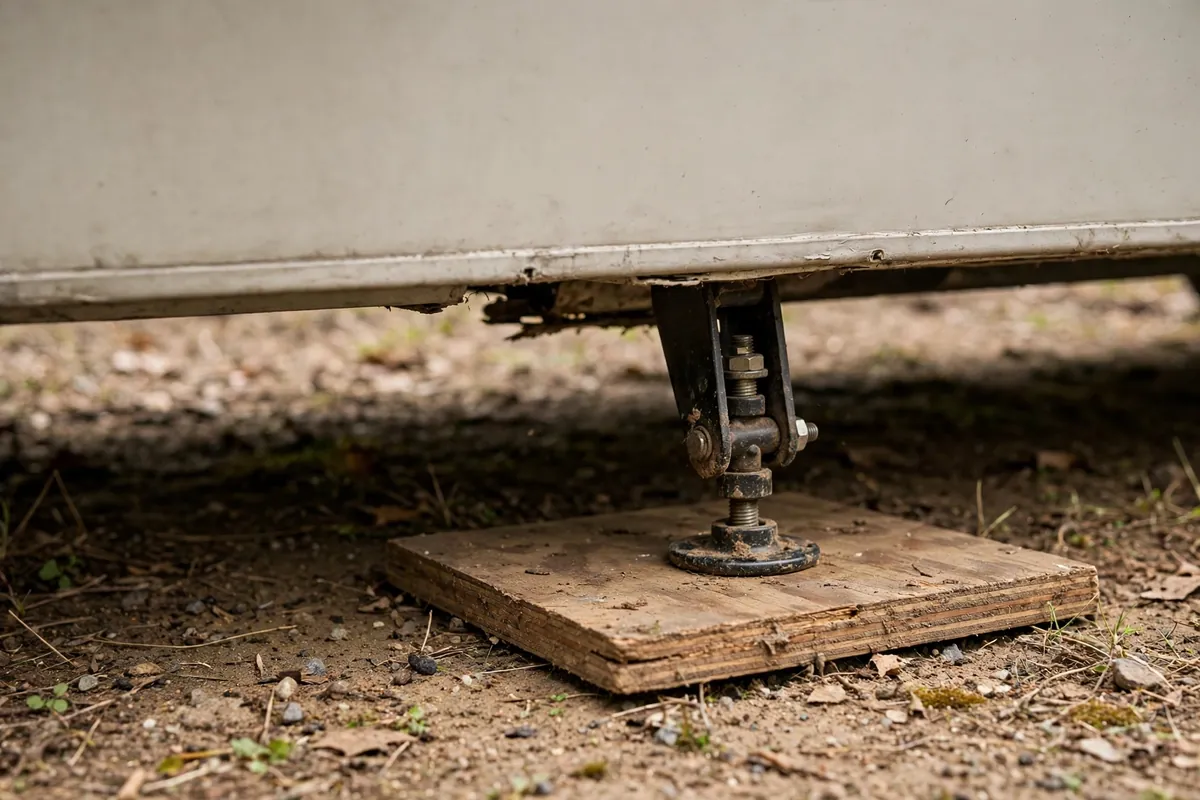
This is the minimum, and for a short stop with a camper whose manual allows lowered-jack use, it’s what most people do. Lower the camper until it’s just off the ground, level it, and put plywood pads under the jack feet so they don’t sink into soft ground or punch into hot asphalt.
It works, but it has two weaknesses owners keep running into. First, the floor: the middle is still unsupported, so a heavier camper — or two adults walking around in it for days — can make the floor feel springy. Second, sway: four jack legs are great at holding weight straight down and poor at resisting sideways push. Every step inside, every gust, every kid leaning on the wall moves the box a little.
2. Jacks plus sawhorses or cribbing under the floor
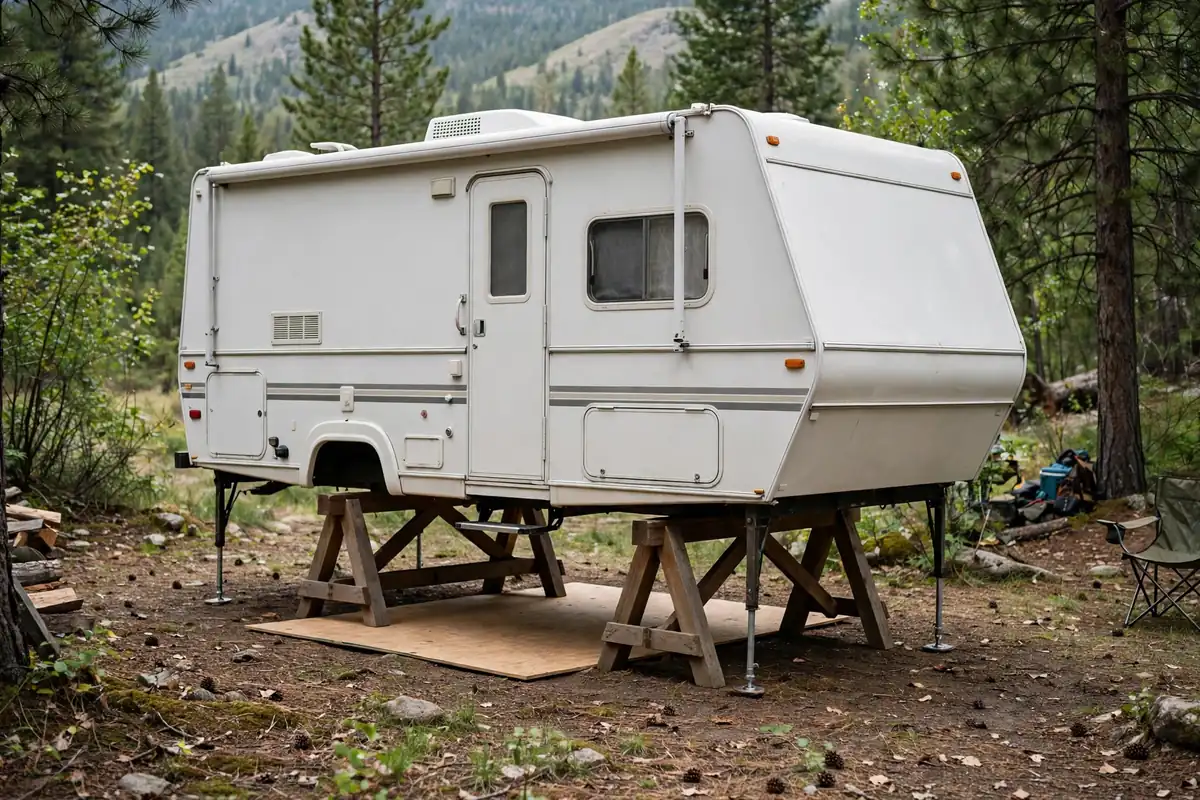
This is the setup I use now, and the one most experienced owners land on. Lower the camper onto sturdy supports under the floor — heavy-duty sawhorses, stacked lumber cribbing, or screw jacks carrying planks — with the corner jacks left in light contact for stability, not carrying the whole load alone.
Owners on Expedition Portal have worked out the details. One long-time owner there recommends three heavy-duty sawhorses from 2×6 lumber, about an inch taller than the truck bed, because the floor is designed to be supported the way the truck bed supports it — across its whole length, not at four points. Once the camper is on the horses, he drops the jacks just far enough to touch the ground, purely for stability. Horses near bed height also mean less jacking to reload.
Two rules for this setup. First, spread the load: Northern Lite’s manual insists on a full sheet of plywood between the camper bottom and any blocks or sawhorses so the weight is evenly distributed, and warns that skipping it can damage the camper. Second, never use tall sawhorses to hold a camper up high. Lance’s manual is explicit about this. Supports are for a lowered camper, not for propping one up at loading height.
3. A full platform
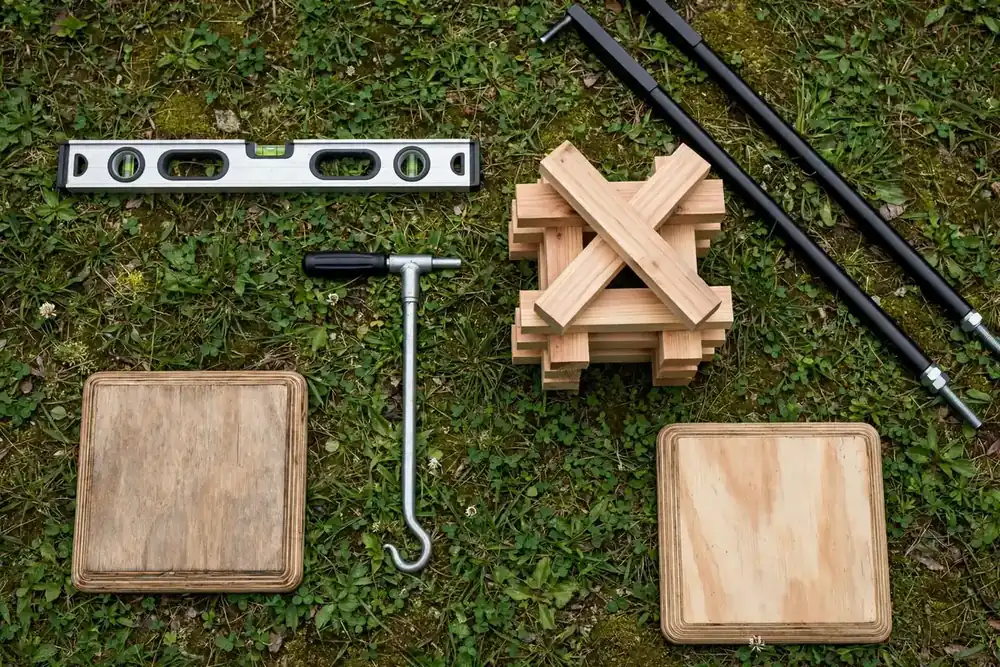
For a longer stay, some owners build or bring a low platform: a frame of 6×6 lumber or plywood X-panels with supports at the front, middle, and rear of the floor, jacks down as backup. One owner on Wander the West, camping in the Midwest where storms bring serious wind gusts, lowers his camper onto a solid 6×6 platform with three risers and parks on the sheltered side of a solid structure against the prevailing wind. He also admitted he cringes driving past campers left sitting high in the air while their trucks are off exploring, and honestly, after my own swaying evening, so do I.
A platform is overkill for an overnight drop. But for a weeks-long stay, it’s the closest thing to putting the truck bed back under the floor.
Lower It for Wind — This Is the One People Skip
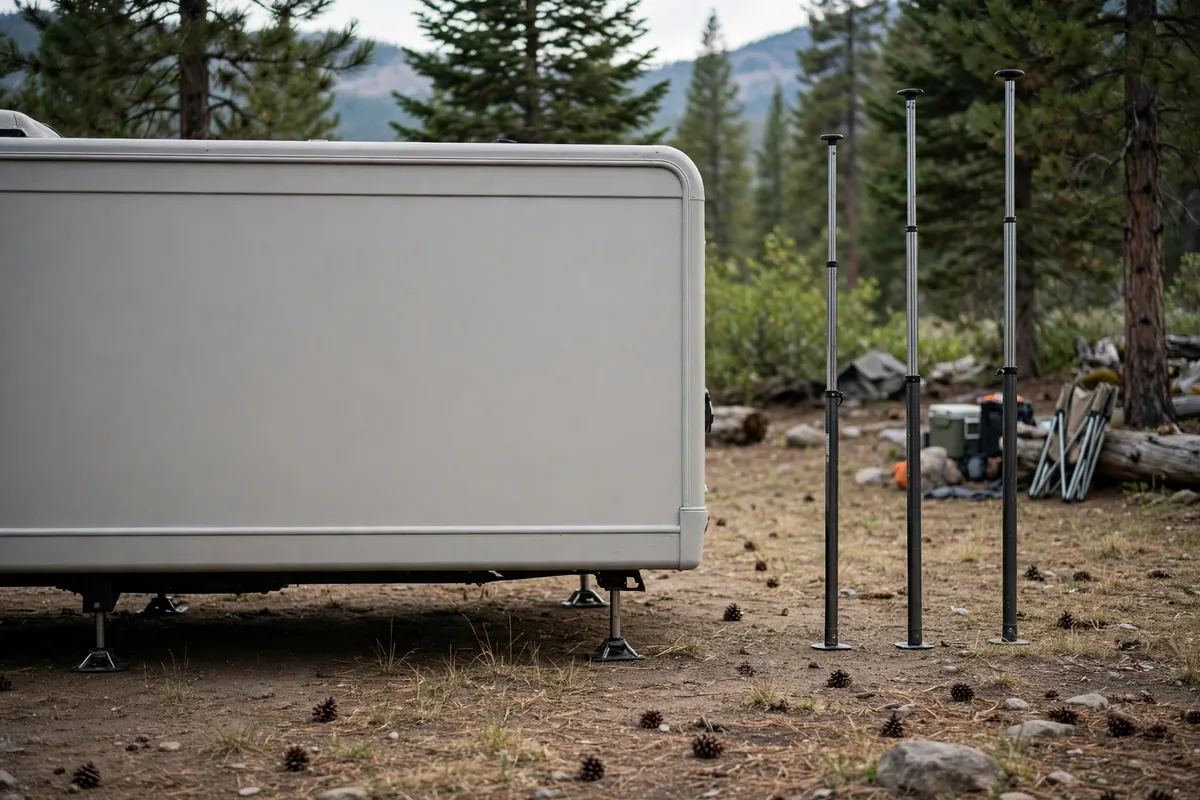
Height is your enemy off the truck. A camper sitting at loading height is a tall, flat-sided sail on four thin legs. Lowered to a few inches off the ground, it’s a much smaller target, and the jacks are shorter, stiffer, and less able to flex.
Every manual says some version of “as low as possible.” Lance says lower it back down close to ground level. Northern Lite says as low as the jacks will allow. An old Atwood jack manual puts it bluntly: do not enter the camper after it is removed from the truck until it is lowered to its lowest position, because sway could cause structural damage or injury.
Practical wind habits that owners swear by:
- Drop it low and level it. This alone fixes most of the sway problem.
- Point the narrow end into the expected wind when you have a choice, and use a building, hedge, or hillside as a windbreak if one is available.
- Add diagonal bracing. Products like StableCamper bars, or homemade diagonal rods connecting the front jack legs back to the camper body, are popular precisely because they kill the side-to-side sway that jacks alone can’t. One Lance owner on iRV2 who drops his camper a dozen times per trip said his homemade diagonal braces were a big help in high winds, even though they add no floor support — they solve a different problem.
- Watch the forecast before you drive away. If serious wind or a storm is coming and the camper is standing alone, the right move might be loading it back on the truck, where four tie-downs and a few thousand pounds of truck hold it down.
Living in It as Basecamp: What Actually Changes
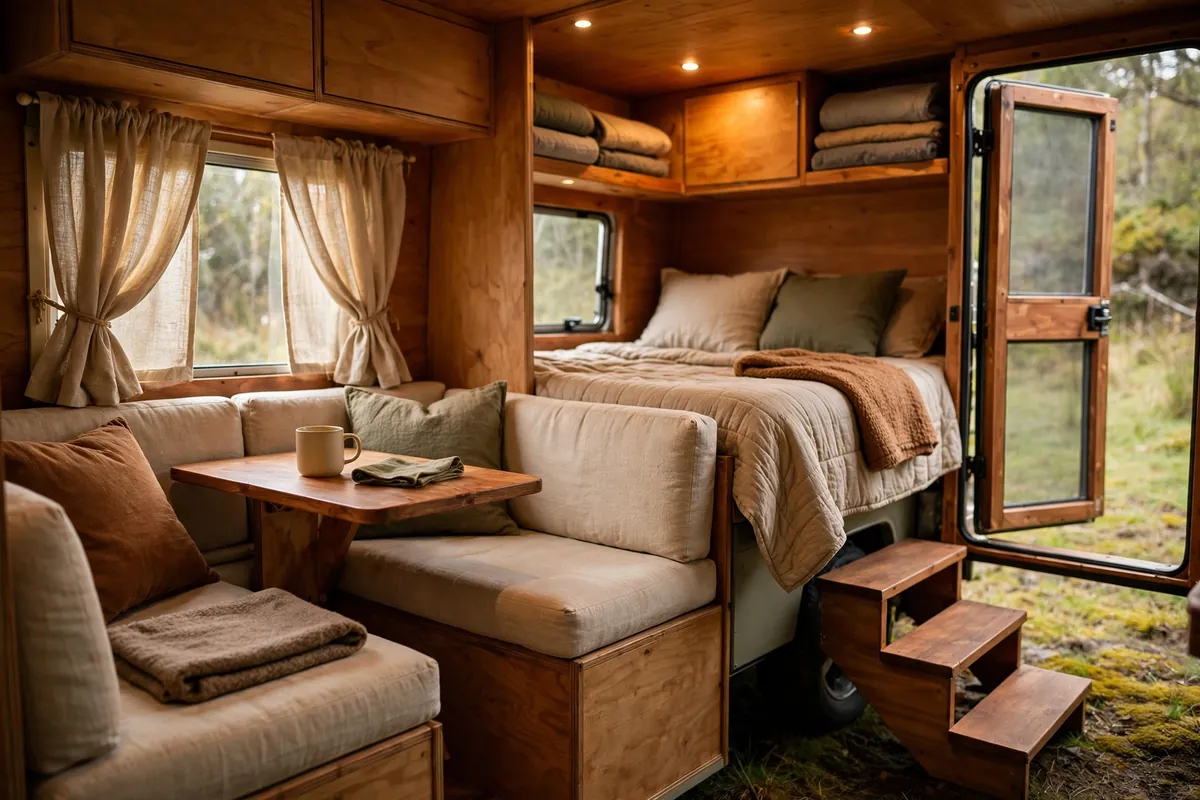
Once the camper is down low and supported, daily life inside is mostly normal — with a few differences worth planning for.
Getting in and out. Lowered is easier: the door is closer to the ground, so your steps reach properly. Just make sure the step setup is stable, not perched on a soft patch.
Power and water. You lose the truck’s alternator charging, so you’re on battery, solar, and propane alone. If you have solar and a decent battery bank, a few days off the truck is no problem. If you don’t, watch your battery like you mean it — and remember that your electric jacks run off that same battery, so don’t drain it flat and then discover you can’t reload the camper. Shore power, if the site has it, changes everything. For the longer version of power planning away from the truck, see my guide to boondocking and dispersed camping in a truck camper.
Moisture. A camper sitting low, with less air moving underneath, can trap damp — especially if you’re cooking and showering inside for days. Vent it: roof vent cracked, fan on after cooking and showering. My full playbook is in how to stop condensation in a truck camper — it matters more off the truck, because a damp floor you can’t see is a floor rotting quietly.
The truck becomes a day-trip vehicle. This is the whole point. Take the truck down a rough road you’d never risk with the camper on, or into town without hunting for a huge parking spot. One Good Sam forum owner said dropping the camper so the truck alone could launch his boat was a main reason he kept doing it. Owners answering an iRV2 owner planning the same thing said yes, it works — but check with the campground first, since some frown on campers left standing and a few won’t allow it.
When You Should NOT Drop the Camper
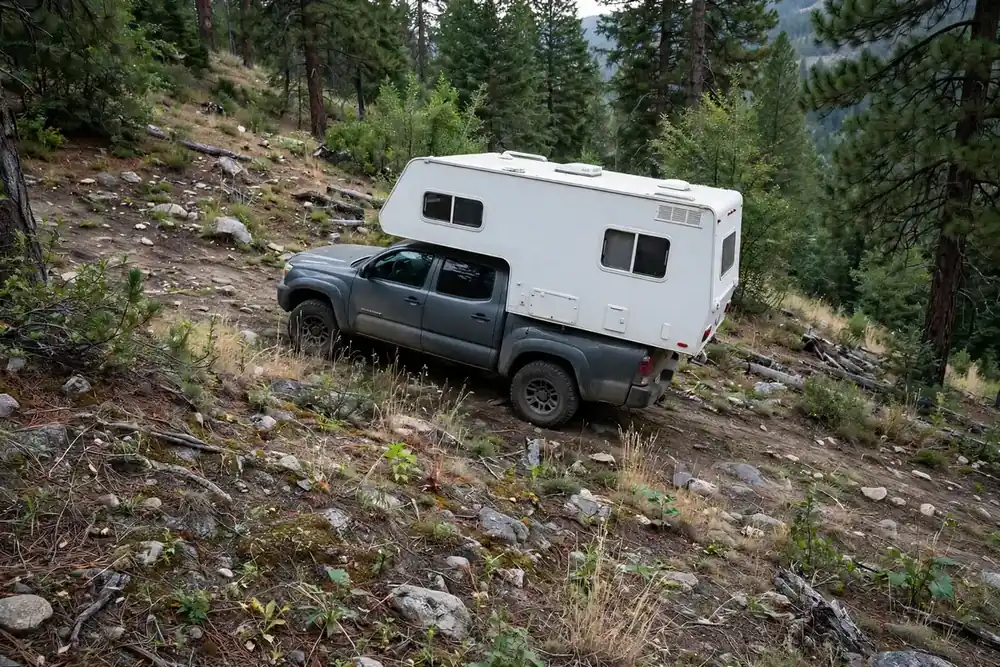
Honest version: sometimes leaving it on the truck is the smarter call.
- One-night stops. If you’re moving tomorrow, the unload and reload cycle costs more time and risk than it saves. Most owners who’ve done this for years say the same thing: the idea sounds better than the reality for short stays.
- Soft, sloped, or uneven ground. Jacks sink, campers tilt, and a slope turns a careful unload into a slow-motion wrestling match. If you can’t find firm, level ground, keep it on the truck.
- Bad weather coming and no shelter. A storm forecast plus a freestanding camper plus you driving away is a combination to avoid.
- Sketchy security. A camper on the truck can leave in a minute. A camper on jacks can’t. If the area feels off, the truck is your escape plan — keep it attached.
- A camper whose manual says no, or a floor you don’t trust. Don’t argue with the manual using forum posts. The manual was written for your exact floor and jack setup.
- You’re tired or in a hurry. Reloading a camper in fading light, on ground that’s settled since you unloaded, with jacks that have sunk a half inch overnight, is when mistakes happen. Owners on iRV2 repeatedly say getting it back on square is the harder half of the job, and rushing it is how trucks get dinged and jacks get bent.
My Off-Truck Checklist
- Read your manual’s off-truck section before the trip, not at the campsite. If it says full floor support, pack supports.
- Pick firm, level ground with room to drive the truck out straight and, later, back under straight.
- Disconnect everything — turnbuckles, tie-downs, power cord, camera cable — before moving anything.
- Lower in small increments, level as you go (full sequence in my solo loading and unloading guide), and get the camper as low as the jacks allow once the truck is out.
- Support the floor. Plywood under the supports, supports under the full floor width, jacks left touching for stability.
- Add sway control if you’ll be there more than a night or wind is expected — diagonal braces, low height, windbreak.
- Level it properly before running a slide out, and never support under the slide itself.
- Check the forecast and the campground rules, and keep enough battery in reserve to run the jacks for reload day.
- Before reload, re-check level and jack feet. Re-level if the ground settled, then load slowly and re-secure every tie-down.
The Bottom Line
Can you use a truck camper off the truck? Yes, and for the right trip it’s the best of both worlds: a proper little basecamp that stays put while your truck goes and plays. The manufacturers who allow it all say the same thing in different words — lowered, level, floor supported, nobody inside while it’s moving — and the owners who’ve done it for decades say the same thing with lumber: don’t trust four jack feet alone, get the weight onto something wide and solid, and get the box down out of the wind.
Frequently Asked Questions
Can you sleep in a truck camper off the truck?
Yes, if the camper is lowered as far as possible, level, and properly supported — ideally with the floor supported across its width, not just at the four jack corners. Lance allows occupancy lowered, not raised; Northern Lite requires full floor support. Always follow your own manual first.
Is it safe to leave a truck camper on jacks only?
For a short stop with a manual that allows lowered-jack use, jacks-only is common. For longer stays, heavier campers, or a flexible floor, add under-floor support — sawhorses, cribbing, or a platform, with plywood spreading the load. Never occupy a camper raised high on its jacks.
Do I need sawhorses under a truck camper off the truck?
Not always, but they’re the simplest fix for the two real problems: an unsupported floor middle and sway. Heavy-duty sawhorses or cribbing under the floor, plywood spreading the load, jacks left touching for stability — that’s the setup most long-time owners recommend. Never use tall sawhorses to hold a camper up high.
Can you use a truck camper with a slide-out off the truck?
Yes, but only once the camper is level and stable, and never with supports under the slide-out box itself. If it isn’t steady, keep the slide in — extending one on an unlevel or rocking camper can rack the opening and damage the mechanism.
Will wind tip over a truck camper off the truck?
A lowered, well-supported camper is far less vulnerable than one left high on its jacks, but a tall box on four legs is still a sail. Lower it fully, use a windbreak, add diagonal bracing for longer stays, and load it back on if serious wind is forecast while you’re away.
Can you leave a truck camper detached at a campground?
Often yes, but check first — some campgrounds discourage or prohibit campers left standing. Also consider security: a detached camper can’t be moved quickly, so it’s a poor choice where you might want to leave in a hurry.
What about power and water when the camper is off the truck?
Everything still works, but you lose charging from the truck’s alternator. You’re on battery, solar, propane, and any shore power. Keep enough battery in reserve to run the jacks for reloading, and plan water and propane for the full stay.