Best Truck Camper for Chevrolet Silverado 3500HD
I bought my Silverado 3500HD because I was tired of doing payload math at dealerships. One ton. Big diesel. Problem solved, right? Then I stood at a CAT scale with a camper I was sure fit, and the ticket told me a different story. The best truck camper for Chevrolet Silverado 3500HD owners is not the biggest camper on the lot. It is the biggest camper your exact truck can carry once you count the water, the propane, and your family.
This is a one-ton truck, and it will carry campers a half-ton can only dream about. But “one-ton” is a nickname, not a promise: two Silverado 3500HDs on the same lot can sticker more than 2,000 pounds apart.
The Short Answer
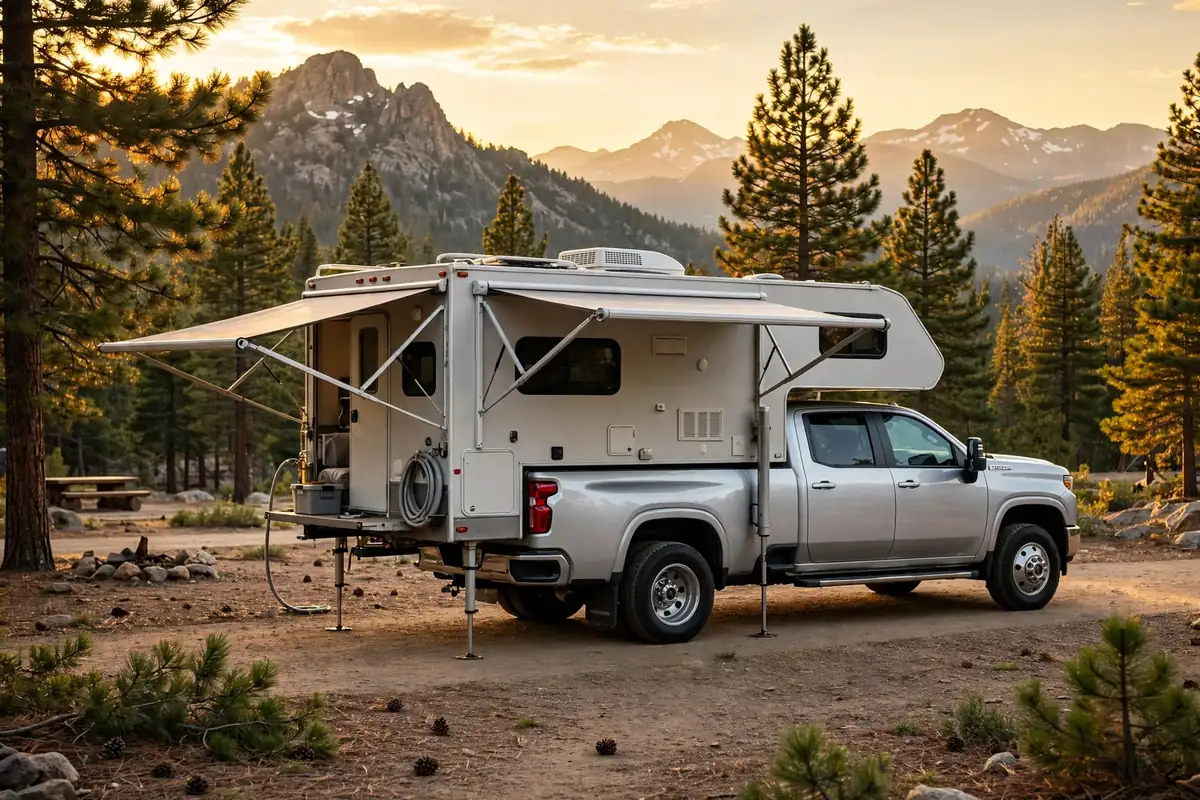
If you own a single-rear-wheel (SRW) Silverado 3500HD crew cab long bed 4×4 — the truck most of us actually drive — your sweet spot is a long-bed hard-side camper in the 2,900 to 3,500 pound dry-weight range: the Lance 960, the Northern Lite 10-2 EX, or the Arctic Fox 990. If you own a dually, the ceiling lifts by roughly 1,400 to 2,000 pounds, and the big triple-slide campers like the Eagle Cap 1200 and the Host Mammoth finally come into play — but only if you run them light.
Your Silverado 3500HD Payload: The Number That Decides Everything
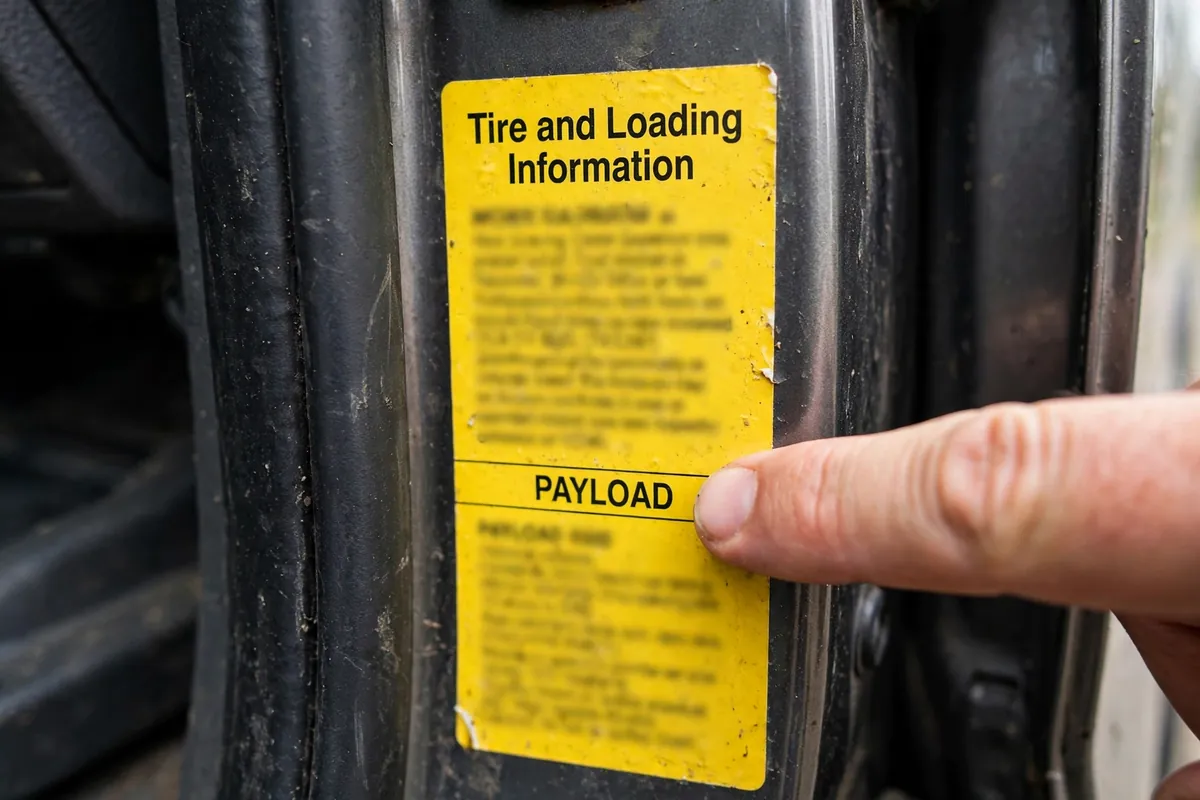
Open the driver’s door and read the yellow “Tire and Loading Information” sticker. That number is your payload — it already accounts for your cab, engine, four-wheel drive, and every factory option. Everything you add after that comes out of that one number.
Here are the 2026 maximum payload figures, from GM’s published order-guide data via GM Authority’s 2026 Silverado HD payload breakdown. Best-case numbers for a base truck — yours will sticker lower once options are added.
| Your Silverado 3500HD | Gas 6.6L V8 | Duramax diesel |
|---|---|---|
| Regular Cab long bed SRW 4WD | 4,590 lb | 4,444 lb |
| Regular Cab long bed DRW 2WD | 7,290 lb | 6,644 lb |
| Double Cab long bed SRW 4WD | 4,456 lb | 4,299 lb |
| Double Cab long bed DRW 4WD | 6,513 lb | 5,807 lb |
| Crew Cab standard bed SRW 4WD | 4,361 lb | 4,191 lb |
| Crew Cab long bed SRW 4WD | 4,472 lb | 4,309 lb |
| Crew Cab long bed DRW 4WD | 6,428 lb | 5,716 lb |
| Crew Cab long bed High Country SRW 4WD | 4,049 lb | 3,924 lb |
| Crew Cab long bed High Country DRW 4WD | 6,093 lb | 5,378 lb |
One honest flag: not every source agrees on the top number. GM Authority’s order-guide tables put the maximum at 7,290 pounds, while some dealer pages and Carfax list up to 7,442 or even 7,789 pounds. This table uses the order-guide figures. Your door-jamb sticker governs.
The pattern is what matters. Gas carries more than diesel in every configuration, because the Duramax weighs roughly 600 to 700 pounds more. The dually adds roughly 1,400 to 2,000 pounds, because GVWR jumps from 12,250 to 14,000 pounds and the rear axle rating from 7,250 to 10,400.
Gas vs Duramax: A Payload Question, Not a Power Question
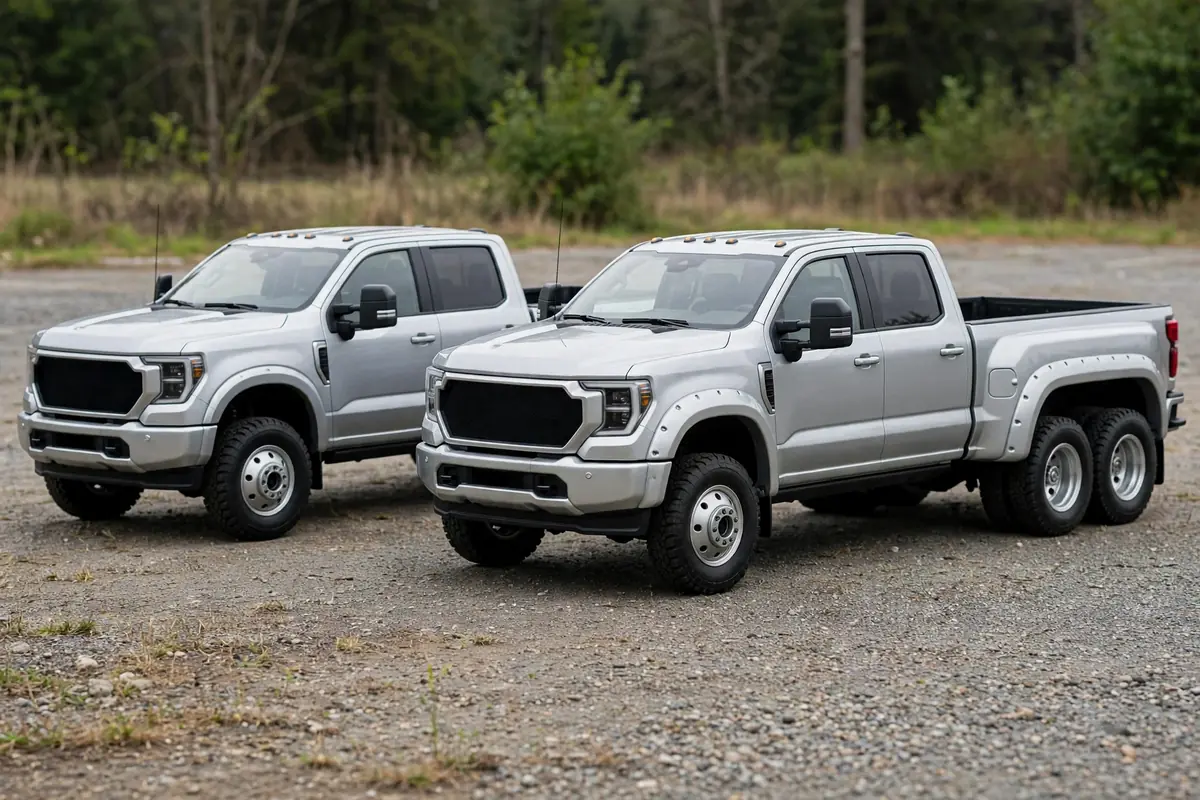
Chevrolet gives you two engines, both with a 10-speed Allison automatic: the 6.6L gas V8 (401 hp, 464 lb-ft) and the 6.6L Duramax turbo-diesel (470 hp, 975 lb-ft). The diesel is the stronger towing engine and the better mountain engine. But for carrying a camper, the gas truck has the better number on the sticker.
Owners on iRV2 have worked through exactly this trade in public. One owner shopping for a dually to carry a camper in the 5,500-pound loaded range found his crew cab 4×4 Duramax dually payload came up short — around 5,000 pounds — and dropping to 2WD only got him to about 5,400. Switching to gas pushed him over 6,000 pounds and solved the problem on paper. His question was whether the gas engine would handle mountain passes out west with that much weight. It will, but it will work harder: more revs, more downshifts, more fuel stops. The diesel climbs like nothing is back there and then quietly costs you 150 to 700 pounds of payload. If your camper fits under either engine with margin, take the diesel. If only gas clears it, take gas — or a lighter camper.
SRW vs Dually: Stability Is the Real Difference
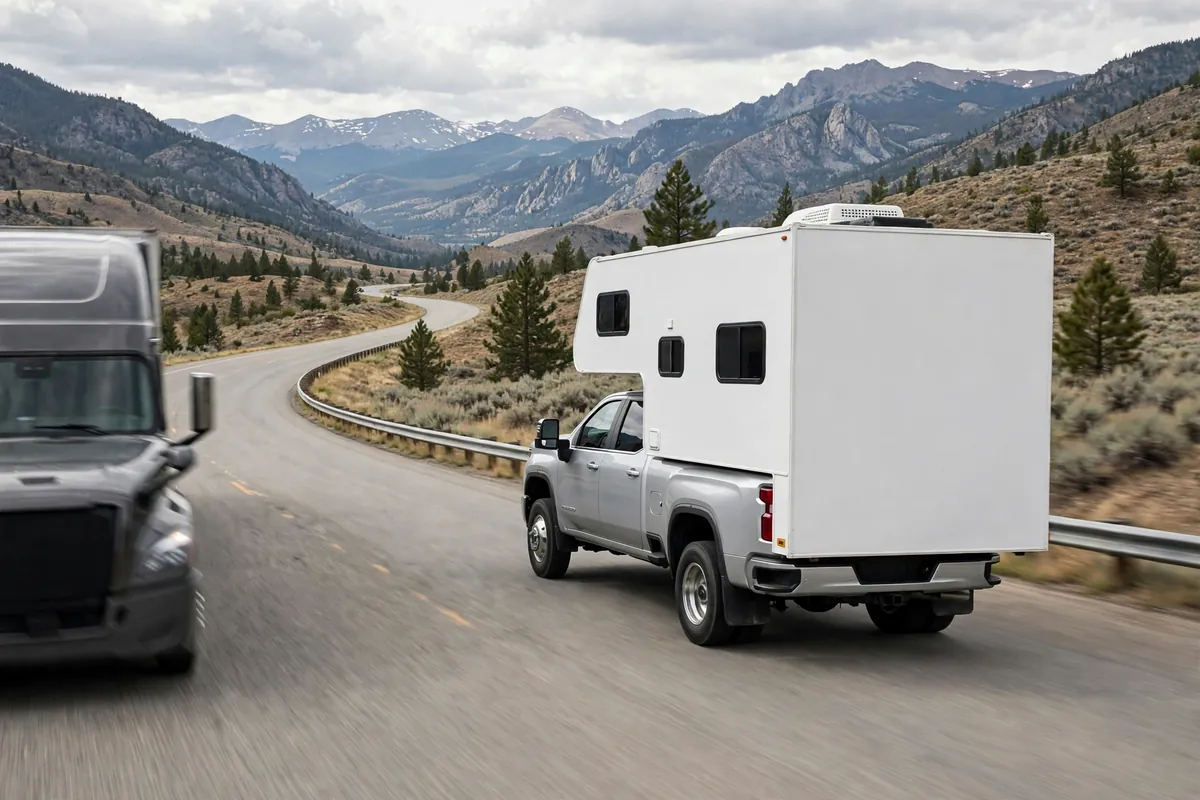
The payload gap is large — roughly 1,400 pounds on a crew cab long bed 4WD diesel, nearly 2,000 on the gas version. But owners who have carried the same camper on both say payload is only half the story. The other half is how the truck feels when a semi passes or a crosswind hits.
On iRV2, one owner who carried the same 4,000-pound, 11-foot camper first on a 2007 Chevy 3500 SRW and then on a 3500 dually wrote that the difference in stability was huge — less bouncing and sway in every way imaginable. Another, who had run a Bigfoot on two SRW trucks before moving it to a dually, called the change dramatic. Four rear tires spread the load wider and share the work of resisting roll, and a tall camper in a crosswind acts like a sail.
None of that makes the SRW a bad truck. An SRW Silverado 3500HD is about 15 inches narrower across the rear fenders, fits in a garage, parks like a normal truck, and is far better in snow and on soft ground, where a dually’s four rear tires spread the weight so thin they can skate. Owners on iRV2 report the same trade-offs every time: duallys are worse in snow, harder to park, and can trap rocks between the rear tires off-road. A Facebook discussion among dually owners agreed on the core point — payload limits, not towing capacity, decide the question for people who travel heavy. If the camper lives on the truck, buy the dually. If the truck is your daily driver, the SRW is the sane choice.
What about fixing an SRW with airbags, Timbrens, or a bigger sway bar? Owners on iRV2 are blunt: those are band-aids. A bigger Hellwig sway bar, Firestone airbags, or heavier shocks will firm up the ride and reduce the lean. But if you are way overweight, all the band-aids in the world will not help — you need more truck. The most repeated advice in those threads is the simplest: slow down a bit. Our airbags vs Timbren vs SumoSprings guide walks through what each option actually does.
The Glove-Box Sticker Nobody Reads
Here is a Silverado-specific trap that catches first-time buyers. Your Silverado has a second sticker — in the glove box — that states a recommended weight for a slide-in truck camper. That number is lower than your door-jamb payload, and people assume it is a mistake. It is not.
A 2025 Silverado 3500 SRW regular cab owner posted his numbers: 4,384 pounds of max payload on the door sticker, but a glove-box camper cargo weight rating of 3,934 pounds — a 450-pound gap, roughly three passengers at 150 pounds each. The door payload includes you and your passengers; the glove-box rating is what is left for the camper itself.
So when you shop, compare the camper’s loaded weight to the glove-box number, not the door number. If your door sticker says 4,309 and your glove box says roughly 3,850, a camper that loads out at 4,000 pounds is already over. Check both stickers before you sign anything.
The Dry-Weight Lie: Add 1,000 Pounds, Then Weigh It
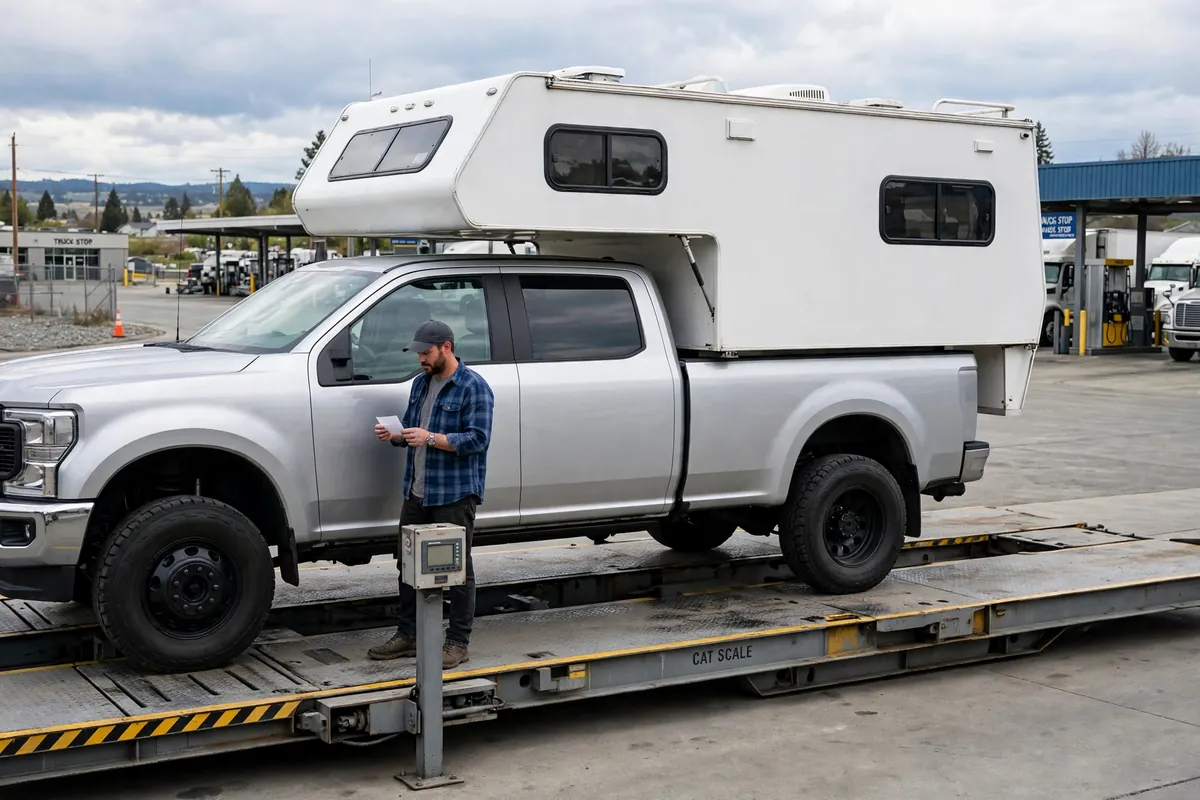
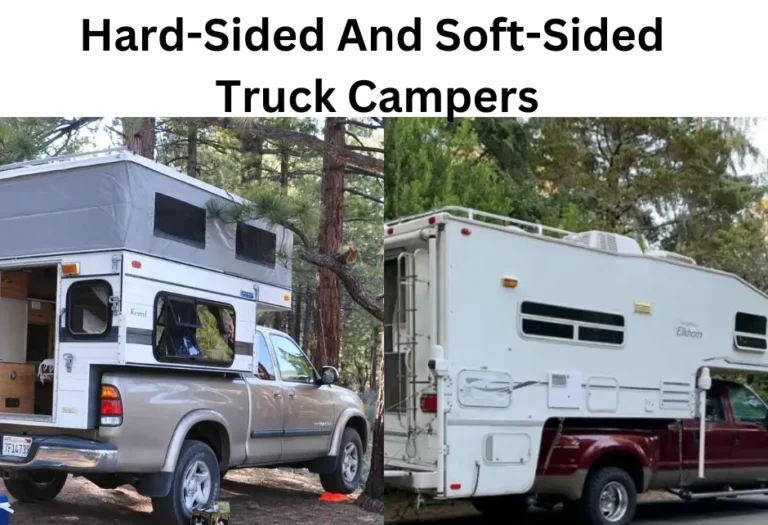
A camper’s dry weight is the weight of an empty shell as it left the factory, usually without options, water, propane, or batteries. Real life adds roughly 800 to 1,500 pounds: 30 gallons of fresh water alone weighs about 250 pounds, plus propane, batteries, food, and gear. Truck Camper Magazine’s measured review of the Lance 960 tells the story: the factory lists 2,970 pounds dry, but their test unit weighed 3,254 pounds dry and 4,321 pounds wet. Add at least 1,000 pounds to every dry weight before comparing it to your sticker.
Then weigh the finished rig on a CAT scale. Truck Camper Adventure took a brand-new Bundutec Roadrunner — 2,450 pounds dry on paper — to a CAT scale and found the loaded camper weighed about 3,300 pounds, and the whole rig came in at 12,180 pounds against an 11,700-pound GVWR: over on total weight while still under both axle ratings, exactly the gray zone most overloaded rigs live in. Owners on WanderTheWest report the same pattern. Weigh the truck empty first, then truck and camper together. The scale does not care what the brochure said.
Best Truck Camper for Chevrolet Silverado 3500HD SRW
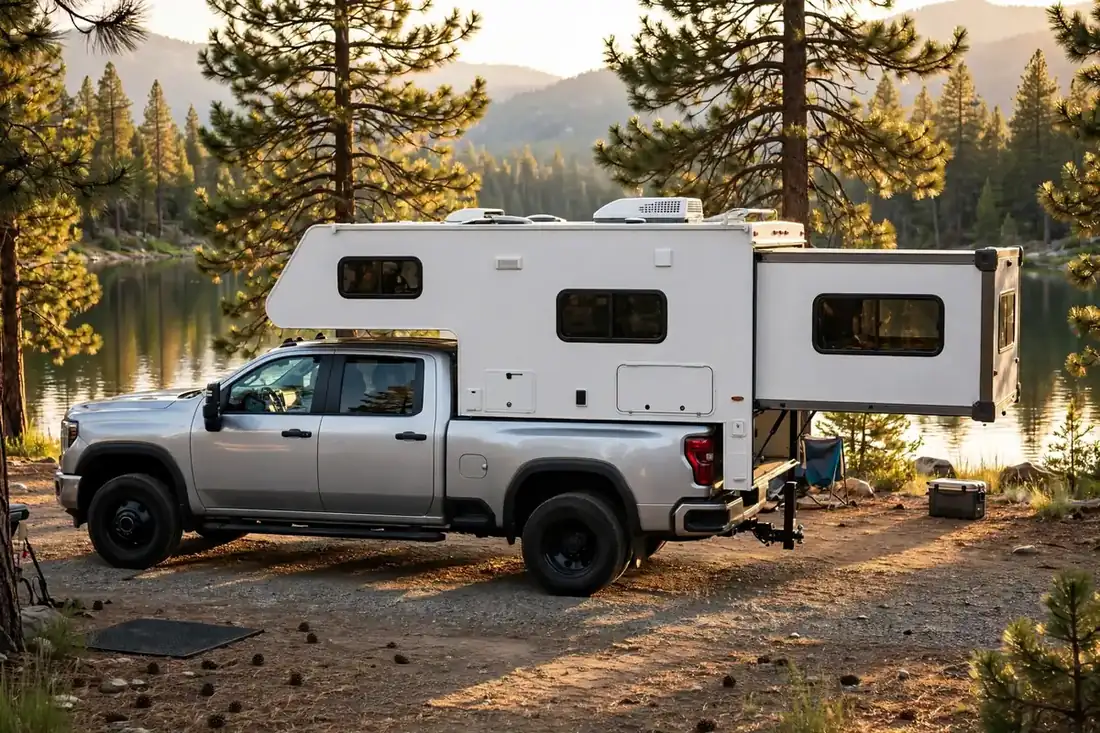
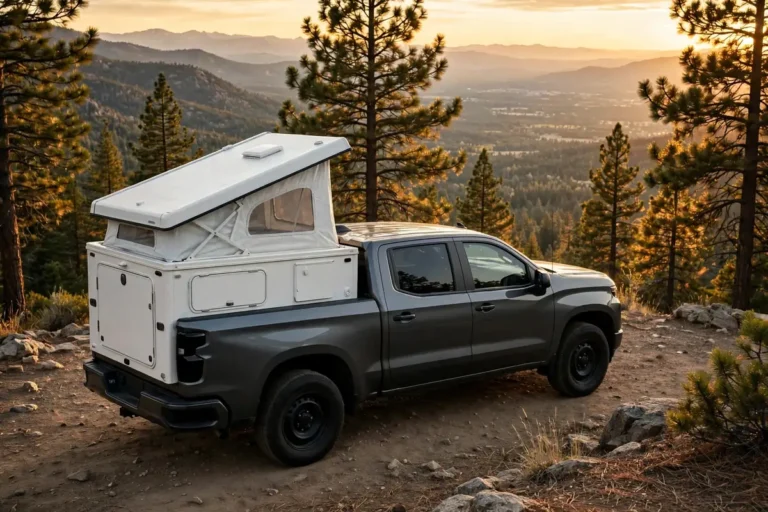
These are long-bed campers for the truck most Silverado 3500HD owners drive: a crew cab or double cab long bed SRW 4×4 with roughly 4,200 to 4,500 pounds of payload on the sticker, or about 3,800 to 3,900 pounds of glove-box camper rating once people are counted. Every weight below is dry weight — apply the 1,000-pound rule before comparing it to your sticker.
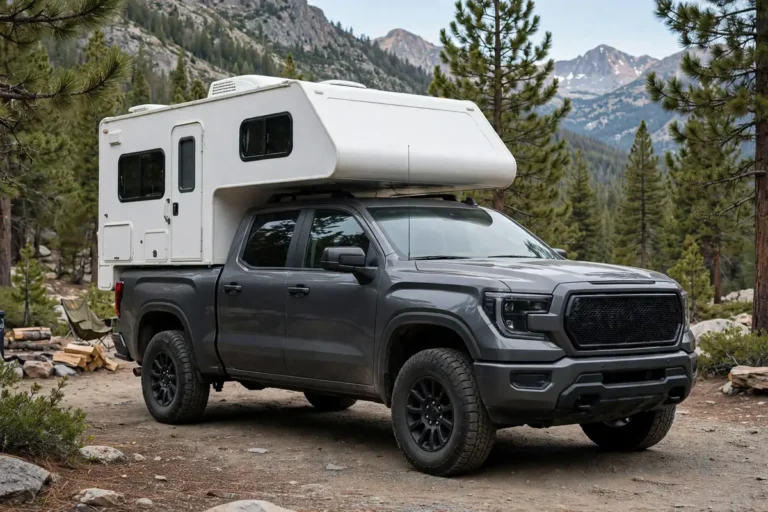
Lance 960 — the default answer. Lance lists the 960 at 2,970 pounds dry, a hard-side, single-slide, wet-bath camper with a 9-foot-11-inch floor built for long-bed SRW trucks. Truck Camper Magazine’s measured review tells a more honest story: their test unit weighed 3,254 pounds dry and 4,321 pounds wet. Even at the measured wet weight, the 960 fits a gas or diesel SRW crew cab with room for people and gear. Truck Camper Adventure’s Silverado 3500HD top-10 list ranks it the same way.
Northern Lite 10-2 EX — the four-season pick. The 10-2 EX is Northern Lite’s largest model, a 10-foot-9-inch floorplan with a north-south queen, a wet bath, and a fiberglass clamshell body built like a boat hull. Dry weight is listed at 3,265 to 3,285 pounds, which puts it around 4,300 to 4,400 pounds loaded. That fits an SRW crew cab, but it is tighter than the Lance on a diesel High Country — check your glove-box number. Owners on iRV2 report loaded rigs around 12,000 to 12,500 pounds GVW on SRW trucks: the SRW hauled it fine after heavier shocks and a sway bar, but the dually did a much better and more stable job.
Arctic Fox 990 — the single-slide workhorse. Northwood lists the 2027 Arctic Fox 990 at 3,010 pounds dry, a hard-side, single-slide, wet-bath long-bed camper. Loaded, figure roughly 4,000 to 4,200 pounds. It fits any SRW Silverado 3500HD with room to spare.
Best Truck Campers for the Silverado 3500HD Dually
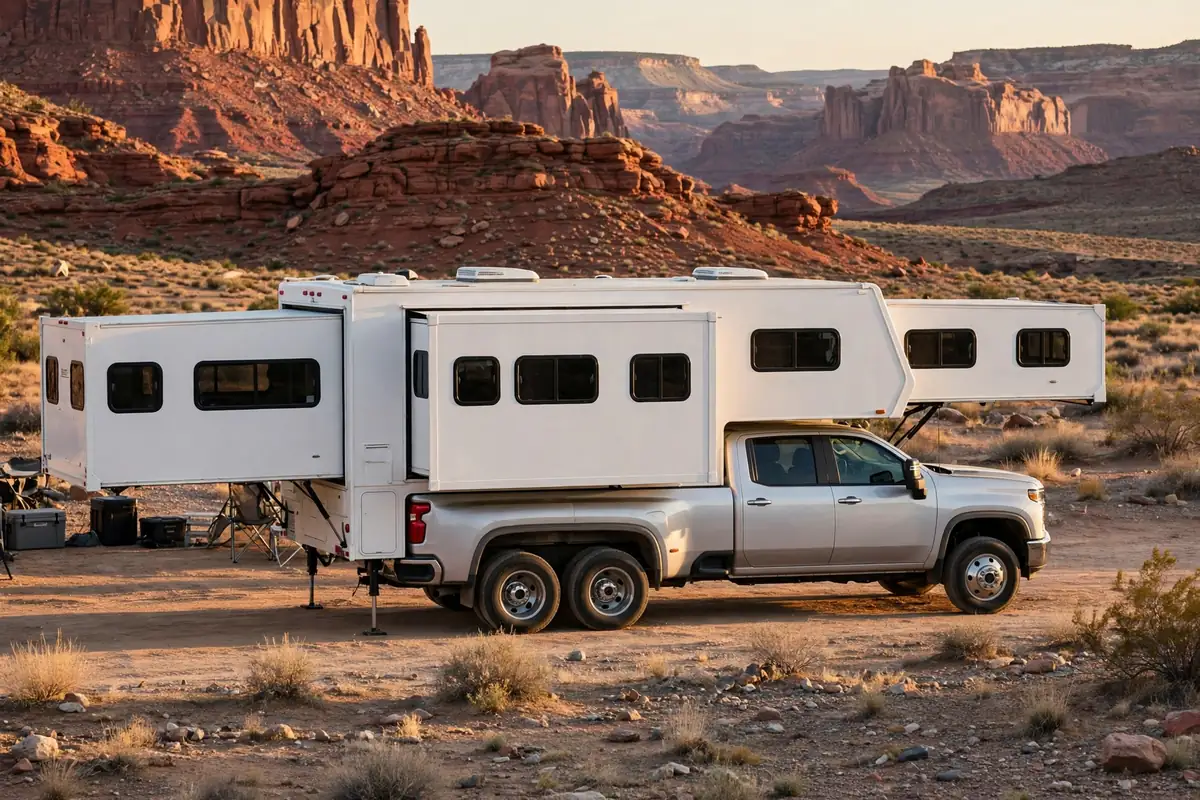
A dually crew cab long bed 4×4 diesel stickers around 5,716 pounds of payload; the gas version reaches 6,428. That opens the door to the biggest slide-in campers made — but the margin disappears fast once you add 1,000-plus pounds of loading to a 4,800-pound dry weight.
Eagle Cap 1200 — the biggest camper that fits, barely. The triple-slide, dry-bath 1200 is the largest slide-in camper on the market, with an 11-foot-11-inch floor and a California king bed. Truck Camper Magazine measured it at 4,801 pounds dry and 6,021 pounds wet. On a gas dually with 6,428 pounds of payload, a loaded 1200 at 6,000-plus pounds leaves almost nothing for passengers and gear. On a diesel dually at 5,716, it is over before you load the fridge. This is a gas-dually-only camper, run light.
Host Mammoth 11.6 — the triple-slide alternative. Host’s Mammoth is typically listed around 4,700 pounds dry, loading out toward 5,500 to 6,000 pounds once the big tanks are full. Same verdict as the Eagle Cap: gas dually, run light, weigh it.
Lance 1172 — the double-slide middle ground. At 4,063 pounds dry, the double-slide, dry-bath 1172 is the heaviest Lance, and it loads out near 5,000 to 5,300 pounds. That fits a diesel dually with margin and a gas dually comfortably. If the Eagle Cap scares you on the math, this is the compromise.
One caution for all three: dually campers need dually-specific tie-downs. Torklift’s Talon rear tie-downs (part C3222A) are made for 2020–2027 Chevrolet and GMC 3500 dual-rear-wheel trucks with an 8-foot bed, and they bolt to the frame with no drilling. Our tie-downs and turnbuckles comparison covers Torklift, Happijac, and Brophy head to head.
Short Bed vs Long Bed, and Towing Behind the Camper
The Silverado 3500HD comes with two beds: a standard bed at 6 feet 8 inches and a long bed at 8 feet 2 inches. Every dually is a long bed, and every camper in this guide is built for the long bed. A long-bed camper in a short-bed truck overhangs the tailgate and shifts the center of gravity rearward. If you are still choosing the truck, buy the long bed.
Towing behind the camper creates a second weight budget: the trailer’s tongue weight comes straight out of your payload, on top of the camper. A 5,000-pound trailer at 10 percent tongue weight is 500 pounds you no longer have. One owner on iRV2 worked through this with a Lance 1191 on an F-350 dually and found himself 558 pounds over his maximum once towing was counted — the camper fit, the trailer fit, and the two together did not. Our towing with a truck camper guide covers extensions, weights, and sway.
If you are cross-shopping, the GMC Sierra 3500HD is the Silverado’s mechanical twin — same frame, same engines, same payload tables. Our best truck camper for GMC Sierra 3500HD guide covers that truck with the same numbers. And if a 3500HD is more truck than you need, the best truck camper for Chevrolet Silverado 2500HD guide covers the three-quarter-ton version.
Before You Buy: A Five-Minute Checklist
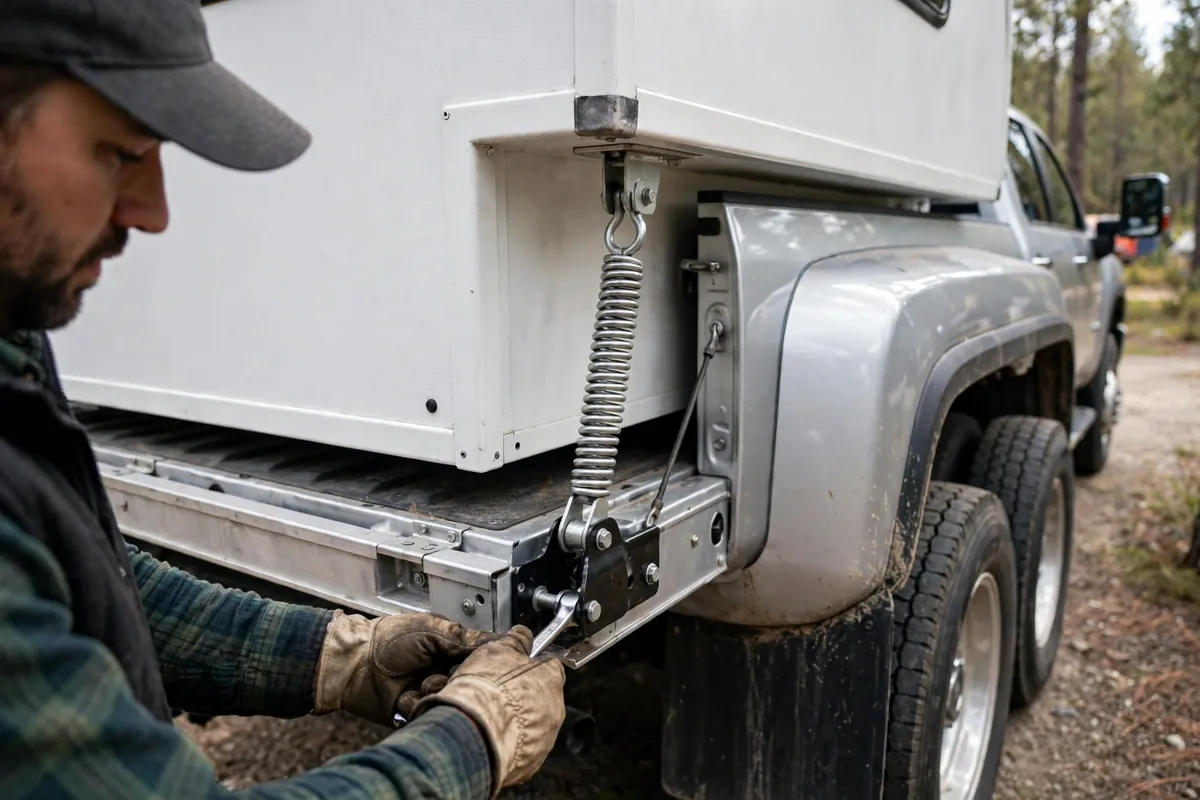
Read both stickers — the yellow door-jamb payload and the glove-box camper rating — and write both numbers down. Add 1,000 to 1,200 pounds to the camper’s dry weight, add 400 pounds for people and cab gear, and compare the total to the glove-box number. If it does not clear with margin, pick a lighter camper. Check the center of gravity: the camper’s COG marker should sit ahead of the rear axle. Confirm the tie-downs are frame-mounted and made for your exact truck. After you buy, weigh the loaded rig on a CAT scale, front and rear axle separately, before your first long trip.
Disclaimer: Payload, towing, and axle ratings vary by individual truck. Confirm the ratings on your own truck’s door-jamb and glove-box labels, and verify camper weights with the manufacturer before purchase. Overloading can affect handling, braking, and insurance coverage.
Frequently Asked Questions
What is the best truck camper for a Chevrolet Silverado 3500HD?
The Lance 960 — a single-slide, long-bed hard-side that loads out around 4,000 to 4,300 pounds and fits any SRW or dually. On a dually, the Northern Lite 10-2 EX and Arctic Fox 990 also fit.
How much payload does a Silverado 3500HD have for a truck camper?
For 2026, maximum payload runs from about 3,924 pounds on a loaded High Country crew cab diesel SRW to 7,290 on a base Regular Cab gas dually. The common truck — a crew cab long bed 4×4 — is rated 4,472 gas / 4,309 diesel SRW, and 6,428 gas / 5,716 diesel as a dually.
Gas or Duramax for a truck camper on a Silverado 3500HD?
Gas carries more payload in every configuration; diesel tows better and climbs grades easier. If your camper fits under either with margin, take the diesel. If only gas clears it, take gas — or a lighter camper.
SRW or dually for a truck camper?
A dually adds roughly 1,400–2,000 pounds of payload and much better stability. But it is wider, harder to park, worse in snow, and does not fit some garages. Camper always on: buy the dually.
Why is the glove-box camper rating lower than the door payload?
Door payload includes driver and passengers; the glove-box rating is what remains for the camper — roughly 450 pounds less on a crew cab. Compare the camper’s loaded weight to the glove-box number.
Can a Silverado 3500HD carry an Eagle Cap 1200 or Host Mammoth?
Only on a dually, realistically only a gas dually run light. A loaded Eagle Cap 1200 is around 6,000 pounds — inside a gas dually’s 6,428-pound maximum but over a diesel dually’s 5,716.
Do I need airbags or a sway bar on my Silverado 3500HD?
No add-on raises your payload rating. A bigger sway bar and good shocks improve handling on a fitting camper; airbags help level the ride.