Truck Camper Fridge Troubleshooting: Fix a Fridge That Won’t Cool or Won’t Light
I learned the hard way that a truck camper fridge not cooling is never a convenient problem. Mine quit on the second morning of a desert trip, with a fridge full of food and no hookups for miles. I spent that morning opening the door every ten minutes, hoping it had fixed itself. It hadn’t.
Here’s what I wish someone had told me: most camper fridges that “die” aren’t dead. They’re unlevel, starved of gas, choked with a spider nest, or confused by a sensor that slipped off a fin. Here’s how I troubleshoot mine now — in order, cheapest first, with the dangerous stuff flagged so you know when to call a pro.
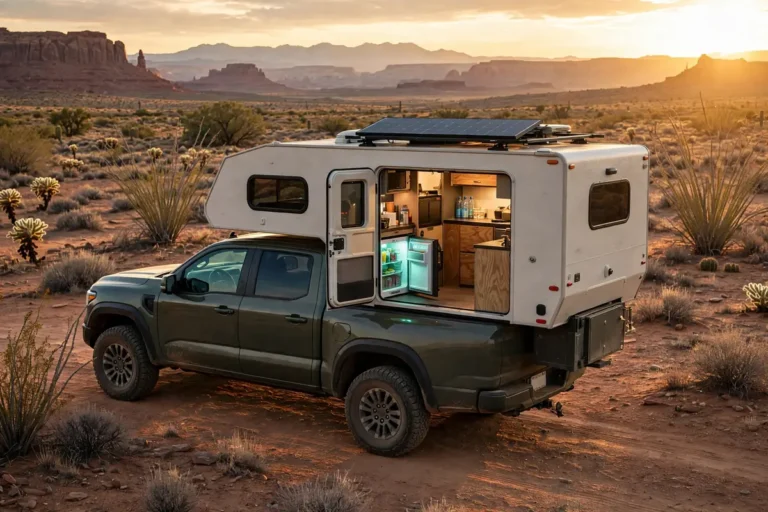
First, figure out which fridge you have. If yours runs on propane or 120V shore power, it’s an absorption fridge — a Dometic or Norcold, most likely — which cools by heating a sealed mix of ammonia, water, and hydrogen, with no compressor and no hum. If it runs only on 12V and hums like a household fridge, it’s a compressor fridge.
Safety first — read this before touching anything
If you smell gas near the fridge, stop: turn the propane off at the tank, open windows and vents, don’t touch any electrical switches, and get out. Dometic’s manuals say the same thing: if the refrigerator stops cooling or emits an ammonia smell, turn it off immediately and contact a service center.
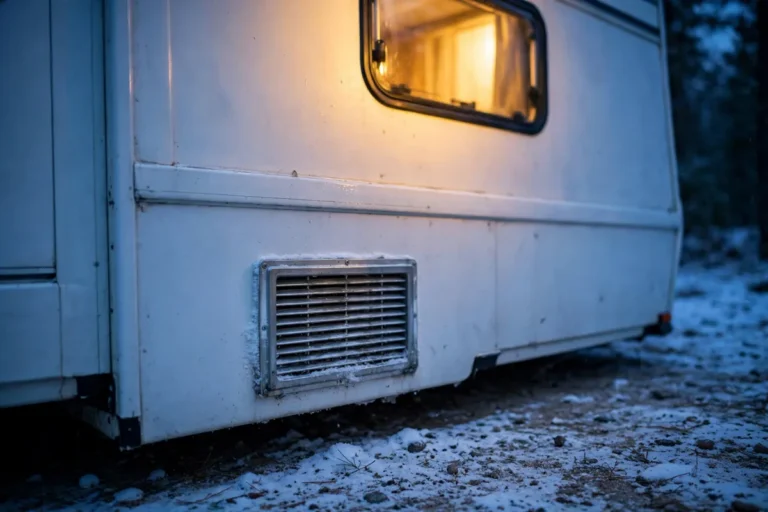
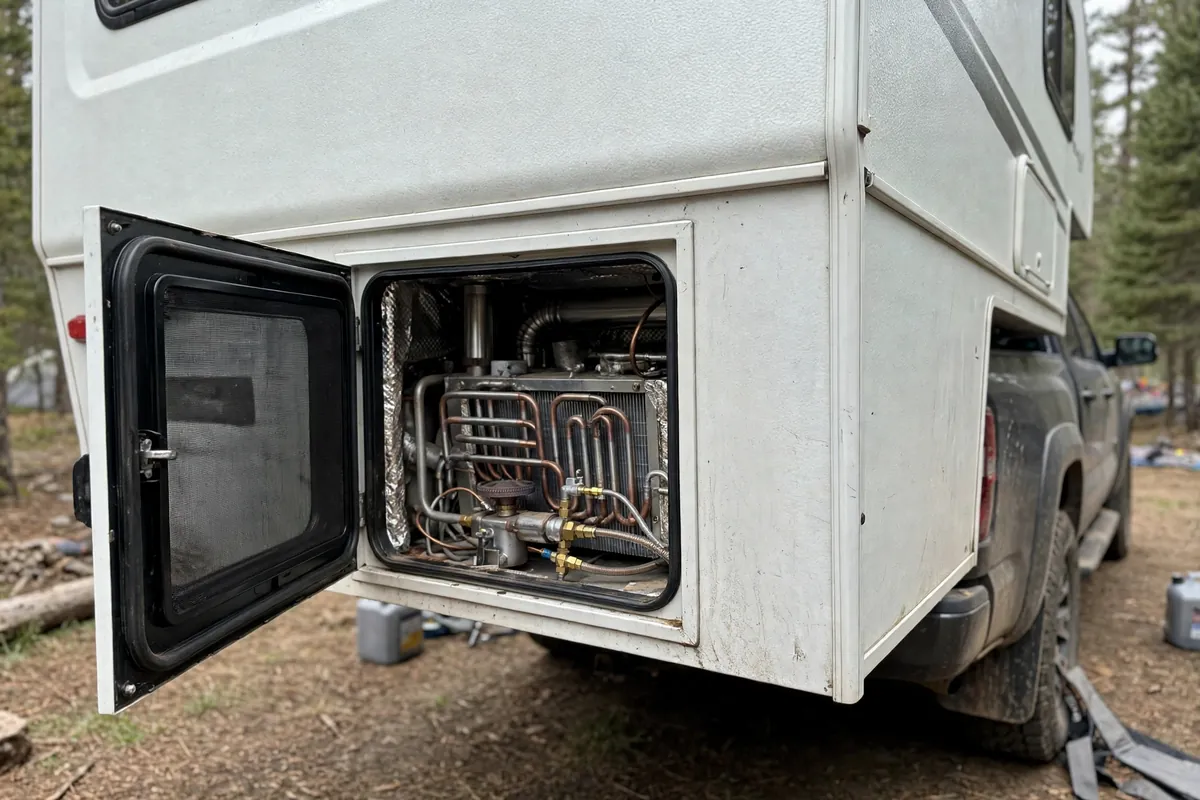
An ammonia leak has two tells: a sharp, chemical smell at the back of the fridge, and yellow, powdery residue on the cooling-unit tubes behind the outside vent panel. If you see or smell either one, the cooling unit has failed — don’t repair it, don’t keep running the fridge, ventilate, shut it off, and let a technician handle it.
One more rule: never poke a wire or pin through a burner orifice to clear it. You’ll widen the hole, change the gas flow, and create a fire hazard. Compressed air and a soft brush only — or replace the orifice.
Give it time: the mistake almost everyone makes first
An absorption fridge is slow: from warm, it can take 8 to 12 hours to fully cool down, and on a hot day the fridge box may take most of a day. I have watched owners condemn a perfectly good fridge after thirty minutes.
So before you diagnose anything: turn the fridge on the day before a trip, set it to the coldest setting, and load it with food that’s already cold — an absorption fridge keeps cold food cold, it won’t chill a warm load of groceries. Judge it with a thermometer in a glass of water on the top shelf, left for several hours, aiming for below 40°F in the fridge and around 0°F in the freezer. If it’s been running overnight, it’s level, and the box is still warm, keep going.
Step 1: Is the camper level?
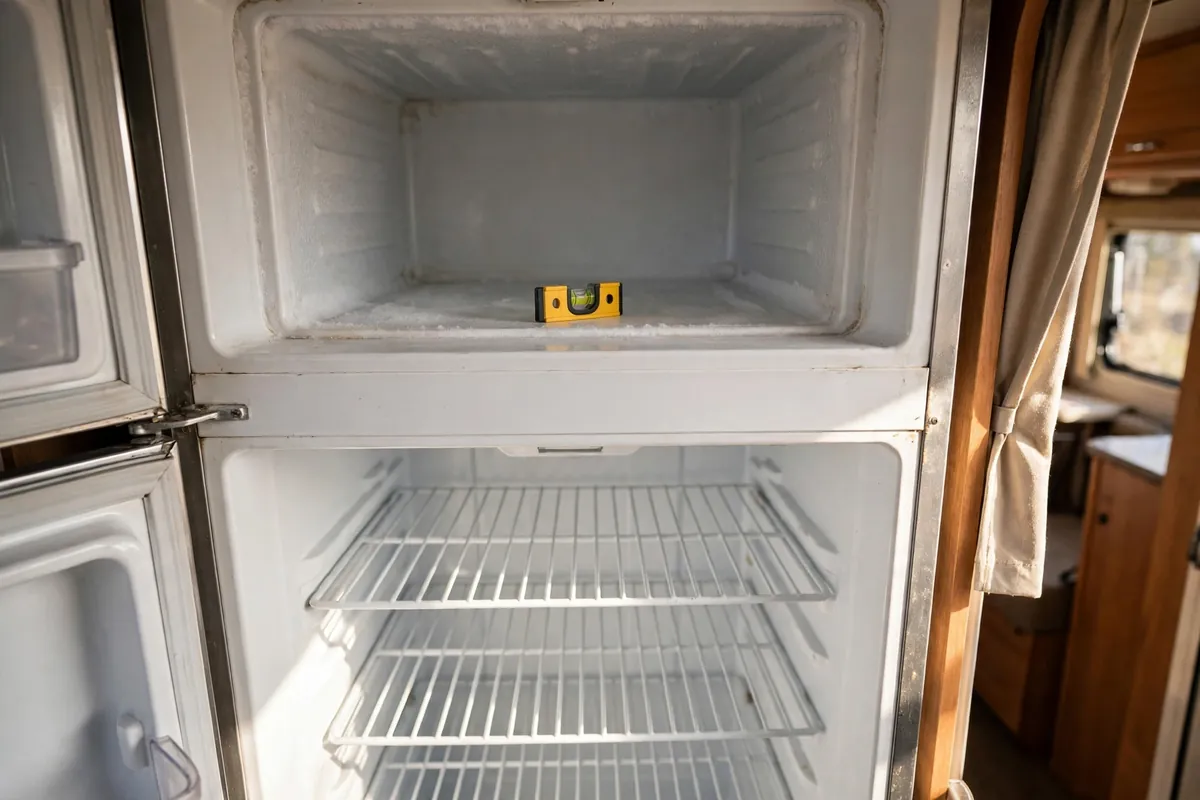
This is the number one cause of absorption fridge problems, and the easiest to fix — owners on Reddit and the RV forums bring it up in nearly every “fridge won’t cool” thread. An absorption fridge moves its ammonia solution by gravity: park tilted and the liquid pools in the wrong place, the cycle stalls, and cooling stops. Run it badly off level for hours and you can permanently damage the cooling unit.
The spec is within about 3 degrees side to side and 6 degrees front to back; Dometic puts it more plainly — level it so it’s comfortable to live in, with no noticeable slope in the floor. Put a bubble level on the freezer floor. If it’s off, re-level first, then give the fridge four to six hours to recover. Driving doesn’t count against you — the rolling and pitching of the road keeps the liquid moving.
A compressor fridge doesn’t care about level — if yours is a 12V compressor unit, skip ahead to the compressor section.
Step 2: Check the 12V control power
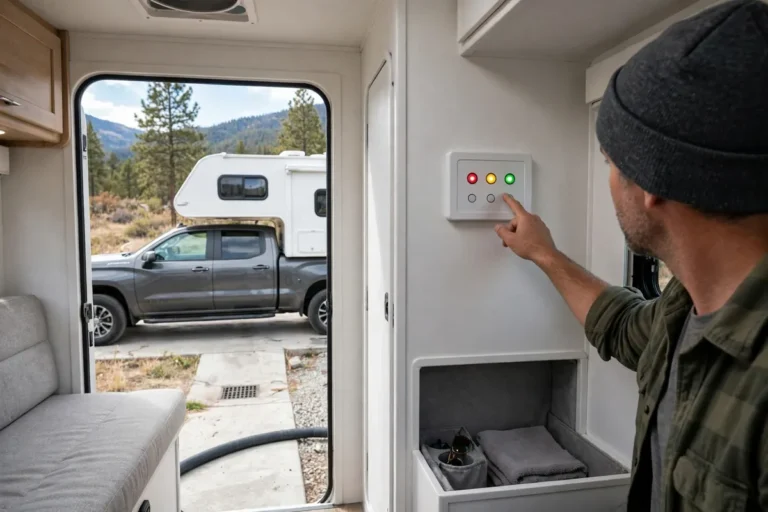
Here’s the surprise that catches new owners: even in propane mode, your absorption fridge needs 12V DC power — the control board, igniter, and gas valve all run on 12 volts. If the house battery is dead or the fridge’s fuse is blown, the burner will never light — no click, no flame, nothing.
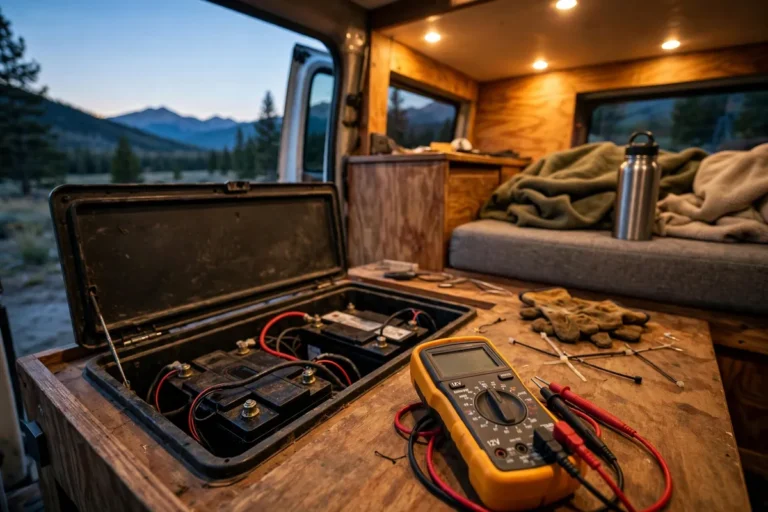
Check voltage at the fridge’s control board terminals if you can, not just at the battery. Dometic’s manuals note the controls work down to 9.6 volts, but a weak battery is one of the most common reasons a fridge won’t light on gas after a night off-grid. Check the blade fuse on the control board itself (usually 2 to 5 amps) as well as your main fuse panel. If your broader 12V system is acting up, sort the electrical side first.
Step 3: Won’t light on propane? Start with the gas supply
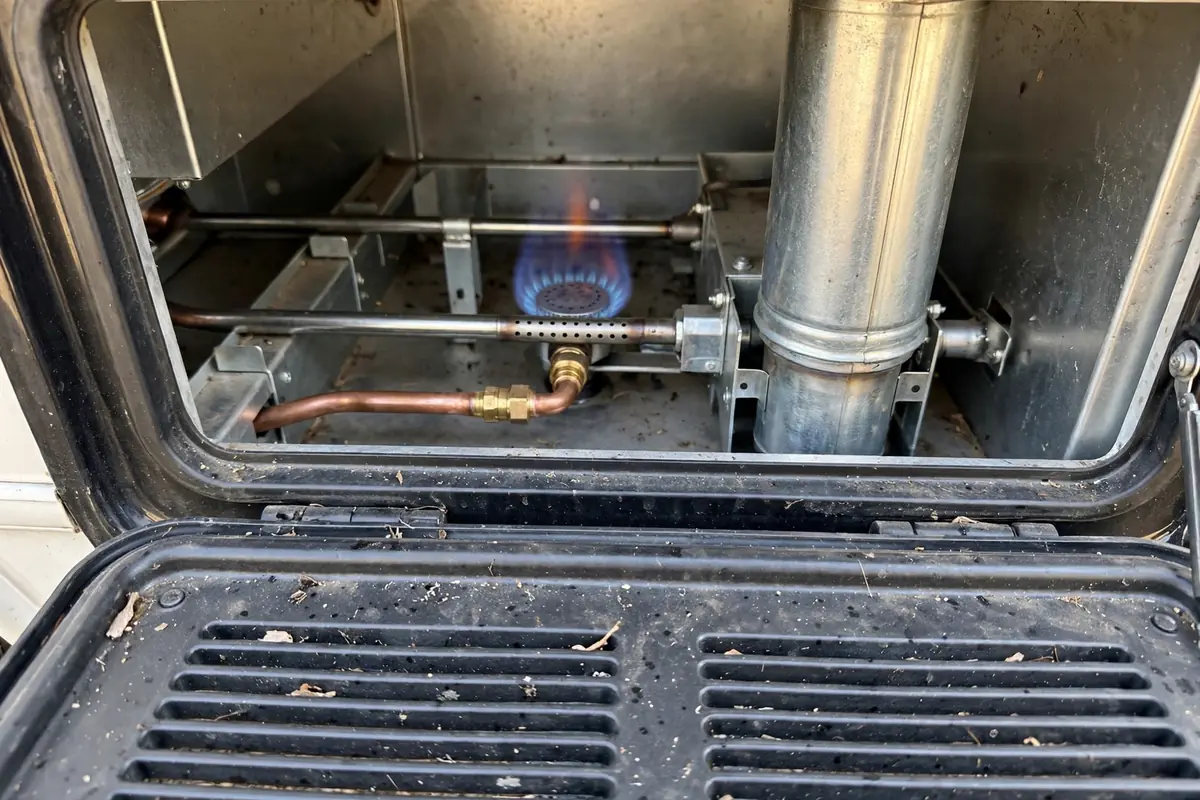
If the fridge clicks and clicks but the burner never catches, work the gas side in this order.
Purge the air. If the tank was just refilled, or the system sat unused for weeks, air is trapped in the lines. Light a stove burner first and let it burn steady for a minute or two — that purges the air out of the shared lines. Then try the fridge. Dometic’s own procedure, in the Americana operating manual, is to turn the fridge off and back on; if the flame doesn’t light within about 45 seconds, repeat three or four times.
Prove gas is reaching the camper. Light the stove: a strong, steady blue flame means supply is fine. A weak, sputtering yellow flame points at the tank valve or regulator — and the fridge burner, which uses a tiny flame, is the least tolerant appliance in the camper, so it fails first. If the stove is weak too, the problem is upstream of the fridge; my propane system guide covers regulators and tank valves.
Check the burner and flue. This is the fix owners on Reddit, iRV2, and the owner forums report most often for a fridge that worked last season and won’t light this one: spiders and mud daubers love the odorant in propane, and they nest inside the burner tube over winter. Take the lower vent cover off, shut the propane off at the tank, and look inside. Blow the burner tube out with compressed air, brush the flue, and clear any soot or webbing. Refit the flue baffle exactly where it was — its position sets the heat transfer.
Watch the flame. With everything reassembled and the gas back on, watch the burner light: you want a crisp, steady blue flame. Yellow, lifting, or fluttering means a restriction. A burner that lights then drops out usually points at the flame-sense probe — clean carbon off the electrode and check its position in the manual; it has to sit in the flame.
Altitude matters. Dometic’s manuals are blunt: reduced cooling and burner outage can happen above 5,500 feet on LP gas, and the manual says to run on electric above that altitude. If your fridge worked at sea level and quit in the mountains, that may be all it is.
Step 4: Cools on one power source but not the other
This symptom narrows the fault fast, because it tells you the cooling unit itself is fine.
Works on propane, not on AC. The 120V heating element is the prime suspect — but first check the outlet behind the lower exterior vent, which often shares a GFCI with the bathroom. If the outlet has power, the element may have burned out. With power disconnected, a technician can test it: a good element reads in the tens of ohms (roughly 40 to 60 ohms for a common 325-watt element, model-specific); infinite resistance means it’s open.
Works on AC, not on propane. The cooling unit is fine — the fault is on the gas side, so go back to Step 3: gas supply, air in the lines, burner, flue, igniter. Norcold’s service literature says the same: on LP gas, check the burner flame first, because most gas-mode faults relate to a dirty burner.
Won’t cool on either source. You’re looking at a shared fault: level, 12V control power, the control board, or the cooling unit — work Steps 1 and 2 first. Norcold units also have a high-limit thermal switch on the boiler stack with a manual reset; if it tripped, the fridge won’t heat on either source. Press it only with the fridge off.
Step 5: Freezer cold, fridge warm — check the thermistor
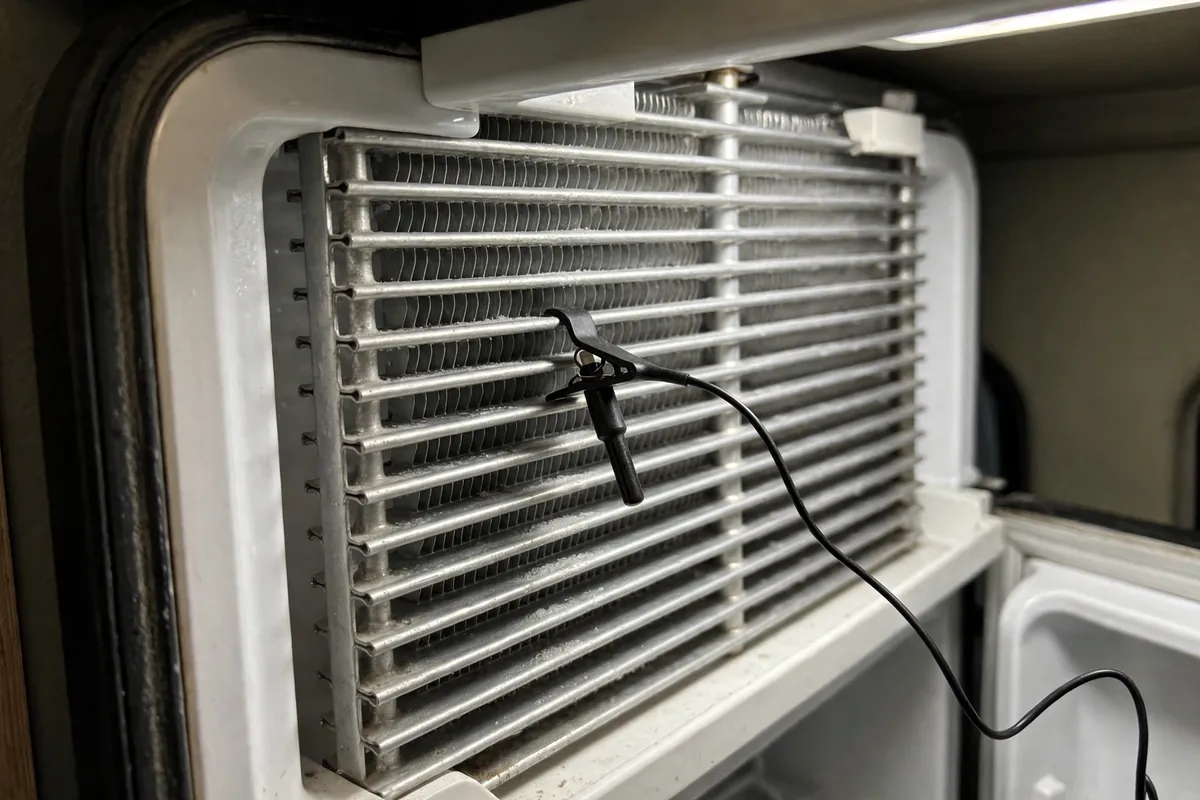
This one fooled me once. Freezer at 20 degrees, fridge section stuck in the 50s, and I was ready to order a cooling unit. The actual problem was a two-dollar clip.
The thermistor is a small temperature sensor clipped to one of the cooling fins inside the fridge box. If it slips off, it reads warm air instead of the cold plate, the board thinks the box is cold enough, and cooling stops early. Owners on iRV2 and the Good Sam forums report this constantly — a thermistor that slid down its fin after a bumpy road is a classic cause of a cold freezer and a warm fridge.
Open the fridge and find it: a small probe clipped to a fin, usually on the right. Make sure it’s firmly seated on the correct fin — the exact fin and height are model-specific. If it fell off, re-clip it and give the fridge hours to recover.
If it’s seated and the problem persists, test it. Disconnect the thermistor from the control board, drop the sensor end into a glass of ice water for five to ten minutes, and measure resistance across its two wires. For most Dometic models, expect roughly 7,000 to 10,000 ohms in ice water; for many Norcold models, around 30,000 to 32,000 ohms at 32°F — but Norcold values vary by model, so verify yours in the manual. Zero or infinite resistance means it’s failed.
While you’re in there, check the door seal: close the door on a dollar bill and pull — you should feel resistance all the way around. And don’t pack food tight against the fins; air has to circulate inside the box.
Step 6: Fine at night, warm by afternoon — it’s ventilation
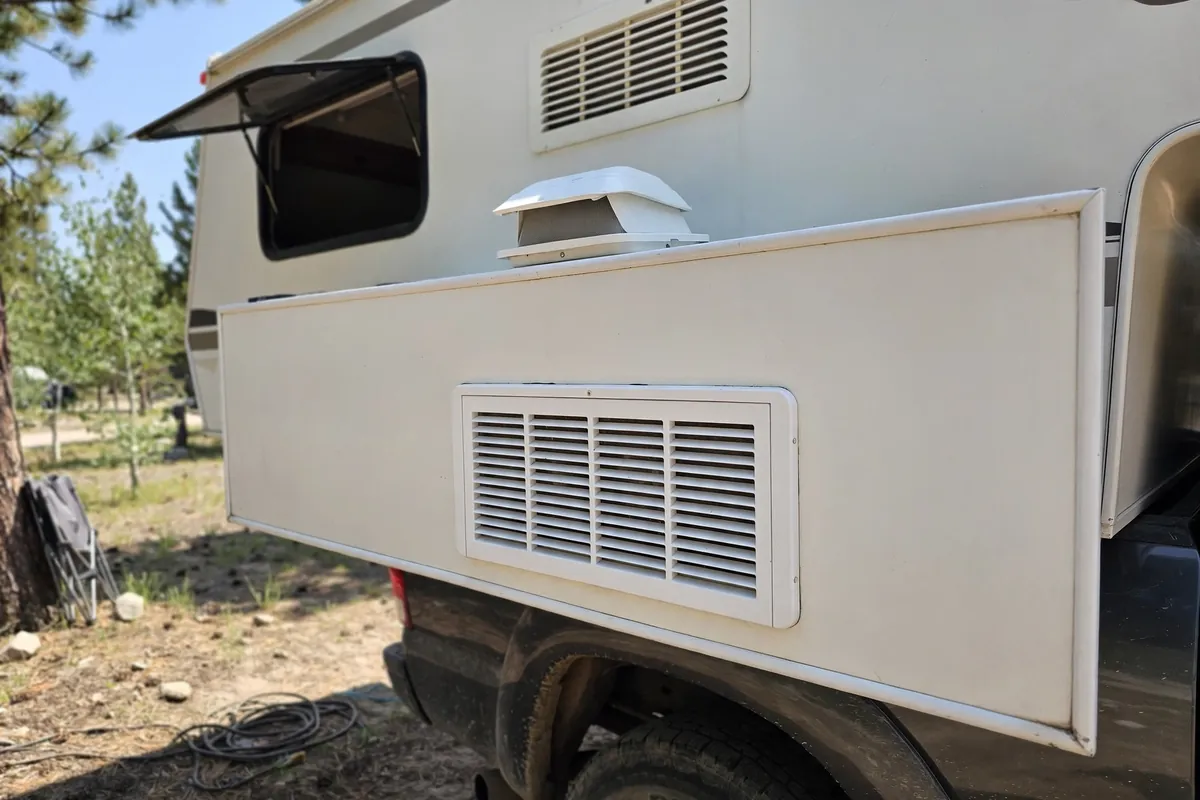
If the fridge holds temperature overnight but climbs into the 50s by mid-afternoon, you almost certainly have a ventilation problem, not a broken fridge — the fault RV technicians say they see missed most often.
An absorption fridge dumps its rejected heat out the back, and that heat has to escape through the exterior vents — cool air in the lower vent, hot air out the roof cap or upper sidewall vent. On a hot day, with the sun beating on the fridge side, the system is trying to dump heat into air that’s already hot. Park the fridge side in the shade, especially out of the afternoon sun.
Check both vents for blockages — wasp nests, mud, leaves. A common fix owners share on YouTube and in forums is a small 12V fan behind the fridge, blowing across the cooling fins or exhausting out the upper vent; on a hot trip it can be the difference between 38 degrees and 55. If you’re adding electrical loads, make sure your solar and battery setup can carry them.
Step 7: The cooling unit — how to know it’s really dead
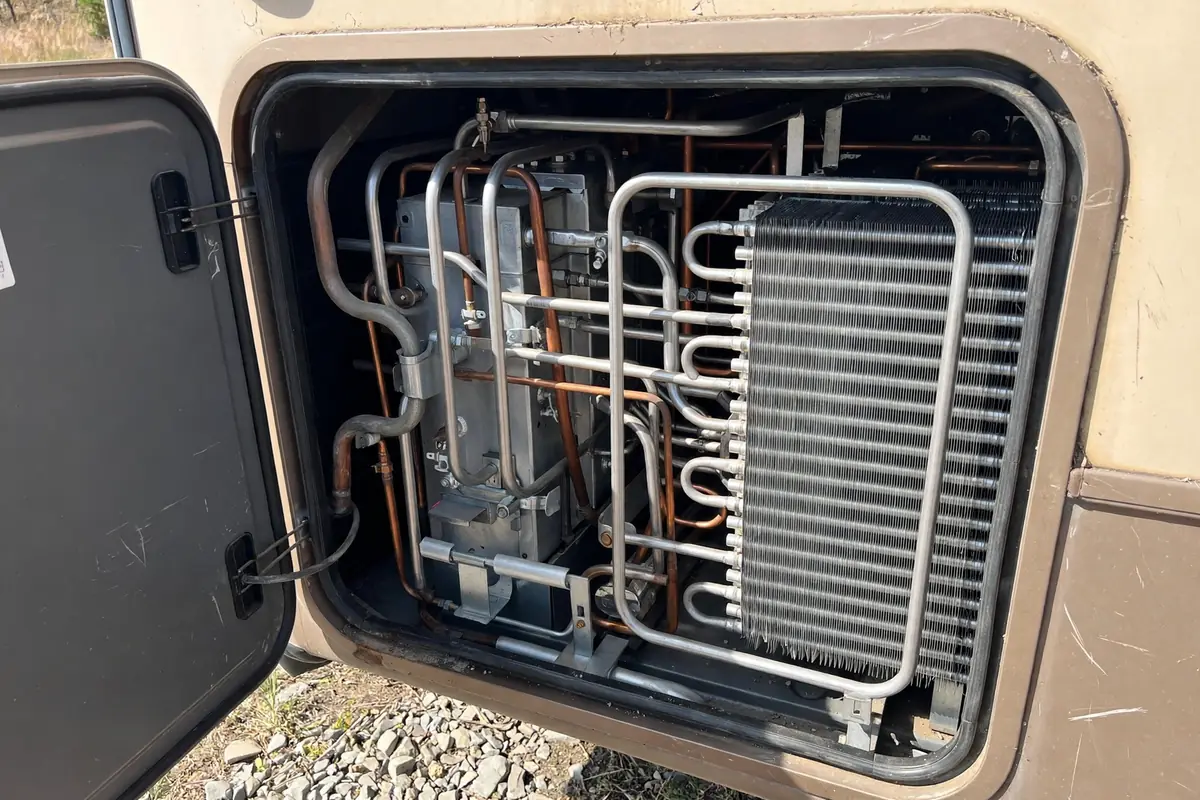
Sometimes the fridge really is done — recognize it before spending money on parts that can’t fix it. The signs: ammonia smell at the back of the fridge or around the vent; yellow, powdery residue on the cooling-unit tubes; the boiler gets hot on either heat source but the box never cools; or cooling stopped after the fridge was run off level for a long time.
A failed cooling unit means a replacement cooling unit or a replacement fridge — a big job, since the fridge usually has to come out, so get quotes for both before deciding. On an older camper, a new 12V compressor fridge sometimes costs less than rebuilding the absorption unit. If yours is a Norcold, check for an outstanding recall first — some older models had one. Model information and support contacts are on Norcold’s site.
12V compressor fridges: a different animal
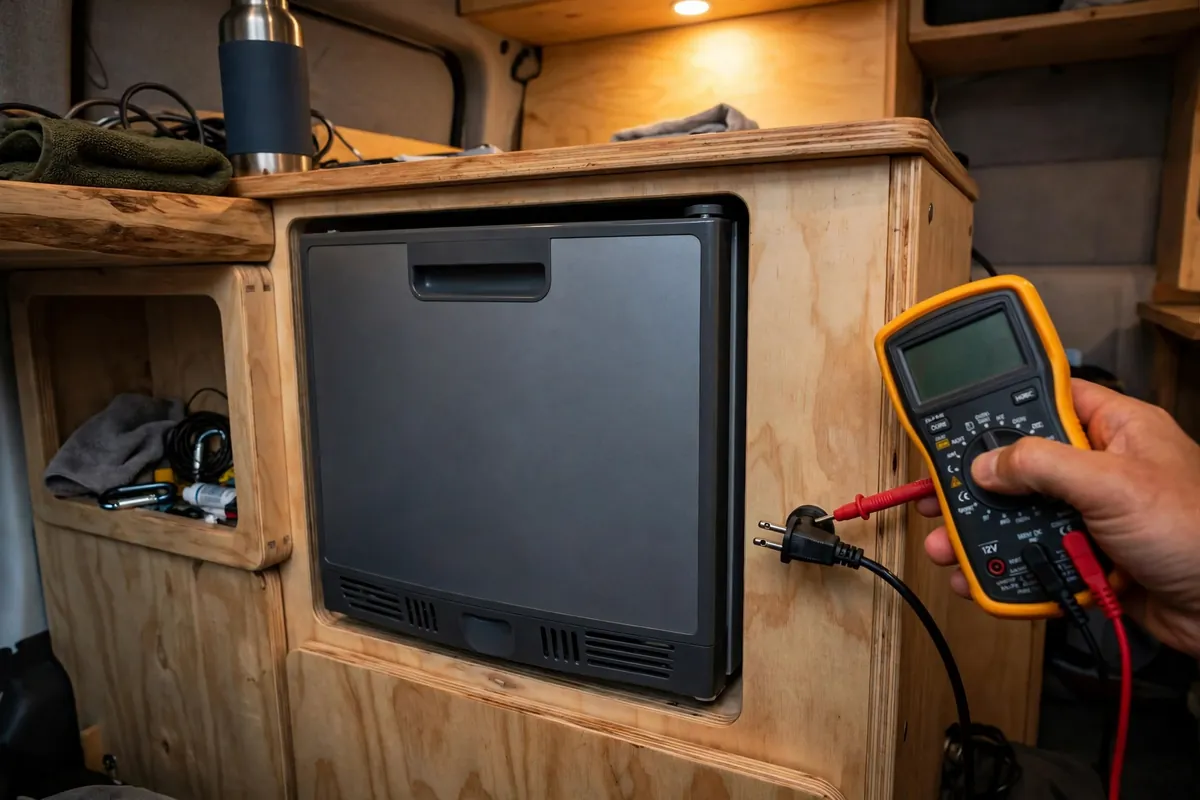
If your fridge is a 12V compressor unit — a Dometic CFX, an ARB, or a built-in 12V model — forget level and burners. These work like a household fridge, and they fail differently.
The number one cause is voltage drop. Overlanders on YouTube and in forums report the same story: the battery reads 12.1 volts at its terminals but only 11.4 at the fridge plug, and that 0.7-volt gap is enough for the compressor to sag and shut itself down. The display is lit, the fridge is silent, nothing gets cold. Measure voltage at the fridge, not at the battery, while the compressor tries to start. A drop of more than about 0.5 volts means undersized or corroded wiring, a loose plug, or a bad connection — not a bad fridge.
Other checks: make sure the condenser fan is spinning — a stopped fan traps heat at the coils. Clear dust from the condenser fins, and check that bedding or luggage isn’t pressed against the vents. Confirm the setpoint and that it isn’t stuck in an eco mode or battery-protection setting. Note any error code before resetting — it tells the technician exactly what tripped. If the compressor runs constantly but the box stays warm with good airflow and voltage, that’s refrigerant loss or compressor wear: a shop job.
Keeping it from happening again
Most fridge failures are maintenance failures with a long fuse. Fold this into your seasonal maintenance schedule: every spring, pull the lower vent cover, blow out the burner tube and flue, check for nests, then light the fridge on gas and confirm a blue flame. Check the thermistor clip when you load the fridge — a bump on a forest road can knock it loose. Before winter storage, turn the fridge off, prop the doors open, and cover the exterior vents against insects — the same trip is a good time to give the water heater the same treatment.
I still think about that desert morning — not because the fridge beat me, but because it didn’t have to. A spider nest in a burner tube and a camper parked a few degrees off level cost me a morning and a fridge full of food. The fix took twenty minutes, once I knew what to look for. That’s the point of troubleshooting in order: the expensive answer is usually the last one.
Frequently asked questions
Why is my truck camper fridge not cooling on propane but works on electric?
The cooling unit is fine — the fault is on the gas side. Light a stove burner to check supply, purge air from the lines, then clean the burner tube and flue; spider nests are the most common cause after storage. If the burner lights then drops out after a few seconds, the flame-sense probe may be dirty or misaligned.
Why is my truck camper fridge not cooling on electric but works on propane?
Usually the 120V heating element has burned out, or the outlet behind the lower vent has no power — check for a tripped GFCI first. With power disconnected, the element should read tens of ohms; infinite resistance means it’s open.
How long does a truck camper fridge take to get cold?
An absorption fridge needs 8 to 12 hours from warm to fully cold, and the fridge box can take most of a day in hot weather. Turn it on the day before your trip and load already-cold food.
How level does a truck camper fridge need to be?
Within about 3 degrees side to side and 6 degrees front to back — level enough that the floor feels flat to live on. Running an absorption fridge well off level for hours can permanently damage the cooling unit.
What does yellow powder behind my RV fridge mean?
The sealed cooling unit has leaked — the yellow powder is residue from the ammonia solution inside. Turn the fridge off, ventilate, and do not use it. The cooling unit needs replacement by a technician.
Why does my fridge work at night but get warm in the afternoon?
Poor ventilation. On a hot afternoon — especially with sun on the fridge side — the heat dumped out the back can’t escape fast enough. Clear both vents, park the fridge side in the shade, and add a small 12V fan behind the fridge if needed.