Keeping Bugs Out of a Truck Camper: Mosquitoes, Flies, Ants and No-See-Ums
The first night bugs in a truck camper really get to you, you learn something fast: a truck camper is not a sealed house. It is a small box with a door you open fifty times a day, windows you want open for air, roof vents, a fridge vent, a furnace vent, a power cord, a water hose, and four tires and four jacks sitting on the ground. Every one of those is either a door or a bridge. Stopping bugs in truck camper life is not about finding one magic spray. It is about closing the doors, cutting the bridges, and then dealing with the few that still slip through.
I have spent enough buggy evenings in a camper to know the difference between a trip ruined by mosquitoes and a trip where you notice them, shrug, and go back to your coffee. The difference is almost never how much repellent you own. It is whether you did the boring work before dusk.
One distinction up front: this article is about insects only. If your problem is chewing, droppings, or something nesting in your wiring, that is a different fight — see our guide to mice in a truck camper instead.
Bugs in a Truck Camper: Where They Actually Get In
Before you buy anything, do the light test. After dark, turn on every light inside, close the door, and walk around outside. Anywhere light leaks out is somewhere a bug can get in. The gaps are rarely dramatic: the tired foam seal around the entry door, a window screen shifted a fraction of an inch in its frame, the crank opening in a roof vent, and the gap where a power cord or water hose passes through a compartment door.
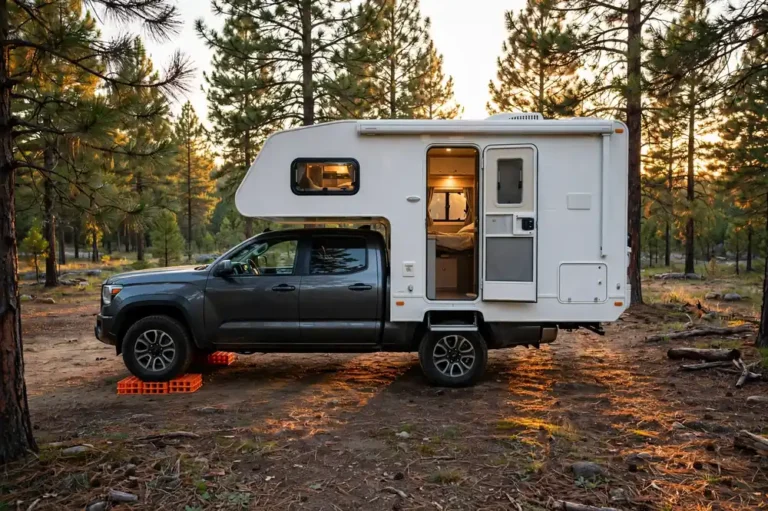
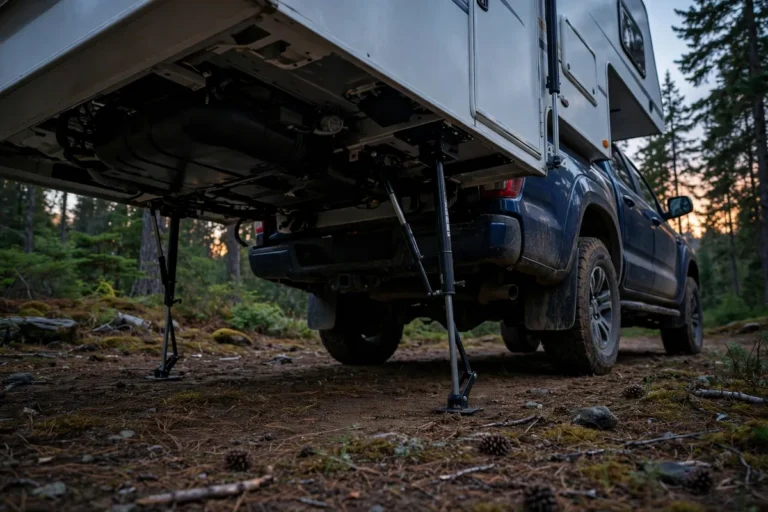
Ants do not usually scale your camper walls like tiny mountaineers. They walk up whatever touches the ground — a tire, a jack foot, a leveling block, a power cord lying in the grass, a water hose — and follow it straight inside. Flies and mosquitoes mostly come in the way you do: through the door, in the two seconds it takes to carry dinner inside, or through a screen that looks fine from three feet away but has a torn corner. So fix the shell first, manage the ground contacts second, and only then worry about repellents. No repellent fixes a torn screen.
Screens, Seals, and Door Discipline
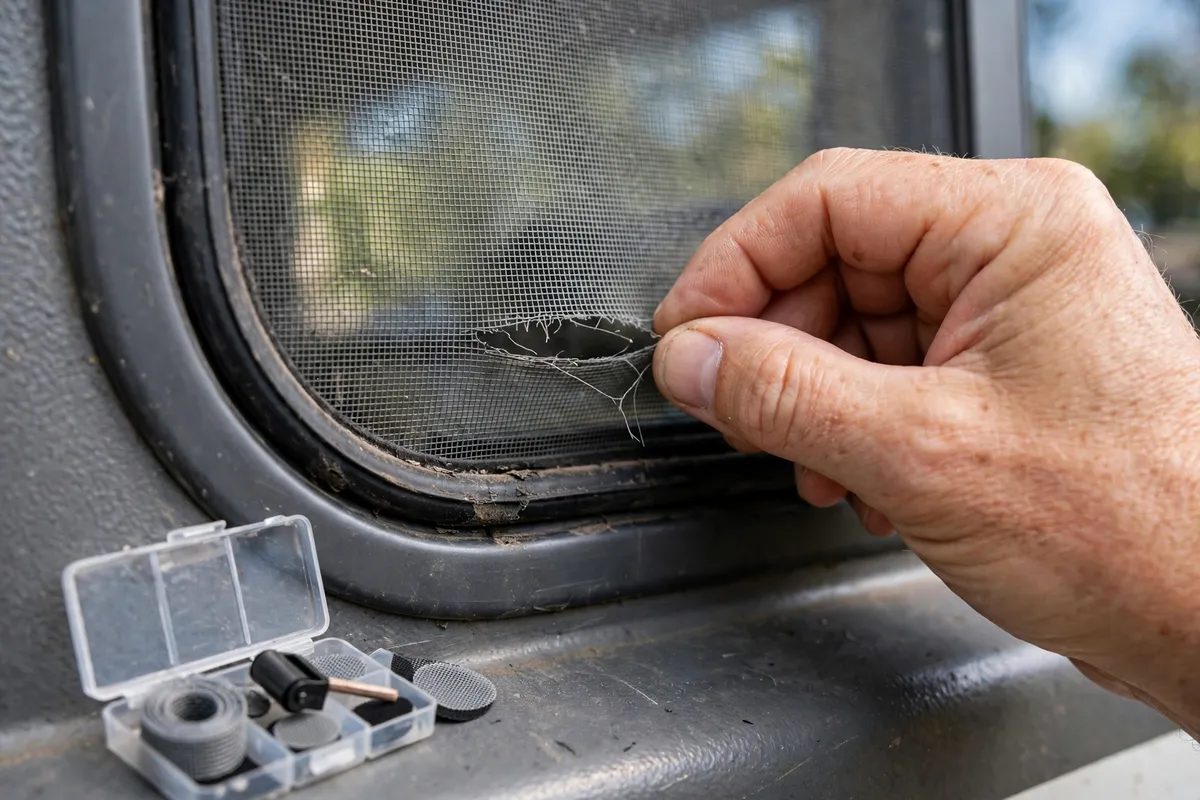
Start with every screen. Hold each one up to the light, patch small tears with a repair kit or silicone and scrap mesh, and re-screen any frame where the mesh has gone baggy. Check the edges, not just the middle: forum owners repeatedly find the screen fine but shifted in its frame, leaving a crescent gap at one corner. A screen that does not sit square is barely a screen.
Then check the seals. The foam gasket on the entry door compresses over time, especially at the bottom and on the hinge side, and once it goes flat, mosquitoes treat the door like it is ajar. Replacing a door seal is a ten-minute job and one of the cheapest bug fixes you will ever make. Do the same for windows and roof vents, and check the openings nobody thinks about: the crank hole in a roof vent, the gaps around a vent surround, and the louvered outside covers for the fridge, water heater, and furnace.
Owners on WanderTheWest report mosquitoes pouring into a pop-up camper in British Columbia in early June through spaces around the fridge, fixed by fitting aluminum screen over both fridge vents, cut large and folded over so the grill holds it in place. Others screened hatch covers from inside with screen and tape — still holding years later because the tape never sees weather. Exterior vents are real entry points, and mesh over them costs almost nothing.
One caution: do not block a vent that needs airflow. Fridge, furnace, and water heater vents move heat and combustion gases out — a coarse screen over the outside cover is fine, packing fine mesh against a burner is not. If unsure, check your appliance manual first.
Standard 18×16 screen stops most mosquitoes and flies and still breathes well. No-see-ums, covered below, walk straight through it; finer 20×20 mesh stops far more of them but moves less air. My answer: keep standard mesh everywhere, and carry clip-on fine-mesh panels for bedroom windows on coastal trips.
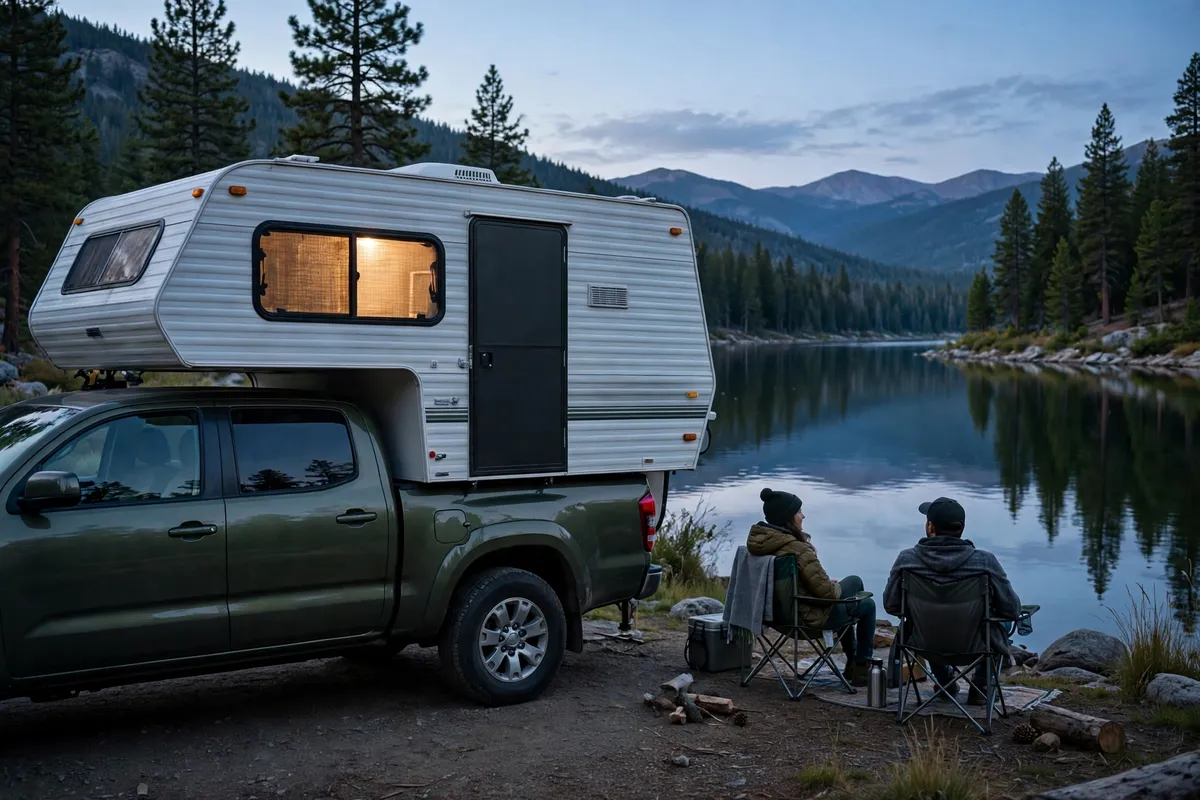
Finally, door discipline. At dusk, decide: door closed, screen door latched, or everyone stays outside together. The worst pattern is the door propped open while people drift in and out for snacks, with the interior lights blazing — light is the invitation, and an open door is the open gate. If your camper has no screen door, a magnetic doorway screen is worth every penny. If you camp with kids, this habit alone cuts indoor mosquitoes more than any gadget — see our truck camping with kids guide. A warm amber porch bulb helps too.
Ants: Cut the Bridges, Then Bait — Don’t Just Spray
Ants are the most patient bug problem in a truck camper, and the most misunderstood. The ants on your counter do not live in your camper. They are foragers from a colony in the ground nearby, and they found you because one scout found a crumb or a sticky spoon and laid down a scent trail for the rest to follow. Kill the ants you can see and you have accomplished almost nothing. Break the trail, remove the food, and get bait back to the colony, and the problem actually ends.
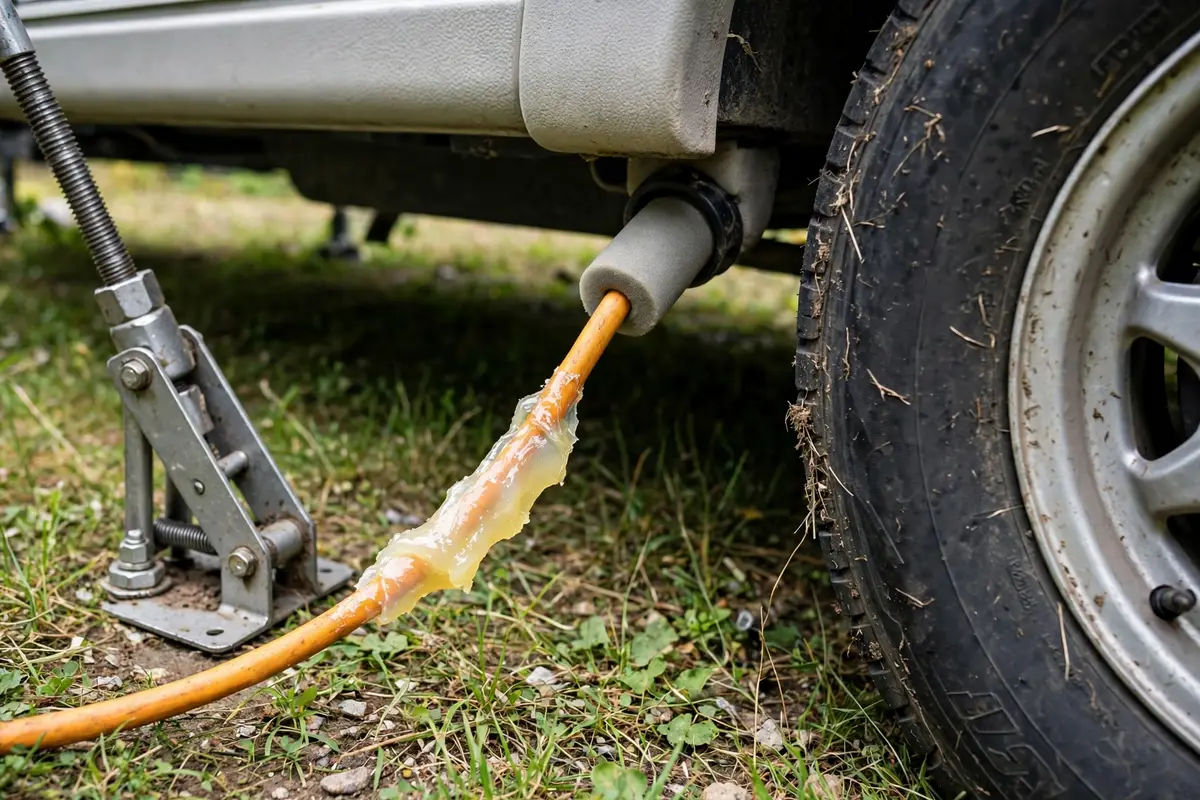
Start at the ground. Everything connecting your camper to the earth is an ant highway: tires, jack feet, leveling blocks, power cord, water hose. Owners on iRV2 and Forest River Forums report ants marching up the power cord by the thousands, or entering through the cord access port. Their fixes are low-tech: stuff the port around the cord with sponge or foam cut to fit, slit so it wraps the cord; or smear a short band of petroleum jelly around cords, hoses, and jack legs — Truck Camper Magazine owners report a four-inch Vaseline band stopping earwigs on a power cord, and ants will not cross it either. Food-grade diatomaceous earth around tires and jack pads also works, but stops working when wet, so reapply after rain.
Then deal with the trail inside. Wipe every surface the ants touched with vinegar or soapy water to erase the scent trail, seal food in hard-sided containers, wipe the dinette after meals, take trash out nightly, and do not leave a pet bowl out overnight. A single sticky spoon in the sink is a dinner bell.
For the colony itself, slow-acting bait beats contact spray, and this is the mistake most people make. Spray kills the foragers you see, and the colony sends more. Worse, spraying a repellent insecticide across a trail can scatter the colony or make ants avoid the bait you put down. Owners on iRV2 put it bluntly: do not spray while you are baiting. Put closed bait stations right on the active trail, out of reach of children and pets, and leave them alone for days — bait takes time because workers have to carry it home. If ants ignore one bait, try another: colonies switch between craving sugar and protein depending on the season. Keep food sealed while you bait, so the bait is the best meal on offer.
Never use a bug bomb or fogger inside a camper — the propellants are flammable and residue lands on everything you eat off. Do not spray shared campsite ground or waterways either. And check your fresh water system connections when ants appear near the sink — a slow drip gives them water that keeps them coming back.
Mosquitoes in a Truck Camper: Repellent, Air, and a Zone Outside
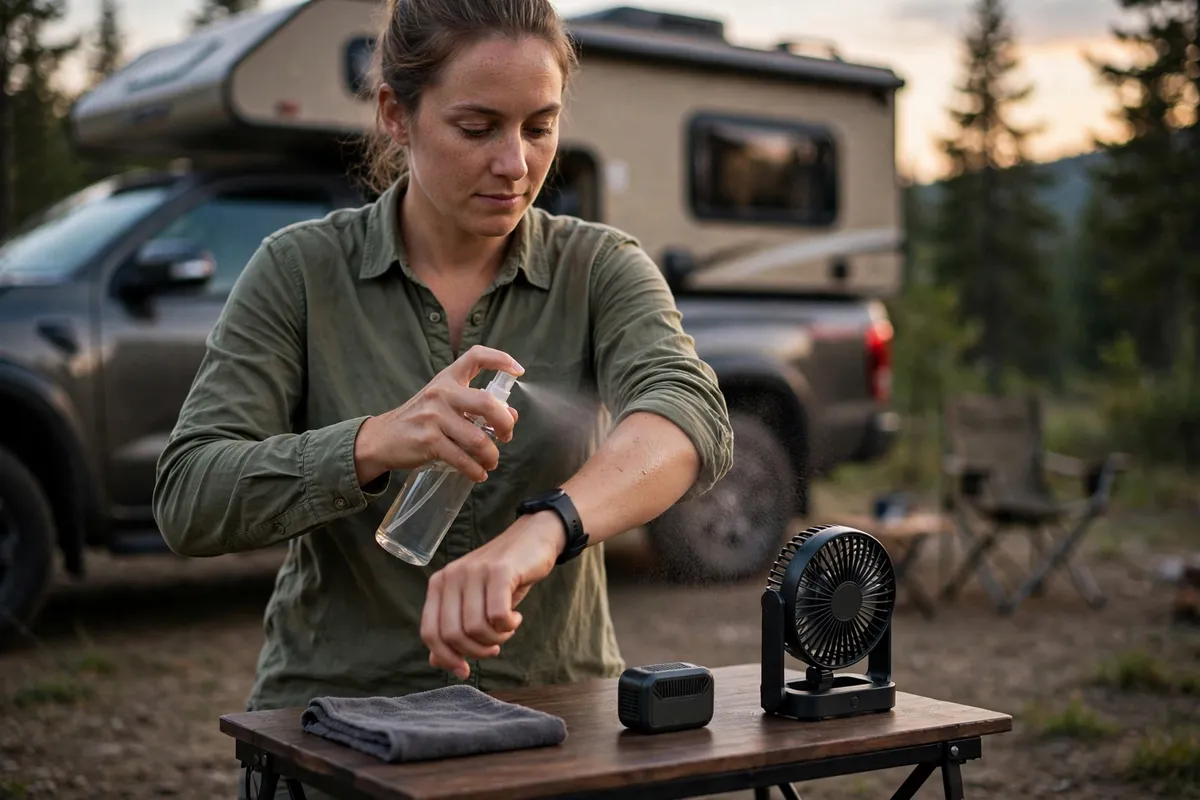
Mosquitoes are the bug most truck campers actually lose sleep over. They find you by the carbon dioxide in your breath and the heat and scent of your skin, they are most active at dawn and dusk, and a camper full of sleeping people with the windows open is a perfect target. The official guidance is clear: use an EPA-registered repellent on exposed skin. The CDC points campers to DEET and picaridin, with oil of lemon eucalyptus (active ingredient PMD) as a plant-based option. Higher concentration means longer protection, not stronger — a 20% picaridin or 20–30% DEET product covers most evenings, reapplied when you start getting bitten. Picaridin suits camper life best: nearly odorless, not greasy, and unlike DEET it will not damage plastics or synthetic fabrics.
Treat your clothing, not your skin, with permethrin. Spray it on shirts, pants, socks, and hats, let it dry completely, and it keeps repelling mosquitoes that land on the cloth through several washes. It is the best upgrade for dawn and dusk walks and sitting outside. It also carries the one warning you must not skip: permethrin is highly toxic to cats while wet, so treat clothing outside, away from cats, and let it dry fully before bringing it near them. For dogs, follow the label — never use a clothing permethrin product on an animal. If you travel with a dog, our truck camping with dogs guide covers the rest of the pet-at-camp routine.
Outside, a spatial repellent device — best-known are Thermacell units — creates a zone around a sitting area by releasing an EPA-registered ingredient (metofluthrin in rechargeable models, allethrin in fuel-powered ones). Owners on overlanding forums list one alongside a mosquito net as standard kit, and the verdict matches the manufacturer’s limits: best in still air, up to about 20 feet, ten to fifteen minutes to build up. Put it upwind of your chairs. Fuel-powered units are outdoor-only — never run one inside a camper.
A fan costs nothing and owners keep rediscovering it: mosquitoes are weak fliers, so a small 12-volt fan or roof vent fan makes it hard for them to land — and helps you sleep in a warm camper. Site choice is the free repellent nobody mentions: a marsh-edge or low, wet site will always be worse than a breezy, elevated one a few hundred yards away. See our boondocking and dispersed camping guide before you commit to a site, and tip out anything holding water at your own site.
Flies: Keep the Kitchen From Becoming a Beacon
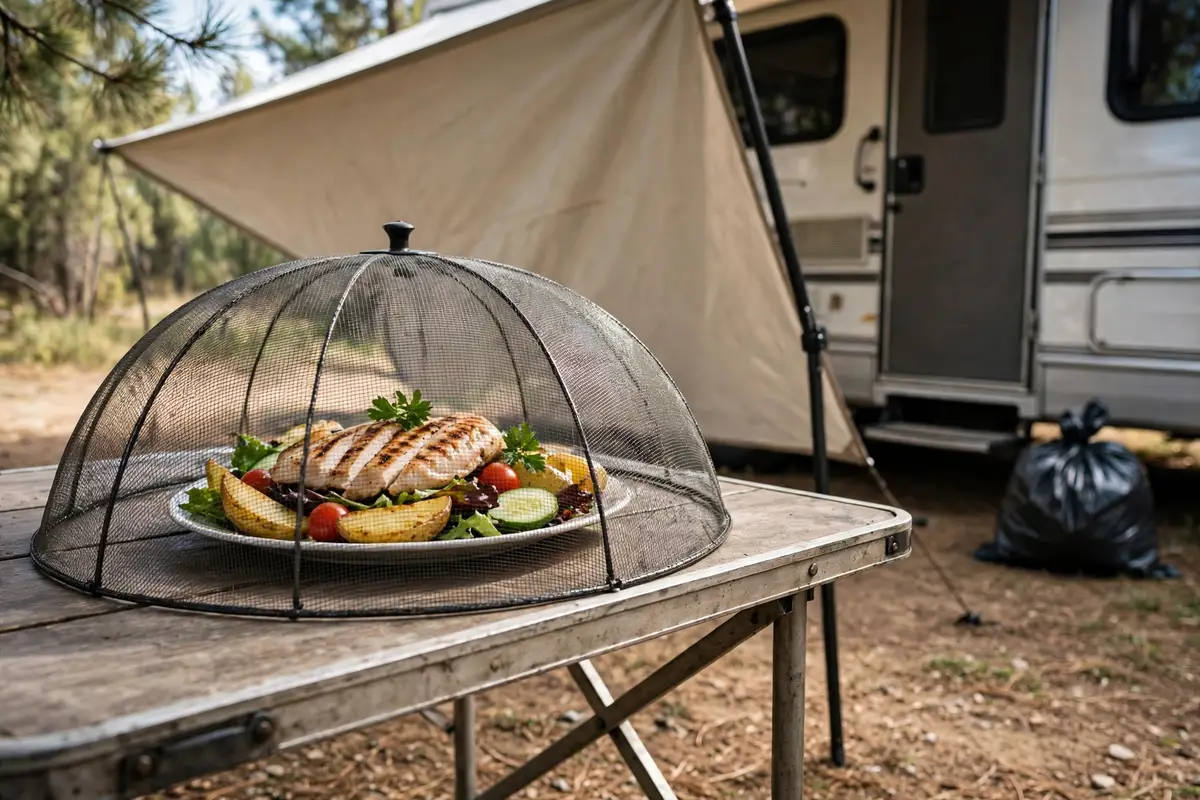
Flies are less about bites and more about annoyance — and food hygiene. They are drawn to food, garbage, and animal waste, and a truck camper kitchen is a concentrated version of all three. Keep food covered whenever it is not being eaten, wipe the table and stove after cooking, bag trash and get it out every evening, and never leave a trash bag sitting right outside the door overnight. That bag is a fly nursery parked at your entrance.
Cooking location matters. Owners on Overland Bound note that cooking out of the back of a truck or right at the door means flies and cooking smells linger where you sleep, and getting every fly back out takes far longer than cooking outside. Cooking under an awning but away from the door, with a breeze carrying smells away, is better — our truck camper awning guide covers setups that keep living space separate from cooking space. A mesh food cover over plates does more than any spray, because it removes the reason flies came.
For flies that do get in, skip the bug zapper inside — loud, messy, and mosquitoes barely care about ultraviolet light. A fly swatter, a small glue-board trap overnight, and a handheld vacuum in the morning are quieter and cleaner. Owners on Airstream forums keep a stick vacuum in the camper for exactly that morning-after cleanup, and I do now too.
No-See-Ums: The Tiny Enemy That Ignores Your Screens
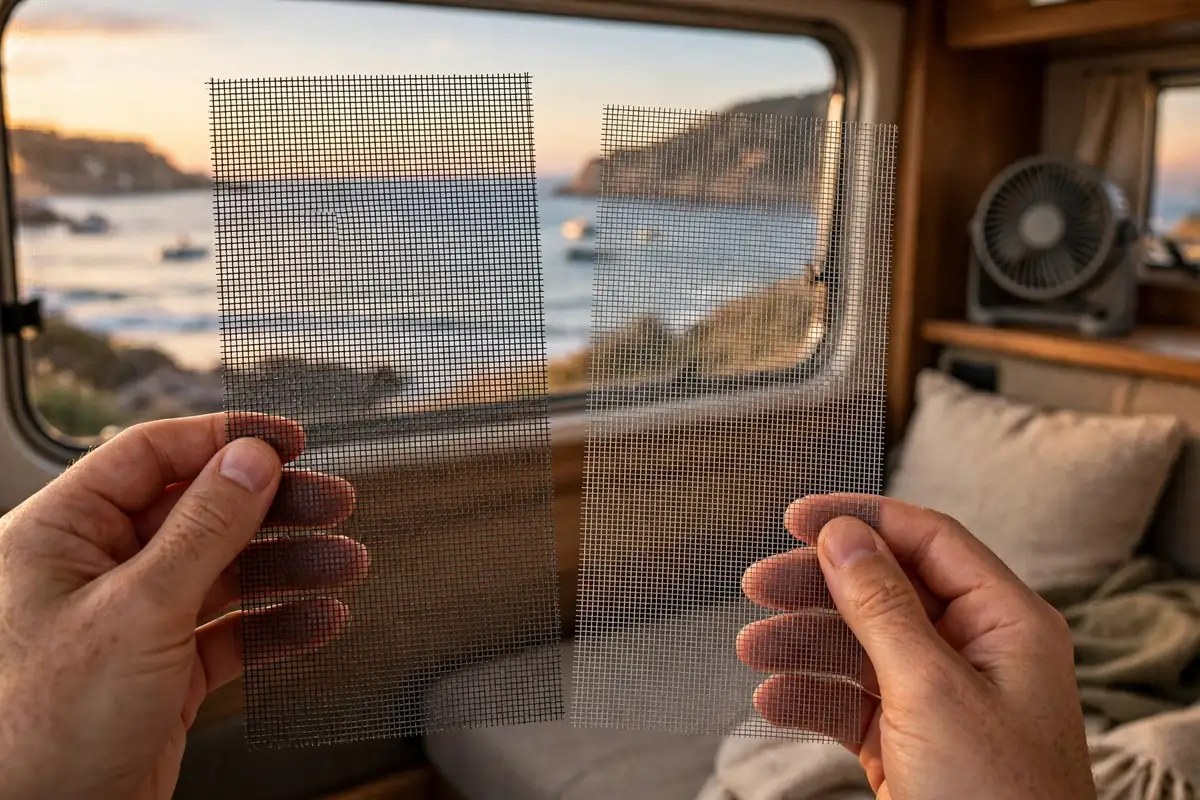
If you have ever been bitten all over by something you could not see, you have met no-see-ums — biting midges, 1 to 2 millimeters long, active mostly at dawn and dusk, worst near salt marshes, tidal creeks, beaches, and wet coastal ground. Their signature insult is that they walk straight through standard window screen, so a camper that is mosquito-proof can still be full of them.
Defenses, in order: finer mesh, moving air, repellent. Supplement bedroom screens with 20×20 or finer mesh for coastal trips and run a fan — no-see-ums are even weaker fliers than mosquitoes, so a breeze you barely notice keeps them from landing. A bedside fan is the main defense on a coastal night. DEET and picaridin work on midges too, so apply repellent before that dusk beach walk, not after you are itching.
If you wake up covered in welts and cannot find the culprit, do not hunt for a nest. No-see-ums do not nest in campers; they came in, bit, and left or died. Close the windows, run the fan, and fix the gap they used.
When They Are Already Inside, and My Bug Kit
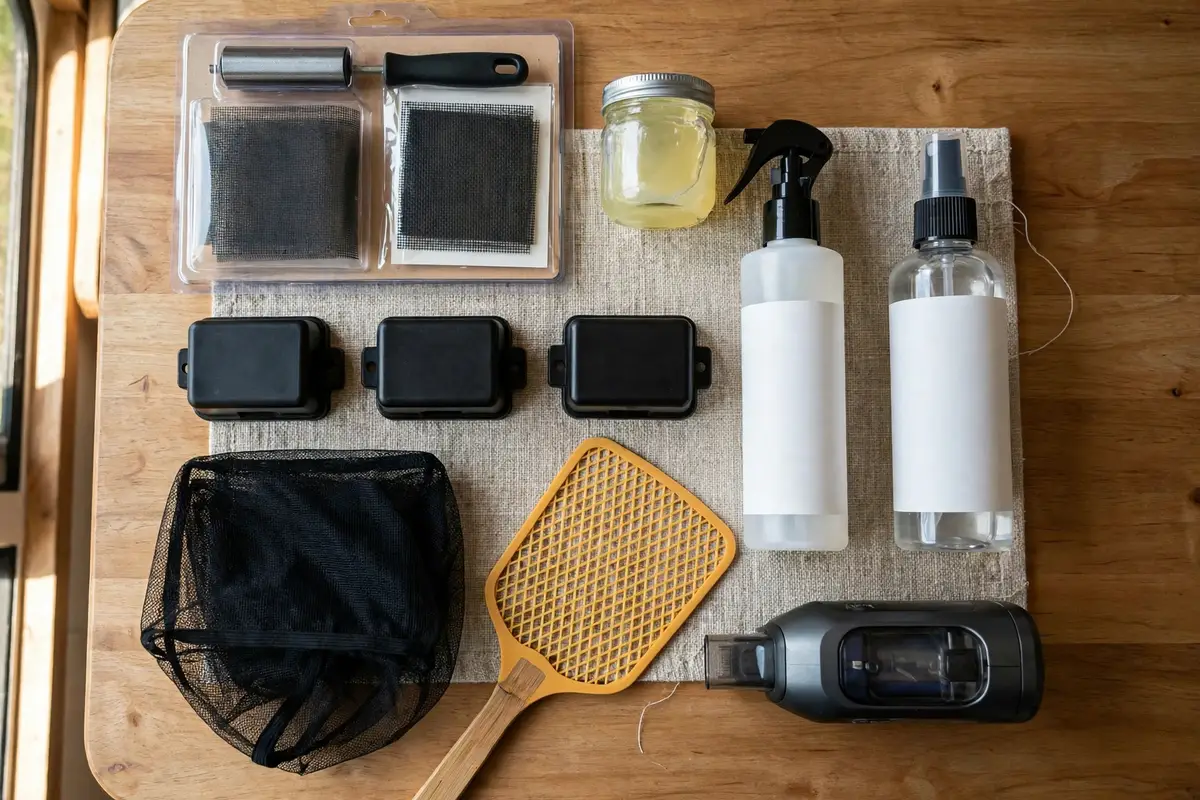
Every system fails sometimes. You will open the door at the wrong moment, and you will go to bed with a mosquito whining around your ear. Stay calm: kill the lights except one small light away from the bed, swat the stragglers, run the fan, and in the morning vacuum the corners, window tracks, and cabover bedding area, where dead insects collect. If ants are the problem, resist the urge to spray everything — wipe the trail, seal the food, bait the trail, and wait.
This kit covers almost every trip: screen repair kit and spare mesh, silicone and a spare door seal, petroleum jelly, diatomaceous earth for longer stays, closed ant bait stations out of reach of pets and kids, 20% picaridin, permethrin for clothing (treated outside, dried fully), a spatial repellent unit for outdoor sitting only, a mesh food cover, a fly swatter, a handheld vacuum, and long sleeves plus a head net for the one truly biblical trip a year. No foggers, bug bombs, or ultrasonic plug-ins — no credible evidence behind them. Spend the money on screens and bait.
FAQ
What is the best way to keep mosquitoes out of a truck camper?
Fix screens and door seals first, keep the door closed at dusk, and run a fan. Then use DEET or picaridin on skin, permethrin on clothing, and a spatial repellent device outside only. No product replaces a torn screen.
Can no-see-ums get through regular camper window screens?
Yes. No-see-ums are only 1 to 2 millimeters long, and standard 18×16 mesh is too coarse to stop many of them. Use 20×20 or finer mesh on bedroom windows for coastal or marshy trips, run a fan, and apply DEET or picaridin before going out at dawn and dusk.
How do I get rid of ants in my truck camper?
Wipe the trail with vinegar or soapy water, seal all food, and put slow-acting closed bait stations on the trail, out of reach of children and pets. Do not spray while baiting. Block ground routes with petroleum jelly on cords, hoses, and jack legs, and foam plugs in cord ports.
Are Thermacell devices safe to use inside a truck camper?
No — fuel-powered spatial repellents are designed for outdoor use only and should never be run inside a camper, tent, or enclosed space. Use them outside, upwind of your sitting area, and rely on screens, closed doors, and a fan inside.
Do ultrasonic pest repellers work for bugs in a camper?
There is no credible evidence that ultrasonic plug-in devices repel mosquitoes, flies, or ants in a camper. Owners consistently report that insects ignore them. Spend that money on screen repair, door seals, and ant bait instead.
Should I spray insecticide all around my campsite?
No. Treat your own camper’s ground contacts — tires, jacks, cords, and hoses — and follow every product label. Do not spray shared campsite ground, vegetation, or anywhere near water, and never use a fogger or bug bomb inside a small camper.
Keeping bugs out of a truck camper is not a battle you win once. It is a set of small habits — screens checked, door shut at dusk, cords off the ground, food sealed, trash out — that you repeat until they are automatic. Do those, and bugs become a minor detail, not the story of the trip.
Sources and further reading: The National Pesticide Information Center’s insect repellent fact sheet explains EPA-registered ingredients; Thermacell’s repellent effectiveness comparison sets out how spatial repellents differ from skin-applied ones; and Truck Camper Magazine’s reader-sourced 30 ways to keep the critters out is where several owner fixes above were first shared by truck camper owners.