Best Truck Camper for Ford Ranger: What Actually Fits Without Overloading It
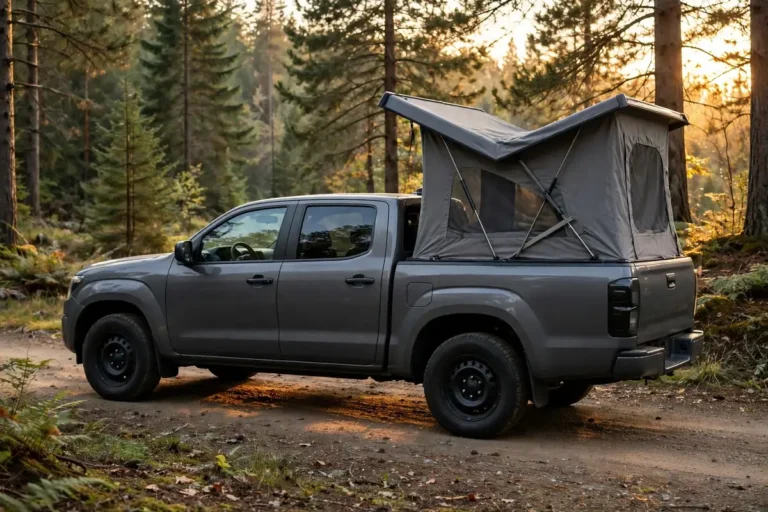
The Ford Ranger will fool you in the opposite direction from a half-ton. A Ram owner gets seduced by a big brochure payload number and buys too much camper. A Ranger owner gets seduced by the truck itself — it looks like a proper pickup, it tows 7,500 pounds — and then discovers the payload ceiling is barely half of a half-ton’s. Finding the best truck camper for Ford Ranger is a smaller, stricter puzzle: few campers fit, the bed is five feet long, and the margin for error is a couple of hundred pounds.
I have watched this play out in owner threads for years: the camper fits the bed, the truck squats, the steering goes light, and the owner is back asking whether airbags will fix it. They will not. The math has to come first — and on a Ranger it is unforgiving.
The Best Truck Camper for Ford Ranger Starts With a Smaller Number Than You Think
Ford lists a maximum available payload of 1,767 pounds for the 2026 Ranger — but only for one specific truck. Ford’s own Ranger page breaks it down by engine: the 2.3L EcoBoost 4×2 at 1,767 pounds, the same engine with 4×4 at 1,763, the 2.7L V6 4×4 at 1,513, and the Raptor’s 3.0L V6 at 1,373. Every option — four-wheel drive, the bigger engine, a higher trim — comes straight out of that number. A loaded Lariat 4×4 with the 2.7L will sticker well under 1,500 pounds, and a Raptor is the worst Ranger for carrying a camper.
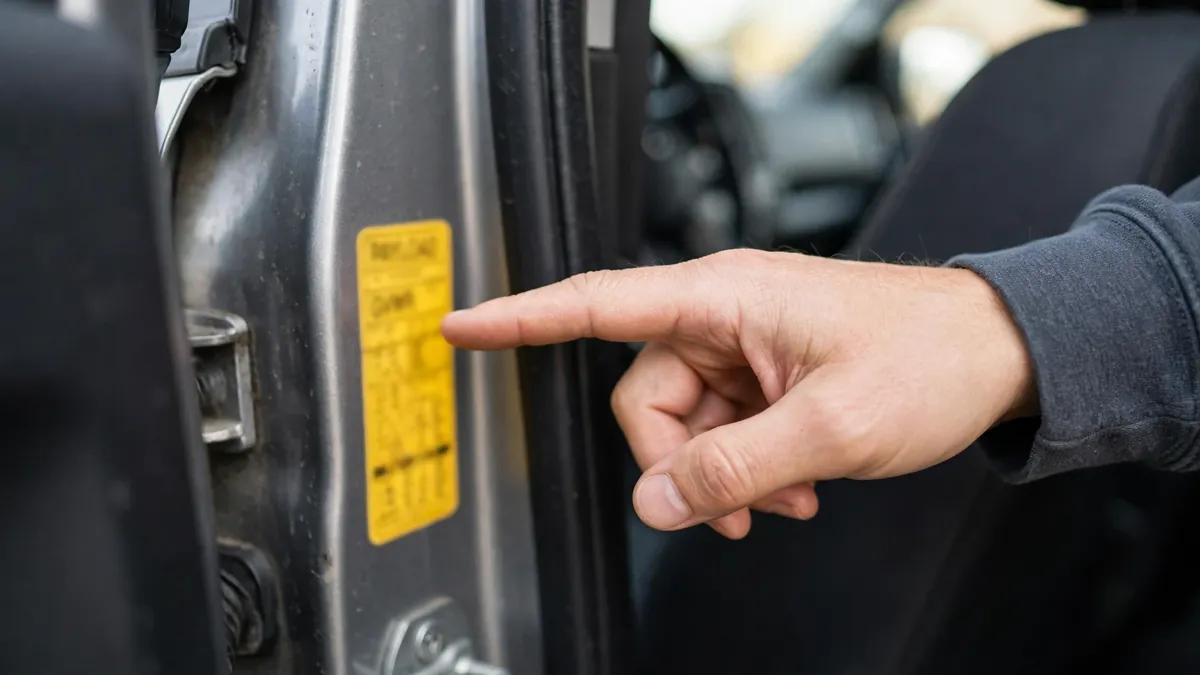
Your truck’s real number is lower still. The door-jamb sticker is the only payload figure that counts. Our truck camper payload calculator guide walks through the subtraction: sticker, minus two adults (~300–350 lbs), gear (~150–250 lbs), and water at 8.34 lbs per gallon. On a 1,500-pound-sticker XLT 4×4, that leaves roughly 800–900 pounds for the camper, dry. On a Raptor, closer to 650. That is the budget.
One thing most Ranger camper articles skip: Ford does not camper-certify this truck. The 2024 and 2025 owner’s manuals state, under “Using a Slide-In Camper”: “We do not recommend using your pickup for carrying a slide-in camper.” Thousands of owners still carry light campers, but you are outside the manufacturer’s recommendation — so staying inside GVWR and both axle ratings is not optional. If that bothers you, the honest alternatives are a canopy camper or a bigger truck.
SuperCab vs SuperCrew, 5-Foot vs 6-Foot Bed: The Ranger’s One Big Quirk
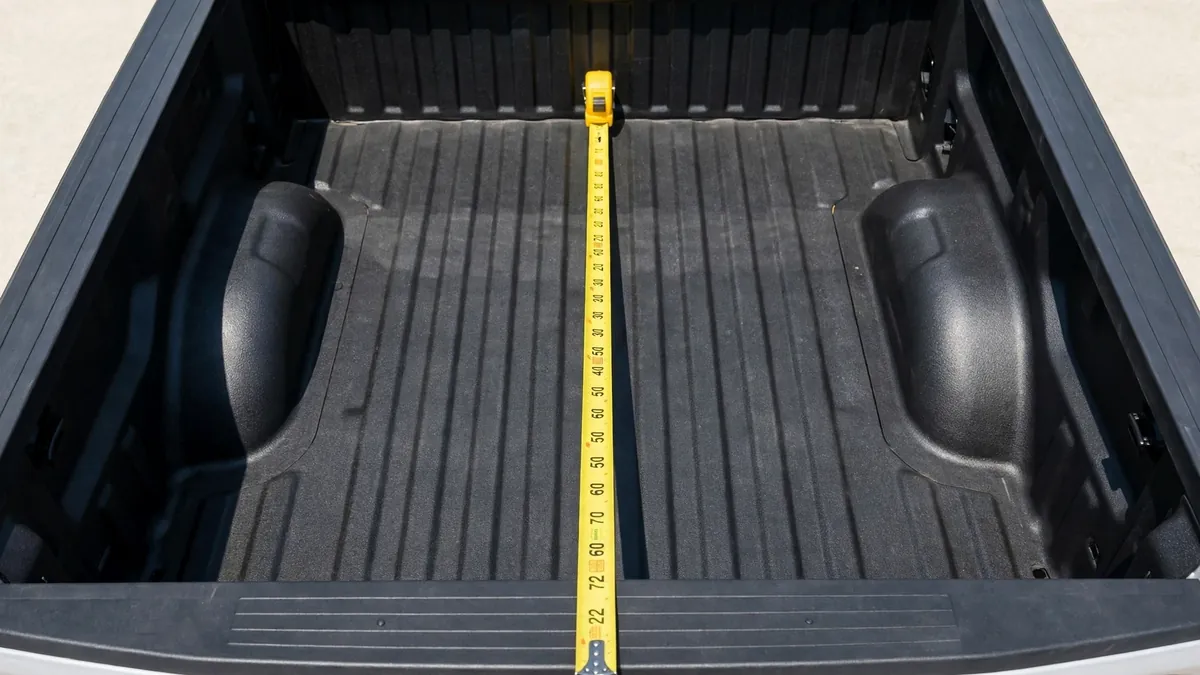
If you are buying a new Ranger, you do not get a choice of bed. The current generation, 2024 and newer, is sold in the US as a SuperCrew only, with a single 5-foot bed — 59.6 inches of floor length, 62.4 inches wide, 48.2 inches between the wheel wells, 43.5 cubic feet, per Ford. There is no SuperCab and no 6-foot bed. Every new Ranger takes the same camper footprint.
The 2019–2023 Ranger was different: a SuperCrew with a 61-inch 5-foot bed, or a SuperCab with a 72.8-inch 6-foot bed. Shopping used, that SuperCab long bed is worth real money — it is the only Ranger that takes a 6-foot slide-in like the Four Wheel Camper Fleet. But its bed is narrower between the wheel wells (44.8 vs 48.2 inches), and accessories do not cross-fit. Measure your actual truck.
Most slide-in campers are built around a 6- to 6.5-foot floor. Put one on a 5-foot Ranger and it overhangs the tailgate by a foot, moving weight behind the rear axle — or it simply does not fit. Our short bed vs long bed truck camper guide covers the tradeoffs, but on the Ranger the decision is made for you: your shortlist is campers built for a 5-foot bed. The exception is canopy campers, which sit on the bed rails.
On a 5-foot-bed Ranger, the camper’s center of gravity sits close to the rear axle — good for balance, as long as the weight lands ahead of it. Scout publishes a 26-inch CG for the Yoho, designed to land ahead of a midsize truck’s rear axle. Ask for the CG figure before you buy: a camper whose weight sits behind the axle steers light and porpoises even when the total looks legal.
The Math Nobody Does Before Buying a Ranger Camper
Dry weight is a trap on every truck, and on a Ranger it has almost no slack. Dry weight is the factory number with no water, propane, battery, or options. Wet weight adds all of that plus gear — routinely 300 to 500 pounds more, even on a small camper. A Swift listed at 950 dry is a 1,300-pound camper once you fill the tank, add a battery and propane, bolt on an awning and solar, and throw in bedding and food. That is the difference between fitting and not fitting.
Run the numbers on the most common Ranger: an XLT 4×4 with the 2.3L and a sticker of 1,550 pounds. Two adults: minus 325. Weekend gear: minus 200. Ten gallons of water: minus 83. Propane and a battery: minus 60. About 880 pounds left — so a 950-pound Swift is already over before you add a single option. It can still work, but only on the right Ranger: a 2.3L 4×2 XL or lightly optioned XLT 4×4 with a sticker near 1,700, packed light and weighed. On a 2.7L Lariat or a Raptor, the same camper is a bad idea.
The Campers That Actually Fit a Ford Ranger
Four Wheel Camper Swift — the default slide-in, for the 5-foot bed
The Swift is the camper most Ranger owners end up with, and the only full slide-in Four Wheel Campers builds for 5- to 5.5-foot beds: ~950 pounds dry, per Four Wheel Campers’ own midsize guide, sleeping two with a cabover bed and convertible dinette. A fully equipped Swift starts at $30,150, base shells from $20,275 — but budget for the optioned weight, not the base weight, because the fridge, heater, solar, and awning add real pounds. On a 2.3L Ranger with a sticker above 1,600, a lightly optioned Swift is the most camper you can carry while staying legal. Our Four Wheel Camper Fleet vs Swift vs Hawk comparison breaks down the family: Swift yes, Fleet no — the Fleet is built for 6- to 6.7-foot beds at ~1,050 pounds dry, so it only fits the 2019–2023 SuperCab long bed. The Hawk (~1,200 dry, 6.5-foot beds) is not a Ranger camper.
Scout Yoho — the lightest hardwall that fits
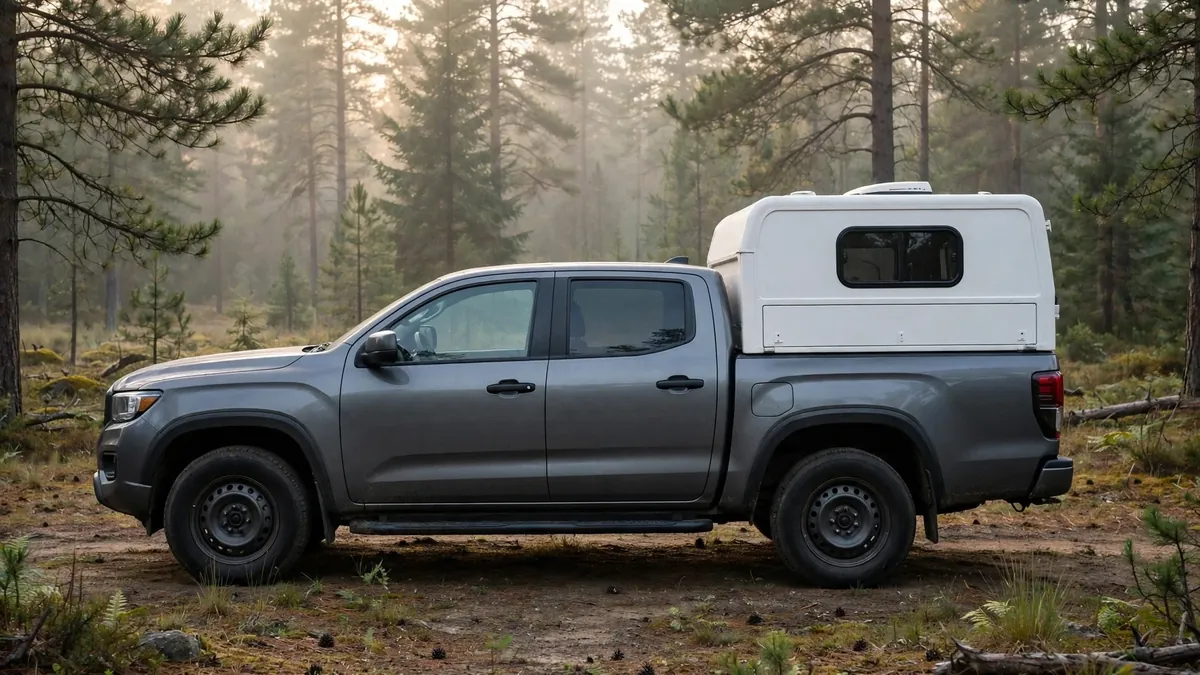
If you want hard walls instead of canvas, the Scout Yoho is the strongest fit here. Scout lists the hardwall Yoho at 904 pounds on its spec table (the model page text says 929 — call it ~905–930), with a 69.75-inch floor for narrow midsize beds, and Scout lists the Ranger’s 5-foot and 6-foot beds as fitments. It sleeps up to four, carries a small 4.9-gallon fresh tank, and its CG sits at about 26 inches; the pop-up Yoho is a touch heavier at 941 pounds. The tradeoff is space: no wet bath, a compact interior, a small water supply. But for a Ranger owner whose sticker reads 1,400, the Yoho is one of the only real slide-ins that leaves room for people and water — and unlike the Swift, you are not sleeping inside canvas walls on a cold night. Scout’s Tuktut is lighter still at 812 pounds but far more minimal; the Kenai (1,336 lbs, built for heavy half-ton to one-ton trucks) is not a Ranger camper.
Tune M1 — the ultralight pop-top for the payload-starved
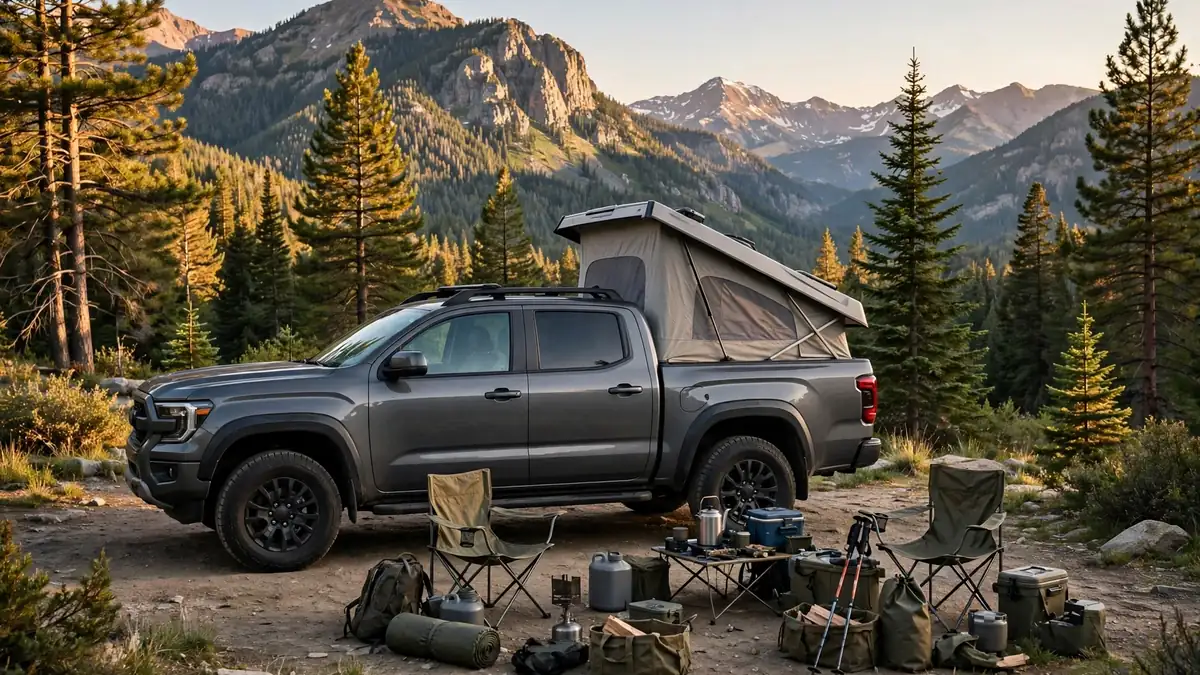
If your sticker is under 1,500 pounds, the honest answer may be to stop shopping for slide-ins entirely. The Tune M1 is a hard-sided pop-top canopy camper starting at ~400 pounds (Tune’s guide: 400–500 depending on configuration), popping up to 6’4″+ of headroom. Mid-size starts at $12,999, full-size at $13,999. It is not a finished RV interior; you build out the inside on its T-track system. What you give up in comfort you get back in payload: at 400-odd pounds, the M1 leaves over 1,000 pounds of capacity on even a Raptor. Our Tune M1 review covers the hands-on verdict.
Go Fast Campers V2 Pro and V2 Max — the wedge option
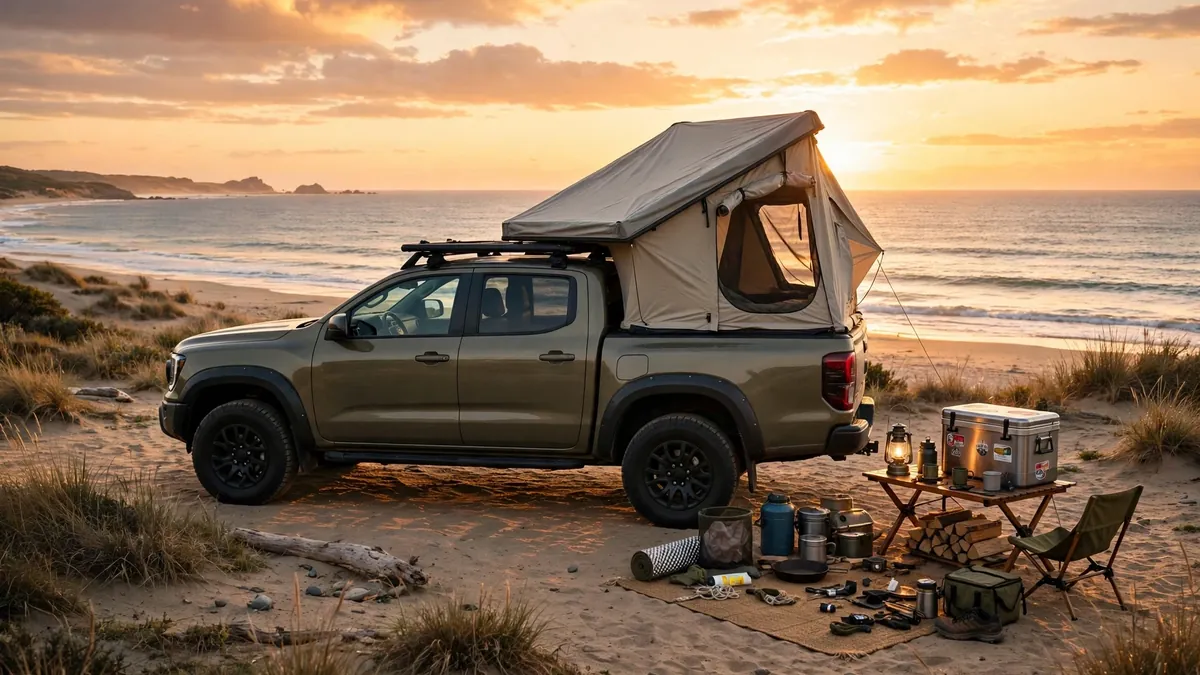
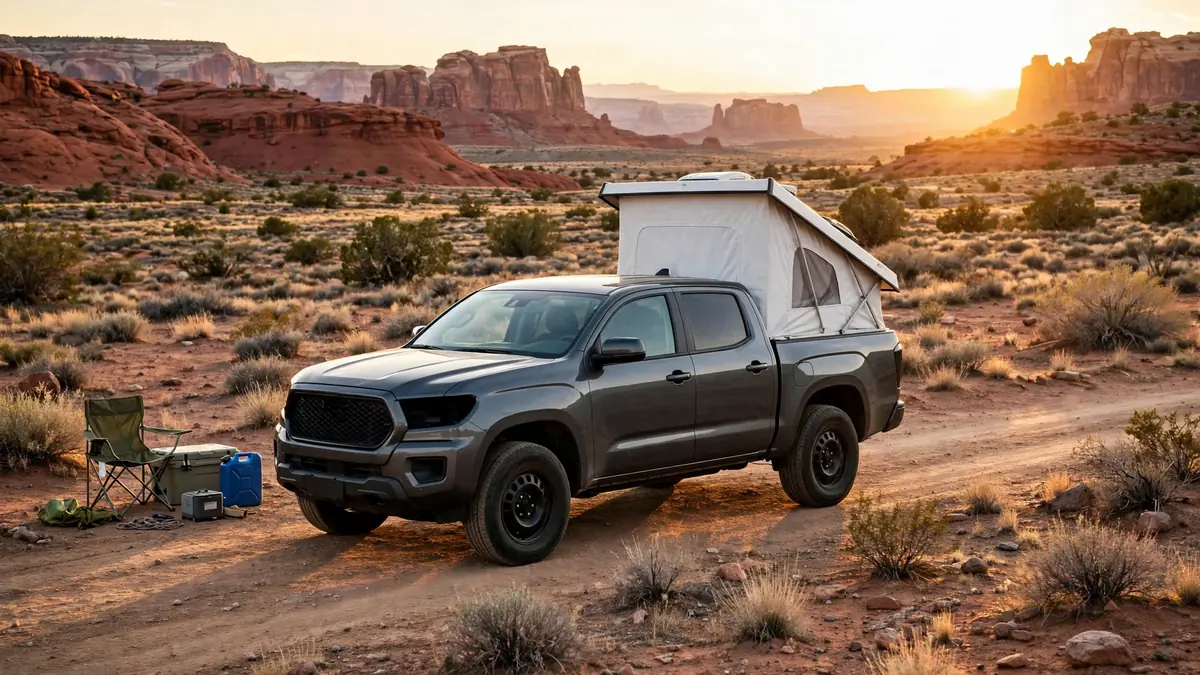
The wedge camper is the lightest way to sleep off the ground in a Ranger, and Go Fast Campers is the benchmark. The V2 Pro shell weighs ~275 pounds and starts at $7,950 for mid-size trucks; the longer V2 Max adds ~18 inches of platform and a stand-up pass-through, weighs ~335 pounds, and starts at $10,950, per Go Fast Campers’ own listing. That is less than a third of a Swift’s weight, so payload worries effectively disappear — at the cost of standing headroom, a bathroom, and insulation. Owners on Reddit report the same two wedge-camper complaints — wind noise at highway speed and limited storage. Our best wedge canopy campers roundup covers the class. If your camping is mostly sleeping somewhere beautiful and cooking outside, a wedge is the Ranger’s natural camper.
Alu-Cab type canopy campers — the overland middle ground
Between the wedge and the slide-in sits the canopy camper: a hard-sided aluminum canopy with a pop-up roof and sleeping platform, typified by the Alu-Cab Canopy Camper. Lighter than any slide-in, it keeps the full bed usable for gear. I will not quote a weight or price — Alu-Cab’s US pricing varies by dealer, and I could not verify a current figure. Wedge and canopy campers average in the mid-300-pound range.
What to Avoid on a Ford Ranger
Skip any hard-side slide-in over ~1,300 pounds dry: the Lance 650 (~1,813 dry, over 2,000 wet), the Cirrus 620, the Scout Kenai, and every full-size slide model. Skip the Hawk and Fleet on a current 5-foot Ranger; they are built for longer beds. Skip any camper sold with a generic “fits most mid-size trucks” claim and no Ranger-specific fitment confirmation. And skip buying a camper for a truck you have not weighed — a CAT scale visit costs about fifteen dollars, and the mistake it prevents costs thousands.
Winter warning: a pop-up Swift or wedge camper is a three-season shelter. Condensation collects on canvas and drips onto bedding — winter owners run a vent cracked open and never pack the camper away wet. For four-season camping, the hardwall Yoho is the only qualifier.
Tie-Downs, Center of Gravity, and Suspension: What Ranger Owners Actually Do
The Ranger’s owner community has done the most useful work here. Three lessons keep coming up.
Bed-mounted tie-downs are the weak link, and frame mounts only recently caught up. Experienced owners agree: stake-pocket tie-downs rely on the strength of the bed itself, and the bed is not the strong part of the truck. Frame-mounted tie-downs bolt to the frame — but for years Ranger owners had to improvise because nobody made a proper kit. That changed with Torklift’s F3014 rear tie-down, designed for the 2024 Ranger 5-foot bed and released for presale in early 2025. Putting a slide-in on a current Ranger? Buy a frame-mounted system with spring-loaded turnbuckles — our tie-down comparison covers the options — plus a rubber bed mat. Never trust a slide-in to the factory bed cleats.
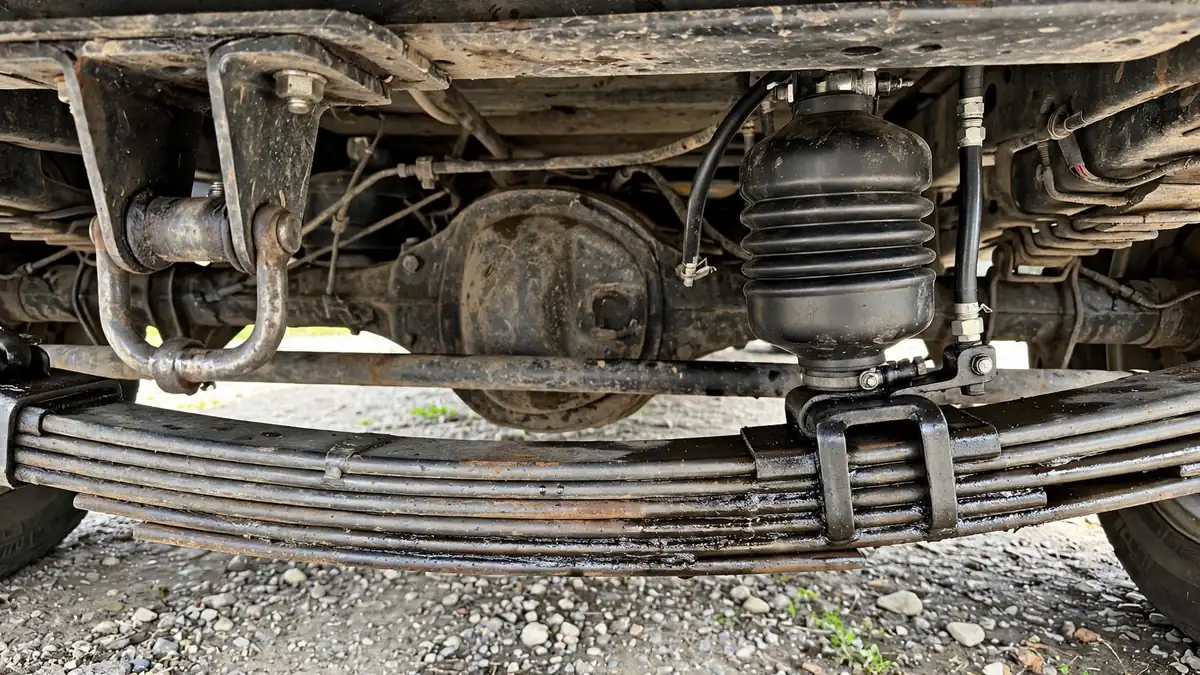
The rear sags, and the fix owners reach for first is usually the wrong one. The Ranger’s leaf-spring rear squats under a constant camper load and porpoises over highway expansion joints. The community’s fix: airbags or helper springs to level the truck, correct tire pressure, and the heaviest gear loaded forward, over or ahead of the rear axle. But owners are blunt: no airbag, Timbren, or SumoSpring raises your payload rating, and build threads report owners who added airbags, felt the truck sit level, and concluded they could carry more weight. They could not. Level is not legal. Our airbags vs Timbren vs SumoSprings comparison lays out the three options; pick a camper that fits first, then level the truck.
The “it fits, so it works” trap. A camper slides into the bed, the tailgate closes, the truck sits level, and the owner drives off — then comes the first long highway day in a crosswind or steep grade, and the truck feels vague and the brakes work harder. Owners who have been through it give the same advice: weigh the loaded rig on a CAT scale, axles separately, against GVWR and both axle ratings, before your first real trip. The rear axle rating is usually what you bust first on a Ranger. A scale ticket costs less than a tank of gas.
Verdict Table: The Best Truck Camper for Ford Ranger by Configuration
| Your Ranger | Realistic sticker | Best pick | Why it works |
|---|---|---|---|
| XL / XLT 4×2, 2.3L | ~1,650–1,767 lbs | Four Wheel Camper Swift | Highest-payload Ranger; the only one where a lightly optioned Swift fits with people and water |
| XLT / Lariat 4×4, 2.3L | ~1,450–1,650 lbs | Scout Yoho hardwall | Hard walls, ~905 lbs dry, CG designed for midsize beds |
| XLT / Lariat 4×4, 2.7L | ~1,350–1,513 lbs | Tune M1 | At ~400 lbs, the pop-top leaves 900+ lbs of margin |
| Raptor 4×4, 3.0L | ~1,300–1,373 lbs | GFC V2 Pro / V2 Max | Lowest-payload Ranger; only a ~275–335 lb wedge keeps you legal |
| 2019–2023 SuperCab, 6-ft bed | ~1,600–1,860 lbs | Four Wheel Camper Fleet | The only Ranger that takes a 6-ft slide-in |
| Any Ranger, daily driver + weekends | Any | Tune M1 or wedge camper | Lightest options; truck still drives like a truck |
On a Ranger, the camper you can carry is decided by your door sticker and your engine, not by what fits in the bed. A 2.3L XL 4×2 with a Swift and a Raptor with a wedge are both correct — for their trucks.
How to Buy Without Regret
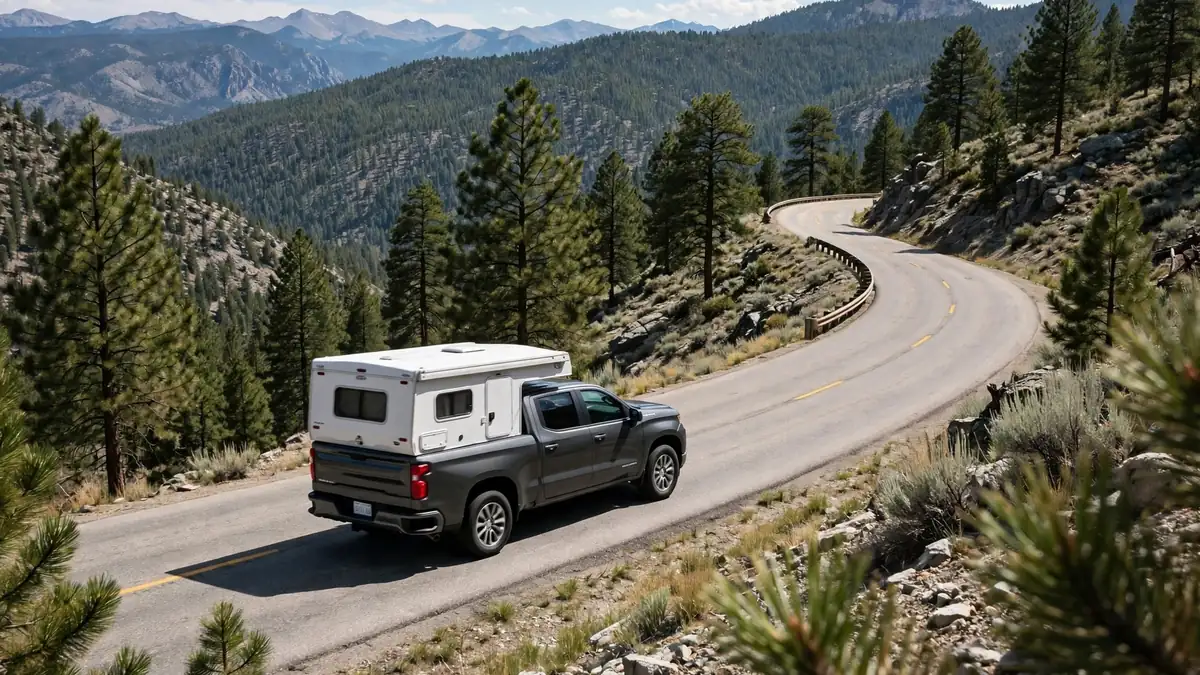
First, read your door sticker. Second, subtract 325 for two people, 200 for gear, and water and propane — on most Rangers, 800 to 950 pounds of dry weight is what is left. Third, shortlist only campers built for a 5-foot bed, or a canopy camper. Fourth, confirm fitment by year and bed length before you pay a deposit. Fifth, budget for frame-mounted tie-downs and a helper spring or airbag setup. Sixth, weigh the loaded rig at a CAT scale, axles separately, against GVWR and both axle ratings.
The Ranger is a good truck camper platform, but only inside its limits — nimble on trails a full-size truck cannot enter. The trucks that fail carry a camper bought for a different truck. Read the sticker first, and the best truck camper for Ford Ranger picks itself.
Disclaimer: payload ratings vary by model year, trim, cab, bed, engine, and options. Confirm your truck’s ratings on the door-jamb sticker and in your owner’s manual, and weigh your loaded rig before extended travel. Never exceed GVWR or axle ratings. Ford’s manual states it does not recommend using the Ranger for carrying a slide-in camper. This guide is general information, not a substitute for your manufacturer’s ratings.
Frequently Asked Questions
Can a Ford Ranger carry a truck camper?
Yes, but only a light one. Maximum payload is 1,767 pounds, and most real trucks sticker between 1,350 and 1,650. Pop-ups like the Swift, hardwalls like the Yoho, and canopy campers like the Tune M1 and GFC wedges are the realistic choices.
What is the payload capacity of a 2026 Ford Ranger?
Maximum: 1,767 pounds on a 2.3L EcoBoost 4×2, 1,763 with 4×4, 1,513 for the 2.7L V6 4×4, and 1,373 for the Raptor’s 3.0L V6. Your door-jamb sticker is the only number that counts.
What is the best truck camper for a Ford Ranger with a 5-foot bed?
The Four Wheel Camper Swift is the best slide-in, ~950 pounds dry, built for 5- to 5.5-foot beds. The Scout Yoho is the best hard-sided option at ~905 pounds. If your payload is tight, the Tune M1 (~400 lbs) or a GFC wedge (~275 lbs) are the safest picks.
Does the Ford Ranger come with a 6-foot bed?
Not anymore. The current Ranger (2024+) is SuperCrew only with a single 5-foot bed, 59.6 inches at the floor. The 2019–2023 Ranger offered a SuperCab with a 72.8-inch 6-foot bed — the only Ranger that fits 6-foot slide-ins.
Can a Ford Ranger Raptor carry a truck camper?
Only a very light one. The Raptor’s maximum payload is 1,373 pounds, the lowest in the lineup. A GFC V2 Pro (~275 lbs) or Tune M1 (~400 lbs) fits; a Swift leaves no room for people, water, and gear.