Truck Camper Hail Damage: Prevention, Insurance, and Repair
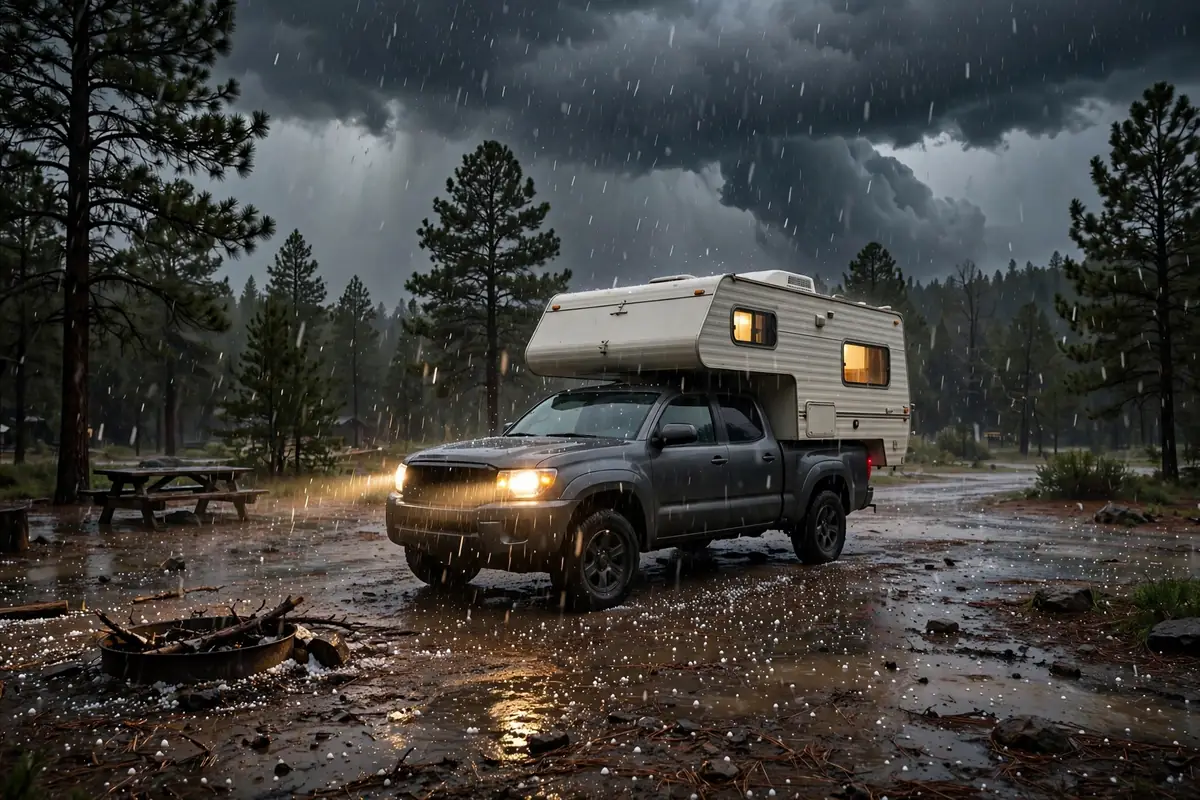
There’s a special kind of helpless that only comes from sitting inside a truck camper while hail hammers the roof. The whole rig shudders with every hit, and all you can do is listen and do mental math about what this storm is about to cost you. If you’ve just lived through that — or you’re watching storm season approach — this truck camper hail damage repair guide is for you: what hail does to a camper, what actually protects one, how the insurance claim process works for truck campers specifically, and what repairs look like from a cracked vent lid to a totaled roof.
Why Hail Is a Truck Camper’s Worst Storm Enemy
A truck camper is, from hail’s point of view, a perfect target. It sits high on the truck bed with the entire roof flat and broad to the sky — the most hail-exposed surface on any vehicle — and the roof is covered in exactly the parts hail loves to destroy: brittle plastic vent lids, skylight domes, air conditioner shrouds, antenna housings, and the fiberglass or aluminum skin itself.
Golf-ball hail is bad. Baseball hail is catastrophic. The biggest hailstone ever recorded — eight inches across and two pounds — fell in Vivian, South Dakota. You don’t need anything near that to ruin a roof: quarter-size stones can dimple aluminum, and once hail cracks the plastic fixtures up top, water finds its way in — turning a one-day storm into slow, invisible rot.
Truck campers are particularly vulnerable for one more reason: thin-skinned construction. Sidewalls and roofs are built light for a pickup bed, so the aluminum or fiberglass dents far more easily than your truck’s steel hood — and the roof plastics die first. That’s the same story from every owner in Texas, Colorado, Nebraska, Kansas, and Illinois — the top five hail-claim states per the National Insurance Crime Bureau, cited by RVLife. Ask anyone who’s weathered a real storm in Texas, Colorado, Nebraska, Kansas, or Illinois — the top five hail-claim states per the National Insurance Crime Bureau, cited by RVLife — and they’ll tell you the same story: the roof plastics die first.
Prevention First: Keeping Hail Off Your Camper
Old-timers on the RV forums have a saying about hail protection, and it boils down to two sentences: put a roof over it, or don’t be there. Everything else is a compromise. But compromises still matter, because most of us don’t live in a pole barn.
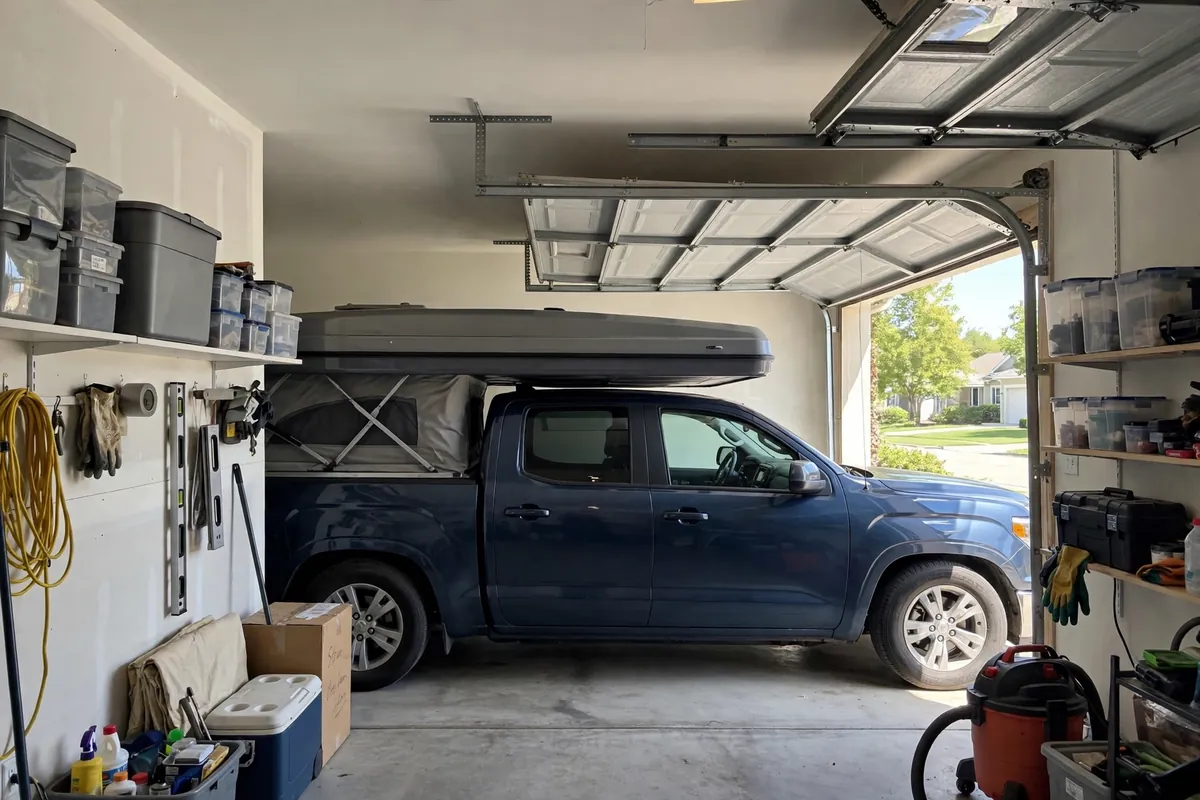
Covered storage is the real answer. An enclosed garage, a pole barn, a carport — any of these will do. Pop-up owners have a quiet advantage: a lowered pop-up fits a standard residential garage, which is genuine hail armor. Owners on the Wander the West forum note garage-storing a pop-up as one of its best perks in hail country, and pop-up folks commonly drop the roof when a storm rolls in at camp, removing the canvas from the line of fire.
An RV cover helps, but keep your expectations honest. A heavy fabric cover will blunt marginal hail — the small stuff that’s borderline for causing damage — but no quilted cover stops golf balls, and a cheap tarp stretched tight gives you basically nothing. Layering padding underneath a cover — sleeping bags, foam pads, quilts between the cover and the roof — is the only way covers meaningfully blunt bigger stones, as one North Texas RVer worked out in detail (see his full hail-protection breakdown). It’s a genuine storage-season strategy, not something you can do at a campsite.
Harden the parts hail eats first. The most common hail casualties on a truck camper roof are the plastic fixtures: vent lids, skylight domes, AC shrouds. Owners on the RV forums report two smart upgrades. First, replacing thin factory vent lids with heavier-duty or metal lids — one forum member did exactly this after hail pulverized several fixtures, specifically so it “won’t crack from hail” the next time. Second, MaxxAir-style vent covers, which are thicker than factory lids and add an angled second shell over the vent. These won’t save you from baseball hail, but they turn quarter-size stones from a roof full of leaks into a roof full of dents.
Learn to leave. When meteorologists are calling for large hail with confidence, the best protection is an empty sky over an empty campsite. Keep a radar app on your phone and watch the forecast during spring and early summer (roughly March–August per RVLife). Hail Alley — the junction of Colorado, Wyoming, and Nebraska — and central and south Alberta’s “Hailstorm Alley” earn their nicknames honestly. Road-tripping through either one in May? Check the forecast like your roof depends on it.
If you’re caught mid-storm on the road: pull off, park, and stay put. A gas station canopy or overpass works as shelter. Trees give some hail cover but trade it for falling-limb risk — worse damage than the hail itself in high wind. Don’t try to drive through it; you can’t outrun a cell.
What to Do in the First 48 Hours After a Storm
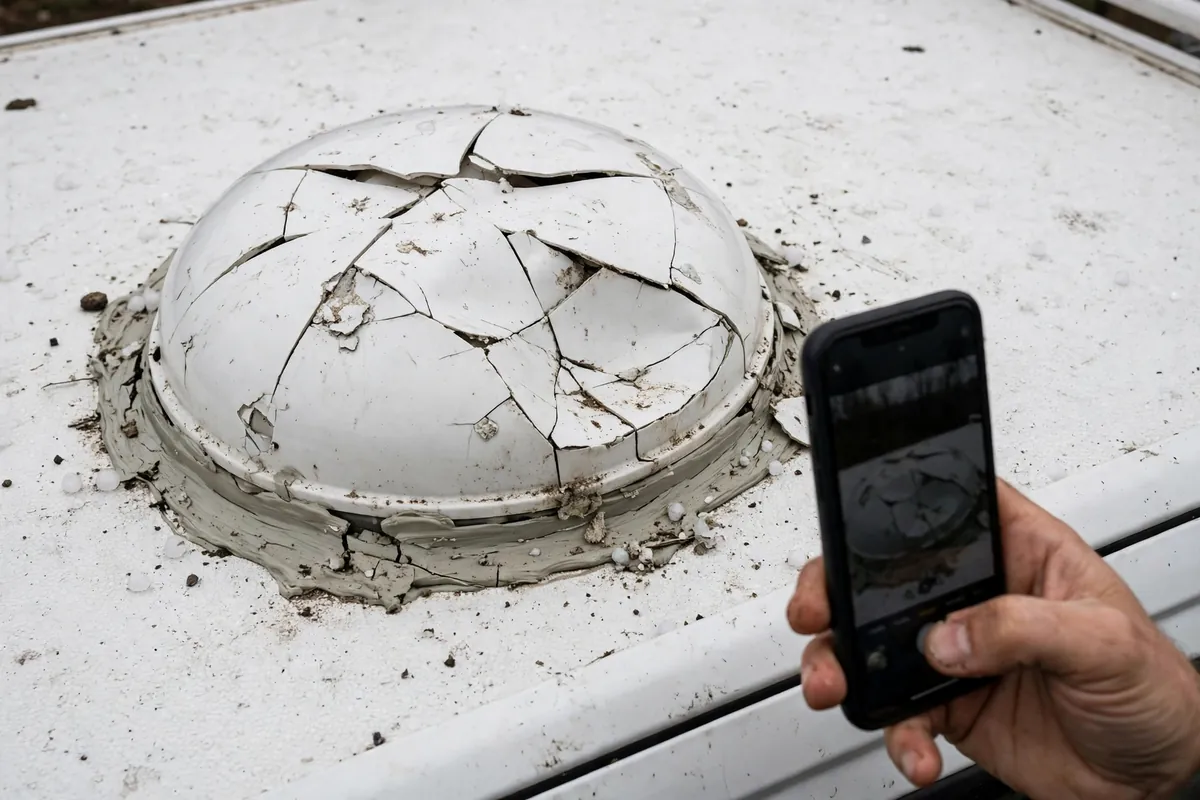
Storm’s over. Hands have stopped shaking. Here’s the order of operations:
- Photograph everything before you touch anything. Every dent, every cracked vent lid, the hail on the ground next to something for scale. Wide shots and close-ups. These photos are your insurance file, and you can’t recreate them later.
- Stop the water, not the damage. Broken vent covers and cracked shrouds are open doors for rain. The emergency fix owners on the iRV2 forums swear by: garbage bags stretched over the broken fixture, sealed with duct tape. One owner hit with golf-ball and baseball hail at Palmer Gulch near Mount Rushmore found every plastic item on the roof destroyed — vent caps, skylight dome, antenna dome, fan domes, AC shrouds — and bag-and-tape got the rig through the rest of the trip. Do this the same day; a leak ignored for a week can rot wood and delaminate a wall.
- Get a proper roof inspection soon, even if it looks fine. This one comes straight from the owner forums: hail damage to fiberglass isn’t always visible right away. An iRV2 member’s motorhome roof took about $20,000 in hail repairs, and months later — while washing the white roof — he found fresh cracks that had been hiding, only revealed when dirt worked into the fine dings. He got the claim reopened without a second deductible. Run your hand over every roof surface, look at the plastics from multiple angles, and check every seal around every roof penetration.
- Note the date and gather your maintenance records. Storm date, weather alerts, your photos, and your resealing history all matter to an adjuster. Insurers have denied roof claims on “lack of maintenance” grounds, so your resealing log — the kind of record you keep if you follow a proper annual truck camper maintenance schedule — is worth its weight in fiberglass here. If you spot damp spots inside afterward, treat them as urgent and work through your roof leak repair checklist right away, because post-hail leaks rot fast.
Filing an Insurance Claim for Hail Damage on a Truck Camper
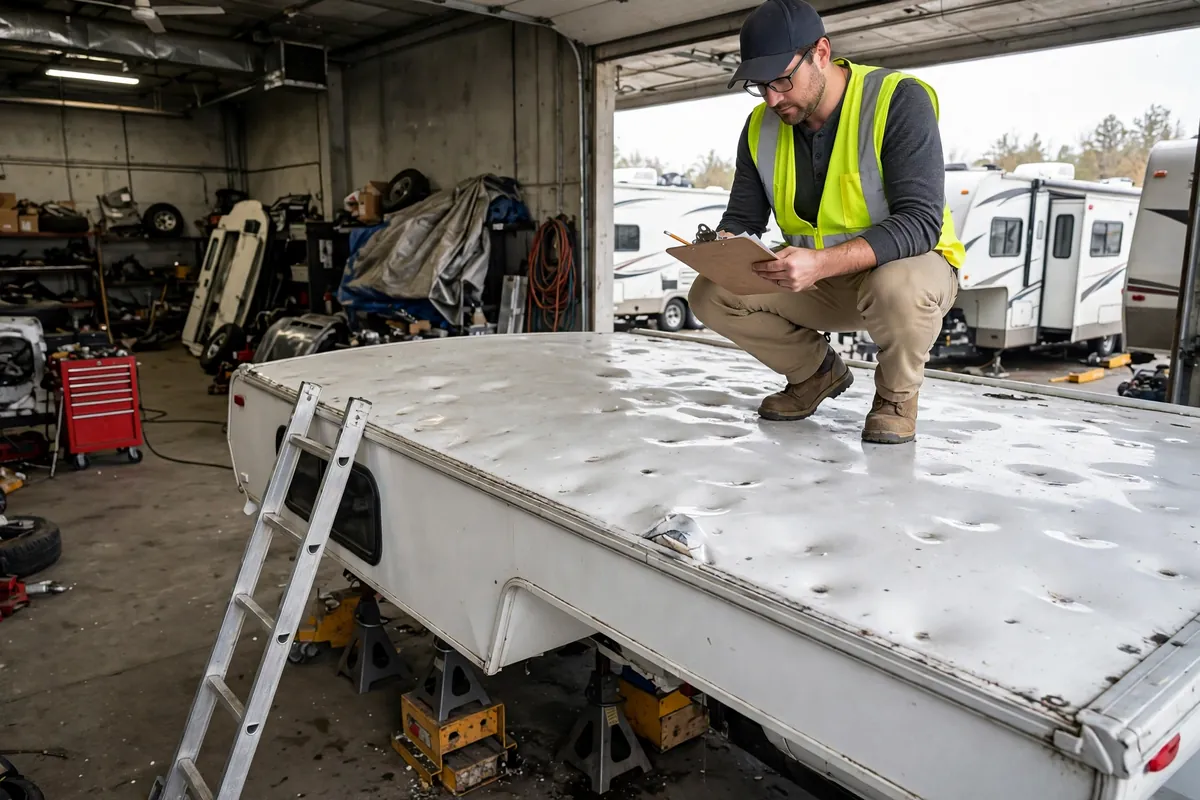
Here’s the first thing to know: hail damage falls under comprehensive coverage, not collision. But truck campers have a paperwork quirk — a camper can be covered under the truck’s policy, a separate camper policy, or even a homeowner’s policy when it’s off the truck at home. One owner in Truck Camper Magazine’s collection of real truck camper insurance claim stories learned this after an Alabama hailstorm tore through his Arctic Fox 990 while it was sitting off the truck in his driveway: first told it was only covered on the truck, the insurer eventually covered the whole roof replacement. Lesson: know which policy covers your camper — on the truck, off it, at camp — before the storm. Our truck camper insurance guide covers the coverage types in detail.
When you file, expect the process to be slower and more specialized than a car hail claim.
- Push for a qualified adjuster or shop estimate. The first estimate isn’t always the real estimate. One Lance owner in that same claim-stories collection reported the original adjuster’s repair estimate was “very low” — then a different adjuster at the repair shop increased it five times. If the first number looks wrong, get the camper to a shop that actually works on truck campers and have the shop meet the adjuster.
- Document the camper’s value. Insurers undervalue niche vehicles. When hail beat up a Northstar TC650’s roof badly enough to total it, the owner had to get the insurer to call the manufacturer to verify the value — and they ended up paying more than expected. Keep your purchase paperwork and receipts for upgrades.
- Know that totaling is a real possibility. Hail totals more RVs than people expect, because replacing a whole camper roof is enormously labor-intensive. If your camper gets totaled, ask about buying it back at salvage value — the Northstar owner bought his back for $2,000, used it for a couple more years, then traded it and still got full value on the trade. Adjusters don’t always volunteer that option.
- Be patient, but stay on them. One owner reported his hail claim took seven months after the file got lost and the adjuster quit — they eventually paid $8,000 for a whole new roof. Keep records of every call, name, and promise.
- One claim can cover both truck and camper. A Northern Lite owner caught in a hailstorm at Frontier Days in Cheyenne had the truck ($3,400 in damage) and the camper (a destroyed bathroom vent cover) covered under a single claim with no double deductible — and the insurer even paid for his own time replacing the vent cover himself after he couldn’t get a shop appointment.
A word of caution before you file: compare the repair estimate to your deductible and to what a claim could cost you at renewal. For cosmetic-only damage, some owners decide the claim math doesn’t pencil out and live with the dents. (Insurance disclaimer: nothing here is insurance advice. Read your actual policy, talk to your agent, and decide for your own rig and budget.)
Truck Camper Hail Damage Repair: Your Options by Severity
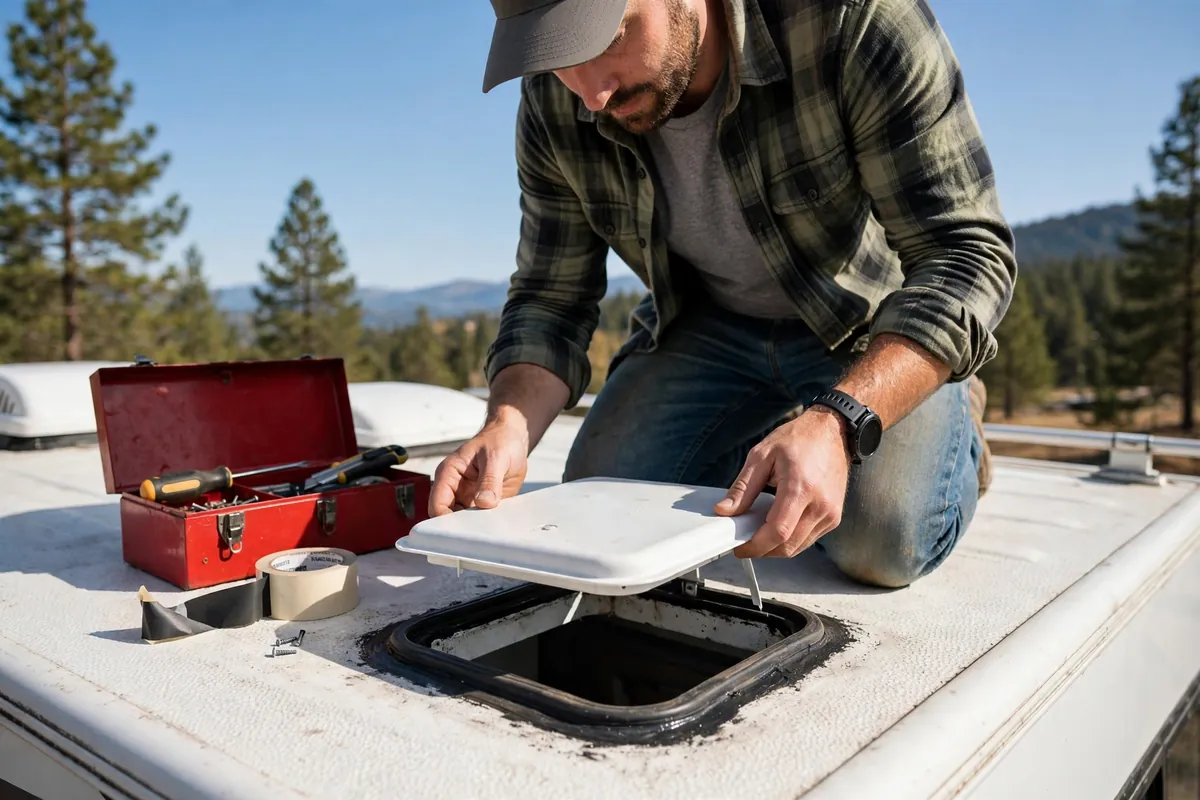
Hail repair on a truck camper isn’t one job — it’s a menu, and which item you order depends on what got hit and how bad.
Broken plastics: replace all of them. The most common truck camper hail repair, and it’s very DIY-friendly. Vent lids, skylight domes, AC shrouds, fridge and furnace vent covers — if the storm got one, inspect all of them, because hail doesn’t miss selectively. Forum owners commonly end up replacing every plastic fixture on the roof after a serious storm, which is why the post-hail roof audit matters. The parts are standard 14×14 vents and common shroud sizes, inexpensive relative to body work, and the job is usually a few screws, butyl tape, and sealant.
Cosmetic aluminum dents: the honest options are PDR or living with them. Here’s the catch: the paintless dent repair body shops use on cars doesn’t transfer cleanly to camper construction. RVLife notes that PDR generally can’t be used on RVs the way it is on cars, because camper walls and roofs are thin aluminum over ribs and foam with no back-side access, not solid steel panels. Small dents on sidewalls sometimes respond to a mobile PDR tech; for a roof that’s been peppered, the real “repair” is panel replacement or a full re-skin, which is where the five-figure quotes come from. That math leads many owners to the conclusion the little-trailer crowd reached on the T@B forums: when the damage is cosmetic, take the insurance check and keep camping. Live in hail country and your camper will get hailed on again — spending thousands to make it pristine for one season rarely makes sense. Cosmetic-only dents are also the one category of truck camper hail damage repair where “do nothing” is a legitimate, defensible answer.
Fiberglass gel-coat spiderweb cracks: fix them promptly, DIY or pro. Spiderweb cracks let moisture into the laminate, and moisture causes delamination — the expensive kind of damage. RVLife’s repair walkthrough for minor gel-coat damage is a useful template: dry ventilated workspace, clean the cracks with acetone, sand, mask with painter’s tape, apply marine-grade gel coat per the manufacturer’s directions, cure overnight, then sand smooth, clean, prime, and paint to match. It takes care to make invisible, but it’s a genuine DIY job. Leave spiderweb cracks unfixed and you’re storing up a delamination repair that costs many times more.
Full roof replacement: the nuclear option. When the roof skin itself is shredded or the structure underneath is compromised, replacement is the only real fix — skin, decking, insulation, and every roof penetration resealed. One industry estimate puts a professional RV roof replacement around $300 per linear foot, and on an older camper that can exceed the camper’s market value — which is exactly how campers end up totaled. Get multiple quotes from shops with real truck camper experience, not just car body shops.
Buying a Used Camper? Read Its Hail History
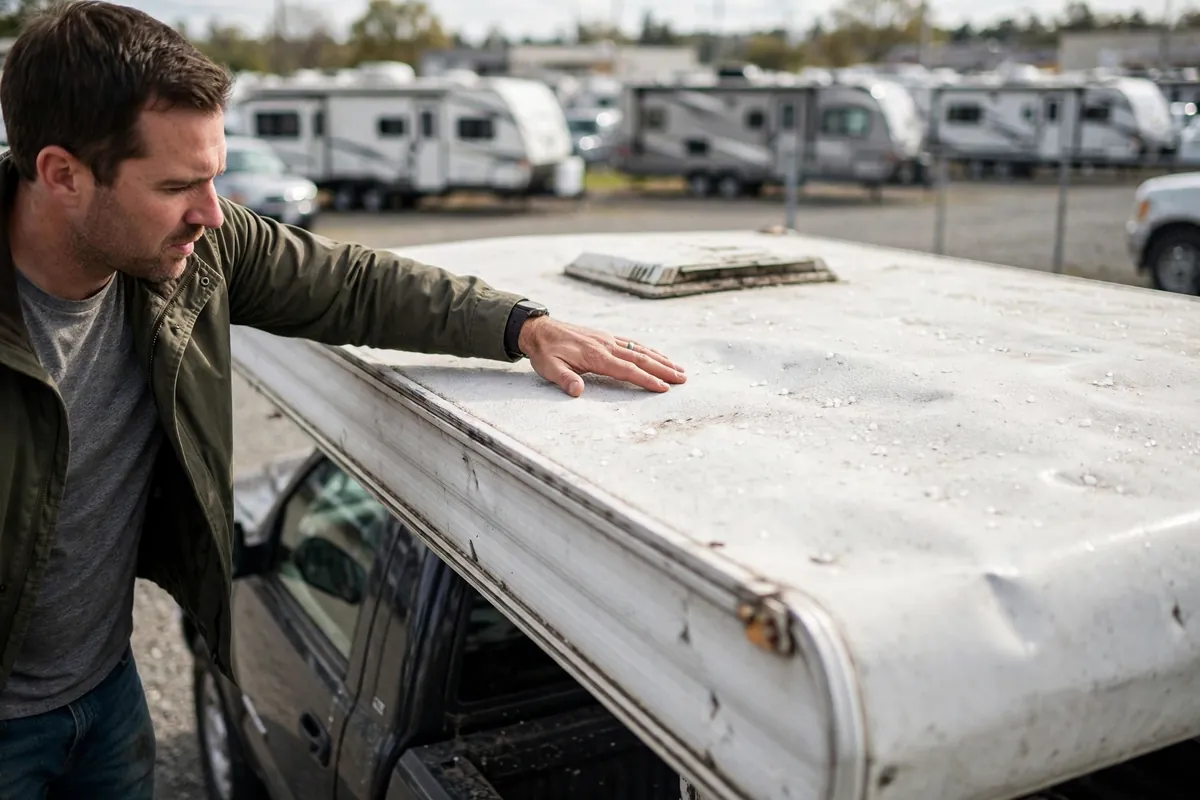
This is the flip side of everything above. Hail-damaged campers get bought back at salvage, patched up, and resold — sometimes disclosed, sometimes not. Before you buy any used truck camper, especially in Texas, Colorado, Nebraska, Kansas, Oklahoma, or Alberta, run your hand over every roof panel and check the plastics: a roof full of small matching dents, vent lids that are newer than the camper, skylight domes oddly clear compared to yellowed neighbors, or an AC shroud that looks suspiciously fresh. New plastics on an older roof are a clue, not proof — but they should prompt the question. Add a hail check to your routine alongside everything on the used truck camper inspection checklist, and if a seller can’t tell you the camper’s storm history, treat a discounted price with suspicion rather than excitement.
What Hail Protection Is Actually Worth Paying For
Ranked the way a working owner would:
- Covered storage — the only real protection. A carport or garage does what nothing else does. In Hail Alley long-term, renting a covered storage spot for storm season may be the best money you spend on the camper all year.
- A separate camper policy with agreed value — cheap, and it’s the only financial protection that exists. Confirm hail is covered under comprehensive and know your deductible.
- Upgraded vent covers and fresh plastics — modest cost, real reduction in the most common damage. Replace aging, sun-brittled vent lids before storm season; UV makes plastic shatter-prone, which is exactly what hail exploits.
- A radar app and a personal evacuation rule — free, and it works better than any gadget bolted to the roof.
- Thick padded covers for storage season — worth it if you store outside and you’re buying a cover anyway; not worth buying as a standalone anti-hail system.
Not worth much: thin tarps stretched tight, “hail blankets” sold with big promises, and parking under trees in high wind. The forums and the physics agree.
Frequently Asked Questions
Will my truck camper insurance cover hail damage? Hail is almost always covered under comprehensive coverage, assuming your policy includes it and your camper is properly insured — which for truck campers means confirming which policy covers the camper on the truck versus off it.
Should I file a claim for minor hail dents? Compare the estimate against your deductible and consider the possible premium impact. Many owners file for functional damage (cracked plastics, punctured skin) and skip claims for cosmetic dents. Get an estimate, then decide.
Can hail dents be popped out of a truck camper like a car? Rarely as cleanly. Car PDR relies on access behind solid steel panels; camper walls and roofs are thin skins over ribs and foam, which limits what PDR can do. Small accessible dents sometimes respond; a peppered roof usually needs panel replacement or a re-skin.
How do I know if hail cracked my fiberglass roof? Look for spiderweb-pattern cracks in the gel coat, checked from multiple angles in good light. Hidden cracks can surface months later as dirt works into the dings. After a direct hit from large hail, assume damage until a careful inspection says otherwise.
Does a cover protect a truck camper from hail? Marginally. A heavy cover with padding underneath can blunt smaller hail, but no fabric cover reliably stops golf-ball-size stones or bigger. A carport, garage, or barn is the only storage option that genuinely protects against serious hail.
What’s the first thing to replace after a hailstorm? Every cracked or shattered plastic fixture on the roof: vent lids, skylight domes, and the AC shroud. These are your leak points — garbage-bag-and-tape covers get you through until replacements arrive.