Best Truck Camper for Ram 1500 — What Actually Fits Without Overloading It
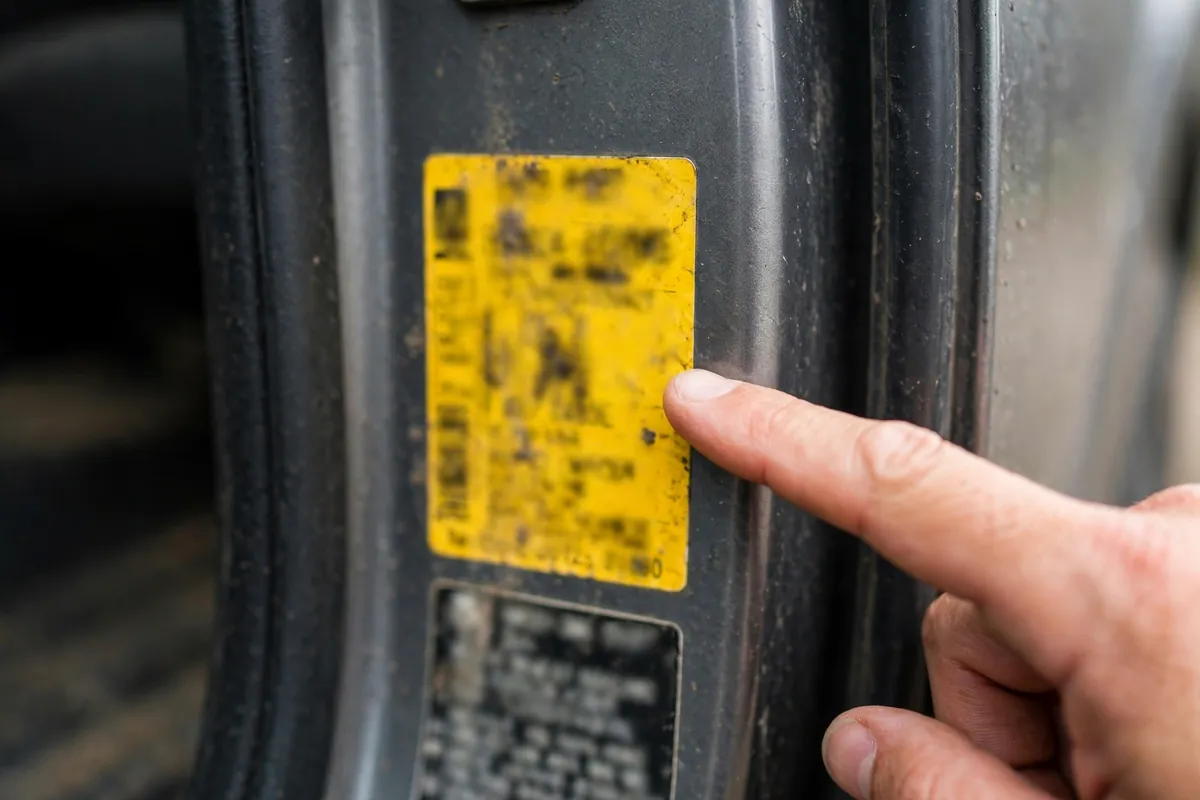
The Ram 1500 is the truck most likely to trick you into buying the wrong camper. It tows over 11,000 pounds and the brochure shouts about a 2,360-pound max payload — then you open the driver’s door of your Crew Cab 4×4 Laramie and the yellow sticker says something closer to 1,400. That gap is where most Ram 1500 camper mistakes happen. Finding the best truck camper for Ram 1500 is not about the biggest camper the truck can hold. It is about the camper that still leaves room for you, your passenger, your water, and your gear.
In the owner threads, the pattern is always the same: the camper fits the bed, the truck squats, the steering goes light, and the owner asks whether airbags will fix it. This guide does the math first, so you buy the camper once.
The Best Truck Camper for Ram 1500 Starts With Your Payload Sticker
Ram’s headline number for the 2026 Ram 1500 is a maximum payload of 2,360 pounds, and it is real — but only for one specific truck: a Tradesman or Express Crew Cab with the 6’4″ bed, two-wheel drive, and the 3.6L Pentastar V6 with eTorque. Change almost anything and the number drops. Ram’s own 2026 payload and towing guide shows the slide: the 3.0L Hurricane standard-output tops out around 1,930 pounds, the returning 5.7L HEMI V8 around 1,650, and the high-output Hurricane around 1,490. A Crew Cab with the popular 5’7″ bed and the Hurricane SO is rated around 1,820 pounds; the HEMI Crew Cab with the 5’7″ bed sits around 1,650.
Trim matters just as much, because every option is weight that comes straight out of payload. Dealer charts for the 2026 lineup put the work trucks on top — Tradesman and Express up to 2,360 pounds — followed by Big Horn at up to about 1,940, Laramie around 1,670, Rebel around 1,600, and Limited and Longhorn down around 1,340. Those are maximums per trim, not promises. A loaded Limited 4×4 can easily sticker under 1,400 pounds — less than some campers weigh dry. Before you shop, open your door and read the yellow tire-and-loading sticker. Our truck camper payload calculator guide walks through the subtraction step by step.
Owners keep discovering the brochure number was never theirs. On RamForum, one owner with a 2017 Crew Cab 4×4 found his sticker read 1,292 pounds while the chart for his configuration listed 1,510 — a 200-plus-pound gap from options like a bed cap and larger wheels — and another reported chasing fifth-generation Ram payload numbers for three years without ever finding a real truck with the “18xx” payload the charts suggested. The fix the forum regulars repeat is boring and correct: read your own sticker, then confirm it with a $15 CAT scale weigh. The sticker is your truck.
The Math Nobody Does Before Buying
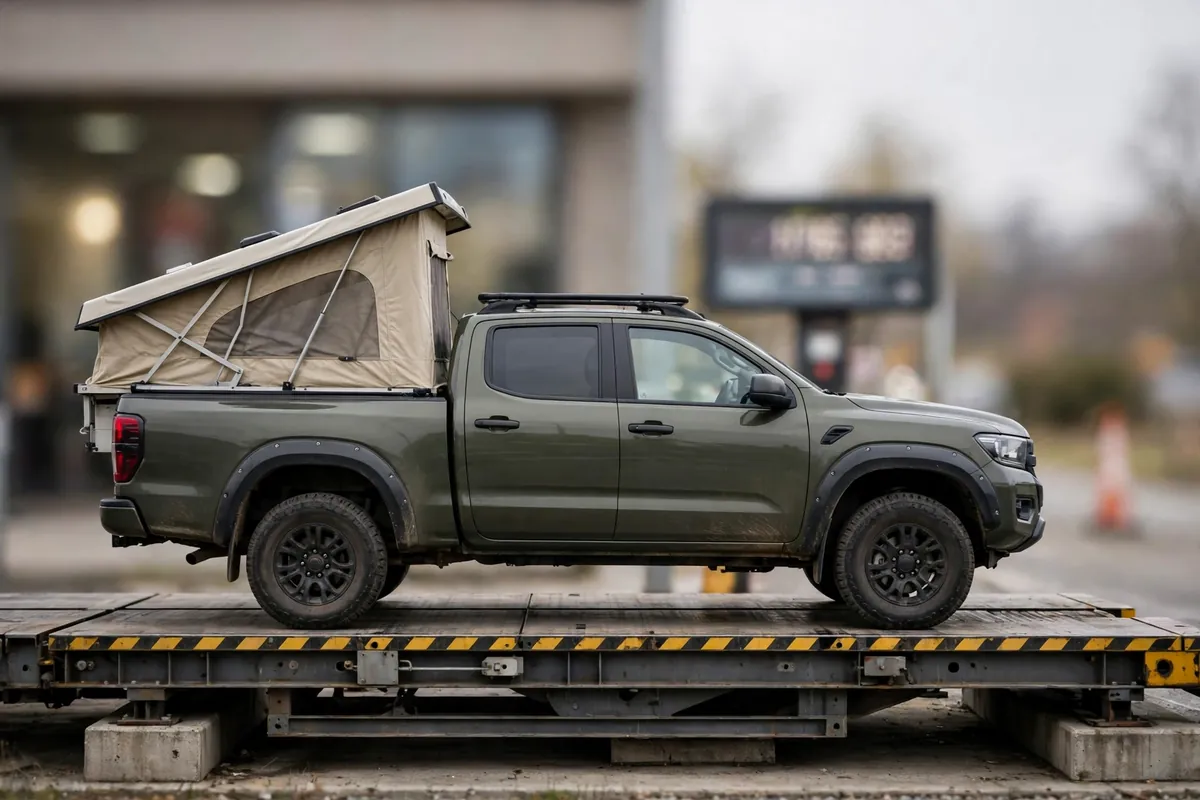
Start with your sticker payload. Subtract the people in the cab — two adults is roughly 300 to 350 pounds. Subtract gear — food, bedding, tools, recovery gear — easily 200 to 300 pounds for a weekend. Subtract water at 8.34 pounds per gallon (a full 20-gallon tank is 167 pounds) and propane at roughly 20 pounds per full 10-pound tank. On a truck with a 1,700-pound sticker, that “consumables tax” eats 600 to 700 pounds before the camper enters the picture. Your honest dry-camper budget is what is left: about 1,000 to 1,100 pounds.
That is why dry weight is a trap. A camper’s dry weight is the factory number with no water, no propane, and no options. Truck Camper Magazine’s wet-weight math adds water, propane, a battery, and a standard 500 pounds of stuff — and the jump from dry to wet is routinely 500 to 800 pounds. A camper listed at 1,500 dry is a 2,000-plus-pound camper on your truck. The same hard lesson shows up in our F-150 truck camper payload guide, and the F-150’s numbers are, if anything, friendlier than the Ram’s. Check the camper’s center of gravity against the CG zone in your owner’s manual, and weigh axles separately — a camper sitting too far behind the rear axle steers badly even when the total looks fine.
Bed Fitment: 5’7″ vs 6’4″, RamBox, and Air Suspension
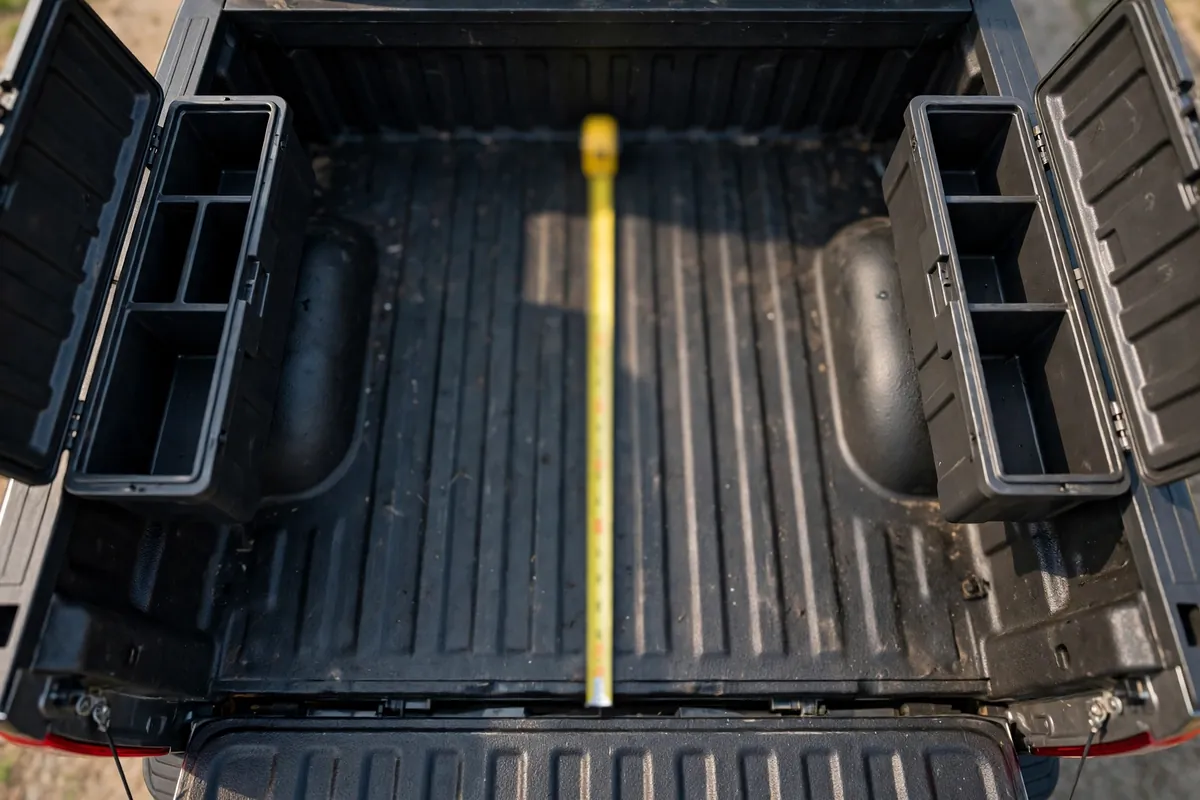
The current Ram 1500 comes with two beds: the 5’7″ short bed (67.4 inches long, 53.9 cubic feet) and the 6’4″ standard bed (76.3 inches, 61.5 cubic feet). Both are 66.4 inches wide inside the rails, with about 51 inches between the wheel wells. The 5’7″ bed pairs only with the Crew Cab; the 6’4″ bed pairs with Crew or Quad Cab. That nine-inch difference is decisive: most slide-in campers are built around a 6.5-foot floor, and a camper designed for the 6’4″ bed will overhang or simply not fit right on a 5’7″ bed. If you already own the short-bed Crew Cab — and most Ram 1500s on dealer lots are exactly that — your shortlist is short-floor campers like the Scout Yoho. If you are still truck shopping and a camper is the plan, the 6’4″ bed is worth hunting for: it opens up the Hawk, the Kenai, and the Cirrus 620, and it usually carries a higher payload rating too.
Two Ram-specific traps: RamBox and factory air suspension. The bedside storage boxes narrow the bed and change the rail profile, and many slide-in campers are built for a standard bed only — never assume a camper fits a RamBox truck without manufacturer confirmation, and confirm fitment by VIN before you pay a deposit. The four-corner air suspension on higher trims rides beautifully empty, but owners report it gets vague and sway-prone under a constant heavy load, and most aftermarket in-coil airbag kits explicitly state they will not fit trucks with factory air suspension. Know that before you buy the camper, not after.
The Campers That Actually Fit
Four Wheel Camper Hawk — the default answer
The Hawk is the camper most Ram 1500 owners end up with, and the weight explains why. The 2026 Hawk lists a dry weight of about 1,200 pounds in Truck Camper Magazine’s buyers guide, with a wet weight of roughly 1,950 pounds once you add water, propane, a battery, and 500 pounds of gear. Four Wheel Campers itself notes the average Hawk leaves the factory at about 1,428 pounds dry with options — awnings, bigger fridges, and solar add up fast — so budget for the optioned number, not the base. At a $30,675 starting MSRP for 2026, it is not cheap, but it is the lightest full-featured slide-in that sleeps four, and it is built for 6.5-foot beds, so it wants your 6’4″ bed, not the 5’7″. Our Four Wheel Camper Fleet vs Swift vs Hawk comparison breaks down the differences. On a Big Horn or Tradesman 4×4 with a 1,800-plus-pound sticker, a moderately optioned Hawk works; on a Limited with a 1,340-pound sticker, it does not — the same camper is a great fit or a bad one depending on trim.
Scout Yoho — the lightest hardwall
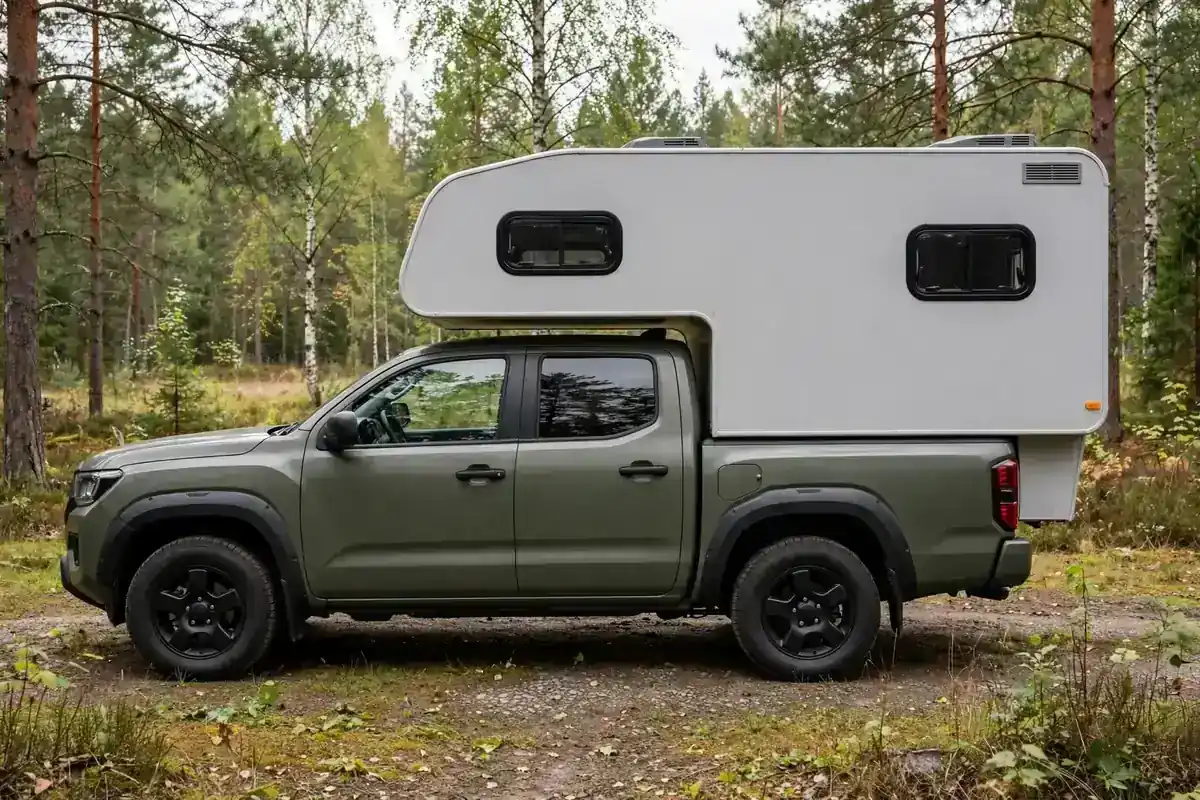
If your Ram is a short-bed Crew Cab or a high trim with a small sticker, the Scout Yoho is the camper that makes the math work. The hardwall Yoho lists a base weight around 929 pounds on Scout’s own spec page — the spec table shows 904 pounds, so call it roughly 905 to 930 — and Truck Camper Magazine’s 2026 guide lists it at 1,002 pounds dry and about 1,553 wet, with an MSRP of $22,495. It sleeps up to four, has a 69.75-inch floor that fits the 5’7″ bed, and its composite hardwall body needs no canvas pop-up. The tradeoff is space: no wet bath, a small 4.9-gallon fresh tank, and a compact interior. But for a Ram owner whose sticker reads 1,500, the Yoho is one of the only real campers that leaves room for people and water.
Scout Kenai — the bigger hardwall, for the right truck
The Kenai is Scout’s full-size model. Scout lists a base weight of 1,232 pounds; the 2026 buyers guide lists 1,358 dry and about 1,909 wet, at a $26,990 MSRP. It sleeps four to six, carries a wet bath, and Scout describes it as designed for heavy half-ton to one-ton trucks — honest framing, because at nearly 1,900 pounds wet it needs a Tradesman or Big Horn sticker to work. On a 2,000-plus-pound Quad Cab 4×2, it is arguably the best-value hard-side a Ram 1500 can carry; on a 1,600-pound Crew Cab 4×4, it is over by the time you fill the water tank. Its 92.25-inch floor makes it a 6’4″-bed camper, not a short-bed one.
Cirrus 620 — the four-season hard-side, right at the edge
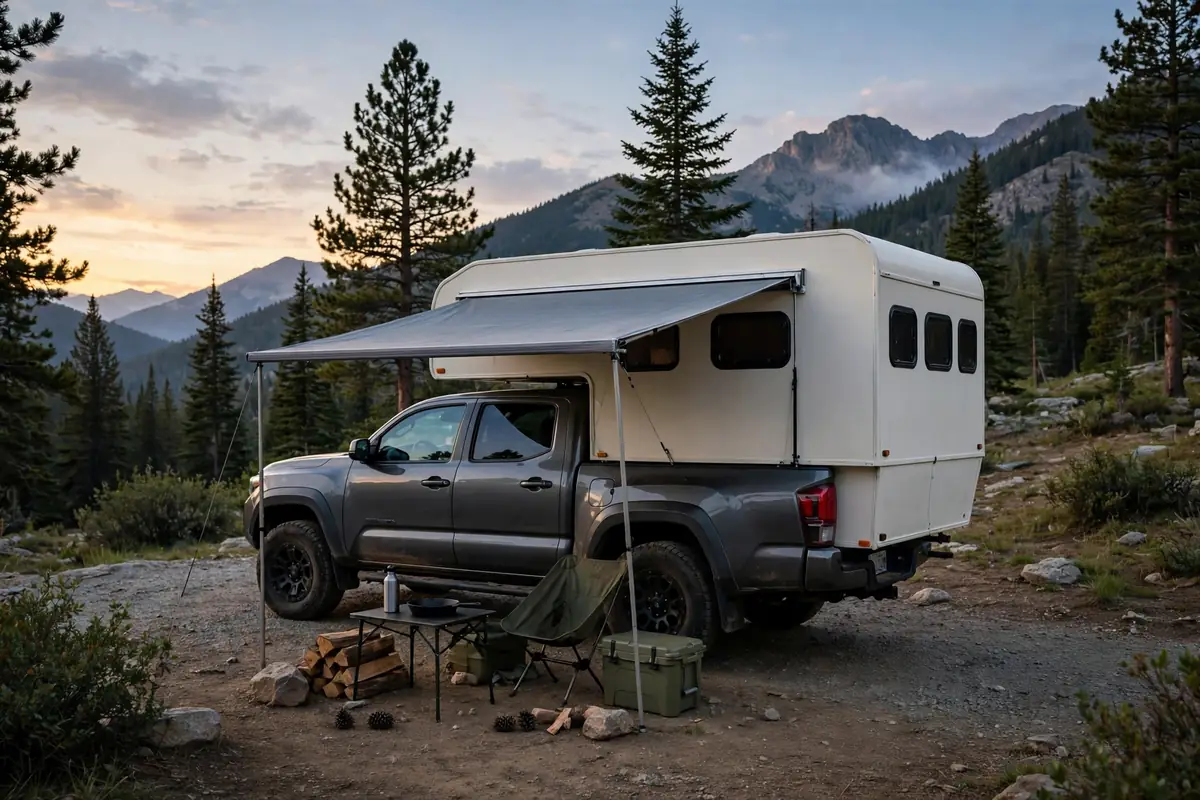
The nuCamp Cirrus 620 was designed from scratch to be a half-ton hard-side. The original prototype weighed 1,491 pounds dry, and the current model lists 1,565 pounds dry on nuCamp’s own spec sheet, with a wet weight around 2,312 pounds once you add 18 gallons of water, propane, batteries, and gear. A lighter 620 Lite is coming for 2027 at 1,380 pounds dry and a $29,115 MSRP. The 620 is a genuine four-season camper — Alde heating and hot water, Azdel composite walls, a standard 100-amp-hour lithium battery and 310 watts of solar on recent models. But at 2,300 pounds wet, it only fits the highest-payload Ram 1500s: a 2,300-pound-plus Tradesman or a lightly optioned Big Horn, travelling light and weighed on a scale. Owners on half-ton forums report the same pattern: the dry number looks possible, the scale number does not. If the 620 is your dream camper, buy the truck to match it — or the Lite.
Tune M1 — the ultralight pop-top for the payload-starved
If your sticker is under 1,500 pounds and you still want to camp, the honest answer may be to stop shopping for slide-ins and buy a pop-top canopy camper instead. The Tune M1 full-size weighs about 500 pounds dry, pops up to more than 6’4″ of headroom, and starts at $13,999 for the full-size version ($12,999 mid-size) from Tune Outdoor. It is a hard-sided pop-up canopy, not a finished RV interior — you build out the inside on its T-track system — but at 500 pounds it leaves over 1,000 pounds of payload on even a Limited. Our best wedge canopy campers roundup covers the lighter end of this class. The M1 is the right call for the Ram owner who uses the truck daily, camps weekends, and refuses to drive overloaded.
Lance 650 — the borderline hard-side
The Lance 650 is the lightest hard-side Lance builds. The current model lists 1,813 pounds dry and 2,016 wet on Lance’s own product page — lighter than the 2,061-pound dry figure the 2024 model carried, but still heavy for a half-ton once loaded. Our Lance 650 vs 825 vs 865 weight comparison shows how quickly the bigger Lances leave half-ton territory. The 650 has a real wet bath, a queen bed, and a proper kitchen, but at over 2,000 pounds wet plus people and gear, it needs a 2,300-pound Tradesman sticker and disciplined packing, and it is a flat no on a Laramie, Limited, or Rebel. Lance’s own lineup page has recently tagged the 650 for 250/2500-series trucks — a quiet signal even the manufacturer is steering it away from half-tons. Treat the 650 as a “maybe, on one specific truck” camper.
What to Avoid on a Ram 1500
Skip any slide-in hard-side over about 2,000 pounds dry — that includes the Lance 825 and 865 and every full-size slide model, which need a 2500. Skip the “fits any half-ton” line on dealer listings; no single camper fits every Ram 1500, because a Tradesman 4×2 and a Limited 4×4 are nearly 1,000 pounds apart on payload. Skip buying a camper for a truck you have not weighed — the scale is fifteen dollars and the mistake is thousands. And skip the idea that a suspension upgrade fixes an overweight truck. It does not.
Suspension: What Ram 1500 Owners Actually Do
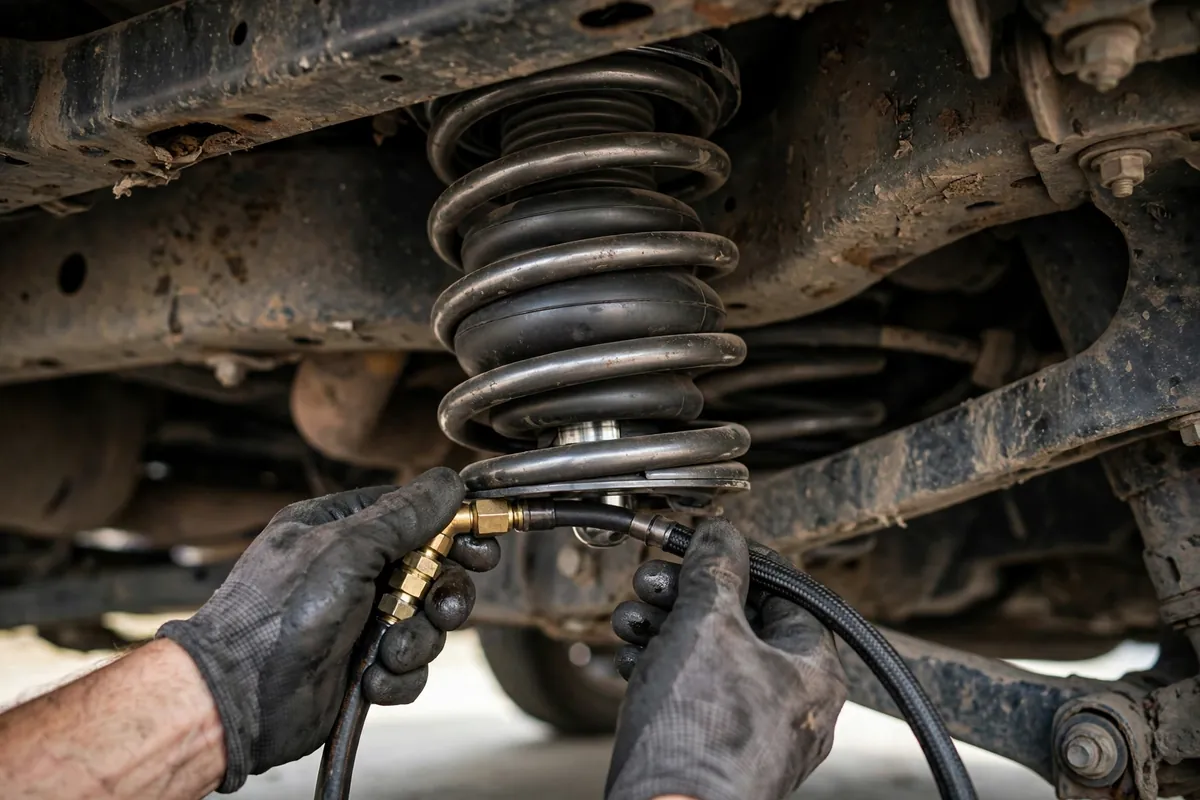
The Ram 1500 is the only full-size half-ton with coil springs instead of leaf springs out back, which is why it rides like a car empty — and why it sags visibly under a constant camper load. Here is what the community has worked out.
The rear squats and the ride goes soft and bouncy. Truck Camper Adventure’s half-ton guide puts it bluntly: some owners report an excessively soft and bouncy ride with sway, corrected only with a sway bar and either Timbrens or SumoSprings. Owners on Reddit and the forums describe the same thing: fine in the driveway, then porpoising over highway expansion joints and leaning in crosswinds. The fix is a rear sway bar first — it attacks the actual problem, body roll — plus a helper spring.
Airbags get installed, then the owner learns they do not carry weight. This is the single most repeated lesson in the Ram 1500 camper threads. A Go Fast Campers forum owner with a Ram Big Horn 1500 installed airbags after his camper sagged the rear, and when he asked about moving to a Rebel, the forum’s Ram suspension regulars told him the unglamorous truth: airbags are for towing, not for constant weight. Shocks do nothing to support load either — weight is supported by the springs. For a camper that lives on the truck, the recommended fix was heavier constant-load rear springs (a 500-pound constant-load spring was the specific suggestion), with airbags only as a fine-tuning aid. Our airbags vs Timbren vs SumoSprings comparison lays out the three options. Practical takeaway: full-time camper, budget for springs; weekends only, airbags plus a sway bar are the common setup.
Factory air suspension fights the load instead of carrying it. Owners on the WinnieOwners forum report that the four-corner air suspension on 2019-and-newer Rams can feel unstable under a heavy trailer or camper — sway, light steering, a mushy sensation no hitch adjustment fully cures — and one owner ended up talking to his dealer about swapping the truck because Ram had no fix to offer. The workaround owners share: put the suspension in jack mode, hook up and level the load, then turn the air suspension back on so its self-levelling starts from a level baseline. It helps; it does not turn an air-suspension truck into a coil-and-spring hauler. Most aftermarket in-coil airbag kits will not fit a truck with factory air suspension at all. Shopping used? A coil-spring Ram is the easier, cheaper platform to set up.
The “it feels fine” trap. On the 5thGenRams forum, an owner posted that his sticker read only 1,629 pounds and he had hauled about 2,100 pounds of flooring — roughly 750 over — for 20 miles. The replies split between “you’re fine, ratings are conservative” and the careful answer: payload is set by spring rates, tire specs, and highway driving dynamics, and the real risk is stopping distance and emergency handling. A one-off short overload is not the same as living 500 pounds over every weekend. If you are going to be over, know it, weigh it, drive slower, and leave more space. Better plan: pick the camper your sticker allows.
How to Buy Without Regret
First, read your door sticker. Second, subtract 350 for two people and 200 for gear, and see what dry weight that leaves. Third, shortlist only campers whose wet weight — not dry — fits inside the remainder. Fourth, check bed fitment: floor length, RamBox compatibility, and the camper’s center of gravity against your truck’s CG zone. Fifth, weigh the loaded rig at a CAT scale, front and rear axles separately, against GVWR and both axle ratings. Sixth, spend the suspension money in the right order: sway bar, then springs or helpers, then tires at the correct pressure.
The Ram 1500 can be a genuinely good truck camper platform, but only in the right configuration with the right camper. A Tradesman or Big Horn with the 6’4″ bed and a Hawk or a Kenai is a rig you can live with. A Limited Crew Cab 4×4 with a 2,000-pound hard-side is a rig you will fight. The truck did not change. The sticker did. Read it first, and the best truck camper for Ram 1500 picks itself.
Disclaimer: payload ratings vary by model year, trim, cab, bed, engine, axle ratio, and options. Always confirm your truck’s ratings on the driver-door jamb sticker and in your owner’s manual, and weigh your loaded rig before extended travel. Never exceed your truck’s GVWR or gross axle weight ratings. This guide is general information, not a substitute for your manufacturer’s ratings.
Frequently Asked Questions
Can a Ram 1500 carry a truck camper?
Yes, but only a light one. Most Ram 1500s have 1,400 to 2,360 pounds of payload, and a loaded camper plus people, water, and gear has to fit inside that number. Pop-ups like the Four Wheel Camper Hawk and hardwalls like the Scout Yoho are the realistic choices; heavy hard-sides generally do not fit.
What is the payload capacity of a Ram 1500?
The 2026 Ram 1500’s maximum payload is 2,360 pounds on a Tradesman or Express Crew Cab 6’4″ 4×2 with the V6. Real trucks run lower: Big Horn up to about 1,940, Laramie around 1,670, Rebel around 1,600, Limited and Longhorn around 1,340. Your door-jamb sticker is the only number that counts.
What is the best truck camper for a Ram 1500 Crew Cab short bed?
The Scout Yoho is the strongest fit — its 69.75-inch floor and roughly 1,000-pound dry weight were made for short beds and tight payloads. The Tune M1 pop-top is the ultralight alternative at about 500 pounds. Most full-size slide-ins, including the Hawk and Kenai, are built for the 6’4″ bed.
Do I need airbags for a truck camper on a Ram 1500?
Most owners end up adding something: a rear sway bar plus airbags, Timbrens, or SumoSprings is the common setup for the sagging coil-spring rear. For a camper that lives on the truck full-time, owners recommend heavier constant-load rear springs instead of airbags alone — airbags level the load, they do not increase your payload rating.
Does a Ram 1500 with factory air suspension work with a truck camper?
It can, but it is the hardest Ram 1500 to set up well. Owners report sway and light steering under load, and most aftermarket in-coil airbag kits will not fit trucks with factory air suspension. A coil-spring Ram is the simpler, cheaper camper platform.
Can a Ram 1500 carry a Lance 650?
Only on the highest-payload trucks. The current Lance 650 lists 1,813 pounds dry and 2,016 wet, which needs a roughly 2,300-pound Tradesman sticker and disciplined packing. It does not fit a Laramie, Limited, Rebel, or any Ram 1500 with a sticker under about 2,000 pounds, and Lance now tags the model for 250/2500-series trucks.
What truck campers should I avoid on a Ram 1500?
Avoid any hard-side slide-in over about 2,000 pounds dry, including the Lance 825 and 865 and all full-size slide models. Avoid any camper sold with a generic “fits any half-ton” claim, and avoid buying before you have read your door sticker and weighed the truck.