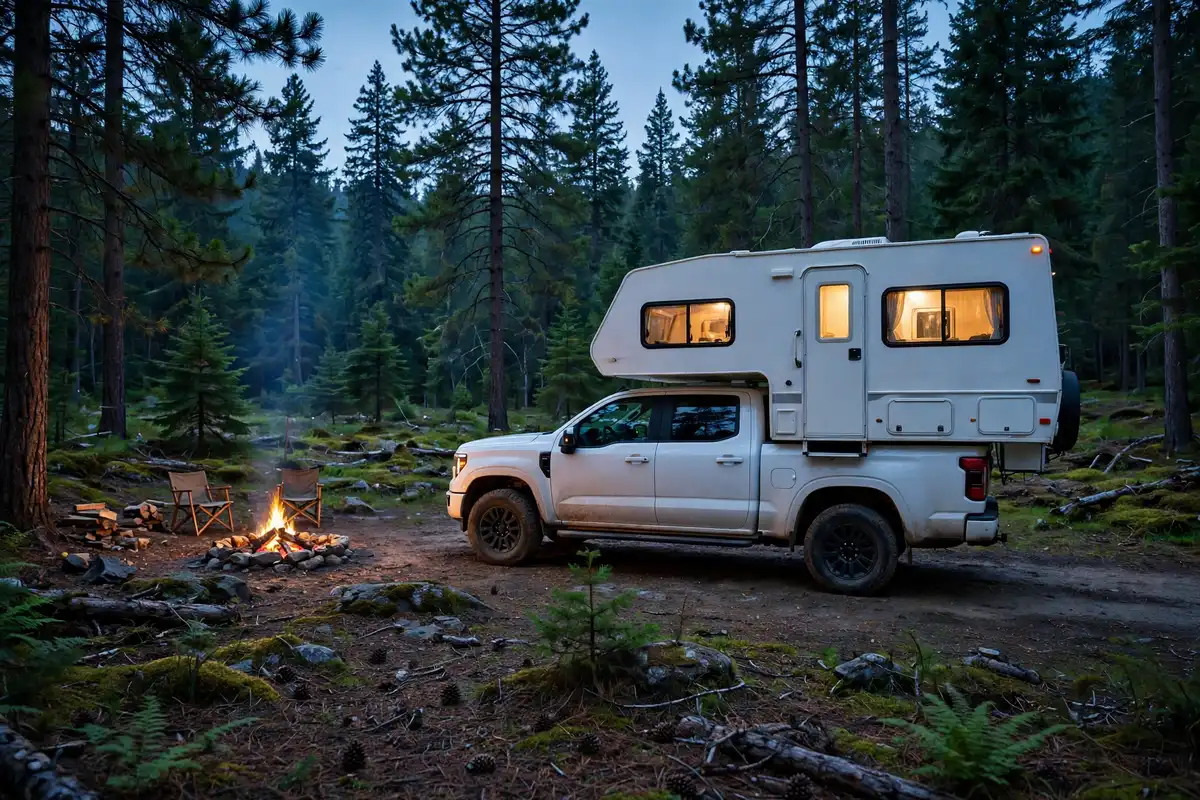
Truck Camper Fire Safety: Detectors, Extinguishers, and Escape Plans That Actually Work
I learned most of what I know about truck camper fire safety at 2 a.m. in a parking lot, listening to a detector scream, trying to work out whether my camper was about to kill me or the detector was just having a bad night. It was a dying house battery. That night changed how I set up every camper since.
Your whole house is a walk-in closet of wood, foam, fiberglass, and fabric, carrying propane, a 12-volt system, and a heater within arm’s reach of where you sleep. The U.S. Fire Administration estimates an average of 4,200 RV fires reported each year from 2018 to 2020, causing an estimated 15 deaths, 125 injuries, and about $60.3 million in property loss. Rare — and fast. What saves you is decided beforehand: working detectors, a reachable extinguisher, a practiced escape plan.
I’m not a firefighter, and this isn’t a substitute for your manufacturer’s instructions or local fire codes — just general guidance from an owner who has made the mistakes already.
Truck Camper Fire Safety Starts With How Fast a Small Box Burns
A house fire gives you minutes. A truck camper fire gives you far less — owners on RV forums put it at about two minutes before heat and toxic smoke make escape impossible. The extinguisher buys you a way out, not a saved rig. Prevention first, warning second, escape third, fighting the fire a distant fourth — only if small, with a clear way out.
Vibration is the other difference: every mile of dirt road shakes connections loose and works propane fittings a fraction of a turn looser. The National Park Service warns that bouncing down the road can loosen electrical connections, which produce heat, and that many RV fires are caused by a 12-volt short. So truck camper fire safety isn’t a one-time install — it’s a quick check before every trip.
The Three Detectors You Need
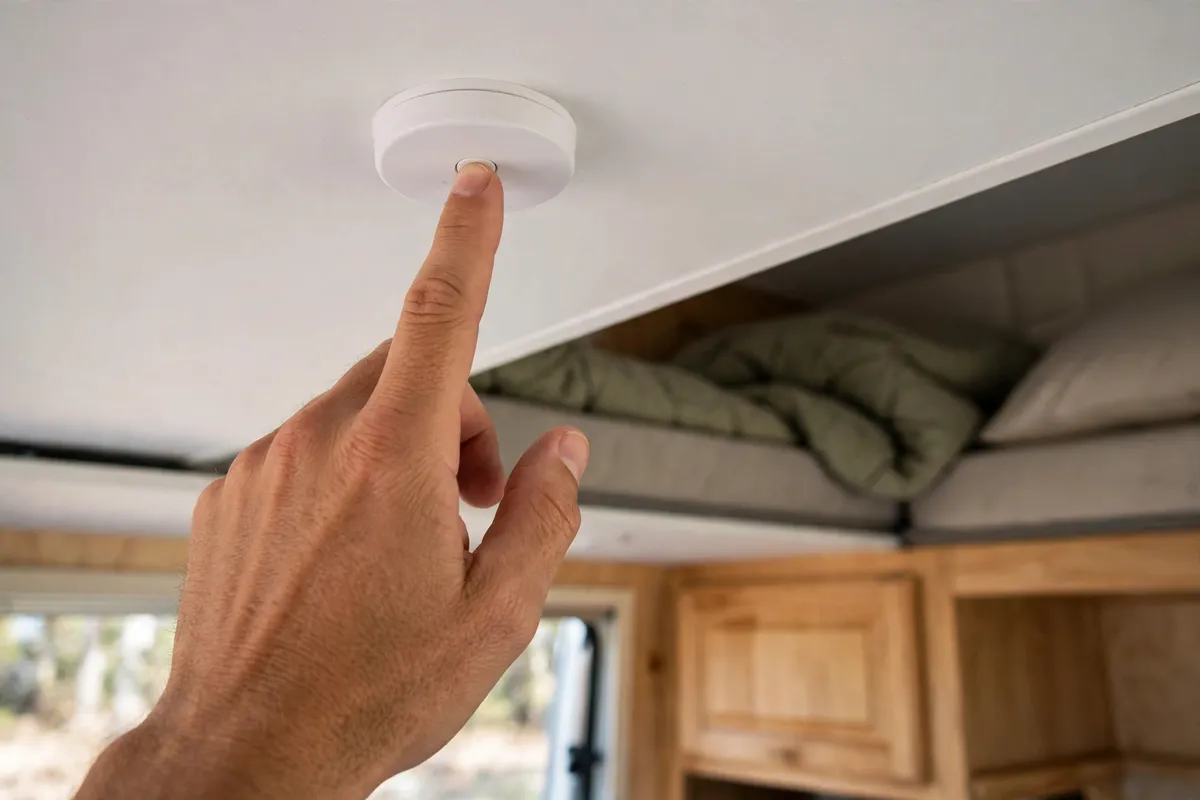
Three things matter most in truck camper fire safety: a working smoke alarm, a working carbon monoxide alarm, and a working propane (LP) alarm — tested, correctly placed, none past its replacement date. The U.S. Fire Administration says all RVs should have working CO and smoke alarms inside, tested every month. Thirty seconds, on the first of the month, with your tire pressures.
Smoke alarms: ceiling, near the bed, away from the stove
Smoke rises, so the alarm goes on the ceiling — one in the living area and, if your layout allows, a second near the cabover. The factory alarm is usually a cheap ionization type. Owners on iRV2 report its weakness: quick on fast, flaming fires, slow on smoldering ones — the kind that starts in bedding and fills the camper with smoke long before it flames. Owners in that thread recommend photoelectric or dual-sensor alarms.
Placement matters too. Too close to the stove and every batch of bacon sets it off — which is how alarms end up with their batteries pulled out. A few feet from the stove, on the ceiling, away from the vent’s draft, is the sweet spot. If yours screams every time you cook, move it.
Carbon monoxide alarms: near where you sleep
Carbon monoxide is colorless and odorless, and you can’t feel it building up until it’s making you confused, headachy, and drowsy — easy to mistake for road fatigue. It comes from incomplete combustion: a faulty furnace, a generator too close, a neighbor’s exhaust, or a portable heater used where it shouldn’t be.
Mount the CO alarm near the sleeping area, per your model’s instructions. Never bury it behind a curtain, inside a closet, or next to a window, door, heater, or vent where drafts keep gas from the sensor. Keep it five feet from gas appliances: startup puffs can set it off, and false alarms train you to ignore the real one. A battery-powered CO alarm is a good backup: it keeps working when the house battery is dead, exactly when these problems show up.
Propane (LP) alarms: low, near the floor
Propane is heavier than air: it sinks and pools in the lowest spots — under the dinette seats, along the floor. So the LP alarm lives low, typically 4 to 20 inches off the floor, near the stove, furnace, fridge, and water heater. A combination CO/LP alarm goes low for the same reason.
The part that confuses every new owner: the LP alarm goes off when there is no leak at all. Owners on RV forums report the same causes over and over — a low or dying house battery, an alarm past its roughly five-year life, aerosol sprays across the sensor, and dust clogging it. Learn its sounds: a continuous loud alarm means get out and treat it as a real leak; a short chirp usually means low voltage or end of life. But never assume a false alarm while you’re still inside — get out, shut the propane off at the tank if safe, air the camper out, then check the battery, the alarm’s date, and the hairspray. If the alarm stops once the gas is off, assume it was a real leak until a technician proves otherwise.
Check the date: LP and CO detectors typically last about five years, and the date is printed on the unit. Don’t know a used camper’s detectors’ age? Replace them — one of the cheapest safety upgrades there is.
Fire Extinguishers: More Than One, None of Them Buried
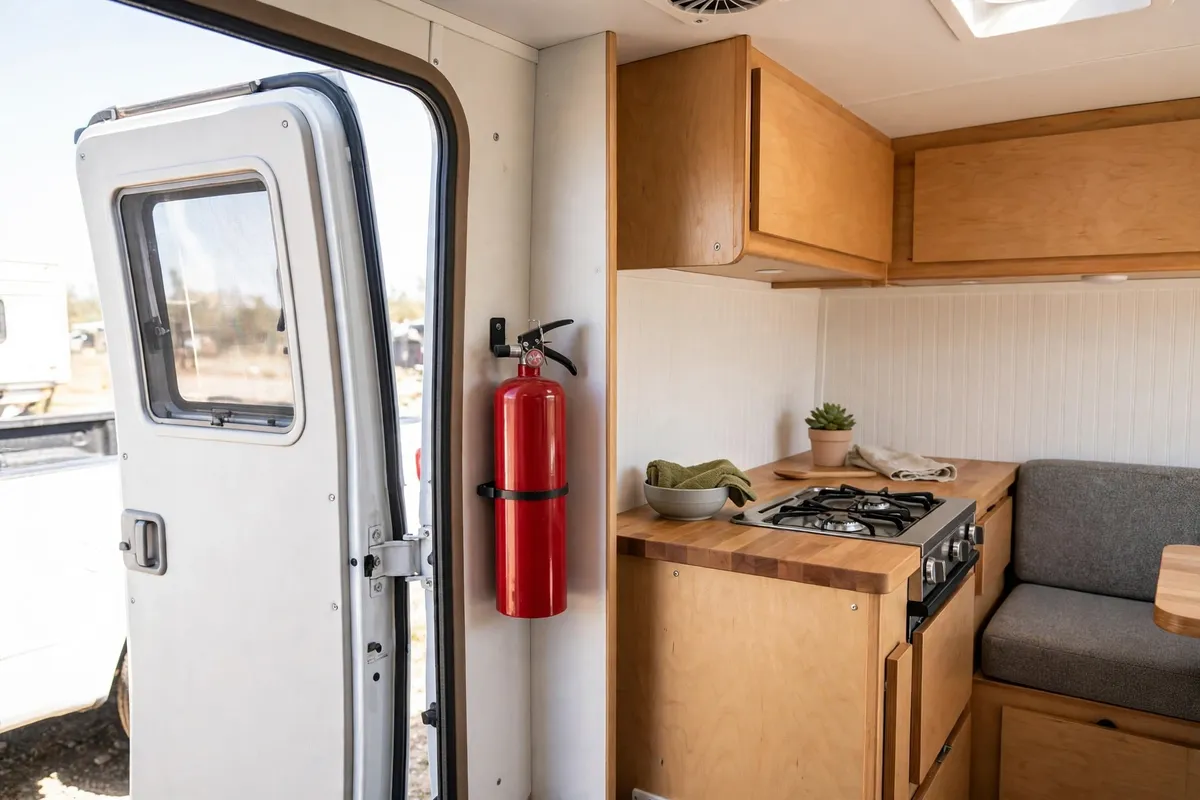
The extinguisher that came with your camper is probably a small dry-chemical ABC unit by the entry door. Keep it, but don’t stop there: ABC covers combustibles, flammable liquids, and electrical fires — exactly the mix a truck camper offers. A small one discharges in roughly 8 to 10 seconds: enough for a small stove fire or a path to the door, not a camper already burning.
Owners on iRV2 and the Heartland Owners forum place them: one by the main exit, one in or near the cabover so you’re never trapped upstairs without one, and one outside in an unlocked compartment or in the truck. Several owners report upgrading the factory unit to a 5-pound one and adding a second in the bedroom. Others keep a fire blanket by the stove for pan fires — no chemical dust everywhere.
Check the gauge monthly — needle in the green; a partially discharged extinguisher counts as empty. Shake it and flip it once a month: dry chemical powder settles and packs down, especially on dirt roads. Turn it upside down, tap the bottom sharply, and shake it well. Know P.A.S.S. before you need it: Pull the pin, Aim low at the base of the fire, Squeeze the lever, Sweep side to side. Never let the fire get between you and the door.
Your Escape Plan: Two Ways Out, Practiced
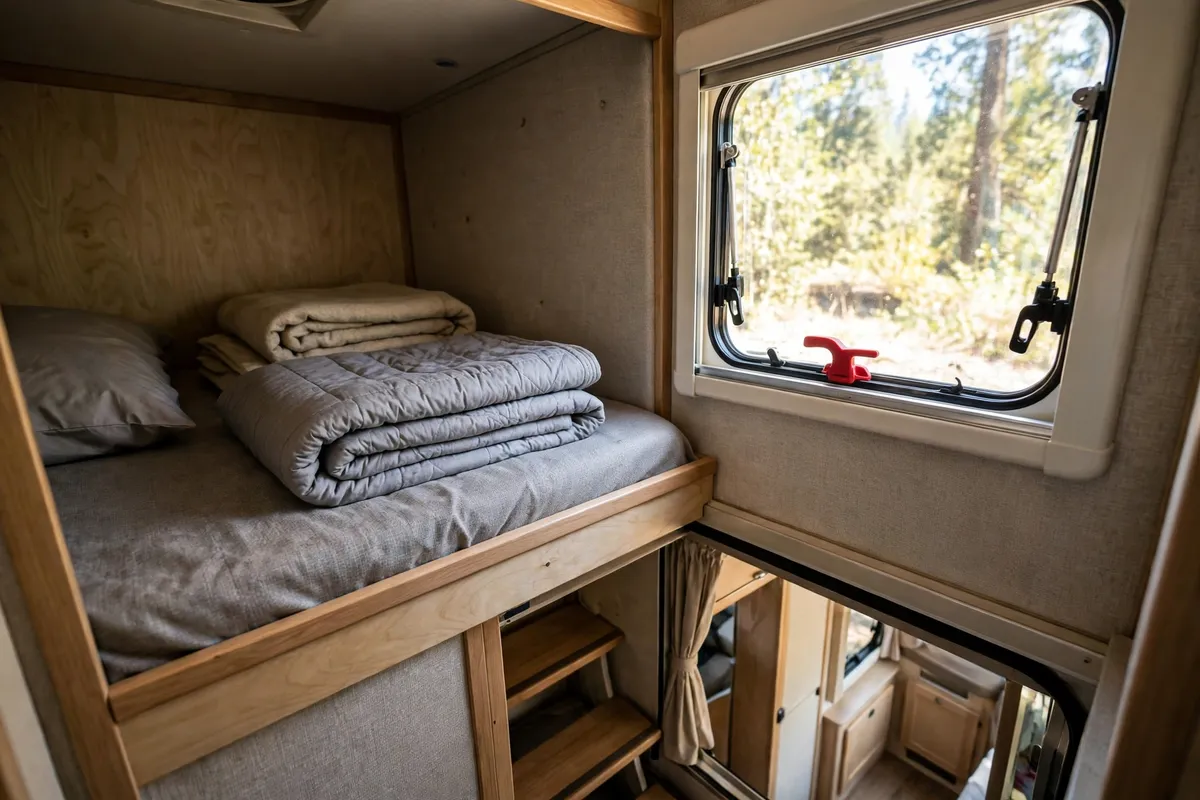
Every truck camper has a main door and, usually, an emergency exit window in the cabover, marked with a red latch or an “EXIT” label. On paper, two ways out. In real life, owners on the forums keep finding the gap: the latch is stiff because it’s never been opened, the window is blocked by bedding or a bin, and the drop from a cabover window is six feet or more, feet-first, in the dark.
So practice it — once, in daylight, when nothing is wrong. Open every exit window and the main door; if a latch sticks, fix it now, not during a fire. Climb out of the cabover window feet first. Owners on the Heartland forum suggest laying folded bedding over the sill to soften the aluminum edge. Have kids practice too, with you spotting them. Then pick a meeting point, upwind of the truck, and say it out loud: “We meet by the picnic table.”
Everyone should know where the extinguishers are, what each alarm sounds like, and that the rule is get out first — nobody goes back for a phone, a wallet, or a pet. Run through it on the first night of every trip — five minutes. For the kit that supports this — headlamp, whistle, charged phone, first aid — see my truck camper emergency breakdown kit and self-rescue guide. Keep the exits clear, always: the emergency window is not a storage shelf.
Propane: Respect It, Don’t Fear It
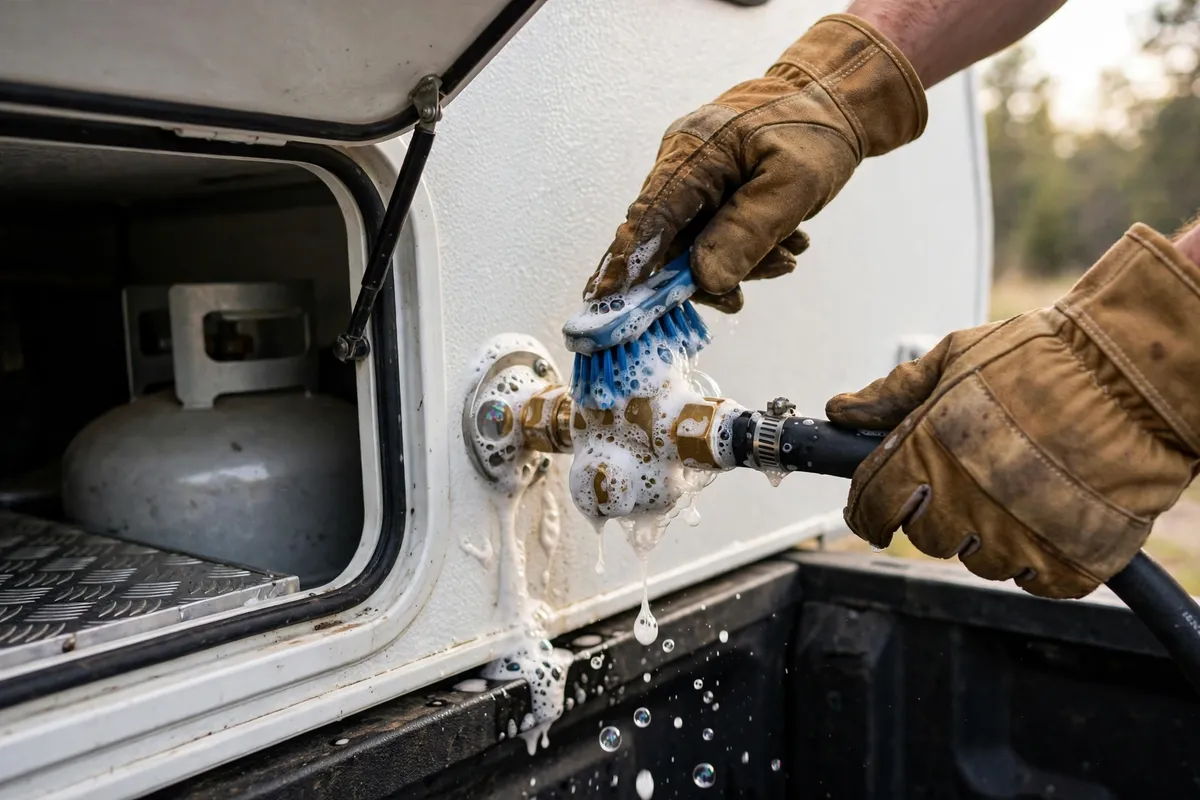
Propane runs the good life in a truck camper — stove, furnace, fridge, sometimes the water heater. It’s also the fuel owners worry about most: a leak plus a spark in a sealed box is the worst case in this article. The good news is that propane safety is mostly unglamorous habits.
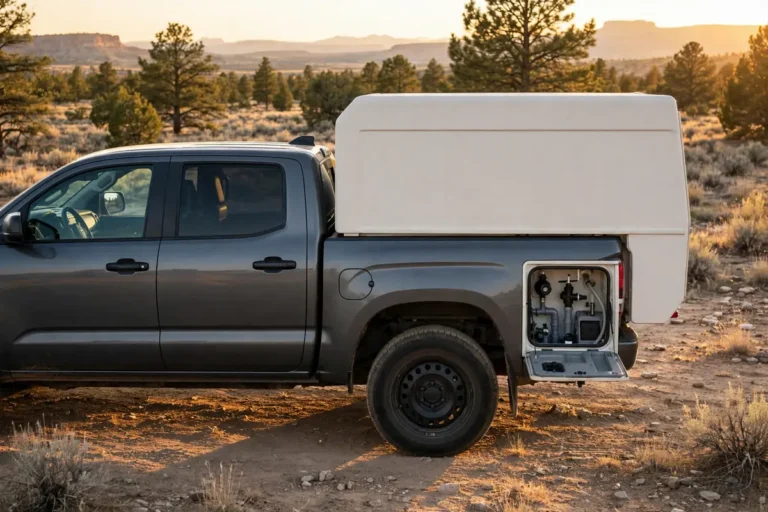
Check the system as in my truck camper propane system guide: hoses, regulator, and fittings inspected regularly, leak-checked with soapy water or detection fluid (never a flame), re-checked after rough roads. If you smell gas — that rotten-egg odor added so you can smell it — don’t flip a light switch or light anything. Get everyone out, shut the propane off at the tank if safe to do so from outside, and call for help from a safe distance.
Two non-negotiable rules: propane off at the tank while driving, all propane appliances off before a fuel stop. The National Park Service is explicit — an accident or blowout with the propane on can be significantly worse. Most absorption fridges keep food cold for hours without running. Never store a spare cylinder inside, and never use the stove or oven for heat. Keep the fridge’s exterior vent clear — owners report debris in the burner area is a real fire cause, preventable with a two-minute look a few times a season.
Electrical Fires: The Quiet One
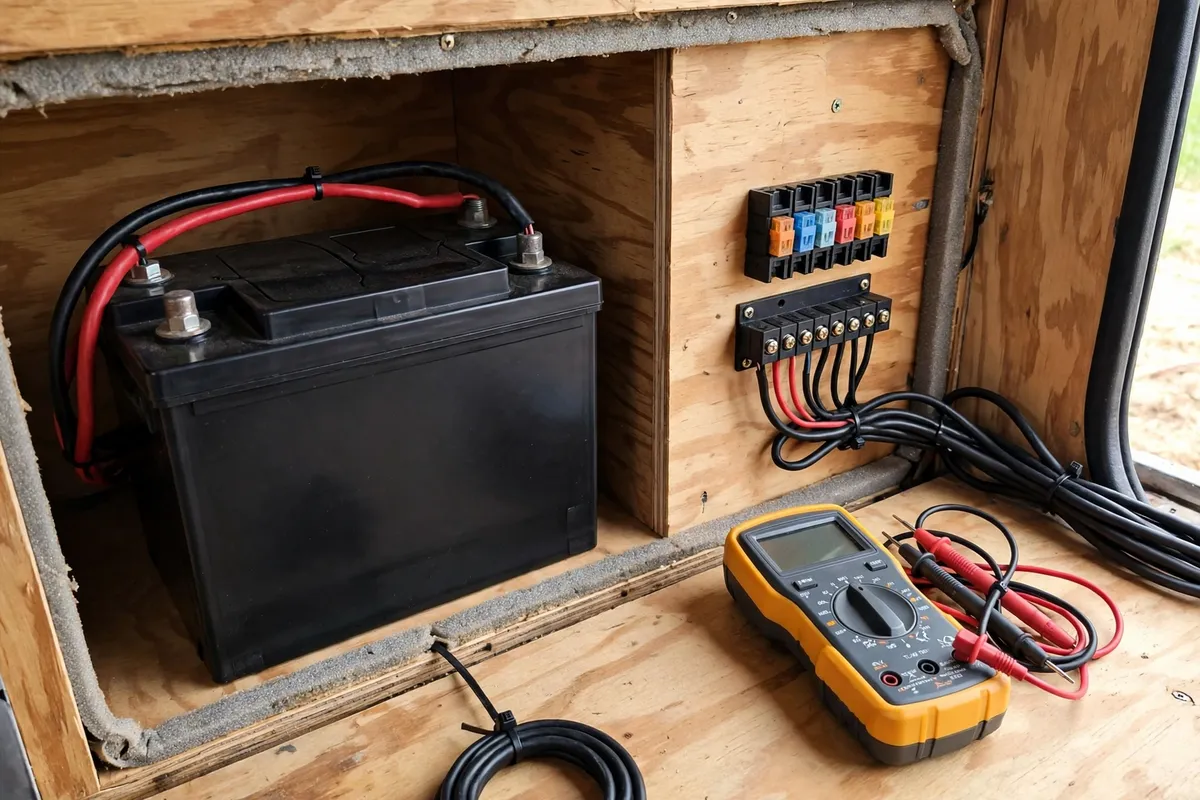
If propane is the fuel owners worry about most, electricity is the one that actually starts the most fires. The NFPA’s RV fire study found mechanical and electrical failures the leading causes — electrical malfunctions behind about a fifth of vehicle fires and a quarter of structure fires in 2008–2017 data. The 12-volt side deserves as much respect as the 120-volt side — the Park Service warns many RV fires are caused by a 12-volt short.
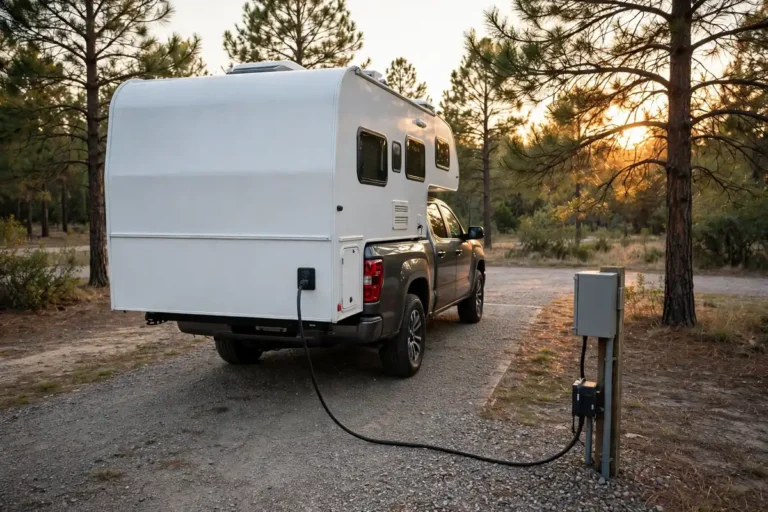
Check your 12-volt connections before every trip: loose terminals, chafed wires, melted insulation, anything that smells hot or looks scorched. My truck camper electrical troubleshooting guide walks through the dead batteries, bad grounds, and loose connections behind most of these problems. Don’t overload outlets — one heat-producing appliance per outlet, major appliances straight into the wall, no cords under rugs. The Park Service warns circuit breakers don’t always prevent overload fires. Treat lithium and solar installs with respect: loose terminals, undersized wire, missing fuses, and batteries charging without ventilation are the mistakes in fire reports — get a qualified check of a DIY install. A hot, swelling, or sweet-smelling battery comes out of the camper and isn’t charged again until you know why — and replace a shore cord with a discolored plug, loose prongs, or cracked insulation.
Heaters: Furnaces, Diesel Heaters, and Portable Ones
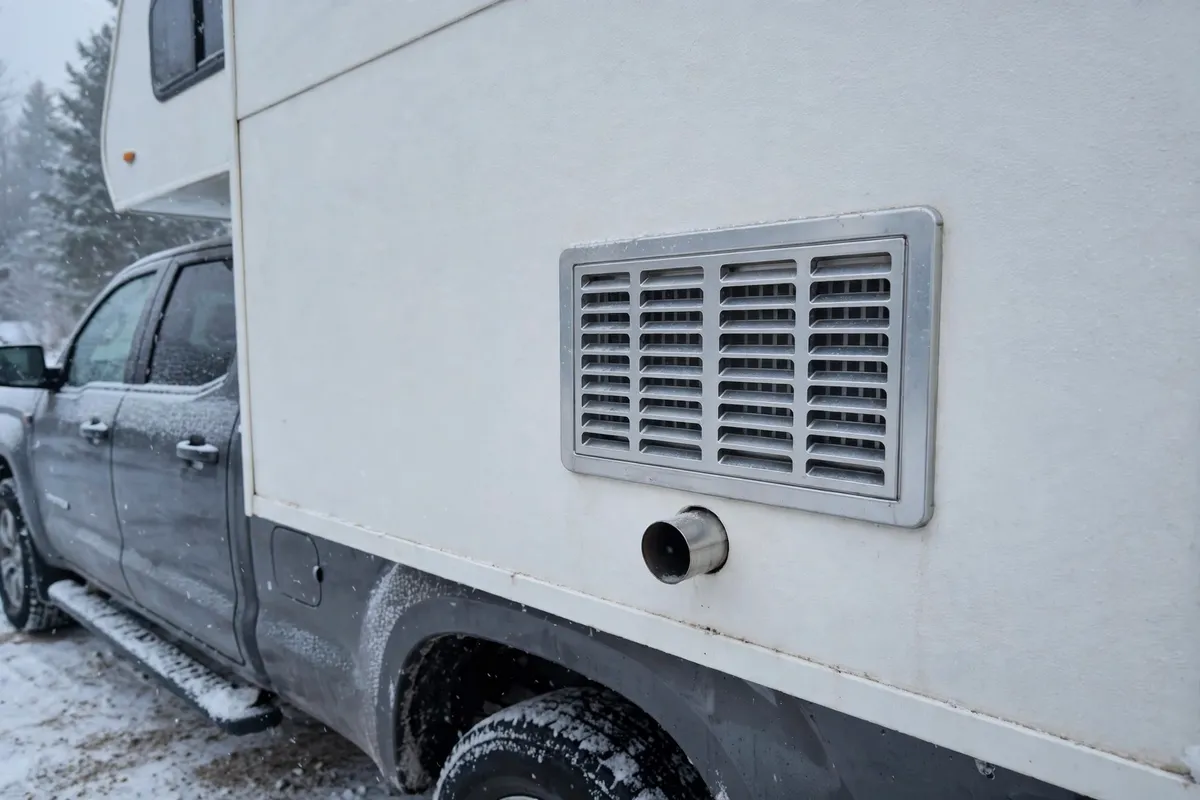
Cold nights are when truck campers burn. Your built-in propane furnace is the safest heat you have — vented outside, designed for the space. Service it regularly, keep vents clear of snow, mud, and nests, and never block warm-air outlets with bedding. Short-cycling, strange smells, or soot around the vent? Stop using it and find out why. My truck camper furnace troubleshooting guide covers the common failures.
Diesel heaters are hugely popular now — but they’re a combustion appliance installed by hand, often by the owner, and the install is the safety system: exhaust and fuel routing, clearances to combustibles, and a working CO alarm aren’t optional. Read my truck camper diesel heater install walkthrough before you drill the first hole, and have someone experienced check your exhaust and fuel connections after.
Portable heaters are where the most danger lives. The Consumer Product Safety Commission is blunt: never use fuel-burning portable heaters or lanterns while sleeping in enclosed areas such as tents, campers, and vehicles. An “indoor-safe” portable propane heater with an oxygen-depletion sensor and tip-over shutoff is a different thing from a camp stove dragged inside — but even indoor-rated ones need the ventilation their manual requires, clearances from bedding, and a working CO alarm, and most owners I trust turn them off before sleeping. Never use a camp stove, grill, or charcoal burner for heat inside. Electric space heaters avoid CO but draw heavy power: clear space, flat surface, never while you sleep, straight into a wall outlet.
Cooking Fires: The Most Common Start
The kitchen is the most common area for RV fires to start. Stay in the kitchen while you cook — the rule people break most often, because “just stepping outside for a second” is easy in a space this small. Keep towels and curtains away from the stovetop. If a pan catches fire, don’t carry it outside and don’t throw water on a grease fire: turn the burner off if you can reach it safely, smother the pan with its lid or a fire blanket, and use the extinguisher only if the fire is small and you have a clear exit behind you. If the flame goes out, turn the burner off and air the camper out before relighting — gas keeps flowing from an unlit burner.
The Monthly Five-Minute Check
Monthly, and before every trip: test every detector, check and shake every extinguisher, open the exit window and door, check propane hoses, battery terminals, and the shore cord. Twice a year add detector dates, furnace and water heater vents, and the fridge burner area. Once a year, a trained technician inspects the whole system.
What to Do If an Alarm Sounds or a Fire Starts
Memorize this order. If an alarm sounds, get everyone out first, into fresh air, and account for everyone. Don’t stop to grab things. Shut the propane off at the tank only if you can do it safely from outside. Call 911 from a safe distance — know your exact location first (campground and site, GPS, mile marker) and have it written down; cell service is thin where truck campers go.
If there’s a fire, get out, stay out, and call for help. Use an extinguisher only if the fire is small, you know how, and you have a clear escape route. Never re-enter a burning camper.
Frequently Asked Questions
How long do RV carbon monoxide and propane detectors last?
About five years is typical — follow your model’s instructions. The date is printed on the unit; check it on a used camper and replace any detector past its date or chirping an end-of-life signal.
Why does my propane detector keep going off for no reason?
Usually a low house battery, an expired detector, aerosols near the sensor, or dust. Treat every full alarm as a real leak first: get out, shut the gas off if safe, ventilate, then troubleshoot. If it stops with the gas off, assume it was real until a technician finds the cause.
Can I use a portable propane heater in my truck camper while I sleep?
The Consumer Product Safety Commission advises against fuel-burning portable heaters while sleeping in enclosed spaces like campers. If you use an indoor-rated one, follow its manual exactly and switch it off before sleeping. Your vented furnace is safer overnight.
What should I do first if I smell propane in my camper?
Get everyone out, don’t touch light switches or anything that could spark, and don’t hunt for the leak from inside. Shut the propane off at the tank if safe from outside, ventilate, and call for help from a safe distance. Don’t turn the gas back on until a technician has fixed the cause.
Safety note: general guidance from an experienced owner, not a substitute for your manufacturer’s instructions, appliance manuals, or local fire codes. Follow your manufacturer’s guidance; have propane and electrical systems inspected yearly by a qualified technician.
Sources: USFA RV Fire and Life Safety Practices, NPS RV Fire Safety 101, Texas DOI RV fire safety guidance. Community insights from owner threads on iRV2 and the Heartland Owners Forum.