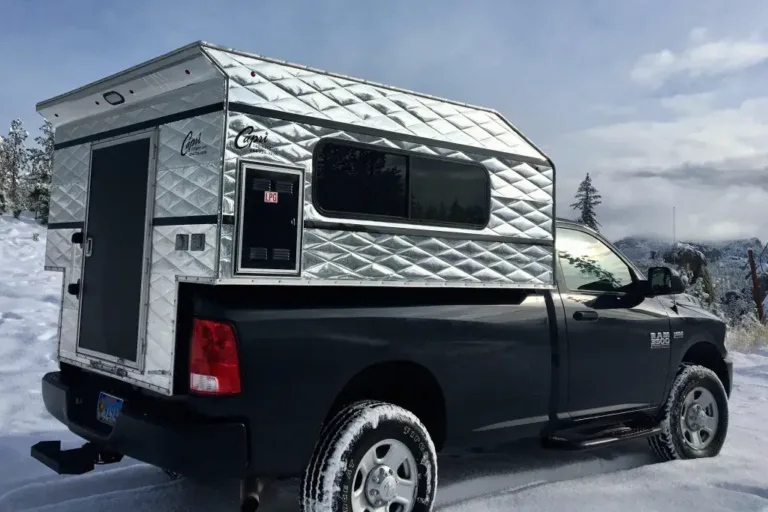

Truck Camper for Tall People: What Actually Works at 6’2\” and Up
I’m going to be honest with you right up front: I’m 5’6″, and I have no idea what 6’3″ feels like inside a truck camper. What I do have is weeks of reading through owner forums, spec sheets, and review comments from people who are tall and camp anyway — because a tall friend asked me to help her shop, and every brochure I opened was useless on the one question she cared about: will I actually fit in this thing?
So this is the truck camper for tall people guide I wish someone had handed her. Not a “best campers” list — a filter. The measurements that actually matter when you’re 6’2″ or taller, real interior heights and bed lengths I’ve pulled from manufacturer specs, and the stuff tall owners say that never makes it into marketing copy. Including the finding that surprised me most: pop-up campers, which most people assume are worse for tall folks, often beat hard-sides where it counts.
The five measurements that matter in a truck camper for tall people
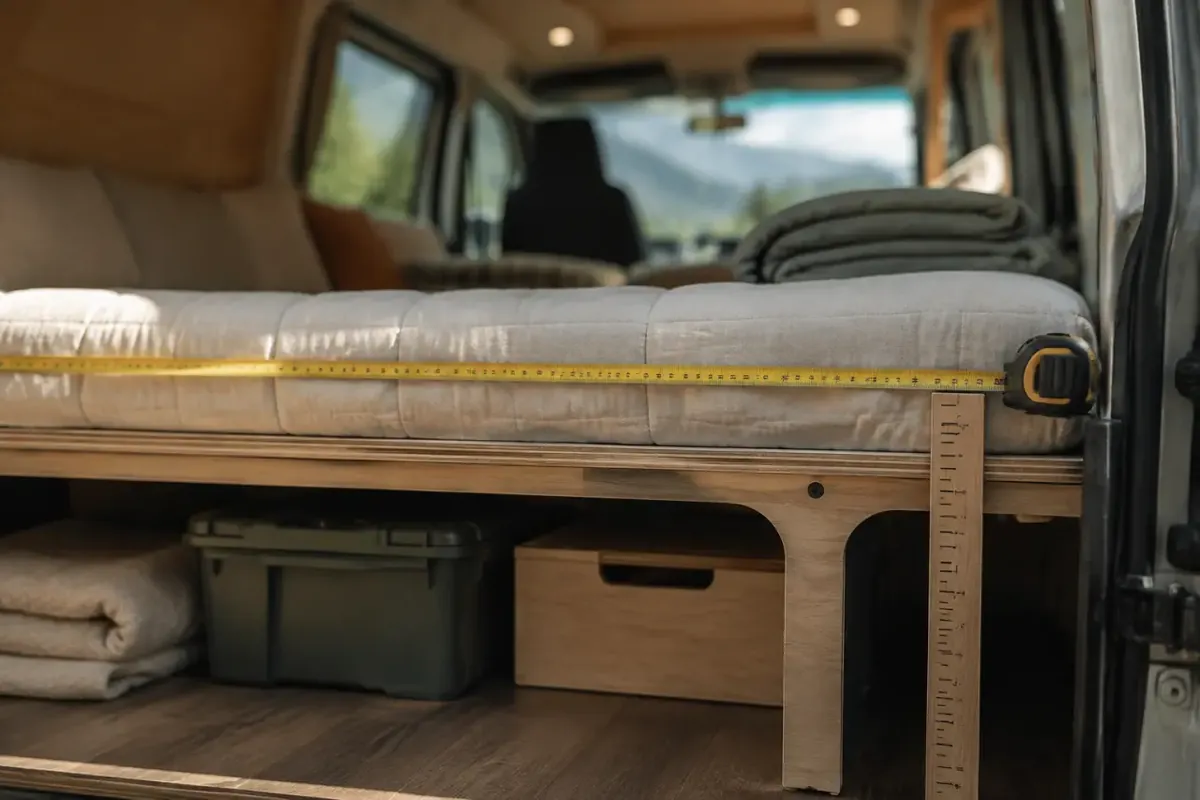
Before we get to models, here’s the checklist I built from owner complaints. Brochures list “interior height” and stop there. Tall owners on forums consistently name five things:
- Interior standing height — floor to ceiling in the main cabin.
- Cabover bed length — head-to-toe sleeping room, not the mattress label.
- Bed orientation — north-south (head to foot along the camper) versus east-west (side to side).
- Door height — the one nobody measures until their forehead finds it.
- Bathroom usability — shower headroom and whether you can sit on the toilet without your knees hitting the wall.
One more thing owners repeat so often it should be printed on the dealer door: advertised interior height is measured at the highest point, dead center. Move a foot toward the walls, stand under a roof vent crank, or walk under the AC, and you lose inches. A 6’6″ interior height does not mean 6’6″ everywhere.
The bed matters more than the ceiling (say the tall owners themselves)
Here’s the first community insight, and it runs against what most people assume. Across multiple owner forums, tall campers keep landing on the same conclusion: bed length is the prime concern; standing headroom is secondary.
The reasoning is practical. You spend seven or eight hours horizontal. Standing up is something you do in bursts — getting dressed, cooking, brushing your teeth. One forum full of tall RV owners put it plainly: a miserable night’s sleep ruins the whole trip, while a little ducking during the day is forgettable. A 6’7″ owner on Good Sam said the shower is the real litmus test for him, not the ceiling. And a Truck Camper Magazine reader who’s 6’7″ put the whole problem in one sentence: he just wants a camper bed his feet don’t hang off.
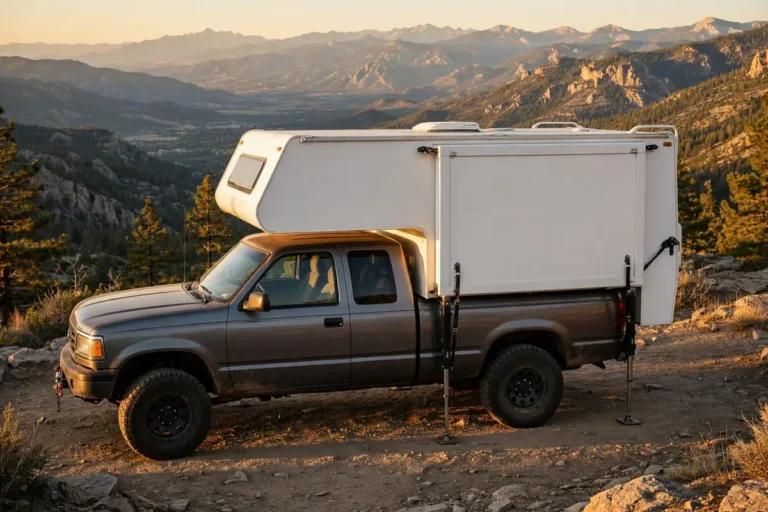
So when you’re comparing models, look at the cabover bed dimensions before the ceiling number. Here’s what the spec sheets actually say:
- Northern Lite 10-2 and 9-6 series: 60″ x 80″ queen mattresses — a true 80 inches of sleeping length, which handles most 6’4″ sleepers. Their interior headroom runs 6’4″ to 6’8″ depending on model and year (the 9-6 Limited Edition lists 76 inches, the 10-2 EX has been measured at 6’8″).
- Cirrus 920: the redesigned 2026 model lists a primary sleeping area of 81″ x 59″ — 81 inches of length — with interior height around 6’5″ to 6’6″ depending on the year. A 6’3″ reviewer who tested one specifically called out that he could stand fully in the wet bath and sit up fully in the cabover.
- Eagle Cap 1165: interior height is listed at 6’3″ (76″) — the shortest ceiling among the big triple-slide rigs — but the cabover is a north-south queen, which is the orientation tall sleepers want.
- Four Wheel Camper Hawk+ flatbed: standard cabover measures 72″ x 77″, with an optional king at 83″ x 77″. That 77-inch dimension is the one your height has to beat.
Watch out for the fine print on “queen.” A true queen mattress is 60″ x 80″, but several compact and minimalist campers use shorter lofts — some list 75-inch sleeping platforms, which is a hard no at 6’2″+. On pop-ups, measure the bed with the roof fully popped — platforms can extend only in camping configuration.
If the bed is close but not quite there, tall owners have one more trick before giving up on a model: replace the factory mattress. Stock cabover mattresses are often thin foam that sags under real weight, and upgrading to a proper mattress can buy you both comfort and a truer sleeping surface. I covered the full process in my truck camper mattress upgrade guide.
Hard-side interior heights, model by model
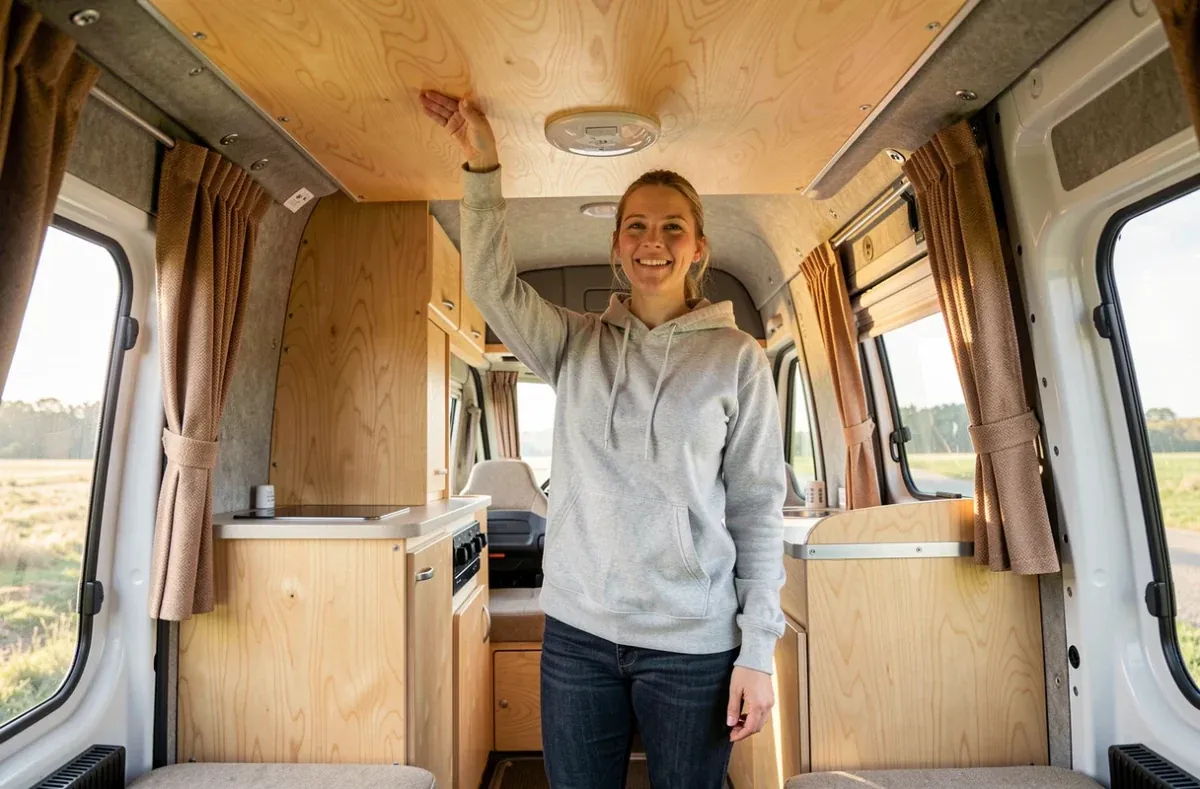
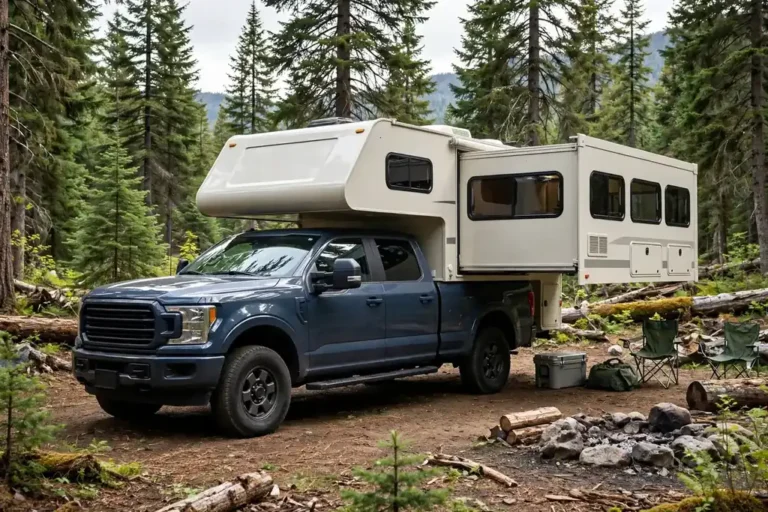
For hard-sides — the tall, walk-in boxes — here’s what manufacturers and dealer spec sheets actually publish. I’ve stuck to numbers I could verify, and skipped models where nobody publishes the figure:
- Lance 1172: 6’8″ interior height, the tallest of the common big hard-sides.
- Lance 975: 6’7″.
- Lance 1191 (2026 redesign): 6’6″, non-slide, dry bath.
- Lance 825 and Squire SQ825: 6’6″ and 6’5″ respectively — smaller footprints, still decent ceilings.
- Cirrus 920: 6’5″–6’6″ depending on model year.
- Northern Lite 10-2: 6’5″ on older brochures, up to 6’8″ on the EX Special Edition; the newer 610 and 9-6 models list 6’4″.
- Eagle Cap 1165: 6’3″ — roomy everywhere else, but a 6’2″+ buyer will brush the ceiling.
Notice the pattern: even the best hard-sides top out around 6’6″ to 6’8″, and that’s measured dead center. There’s a physical reason. The whole rig has to stay under roughly 13’6″ of legal road height, and everything below the ceiling — tanks, insulation, flooring, the truck bed itself — eats into it. No hard-side is giving you 7 feet of standing room without breaking the law.
Which is exactly why the next section matters.
Why pop-ups often beat hard-sides for tall campers
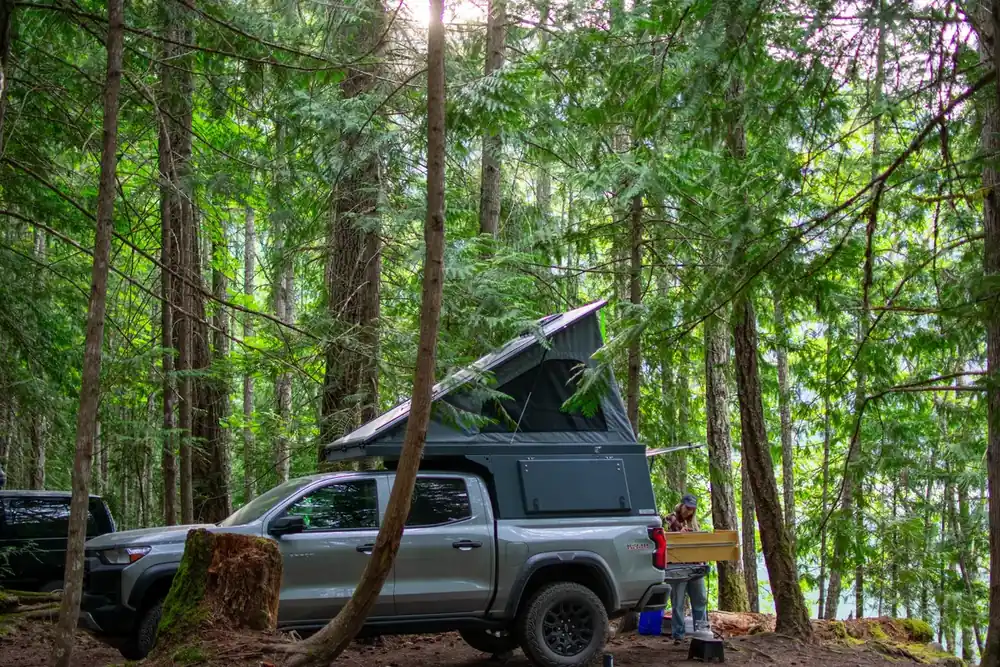
This is the counter-intuitive finding, and it’s the whole reason this guide exists. A pop-up’s roof goes up above the legal road-height problem. The walls are canvas, the roof lifts, and the standing room is set by how far the lift goes — not by bridge clearances.
Real numbers, popped up:
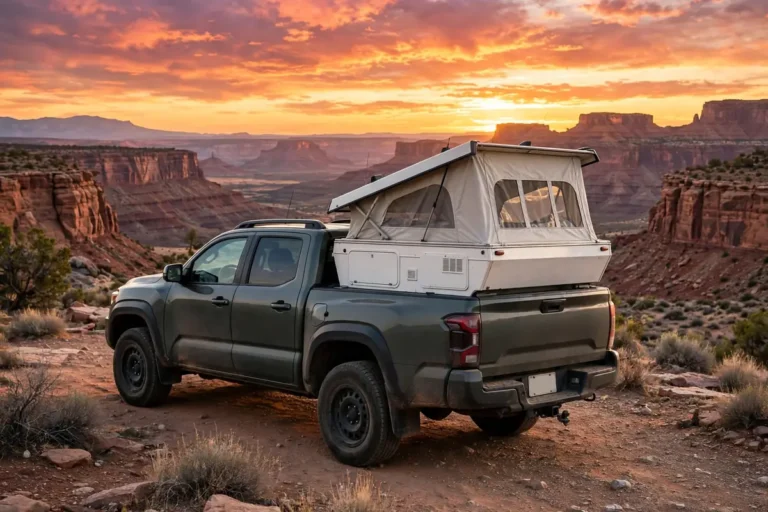
- Four Wheel Campers (Hawk, Grandby, and the flatbed models): a full 6’6″ of interior standing room when popped, straight from the manufacturer. On the Wander the West forum, an Eagle owner mentioned telling an over-6-foot visitor the camper had 6’4″ of headroom when open, and the guy was genuinely surprised — pop-ups just don’t look that tall from the outside.
- Palomino Backpack SS-1500: 7 feet of interior height popped up. That’s a full foot more than most hard-sides, in a camper that tows like a low-profile box.
- AT Overland Atlas: 6’10” of headroom under the insulated composite roof when deployed, per the manufacturer’s own spec page — the tallest standing room I’ve found in anything that fits in a truck bed.
So at 6’2″ to 6’4″, a popped pop-up gives you more standing room than the tallest hard-sides on the market, with inches to spare.
There are trade-offs, and tall buyers should know them cold:
- Closed headroom is miserable. With the top down, a Four Wheel Camper gives you roughly 4 to 4’4″ of interior height — fine for sleeping and stealth parking-lot stops, but you’re crawling, not standing. If your camping style involves lots of roadside overnights where you don’t want to pop the top, a hard-side treats you better.
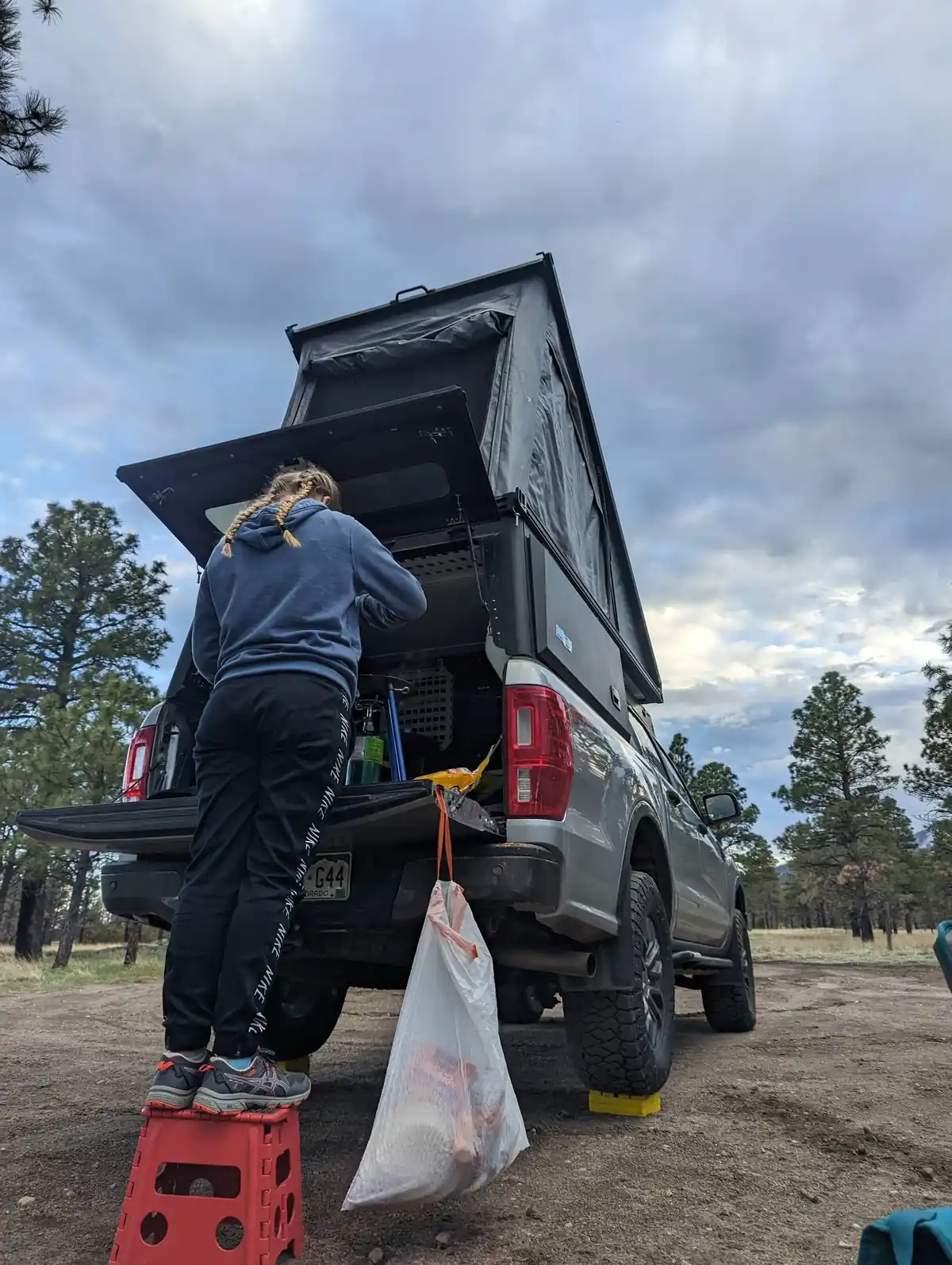
- The doors are short. This came up on Expedition Portal with a great technical explanation: most pop-up manufacturers use a short rear door on purpose, because the top of the door frame braces the rear of the camper and resists the force trying to push the top rear sides together when the camper is sitting on its jacks. It’s structural, not cheapness. (The Alaskan is the famous exception — a full-height two-piece door — but it’s a hardside.) At 6’2″+, you will duck through a pop-up door every single time. One tall owner’s wife on Wander the West put it exactly right: on their model the door wasn’t a problem, “but designs differ — something to check.” So check it, in person, with your shoes on.
- Winter camping takes more work. Canvas walls breathe and bleed heat. It’s absolutely doable — plenty of owners four-season their pop-ups — but you’ll work harder at it than in a hard-side. I wrote a full breakdown of winter camping in a pop-up truck camper if that’s your plan.
For the full landscape of what’s available, my best pop-up truck campers guide covers the current lineup, and the Four Wheel Camper Fleet vs Swift vs Hawk comparison will help you match a model to your truck bed. If you’re still weighing the two body styles overall, the hard-side vs soft-side comparison lays out the full trade-off list.
North-south vs east-west: the orientation question
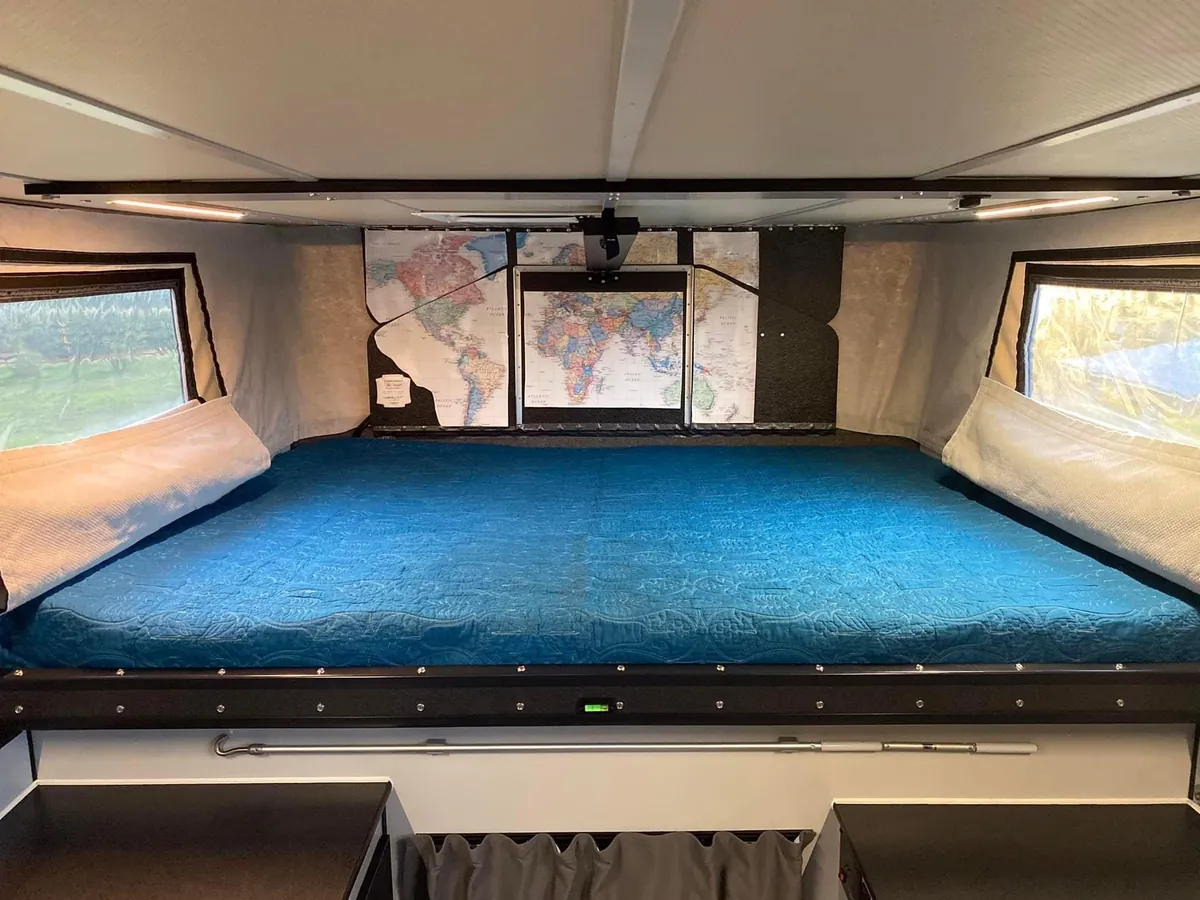
Here’s where bed length turns into bed usability. A cabover bed can run two ways:
- North-south (head-to-foot along the length of the camper): your height gets the long dimension. A 60″ x 80″ north-south queen fits a 6’4″ sleeper with room to spare.
- East-west (side to side across the camper): your height gets the camper’s width, which is usually the shorter dimension — often 72″ to 77″. At 6’2″ you’re exactly at the edge; at 6’4″ your head and feet both touch.
The Eagle Cap 1165 runs a north-south queen, which is a genuine tall-person feature in a big hard-side. Many pop-ups and compact hard-sides run east-west, where you need to check the actual number rather than trusting the word “queen.” The rule is simple: in an east-west bed, ignore the label and find the sleeping length in inches. If it’s under 76″, a 6’2″ buyer should lie in it at the dealership before signing anything.
One more orientation wrinkle from the forums: in a full-width east-west setup, an owner can sometimes gain inches by using the full width of the camper rather than the mattress that came with it — one owner cut a queen memory-foam mattress to the full width of the sleeping area and used the leftover foot space as storage. Worth knowing if you fall in love with a camper whose stock mattress is an inch short.
Doors, fan cranks, and the head-bump zones nobody warns you about
Tall owners will tell you the ceiling isn’t what gets you. It’s the obstacles: the door header, the Fantastic Fan crank, the AC housing, the light fixtures. One 6’2″ owner’s wife reported he has to watch his head around the fan knob and going in and out the door — two spots that never appear in a spec sheet.
Two pieces of community wisdom here:
First, measure the door in person. Manufacturers rarely publish door heights, and they vary wildly between models. Stand in it with your shoes on, and pay attention the second time through too — that’s how you’ll actually walk through it at 6 a.m.
Second, the pool-noodle trick. On an RV forum, an owner who kept smashing his head exiting his trailer cut a piece of pool noodle and screwed it just above the door jamb header — it works as a visual reminder to duck and as padding for the times you forget. It’s a two-dollar fix, and multiple tall owners swear by some version of it.
The shower test
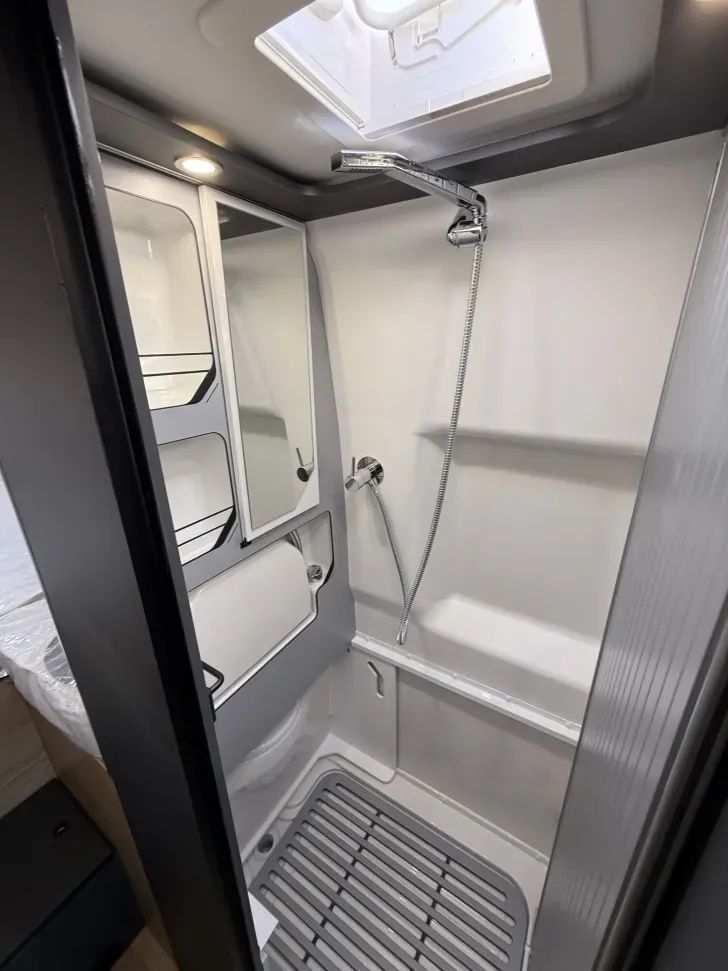
Remember the 6’7″ Good Sam owner? His rule: the shower is the litmus test. Wet baths in truck campers are tight for everyone, and at 6’2″+ you’re checking three things: can you stand upright under the shower head, can you raise your arms to wash your hair, and can you sit on the toilet without your knees hitting the opposite wall.
A few things that help: a dome skylight over the wet bath buys real standing inches (a Truck Camper Magazine reviewer who’s tall specifically praised this on the Wolf Creek 850 — “tall folks like yours truly need this extra headroom to stand”). A handheld shower wand on a hose (“telephone style”) beats a fixed head, because the head height stops mattering. And the Cirrus 920’s wet bath, at 6’5″–6’6″ of interior height, is one of the few where a 6’3″ person can genuinely stand upright.
Do what the owner forums say and take the shower test literally: get in the shower at the dealership, close the curtain or door, and mime washing your hair.
The try-before-you-buy rule
The single most repeated piece of advice across every tall-camper thread I’ve read, from RV forums to truck camper groups, is some version of this: try out everything. Sit on the toilet. Get in the shower. Lie in the cabover bed. Then — my favorite version of the advice — pretend you’re stuck inside for a rainy weekend, because it will happen. A camper that fits you for a five-minute walkthrough can feel very different on day three of rain when you’re 6’3″ and everything requires a half-duck.
Bring a tape measure, wear your bulkiest shoes, and don’t let anyone rush you. The right truck camper for tall people is out there — the owners proving it every weekend are 6’4″, 6’6″, even 6’7″, sleeping fine and standing tall. They just did the measuring before they bought.
Frequently asked questions
What interior height does a truck camper need for a 6’2″ person?
For comfortable standing, look for 6’5″ or more of interior height — that gives you a few inches of clearance for shoes and uneven footing. Lance’s 1172 (6’8″) and 975 (6’7″), the Cirrus 920 (6’5″–6’6″), and Northern Lite’s 10-2 (up to 6’8″) all clear this bar. Popped pop-ups do even better: Four Wheel Campers give 6’6″, the Palomino Backpack SS-1500 gives 7 feet, and the AT Overland Atlas gives 6’10”.
Do pop-up truck campers really have more headroom than hard-sides?
When popped up, yes — often significantly more. Hard-sides are capped by legal road height (about 13’6″), so they max out around 6’6″–6’8″ of interior height. Pop-ups lift their roof above that constraint once parked, reaching 6’6″ to 7 feet. The trade-off is headroom with the top down (around 4 feet — crawl space only) and shorter entry doors.
What cabover bed length works for someone 6’4″?
Look for at least 78–80 inches of sleeping length. Good verified options: Northern Lite’s 60″ x 80″ queen, the Cirrus 920’s 81″ x 59″ primary sleeping area, and Four Wheel Camper’s optional king at 83″ x 77″. Be wary of compact campers with 75-inch lofts, and always check whether the bed runs north-south or east-west before trusting the mattress label.
Is a north-south or east-west cabover bed better for tall sleepers?
North-south is better for tall sleepers because your height gets the long dimension (usually 78–80+ inches). In an east-west bed, your height has to fit the camper’s width — typically 72″ to 77″ — which is borderline at 6’2″ and too short at 6’4″. The Eagle Cap 1165’s north-south queen is a good example of the tall-friendly layout.
What’s the biggest door-height gotcha in pop-up truck campers?
Pop-up doors run short on purpose: the top of the door frame structurally braces the rear of the camper when it’s sitting on its jacks. Manufacturers rarely publish door heights, so a 6’2″+ buyer should walk through the door in person, with shoes on. If you keep clipping the header, the pool-noodle trick — padding screwed above the door jamb as both a reminder and a cushion — is the classic owner fix.
Can a tall person full-time in a truck camper?
Yes — tall owners do it, but they choose differently than average-height buyers. The recurring advice from 6’4″+ full-timers: prioritize an 80-inch bed over ceiling height (you’ll forgive ducking, you won’t forgive bad sleep), pick a floorplan where you can stand fully in the bathroom, and spend a rainy afternoon inside any finalist before you commit.